

P0302 on 2009-2016 Jaguar XF: Cylinder 2 Misfire Causes and Fixes
P0302 on a Jaguar XF indicates a misfire in cylinder 2. The most common cause is a failed ignition coil or a worn spark plug. Swapping the coil from cylinder 2 with another is the quickest way to diagnose the problem. A single coil replacement is relatively inexpensive, but spark plug replacement can be costly due to labor. Correctly identifying your engine (V8, V6, or I4) is critical as the location of cylinder 2 differs for each.
- P0302 means cylinder 2 is misfiring. Do not ignore it, especially if the check engine light is flashing.
- The most likely cause is a bad ignition coil, which is easy to diagnose by swapping it with another cylinder's coil.
- If it's not the coil, suspect the spark plug. Spark plug replacement on these engines can be labor-intensive and costly.
- Before starting work, you MUST identify your engine (V8, V6, or I4) to find the correct location of cylinder 2.
- Be aware of manufacturer TSBs for this model, which point to less common causes like fuel pump issues and outdated engine software.
What's Unique About the 2009-2016 Jaguar XF
The 2009-2016 Jaguar XF spans two generations (X250 and X260) and used a wide array of engines. Correctly locating cylinder 2 is the first crucial step, as the numbering is not sequential on V-engines. 🎬 Watch: A guide to cylinder numbering on Jaguar V-engines. * 5.0L V8 (AJ133): Cylinders are numbered 1-8. Bank 1 (passenger side, right-hand side) contains cylinders 1, 3, 5, 7 from front to back. Bank 2 (driver side, left-hand side) contains 2, 4, 6, 8. Cylinder 2 is the front-most cylinder on the driver's side (LHS). * 3.0L V6 (AJ126): Cylinders are numbered 1-6. Bank 1 (passenger side, RHS) has 1, 3, 5. Bank 2 (driver side, LHS) has 2, 4, 6. Cylinder 2 is the front-most cylinder on the driver's side (LHS). * 2.0L I4 (EcoBoost): Cylinders are numbered 1-4 sequentially from the front (timing belt end) to the back of the engine. Cylinder 2 is the second cylinder from the front. Jaguar has also issued Technical Service Bulletins (TSBs) for this era of XF that link misfire codes like P0302 to specific issues beyond typical coil and plug failures, such as problems with the high-pressure fuel pump's metering valve and the need for engine computer software updates. [JTB00410NAS1, JTB00445NAS1]
Diagnostic Flowchart
Tap your situation to follow the diagnostic path that matches what you're seeing on this vehicle.
Generation note: The 2009-2016 range covers the first generation XF (X250, 2009-2015) and the first model year of the second generation (X260, 2016). A variety of engines were offered, including V8s (4.2L, 5.0L), V6s (3.0L), and inline-4s (2.0L). The location of cylinder 2 and potential causes can differ, so you must identify which engine your car has before starting repairs.
Symptoms You May Notice
- Check Engine Light is on or flashing
- Rough or vibrating engine idle
- Noticeable loss of power and poor acceleration
- Engine hesitates or stumbles
- Reduced fuel economy
- Hard starting [JTB00410NAS1]
- Smell of fuel from the exhaust
- Replacing oxygen sensors. While a faulty O2 sensor can cause performance issues, it will typically set its own specific codes and is unlikely to cause a single-cylinder misfire.
- Replacing the catalytic converter. A misfire can destroy a catalytic converter, but the converter itself is not the cause of the misfire. The converter is the victim, not the culprit.
Most Likely Causes
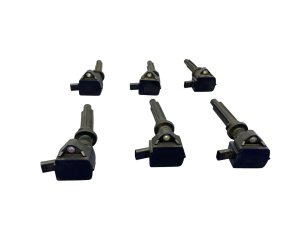
- Failed Ignition Coil 🔴 High Probability → Shop Ignition Coil Coil-on-plug systems are a very common failure point on modern engines as they age due to constant high-voltage operation and exposure to engine heat and vibration.
How to confirm: Swap the ignition coil from cylinder 2 with another cylinder (e.g., cylinder 4 on a V-engine or cylinder 1 on an I4). Clear the codes and drive the car. If the code changes to P0304 or P0301, the coil is faulty.
Typical fix: Replace the faulty ignition coil. It is often recommended to replace the corresponding spark plug at the same time, and some owners choose to replace all coils on the affected bank or the entire engine as preventative maintenance.
Est. part cost: $100-$180 for one OEM coil. - Worn or Fouled Spark Plug 🔴 High Probability → Shop Spark Plug Spark plugs are a regular maintenance item with a finite lifespan. High-performance engines, especially the supercharged variants in the XF, can be harder on plugs. Oil leaks from valve cover gaskets are also known to foul the plugs and cause misfires.
How to confirm: After ruling out the ignition coil, remove the spark plug from cylinder 2. Inspect it for wear (worn electrode), carbon fouling, or oil/fuel deposits. Compare it to a new plug.
Typical fix: Replace the spark plug in cylinder 2. It is best practice to replace all spark plugs as a set if they are near the end of their service life (typically 60,000-100,000 miles, but check your specific engine's maintenance schedule).
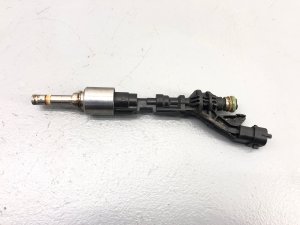
Est. part cost: $15-$45 per plug for OEM-quality brands like NGK or Denso. - Faulty Fuel Injector 🟡 Medium Probability → Shop Fuel Injector Direct injection systems, used on the 5.0L, 3.0L, and 2.0L engines, operate under very high pressure and can be prone to clogging or electronic failure. Carbon buildup on the injector tip can disrupt the spray pattern.
How to confirm: This is more difficult for a DIYer. A professional can perform a fuel injector balance test. You can also listen for a consistent clicking sound from the injector with a mechanic's stethoscope. Swapping injectors between cylinders is possible but much more labor-intensive than swapping coils.
Typical fix: Replace the faulty fuel injector. This can be a labor-intensive job, especially on V-engines where the intake manifold may need to be removed.
Est. part cost: $200-$600+, depending on the engine and injector type. - High-Pressure Fuel Pump Metering Valve ⚪ Low Probability → Shop Fuel Pump A specific TSB (JTB00410NAS1) was issued for 2013 models with the 3.0L V6 or 5.0L V8, indicating an internal fault in the high-pressure fuel pump could cause misfires, rough running, and hard starts.
How to confirm: Requires advanced diagnostics to monitor fuel pressure to confirm it matches the specified values under various engine loads. This is best done by a professional with Jaguar-specific software.
Typical fix: Replacement of the high-pressure fuel pump.
Est. part cost: $500-$1500+ - Engine Control Module (ECM) Software ⚪ Low Probability → Shop Engine Control Module (ECM) TSB JTB00445NAS1 notes that for some 2013 3.0L/5.0L models, the ECM needs to be reprogrammed to protect the engine from damage related to misfires. This is a software fix, not a hardware problem.
How to confirm: A Jaguar dealership or specialist with the correct equipment (like SDD) can check the current software version against the latest available version.
Typical fix: Reprogramming the ECM with updated manufacturer software.
Est. part cost: $0 (if under warranty) or typically one hour of dealer labor charge.
Rare But Worth Checking
- Vacuum Leak: A leak in a vacuum hose or intake manifold gasket can introduce unmetered air, leaning out the mixture and causing a misfire. On the 4.2L SC engine, brittle 1/8" vacuum lines and deteriorated O-rings on the PCV tube are common sources. On other engines, a leaking intake manifold gasket near cylinder 2 can be the culprit.
- Low Engine Compression: Internal engine issues like a burnt valve, worn piston rings, or a leaking head gasket can cause a loss of compression in cylinder 2, leading to a persistent misfire. This is the least likely and most expensive cause, requiring a mechanical compression test to confirm.
- Intake Valve Carbon Buildup: On direct injection engines (5.0L, 3.0L, 2.0L), fuel is sprayed directly into the cylinder, so it doesn't wash over the intake valves. Over time, oil vapor from the PCV system can bake onto the valves, restricting airflow to a specific cylinder and causing a misfire.
- Poor Fuel Quality: TSB SSM-63697 suggests that poor quality or contaminated fuel can lead to misfires across multiple cylinders. While less likely to cause a single-cylinder misfire, it's a possibility. [SSM-63697]
Diagnosis Steps
- Read the code with an OBD-II scanner and note any other codes present.
- Determine the engine in your XF (5.0L V8, 3.0L V6, etc.) to correctly locate cylinder 2 using the guide in the 'Why This Platform is Different' section.
- Perform the 'Coil Swap Test': Remove the engine cover. Unplug and unbolt the ignition coil from cylinder 2 and an easily accessible cylinder (e.g., cylinder 4). Swap their positions. Clear the codes, run the engine, and rescan. If the code has moved (e.g., to P0304), the coil is bad.
- If the coil is good, perform the same swap test with the spark plug from cylinder 2.
- If the misfire remains on cylinder 2, inspect the ignition coil's wiring connector for damage, corrosion, or oil contamination from a leaking valve cover gasket.
- Listen to the fuel injector on cylinder 2 with a mechanic's stethoscope; it should have a regular, audible clicking sound. Compare it to an adjacent injector.
- For vacuum leaks, with the engine running, carefully spray a fine mist of water or an unlit propane torch around the intake manifold gasket near cylinder 2. A change in engine idle indicates a leak.
- If ignition, fuel delivery, and vacuum leaks seem okay, perform a compression test on cylinder 2 to rule out mechanical engine problems. This will identify issues like bad piston rings or valve problems.
Parts You'll Likely Need
- Ignition Coil
(OEM #C2Z18619 (For many 3.0L/5.0L models, verify by VIN))— This is the most common failure item causing a single-cylinder misfire due to constant exposure to engine heat.
Trusted brands: Bosch, Denso, NGK, Delphi
OEM price range: $100-$180
Aftermarket price range: $50-$120 - Spark Plug — A routine wear item that is critical for proper ignition. A worn or fouled plug cannot create a strong enough spark. Oil from a leaking valve cover gasket can also foul the plug.
Trusted brands: NGK, Denso, Bosch
OEM price range: $25-$45
Aftermarket price range: $15-$30 - Fuel Injector — Can become clogged or fail electronically, preventing the correct amount of fuel from entering cylinder 2.
Trusted brands: Bosch, Standard Motor Products
OEM price range: $200-$600+
Aftermarket price range: $150-$400
Related Codes That Often Appear With This One
- P0300 — If multiple cylinders are misfiring randomly, P0300 (Random/Multiple Cylinder Misfire Detected) will be stored alongside P0302.
- P0301, P0303, etc. — Codes for other specific cylinders (e.g., P0301 for cylinder 1) may appear if the cause, like a vacuum leak or fuel delivery issue, affects more than one cylinder.
- P1315 — This is a Jaguar-specific code for 'Persistent Misfire', which can damage the catalyst. It is often logged alongside a specific P030x code. [28, JTB00445NAS1]
- P0316 — This code indicates a misfire was detected within the first 1,000 engine revolutions on startup, and it is often seen with other P030x codes as noted in TSB JTB00533NAS1.
Technical Service Bulletins (TSBs) & Recalls
- JTB00410NAS1
- JTB00445NAS1
- JTB00533NAS1
- SSM-63697
- SSM74160
Platform-Specific Known Issues
- Cylinder Numbering Confusion: Unlike inline engines, Jaguar V-engines do not number cylinders sequentially down each bank. Cylinder 1 is front-passenger, Cylinder 2 is front-driver, Cylinder 3 is middle-passenger, Cylinder 4 is middle-driver, and so on. Misidentifying the cylinder is a common diagnostic mistake.
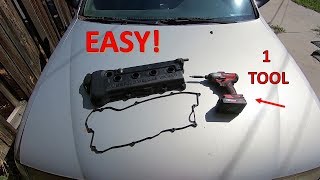
- Valve Cover Gasket Leaks: → Shop Engine Valve Cover On higher mileage engines, the valve cover gaskets and spark plug tube seals can become brittle and leak oil into the spark plug wells. This oil can saturate the ignition coil boot and short out the spark, causing a misfire. When replacing a coil or plug, always check the well for oil.
- Water Ingress After Engine Wash: Some owners have reported multiple misfires immediately following an engine wash. Water can get trapped under the plastic engine cover and seep into the coil connections, causing shorts. If misfires start after a wash, remove the engine cover and use compressed air to dry the coils and connectors thoroughly.
Mechanic-Grade Diagnostic Values
- High-Pressure Fuel Rail Pressure (5.0L V8 & 3.0L V6) — expected: Startup: ~2,100 PSI; Idle: 500-600 PSI; Under load (WOT): Can exceed 2,500 PSI.. Failure: Significantly lower pressure under load (e.g., 550 PSI at 6000 RPM) can indicate failing high-pressure fuel pumps and trigger a P0087 code along with misfires.
- Engine Grounding Point Voltage Drop — expected: Well under 0.5V (500mV) when cranking the engine.. Failure: A reading higher than 0.5V indicates a poor ground connection, which can cause various electrical issues, including poor idle and misfires.
Scan Tool Commands That Help
- Jaguar SDD (Symptom Driven Diagnostics): Live Data Monitoring / Datalogger — To monitor high-pressure fuel rail pressure in real-time to diagnose fuel delivery issues that won't always set a specific fuel pressure code but can cause misfires under load. It can also be used to read manufacturer-specific 'P' codes that provide more detail than generic OBD-II readers.
- Jaguar SDD (Symptom Driven Diagnostics): Service Functions - ECM Reprogram — To apply software updates as specified in TSBs like JTB00445NAS1, which addresses misfire detection logic to protect the engine. This requires a dealer-level tool.
Wiring & Ground Locations
- Engine Ground Strap (V8 Models) — Located on the right side (passenger side in US) of the vehicle, connecting the lower frame to a transmission bolt, directly under the starter.. A poor engine ground can cause a variety of difficult-to-diagnose electrical problems, including intermittent misfires, poor idle, and incorrect sensor readings. Ensuring this connection is clean and tight is a crucial step in ruling out electrical issues.
- Ignition Coil Connector (PI003 for V6/V8) — Connects directly to the ignition coil for cylinder 2, located on the top of the engine on the RH side for V6 and V8 engines.. The connector itself or its wiring can become damaged from heat and vibration, or contaminated with oil from a valve cover gasket leak. This can cause an intermittent connection and lead to a P0302 code even if the coil and spark plug are good.
Real Owner Repair Stories
- Jaguar Forums user 'BuckleSpring' (2006 Jaguar X-Type Wagon (Note: X-Type, but diagnostic process is relevant)) — P0302, P1316, P1314 codes. Engine runs perfectly for brief 5-10 second intervals when floored. Also runs perfectly when the low fuel light is on.
❌ Tried (didn't work) Owner had replaced the fuel injector with a used part., Owner had changed spark plugs and moved the coil, but the misfire stayed on cylinder 2.
✅ What actually fixed it The final resolution was tracking the fault to two cracked spark plugs and a dead ignition coil on cylinder 2.
"I Checked Everything" — The Actual Cause
- A user on Jaguar Forums with a 2016 3.0L SC XF reported lean codes (P2187/P2189) and occasional misfires on Bank 1 at idle. Smoke and propane tests found no vacuum leaks. The final cause was identified as a failed diaphragm in the 'symposer,' a device designed to pipe intake noise into the cabin. Blanking off the symposer port solved the lean idle and misfire issue.
When the Usual Fixes Don't Work
- In one documented case on a Jaguar forum, a 2010 XKR with an occasional rough idle and suspected power loss was not setting any misfire codes. After replacing plugs and fixing a valve cover leak, the issue persisted. A dealer diagnosed the problem as failing high-pressure fuel pumps, noting that this particular failure mode often does not trigger a Check Engine Light, making it difficult to diagnose without monitoring fuel pressure directly with a tool like SDD.
Model Year Variations Within This Range
- 2013-2016: For the 2013 model year, Jaguar introduced a new 2.0L turbocharged I4 and a 3.0L supercharged V6, which replaced the naturally aspirated 5.0L V8. All engines were paired with a new eight-speed automatic transmission. This is significant because the causes, TSBs (like JTB00410NAS1 for the 3.0/5.0), and cylinder locations are different for these newer powertrains compared to the earlier 4.2L and 5.0L V8s.
Helpful Videos
We Have This Part in Stock

The information in this article is provided for general reference and educational purposes only. Vehicle specifications, procedures, and part compatibility can vary by production date, trim level, and region. Always consult your vehicle's factory service manual and verify part numbers before purchasing or performing repairs. Safety-critical components such as airbags, seat belts, and braking systems should be installed by a qualified professional.
- Jaguar XF:
- 🧭 Diagnostic Flowchart
- 🎬 Helpful Videos
- 🛍️ Shop This Part
- What's Unique About the 2009-2016 Jaguar XF
- Symptoms You May Notice
- Most Likely Causes
- Rare But Worth Checking
- Diagnosis Steps
- Parts You'll Likely Need
- Related Codes That Often Appear With This One
- Technical Service Bulletins (TSBs) & Recalls
- Platform-Specific Known Issues
- Mechanic-Grade Diagnostic Values
- Scan Tool Commands That Help
- Wiring & Ground Locations
- Real Owner Repair Stories
- "I Checked Everything" — The Actual Cause
- When the Usual Fixes Don't Work
- Model Year Variations Within This Range
- 🎟️ Get 5% Off