

P0302 on 2017-2019 Jaguar XF: Cylinder 2 Misfire Causes and Fixes
P0302 on a 2017-2019 Jaguar XF indicates a misfire in cylinder 2. The most common cause is a faulty ignition coil, followed by a worn spark plug. This is often a simple DIY fix, with parts costing between $75 and $150. On V6 models, water leaking from blocked cowl drains onto the cylinder 2 coil is a known issue.
- P0302 means cylinder 2 is misfiring. Do not drive for long periods, and stop immediately if the Check Engine Light flashes to avoid catalytic converter damage.
- The most likely cause is a bad ignition coil or spark plug. The 'coil swap' is the fastest and cheapest way to diagnose a bad coil.
- When replacing the coil, check for oil in the spark plug well. If oil is present, the valve cover gasket must also be replaced to prevent a repeat failure.
- Be aware of TSB #SSM74160. If other timing-related codes are present, the problem could be a VVT solenoid, not the coil or plug.
What's Unique About the 2017-2019 Jaguar XF
For the 2017-2019 Jaguar XF (X260 generation), a P0302 code can be more than just a simple spark plug issue. An important Technical Service Bulletin (TSB #SSM74160) notes that this misfire code can be stored along with several timing-related codes, sometimes without any noticeable driving issues. This suggests the root cause could be an electrical or sensor issue, such as a faulty VVT solenoid, rather than a primary ignition component. Additionally, oil leaks from the valve cover gaskets are a known issue on JLR engines, which can saturate the ignition coil and cause it to fail. A specific issue on the 3.0L V6 is the potential for blocked scuttle/cowl panel drains, which can cause rainwater to drip directly onto the Bank 2 ignition coils, shorting out the coil for cylinder 2.
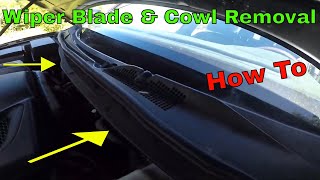
🎬 See how to remove the cowl and clean blocked drainsDiagnostic Flowchart
Tap your situation to follow the diagnostic path that matches what you're seeing on this vehicle.
Symptoms You May Notice
- Rough or shaky idle
- Hesitation or stumbling during acceleration
- Reduced engine power and 'Restricted Performance' message
- Solid or flashing Check Engine Light
- A smell of unburnt fuel from the exhaust
- Engine stalling
- Replacing the oxygen (O2) sensor without first diagnosing the ignition system. A misfire sends unburnt fuel and air into the exhaust, which can sometimes trigger O2 sensor codes, but the sensor is reacting to the problem, not causing it.
Most Likely Causes
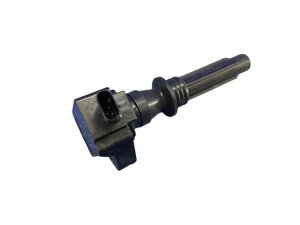
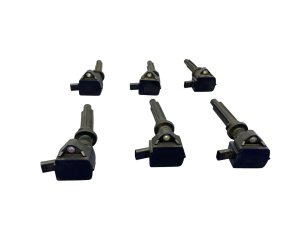
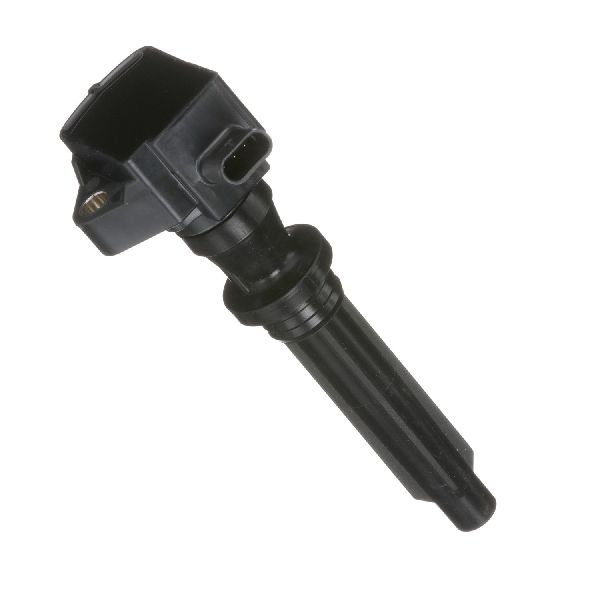
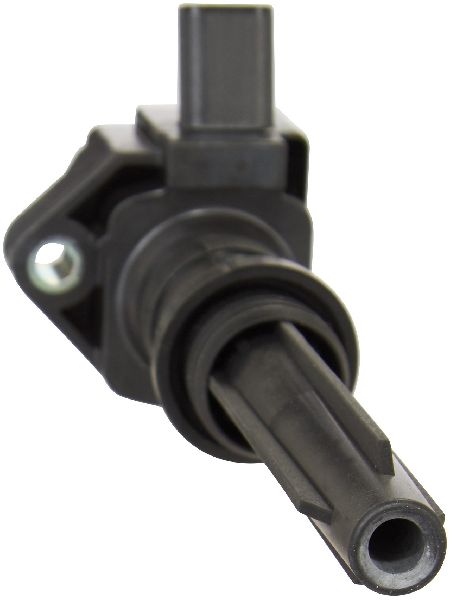
- Faulty Ignition Coil 🔴 High Probability → Shop Ignition Coil Ignition coils on modern engines operate under high heat and electrical stress, making them a common failure item. Oil leaks from the valve cover gasket can also seep into the spark plug wells, saturating the coil boot and causing premature failure. On the V6, water ingress from the cowl can also directly cause the cylinder 2 coil to fail.
How to confirm: Swap the ignition coil from cylinder 2 with another cylinder (e.g., cylinder 4 on the V6 or cylinder 1 on the I4). Clear the codes and drive. If the misfire code changes to the cylinder you moved the coil to (e.g., P0304 or P0301), the ignition coil is faulty.
Typical fix: Replace the faulty ignition coil. It is highly recommended to replace the corresponding spark plug at the same time.
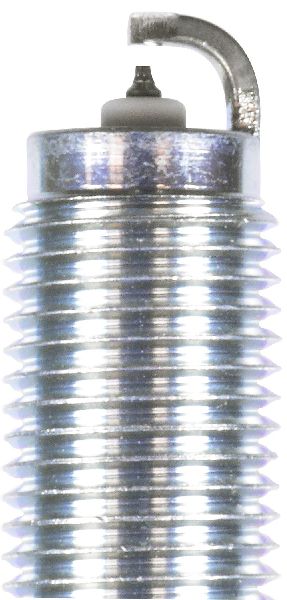
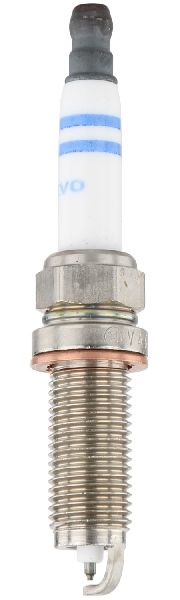
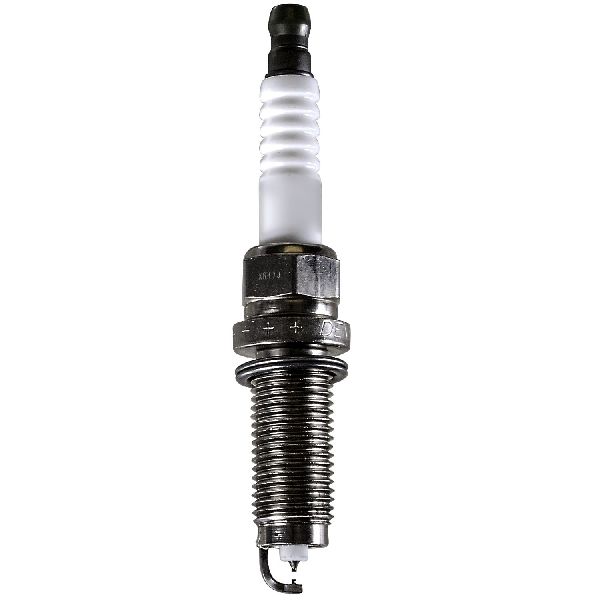
Est. part cost: $50-$115 - Worn or Fouled Spark Plug 🟡 Medium Probability → Shop Spark Plug Spark plugs are a routine maintenance item with a service life of around 50,000-60,000 miles. If they are past their service life or have been fouled by oil or carbon deposits, they can fail to produce a strong enough spark to ignite the air-fuel mixture.
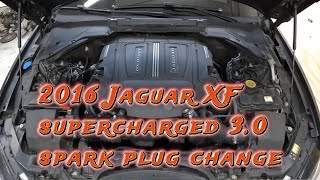
How to confirm: After confirming the ignition coil is good, remove the spark plug from cylinder 2. Inspect it for wear on the electrode, cracks in the porcelain, or heavy fouling from oil or carbon. Compare it to a new plug. 🎬 Watch: How to change spark plugs on the 3.0L engine
Typical fix: Replace the spark plug in cylinder 2. It is best practice to replace all spark plugs at the same time if they are near the end of their service interval.
Est. part cost: $15-$30 per plug - Leaking Valve Cover Gasket 🟡 Medium Probability → Shop Engine Valve Cover The valve cover gaskets on Jaguar engines can become hard and brittle over time due to engine heat, allowing oil to leak into the spark plug tubes. This is a widely reported issue in owner forums.
How to confirm: When you remove the ignition coil from cylinder 2, inspect the coil boot and the spark plug well for the presence of engine oil.
Typical fix: Replace the valve cover gasket and the spark plug tube seals. Thoroughly clean the oil from the spark plug well and replace the oil-soaked ignition coil and spark plug.
Est. part cost: $40-$100 for the gasket set - Clogged or Faulty Fuel Injector ⚪ Low Probability → Shop Fuel Injector The direct injection (GDI) systems used in these engines operate under very high pressure. Fuel injectors can become clogged by fuel contaminants or carbon buildup over time, preventing proper fuel delivery to cylinder 2. Some owners have resolved misfires with a quality fuel system cleaner.
How to confirm: This is more difficult to confirm for a DIYer. A professional can perform a fuel injector balance test. A preliminary step is to use a high-quality fuel system cleaner with Polyetheramine (PEA) to see if the misfire improves. You can also listen to the injector with a mechanic's stethoscope; it should have a consistent ticking sound.
Typical fix: Replace the faulty fuel injector. This is a more labor-intensive job that may involve removing the fuel rail.
Est. part cost: $100-$250
Rare But Worth Checking
- Faulty VVT Solenoid: As per TSB #SSM74160, if P0302 is present with timing-related codes like P054A-00, P0014-71, or P0341-00, the cause may be a faulty Variable Valve Timing (VVT) solenoid (Part No. AJ813329), not a typical ignition or fuel issue. The bulletin advises replacing the solenoid if it was manufactured before August 23, 2018.
- Carbon Buildup on Intake Valves: Direct injection engines, like the Ingenium and AJ126, are susceptible to carbon buildup on the back of the intake valves over time. This can disrupt airflow into the cylinder, causing a misfire, especially on cold starts. This typically requires professional cleaning (e.g., walnut blasting).
- Low Cylinder Compression: Internal engine issues such as a leaking valve, worn piston rings, or a damaged head gasket can cause a loss of compression, leading to a misfire. A compression test is required to diagnose this.
Diagnosis Steps
- Read the trouble codes with an OBD-II scanner and note any other codes present.
- Determine the location of cylinder 2. For the 3.0L V6, the cylinders are numbered 1-3-5 on the passenger side (Bank 1) and 2-4-6 on the driver's side (Bank 2), from front to back. Cylinder 2 is the front-most cylinder on the driver's side. For the 2.0L I4, it is the second cylinder from the front of the engine.
- Swap the ignition coil from cylinder 2 with an adjacent cylinder (e.g., cylinder 4 on the V6, or cylinder 1 on the I4).
- Clear the codes, start the engine, and let it run or take a short drive. Re-scan for codes.
- If the misfire code has moved to the cylinder where you placed the coil (e.g., P0304 or P0301), the ignition coil is bad and must be replaced.
- If the code remains P0302, the coil is likely good. Move the coil back to its original position.
- Next, swap the spark plug from cylinder 2 with the one from the adjacent cylinder. Clear codes and test again.
- If the code moves, the spark plug is faulty. If it remains P0302, the plug is likely good.
- If the coil and plug are good, inspect the cylinder 2 fuel injector and its wiring. Consider using a quality fuel injector cleaner.
- If the problem persists, check for vacuum leaks (especially intake manifold gaskets if other work was recently done) and consider a professional diagnosis, which may include a compression test or fuel pressure test.
Parts You'll Likely Need
- Ignition Coil
(OEM #AJ813732 (for 3.0L V6); JDE39145 (for 2.0L Ingenium))— This is the most frequent cause of a single-cylinder misfire on modern engines due to heat, electrical stress, and susceptibility to oil or water contamination.
Trusted brands: Bosch, NGK, Delphi
OEM price range: $90-$115
Aftermarket price range: $50-$80 - Spark Plug
(OEM #NGK ILKAR7C10 (for 3.0L V6); JDE39548 / LR091617 (for 2.0L Ingenium))— As a routine maintenance item, a worn or fouled spark plug is the second most likely cause of a misfire. NGK is the original equipment manufacturer.
Trusted brands: NGK, Denso, Bosch
OEM price range: $20-$30
Aftermarket price range: $15-$25
Related Codes That Often Appear With This One
- P0300 — If the misfire is intermittent or begins to affect other cylinders, a P0300 (Random Misfire) code may appear alongside P0302.
- P0301, P0303, P0304, etc. — Misfire codes for other cylinders may appear if the root cause affects multiple cylinders, such as low fuel pressure or a large vacuum leak.
- P054A-00, P0014-71, P0341-00 — According to TSB #SSM74160, these timing-related codes appearing with P0302 can point to a faulty VVT solenoid as the root cause.
- P1316 — This is a Jaguar-specific code that often accompanies misfire codes, indicating that the misfire is severe enough to potentially damage the catalytic converter.
Technical Service Bulletins (TSBs) & Recalls
- SSM74160
Platform-Specific Known Issues
- TSB #SSM74160 indicates that P0302 can be stored in the PCM, potentially without any driveability concerns, alongside various timing-related DTCs. This points to a possible electrical or VVT solenoid issue rather than a simple ignition fault.
- On 3.0L V6 models, blocked drains under the cowl/scuttle panel can cause rainwater to overflow and drip directly onto the Bank 2 (driver's side) engine cover, seeping down to the ignition coils. Cylinder 2 is most exposed, making its coil prone to shorting out after heavy rain or a car wash.
Mechanic-Grade Diagnostic Values
- VVT Solenoid (Part No. AJ813329) internal resistance — expected: 6.9 - 7.9 Ohms. Failure: A reading outside this range indicates a faulty solenoid, a key check for the fault described in TSB SSM74160.
- Ignition Coil (e.g., AJ813732) primary winding resistance — expected: 0.4 - 2.0 Ohms. Failure: An open circuit (infinity) or short circuit (zero) indicates a failed coil, though swapping coils remains the most reliable test.
- Ignition Coil (e.g., AJ813732) secondary winding resistance — expected: 6,000 - 10,000 Ohms. Failure: A reading significantly outside this range suggests a faulty coil.
- Fuel Injector resistance (high impedance type) — expected: 10 - 16 Ohms. Failure: A reading outside this range, or one that is significantly different from other injectors, points to a fault.
- High-Pressure Fuel Rail Pressure (3.0L V6) — expected: ~500-600 PSI at idle, rising to over 2,100 PSI under load.. Failure: Pressure that fails to increase with engine load can indicate a failing high-pressure fuel pump (HPFP).
- Low-Pressure Fuel Pump Pressure (3.0L V6) — expected: ~60-106 PSI during prime and idle.. Failure: Significantly lower pressure suggests a weak in-tank fuel pump or a clogged filter.
- Engine Ground Strap Voltage Drop — expected: Well under 0.5V (500mV). Failure: A reading higher than 0.5V while cranking the engine indicates a poor ground connection, which can cause widespread electrical issues, including misfires.
- Short Term Fuel Trim (STFT) at idle — expected: Fluctuating between -10% and +10%. Failure: Sustained positive values >+15% on one bank can indicate a vacuum leak; sustained negative values can indicate a leaking injector.
Hidden / Shadow Codes Worth Checking
- Mode $06, TID:$0c: Provides raw misfire count data for each cylinder. This allows a technician to see misfires that have not yet reached the threshold to trigger a P0302 code, which is useful for diagnosing intermittent issues. (see via An advanced OBD-II scanner or diagnostic software like Torque or Jaguar SDD that can access Mode $06 test results.)
Scan Tool Commands That Help
- Jaguar SDD / Pathfinder: Power Balance Test — This is a primary diagnostic step at the dealer level. It graphically displays the power contribution of each cylinder, allowing a technician to confirm that cylinder 2 is the source of the performance drop without first disassembling parts.
- Jaguar SDD / Pathfinder: VVT System Test / Camshaft Timing Control — If P0302 is accompanied by timing codes (as per TSB SSM74160), this function is used to command the VVT solenoids to actuate. It helps determine if the fault is with the solenoid, wiring, or the mechanical phaser itself.
- Jaguar SDD / Pathfinder: Configure existing module - Powertrain control module — This function is used to re-flash the PCM with updated software. It is the specific fix required by TSB JTB00533NAS1 for certain cold-start misfire conditions that can log a P0302 code.
Wiring & Ground Locations
- G1D123 — Rear of engine compartment, with points on both the left-hand (LH) and right-hand (RH) side.. These are primary engine bay ground points. A poor connection here can cause erratic behavior in various engine sensors and actuators, including the ignition system.
- G1D129 — Behind the left-hand (driver's side in US) headlamp assembly.. This ground serves components at the front of the engine bay. Corrosion or looseness can lead to intermittent electrical faults.
- Main Engine Ground Strap — Typically a braided strap connecting the engine/transmission bellhousing area to the vehicle's chassis/frame, located underneath the car.. This is the primary ground path for the entire engine block. Corrosion or damage to this strap can cause a host of issues, including weak spark and misfires.
- Alternator Cable Bulkhead Stud — Inside a plastic box behind the passenger-side (US) front wheel arch liner.. This area is prone to collecting road grime and salt, which can cause the main power feed stud to arc to ground, leading to significant electrical problems and battery drain that can mimic other faults.
Real Owner Repair Stories
- JaguarForums user 'Noxparadise' (Jaguar X-Type (X400, older but conceptually relevant)) — Rough start-ups in cold weather, rough idle between 500-1000 RPM, and eventually a Check Engine Light with codes P0300, P0302, P0306, and P1316.
❌ Tried (didn't work) Initial search for vacuum leaks was unsuccessful., Ordered BG 44K fuel system cleaner while continuing diagnosis.
✅ What actually fixed it The user discovered a vacuum leak at the lower IMT (Intake Manifold Tuning) valve O-ring. The O-ring was worn and sucking in unmetered air, causing the lean misfires on multiple cylinders. Replacing the faulty O-ring resolved the issue.
"I Checked Everything" — The Actual Cause
- In cases related to Jaguar TSB SSM74160, a standard smoke test for vacuum leaks would come back clean. The actual cause for P0302 (when accompanied by timing codes) is a faulty VVT solenoid, which is an electro-mechanical fault, not a physical air leak in the intake system.
- Per TSB JTB00533NAS1, a cold-start misfire logging P0302 can be caused by a software calibration issue in the PCM. This would not be found by any physical inspection or smoke test and requires a dealer-level software update to fix.
When the Usual Fixes Don't Work
- While a coil or spark plug is the most common cause, a significant number of misfires on this platform are not caused by primary ignition components. TSB SSM74160 directly links P0302 to a faulty VVT solenoid. Furthermore, another TSB (JTB00533NAS1) points to a PCM software calibration issue as a cause for cold-start misfires. These instances show that simply replacing the coil and plug may not fix the issue, and diagnosis should include checking for related TSBs, especially if timing codes are also present.
OEM Part Supersession History
VVT Solenoid manufactured before August 23, 2018→VVT Solenoid (Part No. AJ813329) manufactured after August 23, 2018— A batch of earlier solenoids was identified in TSB SSM74160 as being out of specification, causing erroneous timing-related codes and associated misfires like P0302.
Heads up: Using an old-stock part manufactured before the cutoff date will likely result in a repeat failure.
Model Year Variations Within This Range
- 2017-2018: Vehicles manufactured before August 23, 2018, may be equipped with a VVT solenoid (Part No. AJ813329) that is prone to failure and can trigger a P0302 code along with timing codes, as per TSB SSM74160. Later models have an updated version of this part.
Helpful Videos
Used OEM Parts in Stock
New Aftermarket Parts Available


The information in this article is provided for general reference and educational purposes only. Vehicle specifications, procedures, and part compatibility can vary by production date, trim level, and region. Always consult your vehicle's factory service manual and verify part numbers before purchasing or performing repairs. Safety-critical components such as airbags, seat belts, and braking systems should be installed by a qualified professional.
- Jaguar XF:
- 🧭 Diagnostic Flowchart
- 🎬 Helpful Videos
- 🛍️ Shop This Part
- What's Unique About the 2017-2019 Jaguar XF
- Symptoms You May Notice
- Most Likely Causes
- Rare But Worth Checking
- Diagnosis Steps
- Parts You'll Likely Need
- Related Codes That Often Appear With This One
- Technical Service Bulletins (TSBs) & Recalls
- Platform-Specific Known Issues
- Mechanic-Grade Diagnostic Values
- Hidden / Shadow Codes Worth Checking
- Scan Tool Commands That Help
- Wiring & Ground Locations
- Real Owner Repair Stories
- "I Checked Everything" — The Actual Cause
- When the Usual Fixes Don't Work
- OEM Part Supersession History
- Model Year Variations Within This Range
- 🎟️ Get 5% Off