

P0302 on 2010-2014 Jaguar XK: Cylinder 2 Misfire Causes and Fixes
On a 2010-2014 Jaguar XK with the 5.0L V8, code P0302 almost always points to a failed ignition coil on cylinder 2. A quick diagnostic is to swap the coil with another cylinder to see if the code follows. Cylinder 2 is the front-most cylinder on the driver's side (Bank 2). A new OEM-quality coil costs between $50 and $115.
- P0302 means cylinder 2, the front-most cylinder on the driver's side, is misfiring.
- The most likely cause is a bad ignition coil, which can be easily diagnosed by swapping it with another cylinder's coil.
- If the Check Engine Light is flashing, stop driving immediately to prevent expensive damage to the catalytic converter.
- Always use high-quality, high-octane fuel, as Jaguar has noted that poor fuel quality can cause misfires on this engine.
- If replacing the coil and spark plug doesn't fix the issue, the problem could be a clogged fuel injector, a vacuum leak, or a more serious mechanical issue.
What's Unique About the 2010-2014 Jaguar XK
The 2010-2014 XK models use the 5.0L V8 (codename AJ133) in both supercharged and naturally aspirated forms. While the primary causes for a P0302 are standard ignition parts, this platform is susceptible to specific issues. A Technical Service Bulletin (SSM-63697) directly links misfire codes on these engines to poor fuel quality. Additionally, oil leaks from the valve cover gaskets are a known issue that can saturate the ignition coil boots and spark plug wells, causing the coil to short out and fail, triggering a misfire. As a direct injection (GDI) engine, the AJ133 is also prone to carbon buildup on the intake valves, which can disrupt airflow and cause misfires, an issue not seen in earlier port-injected engines. Misfire codes on these engines can also be an early symptom of timing chain guide failure, a significant known issue on 2010-2014 models.
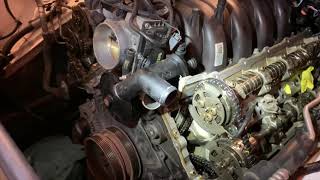
🎬 See this walkthrough for timing chain and guide repairs.Diagnostic Flowchart
Tap your situation to follow the diagnostic path that matches what you're seeing on this vehicle.
Symptoms You May Notice
- Solid or flashing Check Engine Light
- Rough or vibrating idle
- Engine hesitation or stumbling during acceleration
- Noticeable loss of power
- Rough engine startup
- Potential smell of unburned fuel from the exhaust
- Reduced fuel economy.
- Replacing the oxygen sensor on the corresponding bank. An O2 sensor will typically not cause a single-cylinder misfire code. A faulty O2 sensor would more likely cause a bank-wide fuel trim issue.
- Replacing the catalytic converter. A misfire can damage a catalytic converter, but a bad converter will not cause a P0302 code.
Most Likely Causes
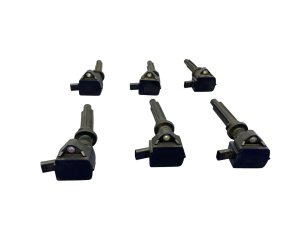
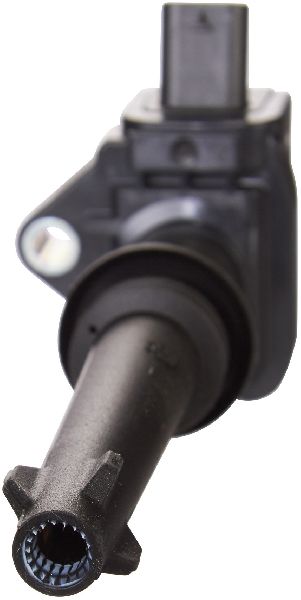
- Faulty Ignition Coil 🔴 High Probability → Shop Ignition Coil Ignition coils on the Jaguar 5.0L V8 are a very common failure item due to high heat in the engine bay and electrical stress. Oil leaks from aging valve cover gaskets can also seep into the spark plug wells, fouling the coil boot and causing it to short-circuit.
How to confirm: Swap the ignition coil from cylinder 2 with another cylinder (e.g., cylinder 4 on the same bank). Clear the codes and run the engine. If the code changes to P0304, the ignition coil is definitively faulty. This is the most common and effective first diagnostic step.
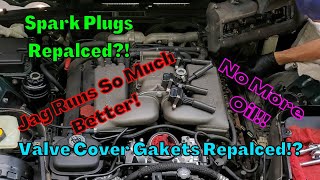
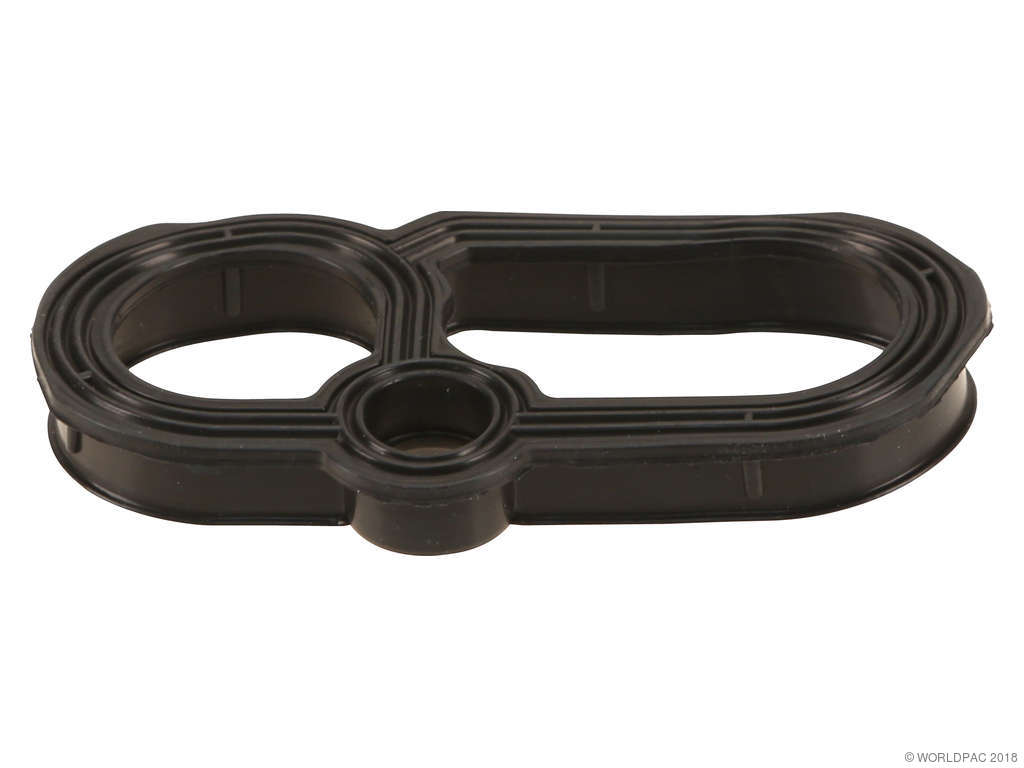
Typical fix: Replace the failed ignition coil. It is often recommended to replace the corresponding spark plug at the same time. If oil was present in the spark plug well, it's critical to also replace the valve cover gaskets 🎬 Watch: Step-by-step guide to replacing valve cover gaskets and plugs. and spark plug tube seals to prevent repeat failure.
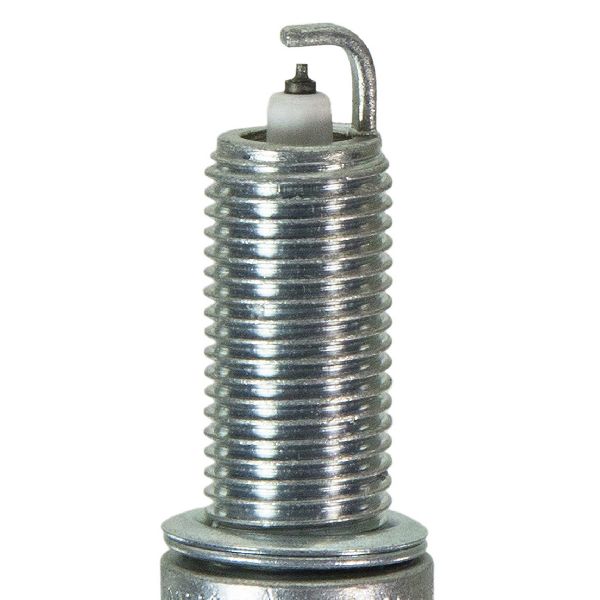
Est. part cost: $50-$115 - Worn or Fouled Spark Plug 🟡 Medium Probability → Shop Spark Plug Spark plugs are a standard maintenance item with a finite lifespan. If they are past their service interval or have been contaminated by oil from a leaking gasket or excessive carbon from a rich condition, they can fail to produce a strong enough spark.
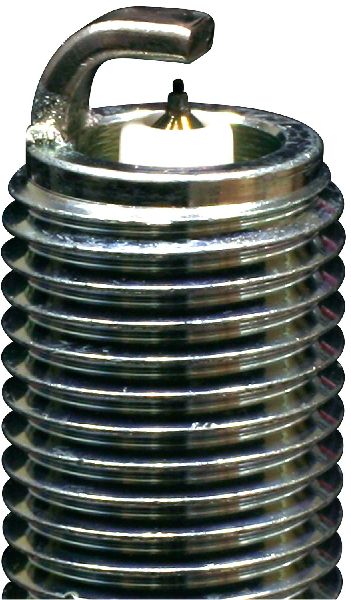
How to confirm: After confirming the ignition coil is good, remove the spark plug from cylinder 2. Inspect it for wear on the electrode, heavy carbon buildup, oil fouling, or a cracked porcelain insulator.
Typical fix: Replace the spark plug. It is best practice to replace all eight spark plugs at the same time to ensure consistent performance and avoid future misfires.
Est. part cost: $15-$30 per plug - Clogged or Faulty Fuel Injector ⚪ Low Probability → Shop Fuel Injector The 5.0L engine uses high-pressure direct injection (GDI), and the injectors can become clogged by fuel contaminants or carbon deposits over time. TSB SSM-63697 specifically notes that poor fuel quality can restrict injectors. In some cases, the entire fuel rail for one bank can fail, causing misfires on all four cylinders of that bank (e.g., P0302, P0304, P0306, P0308).
How to confirm: This is more difficult to diagnose. A professional can perform a fuel injector balance test or a cylinder power balance test using a diagnostic tool like Jaguar SDD. A DIY approach is to use a high-quality fuel system cleaner with Polyetheramine (PEA) to see if the misfire improves. A mechanic's stethoscope can be used to listen for the injector's 'clicking' sound to confirm it's actuating.
Typical fix: Replace the faulty fuel injector. This is a more labor-intensive job on a direct-injection engine and may require special tools and professional service.
Est. part cost: $100-$250 - Poor Fuel Quality ⚪ Low Probability Jaguar issued a TSB (SSM-63697) stating that poor fuel quality can cause misfires on this engine, potentially by restricting fuel injectors.
How to confirm: This is typically a diagnosis of exclusion after ignition and other fuel system components have been checked. If the misfire appeared immediately after a recent fill-up, this could be the cause.
Typical fix: Try a different brand of high-octane (Top Tier) fuel and add a quality fuel system cleaner. If the problem persists, other components are more likely at fault.
Est. part cost: $15-$30 for fuel additive
Rare But Worth Checking
- Vacuum Leak: A leak in the intake manifold gasket or a vacuum hose near the runner for cylinder 2 can lean out the air/fuel mixture and cause a misfire. A smoke test is the best way to find a leak. On the AJ133, hairline cracks in the plastic intake manifold have also been reported.
- Low Cylinder Compression: A mechanical engine issue, such as a worn piston ring, a poorly sealing valve, or a damaged cylinder head gasket can cause a loss of compression and a persistent misfire. A compression test is required to diagnose this.
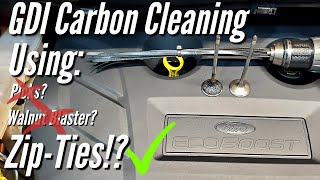
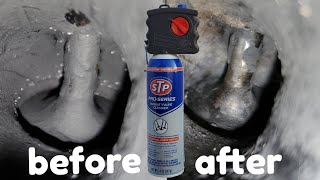
- Intake Valve Carbon Buildup: As a direct injection (GDI) engine, the AJ133 does not have fuel washing over the intake valves. This allows oil vapor from the PCV system and exhaust gases to bake onto the valves, forming hard carbon deposits. This buildup can restrict airflow into cylinder 2, causing cold-start misfires and a rough idle. The fix often requires manual cleaning, such as walnut blasting the intake ports. 🎬 Watch: How to perform a DIY GDI intake valve cleaning.
Diagnosis Steps
- Read the trouble codes with an OBD-II scanner to confirm P0302 is present and check for any other related codes.
- Identify the location of cylinder 2. On the Jaguar 5.0L V8, the cylinders are numbered with Bank 1 (cylinders 1, 3, 5, 7) on the passenger side (in North America) and Bank 2 (cylinders 2, 4, 6, 8) on the driver's side. Cylinder 2 is the front-most cylinder on the driver's side.
- Swap the ignition coil from cylinder 2 with the coil from another cylinder (e.g., cylinder 4 on the same bank). This is the most crucial diagnostic step.
- Clear the codes, start the engine, and let it run or take a short drive.
- Re-scan for codes. If the code has moved to P0304, the ignition coil is the problem and must be replaced.
- If the code remains P0302, the coil is likely good. Remove the spark plug from cylinder 2. Inspect it for wear, damage, or fouling from oil or carbon. Replace if necessary, but it's best practice to replace all 8 if they are old.
- While the coil and plug are out, inspect the spark plug well for oil. Oil presence indicates a leaking valve cover gasket and/or spark plug tube seal, which must be replaced to prevent future coil failures.
- If the coil and plug are good, inspect the wiring and connector for the ignition coil and fuel injector on cylinder 2 for any signs of damage, corrosion, or loose pins.
- Consider using a bottle of high-quality fuel injector cleaner containing PEA with a full tank of premium fuel to see if the misfire improves, as this may address a minor injector clog.
- If the misfire persists, the issue may be a faulty fuel injector, a vacuum leak (requiring a smoke test), or a mechanical engine problem (requiring a compression test).
Parts You'll Likely Need
- Ignition Coil
(OEM #C2Z18619 (interchangeable with AJ811378, LR010687))— This is the most common cause of a single-cylinder misfire on the Jaguar 5.0L V8 engine.
Trusted brands: Jaguar (OEM), Bosch, NGK, Delphi
OEM price range: $90-$115.
Aftermarket price range: $50-$80. - Spark Plug
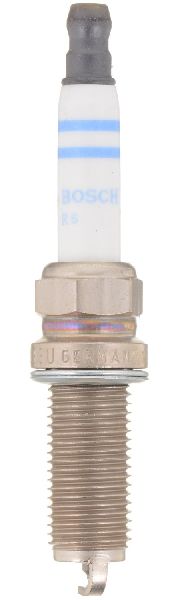
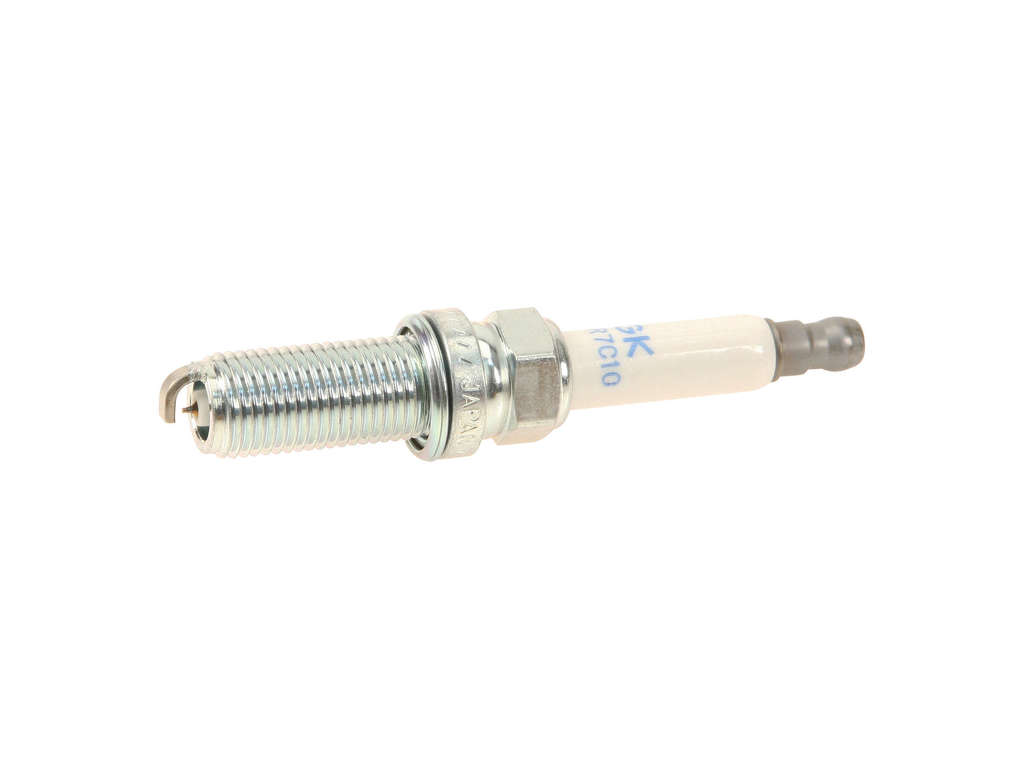
(OEM #ILKAR7C10)— As a routine maintenance item, a worn or fouled spark plug is the second most likely cause of a P0302.
Trusted brands: NGK
OEM price range: $20-$30
Aftermarket price range: $15-$25
Related Codes That Often Appear With This One
- P0300 — If the misfire is intermittent, severe, or begins to affect other cylinders, a P0300 (Random Misfire) code may appear alongside P0302.
- P0316 — This code indicates a misfire was detected within the first 1,000 engine revolutions at startup. It is often stored with specific cylinder misfire codes like P0302, as noted in Jaguar TSB JTB00533NAS1.
- P1315 — This is a Jaguar-specific code for 'Persistent Misfire'. It indicates the misfire is continuous and severe enough to potentially damage the catalytic converter, often causing a flashing Check Engine Light.
- P0304, P0306, P0308 — If multiple misfires are detected on the same bank (Bank 2), it could point to a systemic issue rather than an individual component. One documented case on a 5.0L V8 showed these codes appearing with P0087 (Fuel Rail Pressure Too Low), indicating a failed high-pressure fuel rail for that bank.
Technical Service Bulletins (TSBs) & Recalls
- SSM-63697: States that misfire codes, including P0302, may be stored in the PCM due to poor fuel quality, potentially restricting fuel injectors.
- JTB00533NAS1: Addresses engine misfires (P0300-P0308) accompanied by P0316 during a cold start, suggesting the cause may be a fuel injection calibration issue requiring a PCM software update.
Platform-Specific Known Issues
- TSB on Fuel Quality: Jaguar issued Technical Service Bulletin #SSM-63697 which states that customer symptoms may include an illuminated check engine lamp with misfire codes (P0301-P0308) stored, and that a potential cause is poor fuel quality restricting fuel injectors.
- TSB on Cold Start Misfire: TSB #JTB00533NAS1 addresses misfires (including P0302) that occur with P0316 on a cold start. The bulletin suggests the cause may be a fuel injection calibration issue that can be resolved with a PCM software update at a dealership.
- Leaking Valve Cover Gaskets: A very common issue where the valve cover gaskets and spark plug tube seals degrade, allowing engine oil to fill the spark plug wells. This oil soaks the ignition coil boot, causing it to short out and fail, directly leading to a misfire code like P0302.
- Intake Valve Carbon Buildup: As a direct-injection engine, the 5.0L V8 is susceptible to carbon accumulation on the intake valves, which can cause airflow issues and misfires, particularly at idle or on cold starts.
Mechanic-Grade Diagnostic Values
- High-Pressure Fuel System (Direct Injection) — expected: Initial start-up: ~1450 PSI. Idle: ~800 PSI. Under load/demand: up to 2800 PSI.. Failure: Significantly lower pressure than desired values shown on a scan tool, or a P0087 code, may indicate a failing high-pressure fuel pump.
- Fuel Injector Pulse Width (at idle) — expected: Approximately 1.21 to 1.24 milliseconds (ms) on a healthy bank.. Failure: A bank of cylinders showing a consistently lower pulse width (e.g., 1.14 to 1.18 ms) can indicate the PCM is attempting to correct for an issue on that bank, even if it's not the root cause.
- Engine Ground Voltage Drop (during cranking) — expected: Well under 0.5V (500mV) between the engine block and the negative battery terminal.. Failure: A reading higher than 0.5V indicates high resistance in the ground path, which can cause a variety of electrical issues, including weak spark.
Hidden / Shadow Codes Worth Checking
- Mode 6, Test ID $53 (example): Mode 6 data allows a scan tool to access raw test results from the PCM's self-diagnostics. For misfires, it can show a counter for each cylinder, revealing which one is misfiring even if the count is not yet high enough to set a P030x code and turn on the Check Engine Light. This is invaluable for diagnosing intermittent or subtle misfires. (see via A professional-grade scan tool with Mode 6 capability. The specific Test ID (TID) and Component ID (CID) for misfire data can vary by manufacturer.)
- P1315: This is a Jaguar-specific Diagnostic Trouble Code for 'Persistent Misfire'. It is set when a misfire is severe and continuous, posing an immediate threat to the catalytic converter. It will almost always be accompanied by a flashing Check Engine Light and a specific cylinder code like P0302. (see via Any standard OBD-II scanner.)
Scan Tool Commands That Help
- Jaguar SDD (Symptom Driven Diagnostics): Cylinder Power Balance Test — This function is used to isolate a weak cylinder when the cause is not an obvious ignition component. The tool sequentially disables the fuel injector to each cylinder and measures the drop in engine RPM. A cylinder that causes little or no RPM drop when disabled is not contributing its share of power. This is highly effective for pinpointing issues with fuel injectors or compression.
- Jaguar SDD (Symptom Driven Diagnostics): Module Reprogramming / Service Functions — When performing diagnostics or reprogramming modules with SDD, a stable, high-amperage (30A-50A) power supply is required, not just a battery charger. Failure to use a proper power supply can cause voltage to drop, leading to failed programming and potentially bricking a control module.
Wiring & Ground Locations
- Engine Control Module (ECM) — Located in the left rear of the engine compartment.. This is the central computer that monitors crankshaft speed and triggers the P0302 code. All ignition coil and fuel injector control signals originate here.
- Main Engine-to-Body Ground Strap — The primary ground strap is located on the left-hand side (driver's side in North America) between the inner wing and the engine/gearbox mount. It can be very difficult to access without removing the catalytic converter.. Poor grounding can cause weak spark, erratic sensor readings, and a host of hard-to-diagnose electrical issues that can lead to misfires. Many owners add a secondary, 'mirror-image' ground strap on the right-hand side for redundancy.
- G01BR — A main ground point located at the lower left front of the engine compartment.. This is a key grounding point for various engine bay components. Ensuring it is clean and tight is a crucial step in troubleshooting electrical faults.
Real Owner Repair Stories
- Jaguar Forums user 'Jahummer' (Jaguar 5.0L Supercharged (year not specified, but engine is relevant)) — Sudden valve train clatter on startup, rough running engine, 'Restricted Performance' message, and codes for misfires and cam/crank correlation.
❌ Tried (didn't work) The owner noted that the timing chain guides had already been replaced with the updated parts, which would normally be the primary suspect for these symptoms.
✅ What actually fixed it The root cause was a buildup of oil sludge in the cavities behind the hydraulic timing chain tensioners. This sludge restricted oil flow, preventing the tensioners from applying proper pressure on startup, which allowed the timing chain on the driver's side to jump a tooth. The fix required a full timing job and thoroughly cleaning the sludge from the tensioner oil passages.
"I Checked Everything" — The Actual Cause
- In cases involving the AJ133 engine, misfire codes (P030x) can persist even after ignition components are verified and a smoke test for vacuum leaks comes back clean. A high-value, non-obvious cause is related to the timing system. Even if the timing chain guides have been updated to the newer, more robust style, oil sludge can accumulate behind the hydraulic tensioners, starving them of oil pressure. This allows for chain slack on startup, causing the timing to jump and generating misfire codes. The technician might rule out timing issues if they see the updated guides, but the real problem is the hidden sludge blocking oil flow.
OEM Part Supersession History
Early 5.0L Timing Chain Guides (Pre-2015)→Updated Timing Chain Guides with Steel Inserts— The original guides were made of aluminum, which was softer than the steel piston of the hydraulic tensioner. The piston would wear a hole into the guide over time, causing a loss of tension and chain slack. The updated guides feature a hardened steel insert where the tensioner piston makes contact to prevent this wear.6.35mm Pitch Timing Chains and VVT Units→8.0mm Pitch Timing Chains and VVT Units— Jaguar appears to have transitioned service parts to a more robust 8.0mm chain pitch.
Heads up: This is not a direct swap. Upgrading from 6.35mm to 8.0mm chains requires also replacing the auxiliary timing gear and the fuel pump cam, as the sprocket is integrated. This significantly increases the cost and complexity of a timing service.Jaguar VVT Solenoid (C2P13996)→Range Rover Sport VVT Solenoid (e.g., from Dorman, Standard Motor Products)— The original Jaguar part has been reported as discontinued or difficult to source.
Heads up: The Range Rover part is a functional replacement, but the electrical connector is different. It requires cutting the original connector and splicing in a new pigtail, such as Standard Motor Products part number S2034.
Model Year Variations Within This Range
- 2010-~2014: These early AJ133 engines were fitted with aluminum timing chain guides that are prone to premature wear from the steel tensioner piston. While a 2013 or 2014 model is less likely to have failed than a 2010, any car within this range that has not had its timing components updated is at risk. A metallic rattle on cold start is the key warning sign.
Helpful Videos


Used OEM Parts in Stock
New Aftermarket Parts Available

The information in this article is provided for general reference and educational purposes only. Vehicle specifications, procedures, and part compatibility can vary by production date, trim level, and region. Always consult your vehicle's factory service manual and verify part numbers before purchasing or performing repairs. Safety-critical components such as airbags, seat belts, and braking systems should be installed by a qualified professional.
- Jaguar XK:
- 🧭 Diagnostic Flowchart
- 🎬 Helpful Videos
- 🛍️ Shop This Part
- What's Unique About the 2010-2014 Jaguar XK
- Symptoms You May Notice
- Most Likely Causes
- Rare But Worth Checking
- Diagnosis Steps
- Parts You'll Likely Need
- Related Codes That Often Appear With This One
- Technical Service Bulletins (TSBs) & Recalls
- Platform-Specific Known Issues
- Mechanic-Grade Diagnostic Values
- Hidden / Shadow Codes Worth Checking
- Scan Tool Commands That Help
- Wiring & Ground Locations
- Real Owner Repair Stories
- "I Checked Everything" — The Actual Cause
- OEM Part Supersession History
- Model Year Variations Within This Range
- 🎟️ Get 5% Off