

P0302 on 2020-2025 Kia Telluride: Cylinder 2 Misfire Causes and Fixes
On a 2020-2025 Telluride, P0302 is almost always a bad ignition coil on cylinder 2. Since cylinder 2 is on the easily accessible front bank of the engine, this is a simple DIY fix. Expect to pay around $75-$110 for an OEM ignition coil (part number 27300-3L100 or the superseded 27300-3F100).
- P0302 on a Telluride is a misfire on cylinder 2, which is conveniently located on the front of the engine near the radiator, making it very DIY-friendly.
- The most likely cause is a bad ignition coil. Diagnose this for free by swapping the coil from cylinder 2 with another cylinder (like #4) and seeing if the code follows.
- If the check engine light is flashing, pull over immediately to prevent unburnt fuel from destroying the expensive catalytic converter.
- For 2020 models, if the misfire only happens when the engine is cold, ask a dealer about TSB ENG228 for a software update before buying any parts.
What's Unique About the 2020-2025 Kia Telluride
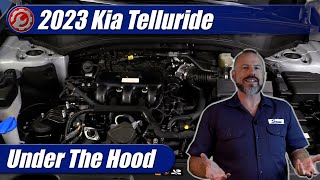
The key detail for a P0302 on the Telluride's 3.8L V6 is the location of cylinder 2. The engine is mounted transversely (sideways), and cylinder 2 is in the front bank, closest to the radiator. This makes accessing its ignition coil and spark plug a very simple job that does not require removing the intake manifold, unlike misfires on the rear bank (cylinders 1, 3, 5). This is also true for its direct platform mate, the Hyundai Palisade. Additionally, some early 2020 models may experience false cold-start misfires, which can be corrected by a dealer software update under TSB ENG228.
Symptoms You May Notice
- Check Engine Light is on or flashing
- Rough or choppy idle
- Engine hesitation or stumbling during acceleration
- Reduced engine power
- Poor fuel economy
- Unusual odor from the exhaust, like gasoline
- Engine stalling at stops
- Replacing rear bank ignition coils. Many V6 engines have cylinder #2 in the rear, but on the Telluride, it is in the front. Do not remove the intake manifold for a P0302.
- Replacing the fuel pump. A single-cylinder misfire is almost never caused by a fuel pump, which would affect all cylinders and likely trigger a P0300 (random misfire) code instead.
- Assuming aftermarket parts are equivalent. Some owners on forums report that using non-OEM ignition coils and plugs led to recurring misfires, which were only resolved by switching to genuine Kia/Hyundai parts.
Most Likely Causes
- Faulty Ignition Coil 🔴 High Probability → Shop Ignition Coil Ignition coils are a common wear item on most modern engines, including the Lambda II V6. The constant heat cycles and vibration in the engine bay eventually cause the internal windings to fail, leading to a weak or absent spark.
How to confirm: Swap the ignition coil from cylinder 2 with the coil from cylinder 4 (the middle cylinder on the front bank). Clear the codes and drive. If the code changes to P0304, the coil is faulty. This is the most common diagnostic step cited by owners and technicians.
Typical fix: Replace the faulty ignition coil. Since it's on the easily accessible front bank, this is a simple, single-part replacement that takes minutes with basic tools.
Est. part cost: $40-$110 - Worn or Fouled Spark Plug 🟡 Medium Probability → Shop Spark Plug Spark plugs have a finite service life, typically around 100,000 miles for this engine. However, issues like oil consumption (a noted problem on some 3.8L GDI engines) or poor fuel quality can cause them to foul or fail prematurely. A cracked porcelain insulator is also a possible failure mode. In other Kia models, NHTSA ODI #11438984 notes that oil on the spark plug can cause a P0302 misfire, leading to decreased fuel mileage and potential backfiring.
How to confirm: After confirming the ignition coil is good, remove the spark plug from cylinder 2 using a 5/8" (16mm) spark plug socket. Inspect it for a worn electrode, cracks in the porcelain, or heavy deposits of carbon or oil.
Typical fix: Replace the spark plug for cylinder 2. It is often recommended to replace all six spark plugs if the vehicle is near its service interval or if others show signs of wear.
Est. part cost: $12-$25 per plug - Clogged or Faulty Fuel Injector ⚪ Low Probability → Shop Fuel Injector The 3.8L engine uses Gasoline Direct Injection (GDI), where injectors are exposed to high pressure and in-cylinder combustion. This can lead to carbon buildup over many miles, though it's less common than ignition issues. A failure here is less likely to cause a single-cylinder misfire than a coil or plug.
How to confirm: If the coil and plug are good, the injector is the next suspect. A professional can perform a fuel injector balance test. A DIY check involves testing the injector's resistance with a multimeter; a reading outside of the 12.5-13.5 Ohms range suggests a failure. Swapping injectors is possible but requires significant labor, including removing the intake manifold.
Typical fix: Replace the fuel injector for cylinder 2. This is a more involved and costly job than a coil or plug.
Est. part cost: $80-$150
Rare But Worth Checking
- Incorrect ECM Misfire Logic (2020 Models): For 2020 Tellurides built between Jan 9, 2019, and May 19, 2020, the original ECM software can be overly sensitive and register false misfires during a cold start. This is addressed by Kia TSB ENG228. If your misfire only happens when the engine is cold, investigate this TSB with a dealer before replacing parts.
- Carbon Buildup on Intake Valves: As a GDI engine, the Telluride's 3.8L V6 does not have fuel washing over the intake valves. Over high mileage (typically 60k-100k+ miles), oil deposits from the PCV system can bake onto the valves, restricting airflow and causing misfires. This usually triggers multiple misfire codes (P0300) but can start with a single cylinder. The fix is a professional 'walnut blasting' cleaning service.
Diagnosis Steps
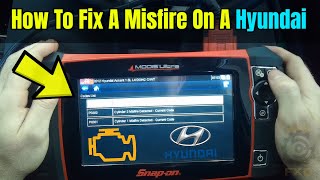
- Verify the code with an OBD-II scanner. Note if the Check Engine Light is solid or flashing.
- Locate cylinder 2. On the Telluride's 3.8L V6, this is the cylinder on the front bank (closest to the radiator) on the passenger side. The front bank cylinders are 2, 4, and 6, from passenger to driver side.
- Swap the ignition coil from cylinder 2 with the coil from cylinder 4 (the middle cylinder on the front bank).
- Clear the codes with the scanner and start the engine. Let it run or take a short test drive.
- Re-scan for codes. If the code has moved to P0304, the ignition coil you moved is bad and needs to be replaced.
- If the code remains P0302, the coil is likely good. Move the original coil back to cylinder 2.
- Swap the spark plug from cylinder 2 with the spark plug from cylinder 4. Clear codes and test again. If the code moves to P0304, the spark plug is the problem.
- If the code remains P0302 after both swaps, the issue is more complex. Suspect a faulty fuel injector, wiring issue, or a mechanical problem like low compression. At this point, professional diagnosis may be required.
Parts You'll Likely Need
- Ignition Coil
(OEM #27300-3L100, supersedes to 27300-3F100)— This is the most common failure part for a single-cylinder misfire on this engine. It is a wear-and-tear component that fails from heat and vibration.
Trusted brands: Kia/Hyundai (Genuine), Denso, NGK, Mando
OEM price range: $75-$110
Aftermarket price range: $40-$80 - Iridium Spark Plug
(OEM #18849-11070)— A worn or fouled spark plug is the second most likely cause of the misfire. It is a standard maintenance item.
Trusted brands: NGK (OEM Supplier), Denso
OEM price range: $17-$25
Aftermarket price range: $12-$20
Related Codes That Often Appear With This One
- P0304 — This code for cylinder 4 will appear after swapping a bad ignition coil from cylinder 2 to cylinder 4 during diagnosis, confirming the coil is the faulty part.
- P0300 — If the cause of the misfire, such as widespread carbon buildup or a vacuum leak, begins to affect other cylinders, a P0300 (Random/Multiple Misfire) code may appear alongside P0302.
Technical Service Bulletins (TSBs) & Recalls
- ENG228: 3.8L GDI Misfire DTC Judgment Logic Improvement - Provides an ECM software update for some 2020 Tellurides to correct false misfire detection during cold starts.
Platform-Specific Known Issues
- For 2020 models built between January 9, 2019, and May 19, 2020, Kia issued TSB ENG228 to update the ECM software. The original software was overly sensitive and could falsely detect misfires during a cold start, triggering codes like P0302 when no mechanical fault existed.
Mechanic-Grade Diagnostic Values
- Fuel Injector Resistance — expected: 12.5 - 13.5 Ohms. Failure: A reading significantly outside this range, or that differs by more than 1.0 Ohm from other injectors, points to a faulty internal coil.
- Ignition Coil Connector Voltage (Pin 1) — expected: 12V+ (Battery Voltage) with Key On, Engine Off. Failure: Low or no voltage indicates a problem with the power supply wiring or fuse, not the coil itself.
- Low-Pressure Fuel System — expected: 45 - 75 PSI. Failure: Pressure below this range indicates a problem with the in-tank fuel pump or filter, which can starve the high-pressure pump.
- High-Pressure Fuel Rail (GDI) — expected: Idle: 400-600 PSI; Under Load: 1500-2500+ PSI. Failure: Pressure that is significantly low at idle or does not increase with engine RPM points to a failing High-Pressure Fuel Pump (HPFP) or sensor.
- Injector Pulse Width (Live Data) — expected: 1.0 - 10.0 ms at idle (varies with temp/load). Failure: A value for cylinder 2 that is drastically different from the other cylinders can indicate a fueling problem or the PCM compensating for another issue.
Hidden / Shadow Codes Worth Checking
- Mode $06, Test ID $A3: Provides the raw misfire count for Cylinder 2 from the last drive cycle. This data is stored by the PCM even if the misfire threshold to trigger a Check Engine Light has not been met. (see via A professional scan tool or an advanced OBD-II app capable of reading Mode $06 test results. The Kia GDS system can also access this data.)
Scan Tool Commands That Help
- Kia GDS (Global Diagnostic System): Current Misfire Count Monitoring — Use during a cold start to identify which specific cylinder is responsible for a rough idle condition, as recommended by Kia for diagnosing issues that may not set a DTC.
- Professional Scan Tool: Cylinder Power Balance Test — Used to confirm a misfire on a specific cylinder. The tool deactivates the fuel injector or ignition coil for each cylinder one by one; a cylinder that is already misfiring will show little to no drop in engine RPM when deactivated.
Wiring & Ground Locations
- Engine Control Unit (ECU) — In the engine bay, located next to the air filter housing, ahead of the brake fluid reservoir on the driver's side.. This is the source of the trouble code and the control module for the ignition coil and fuel injector. Its location is needed for any advanced wiring diagnostics.
- Cylinder 2 Ignition Coil Connector — Plugged into the ignition coil on the front bank (near radiator), passenger side cylinder.. Testing for 12V+ power at Pin 1 of this connector can rule out a wiring/fuse issue before condemning the coil.
Real Owner Repair Stories
- CarComplaints.com user report (2020 Kia Telluride, 69,100 miles) — Check Engine Light on, excessive oil consumption (1 quart per 1000 miles).
❌ Tried (didn't work) Regular 5,000-mile oil changes and maintenance did not prevent the issue.
✅ What actually fixed it The mechanic found heavily carbon-fouled spark plugs and valves. The final repair involved replacing spark plugs, ignition coils, and performing a valve cleaning service for a total cost of $2,088.84. - NHTSA ODI #11570707 — An owner of a Kia Sorento reported that the vehicle began to hesitate, sputtered, and failed to accelerate, with a code reader retrieving DTC P0302.
- NHTSA ODI #11633097 — A Kia K5 owner reported that the car would shake regardless of speed while the check engine light flashed a P0302 cylinder 2 misfire code.
Documented NHTSA Reports
- NHTSA ODI #11725093: A report describes a vehicle that stalled while driving with codes P0300, P0304, P0302, P219D, and P0303, showing no pressure in cylinders 2 and 4.
- NHTSA ODI #11720416: An owner reported a recurring failure where a code reader retrieved DTCs P0017, P0301, P0302, P0303, and P0304.
OEM Part Supersession History
27300-3L100→27300-3F100— Part update/revision by the manufacturer.
Heads up: While this is the documented supersession, be aware that rear bank coils on the Telluride may use a different part number (e.g., 27310-3L000). Always verify the part number for the specific cylinder location you are servicing.
Model Year Variations Within This Range
- 2020 (built Jan 2019 - May 2020): The original ECM software was overly sensitive and could log false misfire codes (P030x) during cold starts. Kia TSB ENG228 provides a software update to correct this logic.
- 2024 (specific VINs): A recall was issued (NHTSA Campaign ID: 23V882000, Kia recall SC296) for improperly heat-treated valve springs that could break, leading to engine damage and misfires. While this often causes a P0300, it could begin as a single-cylinder misfire.
Diagnostic Flowchart
Other Known Issues on This Vehicle
Issues unrelated to this code that are worth knowing about as an owner of this generation:
- Spontaneously Cracking Windshields 🟠 Medium — Widespread complaint, particularly on 2020-2022 models. Can occur at any mileage without obvious impact. Subject of multiple class-action lawsuits. (Ref: Kia issued a 'goodwill' customer satisfaction campaign for some 2020 models but no formal recall.)
- Tow Hitch Wiring Harness Fire Risk 🔴 High — Affects 2020-2022 models equipped with the genuine Kia 4-pin tow hitch harness. Debris and moisture can short the module's circuit board, causing a fire even when parked and off. (Ref: NHTSA Recall 22V-626 / Kia Recall SC247.)
- High Beam Headlight Failure (2020 Models) 🟠 Medium — Affects 2020 models with halogen headlights. Heat from the bulb can damage an internal mechanism, causing the high beams to become inoperable. (Ref: NHTSA Recall 24V148 / Kia Recall SC299.)
- Rollaway Risk / Driveshaft Engagement Failure 🔴 High — Affects 2020-2024 models. The intermediate shaft and right front driveshaft may not engage properly, potentially allowing the vehicle to roll away when in Park if the parking brake is not used. (Ref: NHTSA Recall 24V-214 / Kia Recall SC303.)
- Excessive Oil Consumption 🟠 Medium — A developing concern for higher-mileage (60k+ miles) 3.8L GDI engines. Owners report needing to add oil between changes. Believed to be related to piston ring design and carbon buildup, can lead to fouled plugs and misfires. (Ref: Kia has TSB ENG222 which defines abnormal consumption, but no recall exists. Dealers often perform consumption tests.)
Used vs. New Parts: Buying Guide for This Vehicle
When a used part is the smart pick: For this specific repair, using used parts is not recommended for the primary components (coils, plugs, injectors). Used parts like the plastic engine cover or intake air ducting are acceptable if damaged during repair.
Donor-vehicle mileage cap: roughly under 50000 miles for the part to have meaningful remaining life.
What to inspect on the donor part:
- For an ignition coil, inspect the plastic housing for any cracks or signs of melting.
- Check the electrical connector pins for corrosion or damage.
- Ensure the rubber boot that seals against the spark plug is pliable and not brittle or torn.
OEM-only on this vehicle (don't cheap out):
- GDI Fuel Injector: Aftermarket GDI injectors can have inconsistent flow rates or spray patterns, leading to persistent performance issues. Given the high-pressure system, OEM is the safest choice.
- Ignition Coil: Forum members have reported that using non-OEM ignition coils can lead to recurring or new random misfire codes, suggesting potential quality or compatibility issues.
Aftermarket brands forum-validated for this vehicle:
- NGK (OEM supplier for spark plugs, also makes coils)
- Denso (OEM supplier for many ignition and fuel components)
- Mando (A major Korean OEM parts manufacturer)
Brands owners have reported issues with on this vehicle:
- Unbranded, low-cost ignition coils from online marketplaces have a high reported failure rate across many vehicle platforms and are best avoided.
Real Owner Stories
Aggregated from forums and TSBs cited above. Mileages and costs reflect what owners reported in those sources.
2022 Kia Telluride 3.8L V6 — 27500 miles
Symptoms: Owner experienced a cylinder misfire (P0303) and sought dealer diagnosis.
What fixed it: Dealer diagnosed as a faulty coil or plug; the story highlights that coils are covered under warranty while plugs are not.
Source hint: Reddit r/KiaTelluride thread titled 'Cylinder misfire #3 on my 2022 Telly'
2021 Kia Telluride 3.8L V6
Symptoms: P0304 (Cylinder 4 misfire) code present.
What fixed it: Replacement of the ignition coil after finding the coil boot had physically broken down at the spark plug.
Source hint: Reddit r/KiaTelluride thread titled 'Help : r/KiaTelluride'
2021 Kia Telluride 3.8L V6
Symptoms: Intermittent misfire that started as a single cylinder issue and evolved into a random misfire after using aftermarket parts.
What fixed it: The technician identified a cracked spark plug as the initial cause and emphasized using OEM parts to resolve the subsequent issues.
Source hint: ScannerDanner.com forum post '2021 Kia telluride - Intermittent Misfire Issue'
Related OBD-II Codes
Frequently Asked Questions
I have a 2020 Telluride and the Check Engine Light is on for P0302 during cold starts. Is there a software fix?
Is the ignition coil on my 2022 Telluride covered under warranty if it causes a P0302 code?
Where is cylinder 2 located on the 3.8L V6 engine?
Can I swap parts to diagnose P0302 on my Telluride without buying new components?
Could high oil consumption be causing my P0302 misfire code?
Is the P0302 issue common on the Hyundai Palisade as well?
Helpful Videos
We Have This Part in Stock

The information in this article is provided for general reference and educational purposes only. Vehicle specifications, procedures, and part compatibility can vary by production date, trim level, and region. Always consult your vehicle's factory service manual and verify part numbers before purchasing or performing repairs. Safety-critical components such as airbags, seat belts, and braking systems should be installed by a qualified professional.
- Kia Telluride:
- 🧭 Diagnostic Flowchart
- 🎬 Helpful Videos
- 🛍️ Shop This Part
- What's Unique About the 2020-2025 Kia Telluride
- Symptoms You May Notice
- Most Likely Causes
- Rare But Worth Checking
- Diagnosis Steps
- Parts You'll Likely Need
- Related Codes That Often Appear With This One
- Technical Service Bulletins (TSBs) & Recalls
- Platform-Specific Known Issues
- Mechanic-Grade Diagnostic Values
- Hidden / Shadow Codes Worth Checking
- Scan Tool Commands That Help
- Wiring & Ground Locations
- Real Owner Repair Stories
- Documented NHTSA Reports
- OEM Part Supersession History
- Model Year Variations Within This Range
- Other Known Issues on This Vehicle
- Used vs. New Parts: Buying Guide for This Vehicle
- Real Owner Stories
- 2022 Kia Telluride 3.8L V6 — 27500 miles
- 2021 Kia Telluride 3.8L V6
- 2021 Kia Telluride 3.8L V6
- Related OBD-II Codes
- Frequently Asked Questions
- 🎟️ Get 5% Off