

P0302 on 2013-2019 Land Rover Range Rover: Cylinder 2 Misfire Causes and Fixes
P0302 indicates a misfire in cylinder 2. On the Land Rover V6 and V8 engines, this is most often caused by a failed ignition coil or a worn spark plug. Replacing the coil and plug for cylinder 2 is the most common fix, with parts costing between $75 and $200. In some cases, it can be linked to more complex VVT or timing chain issues.
- P0302 is a misfire on cylinder 2, located at the front of the engine on the driver's side.
- The most likely cause is a bad ignition coil, followed by a worn spark plug.
- A simple diagnostic step is to swap the ignition coil from cylinder 2 with another cylinder to see if the misfire code follows the coil.
- Do not drive for an extended period with a flashing check engine light, as this can destroy your catalytic converter.
- If other camshaft-related codes are present, the issue may be more complex than a simple ignition part failure and could involve the VVT system.
What's Unique About the 2013-2019 Land Rover RANGE ROVER

On the AJ126 V6 and AJ133 V8 engines used in this generation of Range Rover, the primary causes for a single-cylinder misfire like P0302 are typically standard ignition system failures (coil, plug). However, a notable vehicle-specific issue, documented in TSB #SSM74161, is the appearance of this misfire code alongside camshaft timing codes (e.g., P054A-00, P0014-71). This points to potential issues with the variable valve timing (VVT) system, which can be a more complex diagnosis. Furthermore, these engines are known for premature timing chain guide and tensioner wear, which can cause timing to jump, leading to misfires. Carbon buildup on direct injection intake valves is another platform-specific concern that can restrict airflow and cause misfires.
Diagnostic Flowchart

Tap your situation to follow the diagnostic path that matches what you're seeing on this vehicle.
Generation note: The 2013-2019 model years cover the L405 generation of the Range Rover. The primary gasoline engines offered were the 3.0L Supercharged V6 (AJ126) and the 5.0L Supercharged V8 (AJ133). The causes and diagnostic steps for P0302 are similar for both engines as they share the same core architecture.
Symptoms You May Notice
- Check engine light is on or flashing
- Rough or shaky idle
- Engine hesitation or stumbling during acceleration
- Noticeable loss of power
- Increased fuel consumption
- Fuel smell from the exhaust
- Rattling noise from the front of the engine on cold starts (if related to timing chain issues)
- Replacing the oxygen sensor. An O2 sensor might report a problem due to the misfire, but it is almost never the root cause of a single-cylinder misfire code.
- Assuming a bad catalytic converter. The converter can be damaged by a misfire, but it does not cause the misfire itself.
Most Likely Causes

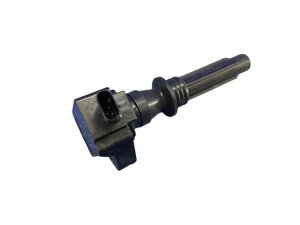
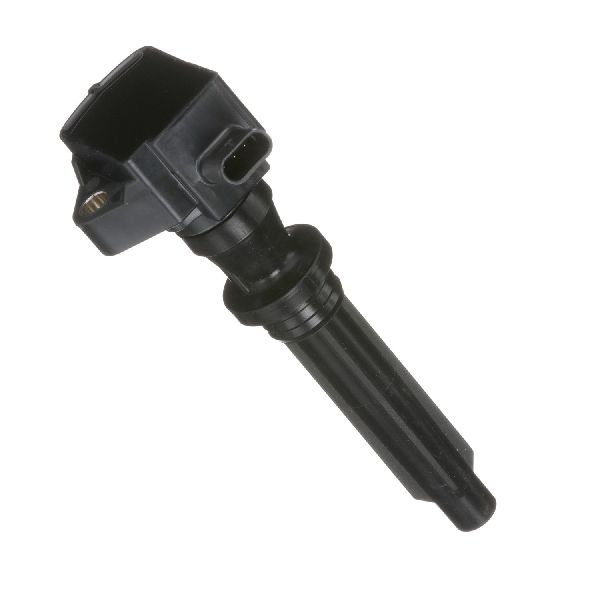
- Failed Ignition Coil 🔴 High Probability → Shop Ignition Coil Coil-on-plug ignition systems are common failure points on many modern engines due to constant exposure to high heat and vibration. They are a very frequent cause of single-cylinder misfires on the AJ126/AJ133 engines.
How to confirm: Swap the ignition coil from cylinder 2 with another cylinder (e.g., cylinder 4, also on the driver's side). Clear the codes and drive the vehicle. If the code changes to P0304, the ignition coil is faulty.
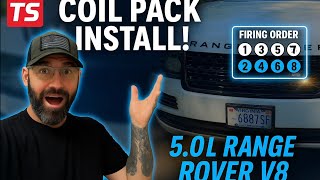
Typical fix: Replace the failed ignition coil. It is often recommended to replace the corresponding spark plug at the same time. Use a quality OEM or aftermarket brand like Bosch or Delphi. 🎬 Watch: Step-by-step guide to replacing spark plugs and coils.
Est. part cost: $50-$120 - Worn or Fouled Spark Plug 🔴 High Probability → Shop Spark Plug Spark plugs are a regular maintenance item with a service life of 30,000 to 100,000 miles. High-performance supercharged engines can lead to faster wear. Oil leaks from valve cover gaskets can also foul the plugs, causing a misfire.
How to confirm: After confirming the coil is good, remove the spark plug from cylinder 2. Inspect it for wear (worn electrode), carbon fouling (sooty black deposit), or oil contamination (glossy black finish). Compare it to a new plug.
Typical fix: Replace the spark plug in cylinder 2. It is best practice to replace all spark plugs as a set if they are near the end of their service life. NGK and Bosch are common OEM suppliers.
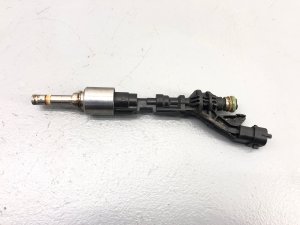
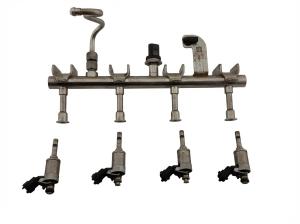
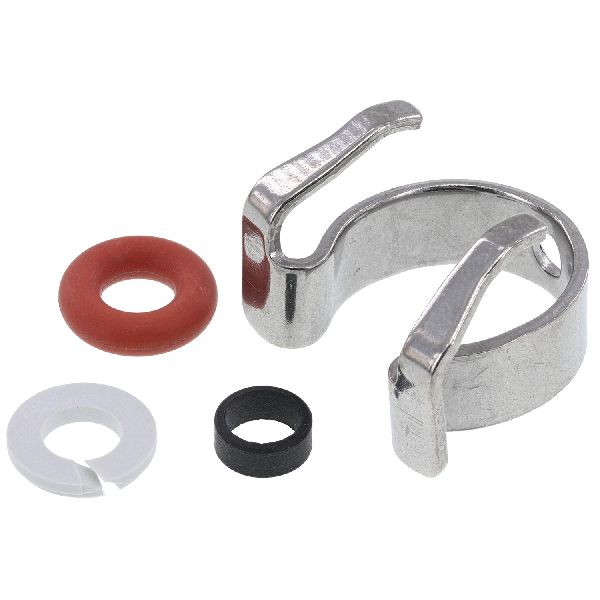
Est. part cost: $15-$40 per plug - Clogged or Faulty Fuel Injector 🟡 Medium Probability → Shop Fuel Injector Direct injection fuel injectors operate under high pressure and can be susceptible to clogging from fuel contaminants or carbon buildup over time. Some owners have reported fixing persistent misfires by replacing a single injector.
How to confirm: This is more complex. A professional can perform a fuel injector balance test. A DIY method involves listening to the injector with a mechanic's stethoscope for a consistent clicking sound. Swapping injectors between cylinders is also possible but is a more involved job than coils or plugs.
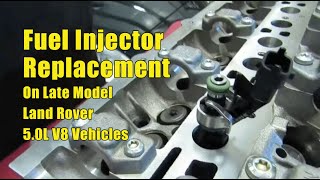
Typical fix: First, try a high-quality fuel system cleaner like BG44K. If that fails, replace the faulty fuel injector. This is a more labor-intensive job than ignition components. 🎬 See how to access and replace these fuel injectors.
Est. part cost: $100-$250
Rare But Worth Checking
- Low Engine Compression: While rare for a single-cylinder misfire, it's a serious mechanical issue. This could be due to a worn piston ring, a bad valve, a leaking head gasket, or even a melted piston from a stuck-open injector. A compression test is needed to confirm this after ignition and fuel issues are ruled out.
- Variable Valve Timing (VVT) System Fault: As mentioned in TSB #SSM74161, misfires can be associated with camshaft timing codes. The TSB specifically identifies faulty VVT solenoids (Part No. LR073778) manufactured before August 23, 2018, as a potential cause. This requires more advanced diagnostics. 🎬 Watch: Detailed teardown and cleaning of the VVT system.
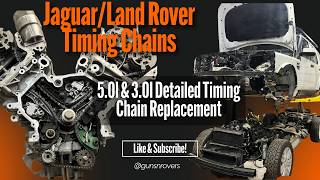
- Timing Chain and Tensioner Failure: The AJ133 and AJ126 engines are known for issues with their timing chain guides and tensioners. Early versions used aluminum guides that could be worn down by the steel tensioner, causing chain slack, which can lead to the chain skipping a tooth and causing misfires and correlation codes. A rattling noise on startup is a key symptom. This is a major engine-out repair.
- Carbon Buildup on Intake Valves: As these are direct injection engines, fuel is sprayed directly into the cylinder, meaning it doesn't wash over the intake valves. Over time, oil vapor from the PCV system can bake onto the valves, restricting airflow and causing a misfire. This typically requires professional cleaning like walnut blasting.
Diagnosis Steps
- Read the trouble codes with an OBD-II scanner and note any other codes present. Freeze frame data can show conditions when the misfire occurred.
- Identify cylinder 2. On the V6 and V8 engines, it is the front-most cylinder on the driver's side (left bank).
- Swap the ignition coil from cylinder 2 with cylinder 4 (the next one back on the same bank). Clear the codes and test drive. If the code changes to P0304, the coil is bad.
- If the code remains P0302, swap the spark plug from cylinder 2 with cylinder 4. Clear codes and test. If the code changes to P0304, the spark plug is bad.
- If the misfire is still on cylinder 2, inspect the fuel injector wiring and listen for a steady clicking sound from the injector using a mechanic's stethoscope.
- If ignition and fuel injector pulse seem okay, inspect for vacuum leaks near the intake manifold for cylinder 2.
- Perform a compression test on cylinder 2 and compare it to a healthy cylinder to rule out mechanical engine problems.
- If timing-related codes are present, investigate the VVT system and timing components. This may require professional diagnosis.
Parts You'll Likely Need
- Ignition Coil
(OEM #LR035548, LR084889)— This is the most frequent cause of a single-cylinder misfire on these engines.
Trusted brands: Bosch, Delphi, Duralast
OEM price range: $100-$150
Aftermarket price range: $50-$120 - Spark Plug
(OEM #LR005483 (replaces LR001394))— A worn or fouled spark plug is the second most common cause and is a standard maintenance item.
Trusted brands: NGK, Bosch, Champion
OEM price range: $25-$40
Aftermarket price range: $15-$30 - Fuel Injector
(OEM #LR105439)— Less common than ignition parts, but a known failure point that can cause a persistent misfire on a single cylinder.
Trusted brands: Bosch
OEM price range: $200-$300
Aftermarket price range: $100-$200
Related Codes That Often Appear With This One
- P0300 — If the misfire is intermittent or affects other cylinders, a P0300 (Random/Multiple Cylinder Misfire) code may be stored alongside P0302.
- P0304, P0306, P0308 — Misfire codes for other cylinders on the same bank (Bank 2, driver's side) could indicate a systemic issue like a vacuum leak affecting that bank or a failing catalytic converter on that side.
- P054A, P0014, P000B, P0341 — As per TSB #SSM74161, these camshaft timing codes for Bank 1 can appear with P0302, suggesting a VVT system issue. Note: The TSB mentions cylinders 2 and 3, which are on different banks, but the association with VVT faults is the key takeaway.
- P0016, P0017 — These are crankshaft-camshaft position correlation codes. If they appear with a misfire code, it strongly suggests a stretched or skipped timing chain.
Technical Service Bulletins (TSBs) & Recalls
- SSM74161: Mentions that DTCs P0302-00 and P0303-00 can be stored with several camshaft timing-related DTCs, indicating a potential VVT issue from a faulty solenoid.
Platform-Specific Known Issues

- TSB #SSM74161 notes that P0302 and P0303 may be stored along with various camshaft position timing codes (P054A-00, P0014-71, P000B-00, P0341-00) in the PCM, sometimes without any noticeable driveability issues. The cause is identified as faulty VVT solenoids (Part No. LR073778) made before 08/23/2018.
- The AJ133/AJ126 engines are known for premature timing chain guide wear, especially on pre-2015 models with aluminum guides. This can cause c
Mechanic-Grade Diagnostic Values
- High-Pressure Fuel Rail Pressure (at idle, engine warm) — expected: 500-600 PSI. Failure: Significantly lower pressure can indicate a failing High-Pressure Fuel Pump (HPFP).
- High-Pressure Fuel Rail Pressure (under load) — expected: 1900-2200 PSI. Failure: Inability to reach or maintain pressure above 2000 PSI under load suggests a weak HPFP.
- Low-Pressure Fuel System Pressure (engine warm) — expected: ~79 PSI. Failure: Pressure dropping below 65 PSI can indicate a weak in-tank fuel pump.
- Ignition Coil Primary Winding Resistance — expected: 0.49 - 0.57 Ohms. Failure: A reading outside this range indicates a faulty coil.
- Ignition Coil Secondary Winding Resistance — expected: 9.5 - 11.1 kOhms. Failure: A reading outside this range indicates a faulty coil.
Scan Tool Commands That Help
- JLR Pathfinder / SDD: Misfire Counter Live Data — To confirm which cylinder is actively misfiring in real-time. This is crucial for verifying the issue after swapping components like ignition coils or injectors.
- JLR Pathfinder: ECU Diagnostics > Powertrain control module (PCM) — Used to read manufacturer-specific DTCs and to initiate software updates or module replacement procedures.
- JLR Pathfinder / SDD: Fuel System Depressurize — This is a mandatory safety function to be run before opening the high-pressure fuel system for repairs like replacing a fuel injector or high-pressure fuel pump. It disables the pumps and allows the engine to run until pressure is bled off.
Wiring & Ground Locations
- Main Engine Bay Grounds — Located on the front wheel arches on both the driver and passenger sides, near the front of the engine. Look for a 13mm nut on a stud with multiple ground wires attached.. Poor engine grounds can cause a host of erratic electrical issues, including weak spark or incorrect sensor readings, which can lead to misfires. These are common corrosion points.
- Battery Main Ground — In the trunk, under the spare tire. The main negative cable from the battery grounds to two studs on the body.. Corrosion at this primary ground point can cause system-wide low voltage, affecting the performance of the entire ignition and fuel system.
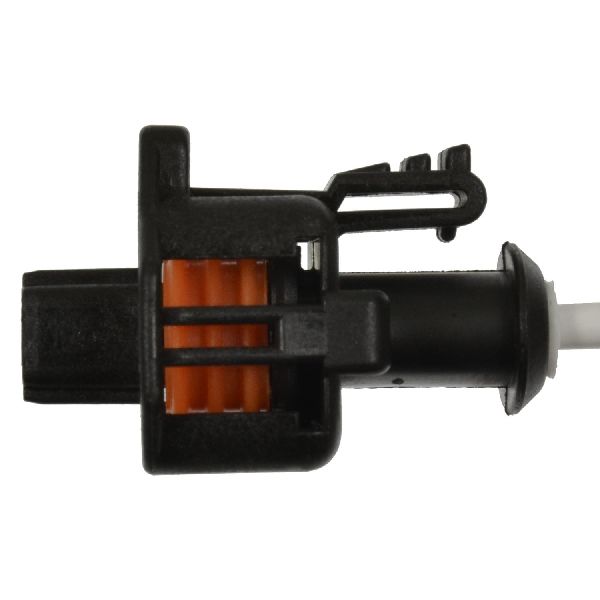
- Cylinder 2 Injector Connector — On the fuel rail, connected to the front-most fuel injector on the driver's side (Bank 2). Access requires removing the engine cover.. This connector provides the signal to fire the injector. A loose or corroded connection will prevent fuel delivery to cylinder 2, causing a misfire.
- PCM Connector C1E116A — One of the main connectors on the Powertrain Control Module (ECM). The specific pin for the cylinder 2 injector control signal is documented in the vehicle's wiring diagram.. Advanced diagnosis may require checking for a signal directly at the PCM pin to rule out a wiring break between the PCM and the injector.
Real Owner Repair Stories
- Land Rover Forums user 'jpmiller' (Land Rover Discovery II (older model, but demonstrates a valid diagnostic path)) — Occasional P0302 code, especially after the vehicle sits for a week. Engine starts and runs fine otherwise.
❌ Tried (didn't work) Replaced spark plugs, Replaced ignition wires, Replaced coil pack, Replaced intake gaskets
✅ What actually fixed it The user performed a chemical block test and found combustion gases in the cooling system, confirming a leaking head gasket was the root cause. The final fix was replacing the head gaskets. - Reddit user in r/LandRover (2018 Range Rover Sport 5.0L Supercharged) — Overheating, white smoke from exhaust, and misfire codes stored for cylinders 2 and 6.
❌ Tried (didn't work) Pressure testing (showed a slow leak), Visual inspection for external leaks
✅ What actually fixed it A borescope inspection revealed coolant intrusion into cylinders 2 and 6, confirming a blown head gasket. The cylinder wall in #6 was also scored, requiring a full engine replacement. This highlights how a misfire code can be a symptom of a severe mechanical failure.
"I Checked Everything" — The Actual Cause
- While not specific to P0302, there are documented cases on the diesel variants where plastic intake manifolds develop cracks that only open under boost pressure. A smoke test at atmospheric pressure may not reveal the leak. The symptom is often a 'Restricted Performance' warning under heavy acceleration. While the V6/V8 gasoline engines have different intake designs, a hairline crack in a plastic component that only opens under specific temperature or pressure conditions remains a possibility if all other causes are eliminated.
OEM Part Supersession History
LR079542→LR105439— Standard part revision by the manufacturer.
Heads up: LR105439 is the current OEM part number for the fuel injector. It also replaces previous numbers LR011964, LR019568, LR037088, and LR069897.
Model Year Variations Within This Range
- 2010 - approx. 2014: Early AJ133/AJ126 engines were fitted with timing chain guides made of a softer aluminum material. The steel tensioner plunger could wear a groove into the guide over time, leading to loss of chain tension, chain rattle on startup, and potentially skipped timing, which can cause misfires.
- Approx. 2015 - 2019: Land Rover introduced revised timing chain guides with a hardened steel cap where the tensioner makes contact. This revision significantly reduces the likelihood of premature guide wear, though failures can still occur due to other factors like oil sludge restricting the tensioner.
Helpful Videos
Used OEM Parts in Stock
New Aftermarket Parts Available


The information in this article is provided for general reference and educational purposes only. Vehicle specifications, procedures, and part compatibility can vary by production date, trim level, and region. Always consult your vehicle's factory service manual and verify part numbers before purchasing or performing repairs. Safety-critical components such as airbags, seat belts, and braking systems should be installed by a qualified professional.
- Land Rover RANGE ROVER:
- 🧭 Diagnostic Flowchart
- 🎬 Helpful Videos
- 🛍️ Shop This Part
- What's Unique About the 2013-2019 Land Rover RANGE ROVER
- Symptoms You May Notice
- Most Likely Causes
- Rare But Worth Checking
- Diagnosis Steps
- Parts You'll Likely Need
- Related Codes That Often Appear With This One
- Technical Service Bulletins (TSBs) & Recalls
- Platform-Specific Known Issues
- Mechanic-Grade Diagnostic Values
- Scan Tool Commands That Help
- Wiring & Ground Locations
- Real Owner Repair Stories
- "I Checked Everything" — The Actual Cause
- OEM Part Supersession History
- Model Year Variations Within This Range
- 🎟️ Get 5% Off