

P0302 on 2012-2019 Land Rover Range Rover Evoque: Cylinder 2 Misfire Causes and Fixes
On a 2012-2019 Range Rover Evoque, code P0302 almost always points to a failed ignition coil or a worn-out spark plug on cylinder 2. It is critical to get the correct part for your specific engine, as the early Ford-derived 'Si4' and later JLR 'Ingenium' engines use different parts. A new ignition coil costs between $40 and $120 and is a straightforward DIY replacement.
- P0302 indicates a misfire in cylinder 2, which requires prompt attention to prevent catalytic converter damage.
- The most probable cause is a bad ignition coil, followed by a worn spark plug. Both are relatively inexpensive and simple to replace for a DIYer.
- Use the 'swap test' to quickly diagnose a faulty ignition coil before spending money on parts.
- The 2012-2019 Evoque used two different 2.0L engines. Verify which engine your vehicle has before ordering parts like ignition coils or injectors.
- Don't be misled by other codes, especially for O2 sensors. Land Rover TSBs confirm that the misfire is often the primary fault that causes secondary codes to appear.
What's Unique About the 2012-2019 Land Rover RANGE ROVER EVOQUE
The 2012-2019 Range Rover Evoque spans two generations with two different 2.0L turbocharged petrol engines. Early models (approx. 2012-2017) use a Ford-derived 'Si4' engine, which is a variant of the Ford 2.0L EcoBoost. Later models (approx. 2018-2019) use Jaguar Land Rover's own 'Ingenium' engine. While the common causes for a P0302 misfire are the same (coils, plugs), the specific parts are not interchangeable. For example, the Si4 engine often uses ignition coil part number LR084889, while the Ingenium engine uses LR091616. It is crucial to identify your engine via VIN before purchasing parts. Land Rover has also issued Technical Service Bulletins (TSBs) that link this misfire code to other issues, like lean conditions, indicating the misfire is often the root cause of other codes.
Diagnostic Flowchart
Tap your situation to follow the diagnostic path that matches what you're seeing on this vehicle.
Generation note: This range covers the first generation Evoque (L538, 2012-2018) and the first year of the second generation (L551, 2019). The L538 primarily used a Ford-derived 2.0L Si4 petrol engine. The L551, introduced for the 2019 model year, uses the JLR 2.0L Ingenium engine. Ignition and fuel parts are specific to each engine type and must be verified by VIN.
Symptoms You May Notice
- Check Engine Light is on or flashing
- Rough or shaky idle
- Engine hesitation or stumbling during acceleration
- Noticeable loss of power
- Reduced fuel economy
- Engine may be difficult to start
- Smell of unburnt fuel from the exhaust
- Replacing oxygen (O2) sensors. A misfire will cause poor combustion, sending unburnt fuel and oxygen into the exhaust. This can trigger lean or rich codes (like P2096/P2097), making the O2 sensor appear faulty when it is only reporting the effects of the misfire. TSB LTB00902NAS2 specifically mentions this scenario, advising technicians to investigate misfire codes first. 🎬 Watch: How to diagnose an Evoque misfire without overspending.
Most Likely Causes
- Faulty Ignition Coil 🔴 High Probability → Shop Ignition Coil Coil-on-plug systems are common failure points on many modern turbocharged engines due to high heat and electrical stress. The plastic housings can crack over time, and the internal windings can fail.
How to confirm: Swap the ignition coil from cylinder 2 with another cylinder (e.g., cylinder 3). Clear the codes and run the engine. If the code changes to P0303, the coil is bad. Cylinder 2 is the second cylinder from the passenger side (timing belt side) of the engine.
Typical fix: Replace the faulty ignition coil. It is often recommended to replace all four if they are original and high-mileage, as the others are likely near the end of their service life.
Est. part cost: $40-$120 per coil - Worn or Fouled Spark Plug 🔴 High Probability → Shop Spark Plug Turbocharged, direct-injection engines like the Si4 and Ingenium are harder on spark plugs, leading to a shorter service life. Oil leaks from the valve cover gasket can also seep into the spark plug tubes and foul the plugs.
How to confirm: After confirming the coil is good, remove the spark plug from cylinder 2. Inspect it for wear on the electrode, carbon buildup, oil fouling, or a cracked ceramic insulator. Compare it to a plug from a working cylinder.
Typical fix: Replace the spark plug in cylinder 2. It is best practice to replace all four spark plugs at the same time for even performance and to prevent future misfires.
Est. part cost: $15-$35 per plug - Clogged or Faulty Fuel Injector 🟡 Medium Probability → Shop Fuel Injector
How to confirm: If the spark plug and coil are good, the injector is the next likely cause. A professional can perform a fuel injector balance test. A DIYer can listen for a consistent clicking sound from the injector with a mechanic's stethoscope or a long screwdriver; a silent or weak-sounding injector is suspect. You can also swap injectors between cylinders to see if the misfire code follows.
Typical fix: Replace the faulty fuel injector. This is a more involved job than plugs or coils and may require special tools.
Est. part cost: $70-$200 per injector - Vacuum Leak ⚪ Low Probability
How to confirm: A vacuum leak allows unmetered air into the engine, leaning out the air/fuel mixture and causing misfires. A mechanic can use a smoke machine to find the source of the leak, often a cracked hose (like the PCV hose) or a bad intake manifold gasket.
Typical fix: Replace the leaking hose or gasket.
Est. part cost: $10-$150 depending on the part
Rare But Worth Checking
- Low Engine Compression: This indicates a more serious internal engine problem, such as a worn piston ring, a bad valve, or a leaking head gasket. A compression test is needed to confirm this. One forum user with a P0302 on a Land Rover discovered a sticking valve was the ultimate cause.
- Powertrain Control Module (PCM) Issue: → Shop Engine Control Module (ECM) In rare cases, a software glitch or hardware failure in the PCM can incorrectly report a misfire. TSB SSM74161Attachme suggests that software updates can sometimes resolve unexplained misfire codes. TSB LTB00799NAS1 also notes that an OBD calibration error can cause misfire codes and may require a software update.
- Carbon Buildup on Intake Valves: Direct injection engines, like those in the Evoque, can suffer from carbon buildup on the intake valves because fuel is no longer sprayed over them, removing their cleaning effect. This can disrupt airflow into the cylinder and cause misfires, especially on cold starts. This typically requires professional cleaning, such as walnut blasting.
Diagnosis Steps
- Read the code with an OBD-II scanner and note any other codes present. A single P0302 strongly suggests a problem isolated to cylinder 2. 🎬 Watch: A detailed guide to diagnosing a cylinder 2 misfire.
- Identify cylinder 2. On the transverse 2.0L engine, it is the second cylinder from the timing belt side (passenger side in the US).
- Swap the ignition coil from cylinder 2 with cylinder 3. Clear the codes and drive the vehicle. If the code changes to P0303, the ignition coil is faulty and needs replacement.
- If the code remains P0302, inspect the spark plug from cylinder 2. Look for wear, damage, or fouling from oil or carbon. Replace if necessary. It's best to replace all four plugs if they are near their service interval.
- If the coil and plug are good, listen to the fuel injector on cylinder 2 with a stethoscope or long screwdriver. It should have a steady, rhythmic clicking. Compare its sound to the other injectors.
- Check for vacuum leaks using a smoke machine, paying close attention to the intake manifold gaskets and PCV hoses.
- If the cause is still not found, perform an engine compression test to check for mechanical issues within cylinder 2, such as worn rings or a bad valve.
- Consult a professional if the issue persists, as it may be related to the wiring harness or require a PCM software update as mentioned in several TSBs.
Parts You'll Likely Need
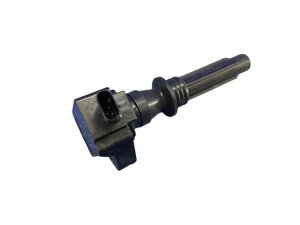
- Ignition Coil
(OEM #LR084889 (also replaces LR030637) for 2.0L Si4 engines; LR091616 for 2.0L Ingenium engines.)— This is the most common failure part for a single-cylinder misfire code.
Trusted brands: Bosch, Delphi, NGK, Standard Motor Products (SMP)
OEM price range: $80-$120
Aftermarket price range: $40-$80 - Spark Plug
(OEM #LR123892 (replaces LR025605) for 2.0L Si4 engines; LR178881 (replaces LR091617) for 2.0L Ingenium engines.)— Spark plugs are a routine maintenance item and the second most likely cause of a misfire. They should be replaced as a set.
Trusted brands: NGK, Bosch, Denso
OEM price range: $25-$40
Aftermarket price range: $15-$25
Related Codes That Often Appear With This One
- P0300 — If the misfire is intermittent or affects other cylinders, a P0300 (Random/Multiple Cylinder Misfire) code may be stored alongside P0302.
- P0301, P0303, P0304 — These codes indicate misfires in other cylinders. Seeing them together with P0302 points to a common problem like a vacuum leak, fuel pressure issue, or contaminated fuel.
- P2096 / P2097 — As noted in TSB LTB00902NAS2, these codes for a lean fuel trim system can be triggered by the misfire itself, as unburnt oxygen from the misfiring cylinder passes over the O2 sensor.
- P1315 — This is a manufacturer-specific code for 'Persistent Misfire'. TSB LTB01101NAS4 confirms it can be stored along with P0302.
Technical Service Bulletins (TSBs) & Recalls
- SSM74161Attachme: Mentions P0302 can be stored with various camshaft position and timing codes.
- LTB00902NAS2: Links P0302 and other misfire codes as a likely cause for lean condition codes P2096/P2097.
- LTB01101NAS4: Connects P0302 with rough idle, poor starting, and other misfire codes.
- LTB00799NAS1: Suggests an OBD calibration error can cause misfire codes, fixable with a software update.
Platform-Specific Known Issues
- Land Rover has issued multiple TSBs acknowledging misfire codes on the Evoque. TSB LTB01101NAS4, for example, directly links codes P0300, P0301, P0302, P0303, P0304, and/or P1315 to symptoms like rough running and poor starting.
- TSB LTB00902NAS2 highlights that when lean codes P2096-00 or P2097-00 are stored, it is likely that a misfire code like P0302 is also present and is the root cause. The bulletin advises diagnosing the misfire first before replacing any fuel system or exhaust components.
- TSB SSM74161Attachme indicates that P0302 can sometimes be stored along with
Mechanic-Grade Diagnostic Values
- High-Pressure Fuel System (GDI) — expected: 2,000 to 2,800 PSI (138 to 193 bar). Failure: Pressure that is significantly below this range under load can indicate a failing high-pressure fuel pump (HPFP).
- Fuel Injector Resistance — expected: Approximately 14.5 ± 0.7 ohms at 20°C (68°F).. Failure: A reading that is significantly higher (open circuit) or lower (short circuit) than the specification indicates a failed injector coil.
- Ignition Coil Primary/Secondary Resistance — expected: Primary: ~0.5 ohms. Secondary: ~9.5–11.1 kilohms.. Failure: A reading outside of these ranges suggests an internal failure in the coil's windings.
Hidden / Shadow Codes Worth Checking
- Mode $06 Misfire Counters: Most advanced OBD-II scanners can access Mode $06 data, which contains non-continuous monitor test results. This includes misfire counts for each individual cylinder over the current and previous 10 driving cycles. A technician can see if cylinder 2 has a high count relative to others, even if the misfire hasn't been frequent enough to set a P0302 code yet. (see via Use an advanced OBD-II scan tool that supports Mode $06 data display. The data is typically presented as Test IDs (TID) and Component IDs (CID).)
Scan Tool Commands That Help
- JLR SDD / Pathfinder: Symptom Driven Diagnostics & Live Data — The official dealer software (SDD for pre-2017, Pathfinder for 2017+) allows technicians to view manufacturer-specific live data streams, including detailed misfire analysis far beyond generic OBD-II. The software guides the technician through a 'Symptom Driven' process, suggesting tests based on the stored codes.
- JLR SDD / Pathfinder: Power Balance / Component Activation — These professional tools typically include bidirectional controls to selectively disable the fuel injector or ignition coil for a specific cylinder while the engine is running. If disabling cylinder 2 causes no change in engine RPM or smoothness, it confirms that cylinder is not contributing power, pinpointing the location of the misfire.
Wiring & Ground Locations
- G1D130A — Left front of the engine compartment.. This is a primary engine ground point. A poor connection here can cause erratic behavior from the PCM, sensors, ignition coils, and fuel injectors, potentially leading to misfire codes.
- G1D132A — Right front of the engine compartment.. Another critical engine ground point. Ensuring this connection is clean and tight is a key step in diagnosing any electrical fault, including a persistent misfire.
- G1D108 — Near the battery.. This ground serves the battery junction box and is fundamental to the entire vehicle's electrical system, including the Engine Control Module (ECM).
Real Owner Repair Stories
- Land Rover Forums user 'jpmiller' (Land Rover Discovery II (demonstrates a possible cause applicable to other Land Rovers)) — P0302 code would appear occasionally, specifically after the vehicle sat for a week. The engine would start and run fine with good power.
❌ Tried (didn't work) New 7mm Magnacor wires, New Champion spark plugs, New upper and lower intake gaskets, New coil pack
✅ What actually fixed it A chemical test revealed combustion gases in the cooling system, indicating a leaking head gasket. The misfire on startup was likely caused by a small amount of coolant seeping into cylinder 2 while the engine was off. - Australian Land Rover Owners forum user 'LoveB' (Land Rover Defender (Puma engine)) — P0302 code, car running very poorly.
❌ Tried (didn't work) Initial dealer diagnosis was inconclusive.
✅ What actually fixed it The dealer eventually found that fuel injector #4 was stuck open, and injectors #2 and #3 were also leaking. The fix was to replace the faulty injectors under a goodwill claim. This shows how a severe injector fault can cause a specific cylinder misfire code.
OEM Part Supersession History
LR025605→LR123892— Standard part evolution and supplier updates for the 2.0L Si4 engine.
Heads up: LR123892 is the correct current replacement for LR025605 and LR109396 on applicable models. Using the older part numbers may result in receiving old stock.
Model Year Variations Within This Range
- 2012-2017: These models primarily use the Ford-derived 2.0L Si4 engine. Diagnostic software used by dealers is typically SDD (Symptom Driven Diagnostics).
- 2018-2019: These models use the JLR-developed 2.0L Ingenium engine. Ignition and fuel parts are not interchangeable with the earlier Si4 engine. The dealer diagnostic software for these models is Pathfinder.
Helpful Videos


Used OEM Parts in Stock
New Aftermarket Parts Available


The information in this article is provided for general reference and educational purposes only. Vehicle specifications, procedures, and part compatibility can vary by production date, trim level, and region. Always consult your vehicle's factory service manual and verify part numbers before purchasing or performing repairs. Safety-critical components such as airbags, seat belts, and braking systems should be installed by a qualified professional.
- Land Rover RANGE ROVER EVOQUE:
- 🧭 Diagnostic Flowchart
- 🎬 Helpful Videos
- 🛍️ Shop This Part
- What's Unique About the 2012-2019 Land Rover RANGE ROVER EVOQUE
- Symptoms You May Notice
- Most Likely Causes
- Rare But Worth Checking
- Diagnosis Steps
- Parts You'll Likely Need
- Related Codes That Often Appear With This One
- Technical Service Bulletins (TSBs) & Recalls
- Platform-Specific Known Issues
- Mechanic-Grade Diagnostic Values
- Hidden / Shadow Codes Worth Checking
- Scan Tool Commands That Help
- Wiring & Ground Locations
- Real Owner Repair Stories
- OEM Part Supersession History
- Model Year Variations Within This Range
- 🎟️ Get 5% Off