

P0302 on 2011-2015 Lexus RX HYBRID: Cylinder 2 Misfire Causes and Fixes
A P0302 code on a 2011-2015 Lexus RX Hybrid indicates a misfire in cylinder #2. The most common culprits are a failed ignition coil or a worn spark plug. Swapping the coil from cylinder #2 with another is the fastest way to diagnose the issue. In some cases, a cold-start misfire may be due to a known software issue requiring an ECM update per a Lexus TSB.
- P0302 on your Lexus RX Hybrid means cylinder #2 is misfiring.
- The most likely cause is a bad ignition coil, followed by a worn spark plug.
- A simple diagnostic test is to swap the ignition coil from cylinder #2 (front, passenger side) with another cylinder and see if the code follows the coil.
- If the misfire only occurs on cold starts, a dealer ECM software update may be required per TSB L-SB-0045-12 Rev.
What's Unique About the 2011-2015 Lexus RX HYBRID
The 2011-2015 Lexus RX 450h uses a 2GR-FXE 3.5L V6 engine in a hybrid setup. While the fundamental causes of a misfire are the same as any gasoline engine, Lexus issued a Technical Service Bulletin (L-SB-0045-12 Rev) for some 2010-2017 models that could exhibit a P0302 code along with rough running, particularly after a cold start. The TSB indicates that this specific condition may be caused by the engine control software logic and the fix is to reprogram the ECM with an updated calibration file. This is a unique, platform-specific issue to consider if the misfire only occurs on cold starts.
Diagnostic Flowchart
Tap your situation to follow the diagnostic path that matches what you're seeing on this vehicle.
Symptoms You May Notice
- Check Engine Light is on or flashing
- Rough or shaky idle
- Engine hesitation or stumbling during acceleration
- Noticeable loss of power
- Reduced fuel economy
- Rough running on initial start-up, especially after a cold soak
- Vehicle may enter 'limp mode'
- Replacing only the spark plug without testing the ignition coil.
- Assuming the issue is 'bad gas' for a single-cylinder misfire. Fuel quality issues typically cause random misfires on multiple cylinders (P0300).
Most Likely Causes
- Failed Ignition Coil 🔴 High Probability → Shop Ignition Coil Ignition coils are wear-and-tear components that handle high voltage. Heat cycles in the engine bay eventually cause the internal windings to fail. This is a very common failure point on most modern engines, including the 2GR-FXE, and is the most frequent cause of a single-cylinder misfire.
How to confirm: Swap the ignition coil from cylinder #2 with another easily accessible cylinder (like #4 or #6). Clear the codes and run the engine. If the code changes to P0304 or P0306, the ignition coil is faulty. This is the definitive DIY diagnostic step.
Typical fix: Replace the faulty ignition coil. 🎬 See this step-by-step guide on replacing a Lexus ignition coil. It is often recommended to replace all three front or rear coils at the same time for preventative maintenance, though only the failed one is necessary.
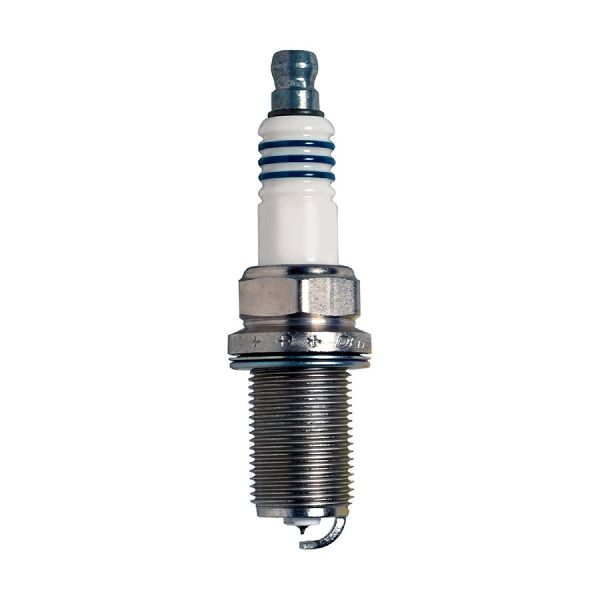
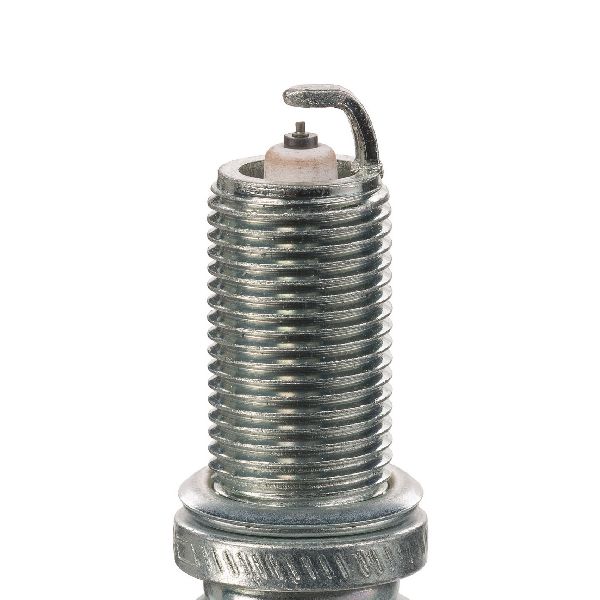
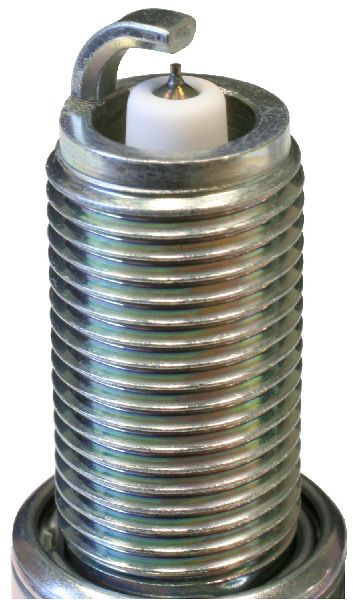
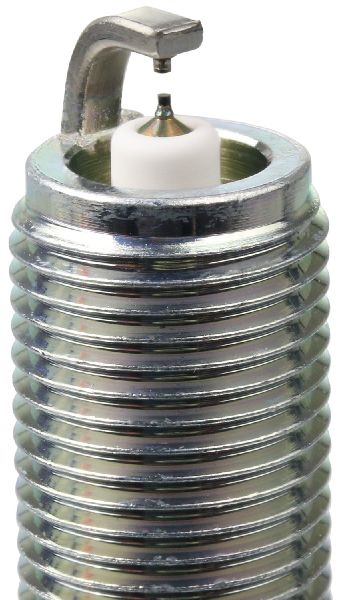
Est. part cost: $50-$100 per coil - Worn or Fouled Spark Plug 🔴 High Probability → Shop Spark Plug Lexus specifies long-life iridium-tipped spark plugs with a service interval of 120,000 miles. While durable, they eventually wear out. As the electrodes wear, the gap increases, requiring more voltage to create a spark, which can lead to a misfire.
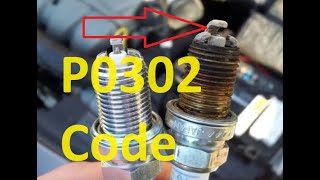
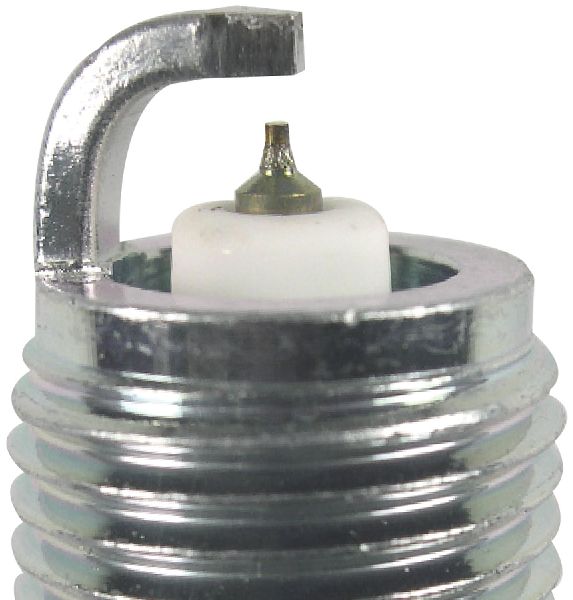
How to confirm: Remove the spark plug from cylinder #2 and inspect it for wear, carbon fouling, oil, or damage to the porcelain insulator. A worn plug will have a rounded center electrode. Compare it to a new plug to see the difference.
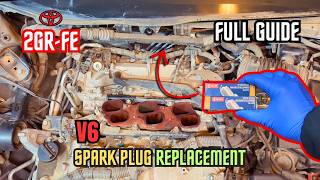
Typical fix: Replace the spark plug. It is best practice to replace all six spark plugs at the same time to ensure consistent performance and avoid future misfires on other cylinders. 🎬 Watch: The ultimate guide to replacing V6 Lexus spark plugs.
Est. part cost: $15-$25 per plug - Clogged or Faulty Fuel Injector 🟡 Medium Probability → Shop Fuel Injector Fuel injectors can become clogged with deposits over time, leading to an improper spray pattern or insufficient fuel delivery to the cylinder. While less common than ignition issues, it is a known failure point, especially on higher-mileage vehicles.
How to confirm: After ruling out the coil and spark plug, the injector is the next suspect. A professional can perform a fuel injector balance test. A DIY method involves using a multimeter to check the injector's resistance; an open circuit indicates a failed injector. Swapping injectors between cylinders is possible but labor-intensive.
Typical fix: Replace the faulty fuel injector. On the 2GR-FXE, cylinder #2 is on the front bank, making the injector accessible without removing the intake manifold, which simplifies the repair compared to the rear bank injectors.
Est. part cost: $70-$200 per injector
Rare But Worth Checking
- Vacuum Leak: A vacuum leak from a cracked hose or a bad intake manifold gasket near the runner for cylinder #2 could lean out the air/fuel mixture and cause a misfire. This would typically be accompanied by other codes (like a P0171 or P0174) or a consistently rough idle.
- Low Cylinder Compression: Internal engine issues like a burnt valve, worn piston rings, or a failed head gasket can cause a loss of compression, leading to a persistent misfire that doesn't respond to ignition or fuel system repairs. This is a worst-case scenario and should be confirmed with a mechanical compression test.
- Loose or Damaged Wiring: A loose connector or damaged wire leading to the ignition coil or fuel injector for cylinder #2 can cause an intermittent or persistent misfire. One owner on ClubLexus reported their P0302 was ultimately caused by a loose wire.
Diagnosis Steps
- Read the code using an OBD-II scanner to confirm P0302 is present.
- Note if the Check Engine Light is steady or flashing. A flashing light indicates a severe misfire that could damage the catalytic converter.
- Locate cylinder #2. On the 2GR-FXE engine in the transverse-mounted RX 450h, the cylinders against the firewall are Bank 1: 1, 3, 5 (passenger to driver). The cylinders at the front of the vehicle are Bank 2: 2, 4, 6 (passenger to driver). Cylinder #2 is the front-most cylinder on the passenger side, making it easily accessible.
- Swap the ignition coil from cylinder #2 with the coil from cylinder #4. This requires a 10mm socket to remove the coil bolt. Clear the codes and drive the vehicle.
- Re-scan for codes. If the code is now P0304, the ignition coil is the faulty part and needs to be replaced.
- If the code remains P0302, swap the spark plug from cylinder #2 with cylinder #4. This requires a 14mm thin-wall magnetic spark plug socket. Clear codes and drive.
- Re-scan for codes. If the code is now P0304, the spark plug is the issue.
- If the code remains P0302 after swapping the coil and plug, inspect the wiring and connector for the ignition coil and fuel injector on cylinder #2. If no damage is found, the issue is likely with the fuel injector or a mechanical engine problem. Further diagnosis by a professional may be required.
Parts You'll Likely Need
- Ignition Coil
(OEM #90919-A2007)— This is the most common failure point for a single-cylinder misfire. It is a high-wear item responsible for generating the spark.
Trusted brands: Denso (OEM Supplier, P/N 673-1310), NGK
OEM price range: $90-$130
Aftermarket price range: $40-$80 - Spark Plug
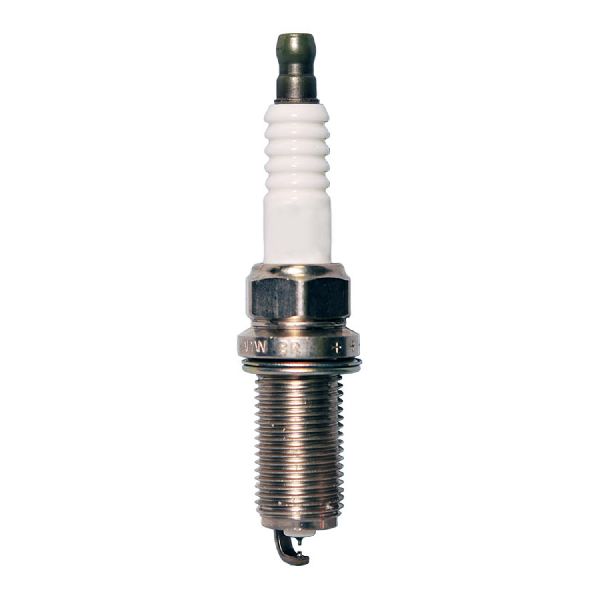
(OEM #90919-01247 (Denso FK20HR11))— A worn or fouled spark plug is the second most likely cause. They are a routine maintenance item with a 120,000-mile replacement interval.
Trusted brands: Denso (OEM), NGK
OEM price range: $15-$25
Aftermarket price range: $10-$18
Related Codes That Often Appear With This One
- P0300 — If the misfire is intermittent or begins to affect other cylinders, a P0300 (Random/Multiple Cylinder Misfire) code may appear alongside P0302.
- P0301, P0303, P0304, P0305, P0306 — If there is a systemic issue like low fuel pressure or a large vacuum leak, you may see misfire codes for other cylinders as well.
- P1305 — This code, for 'Ignition Coil 2 Primary/Secondary Circuit Malfunction', can sometimes appear with P0302, pointing more directly toward a problem with the ignition coil's electrical circuit or the coil itself.
Technical Service Bulletins (TSBs) & Recalls
- L-SB-0045-12 Rev: Addresses potential for MIL 'ON' with DTCs P0300-P0306 and/or rough running on initial start-up after a cold soak. The fix involves an ECM software update. This applies to some 2010-2017 RX 450h vehicles.
Platform-Specific Known Issues
- Lexus issued Technical Service Bulletin L-SB-0045-12 Rev for 2010-2017 RX 450h models that may exhibit a MIL 'ON' with P030x codes and experience rough running on initial start-up after a cold soak. The official repair is to reprogram the Engine Control Module (ECM) with an updated software calibration. This should be considered if the misfire only happens when the engine is cold.
Mechanic-Grade Diagnostic Values
- Fuel Injector Resistance — expected: 11.6 to 12.4 Ω at 20°C (68°F). Failure: A reading outside this range indicates a faulty injector.
- Fuel Pressure — expected: 304 to 343 kPa (44 to 50 psi). Failure: Pressure below this range can cause lean conditions and misfires.
- Mode $06 Misfire Count — expected: A counter that tracks misfires per cylinder.. Failure: A high number of misfires logged for cylinder #2, even without a persistent CEL, confirms the issue is isolated to that cylinder. This data is often more accurate than live data lists, especially under load.
Hidden / Shadow Codes Worth Checking
- Mode $06, Test ID $A2-$A7: This is not a shadow code, but a diagnostic mode that provides raw test data from the ECM's continuous monitors. For misfires, it shows specific misfire counts per cylinder for the current and last 10 driving cycles (Test IDs $A2 through $A7 correspond to cylinders 1-6). This can reveal intermittent misfires that haven't yet met the threshold to set a P0302 code. (see via A professional scan tool like Toyota's Techstream or an advanced generic scanner that can access Mode $06 data.)
Scan Tool Commands That Help
- Toyota Techstream: Active Test: Control the Fuel Injector — This allows a technician to command the fuel injector for cylinder #2 to operate, while listening for the injector's clicking sound with a stethoscope. This can help confirm if the injector is mechanically functioning or stuck.
- Toyota Techstream: Active Test: Check the Cylinder Compression — This function cranks the engine and measures the speed variation of each cylinder to provide a relative compression reading without needing a mechanical gauge. It's a quick way to check for major mechanical issues. Note: A known bug requires cranking within 1 second of pressing 'Start' for accurate results on some models.
- Toyota Techstream: Monitor > Misfire — This screen provides a more accurate snapshot of misfire counts (both current 'rate' and historical 'EWMA') than the standard Data List, which can be unreliable under load. It's the preferred method for diagnosing intermittent misfires that occur while driving.
Wiring & Ground Locations
- Engine Harness Ground (Front Head) — On the side of the front cylinder head (Bank 2), underneath the throttle body area.. Cylinder #2 is on the front bank. A poor ground connection at this point can cause erratic behavior for sensors, ignition coils, and injectors on this bank, leading to misfires.
- Engine Harness Ground (Valve Cover) — Some 2GR-FE harnesses have a sensor ground bundle that attaches to the front valve cover.. A loose or corroded ground here can introduce electrical noise and cause false sensor readings or weak ignition spark, potentially triggering a misfire code.
- ECM Connector E5 (Pin 26) — At the Engine Control Module. Pin 26 of the E5 connector is the IGF (Ignition Confirmation) signal for cylinder #2.. If the coil is good but the ECM doesn't receive a clean confirmation signal on this pin, it may incorrectly flag a misfire. This points to a wiring issue between the coil and ECM.
OEM Part Supersession History
90919-A2007→90919-A2013— This is a common part number update from Lexus/Toyota for ignition coils. The new part is a direct replacement for the old one.
Heads up: The original part number 90919-A2007 was also superseded by 90919-02251, 90919-A2002, and 90919-A2004 before the latest number 90919-A2013 was issued. All are interchangeable for this application.
Helpful Videos
We Have This Part in Stock

The information in this article is provided for general reference and educational purposes only. Vehicle specifications, procedures, and part compatibility can vary by production date, trim level, and region. Always consult your vehicle's factory service manual and verify part numbers before purchasing or performing repairs. Safety-critical components such as airbags, seat belts, and braking systems should be installed by a qualified professional.
- Lexus RX HYBRID:
- 🧭 Diagnostic Flowchart
- 🎬 Helpful Videos
- 🛍️ Shop This Part
- What's Unique About the 2011-2015 Lexus RX HYBRID
- Symptoms You May Notice
- Most Likely Causes
- Rare But Worth Checking
- Diagnosis Steps
- Parts You'll Likely Need
- Related Codes That Often Appear With This One
- Technical Service Bulletins (TSBs) & Recalls
- Platform-Specific Known Issues
- Mechanic-Grade Diagnostic Values
- Hidden / Shadow Codes Worth Checking
- Scan Tool Commands That Help
- Wiring & Ground Locations
- OEM Part Supersession History
- 🎟️ Get 5% Off