

P0302 on 2015-2019 Lincoln MKC 2.0T: Cylinder 2 Misfire Causes & Fixes
P0302 means cylinder 2 is misfiring. On the 2.0T EcoBoost, this is most often a bad ignition coil or spark plug, a simple DIY fix. However, it can also be a symptom of a serious engine defect causing coolant to leak into the cylinder, which requires professional diagnosis and likely engine replacement.
- P0302 indicates a misfire in cylinder 2. Start diagnosis by swapping the ignition coil and then the spark plug from cylinder 2 with another cylinder.
- For this specific 2.0T engine, immediately check your coolant level. If it's dropping with no visible leaks, stop diagnostics and have the vehicle professionally inspected for the known coolant intrusion defect (TSB 19-2346).
- Do not drive if the check engine light is flashing, as this can cause rapid and expensive damage to the catalytic converter.
- When replacing ignition coils or spark plugs, it's best practice to replace them as a full set of four to ensure balanced performance and prevent future misfires.
What's Unique About the 2015-2019 Lincoln MKC

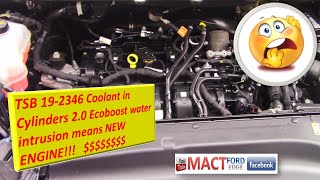
For the 2.0L EcoBoost engine in the Lincoln MKC, a P0302 code must be treated with extra caution. While common ignition failures are the usual cause, this engine has a well-documented design flaw in the engine block. A series of Technical Service Bulletins (TSBs), including TSB 19-2346 and its successor TSB 22-2229, address a defect where the 'open-deck' engine block design allows coolant to leak directly into the cylinders, causing misfires. This issue most commonly affects cylinders 2 and 3. This transforms a simple misfire code into a potential indicator of catastrophic engine failure requiring a full long block replacement.
🎬 Watch: A breakdown of the major 2.0L EcoBoost design flaw.Symptoms You May Notice

- Rough or shaky idle
- Hesitation or stumbling during acceleration
- Noticeable loss of engine power
- Flashing or solid Check Engine Light
- Decreased fuel economy
- Sweet smell from the exhaust
- Excessive white smoke from the exhaust, especially on a cold start (if coolant intrusion is the cause)
- Unexplained coolant loss from the reservoir with no visible external leaks
- Replacing only the spark plug when the ignition coil was the actual cause (or vice-versa).
- Repeatedly replacing ignition components (plugs, coils) when the underlying issue is a clogged fuel injector or, more critically, coolant intrusion.
- Assuming a bad head gasket is the cause of coolant intrusion, when the actual failure is the engine block itself, as specified in TSB 19-2346.
Most Likely Causes

- Failed Ignition Coil 🔴 High Probability → Shop Ignition Coil Coil-on-plug systems are common failure points on many modern engines. Heat and vibration cause the internal windings to fail over time, leading to a weak or non-existent spark.
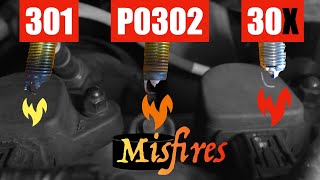
How to confirm: Swap the ignition coil from cylinder 2 with another cylinder (e.g., cylinder 3). Clear the codes with a scanner. Drive the vehicle to see if the check engine light returns. If the code changes to P0303, the ignition coil is confirmed to be faulty. 🎬 See how to diagnose a P0302 code using the swap method.
Typical fix: Replace the failed ignition coil. It is considered best practice to replace all four coils and spark plugs at the same time for preventative maintenance and long-term reliability.
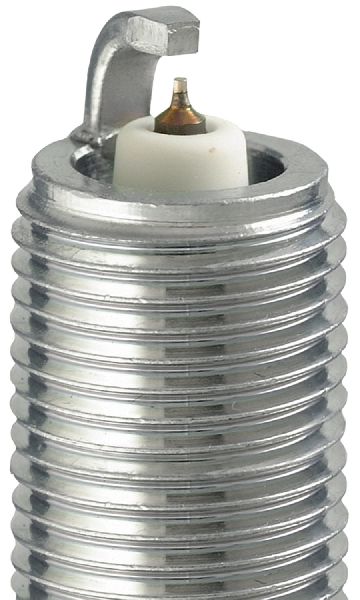
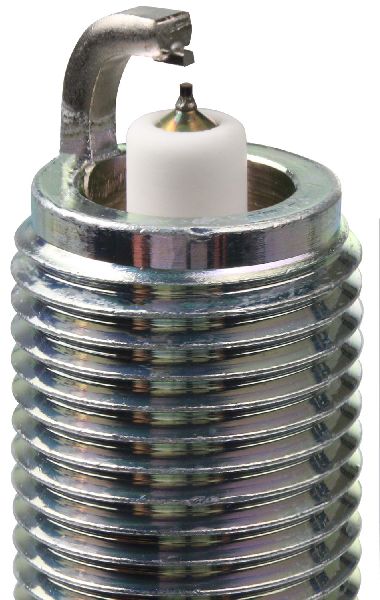
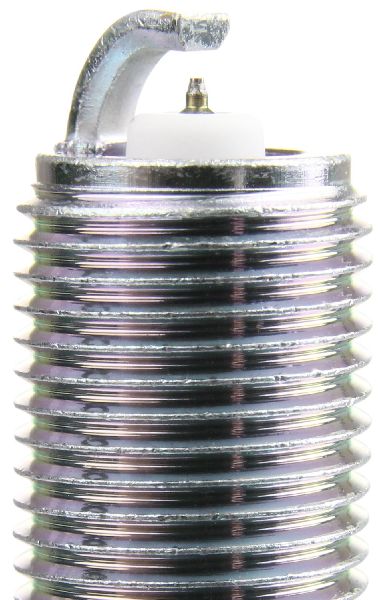
Est. part cost: $30-$60 per coil - Worn or Fouled Spark Plug 🔴 High Probability → Shop Spark Plug Spark plugs are a regular maintenance item. Turbocharged, direct-injection engines like the 2.0T are harder on plugs due to higher cylinder pressures and temperatures. A worn plug can have an incorrect gap or be unable to produce a strong enough spark, causing a misfire under load.
How to confirm: After confirming the coil is good, remove the spark plug from cylinder 2. Inspect it for wear on the electrode, carbon fouling, oil contamination, or a white/green crusty deposit, which indicates coolant contamination.
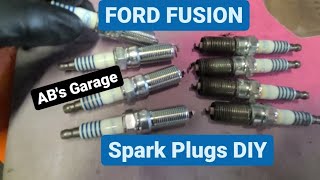
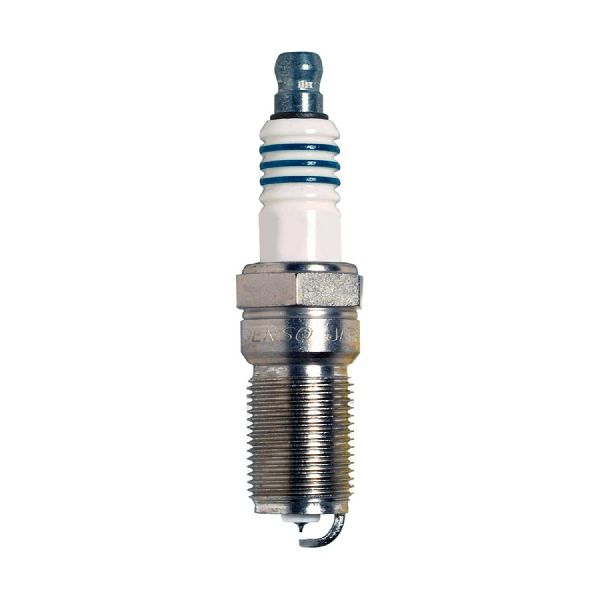
Typical fix: Replace the spark plug. It is highly recommended to replace all four spark plugs as a set with the correct OEM-specified Iridium plugs (Motorcraft SP-537 or equivalent) 🎬 Watch: Step-by-step guide to replacing spark plugs on this engine. to ensure proper performance.
Est. part cost: $10-$25 per plug - Clogged or Faulty Fuel Injector 🟡 Medium Probability → Shop Fuel Injector Gasoline Direct Injection (GDI) fuel injectors operate under extremely high pressure and are located inside the combustion chamber. This makes them susceptible to clogging from carbon deposits or fuel contaminants, which can disrupt the fuel spray pattern and cause a misfire.
How to confirm: This is more difficult to diagnose for a DIYer. A professional can perform a fuel injector balance test to measure flow rates. A simpler method is to listen to the injector with a mechanic's stethoscope; it should have a consistent, sharp clicking sound, similar to the other injectors.
Typical fix: Replace the faulty fuel injector. Due to the labor involved in accessing the injectors, it's often recommended to have all injectors professionally cleaned or replaced as a set.
Est. part cost: $50-$150 per injector
Rare But Worth Checking
- Coolant Intrusion Due to Engine Block Defect: This is the most critical potential cause for this specific vehicle. TSB 19-2346 and its successors (like TSB 22-2229) detail a design flaw in the 2.0L EcoBoost block that allows coolant to leak into cylinders, most often between cylinders 2 and 3. The flaw is a slot in the engine block's open-deck design that is prone to cracking. Symptoms include gradual coolant loss with no visible leaks, white exhaust smoke, and persistent misfire codes (P0302, P0303, P0316). The only permanent fix is a complete long block engine replacement with a redesigned block. Repair costs can be upwards of $8,200.
- Leaking Valve Cover Gasket: → Shop Engine Valve Cover The valve cover gasket or the integrated spark plug tube seals can fail, allowing engine oil to leak into the spark plug well. This oil can submerge the bottom of the ignition coil and the spark plug, causing it to short out and trigger a misfire.
- Cracked EGR Cooler: On some 2019-2020 models with the 2.0L EcoBoost, a cracked Exhaust Gas Recirculation (EGR) cooler can cause coolant loss and white smoke, mimicking the symptoms of the engine block failure. Ford issued TSB 20-2234 for this issue on the related Ford Edge and Lincoln Nautilus. While less common on the MKC, it is a possible misdiagnosis if not properly investigated.
Diagnosis Steps

- Verify the code P0302 with an OBD-II scanner. Note any other codes present, especially P0300, P0303, or P0316.
- Check the coolant reservoir. If it is low and you have not seen any external leaks, be highly suspicious of the coolant intrusion issue.
- Perform an ignition coil swap. Move the ignition coil from cylinder 2 to cylinder 3. Clear the codes and drive the vehicle. If the code returns as P0303, the ignition coil is faulty and needs replacement.
- If the code remains P0302, inspect the spark plug. Remove the plug from cylinder 2 and check for damage or deposits. A white, crusty buildup is a tell-tale sign of coolant being burned in the cylinder.
- If the code remains P0302, inspect the spark plug well for engine oil, which would indicate a leaking valve cover gasket.
- Listen to the fuel injector on cylinder 2 with a mechanic's stethoscope and compare the clicking sound to other injectors. A different sound may indicate a faulty injector.
- If coolant intrusion is suspected (coolant loss, white smoke, coolant-fouled plug), a professional diagnosis is required. A technician will perform a cooling system pressure test (TSB specifies checking for a drop of more than 4 PSI over 5 hours) and use a borescope to visually inspect the inside of the cylinder for coolant and scoring.
- A compression test can be performed on all cylinders. A significantly lower reading in cylinder 2 would confirm a mechanical engine problem, such as a valve issue or piston ring failure.
Parts You'll Likely Need
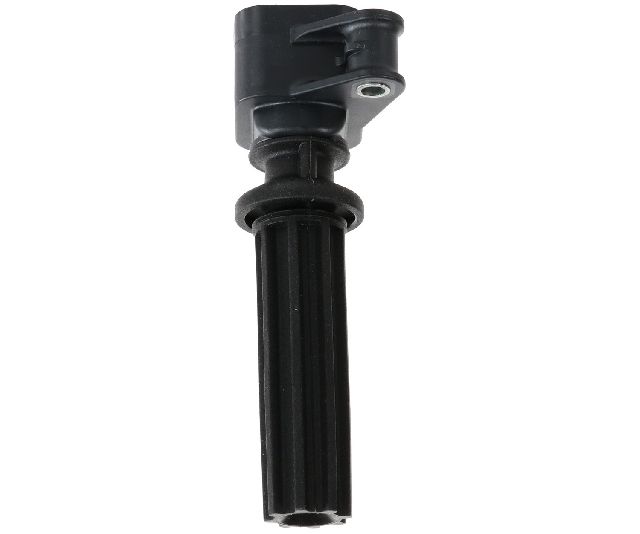
- Ignition Coil
(OEM #DG-549 (Motorcraft))— This is the most common failure point for a single-cylinder misfire. Heat and vibration cause them to fail over time.
Trusted brands: Motorcraft, NGK, Bosch
OEM price range: $50-$80
Aftermarket price range: $30-$60 - Spark Plug
(OEM #SP-537 (Motorcraft) / CYFS-12Y-2)— Spark plugs are a routine maintenance item and a frequent cause of misfires, especially on turbocharged engines. It is critical to check them for signs of coolant fouling.
Trusted brands: Motorcraft, NGK (LTR6DI-8), Champion
OEM price range: $15-$25
Aftermarket price range: $10-$20
Related Codes That Often Appear With This One
- P0300 — If the problem causing the misfire is intermittent or affects multiple cylinders, the PCM may log a 'Random Misfire' code in addition to the specific cylinder code. This is also listed as a potential code in the coolant intrusion TSB.
- P0316 — Indicates a 'Misfire Detected on Startup (First 1000 Revolutions).' This is a very strong indicator of coolant intrusion, as coolant can pool in the cylinder overnight and cause a definite misfire when the engine is first started. This code is specifically mentioned in TSBs 19-2346 and 22-2229.
- P0303 — The coolant intrusion issue on the 2.0L EcoBoost often occurs in the channel between cylinders 2 and 3, potentially causing misfires on both cylinders simultaneously or in close succession.
- P1299 / P0217 — These codes indicate a 'Cylinder Head Over-Temperature' or 'Engine Overheat Condition.' They are also listed in the coolant intrusion TSBs and point to the underlying cooling system failure that leads to the misfire.
Technical Service Bulletins (TSBs) & Recalls
- TSB 19-2346: The primary TSB for the 2.0L EcoBoost engine. It identifies the symptoms (low coolant, white smoke, rough run) and associated DTCs (P0300, P0301-P0304, P0316) caused by coolant intrusion. It applies to 2017-2019 MKC models built before April 18, 2019, and mandates a long block engine replacement as the fix.
- TSB 22-2229: A later TSB that supersedes previous versions, reaffirming the coolant intrusion problem and the long block replacement procedure for affected 2.0L EcoBoost engines.
- TSB 20-2234: Relevant for some 2019-2020 models, this TSB addresses a cracked EGR cooler that can cause identical symptoms (coolant loss, white smoke) to the engine block flaw, making it an important alternative diagnosis to consider.
- Bulletin #SSM 47204: Notes that some vehicles equipped with a 2.0L EcoBoost engine may exhibit a runs rough condition with DTCs P0300, P0301, P0302, P0303, P0304 and/or P0316 due to coolant intrusion caused by corrosion on the engine block.
Platform-Specific Known Issues
- A critical known issue is coolant intrusion into the cylinders due to a flaw in the engine block design, covered by Ford TSB 19-2346 and its successors. This can cause persistent P0302 codes and requires engine replacement to permanently fix. The issue stems from an 'open-deck' block design with a coolant slot between cylinders that is prone to cracking. This problem has led to class-action lawsuits against Ford.
Mechanic-Grade Diagnostic Values
- High-Pressure Fuel System Pressure — expected: 65 to 2150 psi (448 to 14823 kPa), depending on engine load and demand.. Failure: Pressure that is consistently low or does not increase under load can indicate a failing high-pressure fuel pump (HPFP). Pressure that is erratic can point to a faulty fuel pressure sensor.
- Mode $06, Test ID $A2 (Misfire Cylinder 1 Data) — expected: A count value below the maximum threshold set by the manufacturer. The value represents the number of misfire events counted during a specific drive cycle.. Failure: A count near or exceeding the maximum value for Test ID $A3 (Cylinder 2) confirms the PCM is detecting a high number of misfire events specifically on that cylinder, even if it's not always enough to trigger a constant CEL.
Scan Tool Commands That Help
- Ford IDS, FORScan, or high-end bidirectional scanner: Power Balance Test — This is a definitive test to confirm a misfire cause. The tool deactivates each cylinder one by one and graphically displays the RPM drop. If disabling cylinder 2 causes little or no drop in RPM compared to other cylinders, it confirms cylinder 2 is not contributing power. This helps differentiate between a fuel, spark, or mechanical issue before swapping parts.
- Ford IDS, FORScan: Misfire Monitor Neutral Profile Correction — This procedure must be performed after major engine repairs, such as replacing a timing chain, crankshaft sensor, or the entire engine. The PCM learns the natural variations of the crankshaft's rotation and uses this profile to accurately detect misfires. Failure to perform this reset can lead to false misfire codes or an inability to detect real misfires.
Wiring & Ground Locations
- PCM Connector C175E, Pin 56 — The Powertrain Control Module (PCM) is located in the engine compartment. C175E is one of the main connectors to the PCM.. Pin 56 on connector C175E is the control circuit for the ignition coil on cylinder 2 (COP2C). A technician can test this pin for a square wave signal from the PCM to confirm the PCM is commanding the coil to fire. Lack of a signal points to a wiring or PCM issue, not a faulty coil.
- G101 / G104 — Primary engine grounds are typically located on the cylinder head or engine block and connect via a strap to the chassis/firewall. For example, G101 is often near the PCM on the driver's side, and G104 can be on the engine block.. The ignition coils rely on a solid engine ground to complete their primary circuit. A loose, corroded, or broken main engine ground strap can cause a weak spark, leading to intermittent misfires that can be difficult to diagnose as the coils and plugs may test good.
- Engine Harness Chafe Points — Inspect the wiring harness where it routes near sharp edges, such as the corners of the cylinder head, accessory brackets, and the shock tower.. Vibrations can cause the harness to rub through, potentially shorting the ignition coil control wire for cylinder 2 to ground or another wire. This can cause a persistent P0302 and may even damage the coil driver inside the PCM.
Real Owner Repair Stories
- Reddit user on r/MechanicAdvice (2017 Lincoln MKC 2.0T) — Check engine light with P0302 came on two days after purchasing the vehicle from a dealership.
❌ Tried (didn't work) Initial unspecified dealership fix., Replaced the TCM (Transmission Control Module)., Replaced spark plugs., Replaced the ignition coil on cylinder 2.
✅ What actually fixed it The user did not post a final resolution, but the symptoms (persistent P0302 on cylinder 2 after replacing all common ignition components) are classic indicators of the underlying coolant intrusion issue described in TSB 19-2346, which the dealership was likely avoiding diagnosing. - NHTSA ODI #11585213 — An owner reported intermittent P0302 codes for a Cylinder 2 misfire over the course of a month. Despite replacing the spark plugs and ignition coil, the Check Engine Light returned.
- NHTSA ODI #11640004 — An owner experienced a P0302 code along with sluggish engine performance. The vehicle displayed a "Coolant level low" message on the dash and the engine temperature rose to high, forcing the driver to stop.
- NHTSA ODI #11607857 — A report describes a rough start in the morning followed by a Check Engine Light. A scan revealed code P0302, indicating a Cylinder 2 misfire with a severity of 2 out of 3.
OEM Part Supersession History
N/A (Pre-TSB Engine)→Varies by specific model/year, but TSB 19-2346 calls for a complete long block assembly with the revised design.— To correct the design flaw in the engine block that allows coolant to intrude into the cylinders.
Heads up: Installing an older-design engine block will result in a repeat failure. The only permanent fix is the redesigned long block assembly specified by Ford's TSBs.
Model Year Variations Within This Range
- 2017-2019 (before April 18, 2019): MKC models built on or before April 18, 2019, are equipped with the original engine block design that is susceptible to the coolant intrusion flaw between cylinders 2 and 3. Vehicles built after this date have the revised long block from the factory.
Diagnostic Flowchart
Real Owner Stories
Aggregated from forums and TSBs cited above. Mileages and costs reflect what owners reported in those sources.
2017 Lincoln MKC 2.0T — 68000 miles
Symptoms: Check engine light came on with a P0302 cylinder 2 misfire code. The acceleration felt sluggish, accompanied by coolant loss and white smoke.
What fixed it: Diagnosed as coolant intrusion requiring a long block engine replacement.
Cost: $8,200+
Source hint: CarComplaints.com
2017 Lincoln MKC FWD 2.0T
Symptoms: Experienced a persistent P0302 error code that the dealership repeatedly failed to fix.
What fixed it: Dealership initially replaced the TCM, spark plugs, and coil without success, ultimately pointing to the deeper coolant intrusion problem.
Source hint: r/MechanicAdvice - '2017 Lincoln MKC FWD 2.0T - P0302 Error Code...'
2018 Ford Edge 2.0L — 47453 miles
Symptoms: Engine failed due to a known coolant leak defect.
What fixed it: Required a new long block engine replacement.
Cost: $7,400
Source hint: r/fordescape - 'My Ford Escape engine needs to be replaced due to a known coolant leak defect!'
Ford Edge 2.0L EcoBoost
Symptoms: P302 cylinder 2 misfire code.
What fixed it: Basic ignition parts were ruled out, leading to a check for the known coolant intrusion issue.
Source hint: Ford Edge Forum - 'P302 - cylinder 2 mis-fire - 2.0L EcoBoost'
Related OBD-II Codes
Frequently Asked Questions
Does TSB 19-2346 apply to my Lincoln MKC?
Why am I losing coolant but don't see any leaks under my MKC?
I have a P0302 code and white smoke from the exhaust on cold starts. What does this mean?
Can a cracked EGR cooler cause a P0302 code on my 2019 MKC?
How can I confirm if my ignition coil is causing the P0302 code?
What should I look for when inspecting the spark plug on cylinder 2?
Helpful Videos

We Have This Part in Stock


The information in this article is provided for general reference and educational purposes only. Vehicle specifications, procedures, and part compatibility can vary by production date, trim level, and region. Always consult your vehicle's factory service manual and verify part numbers before purchasing or performing repairs. Safety-critical components such as airbags, seat belts, and braking systems should be installed by a qualified professional.
- Lincoln MKC:
- 🧭 Diagnostic Flowchart
- 🎬 Helpful Videos
- 🛍️ Shop This Part
- What's Unique About the 2015-2019 Lincoln MKC
- Symptoms You May Notice
- Most Likely Causes
- Rare But Worth Checking
- Diagnosis Steps
- Parts You'll Likely Need
- Related Codes That Often Appear With This One
- Technical Service Bulletins (TSBs) & Recalls
- Platform-Specific Known Issues
- Mechanic-Grade Diagnostic Values
- Scan Tool Commands That Help
- Wiring & Ground Locations
- Real Owner Repair Stories
- OEM Part Supersession History
- Model Year Variations Within This Range
- Real Owner Stories
- 2017 Lincoln MKC 2.0T — 68000 miles
- 2017 Lincoln MKC FWD 2.0T
- 2018 Ford Edge 2.0L — 47453 miles
- Ford Edge 2.0L EcoBoost
- Related OBD-II Codes
- Frequently Asked Questions
- 🎟️ Get 5% Off