

P0302 on 2016-2017 Lincoln MKX: Cylinder 2 Misfire Causes and Fixes
P0302 indicates a misfire in cylinder 2. While often caused by a bad ignition coil or spark plug, on the 2016-2017 Lincoln MKX with the 2.7L EcoBoost engine, this code can be a symptom of a serious internal engine problem related to the cylinder heads, as documented in manufacturer TSBs for engines built between April 2016 and January 2017.
- P0302 is a misfire on cylinder 2. The most common fixes are replacing the ignition coil or spark plug.
- A simple diagnostic test is to swap the ignition coil from cylinder 2 to another cylinder and see if the misfire code follows.
- For the 2.7L EcoBoost engine, be aware of TSB 19-2243. If you have oil consumption or exhaust smoke with your P0302 code, a serious cylinder head issue is possible.
- Do not ignore a flashing check engine light, as it indicates a severe misfire that can cause rapid damage to the catalytic converter.
What's Unique About the 2016-2017 Lincoln MKX
For the 2016-2017 Lincoln MKX, this code is straightforward on the standard 3.7L V6 engine, usually pointing to ignition or fuel delivery parts. However, on the optional 2.7L EcoBoost V6, P0302 can be a sign of a much deeper issue. Lincoln issued Technical Service Bulletin (TSB) 19-2243 for 2.7L engines built from April 1, 2016, to January 1, 2017, which were prone to premature valve guide wear. This defect leads to excessive oil consumption, exhaust smoke, and persistent misfire codes, transforming a potentially simple diagnosis into one that must consider a significant internal engine fault requiring cylinder head replacement.
Diagnostic Flowchart
Tap your situation to follow the diagnostic path that matches what you're seeing on this vehicle.
Symptoms You May Notice
- Engine shaking or rough idle, especially in neutral or park.
- Hesitation or stumbling during acceleration.
- Flashing or solid Check Engine Light.
- Reduced engine power and poor acceleration.
- Poor fuel economy, with owners reporting a 2-4 MPG decrease.
- For 2.7L EcoBoost, possible white or blue smoke from the exhaust, especially after a hot restart.
- Audible ticking or popping from the engine bay.
- Strong fuel odor from the exhaust.
- Replacing only the spark plug when the ignition coil is the actual cause.
- Replacing ignition components repeatedly on a 2.7L EcoBoost (built April 2016 - Jan 2017) when the root cause is the cylinder head valve guide issue described in TSB 19-2243.
- Chasing ignition or fuel problems when the actual cause is carbon buildup on the intake valves, a common issue for GDI engines.
Most Likely Causes
- Faulty Ignition Coil 🔴 High Probability → Shop Ignition Coil Ignition coils are a common failure item on many modern engines, including the EcoBoost family, leading to misfires.
How to confirm: The easiest way to confirm a bad coil is to swap the ignition coil from cylinder 2 with another cylinder (e.g., cylinder 1). Clear the codes and drive the vehicle. If the code changes to P0301, the ignition coil is the faulty component.
Typical fix: Replace the faulty ignition coil. It is often recommended to replace all six coils and spark plugs at the same time for preventative maintenance.
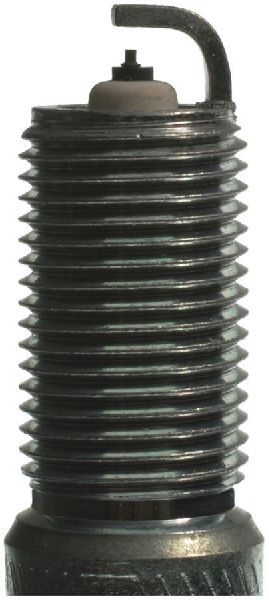
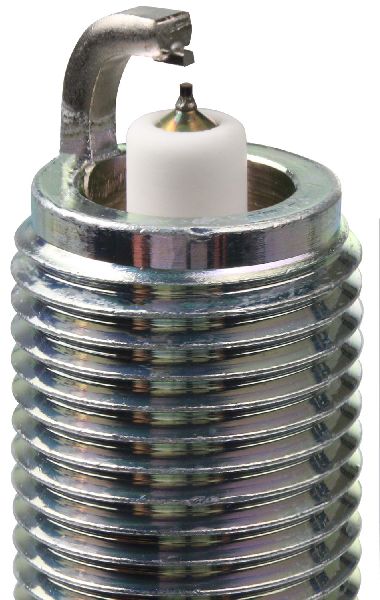
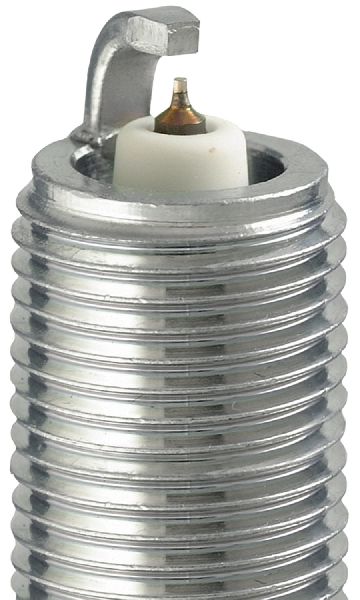
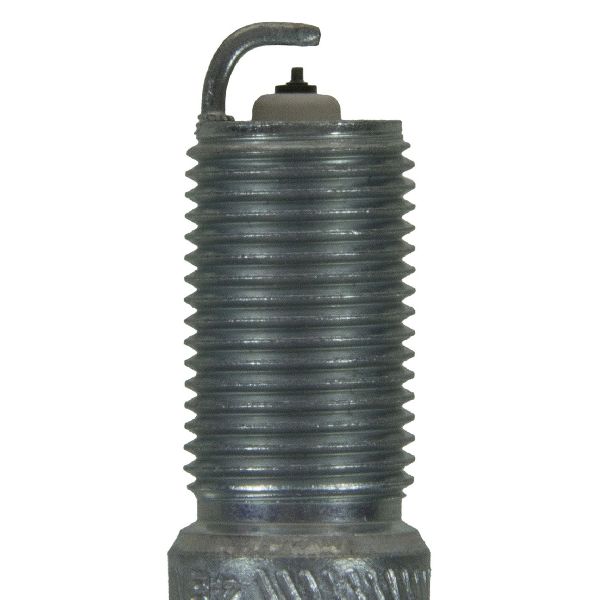
Est. part cost: $40-$80 per coil - Worn or Fouled Spark Plug 🔴 High Probability → Shop Spark Plug Spark plugs are a regular maintenance item. Oil consumption from the known cylinder head issue can also foul the plugs, causing a misfire.
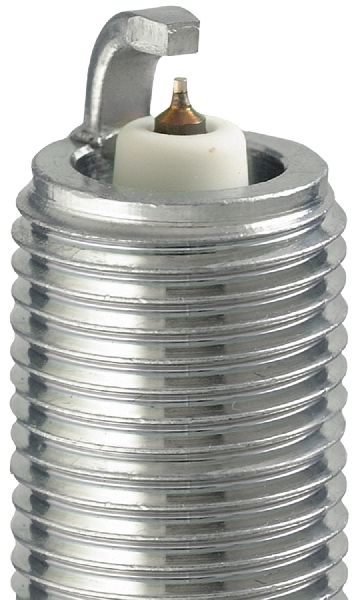
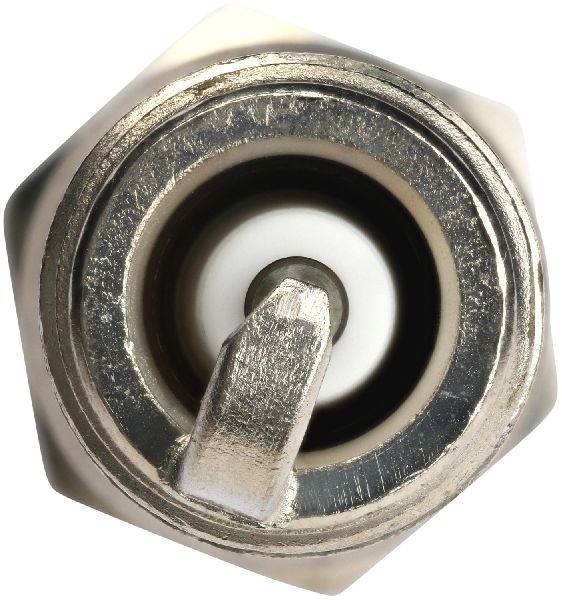
How to confirm: After ruling out the ignition coil, remove the spark plug from cylinder 2. Inspect it for wear (worn electrode), carbon buildup, or oil/fuel fouling. A healthy plug should have a light tan color on its electrode. The correct gap for EcoBoost engines is critical, typically around 0.027" to 0.031".
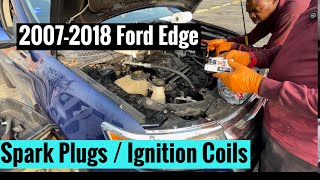
Typical fix: Replace the spark plug. Spark plugs are typically replaced as a full set of six. 🎬 Watch this step-by-step guide to replacing your plugs and coils.
Est. part cost: $10-$25 per plug - Cylinder Head Failure (2.7L EcoBoost Only) 🟡 Medium Probability → Shop Engine Cylinder Head TSB 19-2243 identifies an issue with defective valve guides in 2.7L EcoBoost engines built from April 1, 2016, to January 1, 2017, leading to excessive oil consumption and misfires. This TSB supersedes older versions like 17-2235 and 18-2237.
How to confirm: This is confirmed through professional diagnostics, including verifying the vehicle's build date, checking for excessive oil consumption (1 quart in less than 3,000 miles), observing blue/white exhaust smoke after a hot restart, and performing cylinder leak-down and compression tests.
Typical fix: Replace both left and right cylinder head assemblies as per the procedure outlined in TSB 19-2243. This is a major engine repair with labor estimates around 26.5 hours for an AWD model.
Est. part cost: $1500-$3000+ - Clogged Fuel Injector ⚪ Low Probability → Shop Fuel Injector Direct injection fuel injectors can be susceptible to clogging over time, though less common than ignition issues.
How to confirm: If the ignition system is confirmed to be working, a technician can perform a fuel injector balance test to check flow rates. Swapping injectors between cylinders is possible but more labor-intensive than swapping coils.
Typical fix: Replace the faulty fuel injector.
Est. part cost: $50-$150
Rare But Worth Checking
- Carbon Buildup on Intake Valves: As a Gasoline Direct Injection (GDI) engine, the 2.7L EcoBoost is prone to carbon deposits on the intake valves since fuel is not sprayed over them to keep them clean. This buildup can restrict airflow, causing rough idle, hesitation, and misfires, especially on a cold start. The fix is typically professional media blasting (e.g., walnut blasting). Later model years (2018+) of the 2.7L added port injection to mitigate this issue.
- Vacuum Leak: A leak in a vacuum hose or intake manifold gasket can introduce unmetered air, leading to a lean condition and misfires. This would typically cause multiple or random misfire codes (P0300) but can sometimes isolate to one cylinder.
- Low Engine Compression: Internal mechanical damage such as a worn piston ring, damaged valve, or a leaking head gasket can cause a loss of compression in cylinder 2, resulting in a misfire. A compression test is needed to diagnose this.
- Faulty PCV System: A failing Positive Crankcase Ventilation (PCV) valve or system can lead to increased oil consumption, which in turn can foul spark plugs and contribute to misfire codes. Installing an oil catch can is a modification some owners use to mitigate this.
Diagnosis Steps
- Read all stored DTCs with an OBD-II scanner. Note any other codes that appear with P0302, such as P0300 or oil pressure codes like P0524.
- If driving a 2.7L EcoBoost, check the vehicle build date on the driver's door jamb sticker. If it falls between April 2016 and January 2017, be highly suspicious of the TSB issue.
- Monitor for excessive oil consumption (over 1 quart per 3,000 miles) or blue/white exhaust smoke, which are key signs of the cylinder head problem.
- Swap the ignition coil from cylinder 2 with an adjacent cylinder (e.g., cylinder 1). Cylinder 2 on the 2.7L EcoBoost is on the driver's side, front position. Clear the codes and drive the vehicle to see if the misfire code moves to the new cylinder (e.g., P0301). If it has, the ignition coil is faulty.
- If the misfire remains on cylinder 2 (P0302 returns), inspect and then swap the spark plug from cylinder 2 with another cylinder. Check the old plug for signs of oil or fuel fouling and verify the gap is correct (~0.028").
- If the misfire still remains on cylinder 2, inspect the wiring and connector for the ignition coil and fuel injector on cylinder 2 for any damage or looseness.
- If ignition components are good, the next steps involve more advanced diagnostics: using a scan tool's Power Balance test to confirm the weak cylinder, testing the fuel injector, checking for vacuum leaks (smoke test), and performing an engine compression and leak-down test to rule out mechanical issues.
- If the vehicle is a 2.7L EcoBoost within the affected build range and exhibits related symptoms, consult a professional technician to diagnose for the cylinder head issue per TSB 19-2243.
Parts You'll Likely Need
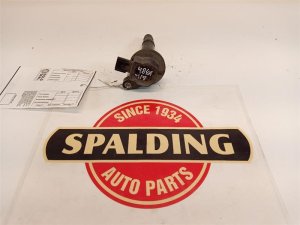
- Ignition Coil
(OEM #DG549 (Motorcraft))— This is the most common failure point for a single-cylinder misfire on EcoBoost engines.
Trusted brands: Motorcraft, NGK, Bosch
OEM price range: $60-$90
Aftermarket price range: $40-$70 - Spark Plug
(OEM #SP-594 (Motorcraft), also cited as SP-578)— Spark plugs are a routine maintenance item and can wear out or become fouled by oil or carbon, causing a misfire.
Trusted brands: Motorcraft, NGK, Autolite
OEM price range: $15-$25
Aftermarket price range: $8-$18 - Cylinder Head Assembly (2.7L EcoBoost)
(OEM #FT4Z-6049-E (Left), FT4Z-6049-F (Right))— The official fix for the known valve guide issue on affected 2016-2017 models as per Ford TSBs.
Related Codes That Often Appear With This One
- P0300 — Indicates a random or multiple cylinder misfire. It often appears alongside specific cylinder codes like P0302 if the underlying issue, such as the TSB-related head failure or a vacuum leak, affects multiple cylinders.
- P0301, P0303, P0304, P0305, P0306 — Misfire codes for other cylinders. Seeing multiple codes strongly suggests a systemic problem like a vacuum leak, low fuel pressure, or the cylinder head issue on the 2.7L engine, which is known to cause misfires across several cylinders.
- P0316 — Indicates a misfire was detected within the first 1,000 engine revolutions on startup. It is often logged with other P030x codes and is specifically mentioned in the TSB for the cylinder head issue.
- P0524 / P06DD — These codes indicate low engine oil pressure. They are specifically mentioned in TSBs alongside misfire codes for the 2.7L EcoBoost, pointing towards the serious internal engine problem related to oil consumption and faulty cylinder heads.
Technical Service Bulletins (TSBs) & Recalls
- TSB 19-2243: The primary TSB for this issue. Supersedes 17-2235. Details the cylinder head replacement procedure for 2016-17 MKX/Edge and 2017 Continental/Fusion with 2.7L/3.0L engines built from 01-Apr-2016 to 01-Jan-2017, which exhibit oil consumption, smoke, and misfire codes.
- TSB 19-2384: A parallel TSB for the 2016-2017 Ford F-150 with the 2.7L EcoBoost, describing the exact same issue (valve guides), symptoms (oil consumption, misfires), and build date range.
- SSM 46363: An older Service Message linking P0302 with exhaust smoke and oil consumption, correctly suspecting the cylinder heads as the cause.
- SSM 54504: An even older message mentioning P0302 with hot restarts and excessive oil consumption, pointing to the same underlying issue.
Platform-Specific Known Issues
- A significant issue for the 2016-2017 Lincoln MKX is documented in Technical Service Bulletin 19-2243, which applies to models with the 2.7L EcoBoost engine built between April 1, 2016, and January 1, 2017. These vehicles may exhibit P0302 (and other misfire codes), excessive oil consumption (1 quart in <3000 miles), rough idle, and blue or white exhaust smoke. The cause is identified as faulty valve guides, and the prescribed repair is the replacement of both cylinder heads. This TSB also applies to the Ford Edge, F-150, Fusion Sport, and Lincoln Continental with the same engine and build dates.
Mechanic-Grade Diagnostic Values
- Spark Plug Gap — expected: 0.027" - 0.031". Failure: An incorrect or overly wide gap can cause a weak spark and misfires under boost.
- Cylinder #2 Location — expected: Driver's side of the engine, front position (closest to the bumper).. Failure: Misdiagnosing the cylinder location will lead to replacing parts on the wrong cylinder.
Hidden / Shadow Codes Worth Checking
- Mode $06 Data: Mode $06 is a diagnostic mode that provides access to test results for non-continuously monitored systems. For misfires, it contains counters for each cylinder (e.g., Test ID $A2, Component ID $01 for cylinder 1, $02 for cylinder 2, etc.). A technician can view these counts to see if cylinder 2 is registering misfires, even if they aren't frequent enough to set a P0302 code yet. (see via Requires a professional-grade OBD-II scanner or software like FORScan that can access and display Mode $06 test results.)
Scan Tool Commands That Help
- Ford IDS (or equivalent pro-level scanner): Power Balance Test — This is a critical diagnostic step when a misfire is felt but the specific cylinder is uncertain. The test graphically displays the power contribution of each cylinder by sequentially disabling the fuel injector for each one and measuring the drop in engine speed. A cylinder with a smaller drop is not contributing as much, confirming it as the source of the misfire.
- Ford IDS (or equivalent pro-level scanner): Misfire Monitor Neutral Profile Correction / Crankshaft Position Sensor Relearn — This procedure should be performed after any major engine repair, such as replacing a crankshaft dampener, flexplate, or the engine itself. Failure to do so can cause the PCM to misinterpret normal crankshaft speed variations as misfires, leading to 'ghost' misfire codes when no mechanical fault exists.
Wiring & Ground Locations
- Engine Compartment Fuse Box (Power Distribution Box) — Located in the front left area of the engine bay, near the battery.. Contains fuses and relays for the PCM and other essential engine components. A fault in this box could potentially interrupt power or signal to the ignition or fuel injection systems.
- Passenger Compartment Fuse Box — Located under the dashboard to the left of the steering column, behind a trim panel.. Powers various modules, including the Body Control Module and PCM logic power, which are integral to the engine management system.
- Cylinder 2 Fuel Injector Wiring — The wiring harness leading to the fuel injector on the driver's side, front cylinder.. A known wire color for the injector circuit is green and black. Damage or corrosion to this wire or its connector can cause an intermittent or constant misfire, mimicking a failed injector.
Real Owner Repair Stories
- YouTube channel 'Auto Repair Guys' (Lincoln MKX / Ford Edge (shared platform and engine/ECU design)) — Constant misfire on one cylinder, severe engine vibration.
❌ Tried (didn't work) Replacing the spark plug on the misfiring cylinder., Replacing the ignition coil with a brand new one., Swapping the new ignition coil with another cylinder; the misfire did not move.
✅ What actually fixed it The Powertrain Control Module (PCM/ECU) was faulty. Specifically, the internal ignition coil driver for that cylinder had failed. The owner removed the PCM, sent it to a specialized repair service, and reinstalling the repaired PCM resolved the misfire. - Ford F150 Forum user (2015 Ford F-150 2.7L EcoBoost) — Rough idle that started intermittently and progressed.
❌ Tried (didn't work) Assuming it was bad gas.
✅ What actually fixed it The vehicle was found to be consuming coolant with no external leaks. The rough idle and misfires were caused by coolant leaking into the cylinders due to the known cylinder head defect (related to TSB 17-2077 for that model year). The dealer replaced the entire engine under warranty.
"I Checked Everything" — The Actual Cause
- In cases where standard diagnostics like swapping coils/plugs fail and a smoke test for vacuum leaks comes back clean, the root cause can be electronic. A documented failure is the ignition coil driver circuit within the Powertrain Control Module (PCM). The PCM itself fails to send the signal to fire the coil, which will not be found by mechanical or vacuum tests.
OEM Part Supersession History
SP-578 (Motorcraft Spark Plug)→SP-594 (Motorcraft Spark Plug)— Routine part update and potential change in material or heat range. Forum discussions suggest the SP-594 may be a slightly different heat range to address performance in newer calibrations or to improve longevity.DG549 (Motorcraft Ignition Coil)→DG586 (in some applications)— The DG586 is cited as an updated part for some F-150 EcoBoost applications, potentially offering better resistance to heat-related failure.
Heads up: While DG549 is the specified part for the MKX, the existence of an updated part for the same engine family suggests a known failure pattern was addressed. Compatibility should be verified by VIN.
Model Year Variations Within This Range
- 2016-2017: These model years use a first-generation 2.7L EcoBoost with direct injection only, making them more susceptible to carbon buildup on intake valves causing misfires.
- 2018+: The second-generation 2.7L EcoBoost, introduced after this vehicle's model range, added a port fuel injection system alongside the direct injection. This dual-injection system sprays fuel onto the intake valves, helping to keep them clean and significantly reducing the likelihood of misfires caused by carbon buildup.
Helpful Videos
Used OEM Parts in Stock
New Aftermarket Parts Available

The information in this article is provided for general reference and educational purposes only. Vehicle specifications, procedures, and part compatibility can vary by production date, trim level, and region. Always consult your vehicle's factory service manual and verify part numbers before purchasing or performing repairs. Safety-critical components such as airbags, seat belts, and braking systems should be installed by a qualified professional.
- Lincoln MKX:
- 🧭 Diagnostic Flowchart
- 🎬 Helpful Videos
- 🛍️ Shop This Part
- What's Unique About the 2016-2017 Lincoln MKX
- Symptoms You May Notice
- Most Likely Causes
- Rare But Worth Checking
- Diagnosis Steps
- Parts You'll Likely Need
- Related Codes That Often Appear With This One
- Technical Service Bulletins (TSBs) & Recalls
- Platform-Specific Known Issues
- Mechanic-Grade Diagnostic Values
- Hidden / Shadow Codes Worth Checking
- Scan Tool Commands That Help
- Wiring & Ground Locations
- Real Owner Repair Stories
- "I Checked Everything" — The Actual Cause
- OEM Part Supersession History
- Model Year Variations Within This Range
- 🎟️ Get 5% Off