

P0302 on 2014-2017 Mazda 6: Cylinder 2 Misfire Causes and Fixes
On a 2014-2017 Mazda 6, code P0302 is most frequently caused by a faulty ignition coil on cylinder 2. A worn spark plug is the second most likely cause. A simple DIY fix involves swapping the coil to another cylinder to confirm the fault, with a replacement coil costing between $40 and $150. A Mazda TSB specifically addresses faulty coils on 2014-2016 models.
- P0302 on a 2014-2017 Mazda 6 is most likely a bad ignition coil on cylinder 2.
- Always start diagnosis by swapping the cylinder 2 ignition coil with another cylinder; this is a free, 10-minute test to confirm the fault.
- If the check engine light is flashing, stop driving immediately to prevent expensive damage to the catalytic converter.
- If ignition parts are confirmed to be good, the next most likely causes are a clogged fuel injector or carbon buildup on the intake valves, especially on higher-mileage vehicles.
What's Unique About the 2014-2017 Mazda 6
The 2014-2017 Mazda 6 with the Skyactiv-G 2.5L engine is particularly susceptible to ignition coil failures. Mazda issued a Technical Service Bulletin (TSB 01-014/16) for 2014-2016 models with VINs lower than JM1GJ**480633 regarding faulty ignition coils from a specific supplier, YUMEBISHI, that were prone to internal failure. The TSB advises replacing them with the more reliable MITSUBISHI-produced parts. Additionally, as a direct-injection engine, these vehicles can experience carbon buildup on the intake valves over time, which can also lead to misfires if ignition components are not the cause.
Symptoms You May Notice
- Rough idle or engine shaking
- Hesitation or stumbling during acceleration
- Noticeable loss of engine power
- Flashing or solid Check Engine Light
- Reduced fuel economy
- Smell of unburnt fuel from the exhaust
- Soft knocking sound at idle that disappears at higher RPM
- Replacing the fuel pump when only a single cylinder is misfiring.
- Replacing oxygen sensors, which rarely cause a single-cylinder misfire.
- Replacing the Mass Airflow (MAF) sensor, which would typically affect all cylinders and set a P0101 code.
Most Likely Causes
- Faulty Ignition Coil 🔴 High Probability → Shop Ignition Coil A batch of ignition coils from supplier 'YUMEBISHI' used in 2014-2016 models are known to fail due to temperature fluctuations. Mazda issued TSB 01-014/16 to address this, recommending replacement with updated MITSUBISHI-made coils.
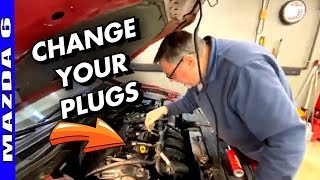
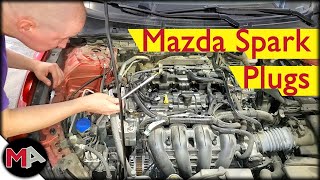
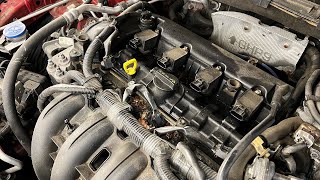
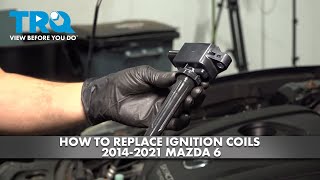
How to confirm: Swap the ignition coil from cylinder 2 with another cylinder (e.g., cylinder 1). Clear the codes, drive the vehicle, and see if the code changes to P0301. If it does, the coil is bad. This is a 10-minute, no-cost diagnostic step. 🎬 Watch: How to replace your Mazda 6 ignition coils.
Typical fix: Replace the faulty ignition coil. It is strongly recommended to replace the corresponding spark plug at the same time. If the vehicle has the original YUMEBISHI coils, it is wise to replace all four, even if only one has failed.
Est. part cost: $40-$150 - Worn or Fouled Spark Plug 🟡 Medium Probability → Shop Spark Plug Spark plugs are a regular maintenance item with a finite lifespan. An old, oil-fouled, or carbon-fouled plug can't produce a strong enough spark to ignite the air-fuel mixture properly, especially under load.
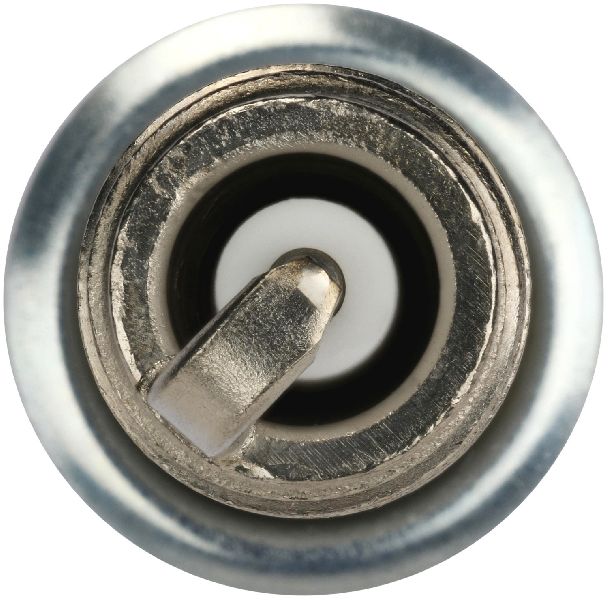
How to confirm: After confirming the ignition coil is good, remove the spark plug from cylinder 2. Inspect it for wear on the electrode, heavy carbon deposits, or oil fouling. Oil in the spark plug well indicates a leaking valve cover gasket.
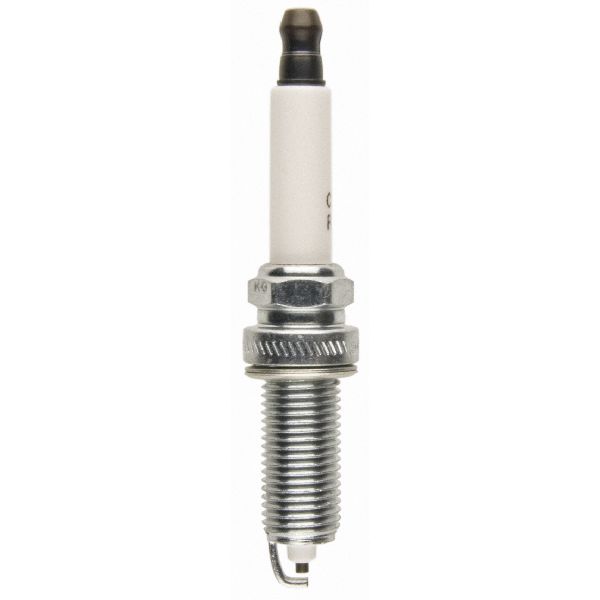
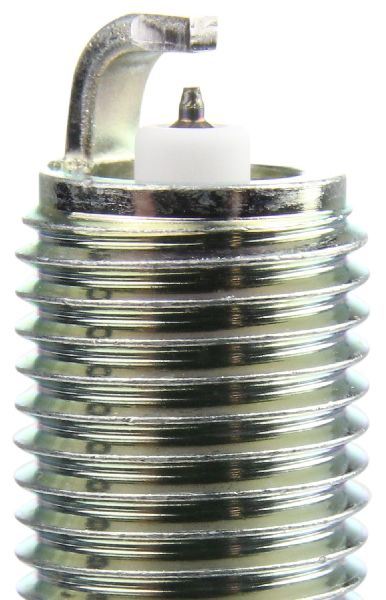
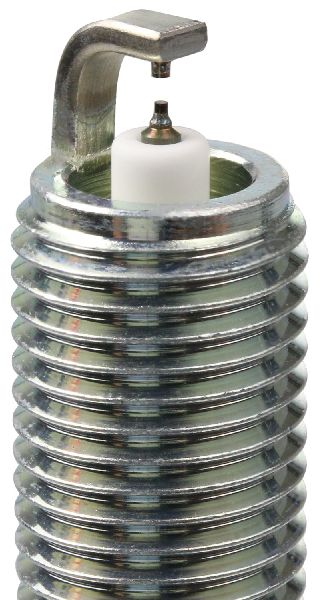
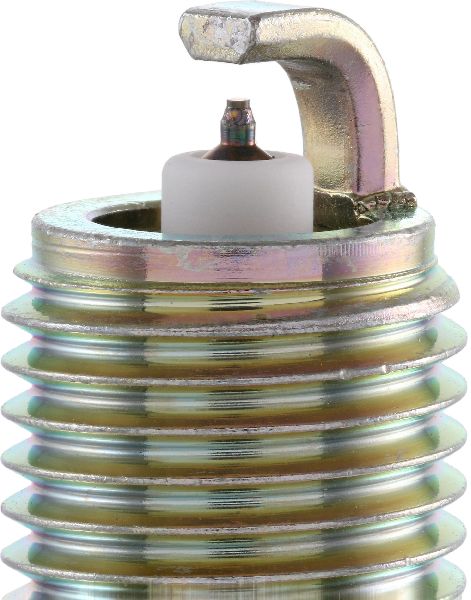
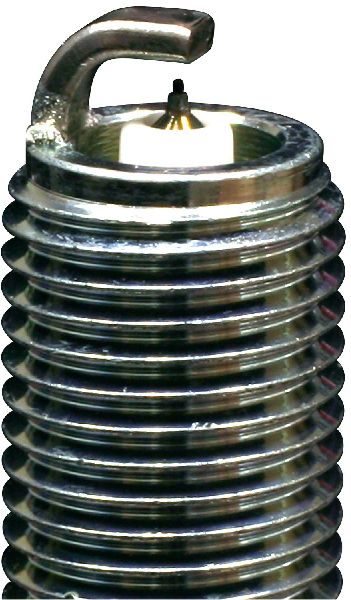
Typical fix: Replace the spark plug. It is best practice to replace all four spark plugs as a set to ensure even performance. Use OEM-specification Iridium plugs, such as the NGK ILKAR7L11.
Est. part cost: $15-$30 per plug - Clogged Fuel Injector ⚪ Low Probability → Shop Fuel Injector As a direct injection engine, the injectors are in the combustion chamber and can become clogged with carbon or fuel deposits over time, restricting fuel flow to a specific cylinder.
How to confirm: This is more difficult to diagnose. A professional may perform a fuel injector balance test. A DIY method is to swap the injector with another cylinder, but this is more labor-intensive than swapping a coil. A user on MazdaSpeeds forum found their cylinder 2 injector was 'caked' with deposits, causing their P0302.
Typical fix: Clean or replace the faulty fuel injector. If cleaning, an ultrasonic cleaning service is most effective. If replacing, it's often recommended to replace the seals on all injectors.
Est. part cost: $50-$150
Rare But Worth Checking
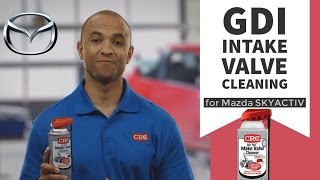
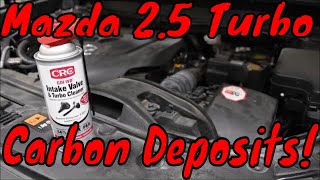
- Carbon Buildup on Intake Valves: Skyactiv-G engines are direct-injection, meaning fuel is sprayed directly into the cylinder. This design allows carbon from the PCV system to bake onto the intake valves, eventually restricting airflow and causing misfires, especially on cold starts. A Reddit user on r/mazda documented resolving a P0302 code on their Skyactiv 2.5L at 58k miles with a manual valve cleaning after plugs and coils didn't fix it.
- Vacuum Leak: A leak in the intake manifold gasket near cylinder 2 could lean out the air/fuel mixture and cause a misfire. A common failure point on Mazdas is the air intake hose between the airbox and throttle body, which can rip and cause unmetered air to enter. This would typically be accompanied by other codes (like P0171) if the leak is large enough.
- Low Cylinder Compression: Internal engine issues like a worn piston ring, a damaged cylinder wall, or a poorly sealing valve can cause a loss of compression, leading to a misfire. This is a mechanical failure and is the least likely cause on a well-maintained engine. A compression test is required to diagnose this.
Diagnosis Steps
- Read the trouble codes with an OBD-II scanner to confirm P0302 and check for any other codes.
- Swap the ignition coil from cylinder 2 with cylinder 1. Clear the codes and drive the vehicle.
- If the code returns as P0301, the ignition coil is faulty. Replace it.
- If the code remains P0302, the coil is likely good. Remove the coil again and inspect the spark plug well for oil, which would indicate a leaking valve cover gasket.
- If no oil is present, swap the spark plug from cylinder 2 with cylinder 1. Clear the codes and drive.
- If the code returns as P0301, the spark plug was the issue. Replace all four spark plugs for best results.
- If the code remains P0302, the issue is not a simple ignition component. Inspect the wiring and connector for the cylinder 2 ignition coil and fuel injector for damage or corrosion.
- If wiring appears intact, the cause may be a clogged fuel injector, significant carbon buildup on the intake valves, or a mechanical engine issue. At this point, professional diagnosis including a fuel injector flow test, intake inspection, or a compression test is recommended.
Parts You'll Likely Need
- Ignition Coil
(OEM #PE20-18-100B (replaces PE20-18-100A))— This is the most common failure item for a P0302 code on this vehicle, especially on 2014-2016 models due to a known faulty supplier part (YUMEBISHI). The updated part is made by MITSUBISHI.
Trusted brands: NGK, Denso, Bosch, Mazda (OEM)
OEM price range: $80-$120
Aftermarket price range: $40-$80 - Iridium Spark Plug
(OEM #PE5R-18-110 (NGK ILKAR7L11))— A worn or fouled spark plug is the second most likely cause of a misfire. It should be replaced with the coil as a best practice, or as a set if near the service interval.
Trusted brands: NGK, Denso
OEM price range: $20-$30
Aftermarket price range: $15-$25
Related Codes That Often Appear With This One
- P0300 — If the misfire is intermittent or begins to affect other cylinders, a 'Random Misfire' code may also be stored.
- P0301, P0303, P0304 — These codes indicate misfires in other cylinders. They are commonly seen during diagnosis when a technician swaps a suspected bad coil or plug to another cylinder to confirm the fault.
- P0202 — This code for 'Fuel Injector Circuit/Open - Cylinder 2' points directly to an issue with the injector or its wiring and can be stored alongside P0302. TSBs 01-004-17-3317a and 01-017-16-3242 note this common pairing.
Technical Service Bulletins (TSBs) & Recalls
- 01-014/16: Addresses a check engine light with misfire DTCs (P0300-P0304) caused by internal failure of YUMEBISHI-produced ignition coils on 2014-2016 Mazda 6, Mazda 3, and CX-5 models.
- 01-004-17-3317a & 01-017-16-3242: Note that misfire codes are often stored at the same time as fuel injector circuit DTCs (P0201-P0204).
- 01-007-19-3541: Mentions a rare case for cold climates where misfires can be caused by frozen water accumulating in the main silencer (muffler), restricting exhaust flow.
- Bulletin #01-001-23a: Notes that some customers may complain about poor acceleration, rough idling, or the check engine light with DTC P0302:00, specifically applicable to turbo engines.
- Bulletin #01-006-18-3429: Describes instances where P0302 and other misfire codes are stored in memory due to frozen water accumulating in the engine system.
- Bulletin #01-010-18-3442b: Reports that vehicles may exhibit an engine misfire during acceleration with a flashing check engine light and DTC P0302:00, noting that sometimes the DTC may not be stored even if a misfire occurred.
- Bulletin #01-012-19-3612: Confirms that vehicles may experience the Check Engine Light ON with DTC P0302:00 stored in memory.
Platform-Specific Known Issues
- TSB 01-014/16 was issued for 2014-2016 Mazda 6 models (and other 2.5L Skyactivs) due to faulty 'YUMEBISHI' brand ignition coils that were prone to failure. The bulletin advises confirming the coil is the cause via swapping, and replacing any YUMEBISHI coils with the updated MITSUBISHI part.
- As a direct-injection engine, the Skyactiv-G 2.5L is prone to carbon buildup on the intake valves over 60,000-80,000 miles, which can cause misfire codes if left unaddressed. Owners have reported this as the specific cause for P0302 after ignition components were ruled out.
Mechanic-Grade Diagnostic Values
- High-Pressure Fuel System Pressure (at idle) — expected: Approx. 3.0 MPa (435 psi) or more.. Failure: Significantly lower pressure could indicate a weak high-pressure fuel pump, though this would typically affect all cylinders.
- Fuel Injector Resistance — expected: 1.74 - 2.04 Ohms at 20°C (68°F).. Failure: A reading of 0 ohms (short), infinity/OL (open), or outside the specified range indicates a faulty injector.
- Ignition Coil Primary Winding Resistance — expected: 0.49 - 0.57 Ohms at 20°C (68°F).. Failure: A reading outside this range suggests a faulty coil, though dynamic testing (swapping) is more reliable.
- Mode $06 Misfire Count (Cylinder 2) — expected: Using a capable OBD-II scanner, check Test ID (TID) $A3.. Failure: A high or incrementing value for TID $A3 confirms that the PCM is counting misfire events on cylinder 2.
Scan Tool Commands That Help
- Mazda M-MDS / IDS (or equivalent high-end scanner): Power Balance Test — This function allows a technician to disable individual cylinders one by one while monitoring engine RPM. If disabling cylinder 2 results in little or no RPM drop compared to other cylinders, it definitively confirms that cylinder 2 is not contributing power, isolating the fault before swapping parts.
Wiring & Ground Locations
- G09 (example identifier) — A primary engine-to-chassis ground point is located on the left side of the cylinder head, near the high-pressure fuel pump.. A loose or corroded main engine ground can cause insufficient or unstable voltage to the ignition coils, leading to weak spark and misfires that can be intermittent and hard to diagnose.
- Cylinder 2 Ignition Coil Connector — On top of the valve cover, second from the front (belt side) of the engine.. This 3-pin connector provides power, ground, and the trigger signal to the coil. A technician can test for 12V+ with key on, continuity to ground, and a pulsing signal from the PCM during cranking to verify the wiring is intact.
Real Owner Repair Stories
- MazdaSpeeds Forum User (Mazdaspeed 6 (similar direct-injection engine principles)) — Rough idle, severe stuttering under acceleration, and a flashing check engine light for P0302.
❌ Tried (didn't work) New spark plugs, Swapping ignition coils, Professional injector cleaning and testing, New camshaft position sensor
✅ What actually fixed it The cylinder 2 fuel injector was found to be 'caked' with deposits. Replacing the fuel injector and cleaning the intake valves resolved the P0302 misfire. - GMTNation Forum User (similar issue) (2005 Trailblazer I6) — Rough idle with a P0302 code, which later became a P0300 (random misfire) after swapping a coil.
❌ Tried (didn't work) Replacing only the #2 spark plug, Swapping the coil pack, Cleaning the throttle body
✅ What actually fixed it The user found oil on the threads of spark plugs 2, 3, and 5. The underlying cause of oil in the spark plug wells is a leaking valve cover gasket and/or spark plug tube seals. Replacing these gaskets prevents oil from fouling the plugs and causing misfires. - YouTube Commenter (Not specified) — Bad rough idle, engine shaking, and stalling with a cylinder 2 misfire code.
❌ Tried (didn't work) Replacing ignition coils, Replacing spark plugs
✅ What actually fixed it A high-quality fuel system cleaner (Redline brand mentioned) was added to the fuel tank. After running the car, the clogged fuel injector was cleared and the misfire was resolved.
OEM Part Supersession History
PE20-18-100A→PE20-18-100B— The original PE20-18-100A coils were supplied by YUMEBISHI and had a high failure rate due to internal breakdown from temperature changes, as noted in TSB 01-014/16. The superseding part is from MITSUBISHI and is more reliable.
Model Year Variations Within This Range
- 2014-2016: These model years, specifically those built before April 7, 2016, were more likely to be factory-equipped with the failure-prone YUMEBISHI ignition coils (part number PE20-18-100A) as detailed in TSB 01-014/16. 2017 models are less likely to have this specific part.
- 2016-2017: The 2016 model year received a significant interior refresh, including an updated infotainment system. While this doesn't directly affect the P0302 code, it's a key difference within the generation. The engine and ignition system remained fundamentally the same.
Diagnostic Flowchart
Other Known Issues on This Vehicle
Issues unrelated to this code that are worth knowing about as an owner of this generation:
- Infotainment 'Ghost Touch' and Delamination 🟠 Medium — Very common, especially on 2016-2018 models. Often triggered by heat. The screen registers phantom touches, randomly changing settings. (Ref: A class-action lawsuit resulted in Customer Service Program (CSP13), but it primarily covers the Connectivity Master Unit (CMU), not the physical screen which is the cause of ghost touch.)
- Leaking Serpentine Belt Tensioner 🟠 Medium — Common failure item. The hydraulic damper inside the tensioner leaks oil, causing belt squeaking on acceleration and eventual failure. Often noticed by greasy residue on the component. (Ref: TSB 01-019/19 addresses this issue, noting an improved part was created to fix the leak.)
- Premature Rear Brake Wear 🟡 Low — Owners report rear brake pads and rotors wearing out faster than the fronts, sometimes in as little as 20,000-30,000 miles. Often attributed to sticking caliper slide pins or issues with the electronic parking brake.
- Failed Cooling Fan Control Module 🟠 Medium — A frequently reported issue where the cooling fan module fails, causing the fans to run constantly or not at all, leading to potential overheating at idle.
Used vs. New Parts: Buying Guide for This Vehicle
When a used part is the smart pick: For an ignition coil, a used part can be a cost-effective option if it is sourced from a low-mileage (<50,000 miles) vehicle and can be visually confirmed to be the updated MITSUBISHI part, not the original YUMEBISHI coil.
Donor-vehicle mileage cap: roughly under 50000 miles for the part to have meaningful remaining life.
What to inspect on the donor part:
- For ignition coils, look for the 'MITSUBISHI' branding, not 'YUMEBISHI'.
- Check the plastic housing for any cracks, melting, or signs of extreme heat.
- Ensure the rubber boot is pliable and free of tears or brittleness.
OEM-only on this vehicle (don't cheap out):
- Direct Fuel Injector: Aftermarket direct injectors for Skyactiv engines have a poor reputation for reliability and correct flow rates. It is strongly recommended to use new OEM injectors or professionally cleaned and flow-tested used OEM injectors.
Aftermarket brands forum-validated for this vehicle:
- NGK (Ignition Coils, Spark Plugs)
- Denso (Ignition Coils, Spark Plugs)
- Bosch (Ignition Coils)
Brands owners have reported issues with on this vehicle:
- Unbranded 'white box' ignition coils and fuel injectors from online marketplaces are known for high failure rates and inconsistent performance.
Real Owner Stories
Aggregated from forums and TSBs cited above. Mileages and costs reflect what owners reported in those sources.
2014 Mazda 6 — 160000 miles
Symptoms: Went into limp mode on the highway at 80 mph with a flashing CEL. After restart, CEL was solid.
What fixed it: The user was advised to swap the ignition coil from cylinder 2 with another cylinder to see if the misfire code follows it.
Source hint: Reddit r/MechanicAdvice
2015 Mazda 6 Skyactiv-G 2.5L — ~70000 miles
Symptoms: Misfire code P0302 occurring after ignition components were ruled out.
What fixed it: Intake valve cleaning to remove carbon buildup, which is common on these direct-injection engines between 60k-80k miles.
Source hint: Reddit (r/mazda): Skyactiv 2.5L Intake Valve Cleaning - Just Completed
Mazda 6 Skyactiv-G 2.5L
Symptoms: Very bad misfire, P0302 code.
What fixed it: The cylinder 2 fuel injector was found to be 'caked' with deposits and required cleaning or replacement.
Source hint: MazdaSpeeds Forum: Very bad misfire, P0302
Related OBD-II Codes
Frequently Asked Questions
Does TSB 01-014/16 apply to my 2014-2016 Mazda 6?
What specific spark plugs should I use for my Skyactiv-G 2.5L to resolve a P0302?
My 2015 Mazda 6 has a P0302 code; should I replace all the ignition coils?
Can carbon buildup cause a P0302 on a high-mileage Mazda 6?
Is there a simple way to test if my P0302 is just a bad ignition coil?
Could a problem with my muffler cause a misfire code like P0302?
Helpful Videos

We Have This Part in Stock

The information in this article is provided for general reference and educational purposes only. Vehicle specifications, procedures, and part compatibility can vary by production date, trim level, and region. Always consult your vehicle's factory service manual and verify part numbers before purchasing or performing repairs. Safety-critical components such as airbags, seat belts, and braking systems should be installed by a qualified professional.
- Mazda 6:
- 🧭 Diagnostic Flowchart
- 🎬 Helpful Videos
- 🛍️ Shop This Part
- What's Unique About the 2014-2017 Mazda 6
- Symptoms You May Notice
- Most Likely Causes
- Rare But Worth Checking
- Diagnosis Steps
- Parts You'll Likely Need
- Related Codes That Often Appear With This One
- Technical Service Bulletins (TSBs) & Recalls
- Platform-Specific Known Issues
- Mechanic-Grade Diagnostic Values
- Scan Tool Commands That Help
- Wiring & Ground Locations
- Real Owner Repair Stories
- OEM Part Supersession History
- Model Year Variations Within This Range
- Other Known Issues on This Vehicle
- Used vs. New Parts: Buying Guide for This Vehicle
- Real Owner Stories
- 2014 Mazda 6 — 160000 miles
- 2015 Mazda 6 Skyactiv-G 2.5L — ~70000 miles
- Mazda 6 Skyactiv-G 2.5L
- Related OBD-II Codes
- Frequently Asked Questions
- 🎟️ Get 5% Off