

P0302 on 2019-2021 Mazda MAZDA3: Cylinder 2 Misfire Causes and Fixes
P0302 on a 2019-2021 Mazda3 almost always indicates a failed ignition coil or a worn-out spark plug on cylinder 2. A DIY-friendly coil swap is the fastest way to diagnose the problem. Expect to pay $40-$100 for a new coil or around $15-$25 for a spark plug. For 2.5L Turbo models, this code can also be a symptom of a more serious issue outlined in TSB 01-001-23a related to the exhaust manifold and cylinder head.
- P0302 signifies a misfire on cylinder 2, most commonly caused by a bad ignition coil or spark plug.
- A simple coil swap between cylinders is the definitive DIY test for a faulty ignition coil.
- For 2.5L Turbo engines, P0302 can be a symptom of a serious factory-acknowledged issue (TSB 01-001-23a) requiring professional diagnosis and repair of the cylinder head/exhaust manifold.
- As a direct-injection engine, the Skyactiv-G is prone to intake valve carbon buildup, which can be a less common but significant cause of misfires.
- Always use high-quality, pre-gapped Iridium spark plugs and replace them at the recommended interval (75k miles non-turbo, 40k miles turbo) to prevent issues.
What's Unique About the 2019-2021 Mazda MAZDA3
The 2019-2021 Mazda3 uses high-compression Skyactiv-G direct-injection engines, which are sensitive to spark quality and fuel delivery. A common failure point for this style of engine is the coil-on-plug ignition system. An official Mazda TSB for older models points to ignition coil failure from thermal stress as a known cause of misfires. Additionally, a specific TSB for the 2020 2.5L Turbo model (TSB 01-001-23a) acknowledges that misfire codes, including P0302, can occur along with poor acceleration and rough idling due to a seized valve in the exhaust manifold causing compression loss. Carbon buildup on intake valves, a known issue with gasoline direct injection (GDI) engines, can also lead to misfires on this platform.
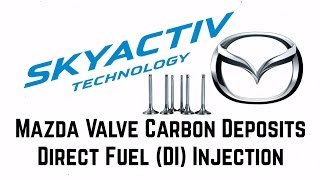
🎬 See how carbon buildup affects Skyactiv engines and how to fight it.Diagnostic Flowchart
Tap your situation to follow the diagnostic path that matches what you're seeing on this vehicle.
Symptoms You May Notice
- Check Engine Light is on or flashing
- Rough or shaky idle.
- Poor acceleration and lack of engine power.
- Engine hesitation or stumbling.
- Increased fuel consumption.
- Fuel smell from the exhaust
- Difficulty starting the engine, especially in cold weather.
- Replacing the catalytic converter. A misfire can damage the catalytic converter, but a bad converter will not cause a single-cylinder misfire code like P0302.
- Replacing oxygen sensors. O2 sensors report on combustion efficiency; they don't cause a misfire in a specific cylinder.
Most Likely Causes
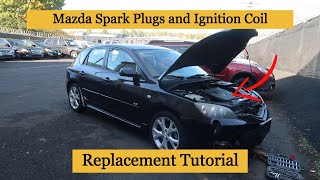
- Faulty Ignition Coil 🔴 High Probability → Shop Ignition Coil Coil-on-plug systems place the coil directly on the spark plug, exposing it to significant heat and vibration. A TSB for a previous generation Mazda (01-014-16-3208A) explicitly mentions internal ignition coil failure from thermal stress as a cause for misfires.
How to confirm: Swap the ignition coil from cylinder 2 with another cylinder (e.g., cylinder 1). Clear the codes and run the engine. If the code changes to P0301 (Cylinder 1 Misfire), the coil is faulty.
Typical fix: Replace the bad ignition coil. While you can replace just one, if the coils are original and high-mileage, consider replacing all of them as a preventative measure.
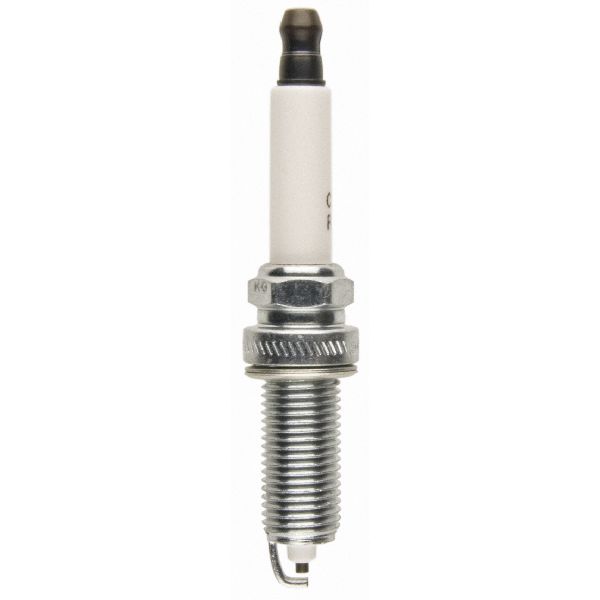
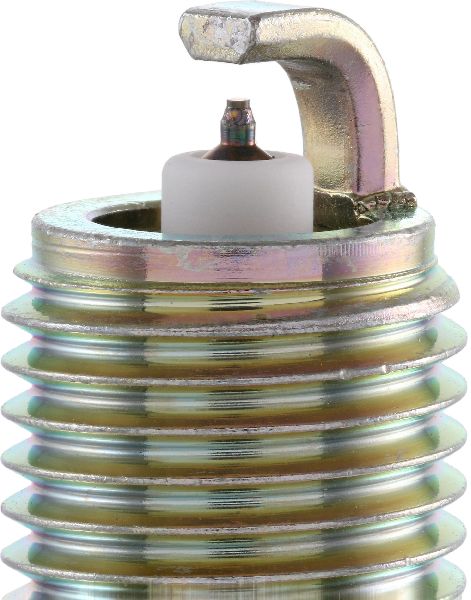
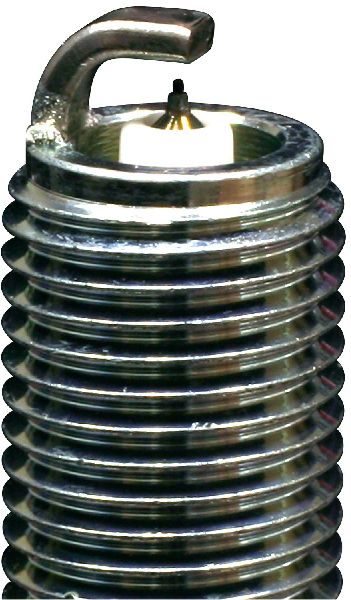
Est. part cost: $40 - $100 - Worn or Fouled Spark Plug 🔴 High Probability → Shop Spark Plug Direct injection engines can be sensitive to spark plug condition. Mazda specifies a replacement interval of 75,000 miles for non-turbo engines and 40,000 miles for the 2.5T. A worn electrode, carbon fouling, or a cracked insulator will prevent a strong spark, causing a misfire.
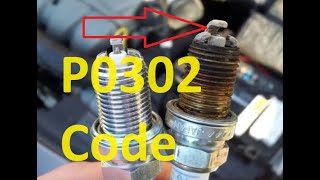
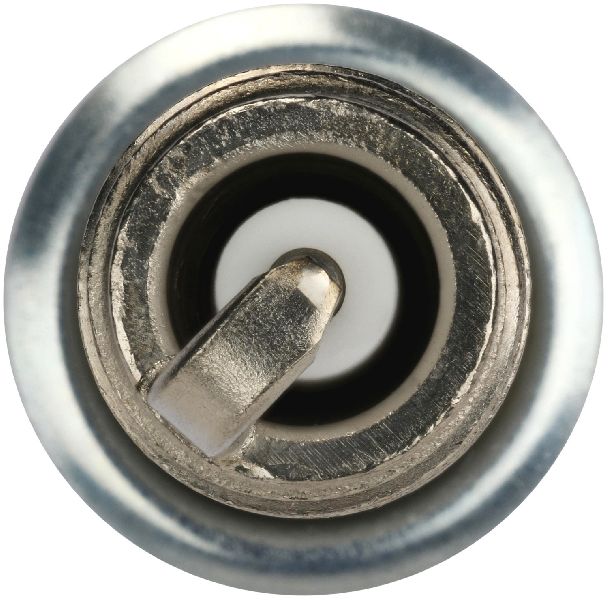
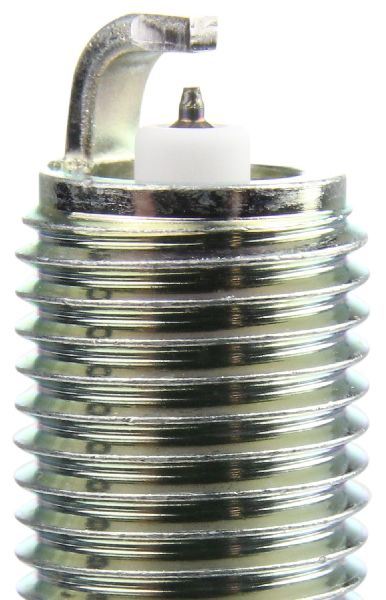
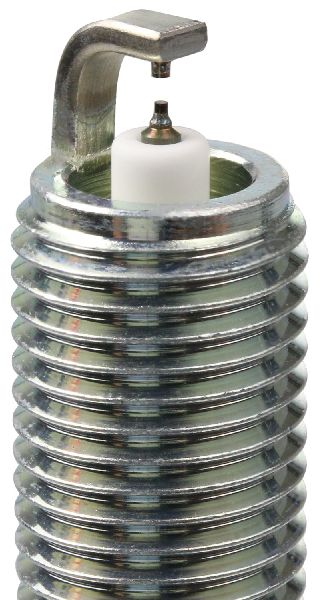
How to confirm: After confirming the coil is good, remove the spark plug from cylinder 2. Inspect it for wear (worn electrode), carbon buildup, oil, or damage to the ceramic insulator. Compare it to a plug from a working cylinder.
Typical fix: Replace the spark plug. It is best practice to replace all spark plugs as a set to ensure even performance. Use high-quality Iridium or Ruthenium plugs; OEM plugs are pre-gapped and should not be adjusted.
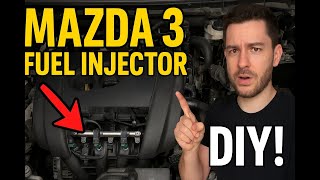
Est. part cost: $15 - $25 per plug - Clogged or Faulty Fuel Injector 🟡 Medium Probability → Shop Fuel Injector Carbon buildup is a known characteristic of direct injection engines and can clog injectors over time. A TSB for a previous generation (01-004-17-3317a) notes that misfire codes can be stored at the same time as fuel injector circuit codes. Some owners have reported fixing a P0302 with fuel system cleaners or by replacing the injector.
How to confirm: Listen for a consistent clicking sound from the injector with a mechanic's stethoscope. You can also test the injector's resistance with a multimeter or perform a fuel injector balance test. Swapping injectors between cylinders is a more involved but definitive test.
Typical fix: Try a high-quality GDI-specific fuel system cleaner first. If that fails, clean or replace the fuel injector for cylinder 2.
Est. part cost: $70 - $200
Rare But Worth Checking
- Intake Manifold Gasket Leak: → Shop Engine Intake Manifold A vacuum leak near the intake runner for cylinder 2 can lean out the air/fuel mixture, causing a misfire specific to that cylinder. This can be diagnosed with a smoke test.
- Low Engine Compression: This indicates a mechanical engine problem like a bad valve, worn piston rings, or a leaking head gasket. A compression test followed by a leak-down test will confirm this. For 2.5L Turbo models, this can be caused by the issue described in TSB 01-001-23a. For non-turbo models, another TSB (related to coolant leaks) also points to potential cylinder head cracks.
- Carbon Buildup on Intake Valves: Skyactiv-G engines are direct-injection, meaning fuel doesn't wash over the intake valves. Over time, oil vapors from the PCV system can bake onto the valves, restricting airflow and causing misfires, particularly on cold starts. One owner on Reddit reported a P0302 code at 58k miles that was resolved by a manual intake valve cleaning.
- Frozen Water in Exhaust/Intercooler: Several Mazda TSBs (e.g., 01-007/19, 01-002/17) for various models note that in freezing temperatures, especially with short drive times, water can accumulate and freeze in the exhaust system, creating a restriction that causes misfire codes upon startup. On turbo models, condensation can also freeze in the intercooler.
Diagnosis Steps
- Read the code with an OBD-II scanner and note any other codes. Freeze frame data can show the conditions (engine temp, RPM) when the misfire occurred.
- Observe the Check Engine Light. If it is flashing, shut the engine off as soon as safely possible to prevent catalytic converter damage.
- To test the ignition coil, swap the coil from cylinder 2 with the coil from cylinder 1. This requires an 8mm or 10mm socket. Clear the codes and start the engine. If the code returns as P0301, the coil is bad and needs replacement.
- If the code remains P0302, remove and inspect the spark plug from cylinder 2 using a 14mm thin-wall spark plug socket. Replace it if it's worn, fouled, or damaged. It's best to replace all plugs at once if they are near their service interval (75k miles non-turbo, 40k miles turbo).
- If the coil and plug are good, check the fuel injector. Listen for a steady clicking with a stethoscope. Check the wiring connector for damage or corrosion.
- If the issue persists, perform a compression test to rule out mechanical engine problems. Low compression on cylinder 2 warrants a leak-down test to pinpoint the source (rings, intake/exhaust valves).
- Check for vacuum leaks around the intake manifold, especially near the runner for cylinder 2, using a smoke machine.
- For 2.5L Turbo models, if compression is low, refer to TSB 01-001-23a, as the issue may be a worn exhaust valve seat due to a seized exhaust manifold valve.
Parts You'll Likely Need
- Ignition Coil
(OEM #PYFS-18-100 (for engines w/ cylinder deactivation), PE20-18-100A (for engines w/o cylinder deactivation or Turbo))— This is the most common failure point for a single-cylinder misfire on modern engines due to heat and vibration.
Trusted brands: Mazda (OEM), Denso, NGK, Bosch
OEM price range: $90 - $120
Aftermarket price range: $40 - $80 - Iridium Spark Plug
(OEM #PE5R-18-110A (non-turbo), PY8V-18-110 (2.5L Turbo))— Spark plugs are a routine maintenance item and a primary cause of misfires as they wear out.
Trusted brands: NGK (OEM supplier), Denso
OEM price range: $20 - $30
Aftermarket price range: $15 - $25
Related Codes That Often Appear With This One
- P0300 — If the misfire is intermittent or affects multiple cylinders, a P0300 (Random Misfire) code may be stored as well.
- P0301, P0303, P0304 — Misfire codes for other cylinders. If present, this points towards a problem affecting the whole engine, like a major vacuum leak, poor fuel quality, or a systemic issue like the ones described in Mazda TSBs.
- P0202 — This code for 'Fuel Injector Circuit/Open - Cylinder 2' points directly to a problem with the fuel injector or its wiring, confirming it as the cause of the P0302 misfire.
Technical Service Bulletins (TSBs) & Recalls
- 01-001-23a: Notes that 2020-2021 turbo models may experience rough idling, poor acceleration, and store P0302 among other misfire codes due to a seized exhaust manifold valve causing compression loss.
- 01-014-16-3208A: While for an older model, this TSB provides relevant context by identifying internal ignition coil failure due to large temperature swings as a cause for misfires.
- 01-007/19 & 01-002/17: These TSBs for other models explain that misfires on cold starts can be caused by frozen water accumulation in the exhaust system, a relevant possibility for any Skyactiv engine in cold climates with short trip patterns.
Platform-Specific Known Issues
- A Technical Service Bulletin (TSB #01-001-23a) was issued for 2020-2021 Mazda3 models with the 2.5L Turbo engine for complaints of poor acceleration, rough idling, and misfire DTCs (P030x). The cause is a seized variable valve in the exhaust manifold leading to overheating, uneven wear on an exhaust valve seat, and subsequent loss of compression. The fix involves replacing the cylinder head and the redesigned exhaust manifold.
- Multiple TSBs (01-007/19, 01-002/17) for other Skyactiv models describe how misfires can occur at startup in freezing temperatures due to water accumulating and freezing in the exhaust, causing a restriction. This is most common on vehicles that are frequently driven for short distances in the cold.
- As a gasoline direct injection (GDI) engine, the Skyactiv-G is susceptible to carbon buildup on the intake valves over time, which can cause misfires. A Reddit user with a Skyactiv engine documented fixing a P0302 code at 58,000 miles by performing a manual walnut-shell blasting of the intake valves.
Helpful Videos

We Have This Part in Stock

The information in this article is provided for general reference and educational purposes only. Vehicle specifications, procedures, and part compatibility can vary by production date, trim level, and region. Always consult your vehicle's factory service manual and verify part numbers before purchasing or performing repairs. Safety-critical components such as airbags, seat belts, and braking systems should be installed by a qualified professional.
- Mazda MAZDA3:
- 🧭 Diagnostic Flowchart
- 🎬 Helpful Videos
- 🛍️ Shop This Part
- What's Unique About the 2019-2021 Mazda MAZDA3
- Symptoms You May Notice
- Most Likely Causes
- Rare But Worth Checking
- Diagnosis Steps
- Parts You'll Likely Need
- Related Codes That Often Appear With This One
- Technical Service Bulletins (TSBs) & Recalls
- Platform-Specific Known Issues
- 🎟️ Get 5% Off