

P0302 on 2003-2010 Porsche Cayenne 3.2L V6: Cylinder 2 Misfire Causes and Fixes
On a Porsche Cayenne with the 3.2L V6 engine, code P0302 almost always points to a failed ignition coil on cylinder 2. This is a very common issue. A new coil costs between $30 and $75, and replacement is a straightforward DIY task. Cylinder 2 is the second cylinder counting from the front of the engine.
- P0302 on the Cayenne 3.2L V6 is most likely a bad ignition coil on cylinder 2.
- The easiest way to confirm a bad coil is to swap it with one from another cylinder and see if the code follows.
- It is highly recommended to replace all six ignition coils and spark plugs at the same time to prevent future misfires.
- If the check engine light is flashing, avoid heavy acceleration to protect your catalytic converters from damage.
- This issue is common for the VW-sourced 3.2L VR6 engine and is a manageable DIY repair for most owners.
What's Unique About the 2003-2010 Porsche Cayenne
The 3.2L V6 engine in the first-generation Porsche Cayenne (model years 2004-2006) is a VR6 engine shared with Volkswagen and Audi. These engines are notoriously prone to ignition coil failures as they age due to heat cycles causing the plastic and epoxy casings to crack. While the coils are generally durable, they are a frequent failure point that can cause misfires as the vehicle ages. Owners often replace all six coils at once as a preventative measure when one fails, a practice highly recommended in owner forums.
Generation note: The 2003-2010 range covers the entire first generation of the Porsche Cayenne, known as the 955 (2003-2006) and the 957 (2008-2010 facelift). The 3.2L V6 engine was only available in the 2004-2006 model years (955 generation). The subsequent 957 V6 used a related 3.6L VR6 which shares many of the same components and failure points, including ignition coils.
Symptoms You May Notice
- Rough or shaky engine idle
- Hesitation or stumbling during acceleration
- Noticeable loss of engine power
- Flashing or solid Check Engine Light
- Reduced fuel economy
- Engine sounds like it's 'loping' or running on fewer cylinders
- Replacing only the spark plug when the ignition coil is the actual cause of the misfire.
- Replacing the mass airflow (MAF) sensor, as a faulty MAF sensor would typically cause multiple or random misfire codes (P0300) and lean codes, rather than a single cylinder misfire.
Most Likely Causes
- Failed Ignition Coil 🔴 High Probability → Shop Ignition Coil The 3.2L VR6 engine used in the Cayenne is known for ignition coil failures as they age. Heat cycles in the engine bay cause the internal epoxy and plastic housing to develop hairline cracks, allowing high voltage to arc to the cylinder head instead of the spark plug. This is the most common cause of a single-cylinder misfire on this engine.
How to confirm: Swap the ignition coil from cylinder 2 with another cylinder (e.g., cylinder 1). Clear the codes and drive the vehicle. If the code changes to P0301, the ignition coil is faulty. This is the universally recommended first diagnostic step in owner forums.
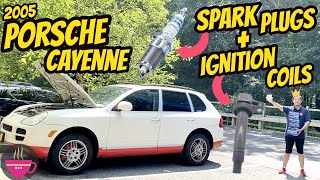
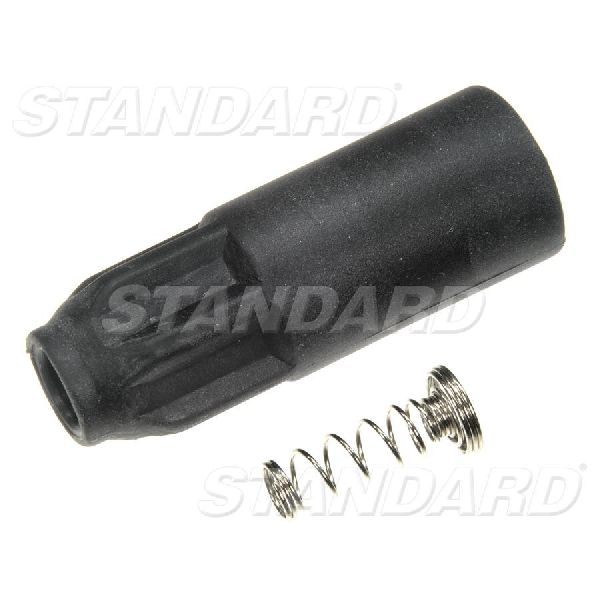
Typical fix: Replace the failed ignition coil. It is highly recommended to replace all six coils and spark plugs 🎬 Watch: Step-by-step guide to replacing your coils and spark plugs. at the same time for reliability, as the others are likely of the same age and condition.
Est. part cost: $30-$75 per coil - Worn Spark Plugs 🟡 Medium Probability → Shop Spark Plug Spark plugs are a regular maintenance item. If they are old, have an incorrect gap, or are fouled by oil from a leaking valve cover gasket, they can fail to produce a strong enough spark, causing a misfire.
How to confirm: Remove the spark plug from cylinder 2 and inspect it for wear, oil fouling, or damage. Check the gap and compare it to the manufacturer's specification (typically 1.1mm). A user on Rennlist reported that re-gapping their plugs temporarily solved their misfire, indicating wear.
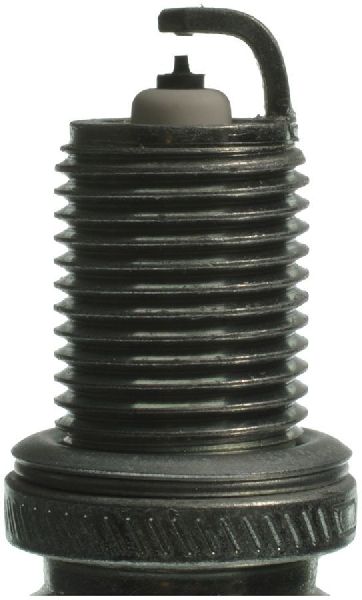
Typical fix: Replace the spark plug. It is best practice to replace all six spark plugs at the same time. Recommended service interval is every 40,000 miles.
Est. part cost: $10-$25 per plug - Vacuum Leak ⚪ Low Probability The plastic and rubber hoses in the engine bay can become brittle and crack over time due to heat and age, leading to unmetered air entering the engine. The PCV/breather hoses and the intake manifold gaskets are common culprits. A failed Air-Oil Separator (AOS) diaphragm is also a very common source of a large vacuum leak on this engine.
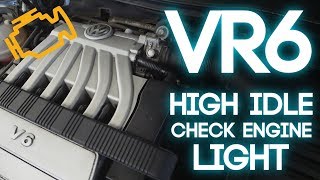
How to confirm: Perform a smoke test to find the source of the leak. You can also carefully spray carburetor cleaner around vacuum lines and intake gaskets with the engine running; a change in idle speed indicates a leak. 🎬 See how a failed AOS causes high idle and codes. For a failed AOS, a high-pitched squeal may be audible at idle, and placing a finger over the small hole on the valve cover will change the engine sound.
Typical fix: Replace the cracked or broken vacuum hose or gasket. If the AOS diaphragm has failed, it can sometimes be replaced separately, though many owners replace the entire valve cover assembly.
Est. part cost: $20-$250 depending on the hose or part - Faulty Fuel Injector ⚪ Low Probability → Shop Fuel Injector Fuel injectors can become clogged with deposits over time or fail electronically, preventing the correct amount of fuel from being delivered to the cylinder. While less common than coils, it is a known failure point. In some Porsche models, fuel delivery issues can trigger a cascade of codes; for instance, NHTSA ODI #11443174 notes a scenario where P0302 occurred alongside P0087 (Fuel rail system pressure too low) and misfires on cylinders 1 and 3.
How to confirm: Swap the fuel injector from cylinder 2 with another cylinder. If the misfire code follows the injector, it is faulty. This is a more involved diagnostic step than swapping a coil and typically requires removing the intake manifold.
Typical fix: Replace the faulty fuel injector. Some owners elect to replace all six at once.
Est. part cost: $50-$150 per injector
Rare But Worth Checking
- Low Engine Compression: A mechanical engine issue, such as a worn piston ring, a problem with a valve, or stretched timing chains, can cause a loss of compression in the cylinder, leading to a misfire. This is less common but more serious. A compression test is needed to confirm.
- Air-Oil Separator (AOS) / PCV Failure: A failed diaphragm in the AOS (which is part of the valve cover on the VR6) can cause a massive vacuum leak, leading to rough running, a high-pitched squealing noise, and multiple misfire codes. A strong suction at the oil filler cap when the engine is running is a key symptom. A user on Rennlist suspected this after experiencing wandering misfires.
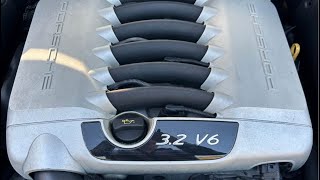
- Leaking Valve Cover Gasket: → Shop Engine Valve Cover A leaking valve cover gasket can allow oil to pool in the spark plug wells, shorting out the ignition coil and causing a misfire. A user on the Pelican Parts forum resolved their rough running issue, which was caused by oil-filled spark plug wells, by replacing the valve cover gasket 🎬 Watch this walkthrough for removing the intake and valve cover. and all six ignition coils.
Diagnosis Steps
- Read the trouble codes with an OBD-II scanner to confirm P0302 and any other related codes. Note if the check engine light is solid or flashing.
- Identify Cylinder 2: On the 3.2L VR6, the cylinders are numbered 1-6 from front to back. Cylinder 2 is the second one from the front of the engine.
- Swap the ignition coil from cylinder 2 to an adjacent cylinder (e.g., cylinder 1). Clear the codes and test drive the vehicle until the check engine light returns.
- Scan the codes again. If the code has moved to P0301, the ignition coil is the problem. Replace it (and ideally all six).
- If the code remains P0302, inspect the spark plug well for oil. If oil is present, the valve cover gasket is leaking and must be replaced.
- If no oil is present, swap the spark plug from cylinder 2 to another cylinder. Clear codes and retest. If the code moves, the spark plug is faulty.
- If the misfire is still on cylinder 2, inspect for vacuum leaks. Listen for hissing or a high-pitched squeal from the engine bay, particularly around the valve cover (AOS/PCV). A smoke test is the most effective method.
- If no vacuum leaks are found, the issue is likely with the fuel injector or a mechanical problem. Testing the fuel injector is the next logical step.
- If all else fails, perform a compression test on cylinder 2 to check for mechanical engine problems like bad valves or piston rings.
Parts You'll Likely Need
- Ignition Coil
(OEM #PAB-905-715 (supersedes 95560210100, 95560210101, 95560210102, 95560210103, 95560210104, 95560210105))— This is the most frequent cause of a P0302 misfire on the Cayenne 3.2L V6 engine.
Trusted brands: Bosch (OEM supplier, part 0221604112), NGK, Beru, Bremi
OEM price range: $60-$95
Aftermarket price range: $30-$75 - Spark Plug
(OEM #95517021990)— Worn spark plugs are the second most common cause and should be replaced as part of regular maintenance, especially when replacing coils.
Trusted brands: NGK, Bosch, Denso
OEM price range: $20-$30
Aftermarket price range: $10-$25
Related Codes That Often Appear With This One
- P0300 — If the misfire is intermittent or affects other cylinders, a P0300 (Random/Multiple Cylinder Misfire) code may appear alongside P0302. This is common if the root cause is a vacuum leak or fuel pressure issue.
- P0301, P0303, P0304, P0305, P0306 — If other ignition coils, spark plugs, or injectors are also failing, you may see misfire codes for other specific cylinders. This is very common as these components tend to age and fail at similar rates.
Platform-Specific Known Issues
- Ignition Coil Failure: → Shop Ignition Coil The 3.2L VR6 engine is known for ignition coil failures, making it the primary suspect for any single-cylinder misfire code. Heat degradation causes cracks in the coil housing, leading to spark leakage.
- PCV / Air-Oil Separator Diaphragm Tear: The PCV diaphragm integrated into the valve cover is a common failure point. A tear causes a significant vacuum leak, often accompanied by a high-pitched squeal, rough idle, and multiple misfire codes. Strong suction at the oil filler cap is a key indicator.
Mechanic-Grade Diagnostic Values
- Fuel Pressure at Rail (Key On, Engine Off) — expected: 33 - 39 psi. Failure: Pressure significantly below this range may indicate a weak fuel pump or a leak.
- Fuel Pressure at Rail (Engine Idling) — expected: 29 - 34 psi. Failure: Incorrect pressure can indicate a faulty fuel pressure regulator or pump.
- Ignition Coil Primary Winding Resistance — expected: 0.49 - 0.57 Ohms. Failure: A reading outside this range indicates a faulty coil. This test is performed on the coil itself after removal.
- Ignition Coil Secondary Winding Resistance — expected: 9.5 - 11.1 kOhms. Failure: A reading outside this range indicates a faulty coil. This test is performed on the coil itself after removal.
Hidden / Shadow Codes Worth Checking
- None: In some cases, a faulty fuel injector can cause misfires without storing a specific fault code in the DME control unit. This can make diagnosis difficult if only a P0302/P0300 code is present. (see via This is an absence of a code; diagnosis would rely on live data and physical testing after common causes are ruled out.)
Scan Tool Commands That Help
- Porsche PIWIS Tester: Diagnostic Drive to evaluate drivetrain knocking — A specific test drive procedure exists to help a technician differentiate between misfire-related vibrations and drivetrain issues (like a transfer case) that can feel similar to the driver. This is used when initial misfire diagnosis is inconclusive.
Wiring & Ground Locations
- Ignition Coil Fuses — In the engine bay fuse box, fuses #7 and #8 are for the ignition coils. Fuse #7 covers cylinders 1, 2, and 3. Fuse #8 covers cylinders 4, 5, and 6.. A faulty fuse could cut power to the coil for cylinder 2 (and others), but this is a very rare failure mode. It's more likely to be checked if multiple misfire codes for cylinders 1-3 are present.
- Engine to Chassis Ground Strap — The main ground cable runs from the alternator to the left front frame rail (driver's side in LHD vehicles). The cable is approximately one foot long.. A corroded or loose main ground can cause a host of electrical issues, including weak spark, which can lead to intermittent and hard-to-diagnose misfires across multiple cylinders.
- General Ground Points — German vehicles typically use brown wires for grounds. Key locations to check for corrosion include a point in the battery compartment, two behind the oil filler cap on the engine/bellhousing, and a major point under the carpet in front of the driver's seat.. Poor grounding for the ECU or ignition system can cause erratic behavior and misfire codes. Checking these points is a crucial step in diagnosing electrical gremlins.
Real Owner Repair Stories
- Rennlist user (Porsche 996 Turbo (engine architecture shares principles with Cayenne)) — Persistent misfire codes P0300, P0301, P0302, P0303, especially around 1800 and 3000 RPM.
❌ Tried (didn't work) Replacing ignition coils, Replacing spark plugs
✅ What actually fixed it The cause was a poorly repaired/welded Variocam solenoid on bank 2. Replacing the damaged solenoid with a proper new part resolved the misfires. - Rennlist user (Porsche 996 (similar diagnostic path)) — Persistent misfire on a single cylinder (P0306) that would not resolve.
❌ Tried (didn't work) New coils and plugs, Swapping coils and injectors to other cylinders (fault did not move), Leak down test
✅ What actually fixed it A second shop suspected a sticky valve or lifter. They drained two quarts of oil, added two quarts of Automatic Transmission Fluid (ATF), and had the owner drive the car for 100-200 miles. After this treatment, the oil was fully changed. The misfire was resolved.
"I Checked Everything" — The Actual Cause
- In one documented case, persistent misfires across multiple cylinders were not caused by a vacuum leak (which a smoke test would find), but by a faulty Variocam solenoid. This electronic component's failure caused timing issues that led to misfires, a problem a smoke test cannot identify.
OEM Part Supersession History
95560210100 through 95560210105→PAB-905-715— Standard part revisions over time to improve reliability and manufacturing.022905715 (VW/Audi)→022905715B, C, D, E, F— This is the corresponding VW/Audi part number family for the VR6 engine ignition coil, showing its own revision history. The Bosch OEM part number is 0221604112.
Heads up: Aftermarket performance versions like those from APR may have different casings (e.g., red) but are designed as direct plug-and-play replacements.
Diagnostic Flowchart
Real Owner Stories
Aggregated from forums and TSBs cited above. Mileages and costs reflect what owners reported in those sources.
2004 Porsche Cayenne 3.2L V6
Symptoms: Experienced wandering misfires across multiple cylinders, including P0302, accompanied by a strong vacuum pull at the oil cap.
What fixed it: After replacing spark plugs and coils failed to resolve the issue, the owner ordered a replacement membrane for the Air-Oil Separator (AOS) to fix the vacuum leak.
Source hint: Rennlist thread titled '2004 Cayenne 3.2 Mysterious Misfire'
2004 Porsche Cayenne 3.2L V6
Symptoms: Vehicle suddenly developed a rough running condition. Inspection revealed that the spark plug wells were filled with oil from a leaking valve cover gasket.
What fixed it: Replaced all six ignition coils and repaired the valve cover gasket seal, which completely resolved the rough running and misfires.
Source hint: Pelican Parts Forum thread titled '2004 Porsche Cayenne 3,2 V6 Running Rough'
2005 Porsche Cayenne Base 3.2L V6
Symptoms: Check engine light illuminated with codes P0300 and P0302.
What fixed it: Replaced the ignition coil on cylinder 2, following community advice that this is the standard, accepted first step in diagnosis for this specific vehicle.
Source hint: RennTech.org thread titled '05 Base Cayenne 6 speed - Cel codes p0300 and p0302'
Documented NHTSA Reports
Porsche Owner Report
Symptoms: An owner reported a series of engine fault codes including 10591-P0301, 10592-P0302, and 10593-P0303, indicating misfires across the first three cylinders.
Findings: According to NHTSA ODI #11443174, these misfire codes were documented alongside code 2838-P0087, which indicates the fuel rail system pressure was too low due to a short to plus.
Source: NHTSA ODI #11443174
Related OBD-II Codes
Frequently Asked Questions
Why is my 3.2L VR6 Cayenne prone to ignition coil failures causing P0302?
I have a P0302 code and hear a high-pitched squeal from the engine bay. What does this mean?
How can I quickly confirm if the ignition coil on cylinder 2 is bad on my Cayenne?
I found oil in the spark plug well of cylinder 2. Will replacing the spark plug fix my P0302?
Should I replace just the one bad ignition coil or all of them on my 3.2L Cayenne?
Are there other vehicles that share this exact P0302 issue with the 3.2L Cayenne?
Helpful Videos
We Have This Part in Stock

The information in this article is provided for general reference and educational purposes only. Vehicle specifications, procedures, and part compatibility can vary by production date, trim level, and region. Always consult your vehicle's factory service manual and verify part numbers before purchasing or performing repairs. Safety-critical components such as airbags, seat belts, and braking systems should be installed by a qualified professional.
- Porsche Cayenne:
- 🧭 Diagnostic Flowchart
- 🎬 Helpful Videos
- 🛍️ Shop This Part
- What's Unique About the 2003-2010 Porsche Cayenne
- Symptoms You May Notice
- Most Likely Causes
- Rare But Worth Checking
- Diagnosis Steps
- Parts You'll Likely Need
- Related Codes That Often Appear With This One
- Platform-Specific Known Issues
- Mechanic-Grade Diagnostic Values
- Hidden / Shadow Codes Worth Checking
- Scan Tool Commands That Help
- Wiring & Ground Locations
- Real Owner Repair Stories
- "I Checked Everything" — The Actual Cause
- OEM Part Supersession History
- Real Owner Stories
- 2004 Porsche Cayenne 3.2L V6
- 2004 Porsche Cayenne 3.2L V6
- 2005 Porsche Cayenne Base 3.2L V6
- Documented NHTSA Reports
- Porsche Owner Report
- Related OBD-II Codes
- Frequently Asked Questions
- 🎟️ Get 5% Off