

P0302 on 2009-2013 Subaru Forester: Cylinder 2 Misfire Causes and Fixes
P0302 on a 2009-2013 Forester most often means a worn spark plug, a bad ignition wire, or a failing ignition coil pack. These are affordable, DIY-friendly parts and should be the first items you check before suspecting more complex issues like tight valve clearances, which are also known to occur on this engine.
- P0302 on a 2009-2013 Forester is a misfire on the driver's side rear cylinder.
- Start your diagnosis with the 'Big Three' of ignition: spark plugs, wires, and the coil pack. These are the most likely causes and are relatively easy to replace.
- Do not drive if the check engine light is flashing to avoid damaging your catalytic converter.
- If you replace the common ignition parts and the misfire continues, especially when the engine is warm, the next step is a mechanical diagnosis focusing on engine compression and valve clearance.
What's Unique About the 2009-2013 Subaru Forester
The 2009-2013 Forester uses the SOHC EJ253 engine, which features a single ignition coil pack with long spark plug wires, a design more prone to age-related ignition failures compared to newer coil-on-plug systems. Additionally, this engine has a mechanical valve train that requires periodic valve lash (clearance) adjustments. Neglecting this maintenance (due every 105,000 miles) can lead to tight exhaust valves, loss of compression when the engine is hot, and persistent misfires that are often misdiagnosed as ignition or fuel problems.
Symptoms You May Notice
- Rough or shaking idle
- Hesitation or stumbling during acceleration
- Solid or flashing Check Engine Light
- Reduced engine power and poor throttle response
- Poor fuel economy
- Engine stalling at stops
- A noticeable 'chugging' or 'sputtering' sound from the engine
- Replacing only the spark plug when the ignition wire or coil was the actual problem.
- Replacing ignition components repeatedly when the underlying cause is a mechanical issue like tight valve clearance.
- Assuming a head gasket failure immediately, as this was more common on older Subaru models and is less likely to be the primary cause of a single cylinder misfire on this specific engine without other symptoms like overheating or coolant loss.
Most Likely Causes
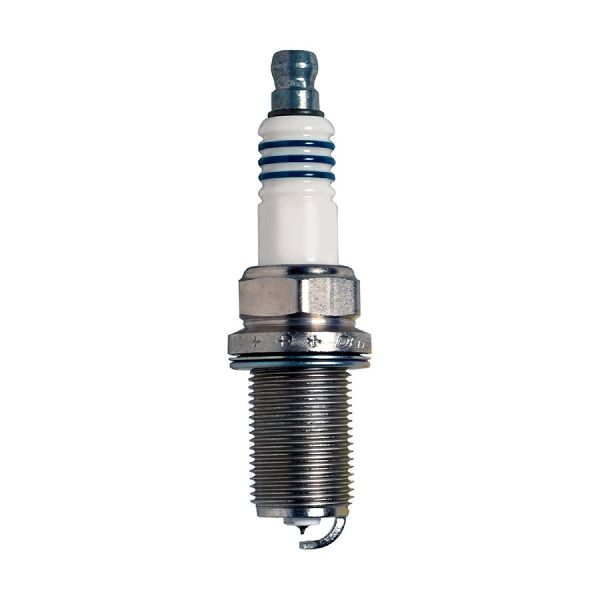
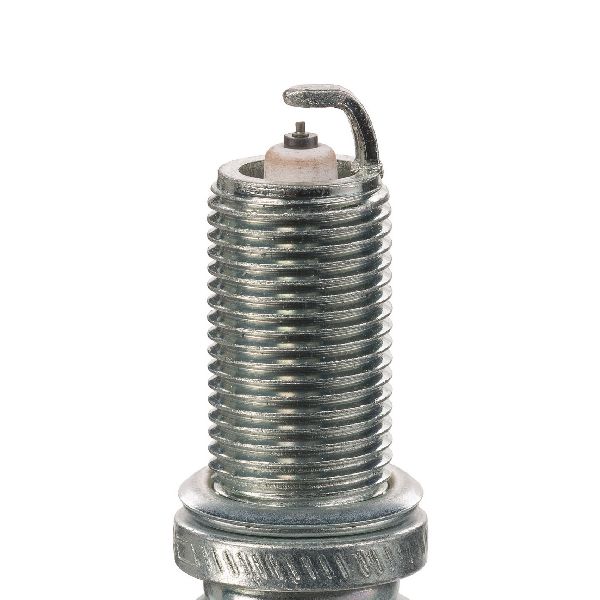
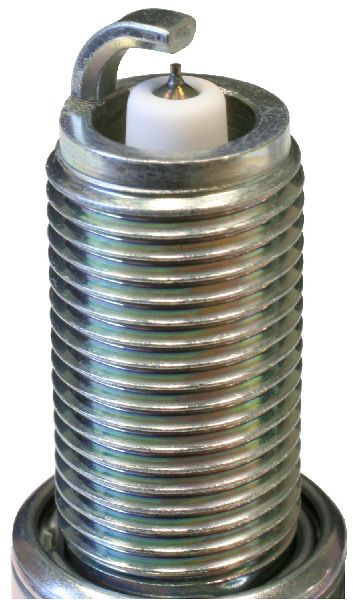
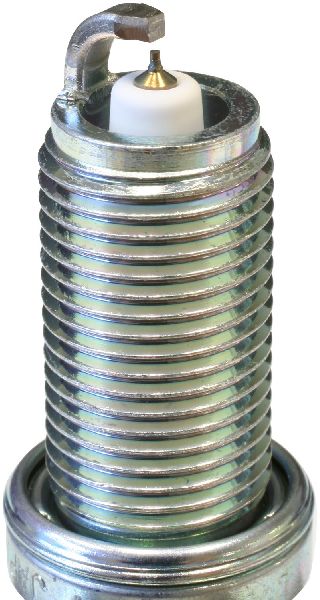
- Worn Spark Plugs 🔴 High Probability → Shop Spark Plug Spark plugs are a regular wear item with a 30,000-mile interval on the non-turbo EJ253. Oil leaks from valve cover gaskets (another common Subaru issue) can also foul the plugs, causing a misfire.
How to confirm: Remove the spark plug from cylinder 2 and inspect it for wear (rounded electrode), damage, carbon fouling, or oil contamination. Compare it to a new plug. The correct gap is 0.044 inches.
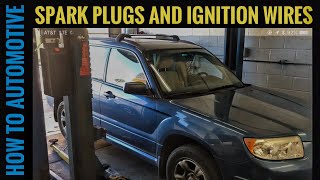
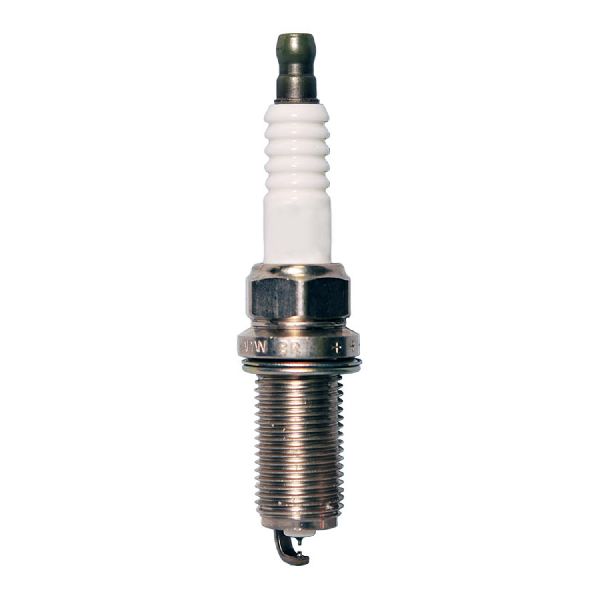
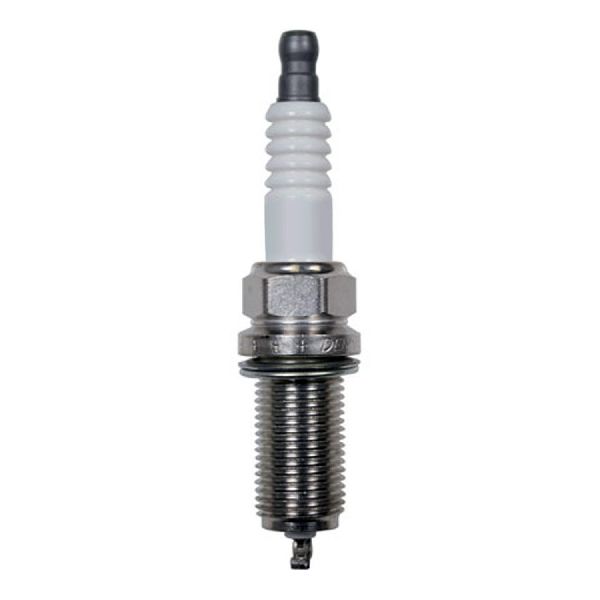
Typical fix: Replace all four spark plugs. 🎬 See this walkthrough for replacing your plugs and wires It is best practice to replace them as a set. Using the OEM-spec NGK plugs is highly recommended for this engine.
Est. part cost: $30-$60 - Faulty Spark Plug Wires 🔴 High Probability → Shop Spark Plug
How to confirm: Inspect the wire for cylinder 2 for any visible damage, cracks, or corrosion at the terminals. A definitive test is to swap the wire for cylinder 2 with the wire for cylinder 4 (the other cylinder on the driver's side). If the code changes to P0304, the wire is bad. Another test is to run the engine in the dark and lightly mist the wires with water from a spray bottle; a bad wire will arc and create a small light show.
Typical fix: Replace the spark plug wires as a set. Brands like NGK or Denso are reliable choices.
Est. part cost: $40-$80 - Failing Ignition Coil Pack 🟡 Medium Probability → Shop Ignition Coil The EJ253 uses a wasted-spark system where one coil fires two cylinders (1 & 2, and 3 & 4). The coil pack is a common failure point as it ages, and a crack or internal short in the half responsible for cylinder 2 will cause a misfire. This failure often becomes more apparent after the engine warms up.
How to confirm: After ruling out plugs and wires, the coil is the next likely suspect. Listen for an audible arcing or snapping sound near the coil pack. A mechanic can test the coil's primary and secondary resistance, but replacement is often the most practical diagnostic step if plugs and wires are confirmed good.
Typical fix: Replace the ignition coil pack. Use a quality OEM or Denso replacement, as cheap aftermarket coils are known to fail prematurely.
Est. part cost: $70-$250 - Clogged or Faulty Fuel Injector ⚪ Low Probability → Shop Fuel Injector
How to confirm: Use a mechanic's stethoscope or a long screwdriver to listen for a consistent clicking sound from the cylinder 2 injector. If it's silent or has an irregular pattern, it may be faulty. Swapping the injector with another cylinder (e.g., cylinder 4) is a more involved but definitive test; if the misfire code follows the injector, the injector is bad.
Typical fix: Replace the faulty fuel injector. It's recommended to replace the O-rings and seals at the same time.
Est. part cost: $50-$150
Rare But Worth Checking
- Incorrect Valve Clearance (Tight Valves): This is a well-documented issue on EJ253 engines. An exhaust valve's clearance that is too tight won't allow it to seal properly when the engine is hot, causing a loss of compression and a misfire that appears after warming up. A compression and leak-down test (especially on a hot engine) are needed for diagnosis. This is a scheduled maintenance item for 105,000 miles but is often overlooked.
- Vacuum Leak: A leak in the intake manifold gasket near the cylinder 2 runner can lean out the air/fuel mixture for that cylinder, causing a misfire. A smoke test is the most effective way to find such a leak.
- Low Engine Compression: This points to a more serious mechanical issue like a burnt exhaust valve, worn piston rings, or a head gasket failure. A compression test followed by a leak-down test will diagnose this. While head gasket failures are common on EJ engines, they usually cause multiple cylinder misfires or overheating symptoms first.
Technical Service Bulletins (TSBs) & Recalls
- TSB Bulletin #11-130-13R: This manufacturer bulletin addresses engine misfire DTCs including P0302, noting that these codes may be accompanied by difficulty starting or a rough idle. It provides specific inspection and repair procedures for intake and exhaust camshaft position-related issues that can trigger these misfires.
- TSB Bulletin #11-100-11R: A service bulletin that highlights difficulty starting and rough idle conditions associated with DTCs P0301 through P0304, as well as various camshaft position sensor codes.
Diagnosis Steps
- Read the code with an OBD-II scanner to confirm P0302. Note any other codes present and check freeze frame data to see when the misfire occurs (e.g., at idle, under load, when hot/cold).
- Inspect the spark plug for cylinder 2 (rear, driver's side). Replace if it is worn, fouled, or past its 30,000-mile service life. Ensure it is gapped to 0.044".
- Inspect the spark plug wire for cylinder 2. Test by swapping it with the wire for cylinder 4 (front, driver's side). If the misfire code moves to P0304, the wire is faulty.
- If plugs and wires are good, the ignition coil is the next most likely cause. Inspect for cracks or carbon tracking. Consider replacing it, especially if it's the original part with over 100,000 miles.
- If the misfire persists, investigate the fuel system. Listen for the clicking of the fuel injector on cylinder 2. If possible, swap the injector with another cylinder to see if the misfire follows.
- If ignition and fuel systems are ruled out, perform an engine compression test on all cylinders when the engine is warm.
- If compression on cylinder 2 is low, perform a cylinder leak-down test to determine if the cause is piston rings, valves, or a head gasket.
- If compression is good but the misfire only happens when the engine is fully warmed up, the cause is very likely tight valve clearances. This requires a valve lash adjustment by a qualified mechanic.
Parts You'll Likely Need
- Spark Plugs (Set of 4)
(OEM #22401AA720 (NGK SILFR6A11))— These are the most common failure point and a routine maintenance item. Worn plugs cause weak spark and misfires.
Trusted brands: NGK, Denso
OEM price range: $12-$20 per plug
Aftermarket price range: $8-$15 per plug - Ignition Wire Set
(OEM #22451AA880)— The long wires on the EJ253 can degrade over time, leading to high resistance or arcing, which weakens the spark.
Trusted brands: NGK (Part #FX101), Denso
OEM price range: $80-$120
Aftermarket price range: $40-$80 - Ignition Coil
(OEM #22433AA542 (superseded by 22433AA590 for 2009-2010 models))— The coil pack is a common failure item after 100,000 miles. A crack or internal short will cause a persistent misfire on the corresponding cylinders.
Trusted brands: Denso, NGK, Subaru (Genuine)
OEM price range: $200-$300
Aftermarket price range: $70-$150
Related Codes That Often Appear With This One
- P0300 — If the misfire is intermittent or affects multiple cylinders, a P0300 (Random/Multiple Cylinder Misfire) may be stored alongside P0302.
- P0301 — Cylinders 1 and 2 are fired by the same side of the ignition coil pack. Seeing P0301 and P0302 together strongly points to a bad coil pack or a problem common to that cylinder bank.
- P0420 — A persistent misfire from P0302 allows unburnt fuel to enter the exhaust, which can overheat and destroy the catalytic converter, eventually leading to a P0420 (Catalyst System Efficiency Below Threshold) code.
Platform-Specific Known Issues
- Valve clearance adjustment is a required but often-missed maintenance item on the SOHC EJ253 engine. Tight exhaust valves are a known cause of heat-related misfires that can be difficult to diagnose without a compression test and valve lash measurement. Many owners chase ignition issues for months before discovering this mechanical problem.
Mechanic-Grade Diagnostic Values
- Ignition Coil Secondary Resistance — expected: 9.5 kΩ - 12.9 kΩ. Failure: A reading outside of this range indicates a faulty coil.
- Spark Plug Wire Resistance (Cylinder 2) — expected: 8 kΩ - 20 kΩ. Failure: Resistance above this range means the wire should be replaced.
- Fuel Injector Resistance — expected: 12 - 16 Ω (High Impedance). Failure: A reading significantly outside this range suggests a faulty injector coil.
- Fuel Pressure — expected: ~46 psi. Failure: Significantly lower or higher pressure can indicate a failing fuel pump or pressure regulator, affecting all cylinders.
- Valve Clearance - Intake (Cold Engine) — expected: 0.20 mm (0.0079 in). Failure: Clearance that is too tight (especially on exhaust valves) can cause misfires when the engine is hot.
- Valve Clearance - Exhaust (Cold Engine) — expected: 0.25 mm (0.0098 in). Failure: Tight exhaust valves are a known cause of heat-related misfires on this engine.
Hidden / Shadow Codes Worth Checking
- Mode $06 Misfire Count: Modern OBD-II systems track misfire events for each cylinder even if the count is not high enough to trigger a Check Engine Light. A technician can view these raw counts to identify an intermittent or borderline misfire on cylinder 2 before it becomes a persistent P0302 code. (see via A professional-grade scan tool or some advanced consumer OBD-II apps that can access Mode $06 diagnostic data. The misfire monitor is often listed under a specific Test ID (TID), such as $53 on Ford, which varies by manufacturer.)
Scan Tool Commands That Help
- Subaru Select Monitor (SSM3/SSM4): Data Display & Save — The dealer-level tool allows for detailed live data monitoring of all engine parameters. For a P0302, a technician would use this to watch short-term and long-term fuel trims for Bank 1 (which includes cylinder 2), injector pulse width, and ignition timing to find anomalies related to the misfiring cylinder.
- Subaru Select Monitor (SSM3/SSM4): System Tests / Bi-Directional Tests — This function allows a technician to manually activate components. For a P0302, one could perform a fuel injector balance test by activating the cylinder 2 injector and measuring the fuel pressure drop, comparing it to other cylinders to confirm if it's clogged or failing.
Wiring & Ground Locations
- Engine Ground Straps — Key grounds are typically located from the engine block/intake manifold to the chassis firewall and from the battery negative terminal to the chassis.. A corroded or loose engine ground can cause erratic electrical behavior, including weak spark from the ignition coil or improper signals to/from the fuel injectors, leading to intermittent misfires that are difficult to diagnose.
- Ignition Coil Connector — The main electrical connector on the ignition coil pack, which is mounted on top of the intake manifold.. This is the central point for the ignition system's primary voltage. Checking for 12V with key-on-engine-off at the correct pin is a crucial step. A wiring diagram is needed to identify the specific power, ground, and trigger wires for the coil side firing cylinders 1 and 2.
- Fuel Injector Connector (Cylinder 2) — The electrical connector on the fuel injector for the rear driver's side cylinder.. Testing this connector for a pulsing ground signal from the ECM with a noid light while cranking confirms the ECM is commanding the injector to fire. A lack of signal points to a wiring or ECM issue, not a bad injector.
Real Owner Repair Stories
- Reddit user on r/SubaruForester ('09 Subaru Forester) — Repeated P0302 check engine light during a cross-country trip.
❌ Tried (didn't work) Replaced all spark plugs and wires., Replaced the ignition coil.
✅ What actually fixed it The user was advised by others that the next steps should be a compression/leak-down test to check for mechanical issues like tight or burnt valves, or to investigate a failing fuel injector, as the common ignition components had already been replaced without success. - Reddit user on r/subaru (Subaru (model not specified, but symptoms are relevant)) — P0302 misfire code persisted after basic tune-up.
❌ Tried (didn't work) Replaced spark plugs.
✅ What actually fixed it The issue was ultimately resolved by replacing the spark plugs, ignition wires, AND a dry-rotted vacuum hose, which was likely the underlying cause. The total cost at a Subaru dealership was $250.
OEM Part Supersession History
22433AA541, 22433AA540, 22433AA480→22433AA542— Likely for improved reliability or change in manufacturer. Part listings show this as the replacement for several previous numbers.
Heads up: The part description for 22433AA542 often applies to turbo models (Forester XT, WRX), while the non-turbo EJ253 uses a different part number (22433AA590 for 2009-2011). It is critical to verify the correct coil part number by VIN, as they are not interchangeable.
Model Year Variations Within This Range
- 2011-2012: During these years, Subaru transitioned from the SOHC EJ253 engine to the DOHC FB25 engine. While they are both 2.5L non-turbo engines, they are mechanically different. The FB25 uses a coil-on-plug ignition system and a timing chain instead of a timing belt. The diagnosis and common causes for a P0302 will differ significantly between these two engines.
Diagnostic Flowchart
Other Known Issues on This Vehicle
Issues unrelated to this code that are worth knowing about as an owner of this generation:
- Head Gasket Failure 🔴 High — Common after 80,000-100,000 miles. The EJ253 is known for external oil and coolant leaks between the block and cylinder head.
- Excessive Oil Consumption 🟠 Medium — Widespread issue, can start at any mileage. Often attributed to piston ring design or PCV system issues. Owners report consuming a quart of oil every 1,000-2,000 miles. (Ref: While more prominent in the later FB-series engines, the EJ25 can also suffer. No specific recall for the EJ253, but it's a well-documented problem.)
- Catalytic Converter Failure 🟠 Medium — Often a consequence of excessive oil consumption or unresolved misfires, which contaminate the catalyst material. Triggers code P0420.
- Timing Belt Maintenance 🔴 High — Not a failure, but a critical maintenance item. The belt, tensioner, and idler pulleys must be replaced every 105,000 miles. Failure to do so will result in catastrophic engine damage as it is an interference engine.
Used vs. New Parts: Buying Guide for This Vehicle
When a used part is the smart pick: For this repair, using used parts is generally not recommended for the primary suspects. However, if a larger component like the intake manifold (in case of a crack) or a wiring harness connector is needed, a used part from a reputable auto recycler is a viable and cost-effective option.
Donor-vehicle mileage cap: roughly under 80000 miles for the part to have meaningful remaining life.
What to inspect on the donor part:
- For a wiring connector, ensure the plastic is not brittle and the locking tab is intact.
- For an intake manifold, inspect thoroughly for any hairline cracks, especially around the cylinder head mounting flanges and sensor ports.
- Check the donor vehicle's history if possible to avoid parts from a car that had a severe frontal impact or engine fire.
OEM-only on this vehicle (don't cheap out):
- Ignition Coil
- Fuel Injectors
Aftermarket brands forum-validated for this vehicle:
- NGK for spark plugs and ignition wires.
- Denso for ignition coils and fuel injectors.
Brands owners have reported issues with on this vehicle:
- Unbranded, 'white-box' ignition coils and fuel injectors from online marketplaces are frequently reported by forum users to have high premature failure rates.
Real Owner Stories
Aggregated from forums and TSBs cited above. Mileages and costs reflect what owners reported in those sources.
2009 Subaru Forester
Symptoms: Check engine light on, showing an engine 2 misfire (P0302) three separate times during a cross-country trip.
What fixed it: The user did not report a final fix; the misfire persisted even after replacing spark plugs, wires, and the ignition coil.
Source hint: Reddit r/MechanicAdvice thread titled ''09 Subaru Forester throws P0302. Third time I've gotten it fixed in the past week.'
Related OBD-II Codes
Frequently Asked Questions
What is the recommended spark plug gap for my 2009-2013 Forester EJ253?
How often should I change the spark plugs on my non-turbo Forester to prevent misfires?
My P0302 code only happens when the engine is fully warmed up. What could be the cause?
Can I test if my spark plug wires are bad without buying new ones?
Is the ignition coil a common failure point on the 2009-2013 Forester?
Could an oil leak cause my P0302 misfire code?
Helpful Videos
We Have This Part in Stock

The information in this article is provided for general reference and educational purposes only. Vehicle specifications, procedures, and part compatibility can vary by production date, trim level, and region. Always consult your vehicle's factory service manual and verify part numbers before purchasing or performing repairs. Safety-critical components such as airbags, seat belts, and braking systems should be installed by a qualified professional.
- Subaru Forester:
- 🧭 Diagnostic Flowchart
- 🎬 Helpful Videos
- 🛍️ Shop This Part
- What's Unique About the 2009-2013 Subaru Forester
- Symptoms You May Notice
- Most Likely Causes
- Rare But Worth Checking
- Technical Service Bulletins (TSBs) & Recalls
- Diagnosis Steps
- Parts You'll Likely Need
- Related Codes That Often Appear With This One
- Platform-Specific Known Issues
- Mechanic-Grade Diagnostic Values
- Hidden / Shadow Codes Worth Checking
- Scan Tool Commands That Help
- Wiring & Ground Locations
- Real Owner Repair Stories
- OEM Part Supersession History
- Model Year Variations Within This Range
- Other Known Issues on This Vehicle
- Used vs. New Parts: Buying Guide for This Vehicle
- Real Owner Stories
- 2009 Subaru Forester
- Related OBD-II Codes
- Frequently Asked Questions
- 🎟️ Get 5% Off