

P0302 on 2014-2018 Subaru Forester 2.5L: Cylinder 2 Misfire Causes and Fixes
P0302 on a 2014-2018 Forester most often means it's time to replace the spark plugs and/or the cylinder 2 ignition coil. Spark plugs are due every 60,000 miles. A DIY coil swap takes minutes, while a full spark plug job is more involved on the boxer engine. In some cases, a faulty alternator pulley can also trigger a 'phantom' misfire code.
- P0302 means cylinder 2 (front, driver's side) is misfiring.
- Before buying any parts, swap the ignition coil from cylinder 2 to cylinder 4. If the code changes to P0304, you've found the problem: a bad coil.
- Check your service records. If your Forester has over 60,000 miles on its current spark plugs, they are a very likely cause and should be replaced.
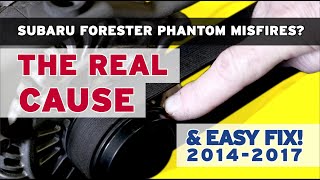
- Be aware of the 'phantom misfire' TSB. If the engine runs perfectly but the code persists, investigate the alternator pulley before spending money on ignition parts.
- A flashing check engine light means stop driving as soon as safely possible to prevent catalytic converter damage.
What's Unique About the 2014-2018 Subaru Forester
For the 2014-2018 Forester (SJ generation), a P0302 code is a very common maintenance reminder. The FB25 engine's spark plugs have a firm 60,000-mile service life, and exceeding this interval is a primary cause of misfires. Additionally, a known issue covered by Technical Service Bulletin 07-103-16R involves the original alternator pulley on 2014-2017 models, which can create vibrations that the engine computer mistakes for a misfire, leading to a 'phantom' P0302 code when the ignition system is perfectly healthy. Manufacturer service bulletin TSB Bulletin #11-100-11R also identifies P0302 as a code associated with difficulty starting and a rough idle.
Symptoms You May Notice
- Rough or shaky idle
- Engine hesitation or stumbling during acceleration
- Flashing or solid Check Engine Light
- Noticeable loss of power
- Reduced fuel economy
- The cruise control and traction control lights may also illuminate, which is a standard Subaru behavior when a Check Engine Light is triggered.
- Replacing ignition components when the true cause is a faulty alternator pulley. TSB 07-103-16R for 2014-2017 models notes that a defective alternator clutch pulley can create vibrations that the crankshaft sensor misreads as a misfire. If the vehicle runs smoothly but still throws a P030x code, inspect the alternator pulley. The original, problematic one is black; the updated replacement is silver.
Most Likely Causes
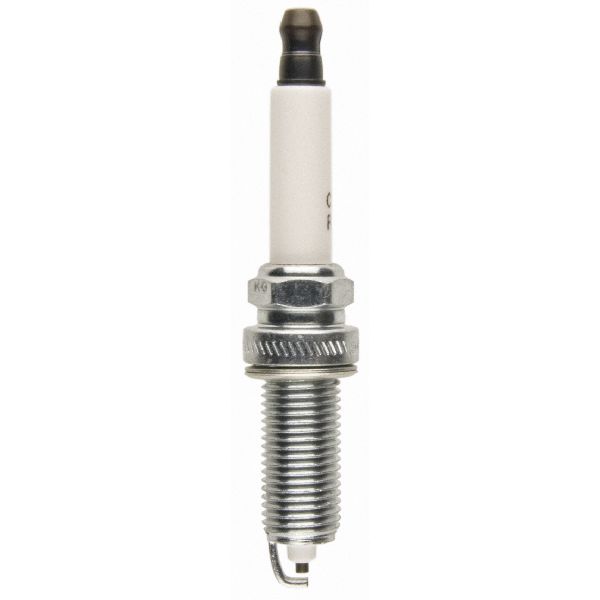
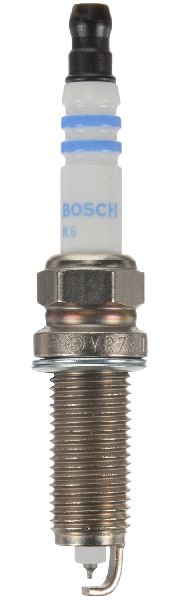
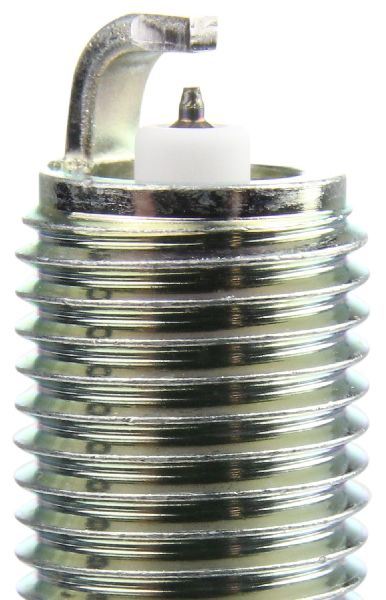
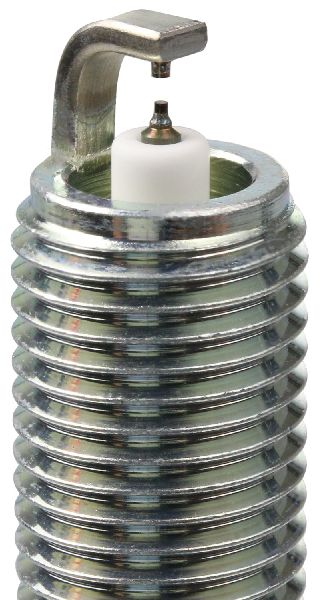
- Worn or Fouled Spark Plugs 🔴 High Probability → Shop Spark Plug The FB25 engine specifies a 60,000-mile replacement interval for its iridium spark plugs. Many owners neglect this service, and worn plugs are the most frequent cause of misfires. Oil consumption issues, common to early FB25s, can also foul plugs prematurely.
How to confirm: Check service records to see when plugs were last changed. If over 60,000 miles ago, they are the primary suspect. A visual inspection of the plug from cylinder 2 will show a worn electrode or fouling. A Reddit user noted that even if plugs look okay, they should be replaced if old.
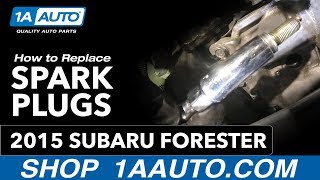
Typical fix: Replace all four spark plugs. It is critical to replace them as a set. The OEM-spec NGK Iridium plugs (SILZKAR7B11) are recommended to avoid compatibility issues.
Est. part cost: $45-$100 for a set of four NGK plugs. - Faulty Ignition Coil 🔴 High Probability → Shop Ignition Coil Ignition coils are a common wear item. Heat cycles and vibration eventually lead to failure, preventing the spark plug from getting the voltage it needs. They can develop cracks that cause arcing, especially in humid weather.
How to confirm: Swap the ignition coil from cylinder 2 (front, driver's side) with the coil from cylinder 4 (rear, driver's side). Clear the codes and drive. If the code changes to P0304, the ignition coil is bad. This is the definitive DIY diagnostic step.
Typical fix: Replace the faulty ignition coil. While you can replace just one, if the vehicle has high mileage, replacing them as a set can prevent future issues. The OEM part number is 22433AA681 (or superseded numbers like 22433AA682), with Denso (673-8305) being a common OEM supplier.
Est. part cost: $50-$120 for a single OEM-quality coil (e.g., Denso, NGK). - Dirty or Clogged Fuel Injector 🟡 Medium Probability → Shop Fuel Injector Fuel deposits can accumulate over time, restricting fuel flow to cylinder 2 and causing a lean misfire. This can be exacerbated by inconsistent fuel quality.
How to confirm: After ruling out spark plugs and coils, a professional can perform a fuel injector balance test. A DIY method is to listen to the injector with a mechanic's stethoscope to ensure it's clicking like the others. An owner on an Outback forum found that using a quality fuel system cleaner immediately smoothed out a recurring P0302 misfire, strongly suggesting a fuel delivery issue.
Typical fix: First, try a high-quality fuel system cleaner with Polyetheramine (P.E.A.), like Subaru's own carbon cleaner (SOA868V9166) or Red Line SI-1. If that fails, the injector may need to be professionally cleaned or replaced.
Est. part cost: $15-$30 for cleaner, $100-$200 for a replacement injector. - Vacuum Leak ⚪ Low Probability Gaskets and hoses can degrade over time, allowing unmetered air to enter the intake manifold, which can lean out the mixture for a specific cylinder.
How to confirm: A smoke test is the most effective way to find a vacuum leak. A visual inspection of all vacuum hoses connected to the intake manifold may also reveal cracks or loose fittings.
Typical fix: Replace the leaking hose or gasket.
Est. part cost: $10-$50 for hoses or gaskets.
Rare But Worth Checking
- Low Engine Compression: This indicates a more serious mechanical problem, such as a burnt valve, worn piston rings, or head gasket issue. A compression test is needed to diagnose this. While less common on the FB25 than older EJ engines, it's not impossible, especially on engines that have suffered from excessive oil consumption.
- Carbon Buildup on Intake Valves: Though this engine is port-injected (which usually keeps valves clean), heavy carbon deposits can still form and disrupt airflow into the cylinder, causing a misfire. Subaru has a TSB (09-74-21R) regarding this issue and recommends a chemical cleaning procedure using a P.E.A. cleaner.
- Faulty Camshaft Position Sensor: → Shop Engine Camshaft Subaru TSB 11-130-13R addresses issues where incorrect camshaft position sensor clearance can lead to various misfire codes, including P0302. This can cause rough idle and starting difficulties.
Diagnosis Steps
- Read the code with an OBD-II scanner to confirm P0302 and check for any other codes.
- Note if the Check Engine Light is steady or flashing. A flashing light indicates a severe misfire requiring immediate attention.
- Ignition Coil Swap Test: Swap the ignition coil from cylinder 2 (front driver's side) with cylinder 4 (rear driver's side). Clear the codes and drive. If the code returns as P0304, the coil is the problem. This is the most common and effective first diagnostic step.
- Spark Plug Inspection: If the coil is good, remove the spark plug from cylinder 2. Check its condition and mileage. If it has over 60,000 miles or looks worn/fouled, replace all four plugs with OEM-spec NGK Iridium plugs.
- Check for Phantom Misfire TSB: If the engine runs smoothly but the code persists, inspect the alternator pulley (2014-2017 models). If it is black, the alternator may be the source of a false misfire signal per TSB 07-103-16R.
- Fuel System Check: Add a bottle of high-quality P.E.A. fuel system cleaner (like Red Line or Subaru's own brand) to a full tank of gas. If the issue improves, it points to a dirty injector. Also, listen to the fuel injector on cylinder 2 with a stethoscope to ensure it is clicking.
- Check for Vacuum Leaks: Perform a visual inspection of vacuum hoses. For a definitive diagnosis, a smoke test is required.
- Compression Test: If all else fails, perform a compression test to rule out mechanical engine damage like worn rings or valves.
Parts You'll Likely Need
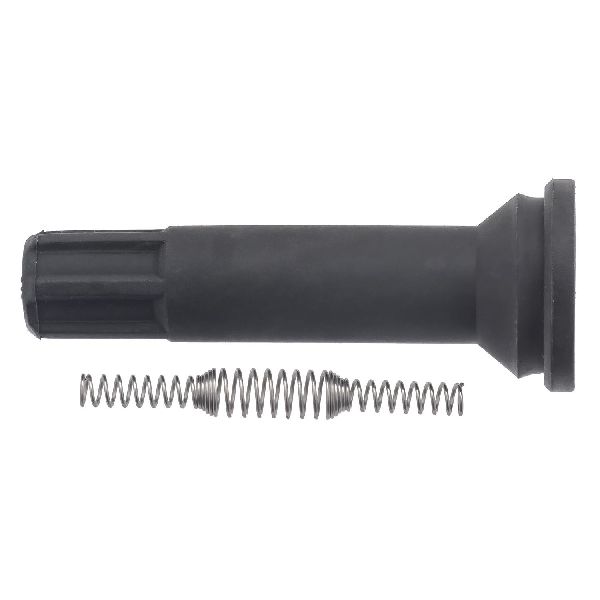
- Ignition Coil
(OEM #22433AA681 (superseded by 22433AA682))— This is one of the two most common failure points for a P0302 code. It's a simple and quick part to replace during diagnosis.
Trusted brands: Denso (OEM Supplier, P/N: 673-8305), NGK, Beck/Arnley
OEM price range: $90-$120
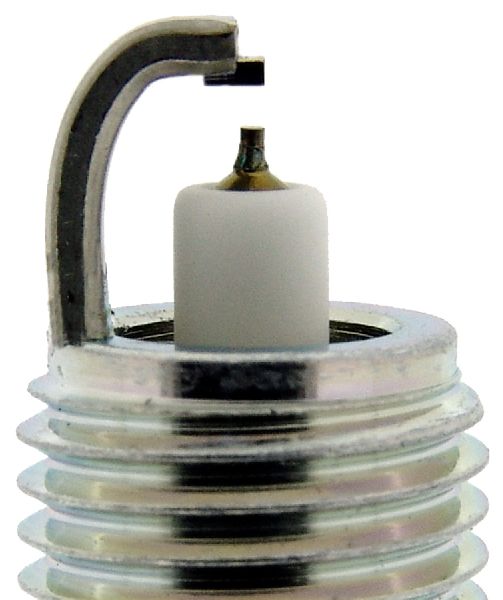
Aftermarket price range: $50-$80 - Iridium Spark Plugs (Set of 4)
(OEM #22401AA781 (NGK SILZKAR7B11))— The 60,000-mile service interval is often missed, making worn plugs the leading cause of misfires on Foresters with this mileage.
Trusted brands: NGK (OEM), Denso
OEM price range: $80-$100
Aftermarket price range: $45-$70
Related Codes That Often Appear With This One
- P0300 — If the misfire is intermittent or affects other cylinders, a P0300 (Random Misfire) may appear alongside P0302.
- P0304 — Since cylinders 2 and 4 are on the same side of the engine (driver's side), a problem affecting that entire bank, like a leaking valve cover gasket fouling the spark plug wells, could cause misfires on both cylinders.
Technical Service Bulletins (TSBs) & Recalls
- TSB 07-103-16R: Addresses false misfire codes (P030x) on 2014-2017 models caused by vibrations from a faulty alternator clutch pulley.
- TSB 09-74-21R: Outlines a cleaning procedure for carbon deposit removal from injectors and intake valves to address misfires, rough idle, and lack of power.
- TSB 11-130-13R: Details diagnosis for misfire DTCs that may be caused by incorrect camshaft position sensor clearance. This bulletin provides inspection and repair procedures for intake and exhaust camshaft position-related and/or engine misfire DTCs including P0302.
- TSB Bulletin #11-100-11R: Notes that engine misfire codes including P0302 can be associated with difficulty starting and a rough idle.
Platform-Specific Known Issues
- A Technical Service Bulletin (TSB 07-103-16R) exists for 2014-2017 models where a faulty original alternator clutch pulley (identified by its black color) can cause false misfire codes. The fix is an updated alternator with a silver-colored pulley.
Mechanic-Grade Diagnostic Values
- Fuel Injector Resistance — expected: 5 to 20 Ohms. Failure: A reading outside of this range indicates a faulty injector.
- Ignition Coil Primary Resistance — expected: 0.49—0.57 ohms at 68°F (20°C). Failure: A reading outside this range suggests the primary winding is faulty. Note: This measurement may not be possible on coil-on-plug units where the ignitor is integrated.
- Ignition Coil Secondary Resistance — expected: 9.5—12.9 kOhms. Failure: A reading outside this range indicates a fault in the secondary winding.
Hidden / Shadow Codes Worth Checking
- Mode $06 Misfire Counts: This is not a 'code' but a data parameter accessible via advanced scan tools. The ECU tracks misfires per cylinder even if they aren't frequent enough to trigger a P0302 code. A technician can view the raw misfire count for cylinder 2 (and all others) to see if it is consistently higher than the rest, indicating a developing problem before the check engine light comes on. (see via Requires an OBD-II scanner with Mode $06 functionality. The data is typically found under a menu like 'On-Board Monitoring' or 'Mode 6'.)
Scan Tool Commands That Help
- Subaru Select Monitor (SSM) or equivalent professional scanner: Misfire Count Data Display — This is a crucial function for diagnosing intermittent misfires. By viewing the live or stored misfire counts for each cylinder, a technician can confirm that cylinder 2 is the sole problem, or see if other cylinders are also misfiring at a lower rate, which might suggest a systemic issue like a vacuum leak or fuel delivery problem.
- Subaru Select Monitor (SSM) or equivalent professional scanner: Injector Cut / Power Balance Test — This active test allows a technician to temporarily disable the fuel injector for cylinder 2 while the engine is running. If there is no change in the engine's idle speed or quality, it confirms that cylinder 2 was not contributing power, strongly pointing to an issue within that cylinder (spark, fuel, or compression). If the idle worsens, the cylinder was working at least partially.
Real Owner Repair Stories
- BobIsTheOilGuy forum user (Subaru Outback with FB25 engine) — Persistent misfire code.
❌ Tried (didn't work) Not specified, but the context implies common ignition parts were likely checked first.
✅ What actually fixed it The problem was a bad fuel injector. The user confirmed this by unplugging the suspect injector, measuring its resistance, and comparing it to a known good cylinder's injector. The faulty injector was replaced, resolving the misfire. - Reddit user in r/SubaruForester (Subaru Forester (year not specified, but behavior is common)) — P0302 code, sputtering on takeoff.
❌ Tried (didn't work) Replacing two spark plugs.
✅ What actually fixed it The user was advised that after replacing plugs, the next most likely culprits are the ignition coil pack and plug wires. A common DIY diagnostic is to spray water on the plug wires in the dark with the engine running to look for arcing, which indicates bad wires.
OEM Part Supersession History
22433AA680→22433AA681, then 22433AA682— Standard part revisions for improved reliability or manufacturing changes.
Heads up: The newest part number, 22433AA682, is the correct replacement for all previous versions on the specified vehicles and should be used to ensure compatibility and longevity.
Model Year Variations Within This Range
- 2019+: Starting around the 2019 model year, Subaru introduced the FB25D, a direct-injection version of the FB25 engine. While the P0302 code's primary causes (coils, plugs) remain similar, the direct-injection system introduces different potential failure points, such as high-pressure fuel system components and a greater susceptibility to carbon buildup on intake valves, which can also cause misfires.
- 2014-2017: As noted in the TSB, these earlier years of the SJ Forester generation were equipped with a potentially faulty black alternator pulley that could induce a 'phantom' misfire code. This issue was addressed in later models.
Diagnostic Flowchart
Other Known Issues on This Vehicle
Issues unrelated to this code that are worth knowing about as an owner of this generation:
- Excessive Oil Consumption 🔴 High — Most prevalent in 2011-2014 models with the FB25 engine. Caused by issues with piston ring design. Can lead to oil levels dropping by a quart every 1,000-1,200 miles. (Ref: A class-action lawsuit led to an extended warranty and potential short block replacement for affected vehicles, but the program has largely expired.)
- Lineartronic CVT Unreliability 🔴 High — Common across 2014-2018 models. Symptoms include shuddering, hesitation, and sometimes complete failure. Failures can occur at any mileage. (Ref: Subaru extended the CVT warranty to 10 years / 100,000 miles for many models, including the Forester, under TSB 16-107-17R.)
- Rear Coil Spring Failure 🟠 Medium — Particularly noted in the 2014 model year, but can affect others. The rear coil springs can corrode and break unexpectedly. (Ref: Subaru issued a recall (WRG-21) for this issue, covering Foresters from 2014-2016.)
- CAN System Parasitic Battery Drain 🟠 Medium — Affects many modern Subarus, including this generation. A software or component issue can cause the system to stay awake, draining the battery overnight. (Ref: Multiple TSBs exist, and a class-action lawsuit was filed regarding this issue.)
- Fragile Windshields 🟡 Low — Many owners report that the windshields are prone to cracking from small impacts. This is more of an annoyance and expense, especially if equipped with EyeSight which requires recalibration.
Used vs. New Parts: Buying Guide for This Vehicle
When a used part is the smart pick: For this repair, a used ignition coil from a reputable salvage yard can be a cost-effective diagnostic tool or short-term fix. If swapping a used coil resolves the P0302, you have confirmed the diagnosis cheaply before buying a new part.
Donor-vehicle mileage cap: roughly under 80000 miles for the part to have meaningful remaining life.
What to inspect on the donor part:
- Look for a donor vehicle with low-to-moderate mileage.
- Inspect the coil for any physical damage, such as cracks in the housing or corrosion on the electrical connector.
- Ask for the VIN of the donor car to verify the model year and ensure it's not from a vehicle with known widespread electrical issues.
OEM-only on this vehicle (don't cheap out):
- Spark Plugs: Always buy new. The cost is low, and they are a critical wear item. Use the specified NGK Iridium plugs to avoid compatibility issues.
Aftermarket brands forum-validated for this vehicle:
- Denso (often the OEM supplier)
- NGK
- Bosch
- Delphi
Brands owners have reported issues with on this vehicle:
- Generic, unbranded ignition coils from online marketplaces can be of poor quality and may fail prematurely. While cheap, they often lead to repeated repairs.
Real Owner Stories
Aggregated from forums and TSBs cited above. Mileages and costs reflect what owners reported in those sources.
2014-2017 Subaru Forester FB25
Symptoms: The engine runs smoothly, but the P0302 code persists as a 'phantom' or false misfire.
What fixed it: Replacement of the original black alternator clutch pulley with an updated silver-colored pulley.
Source hint: TSB 07-103-16R
Subaru Outback 2.5L (FB25)
Symptoms: Recurring P0302 misfire and rough engine operation.
What fixed it: Application of a quality fuel system cleaner, which immediately smoothed out the engine.
Cost: $15-$30
Source hint: Outback forum
2014-2018 Subaru Forester 2.5L — ~65000 miles
Symptoms: Misfire code P0302; spark plugs looked okay visually but were past the service interval.
What fixed it: Replacing all four spark plugs as a set, even though they appeared fine.
Source hint: Reddit user noted in article context
2014-2018 Subaru Forester 2.5L
Symptoms: P0302 code; owner performed a diagnostic swap to confirm the failure point.
What fixed it: Swapping the ignition coil from cylinder 2 to cylinder 4 caused the code to move to P0304, confirming a faulty coil.
Source hint: subaruforester.org
Related OBD-II Codes
Frequently Asked Questions
My 2015 Forester has a flashing Check Engine Light and the traction control light is on. Is this a separate traction control failure?
Does TSB 07-103-16R apply to my 2018 Forester with a P0302 code?
What specific spark plugs should I use for my FB25 2.5L engine to fix a P0302?
Could my P0302 misfire be related to the FB25 oil consumption issue?
Is there a TSB for cleaning carbon deposits if a fuel cleaner doesn't fix my rough idle?
I've replaced the coil and plug on Cylinder 2 but the code persists. Could it be a sensor issue?
Helpful Videos
We Have This Part in Stock

The information in this article is provided for general reference and educational purposes only. Vehicle specifications, procedures, and part compatibility can vary by production date, trim level, and region. Always consult your vehicle's factory service manual and verify part numbers before purchasing or performing repairs. Safety-critical components such as airbags, seat belts, and braking systems should be installed by a qualified professional.
- Subaru Forester:
- 🧭 Diagnostic Flowchart
- 🎬 Helpful Videos
- 🛍️ Shop This Part
- What's Unique About the 2014-2018 Subaru Forester
- Symptoms You May Notice
- Most Likely Causes
- Rare But Worth Checking
- Diagnosis Steps
- Parts You'll Likely Need
- Related Codes That Often Appear With This One
- Technical Service Bulletins (TSBs) & Recalls
- Platform-Specific Known Issues
- Mechanic-Grade Diagnostic Values
- Hidden / Shadow Codes Worth Checking
- Scan Tool Commands That Help
- Real Owner Repair Stories
- OEM Part Supersession History
- Model Year Variations Within This Range
- Other Known Issues on This Vehicle
- Used vs. New Parts: Buying Guide for This Vehicle
- Real Owner Stories
- 2014-2017 Subaru Forester FB25
- Subaru Outback 2.5L (FB25)
- 2014-2018 Subaru Forester 2.5L — ~65000 miles
- 2014-2018 Subaru Forester 2.5L
- Related OBD-II Codes
- Frequently Asked Questions
- 🎟️ Get 5% Off