

P0302 on 2010-2015 Toyota Prius: Cylinder 2 Misfire Causes and Fixes
P0302 on a 3rd Gen Prius is a cylinder 2 misfire. While it can be a simple spark plug or ignition coil, it is frequently caused by a clogged EGR system or a failing head gasket. A rough, shaking idle on cold starts is a major clue pointing towards these more serious issues.
- On a 2010-2015 Prius, P0302 is often more than a bad spark plug. Suspect a clogged EGR system or a failing head gasket first.
- Check your coolant level. A low level without visible leaks is a strong sign of head gasket failure.
- A rough, shaking idle that only happens on cold starts is the most common symptom pointing to the platform-specific issues.
- Don't just replace coils and plugs. At a minimum, swap the coil to another cylinder to confirm the diagnosis before buying parts.
- Cleaning the EGR cooler, valve, and intake manifold is a known, effective fix and a critical maintenance item for preventing this issue.
What's Unique About the 2010-2015 Toyota PRIUS

On the 2010-2015 Prius (Gen 3), a P0302 code is more complex than on a typical car. While standard ignition faults occur, this platform is uniquely prone to issues within its Exhaust Gas Recirculation (EGR) system. Carbon buildup can clog the EGR cooler, EGR valve, and intake manifold passages, leading to uneven air distribution and misfires, particularly on cylinder 2. This can cause condensation to form and get drawn into the cylinder on startup. Furthermore, these models have a well-documented tendency for head gasket failure, which often presents first as a cold-start misfire with codes like P0302 as coolant leaks into the cylinder overnight. Many owners report that the cold start rattle and shudder is the first sign of this impending failure.
Diagnostic Flowchart

Tap your situation to follow the diagnostic path that matches what you're seeing on this vehicle.
Generation note: The 2010-2015 model years cover the entire third generation (XW30) of the Toyota Prius. These models all use the 1.8L 2ZR-FXE engine and share the same common issues related to the P0302 code, specifically the EGR clogging and head gasket failures.
Symptoms You May Notice

- Check Engine Light is on or flashing
- Rough idle, especially on a cold start
- Engine shaking, shuddering, or rattling noise, often described as a 'nasty rattle/knock' for a minute on startup
- Hesitation or lack of power during acceleration
- Decreased fuel economy
- Noticeable knocking sound from the engine bay
- White smoke from the exhaust on startup
- Sweet smell from the exhaust, indicating burning coolant
- Replacing only the spark plugs and ignition coils without investigating the EGR system or for a head gasket leak. Many owners replace these parts only to have the P0302 code return, especially during cold starts.
- A mechanic misdiagnosing the engine misfire as a transmission failure. One owner on PriusChat was told their CVT had failed when the root cause was an engine issue.
Most Likely Causes

- Failed Head Gasket 🔴 High Probability The Gen 3 Prius is known for head gasket failures, often occurring between 100,000 and 200,000 miles. A small leak allows coolant to seep into a cylinder (commonly #1 or #2) when the engine is off, causing a misfire on the next cold start until the coolant is burned off. This issue is often linked to a poorly designed EGR system that, when clogged, creates hotspots in the cylinder head.
How to confirm: Check for a steadily dropping coolant level in the expansion tank with no visible external leaks. A combustion leak test (block tester) on the coolant reservoir can detect exhaust gases. A borescope inspection of cylinder 2 may reveal a 'steam-cleaned' piston top, which looks much cleaner than the others due to the coolant burning off carbon deposits. Some owners report hearing a gurgling sound or seeing bubbles in the coolant reservoir. 🎬 Watch: How to check for a head gasket leak without special tools.
Typical fix: Replace the head gasket. This is a labor-intensive job. 🎬 Watch: Complete step-by-step guide to replacing your Prius head gasket. While the head is off, it is critical to also thoroughly clean the entire EGR circuit (cooler, valve, pipe) and the intake manifold, and replace the PCV valve. Failing to clean the EGR system is a primary reason for repeat head gasket failures.
Est. part cost: $100-$300 - Clogged EGR System (Valve, Cooler, and/or Intake Manifold) 🔴 High Probability The 2ZR-FXE engine's EGR design is highly susceptible to heavy carbon buildup over time. This restricts exhaust gas flow and can cause condensation to pool in the intake manifold, leading to misfires on cold starts. This is a widely documented issue, with many owners recommending preventative cleaning every 50k-80k miles.
How to confirm: Inspect the EGR valve, the pipe leading to the intake manifold, and the intake manifold ports for heavy, black carbon deposits. A P0401 code (EGR Flow Insufficient) is often present alongside the misfire codes. The issue is often confirmed if the misfire happens during light acceleration as mentioned in TSB T-SB-0116-15 REV.
Typical fix: Thoroughly clean the EGR valve, EGR cooler, and intake manifold. Cleaning the cooler is difficult; methods include soaking in degreaser (Purple Power, Oxi-Clean), oven cleaner, or using a pressure washer. 🎬 See this guide on how to clean your Prius EGR system. In many cases, Toyota recommends replacing the intake manifold with an updated part (17120-37054) as per TSB T-SB-0116-15 REV.
Est. part cost: $50-$400 - Faulty Ignition Coil 🟡 Medium Probability → Shop Ignition Coil
How to confirm: Swap the ignition coil from cylinder 2 with another cylinder (e.g., cylinder 4). Clear the codes and drive the vehicle. If the code changes to P0304, the ignition coil is faulty. This is a simple and definitive test.
Typical fix: Replace the failed ignition coil. It is often recommended to replace all four if they are original and high-mileage. Denso and NGK are common OEM-quality brands.
Est. part cost: $40-$90 - Worn or Fouled Spark Plug 🟡 Medium Probability → Shop Spark Plug
How to confirm: Remove the spark plug from cylinder 2 and inspect it. Look for heavy carbon fouling, oil, coolant residue (which would point to a head gasket), or a worn electrode. Compare it to the other plugs. A coolant-fouled plug may look unusually clean or have white deposits.
Typical fix: Replace the spark plug. It is best practice to replace all four spark plugs at the same time. Use the correct OEM spec plugs (Denso SC20HR11).
Est. part cost: $10-$25 - Clogged or Faulty Fuel Injector ⚪ Low Probability → Shop Fuel Injector
How to confirm: This is more difficult to diagnose. A mechanic can perform a fuel injector balance test to measure the flow rate of each injector. You can also swap injectors between cylinders, but this is more labor-intensive than swapping coils. Using a fuel system cleaner like Techron is a simple first step, though it may not fix a heavily clogged injector.
Typical fix: Replace the faulty fuel injector. Some owners have had success resolving a misfire by using a strong fuel injection cleaner in the fuel tank.
Est. part cost: $70-$150
Rare But Worth Checking
- Low Engine Compression: While less common than a head gasket leak, internal engine damage like worn piston rings or valve issues could cause a persistent misfire. A compression test and a cylinder leak-down test would be needed to confirm. A bent connecting rod can occur if enough coolant enters the cylinder from a bad head gasket and the engine attempts to compress it (hydro-lock).
- Faulty Powertrain Control Module (PCM): → Shop Engine Control Module (ECM) Extremely rare. TSB T-SB-0147-16 mentions that the ECM logic was modified to address rough idle and misfire codes, suggesting a software update could be a potential fix in some specific cases.
Diagnosis Steps
- Check the coolant level in the overflow reservoir. If it is consistently low without external leaks, suspect a head gasket leak.
- Scan for other pending or permanent trouble codes. Note if P0300 or P0401 are present, as they strongly point to systemic issues.
- Use an advanced OBD-II app like Dr. Prius or Torque to monitor live misfire counts per cylinder on a cold start. This can help confirm the issue is isolated to cylinder 2.
- Swap the ignition coil from cylinder #2 with another cylinder (e.g., #4). Clear the codes and see if the misfire moves to P0304. If it does, the coil is bad.
- If the misfire remains on cylinder #2, inspect the spark plug. Replace if it appears worn, fouled, or damaged. It's best to replace all four with OEM-spec plugs.
- If new plugs and a known-good coil do not fix the issue, perform a combustion leak test ('block test') on the cooling system to check for a head gasket failure.
- Use a borescope to inspect the top of the piston in cylinder 2 after the car has sat overnight. Look for coolant droplets or a 'steam-cleaned' appearance compared to other pistons.
- Inspect the EGR system. Remove the EGR pipe and valve to check for heavy carbon buildup. If clogged, the entire circuit including the cooler and intake manifold needs to be cleaned.
- If the EGR and head gasket are confirmed to be okay, further diagnostics on the fuel injector and engine compression may be necessary.
Parts You'll Likely Need
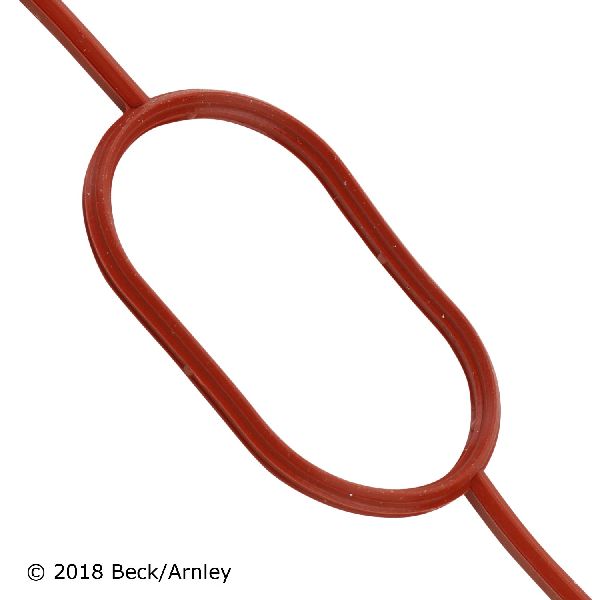
- Intake Manifold
(OEM #17120-37054)— Often required per TSB T-SB-0116-15 REV to fix misfires caused by a clogged EGR circuit. The updated design helps prevent future buildup. This part supersedes 17120-37050, 17120-37051, 17120-37052, and 17120-37053.
Trusted brands: Toyota OE
OEM price range: $350-$450
Related Codes That Often Appear With This One
- P0300 — This is a 'Random/Multiple Cylinder Misfire' code. It often appears with P0302 if the underlying issue, like a clogged EGR or failing head gasket, begins to affect other cylinders.
- P0301, P0303, P0304 — These codes indicate misfires in other cylinders. Seeing them alongside P0302 strongly points to a systemic problem like the EGR system, head gasket, or fuel delivery issue rather than a single component failure.
- P0401 — This code means 'EGR Flow Insufficient'. It is a very strong indicator that the EGR system is clogged and is the likely root cause of the misfire codes.
Technical Service Bulletins (TSBs) & Recalls
- T-SB-0116-15 REV: Addresses rough running and misfire codes (P0300-P0304) during light acceleration due to the EGR system, recommending intake manifold replacement.
- T-SB-0147-16: Mentions an ECM logic update to address rough idle and misfire codes at cold start.
- T-TT-0310-14: A technical tip acknowledging customer reports of knocking or rough running on cold starts, with or without misfire DTCs.
Platform-Specific Known Issues
- The Cold Start Rattle of Doom: A very common owner experience begins with an intermittent rattle or shudder from the engine bay on cold starts, which may last for only a few seconds. This is often the first and most telling sign of either coolant from a failing head gasket entering a cylinder overnight or condensation from a clogged EGR system being ingested. Initially, it may not even set a code, but as the leak worsens or the clog progresses, it will eventually trigger a P030x code. Ignoring this symptom is a common mistake that can lead to more severe engine damage.
- DIY Head Gasket Repair: A Real-World Story: A user on PriusChat shared their experience replacing their own head gasket. They reported the job was 'not nearly as hard as I thought it would be,' costing around $300 in parts and taking 16 hours. They noted that no highly specialized tools were needed, aside from a triple square bit for the head bolts, and that watching videos from 'Gasket Masters' on YouTube was very helpful. This provides a valuable data point for skilled DIYers considering the repair.
- EGR Cleaning: The Preventative Measure: Experienced owners and mechanics on forums strongly advocate for preventative cleaning of the entire EGR circuit (cooler, valve, pipe, and intake manifold passages) every 50,000 to 80,000 miles. One owner on Reddit with 305k miles noted their EGR cooler was completely clogged and took two days of soaking and pressure washing to clear, emphasizing that it's a critical maintenance item often overlooked until a misfire code appears.
Mechanic-Grade Diagnostic Values
- Ignition Coil Connector Voltage (Power Supply) — expected: 12V with ignition switch ON (engine off), or charging system voltage (approx. 13.5-14.5V) with engine running.. Failure: Voltage significantly below 12V indicates a wiring or power supply issue.
- Ignition Coil Connector Voltage (IGF - Ignition Feedback) — expected: Approximately 5V when the connector is disconnected. When connected and back-probed, it should be a pulsed signal viewable on an oscilloscope.. Failure: No voltage or a steady, non-pulsing voltage when the engine is running can indicate a faulty coil or ECM issue.
- Spark Plug Electrode Gap (Used) — expected: Up to 1.3 mm (0.0512 in.). Failure: A gap greater than 1.3 mm requires plug replacement.
- Spark Plug Electrode Gap (New) — expected: 1.0 to 1.1 mm (0.0394 to 0.0433 in.). Failure: Incorrect gap out of the box should be adjusted or the plug replaced.
- Fuel Injector Resistance (2ZR-FXE) — expected: High impedance, typically 12-14 Ohms at room temperature.. Failure: Significantly higher or lower resistance, or an open circuit (infinite resistance), indicates a failed injector coil.
Hidden / Shadow Codes Worth Checking
- Mode 6, Test ID $53: This test monitor stores misfire counts for each cylinder from the last 10 driving cycles, even if the counts aren't high enough to trigger a P030x code. It's a non-continuous monitor that can reveal intermittent or developing misfires. (see via An advanced scan tool capable of reading Mode 6 data, such as Toyota Techstream or some functions in apps like Torque Pro. The data is often presented as Component ID (CID) $01 through $04 for cylinders 1-4.)
Scan Tool Commands That Help
- Toyota Techstream: Misfire Monitor Utility — This utility provides a more detailed and stable view of misfire counts than the standard live data list. It shows both a current misfire 'rate' and a historical count (EWMA) over the last 10 trips, which is invaluable for tracking down intermittent misfires that don't set a code immediately.
- Toyota Techstream: Active Test: Control the Fuel Injection — This bidirectional test allows a technician to shut off individual fuel injectors one by one. When diagnosing a P0302, you can cut fuel to cylinder 2 and observe the change in engine RPM and smoothness. If there is no change when cylinder 2's injector is cut, it confirms that cylinder was not contributing, pointing to a problem with that cylinder's ignition, fuel, or compression.
- Toyota Techstream: Relative Compression Test — This is a quick, non-invasive way to check for major compression differences between cylinders. The tool cranks the engine and measures the current draw from the starter for each compression stroke. A cylinder with low compression will show a significantly different reading. This can quickly point towards a mechanical issue like a bad head gasket or valve problem without needing a manual compression gauge initially.
Wiring & Ground Locations
- Ignition Coil Connector (D21 for Cyl #2) — On top of the valve cover, plugged into the ignition coil for the second cylinder from the passenger (transaxle) side.. This 4-pin connector provides power, ground, and trigger/feedback signals (IGT, IGF) to the coil. A loose connection, corrosion, or damaged wire at this specific connector will cause a P0302. The pins are: 1 (Power - 12V), 2 (IGF - Feedback), 3 (IGT - Trigger), 4 (Ground).
- Engine Ground Points — Key ground points for the engine harness are typically located on the cylinder head (driver's side) and on the transaxle housing. A wiring diagram should be consulted for exact locations.. A poor engine ground can cause a weak or intermittent spark across all cylinders, leading to random misfires (P0300) but can sometimes manifest as a single cylinder misfire initially. Ensuring these grounds are clean and tight is a critical step in diagnosing electrical-related misfires.
Real Owner Repair Stories
- PriusChat user 'pingd' (2013 Prius Two, 200k miles) — Sudden engine knock on startup and when re-engaging the engine at a stoplight, accompanied by a P0302 code.
❌ Tried (didn't work) The user had a well-maintained EGR system and had recently cleaned the intake manifold and replaced the EGR cooler, making a clogged EGR less likely. They also used Techron regularly, making a simple injector clog less probable.
✅ What actually fixed it The final resolution was not posted in the thread, but multiple experienced users immediately diagnosed the symptoms (sudden knock on startup with P0302, despite good EGR maintenance) as a classic head gasket failure. One user noted that if opening the coolant reservoir results in a 'whoosh' of air being sucked in, the head gasket has likely failed. - Reddit user r/prius (2013 Prius V, 140,000 miles) — Persistent P0302 code and very low coolant level.
❌ Tried (didn't work) Replaced all four spark plugs and swapped ignition coils between cylinder 1 and 2. The P0302 code remained on cylinder 2.
✅ What actually fixed it The thread documents the diagnosis process. The combination of persistent P0302 after a coil swap and a low coolant level led the community and the owner to conclude it was a head gasket failure, where coolant was leaking into cylinder 2.
OEM Part Supersession History
22030-37010→An updated head gasket part number exists for later model years, designed to be more robust.— The original head gasket design was prone to failure, often linked to hotspots created by the EGR system.
Model Year Variations Within This Range
- 2014-2015: Later models in this generation (approximately 2014-2015) received an updated piston ring design to reduce oil consumption. While not directly related to the P0302 root causes of EGR/head gasket, it's a notable running change in the 2ZR-FXE engine during this period. Some reports suggest minor updates to the head gasket material in later years as well, though the core design flaw remains.
Helpful Videos
We Have This Part in Stock


The information in this article is provided for general reference and educational purposes only. Vehicle specifications, procedures, and part compatibility can vary by production date, trim level, and region. Always consult your vehicle's factory service manual and verify part numbers before purchasing or performing repairs. Safety-critical components such as airbags, seat belts, and braking systems should be installed by a qualified professional.
- Toyota PRIUS:
- 🧭 Diagnostic Flowchart
- 🎬 Helpful Videos
- 🛍️ Shop This Part
- What's Unique About the 2010-2015 Toyota PRIUS
- Symptoms You May Notice
- Most Likely Causes
- Rare But Worth Checking
- Diagnosis Steps
- Parts You'll Likely Need
- Related Codes That Often Appear With This One
- Technical Service Bulletins (TSBs) & Recalls
- Platform-Specific Known Issues
- Mechanic-Grade Diagnostic Values
- Hidden / Shadow Codes Worth Checking
- Scan Tool Commands That Help
- Wiring & Ground Locations
- Real Owner Repair Stories
- OEM Part Supersession History
- Model Year Variations Within This Range
- 🎟️ Get 5% Off