

P0302 on 2013-2014 Volkswagen Beetle Convertible: Cylinder 2 Misfire Causes and Fixes
P0302 on a 2013-2014 VW Beetle means cylinder 2 is misfiring. The most likely cause is a bad ignition coil, a common failure item. A DIY replacement costs about $30-$75. If you have a turbo (TSI) engine, carbon buildup on the intake valves is another frequent culprit, especially on cold starts. Swapping the cylinder 2 coil with another is the definitive first diagnostic step.
- P0302 means cylinder 2 is misfiring. Do not ignore it, especially if the check engine light is flashing.
- Start your diagnosis by swapping the ignition coil from cylinder 2 with an adjacent cylinder. This is a free, 10-minute test that often finds the problem.
- If you have a 1.8T or 2.0T TSI engine, and new coils/plugs don't fix the issue, the cause is very likely carbon buildup on the intake valves, which requires professional cleaning.
- When replacing spark plugs or ignition coils, it is best practice to replace them as a full set to ensure reliability and smooth engine performance.
What's Unique About the 2013-2014 Volkswagen BEETLE CONVERTIBLE
The 2013-2014 Beetle Convertible used multiple gasoline engines. While ignition coil failure is a very common issue across all of them, the 1.8T and 2.0T TSI (turbocharged) engines have a specific vulnerability. These direct-injection engines are known for significant carbon buildup on the intake valves, which can disrupt airflow and cause misfires that aren't fixed by new plugs or coils. This problem is especially noticeable during cold starts. The 2.5L 5-cylinder engine uses port injection, so it does not suffer from this specific carbon buildup issue as the fuel spray continuously cleans the valves.
Diagnostic Flowchart
Tap your situation to follow the diagnostic path that matches what you're seeing on this vehicle.
Symptoms You May Notice
- Flashing or solid Check Engine Light
- Rough or shaking idle
- Engine hesitation or stumbling during acceleration
- Noticeable loss of power
- Reduced fuel economy
- Unusual smell from the exhaust
- Whistling or sucking noise from the engine bay (if PCV has failed)
- Replacing only the spark plug when the ignition coil is the actual point of failure.
- Replacing fuel injectors on a TSI engine when the root cause is carbon buildup on the intake valves.
- Replacing ignition components when a failed PCV valve is causing a vacuum leak and lean misfires.
Most Likely Causes
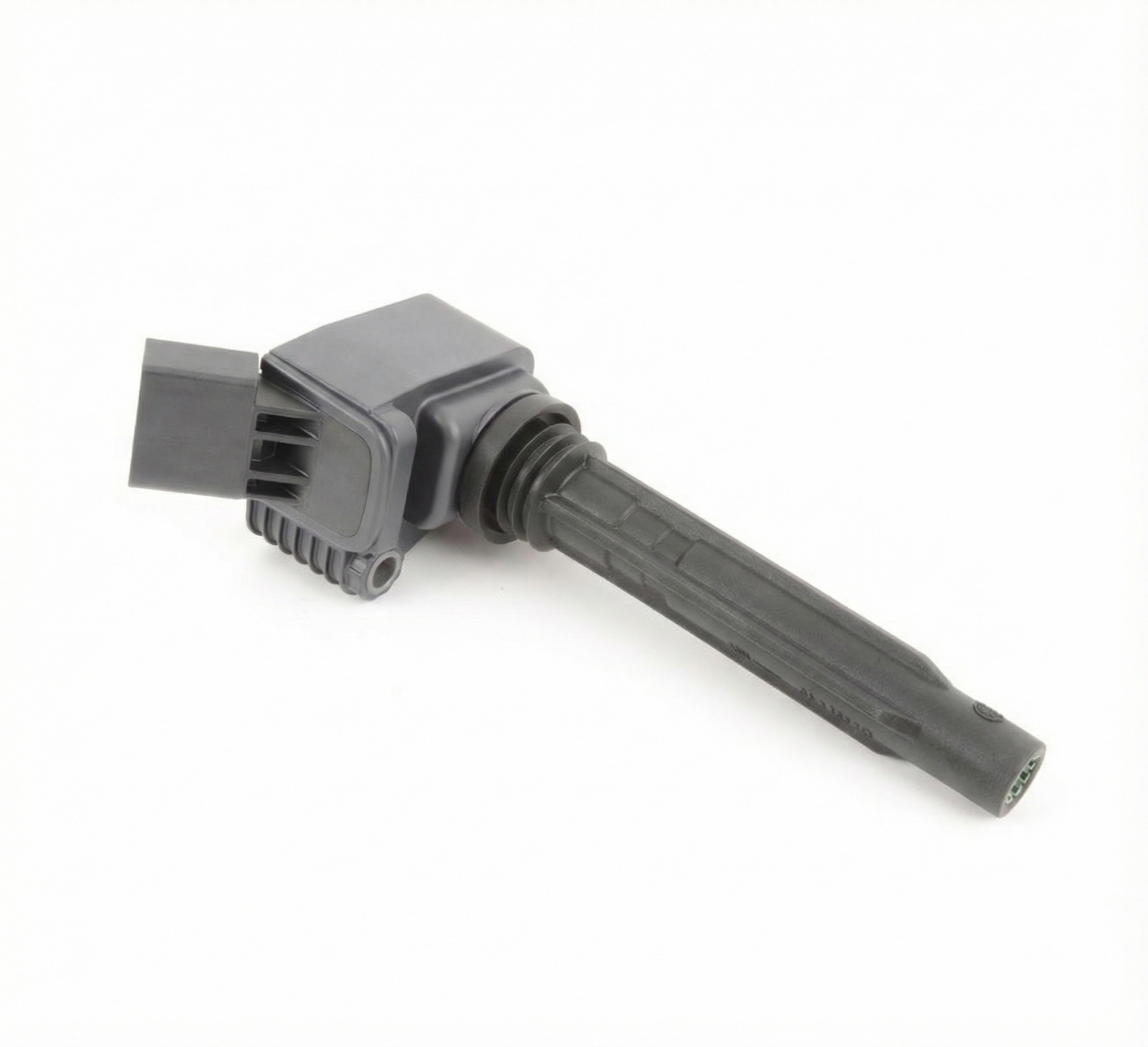
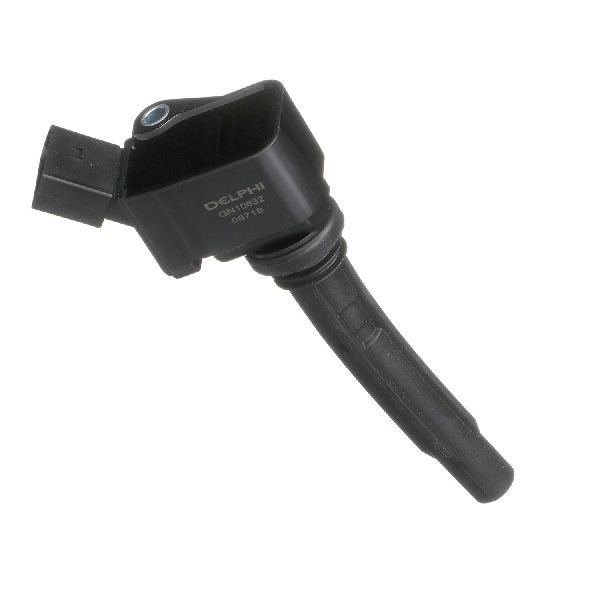
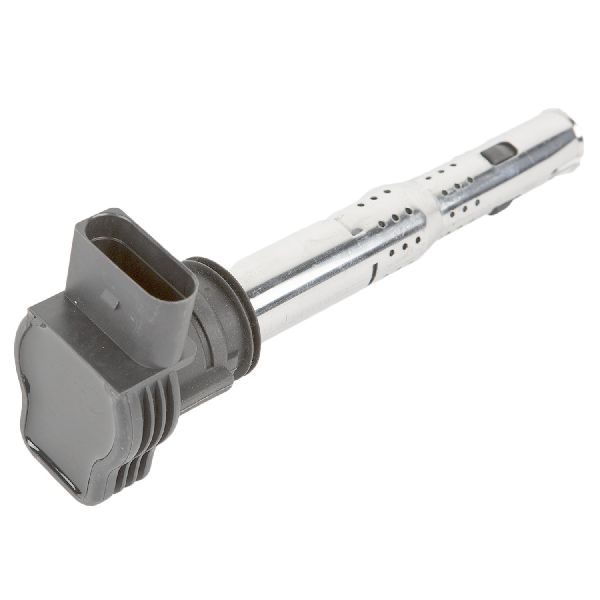
- Faulty Ignition Coil 🔴 High Probability → Shop Ignition Coil Ignition coils are a well-documented, high-failure-rate part on this generation of Volkswagen engines. Multiple revisions of the part exist to improve durability. The plastic connector clips also become brittle with heat and can break, causing a poor connection.
How to confirm: Swap the ignition coil from cylinder 2 with another cylinder (e.g., cylinder 1 or 3). Clear the codes and drive. If the code changes to P0301 or P0303, the ignition coil is faulty. This is the most effective first diagnostic step.
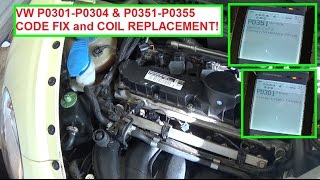
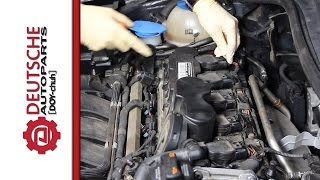
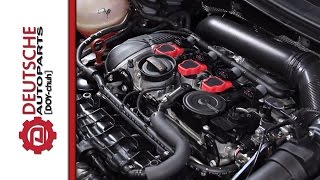
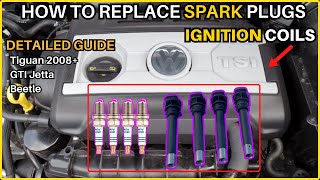
Typical fix: Replace the faulty ignition coil. Many owners and mechanics recommend replacing all coils as a set if they are original, as others are likely to fail soon. 🎬 See this walkthrough for replacing your spark plugs and coils. Reputable brands include Bosch, NGK, and Eldor.
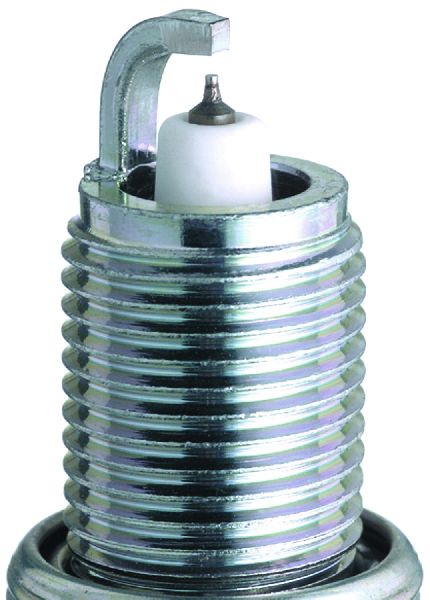
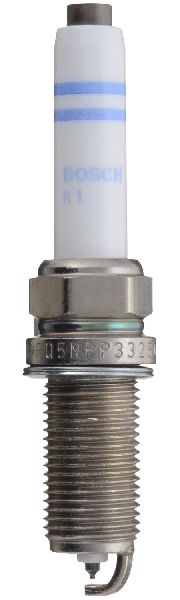
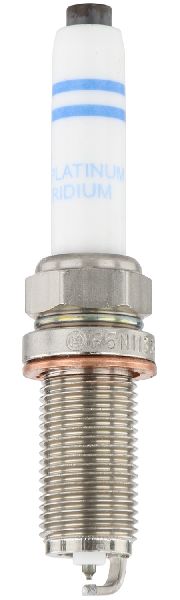
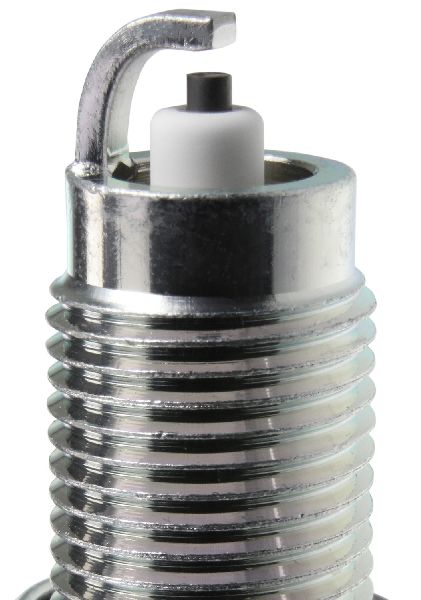
Est. part cost: $30-$75 per coil - Worn or Fouled Spark Plug 🟡 Medium Probability → Shop Spark Plug Spark plugs are a standard maintenance item. If they are past their service life (typically 40k-60k miles), they can no longer produce a strong enough spark to ignite the fuel mixture reliably.
How to confirm: After ruling out the ignition coil, remove the spark plug from cylinder 2. Inspect it for wear, carbon fouling, oil, or a cracked insulator. You can also swap it with a plug from another cylinder to see if the misfire code follows.
Typical fix: Replace the spark plug in cylinder 2. It is best practice to replace all spark plugs as a complete set to ensure even performance.
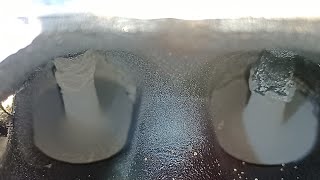
Est. part cost: $10-$25 per plug - Carbon Buildup on Intake Valves (1.8T & 2.0T TSI Engines Only) 🟡 Medium Probability These engines use direct injection, which sprays fuel directly into the cylinder. Unlike port injection, fuel doesn't wash over the intake valves, allowing oil vapor from the PCV system to bake onto them, restricting airflow and causing misfires, especially on cold starts. This can become an issue at mileages as low as 40,000-60,000 miles.
How to confirm: This is difficult to confirm without a borescope to visually inspect the intake valves. This is often diagnosed after new coils and plugs fail to resolve the misfire, particularly on engines with over 60,000 miles.
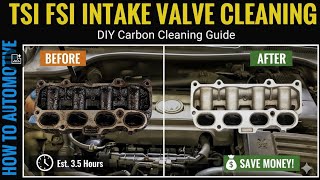
Typical fix: The intake manifold must be removed for a professional cleaning service, typically done by 'walnut blasting' the valves to remove the hardened carbon deposits. 🎬 Watch: How to clean carbon buildup from your intake valves.
Est. part cost: $400-$800 for professional service - Faulty Fuel Injector ⚪ Low Probability → Shop Fuel Injector A fuel injector can become clogged or fail electronically, preventing the correct amount of fuel from being delivered to cylinder 2. While less common than ignition issues, injector failure is a known possibility.
How to confirm: Listen to the injector with a mechanic's stethoscope to confirm it is clicking. A more advanced diagnosis involves checking its electrical resistance or performing a flow test, which may require a professional. You can also swap injectors between cylinders, but this is a much more involved job than swapping coils.
Typical fix: Replace the faulty fuel injector. On direct-injection (TSI) engines, this is a more involved job and requires replacing the single-use seals.
Est. part cost: $50-$150 for port injector (2.5L), $70-$200 for GDI injector (TSI)
Rare But Worth Checking
- PCV System Failure: The Positive Crankcase Ventilation (PCV) valve/oil separator is a common failure item on TSI engines. A failed diaphragm creates a significant vacuum leak, which can cause a whistling or honking noise, a rough idle, and lean codes (P0171) or high idle codes (P0507). A tell-tale sign is extreme suction when trying to remove the oil filler cap while the engine is running; the engine may even stall. This usually causes multiple or random misfires (P0300) but can sometimes manifest as a single-cylinder misfire initially.
- Low Engine Compression: This indicates a serious mechanical engine problem, such as a burnt valve, damaged piston rings, or a failing head gasket. This should only be investigated after all ignition and fuel system causes have been ruled out. A compression test will confirm this issue.
Diagnosis Steps
- Read the code with an OBD-II scanner and confirm P0302. Note any other 🎬 Watch: How to diagnose and clear these common misfire codes. codes present, like P0300 or P0171, as they can provide clues.
- Check if the Check Engine Light is flashing. If so, minimize driving to prevent catalytic converter damage.
- Perform an 'ignition coil swap'. Move the coil from cylinder 2 to cylinder 1. Clear the codes and drive. If the code returns as P0301, the coil is bad. This is the most common fix.
- If the code remains P0302, perform a 'spark plug swap'. Move the spark plug from cylinder 2 to cylinder 3. Clear codes and drive. If the code returns as P0303, the spark plug is bad.
- If the misfire remains on cylinder 2, inspect the wiring and connector for the ignition coil. The locking tabs on these connectors are known to become brittle and break.
- For TSI engines, check for a failed PCV valve. With the engine running, listen for a whistle and try to remove the oil cap. If there is strong suction or the engine stumbles/stalls, the PCV valve is likely bad.
- For TSI engines with over 60,000 miles, strongly suspect carbon buildup on the intake valves if ignition and PCV issues are ruled out. Inspect with a borescope if possible.
- Listen to the fuel injector on cylinder 2 with a stethoscope; a consistent clicking sound indicates it is operating. Compare the sound to other injectors.
- If all else fails, perform a compression test to check for mechanical engine issues. This is best left to a professional if you are inexperienced.
Parts You'll Likely Need
- Ignition Coil
(OEM #2.5L: 07K905715F / 1.8T & 2.0T: 06H905115B (or newer revisions like 06K905110K))— This is the most common failure part causing a P0302 code on all engine variants of this vehicle.
Trusted brands: Bosch, Eldor, NGK
OEM price range: $50-$90
Aftermarket price range: $30-$75 - Spark Plug
(OEM #2.5L: NGK PZFR5Q-11 / TSI: NGK PFR7S8EG)— This is a standard maintenance item and the second most likely cause of a misfire after the ignition coil.
Trusted brands: NGK, Bosch
OEM price range: $20-$30
Aftermarket price range: $10-$25 - PCV Valve / Oil Separator
(OEM #TSI Engines: 06H103495AH (or newer revisions))— A failed PCV system is a common source of vacuum leaks that lead to misfires on TSI engines.
Trusted brands: OEM Volkswagen, Vaico
OEM price range: $150-$200
Aftermarket price range: $40-$100
Related Codes That Often Appear With This One
- P0300 — If the underlying issue, like a vacuum leak from a bad PCV valve or a fuel pressure problem, is not isolated to a single cylinder, a P0300 (Random/Multiple Misfire) code may appear.
- P0301, P0303, P0304, P0305 — Seeing other cylinder-specific misfire codes suggests a common problem like carbon buildup, a bad batch of fuel, or a failing fuel pump affecting all cylinders.
- P0171 — This 'System Too Lean' code often accompanies misfires caused by a large vacuum leak, such as a failed PCV valve, which allows unmetered air into the engine.
- P0087 — As noted in a VW Technical Service Bulletin, misfire codes can appear with P0087 'Fuel Rail/System Pressure - Too Low', pointing to a fuel delivery issue that could be the root cause.
Technical Service Bulletins (TSBs) & Recalls
- VIN4APIN20211026: This is a general diagnostic assistance TSB. It notes that misfire codes (P0300, P0301, P0302, etc.) can appear in conjunction with low fuel pressure codes like P0087, guiding technicians to investigate the fuel delivery system as a potential cause for misfires.
Platform-Specific Known Issues
- The direct-injection TSI engines (1.8T and 2.0T) are hig
Mechanic-Grade Diagnostic Values
- High-Pressure Fuel Rail Pressure at Idle (TSI Engines) — expected: 40 bar (580 psi). Failure: Significantly lower pressure, such as 6-10 bar, indicates a failing High-Pressure Fuel Pump (HPFP). This can be viewed with a capable scan tool.
- Low-Pressure Fuel Pump Pressure (Key On, Engine Off) — expected: 58-87 psi (approx. 4-6 bar). Failure: Pressure below this range indicates a weak in-tank fuel pump, which can starve the high-pressure pump and cause misfires under load.
- Ignition Coil Primary/Secondary Resistance — expected: Varies by manufacturer (e.g., Primary: ~0.5-0.8 Ohms, Secondary: ~7-11 kOhms).. Failure: Readings far outside the expected range for the specific part number. However, this method is less reliable than performing a coil swap, as coils can fail under heat and load in ways a static resistance test won't show.
Hidden / Shadow Codes Worth Checking
- Misfire Counters (Live Data): The ECU maintains a running count of misfire events for each individual cylinder. This is the most effective way to see which cylinder is misfiring in real-time, even if a permanent DTC has not yet been set. (see via Use a VW-specific scan tool like VCDS or OBDeleven. For older controllers, check Measuring Block Groups 014, 015, and 016. For newer UDS controllers, use 'Advanced Measuring Values' and search for 'misfire'.)
Scan Tool Commands That Help
- VCDS (or equivalent VW-specific scanner): Read Misfire Counters — This should be one of the first steps in diagnosis. Observing the counters while driving under different loads (idle, acceleration) can reveal patterns that help pinpoint the cause (e.g., misfires only under load may point to fuel delivery issues).
- VCDS (or equivalent VW-specific scanner): Output Tests (DTC 03) — This function allows the user to command the ECU to individually activate specific components, such as each fuel injector. This can help verify if a fuel injector is electronically functional without having to remove it from the engine. The engine must be off for this test.
Wiring & Ground Locations
- Main Battery to Body Ground — Typically located in the engine compartment on the left side, below or near the battery tray.. A poor main ground connection can cause a host of phantom electrical issues, including weak spark and erratic sensor readings that can lead to misfires.
- Engine Block/Head Ground — A ground strap typically connects the engine block or cylinder head directly to the vehicle's chassis/frame. On some 1.8T engines, a ground point is on top of the cylinder head near the ignition coils.. The ignition coils are grounded through the engine. A corroded or loose engine ground strap can cause a weak spark across all cylinders, potentially leading to misfires that are difficult to diagnose.
Real Owner Repair Stories
- Reddit user via Go-Parts.com article (2019 VW Jetta 1.4T (similar TSI engine family)) — P0302 Check Engine Light.
❌ Tried (didn't work) Replaced ignition coil on cylinder 2, Replaced spark plug on cylinder 2
✅ What actually fixed it The dealership diagnosed and replaced a faulty fuel injector for cylinder 2. - VWVortex Forums via Go-Parts.com article (2017 VW Jetta GLI 2.0T EA888) — Persistent P0302, especially under load and at high RPM.
❌ Tried (didn't work) Replaced all spark plugs, Replaced all ignition coils, Performed intake valve carbon cleaning
✅ What actually fixed it The final repair was replacing the PCV (Positive Crankcase Ventilation) valve assembly. An internal leak was disrupting the air-fuel mixture enough to cause a single-cylinder misfire under specific conditions.
"I Checked Everything" — The Actual Cause
- A common scenario for TSI engines is a misfire code like P0302 where a smoke test of the intake manifold and vacuum lines reveals no leaks. The actual cause can be a failed PCV valve. The diaphragm inside the valve can tear, creating an internal vacuum leak within the crankcase system that doesn't show up on a standard smoke test but is significant enough to lean out the fuel mixture and cause misfires.
OEM Part Supersession History
06H905115B (TSI Ignition Coil)→Multiple revisions exist (e.g., 06H905115C, 06K905110K, etc.)— To improve reliability and prevent premature failure, which was common on early revisions.
Heads up: Always use the latest available revision from an OEM supplier (e.g., Bosch, NGK, Eldor). Avoid mixing old and new revisions if possible; it is best practice to replace all coils as a set.06H103495E (TSI PCV/Oil Separator)→Multiple revisions exist (e.g., 06H103495AC, 06H103495AH, etc.)— The internal diaphragm was prone to tearing on earlier versions, causing significant vacuum leaks.
Heads up: It is critical to purchase the latest available OEM revision. Aftermarket versions are available but may have lower durability than the updated OEM part.
Model Year Variations Within This Range
- 2014: Partway through the 2014 model year, the base 2.5L 5-cylinder port-injected engine was phased out and replaced by a new 1.8T TSI (EA888 Gen 3) direct-injected engine. This is a critical difference for diagnosis, as the 1.8T is highly susceptible to carbon buildup on intake valves causing misfires, while the 2.5L is not.
- 2013-2014: The 2.0T TSI engine received a power increase for the 2013 model year, from 200 hp to 210 hp. While not a fundamental change, it denotes a slightly different engine revision (Gen 2 EA888).
- 2014: For 2014, all Beetle models were updated to a multi-link independent rear suspension, replacing the torsion beam setup found on some 2013 models (2.5L and TDI). This does not affect the P0302 code but is a notable platform change.
Helpful Videos

Used OEM Parts in Stock
New Aftermarket Parts Available

The information in this article is provided for general reference and educational purposes only. Vehicle specifications, procedures, and part compatibility can vary by production date, trim level, and region. Always consult your vehicle's factory service manual and verify part numbers before purchasing or performing repairs. Safety-critical components such as airbags, seat belts, and braking systems should be installed by a qualified professional.
- Volkswagen BEETLE CONVERTIBLE:
- 🧭 Diagnostic Flowchart
- 🎬 Helpful Videos
- 🛍️ Shop This Part
- What's Unique About the 2013-2014 Volkswagen BEETLE CONVERTIBLE
- Symptoms You May Notice
- Most Likely Causes
- Rare But Worth Checking
- Diagnosis Steps
- Parts You'll Likely Need
- Related Codes That Often Appear With This One
- Technical Service Bulletins (TSBs) & Recalls
- Platform-Specific Known Issues
- Mechanic-Grade Diagnostic Values
- Hidden / Shadow Codes Worth Checking
- Scan Tool Commands That Help
- Wiring & Ground Locations
- Real Owner Repair Stories
- "I Checked Everything" — The Actual Cause
- OEM Part Supersession History
- Model Year Variations Within This Range
- 🎟️ Get 5% Off