

P0302 on 2018-2021 Volkswagen Golf: Cylinder 2 Misfire Causes and Fixes
P0302 indicates a misfire in cylinder 2. On a 2018-2021 VW Golf, this is most often caused by a faulty ignition coil or a worn spark plug. Swapping the coil from cylinder 2 with another is a quick way to diagnose the problem. Less common but notable causes on these direct-injection engines include carbon buildup on intake valves and PCV valve failure.
- P0302 on a 2018-2021 Golf means cylinder 2 is misfiring.
- The most likely cause is a bad ignition coil or spark plug, which are easy to diagnose by swapping parts between cylinders.
- Do not ignore a flashing check engine light, as it signals a severe misfire that can quickly damage your catalytic converter.
- If ignition parts are not the cause, consider carbon buildup on the intake valves, a known issue with VW's TSI engines.
- Always start with the simplest and cheapest fixes (plugs and coils) before moving to more complex diagnostics like fuel injectors or compression tests.
What's Unique About the 2018-2021 Volkswagen GOLF

The 2018-2021 VW Golf (Mk7.5) primarily uses turbocharged direct-injection (TSI) engines, mainly the 1.4L and the 2.0L in GTI models. While ignition components are the usual suspects for a P0302, these direct-injection engines are also known to be susceptible to carbon buildup on the intake valves over time. This buildup can disrupt airflow and cause misfires, particularly on cold starts, a problem noted by owners in forums with issues sometimes appearing as early as 35,000-40,000 miles. Additionally, the PCV system is another known weak point that can cause vacuum leaks and lead to misfires.
Diagnostic Flowchart

Tap your situation to follow the diagnostic path that matches what you're seeing on this vehicle.
Generation note: The 2018-2021 model years cover the Volkswagen Golf Mk7.5, a facelift of the Mk7 generation. The standard Golf in the US transitioned from a 1.8L TSI to a more efficient 1.4L TSI engine starting in 2019, while the GTI retained a 2.0L TSI. The causes for P0302 are broadly similar across these engines, though specific part numbers for ignition components differ.
Symptoms You May Notice
- Rough or shaking idle
- Hesitation or stumbling during acceleration, especially under load
- Noticeable loss of engine power
- Flashing or solid Check Engine Light
- Reduced fuel economy
- Difficulty starting the engine or extended cranking
- Smell of gasoline from the exhaust
- Replacing fuel injectors when the issue is a simple spark plug or ignition coil.
- Assuming a major engine problem before performing the basic ignition coil and spark plug swap diagnostics.
- Replacing ignition parts when the root cause is a failed PCV valve creating a large vacuum leak.
Most Likely Causes

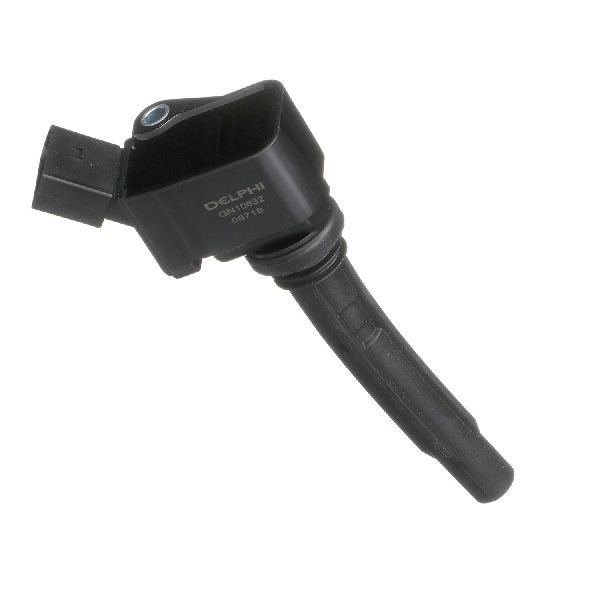
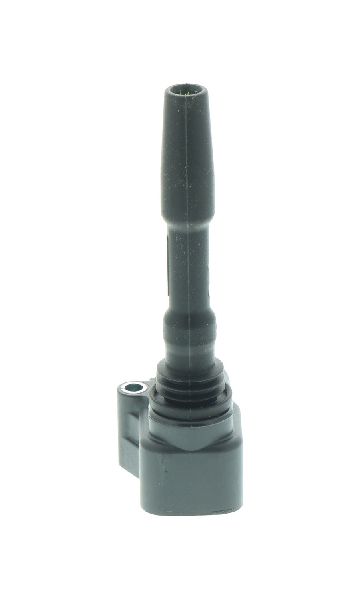
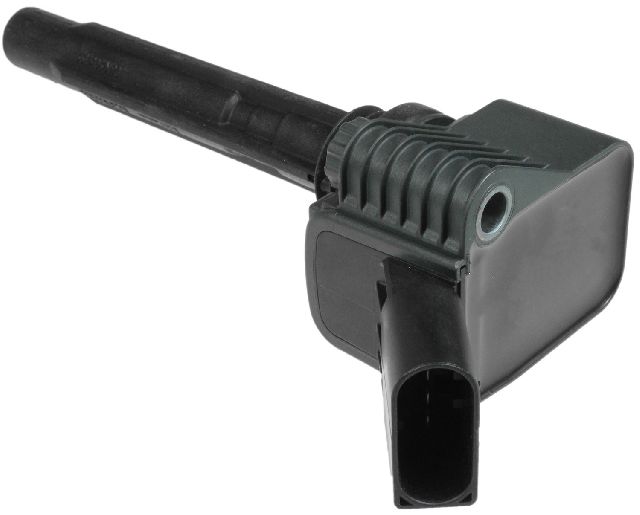
- Faulty Ignition Coil 🔴 High Probability → Shop Ignition Coil Ignition coils are a common wear-and-tear item on many modern engines, including VW's TSI lineup. Heat and vibration eventually cause the internal windings to fail, leading to a weak or absent spark.
How to confirm: Swap the ignition coil from cylinder 2 with another cylinder (e.g., cylinder 3). Clear the codes and run the engine. If the code changes to P0303, the ignition coil is the faulty part.
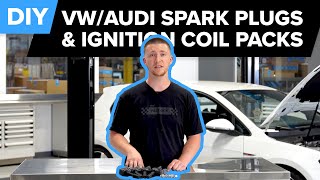
Typical fix: Replace the faulty ignition coil. It is often recommended to replace all coils at the same time 🎬 Watch: How to replace ignition coils and spark plugs on a GTI for preventative maintenance, especially if they are original and have high mileage.
Est. part cost: $30-$75 per coil - Worn or Fouled Spark Plug 🔴 High Probability → Shop Spark Plug Spark plugs have a finite service life (VW recommends 40k-60k miles, depending on the engine). A worn electrode increases the gap, requiring more voltage to fire, while fouling from oil or carbon can prevent a spark altogether. Sometimes the porcelain insulator can crack, causing the spark to ground out.
How to confirm: After ruling out the ignition coil, remove the spark plug from cylinder 2. Inspect it for wear, oil fouling, carbon tracks, or a cracked insulator. You can also swap it with another cylinder's plug to see if the misfire code follows.
Typical fix: Replace the spark plug in cylinder 2. It is best practice to replace all spark plugs as a set if they are near the end of their service life. Ensure they are gapped correctly if not pre-gapped.
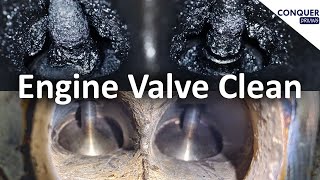
Est. part cost: $15-$35 per plug - Carbon Buildup on Intake Valves 🟡 Medium Probability As a Gasoline Direct Injection (GDI) engine, the TSI injects fuel directly into the cylinder. This means fuel doesn't wash over the intake valves, allowing oil vapor and combustion byproducts to bake onto them, forming hard carbon deposits that disrupt airflow and cause misfires, especially on cold starts. This can become a problem on some cars with as few as 35,000 miles.
How to confirm: This requires a visual inspection using a borescope inserted into the intake port. It is often suspected after ignition and fuel delivery issues are ruled out, especially if misfires occur primarily on cold starts and then improve as the engine warms up.
Typical fix: The intake manifold must be removed, and the valves cleaned manually, often through a process called 'walnut blasting' for best results.
Est. part cost: $0 (if DIY) to $600-$1200 for professional service - Faulty Fuel Injector ⚪ Low Probability → Shop Fuel Injector Direct injectors operate under very high pressure and are located inside the combustion chamber, subjecting them to extreme heat. They can become clogged with carbon or fail electronically over time, leading to improper fueling of a cylinder.
How to confirm: This is more complex. A mechanic can perform a fuel injector balance test, check the injector's resistance, or monitor fuel trims with an advanced scan tool. Swapping injectors between cylinders is possible but is a much more involved job than swapping coils. A leaky injector may also cause a long crank time and a noticeable drop in fuel rail pressure after the engine is shut off.
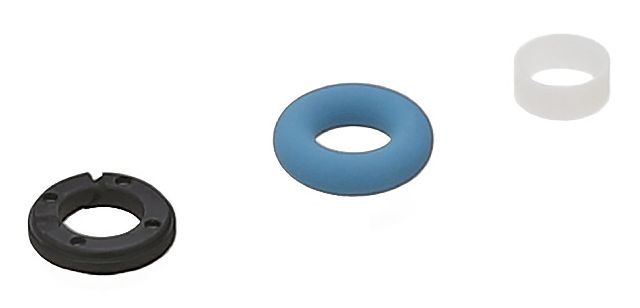
Typical fix: Replace the faulty fuel injector. It's critical to also replace the single-use Teflon seals and any associated hardware. A leaking injector was identified as the cause of a P0302 on a 2017 GTI after initial diagnostics failed.
Est. part cost: $70-$200 per injector
Rare But Worth Checking
- Failed PCV Valve: → Shop PCV Valve The Positive Crankcase Ventilation (PCV) valve can fail, causing a significant vacuum leak. This can lead to a lean condition, rough idle, and misfire codes, sometimes across multiple cylinders (P0300). A whistling or sucking noise from the engine bay at idle is a common symptom.
- Low Engine Compression: This indicates a serious mechanical engine problem, such as a bad piston ring, a burnt valve, or a leaking head gasket. A compression test followed by a leak-down test is needed to diagnose this.
- Vacuum Leak: A leak in a vacuum hose or intake gasket can introduce unmetered air, leading to a lean condition and misfires. This usually affects multiple cylinders and may set other codes like P0171 or P0300.
Diagnosis Steps
- Read the code with an OBD-II scanner and confirm P0302 is present. Note any other codes, like P0300 or P0171, as they provide important clues.
- Check if the Check Engine Light is flashing. If so, avoid driving to prevent catalytic converter damage.
- Swap the ignition coil from cylinder 2 to cylinder 3. Clear the codes and drive the car. If the code changes to P0303, the coil is bad.
- If the code remains P0302, swap the spark plug from cylinder 2 to cylinder 3. Before installing, inspect the spark plug's porcelain insulator for any hairline cracks. If the code changes to P0303, the spark plug is bad.
- If the misfire persists on cylinder 2, inspect the wiring and connector for the ignition coil and fuel injector on cylinder 2 for any damage or corrosion. Pay close attention to the coil ground strap, which is a small wire with an eyelet secured by the 10mm coil hold-down nuts.
- If ignition components are good, consider a failing fuel injector or carbon buildup. A leaky injector can sometimes be diagnosed by checking fuel rail pressure bleed-down after the car is turned off.
- Check for vacuum leaks, especially from the PCV system. Listen for hissing or whistling sounds at idle. A rough idle that smooths out with RPM is a classic symptom.
- For advanced diagnosis, use a tool like VCDS to monitor the live misfire counter for cylinder 2 in the advanced measuring blocks. Also, check fuel pressure, perform an engine compression test, and follow with a leak-down test if compression is low.
Parts You'll Likely Need
- Ignition Coil
(OEM #1.4L: 04E905110K / 2.0L: 06L905110K)— This is one of the most frequent failure points for a single-cylinder misfire. It's a relatively inexpensive and easy part to replace.
Trusted brands: Bosch, NGK, Eldor, Beru
OEM price range: $50-$80
Aftermarket price range: $30-$60 - Spark Plug
(OEM #1.4L: 04E905612C or 04E905602D / 2.0L (GTI): 06K905601K (Iridium for 2019+))— Spark plugs are a routine maintenance item and a common cause of misfires as they wear out. Part numbers can vary by model year.
Trusted brands: NGK, Bosch, Denso
OEM price range: $20-$40
Aftermarket price range: $15-$25 - Fuel Injector
(OEM #2.0L: 06H906036P (or superseding part number))— Less common than ignition parts, but a clogged or failed injector will cause a misfire on a specific cylinder.
Trusted brands: Bosch, Continental
OEM price range: $100-$200
Aftermarket price range: $70-$150
Related Codes That Often Appear With This One
- P0300 — If the misfire is intermittent or affects other cylinders, a P0300 (Random/Multiple Cylinder Misfire) code may appear alongside P0302. This often points to a systemic issue like a vacuum leak or fuel supply problem.
- P0301, P0303, P0304 — If other cylinder-specific misfire codes are present, it could point to a systemic issue like a vacuum leak, fuel delivery problem, or widespread carbon buildup. It could also happen if multiple ignition components fail simultaneously.
- P0171 — System Too Lean (Bank 1). This code often accompanies misfire codes when the cause is a vacuum leak (e.g., from a bad PCV valve) that allows unmetered air into the engine.
Technical Service Bulletins (TSBs) & Recalls
- TSB 01-17-03TT: Addresses false misfire indications after a repair and provides a procedure to force the crankshaft adaptation to relearn by clearing DTCs three times consecutively.
Platform-Specific Known Issues
- A Volkswagen Technical Service Bulletin (TSB 01-17-03TT) addresses how the ECM can sometimes report false misfires after a repair has been made. It recommends clearing the fault codes three consecutive times to force the crankshaft sensor profile to relearn.
- Cracked spark plug porcelain is a known, though not extremely common, failure mode on these engines that can be hard to spot but will cause a persistent misfire on one cylinder.
- Owners on forums frequently report that misfires under load (e.g., hard acceleration) that don't occur at idle are often early signs of ignition coil or spark plug failure.
Mechanic-Grade Diagnostic Values
- Ignition Coil Primary Winding Resistance — expected: 0.5 - 3.5 Ohms. Failure: A reading outside of this range suggests an internal fault in the coil's primary winding.
- Ignition Coil Secondary Winding Resistance — expected: 5 - 16 kOhms. Failure: A reading outside of this range suggests an internal fault in the coil's secondary winding.
- Misfire Counter (Cylinder 2) — expected: 0 at idle and under load.. Failure: Any count greater than 0 indicates a misfire event has been registered by the ECU. This is the most direct way to confirm an active misfire.
Hidden / Shadow Codes Worth Checking
- Misfire Counters: The ECU maintains a running count of misfire events per cylinder that may not trigger a CEL immediately but can be viewed with an advanced scan tool. This allows a technician to see the frequency and conditions under which misfires occur before they become severe. (see via Using VCDS (VAG-COM) or ODIS, navigate to Engine (01) -> Advanced Measuring Values and select the misfire counters for each cylinder. For older controllers, this is in Measuring Blocks, typically Group 015 for cylinders 1-3.)
Scan Tool Commands That Help
- VCDS (VAG-COM) or ODIS: Advanced Measuring Values / Measuring Blocks — This function should be used to monitor live data for misfire counts on each cylinder. It is invaluable for confirming if a misfire is currently happening, especially for intermittent issues that don't always keep the CEL on. It helps verify if a repair was successful by confirming the counter for cylinder 2 remains at zero during a test drive.
Wiring & Ground Locations
- Cylinder 2 Ignition Coil ECU Pin — Pin 46 on the main Engine Control Unit (ECU) connector.. For advanced electrical diagnosis, a technician can test for signal continuity from the ECU directly at this pin to the coil connector to rule out a wiring harness break.
- G15 - Cylinder Head Ground — A primary ground point located on the cylinder head for both 1.4L and 2.0L engines.. The ignition coils rely on a solid engine ground to function correctly. A loose or corroded main engine ground can cause weak spark and intermittent misfires across all cylinders, but can sometimes manifest on a single cylinder first.
- Ignition Coil Ground Strap — A small wire with an eyelet that is secured under the 10mm nut(s) that hold the ignition coil down to the valve cover.. This is the direct ground path for the coil. If this wire is broken, corroded, or if the bolt threads are damaged, it can cause a poor ground connection leading specifically to misfires on that cylinder. This is an easily overlooked mechanical-electrical failure point.
Real Owner Repair Stories
- Reddit user on r/GolfGTI (2017 VW GTI Sport, 24k miles) — Persistent P0302 Check Engine Light.
❌ Tried (didn't work) Using a fuel treatment as advised by the dealer., Replacing the fuel injector and all injector seals after a leak was found. The code returned a week later.
✅ What actually fixed it The dealership performed a carbon cleaning (walnut blasting) service, which resolved the misfire code. This highlights that even after fixing one valid issue (leaky injector), another underlying problem (carbon buildup) can be the final cause. - Reddit user on r/GolfGTI (2019 VW GTI, ~35k miles) — Shaky/rough startup, Check Engine Light with codes P0302 and P0304 (Cylinder 2 and 4 Misfire).
❌ Tried (didn't work) The user brought the car to the dealer, questioning why they didn't try swapping coils first.
✅ What actually fixed it The dealer was confident the issue was carbon buildup and quoted a walnut blasting service. While the final fix isn't confirmed by the original poster, this story is valuable as it shows carbon buildup being the primary suspect for misfires on multiple cylinders even at very low mileage (35k). - User on vwvortex.com forums (2010 VW GTI, 64k miles) — Jerky acceleration, EPC and Check Engine Light with code P0302.
❌ Tried (didn't work) Initially swapping the coil from cylinder 2 resulted in both P0302 and P0300, likely because the codes were not cleared before re-scanning.
✅ What actually fixed it After clearing the codes and swapping the ignition coil from cylinder 2 to cylinder 4, the code changed to P0304. This definitively confirmed a bad ignition coil, which was then replaced, fixing the problem.
"I Checked Everything" — The Actual Cause
- While no specific stories explicitly mention a 'smoke test clean' scenario, multiple owner accounts point to fixes that a smoke test for vacuum leaks would not identify. For example, a leaking fuel injector or carbon deposits on the intake valves can cause a P0302 misfire without creating a vacuum leak that a smoke test would detect.
When the Usual Fixes Don't Work
- While ignition coils and spark plugs are the most common culprits for a P0302, owner experiences show that on the direct-injected TSI engines, other causes should not be dismissed, even at low mileage. In one documented case for a 2017 GTI, the issue persisted after replacing a confirmed leaking fuel injector, and was only resolved after a carbon cleaning service was performed at 24,000 miles. This indicates that multiple factors can contribute, and simply replacing the first part found to be faulty may not always be the final solution.
OEM Part Supersession History
06L905110C, D, E, F, H→06L905110K— Iterative improvements by the manufacturer for reliability and performance.
Heads up: The latest revision 'K' is generally backward compatible with earlier 2.0TSI EA888 Gen 3 engines. It is always recommended to use the latest available part number.04C905110D, H, J, L and 04E905110A, B, C, D, E→04E905110K— Part consolidation and design updates by VW/Audi.
Heads up: For the 1.4L TSI engine, there is a long list of superseded part numbers. Using the latest 'K' revision ensures the most updated design. Always verify fitment with VIN.
Model Year Variations Within This Range
- 2019-2021: Standard (non-GTI) US models switched from a 1.8L TSI to a 1.4L TSI engine. While the misfire causes are similar (coils, plugs, carbon), the specific part numbers for ignition and fuel components are different between these two engines.
Helpful Videos
We Have This Part in Stock


The information in this article is provided for general reference and educational purposes only. Vehicle specifications, procedures, and part compatibility can vary by production date, trim level, and region. Always consult your vehicle's factory service manual and verify part numbers before purchasing or performing repairs. Safety-critical components such as airbags, seat belts, and braking systems should be installed by a qualified professional.
- Volkswagen GOLF:
- 🧭 Diagnostic Flowchart
- 🎬 Helpful Videos
- 🛍️ Shop This Part
- What's Unique About the 2018-2021 Volkswagen GOLF
- Symptoms You May Notice
- Most Likely Causes
- Rare But Worth Checking
- Diagnosis Steps
- Parts You'll Likely Need
- Related Codes That Often Appear With This One
- Technical Service Bulletins (TSBs) & Recalls
- Platform-Specific Known Issues
- Mechanic-Grade Diagnostic Values
- Hidden / Shadow Codes Worth Checking
- Scan Tool Commands That Help
- Wiring & Ground Locations
- Real Owner Repair Stories
- "I Checked Everything" — The Actual Cause
- When the Usual Fixes Don't Work
- OEM Part Supersession History
- Model Year Variations Within This Range
- 🎟️ Get 5% Off