

P0303 on 2020-2021 Audi Q7: Cylinder 3 Misfire Causes and Fixes
For a 2020-2021 Audi Q7, code P0303 (Cylinder 3 Misfire) is most often caused by a faulty ignition coil. A DIY-friendly diagnostic is to swap the cylinder 3 coil with another cylinder's coil to see if the code follows. A new OEM-quality coil costs between $50 and $80. Before replacing parts, check with a dealer for software updates, as Audi has issued TSBs to correct false misfire detection.
- P0303 on a 2020-2021 Audi Q7 means cylinder 3 is misfiring.
- The most likely cause is a bad ignition coil, followed by a worn spark plug.
- A simple DIY diagnostic is to swap the cylinder 3 ignition coil with another cylinder's coil and see if the misfire code moves to that new cylinder.
- Do not drive if the check engine light is flashing, as this can cause expensive catalytic converter damage.
- Before replacing parts, check with an Audi dealer if your vehicle is eligible for a software update covered by TSB A0123802069038_4, which is known to fix misfire issues.
What's Unique About the 2020-2021 Audi Q7
The 2020-2021 Audi Q7, part of the '4M' generation, uses sophisticated direct-injection turbocharged engines (2.0T EA888 I4 or 3.0T EA839 V6). While generally reliable, these engines are known to be sensitive to the condition of their ignition components. A single-cylinder misfire like P0303 is frequently traced back to a failed coil pack, a common issue on many modern VW/Audi products. Additionally, Audi has issued multiple Technical Service Bulletins (TSBs) related to misfires on these vehicles that can sometimes be resolved with a simple software update at the dealership to change the ECM's sensitivity to misfire events, sometimes related to specific fuel blends.
Diagnostic Flowchart
Tap your situation to follow the diagnostic path that matches what you're seeing on this vehicle.
Symptoms You May Notice
- Check Engine Light is on or flashing
- Rough or shaky engine idle
- Vehicle jerking or hesitating during acceleration
- Noticeable loss of power
- Reduced fuel economy
- Engine stalling
- Slight fuel smell from the exhaust
- EPC (Electronic Power Control) light may also illuminate
- Replacing fuel injectors before thoroughly testing the ignition system (coils and plugs).
- Replacing only the spark plug when the ignition coil was the actual cause.
- Replacing hardware (coils, plugs, injectors) before checking with a dealer for a potential software update covered by a TSB.
Most Likely Causes
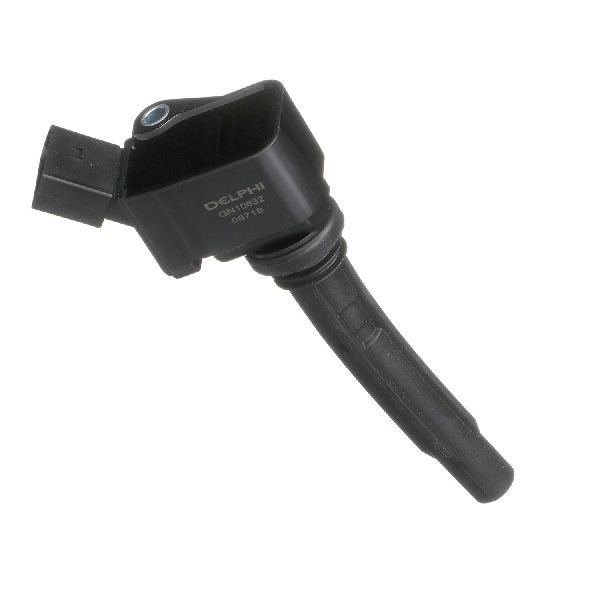
- Faulty Ignition Coil 🔴 High Probability → Shop Ignition Coil Ignition coils are a very common failure point on modern VW/Audi engines, leading to single-cylinder misfires. The same coil part is often used across both the 2.0T and 3.0T engines.
How to confirm: Swap the ignition coil from cylinder 3 with one from another cylinder (e.g., cylinder 1). Clear the codes and drive the vehicle. If the code changes to P0301, the ignition coil is bad. The coils are typically held in by friction and can be pulled straight out after disconnecting the electrical connector.
Typical fix: Replace the faulty ignition coil. It is often recommended to replace all coils at the same time to prevent future failures.
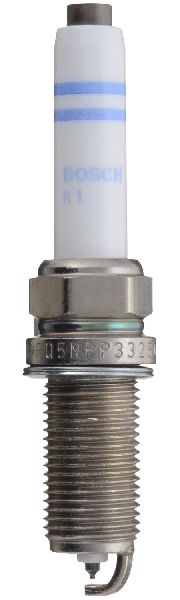
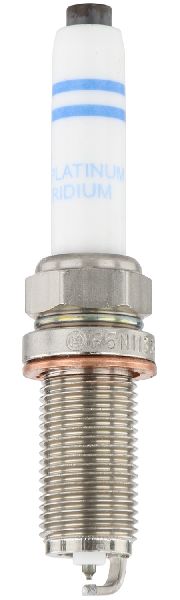
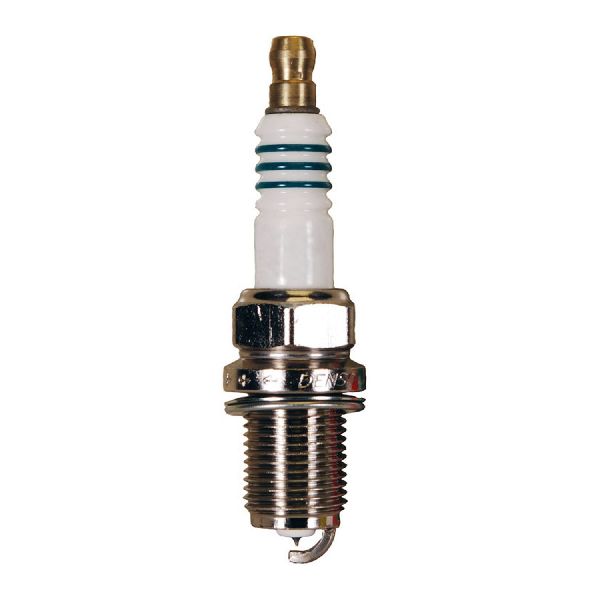
Est. part cost: $50-$80 per coil for OEM/OES brands like Bosch, NGK, or Eldor. - Worn or Fouled Spark Plug 🟡 Medium Probability → Shop Spark Plug Spark plugs are a regular maintenance item with replacement intervals between 30,000 and 60,000 miles depending on the engine. If they are past their service interval or have been fouled by oil or fuel, they can fail to produce a strong enough spark.
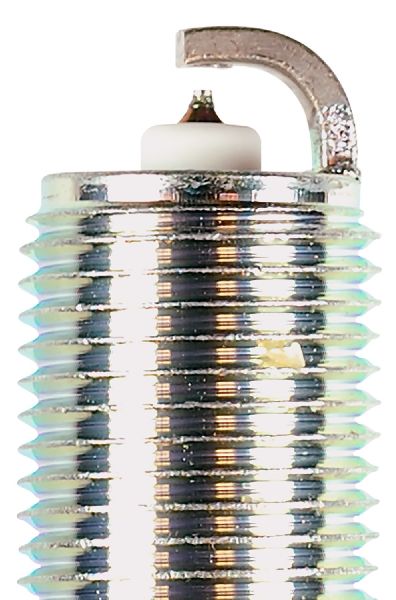
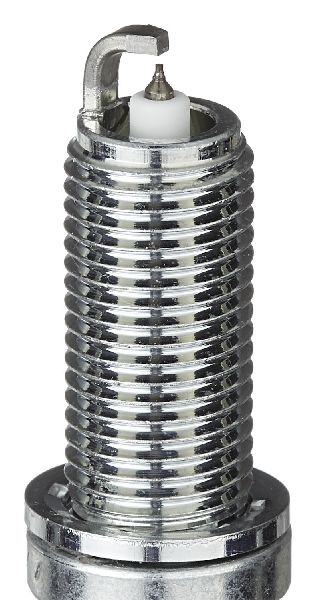
How to confirm: After confirming the ignition coil is good, inspect the spark plug from cylinder 3. Look for wear on the electrode, carbon fouling, oil deposits, or a wet appearance. You can also swap the spark plug with another cylinder to see if the misfire follows.
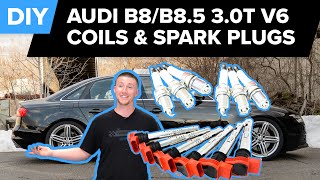
Typical fix: Replace the spark plug. It is best practice to replace all spark plugs as a set. 🎬 Watch: Step-by-step ignition coil and spark plug replacement guide.
Est. part cost: $25-$40 per plug for OEM brands like NGK or Bosch. - Faulty Fuel Injector ⚪ Low Probability → Shop Fuel Injector Direct fuel injectors can become clogged or fail electronically. While less common than ignition issues, it's a known failure point that can cause misfires that are more noticeable at idle or on a cold start.
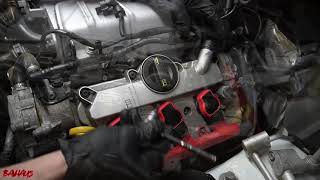
How to confirm: This is a more involved diagnosis. After ruling out ignition components, a technician can perform tests to check the fuel injector's function. A DIY method is to test the injector's resistance with a multimeter or swap the injector with another cylinder 🎬 See how to perform a fuel injector swap test. to see if the code follows. Some owners have had success using a strong in-tank direct injection fuel system cleaner to resolve intermittent misfires.
Typical fix: Replace the faulty fuel injector and its seals. This often requires removing the intake manifold or supercharger. Some owners report resolving rough starts and misfire codes with several doses of a quality DI fuel injector cleaner.
Est. part cost: $150-$300 per injector - Engine Control Module (ECM) Software Issue ⚪ Low Probability → Shop Engine Control Module (ECM) Audi has released software updates to address false misfire detection under certain conditions, such as with winter blend fuels. The update optimizes the software to correct the misfire detection and prevent the MIL from illuminating.
How to confirm: A dealership or qualified shop can check if your vehicle's software is up to date by checking against TSBs like A0124212069038_5.
Typical fix: Update the ECM software at an Audi dealership. This requires a VAS tester with the ODIS software.
Est. part cost: $0 if under warranty, otherwise dealer diagnostic/labor fees apply.
Rare But Worth Checking
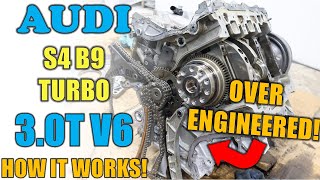
- Low Engine Compression (Rocker Arm/Camshaft Failure): On the 3.0T EA839 engine, a known issue is the failure of needle bearings in the rocker arms, which can lead to a rhythmic ticking noise and subsequent damage to the camshaft lobes. This results in improper valve lift, causing misfires and low compression. The failure is often attributed to lubrication issues, with some specialists recommending 5W-40 oil over the factory-recommended 0W-20. 🎬 Watch: Deep dive into 3.0T rocker arm and camshaft failure.
- Damaged Ignition Coil Wiring Harness: → Shop Ignition Coil The plastic connectors and wiring can become brittle and break over time, causing an intermittent connection to the ignition coil. A visual inspection of the connector for cylinder 3 is recommended. A loose connection can cause the same symptoms as a failed coil.
- Carbon Buildup on Intake Valves: Direct injection engines are prone to carbon accumulation on the back of the intake valves, which can disrupt airflow into the cylinder and cause misfires, especially on cold starts. This typically occurs at higher mileage.
Diagnosis Steps
- Read the trouble codes with an OBD-II scanner to confirm P0303 and check for any other codes.
- Visually inspect the wiring and connector for the ignition coil on cylinder 3 for any damage or loose connections.
- Swap the ignition coil from cylinder 3 with the coil from another cylinder (e.g., cylinder 1). Clear the codes, run the engine, and re-scan. If the code is now P0301, the coil is faulty.
- If the code remains P0303, swap the spark plug from cylinder 3 with the one from cylinder 1. Clear codes and re-scan. If the code is now P0301, the spark plug is faulty.
- If the misfire still remains on cylinder 3, check with an Audi dealer for any applicable TSBs related to ECM software updates for misfires before proceeding.
- If no software update is available, the issue is likely a fuel injector or a mechanical engine issue. Consider trying a high-quality direct injection fuel system cleaner.
- For the 3.0T engine, listen carefully for a rhythmic ticking noise from the top of the engine, which could indicate a developing rocker arm/camshaft issue.
- Further diagnosis of the fuel injector and a compression test are the next steps, which may require professional assistance.
Parts You'll Likely Need
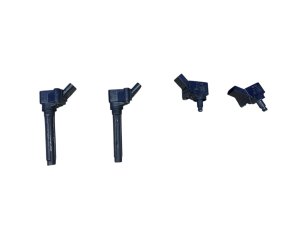
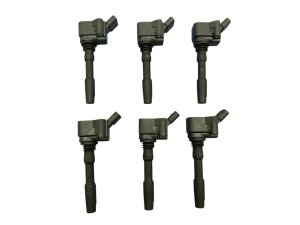
- Ignition Coil
(OEM #06L905110K (verify latest revision, may also see 06K905110K, 06J905110C/D))— This is the most common cause of a single-cylinder misfire on this engine. The same part number is often used for both 2.0T and 3.0T engines.
Trusted brands: Bosch, NGK, Eldor, Genuine Audi/VW
OEM price range: $50-$80
Aftermarket price range: $30-$60 - Spark Plug
(OEM #06M905606F (for 3.0T, verify for 2.0T))— This is the second most common cause and a routine maintenance item that wears out over time.
Trusted brands: NGK, Bosch
OEM price range: $25-$40
Aftermarket price range: $15-$25 - 14mm 12-Point Thin Wall Spark Plug Socket — A special tool is required to remove the spark plugs on this engine; a standard socket will not fit.
Trusted brands: Lisle, CTA Tools
OEM price range: $20-$40
Aftermarket price range: $15-$30
Related Codes That Often Appear With This One
- P0300 — If the misfire is intermittent or begins to affect other cylinders, a P0300 (Random/Multiple Cylinder Misfire) code may appear alongside P0303.
- P0301, P0302, P0304, P0305, P0306 — If other cylinders on the same engine bank are also misfiring, you may see their corresponding codes, pointing to a more systemic issue like a vacuum leak or fuel delivery problem affecting that bank.
- P0087 — In cases where a fuel delivery issue is the root cause, a P0087 (Fuel Rail/System Pressure - Too Low) code may accompany the misfire, pointing towards a failing high-pressure fuel pump (HPFP) or sensor.
Technical Service Bulletins (TSBs) & Recalls
- A0124212069038_6 (May 14, 2024): Supersedes previous versions. Details an ECM software update to correct misfire detection for various models including the 2020-2021 Q7.
- A0123802069038_4 (October 2, 2023): An earlier version of the above TSB, also describing a software update to fix misfire DTCs. States the fix is covered under new vehicle or CPO warranty.
- Informational TSB 2054182: Mentions software calibration causing misfires under certain conditions with winter blend fuel and that a software solution was in development. This was later superseded by the software update TSBs.
Platform-Specific Known Issues
- Audi has issued Technical Service Bulletin A0124212069038_6 (and earlier versions) which states that an ECM software update can correct misfire conditions for the 2020-2021 Q7. It is worth checking with a dealer to see if this applies before performing expensive repairs, as it may be covered under warranty.
- The 3.0T V6 (EA839) engine used in this generation can suffer from premature rocker arm bearing failure, leading to camshaft damage and misfires. The primary symptom is a distinct, rhythmic ticking noise from the engine.
Mechanic-Grade Diagnostic Values
- Ignition Coil Primary Winding Resistance — expected: 0.49 - 0.57 ohms. Failure: Readings outside this range indicate a faulty coil.
- Ignition Coil Secondary Winding Resistance — expected: 9.5 - 11.1 kilohms. Failure: Readings outside this range indicate a faulty coil.
- High-Pressure Fuel System (Rail) Pressure at Idle — expected: ~1,400 bar. Failure: Significant drops under load (e.g., to 1,100 bar) can indicate a failing High-Pressure Fuel Pump (HPFP) and cause misfires.
Scan Tool Commands That Help
- VCDS (VAG-COM): Measuring Value Blocks (MVB) — Use Groups 014, 015, and 016 to view live misfire counters for each cylinder. This helps confirm which cylinder is misfiring in real-time, especially if the fault is intermittent.
- ODIS (Official Audi Software): Guided Fault Finding — When a P0303 code is present, ODIS will initiate a guided test plan that walks the technician through systematic checks, including component actuations and reading specific values, to pinpoint the root cause according to factory procedures.
Wiring & Ground Locations
- Engine Block Ground Strap — On older Q7 models, a primary engine ground cable is located to the left of the alternator and connects to the chassis frame rail. Another attaches to the engine mount. Ensuring these are clean and tight is crucial for stable ignition performance.. A poor engine ground can cause erratic voltage to the ignition coils and ECU, leading to weak spark and intermittent misfires that are difficult to diagnose.
- Ignition Coil Connector Pin 4 — Pin 4 on the 4-pin ignition coil connector is the ground circuit for the coil's internal power stage.. An ohmmeter check from Pin 4 to the coil's metal surface should show very low resistance (10-15 ohms). A reading between Pin 4 and any other pin indicates an internal short to ground, condemning the coil.
- Main ECU Ground — On the 4M chassis, a primary ground point for various control modules is located on the right A-pillar (752) or on the center tunnel (687).. While not a direct engine ground, a compromised ECU ground can cause a wide range of phantom issues, including incorrect sensor readings and misfire detection.
Real Owner Repair Stories
- Ross-Tech Forums user 'Itsmys4' (2018 Audi S4 (B9 chassis with EA839 3.0T engine), 48k miles) — Ticking noises from under the valve covers, which dealers often misdiagnose as normal high-pressure fuel pump noise.
❌ Tried (didn't work) Dealer diagnosis which dismissed the noise as normal.
✅ What actually fixed it The owner self-diagnosed and confirmed rocker arm failure. He successfully replaced the faulty rocker arms with the engine remaining in the car, which resolved the issue. - YouTube video by 'Exotic car DIY' (2019 Audi SQ5 (B9 with EA839 3.0T engine), 95,000 miles, Stage 3+ tune) — Audible rocker arm ticking noise.
❌ Tried (didn't work) Not applicable, as the issue was caught early.
✅ What actually fixed it A preventative/proactive replacement of all rocker arms was performed. Upon inspection, only one rocker arm had lost a single needle bearing, which was causing the tapping noise. Replacing all of them with the updated B9.5 design parts permanently fixed the noise and prevented catastrophic failure. The mechanic strongly attributes the failure to lubrication and recommends 5W-40 oil.
OEM Part Supersession History
06L905110C, 06L905110D, 06K905110K, 06L905110E, 06L905110F, 06L905110H→06L905110K— Ongoing revisions by the manufacturer to improve reliability and performance of the ignition coil.
Heads up: While older revisions may physically fit, it is always recommended to use the latest available part number (06L905110K as of late 2023) for all replacements to ensure longevity. Aftermarket brands like APR and 034Motorsport also offer high-output versions.
Helpful Videos

Used OEM Parts in Stock
New Aftermarket Parts Available

The information in this article is provided for general reference and educational purposes only. Vehicle specifications, procedures, and part compatibility can vary by production date, trim level, and region. Always consult your vehicle's factory service manual and verify part numbers before purchasing or performing repairs. Safety-critical components such as airbags, seat belts, and braking systems should be installed by a qualified professional.
- Audi Q7:
- 🧭 Diagnostic Flowchart
- 🎬 Helpful Videos
- 🛍️ Shop This Part
- What's Unique About the 2020-2021 Audi Q7
- Symptoms You May Notice
- Most Likely Causes
- Rare But Worth Checking
- Diagnosis Steps
- Parts You'll Likely Need
- Related Codes That Often Appear With This One
- Technical Service Bulletins (TSBs) & Recalls
- Platform-Specific Known Issues
- Mechanic-Grade Diagnostic Values
- Scan Tool Commands That Help
- Wiring & Ground Locations
- Real Owner Repair Stories
- OEM Part Supersession History
- 🎟️ Get 5% Off