

P0303 on 2010-2017 Cadillac Escalade ESV: Cylinder 3 Misfire Causes and Fixes
P0303 indicates a misfire on cylinder 3. On the 6.2L V8, this is most often a failed ignition coil, a worn spark plug, or a loose spark plug wire. Swapping the coil from cylinder 3 to another cylinder is the fastest way to diagnose a bad coil. In some cases, it can be a more serious issue like a failed AFM lifter.
- P0303 means cylinder 3 is misfiring, which is the second cylinder back on the driver's side.
- The most likely cause is a bad ignition coil or a worn spark plug. Always perform a 'coil swap' test first, as it is free and definitive.
- Carefully check that the spark plug wire is securely connected at both ends, as a loose wire is a known issue cited in a GM service bulletin.
- Do not ignore a flashing check engine light. This signals a severe misfire that can cause expensive damage to the catalytic converter.
- If you hear a persistent ticking or tapping noise from the engine, the problem could be a more serious AFM lifter failure, which requires professional diagnosis.
What's Unique About the 2010-2017 Cadillac ESCALADE ESV
The 2010-2017 Escalade ESV spans two generations (GMT900 and K2XL) but uses versions of the 6.2L V8 in both. While standard ignition failures are common, these engines are also known for issues with the Active Fuel Management (AFM) system. A failed AFM lifter can cause a misfire, often accompanied by a distinct ticking noise. Although cylinder 3 is not an AFM cylinder, a failure in the AFM system can cause widespread engine instability and may log misfires on non-AFM cylinders. Additionally, a GM Technical Service Bulletin (#PIP4819A) specifically points to loose spark plug wires as a potential cause for misfires on these engines, making it a crucial and simple check.
Diagnostic Flowchart
Tap your situation to follow the diagnostic path that matches what you're seeing on this vehicle.
Generation note: This range covers the third generation (2010-2014, GMT900 platform) and the fourth generation (2015-2017, K2XL platform). The 2010-2014 models typically use the L94 6.2L V8, while the 2015-2017 models use the updated L86 6.2L V8 with direct injection. While the fundamental causes of a P0303 misfire are similar, the L86's direct injection system introduces different fuel injectors and a high-pressure fuel system as potential, though less common, failure points. Carbon buildup on the back of intake valves is also a more prevalent issue on the direct-injected L86, which can cause misfires.
Symptoms You May Notice
- Rough or shaking idle
- Hesitation or stumbling during acceleration
- Loss of engine power
- Flashing or solid Check Engine Light
- Reduced fuel economy
- Noticeable gasoline smell from the exhaust
- Engine ticking or tapping noise, which could indicate a lifter issue
- Replacing only the spark plug without testing the ignition coil. 🎬 Watch: How to diagnose spark plugs and ignition coils The coil swap is a free and fast diagnostic step that should be done first.
- Assuming a P0303 code is always a simple ignition issue and overlooking signs of a more serious mechanical problem, like the ticking noise associated with a failing AFM lifter.
- Replacing fuel injectors on a 2015+ model before ruling out a mechanical issue like a failed lifter or carbon buildup on the valves, which can present similar symptoms.
Most Likely Causes
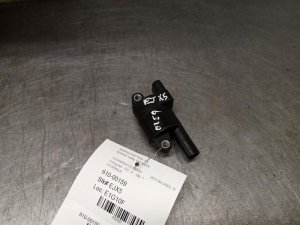
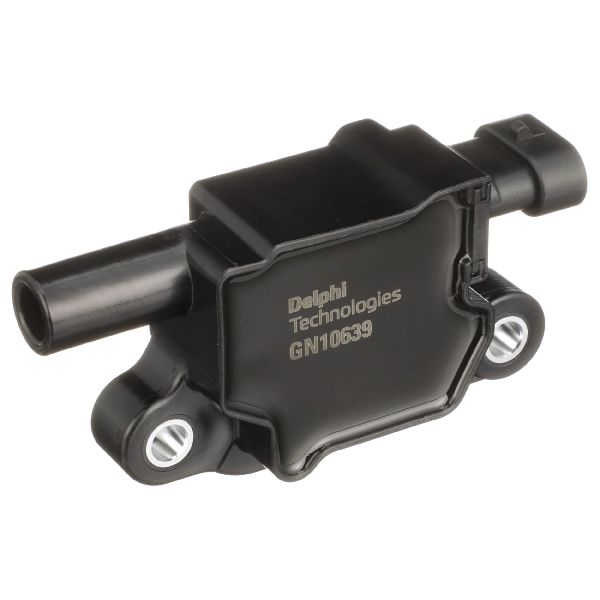
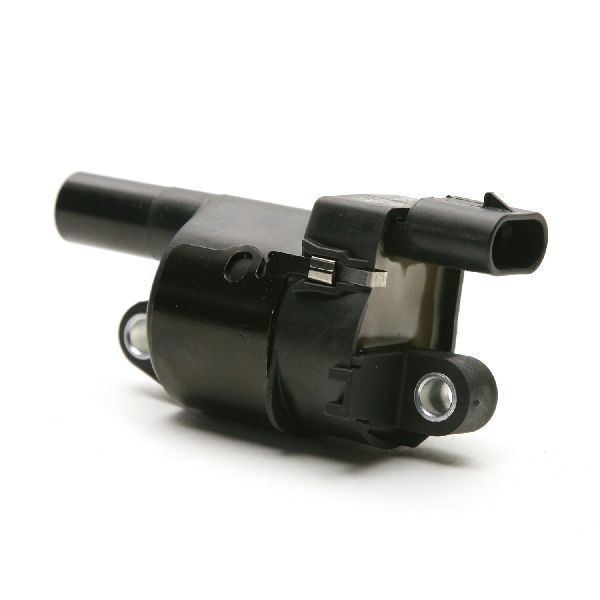
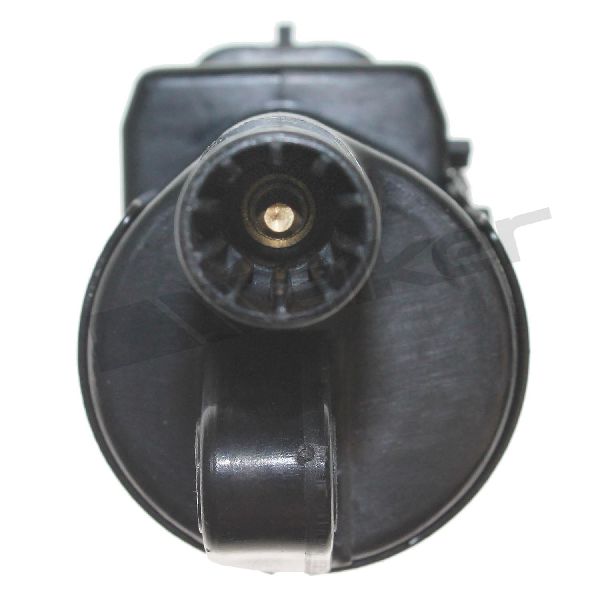
- Faulty Ignition Coil 🔴 High Probability → Shop Ignition Coil The coil-on-plug design places the coil directly on the engine, where it is exposed to significant heat and vibration, leading to eventual failure of the internal windings.
How to confirm: Swap the ignition coil from cylinder 3 with another cylinder (e.g., cylinder 1). Clear the codes and drive the vehicle. If the code changes to P0301, the ignition coil is bad. Visually inspect the coil for cracks or carbon tracking on the boot.
Typical fix: Replace the faulty ignition coil. It is often recommended to replace the corresponding spark plug at the same time.
Est. part cost: $40-$80 - Worn or Fouled Spark Plug 🔴 High Probability → Shop Spark Plug Spark plugs are a standard maintenance item that wear out over time. Oil consumption, which can be an issue on some of these engines, can also foul the plugs, preventing a good spark. A cracked porcelain insulator is also a common cause of misfires.
How to confirm: After confirming the ignition coil is good, remove the spark plug from cylinder 3. Inspect it for wear (worn electrode), carbon fouling (black, sooty), oil/fuel fouling (wet, black), or fine cracks in the white porcelain insulator. A wet plug indicates it is not firing.
Typical fix: Replace the spark plug. If one is worn, it's good practice to replace all eight, especially if they are near the end of their 100,000-mile service life.
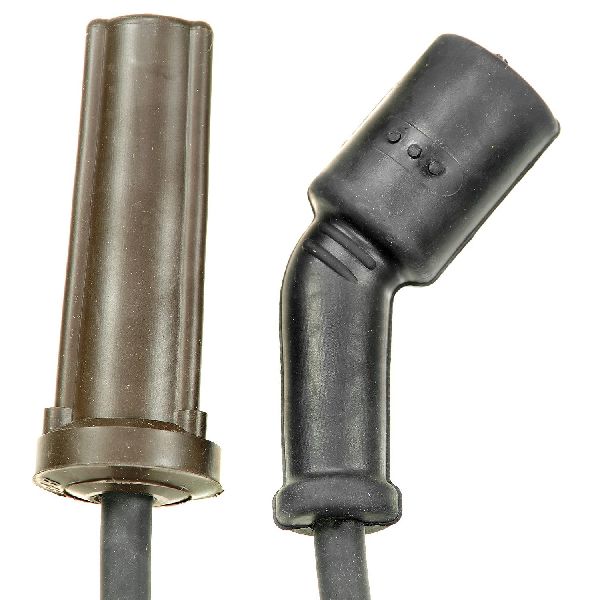
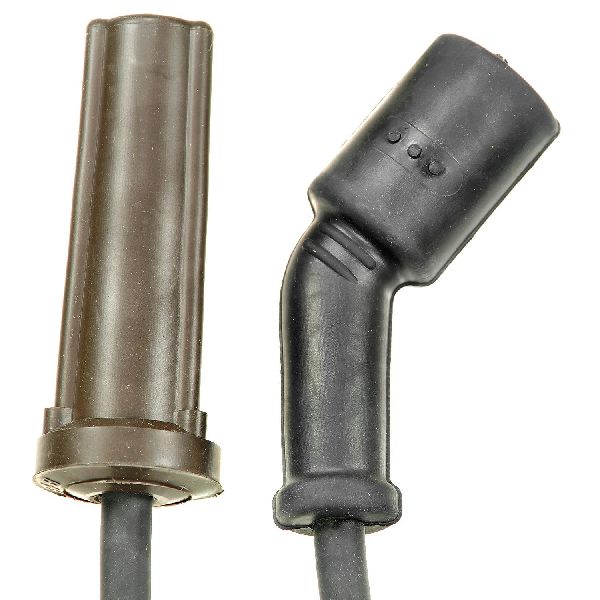
Est. part cost: $8-$20 per plug - Loose or Damaged Spark Plug Wire 🟡 Medium Probability → Shop Spark Plug GM issued TSB #PIP4819A specifically for this issue. The connection at the spark plug or the ignition coil can become loose, causing an intermittent or weak spark.
How to confirm: Visually inspect the spark plug wire for cylinder 3. Ensure it is fully seated on both the ignition coil and the spark plug with an audible 'click'. Check for any signs of physical damage, arcing (white or black marks), or corrosion.
Typical fix: Reseat the spark plug wire firmly. If the wire is damaged or the connection remains loose, replace the spark plug wire set.
Est. part cost: $50-$100 for a set - Failed Active Fuel Management (AFM) Lifter ⚪ Low Probability → Shop Engine Valve Lifter The AFM system deactivates cylinders to save fuel, but the special lifters used are a known failure point across many GM V8s. A lifter can collapse or become stuck, preventing the valve from opening and causing a misfire.
How to confirm: This is a more complex diagnosis. A primary symptom is a distinct ticking or tapping noise from the engine's top end. A mechanic can 🎬 See how to diagnose a Cadillac lifter tick confirm this by removing the valve cover to check for a rocker arm that is not moving or has excessive play. This issue often presents with a P0300 (random misfire) code as well.
Typical fix: Requires replacement of the failed AFM lifter, and often all lifters on that bank. The camshaft should also be inspected for damage. This is a significant and costly repair. Many owners opt to perform an 'AFM delete' at this time, replacing the AFM components with standard lifters and a non-AFM camshaft.
Est. part cost: $500-$1500 for parts including lifters, gaskets, and potentially a camshaft.
Rare But Worth Checking
- Clogged or Faulty Fuel Injector: → Shop Fuel Injector If ignition components are confirmed to be good, the fuel injector for cylinder 3 could be the problem. It may be clogged and not delivering enough fuel. This is more common on higher-mileage vehicles. On 2015+ L86 engines, the direct injectors are more complex and expensive to service. A diagnostic swap with an adjacent injector can confirm the fault if the misfire code moves.
- Intake Manifold Gasket Leak: → Shop Engine Intake Manifold The intake manifold gaskets on these V8 engines can degrade over time, causing a vacuum leak. If the leak is isolated near the intake runner for cylinder 3, it can lean out the air/fuel mixture and cause a misfire. A smoke test is the most effective way to diagnose this.
- Low Cylinder Compression: A more serious mechanical issue like a bent valve, worn piston rings, or a damaged cylinder head can cause a loss of compression in cylinder 3, leading to a persistent misfire. A compression test and a cylinder leak-down test are required to diagnose this.
Diagnosis Steps
- Read the fault codes using an OBD-II scanner and confirm P0303 is present. Note if the Check Engine Light is solid or flashing.
- Locate cylinder 3. On the 6.2L V8, this is the second cylinder from the front on the driver's side (left bank).
- Swap the ignition coil from cylinder 3 with the coil from cylinder 1 (the front-most cylinder on the same side).
- Clear the codes, start the engine, and let it run or drive it briefly.
- Re-scan for codes. If the code is now P0301, the ignition coil is faulty and must be replaced.
- If the code remains P0303, the coil is likely good. Turn off the engine and remove the spark plug from cylinder 3.
- Inspect the spark plug for excessive wear, damage, or fouling (black soot or wet with fuel/oil). A wet, sooty plug is a strong sign it is not firing. Replace the spark plug if it is in poor condition. 🎬 Watch: Step-by-step spark plug replacement for 2015+ models
- Inspect the spark plug wire for a secure fit at both ends, as per TSB #PIP4819A. Check for any visible damage or signs of arcing.
- If ignition components are good, the issue may be with the fuel injector or a mechanical problem. Listen for any engine ticking noises that could indicate a lifter issue.
- For further diagnosis, consider swapping the fuel injector from cylinder 3 to another cylinder to see if the misfire follows. This is more labor-intensive.
- If the misfire persists, a compression test and cylinder leak-down test should be performed to check for mechanical engine problems.
- For further diagnosis of fuel or mechanical issues, professional assistance may be required.
Parts You'll Likely Need
- Ignition Coil
(OEM #12611424 (Often superseded by ACDelco D514A))— This is the most common failure point for a single-cylinder misfire due to constant exposure to heat and vibration.
Trusted brands: ACDelco, Delphi, NGK
OEM price range: $50-$90
Aftermarket price range: $30-$60 - Iridium Spark Plug
(OEM #41-110 (for L94, often superseded by 41-162) or 41-162 (for L86))— Spark plugs are a routine wear item and a frequent cause of misfires. A fouled or worn plug cannot create a strong enough spark for proper combustion.
Trusted brands: ACDelco, NGK, Denso
OEM price range: $10-$20
Aftermarket price range: $8-$15
Related Codes That Often Appear With This One
- P0300 — If the misfire is intermittent or starting to affect other cylinders, a P0300 (Random Misfire) code may appear alongside P0303. This is especially common if the root cause is a failing AFM lifter.
- P050D — This code for 'Cold Start Rough Idle' can sometimes accompany misfire codes, particularly if a lifter or other mechanical issue is the cause.
Technical Service Bulletins (TSBs) & Recalls
- PIP4819A: Addresses misfire DTCs P0300-P0308 caused by loose fitting spark plug wires. Advises technicians to inspect wire connections and replace if necessary.
Platform-Specific Known Issues
- AFM Lifter Failure: The Active Fuel Management (AFM) lifters are a well-documented weak point. A collapsed or stuck lifter is a common cause of misfires, often starting with a distinct ticking sound. While cylinder 3 is not an AFM-deactivated cylinder, a failure elsewhere in the system can cause engine imbalance and log misfires on any cylinder. This is a major repair that can also damage the camshaft if not addressed.
- Carbon Buildup (2015+ L86): The direct injection engine used from 2015-2017 is prone to carbon buildup on the intake valves. Since fuel is injected directly into the cylinder, it no longer washes over the valves to keep them clean. Significant buildup can impede airflow into cylinder 3 and cause a misfire. This typically requires professional cleaning (e.g., walnut blasting).
Mechanic-Grade Diagnostic Values
- Ignition Coil Primary Resistance (Round Style Coil) — expected: 0.820 Ohms. Failure: Significant deviation from this value.
- Ignition Coil Secondary Resistance (Round Style Coil) — expected: 7.10k Ohms. Failure: Significant deviation from this value.
- Ignition Coil Primary Resistance (Square Style Coil) — expected: 0.690 Ohms. Failure: Significant deviation from this value.
- Ignition Coil Secondary Resistance (Square Style Coil) — expected: 5.3k Ohms. Failure: Significant deviation from this value.
- Fuel Injector Resistance (2010-2014 L94 Port Injection) — expected: 8 - 16 Ohms (High Impedance). Failure: A reading outside this range, or an open (infinity) or shorted (near zero) circuit.
- Fuel Injector Resistance (2015-2017 L86 Direct Injection) — expected: 1.5 - 2.2 Ohms (Low Impedance). Failure: A reading outside this range, or an open (infinity) or shorted (near zero) circuit.
- Low-Side Fuel Pressure (Key On, Engine Off) — expected: 48 - 52 psi for L86 (2015+). Failure: Pressure below specification suggests a weak in-tank fuel pump.
- High-Side Fuel Pressure (2015+ L86) — expected: Can range from ~500 psi at idle to over 2000 psi under load.. Failure: Pressure that does not respond to engine load or is significantly below commanded pressure indicates a failing high-pressure fuel pump (HPFP).
Scan Tool Commands That Help
- GDS2/Tech2: Cylinder Power Balance Test — To graphically display the contribution of each cylinder in real-time. A cylinder with a significant drop in contribution compared to others confirms the location of the misfire without having to swap parts initially.
- GDS2/Tech2: Misfire History Counters — To view a historical count of misfires per cylinder over different RPM ranges. This can help determine if the misfire is happening at idle, under load, or across the entire RPM range, which helps narrow down the cause.
- GDS2/Tech2: Injector Flow Test / Balance Test — After ruling out ignition issues, this command can be used to disable specific injectors one by one to see how it affects engine RPM. A cylinder whose RPM does not drop when its injector is disabled indicates a problem with that injector or cylinder.
Wiring & Ground Locations
- G102 — Located at the left rear of the engine; grounds all 8 ignition coils.. A loose or corroded G102 ground can cause a weak or intermittent spark on one or more cylinders, leading to misfire codes. Since it grounds all coils, it can cause random misfires (P0300) or a single cylinder misfire if the connection for one coil's ground path is compromised.
- G103 / G104 — G103 is on the front of the passenger side cylinder head. G104 is on the rear of the driver's side cylinder head. These are primary engine-to-chassis grounds.. Poor engine grounding can introduce electrical noise into the ignition and sensor systems. The ECM relies on a stable ground reference; a bad ground can cause the ECM to misinterpret sensor data or fail to properly control the ignition coils, leading to misfires.
- ECM Connector X2 (2015+) — The black connector on the Engine Control Module (ECM) located in the engine bay.. This connector contains the signal and control wires for the ignition coils and fuel injectors. A loose pin, corrosion, or water intrusion at this specific connector can cause an open or short in the circuit for cylinder 3, directly causing a P0303 code.
Real Owner Repair Stories
- cadillacforums.com user (2015 Cadillac Escalade) — Check engine light with P0303, rough idle, and a ticking noise from the engine.
❌ Tried (didn't work) Swapping ignition coils, Replacing all spark plugs, Swapping fuel injectors
✅ What actually fixed it The ultimate cause was a failed AFM (Active Fuel Management) lifter. The repair involved removing the cylinder head and replacing the collapsed lifter. The user noted that while cylinder 3 is not an AFM cylinder, the mechanical failure of a lifter on another cylinder caused enough instability to register a consistent misfire on cylinder 3.
OEM Part Supersession History
ACDelco 41-110→ACDelco 41-162— Design change for newer model years and emissions standards.
Heads up: While the 41-162 is the official replacement, some owners of L94 engines (pre-2015) report a smoother idle and better performance by seeking out the original 41-110 plugs, citing perceived higher manufacturing quality. The 41-162 is physically shorter than the 41-110.ACDelco D514A (Round Coil)→ACDelco 12570616 / D581 (Square Coil)— Change in ignition coil design between engine generations and models.
Heads up: The round (e.g., D514A) and square (e.g., D581) coils are physically different and have different resistance values; they are not interchangeable. The 2010-2014 Escalade typically uses the round style coil.
Model Year Variations Within This Range
- 2015-2017 (L86 Engine): These models use a direct injection fuel system. This introduces the high-pressure fuel pump (HPFP) and direct injectors as potential failure points not present on 2010-2014 models. More significantly, these engines are prone to carbon buildup on the intake valves, which can restrict airflow and cause misfires, an issue addressed in GM TSB 16-NA-383.
- 2010-2014 (L94 Engine): These models use a port injection system with traditional fuel injectors that are less expensive and easier to service than direct injectors. While still having AFM lifter issues, they are not prone to the intake valve carbon buildup seen in the later direct-injection engines.
Helpful Videos
Used OEM Parts in Stock
New Aftermarket Parts Available


The information in this article is provided for general reference and educational purposes only. Vehicle specifications, procedures, and part compatibility can vary by production date, trim level, and region. Always consult your vehicle's factory service manual and verify part numbers before purchasing or performing repairs. Safety-critical components such as airbags, seat belts, and braking systems should be installed by a qualified professional.
- Cadillac ESCALADE ESV:
- 🧭 Diagnostic Flowchart
- 🎬 Helpful Videos
- 🛍️ Shop This Part
- What's Unique About the 2010-2017 Cadillac ESCALADE ESV
- Symptoms You May Notice
- Most Likely Causes
- Rare But Worth Checking
- Diagnosis Steps
- Parts You'll Likely Need
- Related Codes That Often Appear With This One
- Technical Service Bulletins (TSBs) & Recalls
- Platform-Specific Known Issues
- Mechanic-Grade Diagnostic Values
- Scan Tool Commands That Help
- Wiring & Ground Locations
- Real Owner Repair Stories
- OEM Part Supersession History
- Model Year Variations Within This Range
- 🎟️ Get 5% Off