

P0303 on 2007-2018 Chevrolet Silverado 1500: Cylinder 3 Misfire Causes and Fixes
P0303 indicates a misfire on cylinder 3. The most common fixes are replacing the spark plug and ignition coil, costing around $20-$100 for DIY. However, on these specific GM V8 engines, this code can be a symptom of a much more serious Active Fuel Management (AFM) lifter failure, which is a very expensive repair.
- P0303 is a misfire on cylinder 3, the second cylinder from the front on the driver's side.
- Always start diagnosis by swapping the cylinder 3 ignition coil with another cylinder to see if the code follows; this is a free and effective test.
- If you hear a persistent ticking or tapping noise along with the misfire, stop driving and suspect a failed AFM lifter, which requires professional diagnosis and repair.
- Use high-quality OEM or equivalent spark plugs, like ACDelco Iridium plugs, as these engines are sensitive to plug quality.
- A flashing Check Engine Light signals a severe misfire that can cause expensive damage to your catalytic converter; pull over as soon as it is safe.
What's Unique About the 2007-2018 Chevrolet Silverado 1500

While any vehicle can have a misfire, the 5.3L and 6.2L V8 engines from this era have a well-documented, critical weakness in their Active Fuel Management (AFM) system. A P0303 code, while often a simple ignition issue, can be the first warning sign of a collapsed AFM lifter. This specific mechanical failure is far more common on these engines than on other V8s and turns a simple misfire diagnosis into a potentially major engine repair. While cylinder 3 is not an AFM cylinder (AFM cylinders are typically 1, 4, 6, and 7), problems in the AFM system's oiling, like a faulty Valve Lifter Oil Manifold (VLOM), can affect the entire engine and lead to misfires on any cylinder.
Generation note: This guide covers the GMT900 (2007-2013) and K2XX (2014-2018) generations. The specified Gen IV engines (LY5, LH6, LMG, LC9, L92) were primarily used in the GMT900 trucks. The K2XX trucks introduced new Gen V engines (L83, L86), but the AFM-related lifter issues are a known concern across both generations' V8s.
Symptoms You May Notice
- Rough or shaking idle
- Hesitation or stumbling during acceleration
- Noticeable loss of engine power
- Flashing or solid Check Engine Light
- Reduced fuel economy
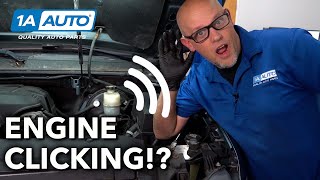
- A ticking or tapping noise from the engine, which strongly suggests a lifter issue. 🎬 Watch: How to diagnose that engine ticking and clicking noise.
- Replacing only ignition components when a mechanical noise (ticking) is present. The ticking is a key indicator of a more serious AFM lifter problem that a tune-up will not fix.
- Assuming the problem is on an AFM cylinder when it could be a non-AFM cylinder affected by an AFM system-related oiling issue.
Most Likely Causes


- Worn or Fouled Spark Plug 🔴 High Probability → Shop Spark Plug These engines are sensitive to spark plug condition. Oil from the PCV system or as a symptom of other issues can foul plugs. It's the most common and simple starting point.
How to confirm: Remove the spark plug from cylinder 3. Inspect it for wear, carbon buildup, or oil fouling. Compare it to a new plug.
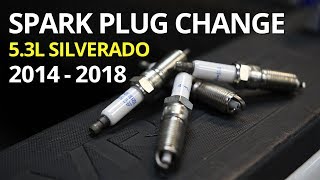
Typical fix: Replace the spark plug. It is recommended to replace all 8 plugs at the same time 🎬 See this step-by-step guide for changing your spark plugs. for consistent performance.
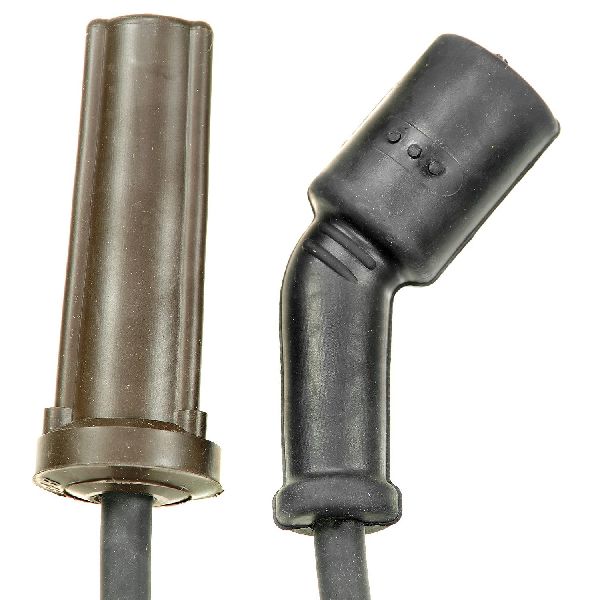
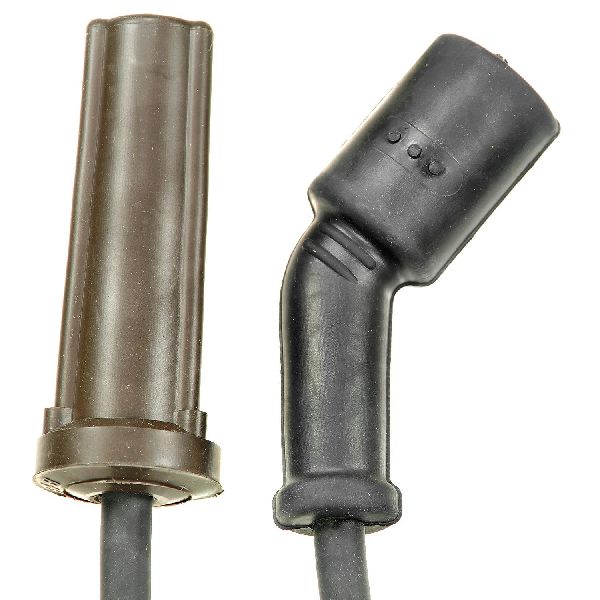
Est. part cost: $5-$15 per plug - Faulty Ignition Coil or Spark Plug Wire 🔴 High Probability → Shop Ignition Coil Coil packs and wires are wear items that fail from heat and vibration over time. Manufacturer Bulletin #PIP4819A notes that technicians may find misfire codes like P0303 and should specifically inspect for loose spark plug wires.
How to confirm: Swap the cylinder 3 ignition coil with another cylinder (e.g., cylinder 1). Clear the codes and drive. If the code changes to P0301, the coil is bad. Inspect the spark plug wire for damage or looseness.
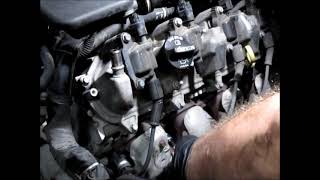
Typical fix: Replace the faulty ignition coil 🎬 Watch: A quick walkthrough on replacing a faulty ignition coil. and/or spark plug wire set.
Est. part cost: $30-$80 for a coil, $40-$100 for a wire set - Collapsed or Stuck AFM Lifter 🟡 Medium Probability → Shop Engine Valve Lifter The Active Fuel Management (AFM) system deactivates cylinders (1, 4, 6, and 7) to save fuel. The special lifters used for this system are a known major failure point, often getting stuck or collapsing due to issues with oil pressure, contamination, or internal pin damage. While cylinder 3 is not an AFM cylinder, misdiagnoses are common, and a failure in the AFM system can sometimes manifest as misfires on other cylinders.
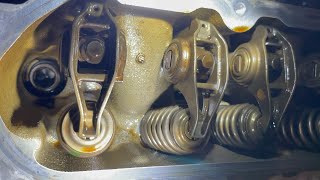
How to confirm: This is a complex diagnosis. It often starts with a persistent ticking noise. A mechanic will confirm by ruling out fuel and spark, then may perform a running compression test or remove the valve cover to visually inspect valve train movement while the engine is running. Ultimately, it requires removing the cylinder head for visual inspection of the lifter and camshaft lobe.
Typical fix: This is a major repair. It involves replacing all AFM lifters (and often non-AFM lifters), the lifter guides, and sometimes the camshaft if it has been damaged by the failed lifter. Many owners opt to install an 'AFM delete kit' at this time to prevent future failures.
Est. part cost: $400-$1000+ - Clogged or Failed Fuel Injector ⚪ Low Probability → Shop Fuel Injector
How to confirm: After ruling out ignition issues, a technician can test the fuel injector's function using a scan tool or by checking its resistance. One can also swap injectors between cylinders, but this is more labor-intensive than swapping a coil.
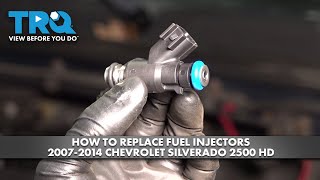
Typical fix: Replace the fuel injector for cylinder 3. Per TSB 20-NA-098, it is critical to use the correct flow-matched injector to avoid further issues.
Est. part cost: $50-$150
Rare But Worth Checking
- Low Cylinder Compression: If ignition and fuel checks don't solve the problem, a compression test is the next step. This can indicate more serious internal engine issues like a bad valve, worn piston rings, or a head gasket leak.
- Bent Pushrod or Broken Valve Spring: Often a consequence of a collapsed lifter, a bent pushrod or broken valve spring can cause a persistent misfire and noise. TSB 19-NA-219 discusses diagnosing misfires from these causes. Visual inspection under the valve cover is required.
- Clogged VLOM Filter Screen: The Valve Lifter Oil Manifold (VLOM) has a small filter screen under the oil pressure sensor. If this screen becomes clogged with sludge or debris, it can restrict oil flow to the AFM lifters, causing them to malfunction and potentially leading to widespread engine issues, including misfires.
Diagnosis Steps

- Read the codes with an OBD-II scanner and note any other codes present.
- Check for a flashing Check Engine Light. If flashing, avoid driving to prevent catalytic converter damage.
- Listen for a rhythmic ticking or tapping noise from the engine. A noise strongly points towards a mechanical issue like a failed lifter.
- Swap the ignition coil from cylinder 3 to an adjacent cylinder (like cylinder 1 or 5). Clear the codes and see if the misfire code moves to the new cylinder (e.g., P0301 or P0305). If it does, the ignition coil is faulty.
- If the code does not move, inspect and replace the spark plug for cylinder 3. Examine the old plug for signs of oil, fuel fouling, or excessive wear.
- Inspect the spark plug wire for a secure connection and any signs of damage. According to Bulletin #PIP4819A, loose spark plug wires are a known cause of misfire codes including P0303.
- If the misfire persists, check fuel trims with a capable scan tool. Abnormal readings can point towards a fuel delivery or vacuum leak issue.
- The next steps involve more complex checks: testing the fuel injector (may require a professional) and performing a compression test to rule out internal engine damage.
- If a mechanical noise is present and other tests are inconclusive, remove the driver's side valve cover to inspect the valve train for cylinder 3 for lack of movement, indicating a collapsed lifter.
Parts You'll Likely Need

- Iridium Spark Plug
(OEM #ACDelco 41-110 (Original Spec) or 41-162 (Superseded))— This is the most common failure item for a single-cylinder misfire. The original 41-110 was superseded by the 41-162, which has a slightly different length. Both are generally considered acceptable for these engines, though some owners report better performance with the original 41-110 plugs.
Trusted brands: ACDelco, NGK
OEM price range: $10-$20
Aftermarket price range: $8-$15 - Ignition Coil
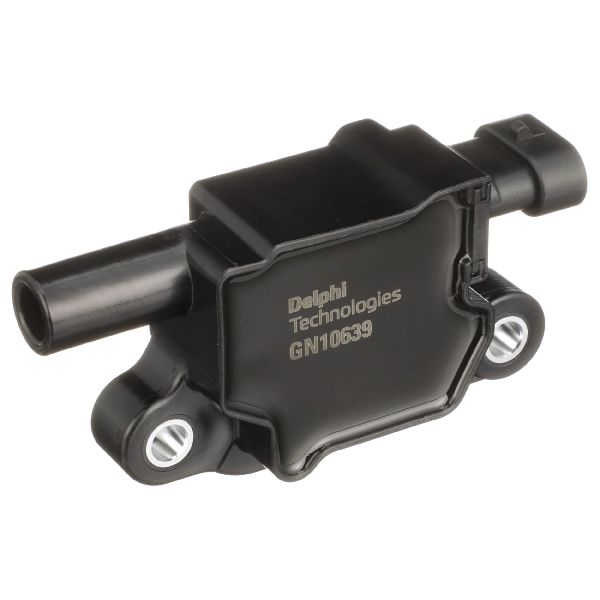
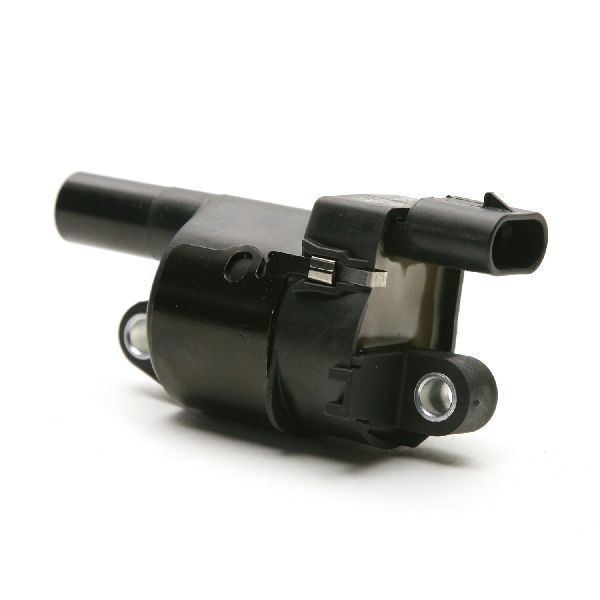
(OEM #ACDelco D510C (or 12611424) for most Gen IV V8s)— The second most common failure point. Easily diagnosed by swapping coils between cylinders. Note: The D521C mentioned in pass 1 fits smaller GM engines, not the Silverado V8s.
Trusted brands: ACDelco, Delphi, Denso
OEM price range: $50-$90
Aftermarket price range: $30-$60 - AFM Lifter Kit — A significant platform-specific weakness. If a ticking noise is present with the misfire, a failed lifter is highly probable. This is a major repair.
Trusted brands: ACDelco, Delphi, Melling
OEM price range: $300-$500
Aftermarket price range: $200-$400 - AFM/DOD Delete Kit
(OEM #Example: Melling MDK300, Michigan Motorsports Kit)— For owners repairing a failed AFM lifter, many choose to install a 'delete kit' to prevent future failures. This involves replacing the AFM lifters with standard lifters, replacing the VLOM with a standard valley cover, and reprogramming the ECM to disable the AFM system.
Trusted brands: Melling, Texas Speed, Michigan Motorsports
OEM price range: N/A
Aftermarket price range: $300-$700
Related Codes That Often Appear With This One
- P0300 — If the misfire is severe or intermittent, it may also trigger a P0300 (Random/Multiple Misfire Detected) code, especially if an AFM system failure is beginning to affect multiple cylinders.
- P0203 — This code for 'Cylinder 3 Injector Circuit Malfunction' points directly to the fuel injector or its wiring as the source of the problem, rather than the ignition system.
- P219B — This code indicates an Air/Fuel Ratio Imbalance on Bank 2 (passenger side). TSB 20-NA-098 notes that installing an incorrect flow-rate fuel injector can cause this code along with misfire codes.
Technical Service Bulletins (TSBs) & Recalls
- 19-NA-219: Diagnostic Tip for Misfire, Chirp, Squeak, Squeal or Tick Noise, which can be caused by a worn cam lobe, a collapsed AFM lifter, or a broken valve spring.
- 20-NA-098: Information on Fuel Injector Replacement Guidelines, warning that incorrect injector part numbers can cause further issues like fuel trim imbalance codes.
- Bulletin #PIP4819A: Notes that vehicles with a Service Engine Soon light and misfire codes P0300-P0308 may require inspection and replacement of loose spark plug wires.
- PIP5282 (Superseded): A preliminary bulletin that detailed diagnosis for AFM lifter failure on cylinders 1, 4, 6, or 7, linking it to low oil pressure, sludge, and internal lifter damage.
- Special Coverage N192212010: For some 2016-2017 models in specific states, GM offered extended coverage (10 years/150,000 miles) for fuel injector issues.
Platform-Specific Known Issues
- Active Fuel Management (AFM) Lifter Failure: This is the most significant issue for these engines. The system deactivates cylinders to improve fuel economy, but the specialized lifters are prone to failure, causing misfires and engine noise. TSB 19-NA-219 addresses diagnosing misfires that can result from a collapsed AFM lifter, broken valve spring, or other valve train issues.
- Incorrect Fuel Injector Replacement: TSB 20-NA-098 warns that these engines use flow-matched injectors. Replacing a single injector with the wrong part number (e.g., a 'low flow' vs 'nominal flow' injector) can cause fuel trim issues and new misfire codes. For a 2014+ 5.3L L83, the correct injector may be GM part 12668390 or its supercession 12681212.
- Preliminary Information Bulletin PIP5282: This bulletin, now superseded but relevant, specifically addressed engine misfires on AFM cylinders (1, 4, 6, or 7) due to stuck or collapsed lifters, often caused by low oil pressure or internal sludge.
Mechanic-Grade Diagnostic Values
- Ignition Coil Primary Resistance — expected: 0.4 to 2.0 ohms, with some aftermarket coils specified around 0.840 ohms.. Failure: A reading outside the specified range, or an open circuit (O.L.).
- Ignition Coil Secondary Resistance — expected: 6,000 to 10,000 ohms (6k-10k Ω).. Failure: A reading significantly outside this range indicates a faulty coil.
- Fuel Injector Resistance (Gen IV 5.3L/6.2L) — expected: Approximately 11.4 to 13.5 ohms.. Failure: A reading outside of this range, especially an open or shorted reading, indicates a failed injector.
- Fuel Pressure (Key On, Engine Off) — expected: 55-62 PSI for the in-tank pump system.. Failure: Pressure below this range can indicate a weak fuel pump, clogged filter, or faulty regulator, potentially causing a lean misfire.
- Scan Tool Fuel Injector Balance Rates (at idle) — expected: Between +4.0 mm³ and -6.9 mm³ in Park or Neutral.. Failure: A large positive value on cylinder 3 suggests it's under-fueling (clogged injector) or has low compression. A large negative value suggests it's over-fueling (leaking injector).
Hidden / Shadow Codes Worth Checking
- Mode 6, Test ID $A2-$A9: These are not shadow codes but are part of the OBD-II standard (Mode 6) that tracks misfire counts per cylinder. Test ID $A4 corresponds to Cylinder 3 Misfire Count. This data can show misfires that are not yet frequent enough to set a P0303 code. (see via A professional scan tool or an advanced consumer OBD-II app that can display Mode 6 data.)
Scan Tool Commands That Help
- Tech 2 / GDS2: Cylinder Power Balance Test — This bidirectional test allows the technician to disable individual fuel injectors one by one and observe the RPM drop. If disabling cylinder 3 causes little or no RPM drop compared to other cylinders, it confirms cylinder 3 is not contributing power, isolating the fault to that cylinder.
- Tech 2 / GDS2: AFM Solenoid Control — While cylinder 3 is not an AFM cylinder, a technician can use the scan tool to command the AFM system on and off to see if it influences the misfire or causes other symptoms, which can help diagnose a faulty VLOM or system-wide oiling issue.
Wiring & Ground Locations
- G103 / G104 — Typically found on the rear of the driver's side cylinder head. There is often a ground strap from the firewall to the back of the head.. A loose or corroded ground strap at the cylinder head can cause erratic behavior for the ignition coils and fuel injectors on that bank, leading to misfires. This is a commonly overlooked cause.
- ECM/TCM Bracket Harness Chafe — On later model trucks (2019+ but relevant to earlier designs), the engine wiring harness can rub against a sharp edge on the ECM/TCM mounting bracket on the driver's side.. Chafing can damage the insulation on the ignition coil or fuel injector control wires for cylinder 3, causing an intermittent short to ground and a persistent misfire that is difficult to diagnose.
- ECM Connector X3, Pin 49 (Gen V L83) — On the 2015+ 5.3L L83 engine, the control wire for the cylinder 3 ignition coil is a Dark Green/White wire at Pin 49 of the X3 ECM connector.. This specific pin is the starting point for any circuit integrity test (continuity, short-to-ground) for the cylinder 3 ignition coil control circuit if the coil itself is known to be good.
Real Owner Repair Stories
- Chevrolet Forum user (2013 Suburban 5.3L, 40k miles) — Sudden full misfire at idle, check engine light on. Previously had a slight stumble at idle.
❌ Tried (didn't work) Replacing the spark plug in cylinder 7 (misfire was on 7 in this case, but same engine family/issue).
✅ What actually fixed it The dealership diagnosed and replaced a broken exhaust valve spring on the misfiring cylinder, which was covered under the powertrain warranty. - Reddit user in r/Silverado (2008 Silverado 5.3L) — Persistent P0303 code after several days of driving.
❌ Tried (didn't work) Replaced spark plugs and wires., Swapped ignition coils between cylinders (code remained on cylinder 3).
✅ What actually fixed it The user was advised that the next logical steps were to swap the fuel injector from cylinder 3 to another cylinder to see if the code moved, or to remove the valve cover and check for a collapsed/stuck lifter, as these are the most likely causes after ignition components are ruled out. - AnandTech Forums user (2014 Sierra 1500 Crew Cab, 150k miles) — Engine misfire, ticking noise.
❌ Tried (didn't work) Initial diagnosis
✅ What actually fixed it An AFM lifter had frozen and destroyed the camshaft lobe. The owner opted to replace the entire engine with a new crate engine for ~$4800 plus ~$2600 in labor, as the cost to repair the damaged components was only about $1500 less than a full replacement.
OEM Part Supersession History
ACDelco 41-110 (Iridium)→ACDelco 41-162 (Iridium)— Change in supplier (from NGK to Denso, or vice-versa) and a slight design change.
Heads up: The 41-162 plug is physically shorter from the seat to the electrode tip. While GM lists it as the correct replacement, some owners and mechanics report quality control issues with the 41-162 and prefer to source the original 41-110, claiming it provides a smoother idle.ACDelco 41-985 (Iridium)→ACDelco 41-110 (Iridium)— Standard part number update and design revision for Gen IV engines.
Model Year Variations Within This Range
- 2007-2013 (Gen IV / GMT900): The VLOM filter screen is located at the rear of the engine valley, underneath the oil pressure sensor. Access is extremely difficult and often requires removing the intake manifold.
- 2014-2018 (Gen V / K2XX): The VLOM is located at the front of the engine valley and has its own access point, separate from the oil pressure sensor. It is still under the intake manifold but in a different location than the earlier engines. These engines also use Direct Injection (DI), making fuel injector issues and intake valve carbon buildup more distinct possibilities.
- 2007-2013 (Gen IV): These engines use a 'Multec 2' style fuel injector connector, which is different from later EV6 connectors. The ignition coils are typically square-shaped (D585/UF262 style) on early models and later changed to a different style.
Diagnostic Flowchart
Real Owner Stories
Aggregated from forums and TSBs cited above. Mileages and costs reflect what owners reported in those sources.
2007 Chevrolet Silverado 1500
Symptoms: Persistent P0303 misfire that did not resolve after replacing ignition parts.
What fixed it: Owner replaced plugs, wires, and a coil, and swapped injectors with no change; the community advised checking for mechanical issues like a collapsed lifter.
Source hint: Reddit r/MechanicAdvice - Having a hard time with a P0303!
2008 Chevrolet Silverado 1500 5.3L
Symptoms: P0303 code after replacing plugs, wires, and swapping coils.
What fixed it: The owner was advised to swap injectors first to rule out fuel delivery, with a strong warning that the ultimate issue could be a collapsed lifter.
Source hint: Reddit r/Silverado - P0303 after plugs, wires, and coil swap
Chevrolet Silverado 1500 — 81000 miles
Symptoms: AFM/DFM lifter failure causing engine issues.
What fixed it: Identified as a long-standing design issue requiring lifter replacement.
Source hint: Chevy Trail Boss Forum - Lifter issues resolved?
Chevrolet Silverado 1500 — 88000 miles
Symptoms: AFM/DFM lifter failure.
What fixed it: Identified as a long-standing design issue requiring lifter replacement.
Source hint: Chevy Trail Boss Forum - Lifter issues resolved?
Related OBD-II Codes
Frequently Asked Questions
Is there a technical service bulletin (TSB) for the ticking noise and misfire on my 5.3L Silverado?
I have a 2016 Silverado with a bad fuel injector causing P0303. Is it covered under any extended warranty?
If I need to replace the cylinder 3 fuel injector on my 2014 5.3L L83, can I use any aftermarket injector?
Cylinder 3 isn't an Active Fuel Management (AFM) cylinder, so could a collapsed lifter still cause my P0303 code?
How can I test if the ignition coil is causing the P0303 on my 6.2L V8?
What is the 'AFM delete kit' that Silverado owners mention for misfire issues?
Helpful Videos
Used OEM Parts in Stock
New Aftermarket Parts Available


The information in this article is provided for general reference and educational purposes only. Vehicle specifications, procedures, and part compatibility can vary by production date, trim level, and region. Always consult your vehicle's factory service manual and verify part numbers before purchasing or performing repairs. Safety-critical components such as airbags, seat belts, and braking systems should be installed by a qualified professional.
- Chevrolet Silverado 1500:
- 🧭 Diagnostic Flowchart
- 🎬 Helpful Videos
- 🛍️ Shop This Part
- What's Unique About the 2007-2018 Chevrolet Silverado 1500
- Symptoms You May Notice
- Most Likely Causes
- Rare But Worth Checking
- Diagnosis Steps
- Parts You'll Likely Need
- Related Codes That Often Appear With This One
- Technical Service Bulletins (TSBs) & Recalls
- Platform-Specific Known Issues
- Mechanic-Grade Diagnostic Values
- Hidden / Shadow Codes Worth Checking
- Scan Tool Commands That Help
- Wiring & Ground Locations
- Real Owner Repair Stories
- OEM Part Supersession History
- Model Year Variations Within This Range
- Real Owner Stories
- 2007 Chevrolet Silverado 1500
- 2008 Chevrolet Silverado 1500 5.3L
- Chevrolet Silverado 1500 — 81000 miles
- Chevrolet Silverado 1500 — 88000 miles
- Related OBD-II Codes
- Frequently Asked Questions
- 🎟️ Get 5% Off