

P0303 on 2012-2014 Dodge Avenger: Cylinder 3 Misfire Causes and Fixes
P0303 means cylinder 3 is misfiring. On a 2012-2014 Avenger, this is most often caused by a bad ignition coil or a worn-out spark plug. For the 3.6L V6, a failing rocker arm/lifter is also a strong possibility. For the 2.4L I4, oil in the spark plug tube from a leaking valve cover gasket is a common culprit. Swapping the coil from cylinder 3 with another cylinder is a quick, no-cost diagnostic step.
- P0303 indicates a misfire specifically in cylinder 3.
- The most likely culprits are a bad ignition coil or a worn spark plug, which are affordable and relatively easy to replace for a DIYer.
- A simple and effective diagnostic step is to swap the ignition coil from cylinder 3 to another cylinder and see if the misfire code follows.
- On models with the 3.6L V6 engine, check with a dealer if TSB #18-102-16 (a PCM software update) applies to your vehicle before replacing parts.
- Do not ignore a flashing check engine light, as this signals a severe misfire that can quickly destroy your catalytic converter.
What's Unique About the 2012-2014 Dodge AVENGER
The 2012-2014 Avenger was available with two main engines: the 2.4L 'Tigershark' I4 and the 3.6L 'Pentastar' V6. While standard ignition component failure is common on both, each has unique failure patterns. The 3.6L V6 has a well-documented history of valvetrain issues, specifically failing rocker arms and lifters that can cause a ticking noise and a single-cylinder misfire like P0303. The earlier cylinder head issue (extended warranty X56) primarily affected the left bank (cylinders 2, 4, 6) on 2011-2013 models, making it a less likely, but not impossible, cause for a P0303. On the 2.4L engine, a very common cause for misfires is oil leaking from the valve cover tube seals into the spark plug wells, saturating the ignition coil boot 🎬 Watch: Why oil leaks into spark plug wells and how to fix it. and causing the spark to fail. A Technical Service Bulletin (TSB #18-102-16) also exists for the 3.6L V6 that involves a PCM software update to address various codes, including misfires, which could be triggered by overly sensitive sensor readings.
Diagnostic Flowchart
Tap your situation to follow the diagnostic path that matches what you're seeing on this vehicle.
Symptoms You May Notice
- Rough or shaky idle
- Hesitation or stumbling during acceleration
- Noticeable loss of engine power
- Flashing Check Engine Light (indicates a severe misfire)
- Reduced fuel economy
- Fuel smell from the exhaust
- Ticking noise from the engine (specifically for 3.6L V6, may indicate rocker arm/lifter failure)
- Replacing only the spark plug when the ignition coil is the actual cause (or vice-versa).
- Replacing fuel injectors before performing a simple ignition coil and spark plug swap to rule out the more common and easier-to-fix components.
- On the 2.4L, replacing an oil-fouled ignition coil without also replacing the leaking valve cover gasket, leading to a repeat failure.
- On the 3.6L, repeatedly replacing plugs and coils when the underlying issue is a failing rocker arm.
Most Likely Causes
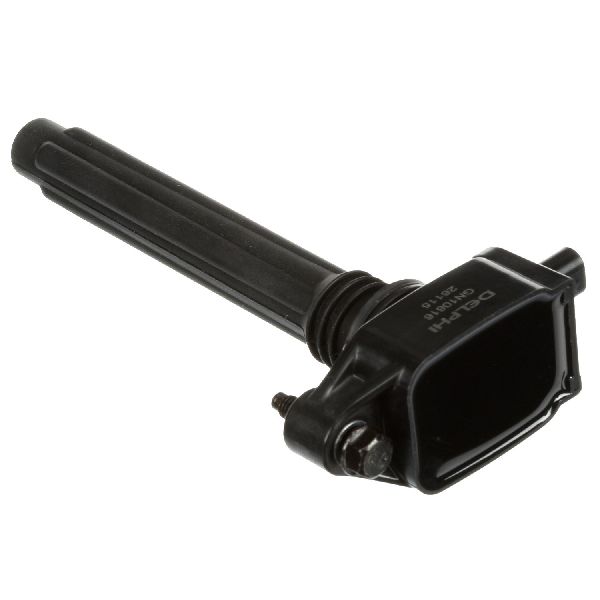
- Faulty Ignition Coil 🔴 High Probability → Shop Ignition Coil Coil-on-plug systems are common points of failure due to constant heat and vibration. On the 2.4L, oil saturation from a leaking valve cover gasket is a frequent cause of coil failure.
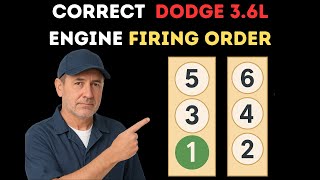
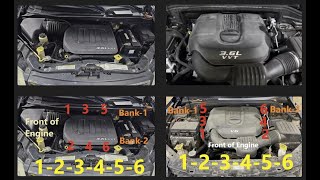
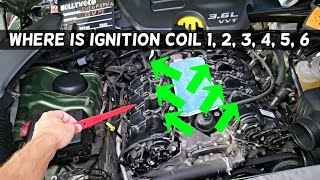
How to confirm: Swap the ignition coil from cylinder 3 with another cylinder (e.g., cylinder 1). Clear the codes and drive the vehicle. If the code changes to P0301, the ignition coil is faulty. For the 3.6L V6, cylinder 3 is the middle cylinder on the rear bank 🎬 See this video to help identify the 3.6L cylinder locations. (firewall side). For the 2.4L I4, it is the third cylinder from the passenger side.
Typical fix: Replace the faulty ignition coil. It is often recommended to replace the corresponding spark plug at the same time. If oil was present in the 2.4L spark plug tube, the valve cover gasket and tube seals must be replaced.
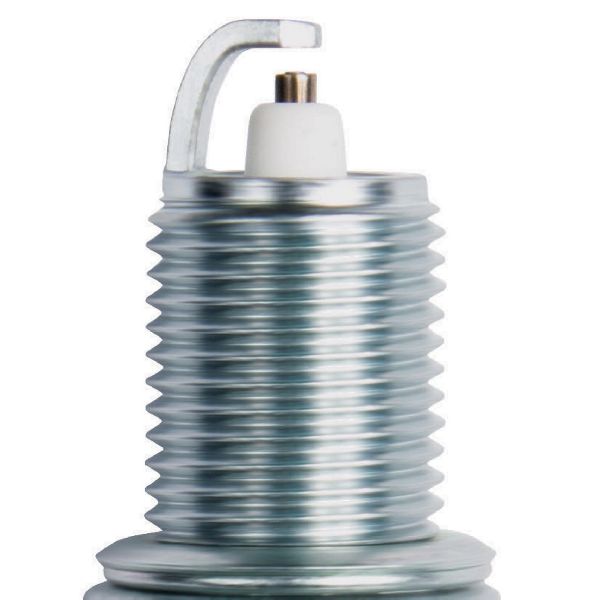
Est. part cost: $25-$75 - Worn or Fouled Spark Plug 🔴 High Probability → Shop Spark Plug Spark plugs are a regular maintenance item. A plug can become fouled by fuel, oil, or carbon, or the electrode can wear down, creating too large a gap for a strong spark.
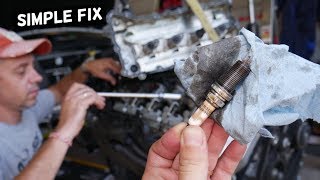
How to confirm: After swapping the coil with no change, inspect the spark plug from cylinder 3. Look for a cracked insulator, heavy black soot, wetness from oil or fuel, or a worn-down center electrode. You can also swap the plug with another cylinder to see if the misfire follows.
Typical fix: Replace the spark plug. It is best practice to replace all spark plugs at the same time to ensure even performance and avoid future misfires.
Est. part cost: $10-$25 per plug - Faulty Fuel Injector 🟡 Medium Probability → Shop Fuel Injector
How to confirm: Listen to the injector with a mechanic's stethoscope or a long screwdriver; it should make a consistent clicking sound. You can also test its resistance with a multimeter or, if accessible, swap it with an injector from another cylinder to see if the misfire code moves. Some owners report an injector being the culprit after plugs and coils fail to fix the issue.
Typical fix: Replace the faulty fuel injector. The intake manifold may need to be removed for access on the 3.6L V6.
Est. part cost: $50-$150 - Failed Rocker Arm / Lifter (3.6L V6) 🟡 Medium Probability → Shop Engine Rocker Arm The 3.6L Pentastar engine is known for premature failure of the needle bearings in the roller rocker arms, leading to a distinct 'Pentastar tick'. This causes excessive play, damages the camshaft lobe, and results in a misfire.
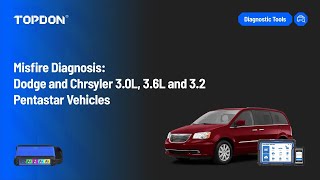
How to confirm: This is a more advanced diagnosis. It typically starts with a persistent single-cylinder misfire (like P0303) and an audible ticking noise from the top 🎬 Watch: Advanced diagnosis of Pentastar valve train and rocker arm issues. of the engine, especially on the bank with the misfire. A compression test may show low results. Visual inspection after removing the valve cover is the definitive confirmation.
Typical fix: Replace all rocker arms and lifters on the affected cylinder head. The camshaft should also be inspected for damage and replaced if necessary. This is a labor-intensive job.
Est. part cost: $200-$500 for parts (rockers, lifters, gaskets, possibly camshaft) - PCM Software Update Required (3.6L V6) ⚪ Low Probability TSB #18-102-16 (and an earlier version #18-004-12) indicates that a PCM software update is available to address misfire codes that may be set incorrectly due to sensitive O2 sensor readings or other parameters.
How to confirm: A Dodge dealership or a qualified shop with a wiTECH scan tool can check if your vehicle's PCM software is up to date by referencing the TSB.
Typical fix: Reprogram the Powertrain Control Module (PCM) with the latest software.
Est. part cost: $0 (if under warranty) - $150
Rare But Worth Checking
- Internal Engine Damage (e.g., bad valve, piston ring, or camshaft/lifter issue): On the 3.6L Pentastar engine, a persistent P0303 after replacing ignition and fuel components strongly points to a more serious internal issue like a failed rocker arm or a cylinder head problem. A compression test and a cylinder leak-down test are required to diagnose this.
- Damaged Ignition Coil Wiring: → Shop Ignition Coil A YouTube case study on a 2011 Avenger with a 2.4L engine found that a shorted control wire in the harness leading to the ignition coil caused a P0303 and melted the coil. A visual inspection of the wiring for chafing or melting is warranted, especially if a coil has failed catastrophically.
- Vacuum Leak: A leak in the intake manifold gasket near cylinder 3 could lean out the air/fuel mixture and cause a misfire. This would typically be accompanied by other lean codes or a hissing sound.
- Leaking Valve Cover Gasket (2.4L I4): → Shop Engine Valve Cover While a common cause of coil failure, this is the root problem. If you find oil in the spark plug tube for cylinder 3, the valve cover gasket and spark plug tube seals must be replaced to prevent repeat failures of the new ignition coil.
Diagnosis Steps
- Read all stored fault codes with an OBD-II scanner. Note any other codes present, as they can provide valuable clues.
- Visually inspect the wiring and connector for the cylinder 3 ignition coil and fuel injector for any damage, melting, or loose connections.
- For the 3.6L V6, identify cylinder 3 as the middle cylinder on the bank closer to the firewall. For the 2.4L I4, it is the third cylinder from the passenger side.
- Swap the ignition coil from cylinder 3 with an adjacent, easy-to-access cylinder (e.g., cylinder 1).
- Clear the codes, start the engine, and drive to see if the misfire code moves to the new cylinder (e.g., P0301). If it does, the ignition coil is bad and needs replacement.
- If the misfire remains on cylinder 3, remove the ignition coil again and inspect the spark plug tube for oil (a common issue on the 2.4L).
- Swap the spark plug from cylinder 3 with the one from the cylinder you just used for the coil swap.
- Clear the codes and check again. If the misfire moves, the spark plug is faulty.
- If the misfire still remains on cylinder 3, the issue is likely fuel or mechanical. Listen for a steady clicking sound from the cylinder 3 fuel injector.
- For the 3.6L V6, listen carefully for a ticking sound from the valve cover area, which could indicate a rocker arm/lifter issue.
- If all ignition and fuel components for cylinder 3 check out, perform a compression test and a cylinder leak-down test to check for mechanical engine problems.
Parts You'll Likely Need
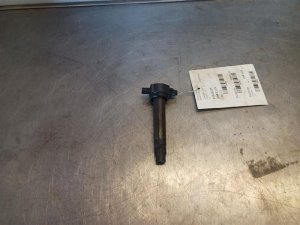
- Ignition Coil
(OEM #5149168AI (for 3.6L V6), 4606824AC (for 2.4L I4))— This is one of the most common failure points for a single-cylinder misfire. Heat, vibration, and (on the 2.4L) oil contamination cause the internal windings to fail.
Trusted brands: Mopar, NGK, Denso, Delphi
OEM price range: $75-$90
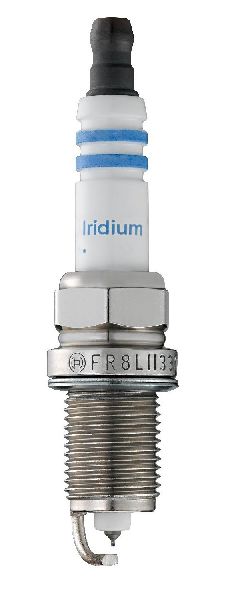
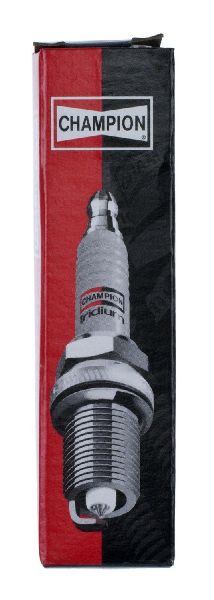
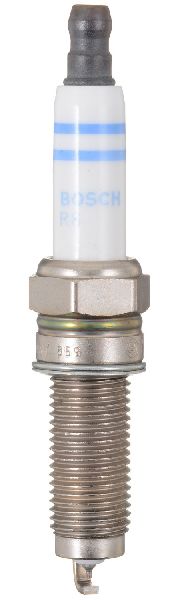
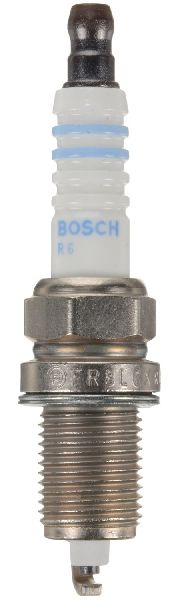
Aftermarket price range: $25-$75 - Spark Plug
(OEM #SP0ZFR5F11 (for 2.4L I4))— Spark plugs are a routine wear item. A fouled, cracked, or worn-out plug cannot produce a strong enough spark for proper combustion.
Trusted brands: NGK, Champion, Denso
OEM price range: $15-$30
Aftermarket price range: $10-$25
Related Codes That Often Appear With This One
- P0300 — If the misfire is intermittent or affects other cylinders, a P0300 (Random/Multiple Cylinder Misfire) may be stored alongside P0303.
- P0301, P0302, P0304, P0305, P0306 — If other cylinder-specific misfire codes are present, it points towards a problem affecting the entire engine, such as low fuel pressure, a large vacuum leak, or incorrect engine timing, rather than a single component on cylinder 3.
- P0133, P0153 — The provided TSB #18-102-16 lists these O2 Sensor Slow Response codes along with misfire codes, suggesting a potential link that may be resolved with a PCM software update on 3.6L models.
- P2308 — This code for 'Ignition Coil Secondary Circuit - Insufficient Ionization' can appear with a P0303 on the 2.4L engine and points directly to a problem with the ignition coil or its wiring harness, as documented in a case study where the wiring was shorted.
Technical Service Bulletins (TSBs) & Recalls
- 1810216: For 2012-2014 models with the 3.6L engine, this TSB involves a PCM software update to address misfire and O2 sensor codes that may be set too sensitively.
- 18-004-12: An earlier version of the PCM flash TSB for 2012 3.6L models, covering the same set of misfire and other engine codes.
- X56: Not a traditional TSB, but an extended warranty bulletin for 2011-2013 Pentastar 3.6L engines for a faulty left cylinder head causing misfires (typically on cylinders 2, 4, 6).
Platform-Specific Known Issues
- For 3.6L V6 engines, TSB #18-102-16 was issued to update the PCM software. This update addresses several diagnostic trouble codes, including P0303, which may be set due to overly sensitive monitoring. It's worth checking if this update has been performed before replacing more expensive parts.
- Early 3.6L Pentastar V6 engines (2011-2013) had a known issue with the left cylinder head that could cause premature valve guide wear and lead to misfires, covered under an extended warranty (X56). This typically affects cylinders 2, 4, and 6, but it's a known major issue for the engine family.
- A more common issue on 2012-2014 3.6L engines is the failure of rocker arms due to collapsed needle bearings, causing a 'Pentastar tick' and a misfire on the corresponding cylinder. If you have a P0303 and a ticking noise, this is a very likely cause.
- For 2.4L I4 engines, oil leaking from the valve cover's spark plug tube seals is extremely common. The oil fills the spark plug well, shorting out the ignition coil and causing a misfire. Finding oil on the coil boot is a clear sign that the valve cover gasket set needs to be replaced along with the coil and plug.
Mechanic-Grade Diagnostic Values
- Fuel Pressure (3.6L V6) — expected: 407 kPa +/- 34 kPa (59 psi +/- 5 psi). Failure: Pressure significantly below this range indicates a fuel delivery problem.
- Fuel Injector Resistance (3.6L V6) — expected: 12.0 to 16.0 Ohms. Failure: A reading of 0, infinite, or significantly outside this range indicates a failed injector.
- Ignition Coil Primary Resistance (3.6L V6) — expected: 0.59 to 0.62 Ohms. Failure: A significant deviation from this range suggests a faulty coil winding.
- Ignition Coil Resistance (2.4L I4) — expected: Primary: 0.64-0.78 Ohms; Secondary: 5.4-6.6 kOhms. Failure: Readings outside of the specified ranges point to a failed ignition coil.
- Mode $06 Misfire Count (All Engines) — expected: Near zero for cylinder 3.. Failure: A high or rapidly increasing count for cylinder 3 confirms the PCM is detecting misfire events, even if a code is not yet permanent.
Hidden / Shadow Codes Worth Checking
- Mode $06, TID $53 (example): This is not a proprietary code, but a standard OBD-II function that provides raw test data from the PCM's onboard monitors. For misfires, it shows the literal count of misfire events per cylinder. This allows a technician to see which cylinder is misfiring and how severely, often before the count is high enough to trigger a constant Check Engine Light. (see via Requires a professional-grade scan tool or a capable consumer OBD-II adapter paired with advanced diagnostic software (like Torque Pro) that can display Mode $06 test results. The specific Test ID (TID) for misfire data can vary by manufacturer and year.)
Scan Tool Commands That Help
- wiTECH (or equivalent professional scanner): Cylinder Power Balance / Cylinder Contribution Test — This function is used to determine how much power each cylinder is contributing. When you have a persistent P0303 but the cause isn't obvious from a coil/plug swap, running this test can definitively confirm that cylinder 3 is the one failing to contribute, helping to rule out a faulty sensor reporting the wrong cylinder.
Wiring & Ground Locations
- G902a — Located at the left rear of the engine.. This is a primary ground point for the engine harness. A poor connection here could potentially cause erratic behavior in sensors or actuators, including the ignition coils and fuel injectors.
- G300 — Located under the driver's seat.. This is a major body ground point. While less likely to cause a single-cylinder misfire, a corroded or loose G300 can cause a wide range of difficult-to-diagnose electrical issues.
- Cylinder 3 Ignition Coil Connector (2.4L) — On the ignition coil for the third cylinder from the passenger side.. This is a two-wire connector. One wire is a shared 12V power feed, and the other is the ground-side switched control wire from the PCM. A short in this control wire can destroy the coil.
Real Owner Repair Stories
- YouTube channel 'D&E In The Garage' (2016 Ram ProMaster with 3.6L Pentastar engine) — P0303 cylinder 3 misfire.
❌ Tried (didn't work) Swapping ignition coils, Swapping spark plugs, Swapping fuel injectors
✅ What actually fixed it The intake camshaft lobe for cylinder 3 was found to be severely worn down. The failure was caused by seized roller bearings on the rocker arms for that cylinder. The final repair was replacing the intake camshaft, two rocker arms, and two lifters for cylinder 3. - YouTube channel 'Positively Diagnostics' (2011 Dodge Avenger with 2.4L engine) — Flashing Check Engine Light with codes P0303 and P2308 (Ignition Coil 3 Secondary Circuit Insufficient Ionization).
❌ Tried (didn't work) Initial diagnosis pointed to a simple coil failure.
✅ What actually fixed it While testing the coil connector, the ignition coil began to smoke and melt. The investigation found that the control wire in the engine harness leading to the coil was shorted to ground. This caused the coil to be constantly energized, leading to its destruction. The fix was to repair the damaged wiring harness.
When the Usual Fixes Don't Work
- While swapping ignition and fuel components is a valid first step, evidence suggests that a persistent P0303 on these vehicles often points to a more complex underlying issue. On the 3.6L V6, a misfire that is not resolved by a new coil and plug is highly indicative of a mechanical valvetrain problem, such as a failed rocker arm, rather than a less common fuel injector issue. Similarly, on the 2.4L, a catastrophic coil failure (melting) should prompt an immediate inspection of the wiring harness for shorts, as simply replacing the coil is likely to result in a repeat failure.
OEM Part Supersession History
5184296AD, 5184296AE, 5184296AF, 5184296AG→5184296AH— The original rocker arms for the 3.6L Pentastar V6 were prone to premature needle bearing failure, causing a ticking noise and misfires. The part has been updated multiple times to improve durability.
Model Year Variations Within This Range
- 2012-2014: The 3.6L Pentastar V6, introduced in 2011, is the only V6 option for this period, replacing the older 2.7L and 3.5L engines. This is significant because the 3.6L has its own well-documented failure pattern of rocker arm failure causing misfires, which would not apply to pre-2011 V6 Avengers.
Helpful Videos

Used OEM Parts in Stock
New Aftermarket Parts Available

The information in this article is provided for general reference and educational purposes only. Vehicle specifications, procedures, and part compatibility can vary by production date, trim level, and region. Always consult your vehicle's factory service manual and verify part numbers before purchasing or performing repairs. Safety-critical components such as airbags, seat belts, and braking systems should be installed by a qualified professional.
- Dodge AVENGER:
- 🧭 Diagnostic Flowchart
- 🎬 Helpful Videos
- 🛍️ Shop This Part
- What's Unique About the 2012-2014 Dodge AVENGER
- Symptoms You May Notice
- Most Likely Causes
- Rare But Worth Checking
- Diagnosis Steps
- Parts You'll Likely Need
- Related Codes That Often Appear With This One
- Technical Service Bulletins (TSBs) & Recalls
- Platform-Specific Known Issues
- Mechanic-Grade Diagnostic Values
- Hidden / Shadow Codes Worth Checking
- Scan Tool Commands That Help
- Wiring & Ground Locations
- Real Owner Repair Stories
- When the Usual Fixes Don't Work
- OEM Part Supersession History
- Model Year Variations Within This Range
- 🎟️ Get 5% Off