

P0303 on 2015-2022 Ford Escape: Cylinder 3 Misfire and Coolant Intrusion Explained
P0303 on a Ford Escape, especially with the 1.5L or 2.0L EcoBoost engine, is often a sign of a serious internal engine problem where coolant leaks into the cylinder. While it can be a simple spark plug or coil, it's critical to check for coolant loss immediately. A simple fix costs under $100, but an engine replacement can exceed $8,000. This issue is so common that Ford has issued multiple TSBs and a warranty extension program.
- On a 2015-2022 Ford Escape with an EcoBoost engine, P0303 is a major red flag for coolant leaking into the engine.
- Before replacing any parts, immediately check your engine coolant level. If it's low, do not drive the vehicle and suspect a major internal leak.
- While the cause could be a simple spark plug or ignition coil, misdiagnosing the problem can be a costly mistake. The symptoms of coolant loss and white exhaust smoke should not be ignored.
- Ford has issued multiple TSBs (19-2346 for 2.0L, 20-2100 for 1.5L) acknowledging this defect. The official repair is often a new engine short block or long block.
- A simple coil swap can rule out an ignition issue, but a cooling system pressure test and borescope inspection are the definitive steps to confirm or deny coolant intrusion.
What's Unique About the 2015-2022 Ford ESCAPE

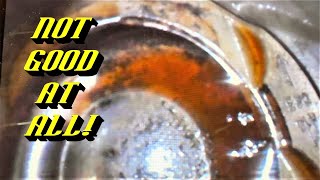
On many vehicles, a P0303 code points to a simple ignition system fault. However, on 2015-2019 Ford Escapes with the 1.5L and 2.0L EcoBoost engines, this code is frequently the first symptom of a catastrophic engine design flaw. The 'open-deck' design of the engine block has insufficient support between the cylinders, allowing a coolant passage to crack over time. 🎬 Watch: See why these EcoBoost engines are gulping coolant. This lets engine coolant leak directly into the cylinders (most commonly cylinders 2 and 3), causing the misfire. This issue is so well-documented that Ford has issued multiple Technical Service Bulletins (TSBs) and a customer satisfaction program, often resulting in the need for a complete engine short block or long block replacement.
Diagnostic Flowchart

Tap your situation to follow the diagnostic path that matches what you're seeing on this vehicle.
Generation note: The 2015-2022 range covers the end of the 3rd generation (2013-2019) and the beginning of the 4th generation (2020-present). The most severe and widely documented coolant intrusion issues are specific to the 1.5L and 2.0L EcoBoost engines found predominantly in the 2017-2019 3rd generation models. The 1.5L engine in 2020+ Escapes is a different 3-cylinder 'Dragon' design and is not affected by this specific issue. Later 2.0L engines in the 4th generation (2020-2022) can also suffer from coolant leaks, but sometimes from a cracked EGR cooler rather than the block itself.
Symptoms You May Notice

- Check Engine Light is on or flashing
- Rough idle or shaking engine, especially on cold startup
- Noticeable loss of power and acceleration
- Engine hesitation or stumbling
- Unexplained low engine coolant level with no visible external leaks
- White smoke from the exhaust, especially on startup
- Sweet smell of coolant from the exhaust
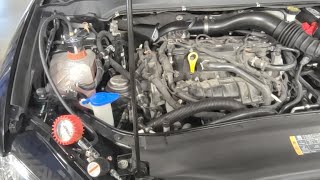
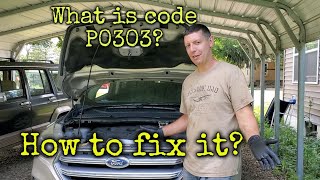
- Simply replacing the spark plug and ignition coil without checking for coolant loss. Many owners report the P0303 code returns because the underlying cause is coolant intrusion fouling the new parts. An owner on a Ford forum with a 2018 Escape 1.5L experienced this exact scenario. Another owner with a 2018 Fusion reported the P0303 code returned 3 days after a plug and wire change, leading to an engine replacement. 🎬 Watch: A full P0303 diagnosis and repair walkthrough.
Most Likely Causes

- Internal Coolant Leak (Coolant Intrusion) 🔴 High Probability A design flaw in the open-deck 1.5L and 2.0L EcoBoost engine blocks allows a crack to form between cylinders, letting coolant seep in. This is a widely known issue documented in Ford TSBs 19-2346 (2.0L) and 22-2322 (1.5L). The flaw is specifically a thin wall in the coolant passage between cylinders 2 and 3.
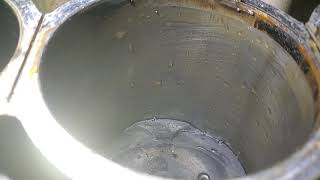
How to confirm: Perform a cooling system pressure test; if pressure drops with no external leaks, an internal leak is likely. Use a borescope to look into cylinder #3 for liquid coolant or an unusually clean, steam-cleaned piston. 🎬 See this live diagnosis of a rough-running engine. A chemical test for combustion gases in the coolant reservoir is also definitive.
Typical fix: The only permanent fix is replacing the engine short block (1.5L) or long block (2.0L) with a redesigned part as per Ford's TSBs. The new block design is 'cross-drilled' for added strength and prevents the crack from forming.
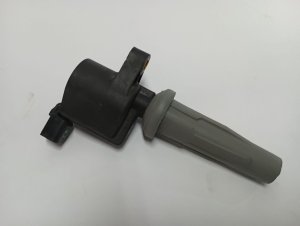
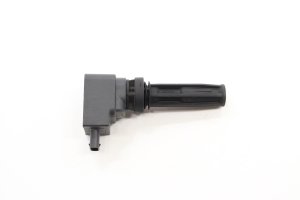
Est. part cost: $3000-$5000+ - Failed Ignition Coil 🟡 Medium Probability → Shop Ignition Coil
How to confirm: Swap the ignition coil from cylinder 3 with another cylinder (e.g., cylinder 2). Clear the codes and drive the vehicle. If the code changes to P0302, the ignition coil is faulty.
Typical fix: Replace the faulty ignition coil. The Motorcraft part number is often DG-549, but verify by VIN.
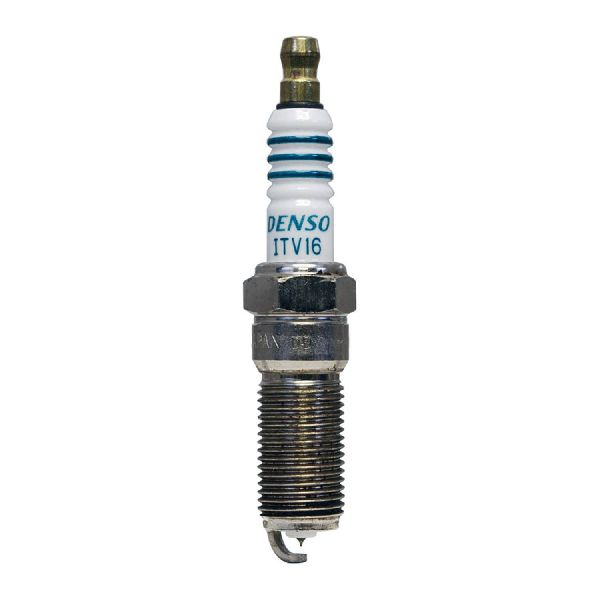
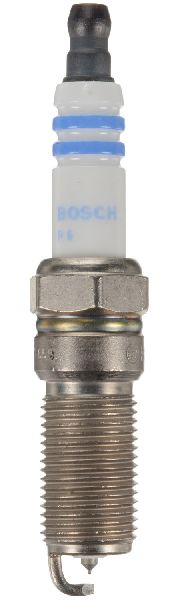
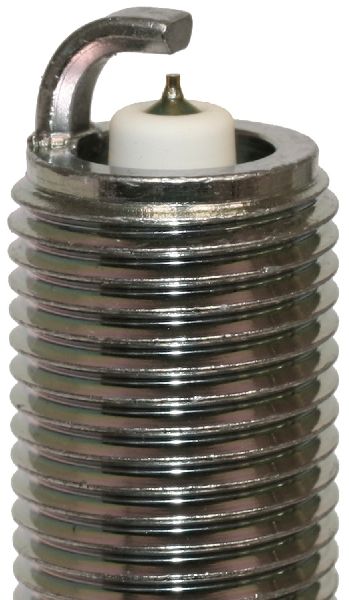
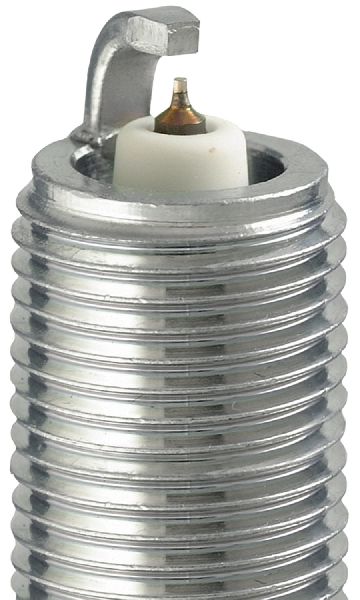
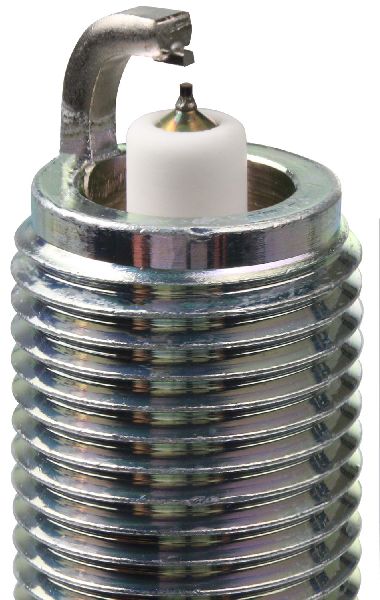
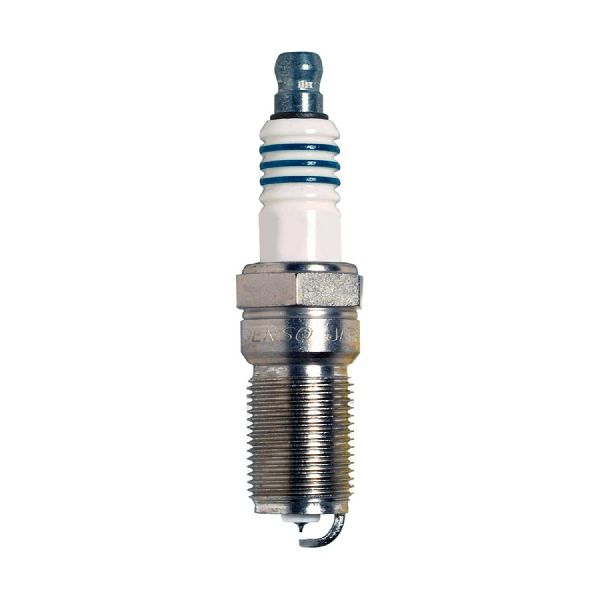
Est. part cost: $40-$80 - Worn or Fouled Spark Plug 🟡 Medium Probability → Shop Spark Plug If coolant is leaking, it will foul the spark plug, causing the misfire. Replacing the plug is a temporary fix that does not address the root cause.
How to confirm: Remove the spark plug from cylinder 3. Inspect it for wear, damage, or fouling from oil or coolant. A coolant-fouled plug will appear wet or steam-cleaned compared to other cylinders.
Typical fix: Replace the spark plug. If it was fouled by coolant, the root cause (coolant intrusion) must be addressed.
Est. part cost: $10-$25 - Faulty Fuel Injector ⚪ Low Probability → Shop Fuel Injector
How to confirm: Requires specialized tools to test injector flow and spray pattern. Can also be tested by checking resistance with a multimeter or swapping with another cylinder's injector, though this is more labor-intensive than a coil swap.
Typical fix: Replace the faulty fuel injector.
Est. part cost: $70-$150
Rare But Worth Checking
- Damaged Charge Air Cooler (CAC): → Shop Intercooler Per TSB 17-0028, on 1.5L engines, an intake manifold bolt can back out and physically damage the Charge Air Cooler, causing a coolant leak that can lead to misfires. The fix requires replacing both the intake manifold and the CAC.
Diagnosis Steps

- Check the engine coolant level in the expansion tank. If it is low, this is a critical warning sign of coolant intrusion. Do this before buying any parts.
- Scan for all OBD-II codes. Note if other misfire codes (P0300-P0304) or overheat codes (P1299, P0217, P1285) are present.
- Inspect the ignition system for cylinder 3. Check the spark plug and ignition coil. A common diagnostic step is to swap the coil with an adjacent cylinder to see if the misfire code follows.
- If the spark plug appears 'steam-cleaned' or wet, it is a strong indicator of coolant in the cylinder.
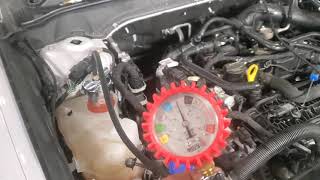
- If coolant is low or a leak is suspected, perform a cooling system pressure test. If the system cannot hold pressure and there are no visible external leaks, an internal leak is highly probable.
- Use a borescope to visually inspect the inside of cylinder 3 through the spark plug hole. Look for liquid coolant, a wet piston, or a piston top that appears unusually clean compared to other cylinders.
- If coolant intrusion is confirmed, consult a professional mechanic or Ford dealership about TSB 19-2346 (2.0L) or TSB 22-2322 (1.5L) and Customer Satisfaction Program 21N12 for engine replacement options.
Parts You'll Likely Need
- Engine Short Block Assembly (1.5L)
(OEM #DS7Z-6009-J)— This is the official Ford-recommended repair for the 1.5L EcoBoost coolant intrusion issue, as it contains the updated 'cross-drilled' engine block design. This is specified in TSB 22-2322 and covered under program 21N12.
Trusted brands: Motorcraft
OEM price range: $2500-$3500 - Engine Long Block Assembly (2.0L)
(OEM #Varies by VIN, order per catalog)— This is the official Ford-recommended repair for the 2.0L EcoBoost coolant intrusion issue, as specified in TSB 19-2346. A long block is required instead of a short block for the 2.0L repair.
Trusted brands: Motorcraft
OEM price range: $4000-$5500 - Ignition Coil
(OEM #DG-549 (Verify by VIN))— A failed ignition coil is a common cause for an isolated cylinder misfire and a primary diagnostic step.
Trusted brands: Motorcraft, NGK, Bosch
OEM price range: $60-$90
Aftermarket price range: $30-$60 - Spark Plug
(OEM #SP-579 (Motorcraft, verify by VIN))— A worn or coolant-fouled spark plug will cause a misfire. It is the cheapest part to replace first, but its condition provides valuable diagnostic clues.
Trusted brands: Motorcraft, NGK
OEM price range: $15-$25
Aftermarket price range: $8-$15
Related Codes That Often Appear With This One
- P0300 — Indicates a random misfire across multiple cylinders, which often occurs as the coolant intrusion issue worsens and affects adjacent cylinders.
- P0301, P0302, P0304 — Misfire codes for other cylinders. Coolant intrusion often affects adjacent cylinders, particularly #2.
- P0316 — Indicates a misfire was detected within the first 1,000 engine revolutions on startup, common when coolant has pooled in a cylinder overnight.
- P1299, P0217 — These are cylinder head and engine over-temperature codes, which are triggered by the loss of coolant associated with the intrusion issue.
- P1285, P2601 — P1285 indicates Cylinder Head Over Temperature, and P2601 relates to the Coolant Pump 'A' Control Circuit. Both are direct consequences of significant coolant loss from the intrusion problem, as reported by an owner of a 2018 Escape.
Technical Service Bulletins (TSBs) & Recalls
- TSB 22-2322: Supersedes previous TSBs for the 1.5L engine. Outlines the procedure to confirm coolant intrusion and replace the short block with a redesigned part.
- TSB 19-2346: The primary TSB for the 2.0L engine. Instructs technicians to confirm coolant in the cylinders and replace the entire long block assembly.
- TSB 20-2100: An earlier version of the TSB for the 1.5L engine, later superseded by 22-2322.
- Customer Satisfaction Program 21N12: Provides a one-time, no-cost short block replacement for affected 1.5L engines for 7 years/84,000 miles from the warranty start date.
- Customer Satisfaction Program 19B37: A required PCM software update that must be performed before a vehicle is eligible for the 21N12 engine replacement program.
Platform-Specific Known Issues
- 1.5L EcoBoost Coolant Intrusion: A flaw in the open-deck engine block design can cause a crack to form between the cylinders, allowing coolant to leak into the combustion chamber. This was addressed with a revised block design around mid-2019.
Mechanic-Grade Diagnostic Values
- Ignition Coil Primary Resistance — expected: 0.4 - 1.0 ohms. Failure: A reading outside this range, especially an open circuit (infinite resistance).
- Ignition Coil Secondary Resistance — expected: 5,500 - 11,500 ohms (5.5kΩ - 11.5kΩ). Failure: A reading significantly outside this range.
- Low-Side Fuel Pressure (Key On, Engine Off) — expected: 70 - 95 PSI. Failure: Pressure is significantly lower, indicating a weak in-tank pump.
- High-Side Fuel Pressure (at Idle) — expected: ~250 - 400 PSI. Failure: Pressure varies widely or does not build, indicating an issue with the High-Pressure Fuel Pump (HPFP).
- High-Side Fuel Pressure (under load) — expected: Up to 2,150 - 3,600 PSI (150 - 250 bar). Failure: Failure to reach specified pressure under load, causing hesitation and misfires.
Scan Tool Commands That Help
- Ford IDS, FORScan, high-end Snap-on/Autel scanners: Misfire Monitor Neutral Profile Correction — This procedure MUST be performed after any internal engine repairs, PCM replacement, or crankshaft sensor replacement. It relearns the crankshaft position sensor's profile of the crankshaft reluctor wheel, which is essential for accurate misfire detection. Failure to perform this can lead to false misfire codes.
- Ford IDS, high-end scanners: Power Balance Test — This test allows a technician to disable one cylinder at a time and observe the RPM drop. A cylinder that shows little to no RPM drop when disabled is not contributing power, confirming the location of the misfire.
Wiring & Ground Locations
- G104 / G111 — On the back of the cylinder head or valve cover, sometimes near the passenger side. One specific ground involves a 10mm nut on a stud between coils #2 and #3.. A loose or corroded ground for the ignition coil circuit can cause multiple coil primary/secondary circuit codes (P035x) and misfires. One technician found that a loose 10mm nut on a ground stud between coils was the root cause for P0351, P0352, P0353, and P0354.
- PCM Ground Wire — Located below the air-box, must be removed to access the battery.. A loose PCM ground can cause a wide array of intermittent issues, including random stalling and various unrelated trouble codes as the PCM de-energizes. An owner of a 2017 Escape reported this exact issue was finally traced to a loose PCM ground after months of troubleshooting.
- Ignition Coil Connector — Directly on top of each ignition coil.. The connector or its wiring can become brittle or damaged, leading to a poor connection and an isolated misfire on cylinder 3. The PCM sends the signal to fire the coil through this connector.
Real Owner Repair Stories
- Reddit user in r/fordescape (2018 Ford Escape 1.5L) — Check engine light with code P0303.
❌ Tried (didn't work) Replacing the spark plug for cylinder 3., Replacing the ignition coil for cylinder 3.
✅ What actually fixed it The check engine light returned after a week. The user was advised to check coolant levels, as the true cause was likely the known coolant intrusion issue fouling the new parts. - Ford Forum user 'Patb' (2018 Ford Escape 1.5L) — P0303 Cylinder Misfire, rough running, low coolant.
✅ What actually fixed it The user replaced the spark plugs and the coil on cylinder 3, and topped off the coolant. The problem did not return, which contradicts the common engine replacement outcome. The user continues to monitor coolant levels, suggesting it may have been an early-stage leak or a coincidental fix. - CarComplaints.com user (2018 Ford Escape SE 1.5L with 86,000 miles) — Check engine light with code P0303.
❌ Tried (didn't work) Changing the spark plugs and clearing the code.
✅ What actually fixed it The code returned 1.5 months later with rough running. The vehicle was towed to a dealership where it was diagnosed with coolant intrusion into cylinder #3, requiring a complete engine replacement.
OEM Part Supersession History
DS7Z-6009-G→DS7Z-6009-J— Superseded part for the 1.5L EcoBoost Short Block. The new part number corresponds to the updated block with the revised 'cross-drilled' coolant passages to prevent cracking between cylinders.DS7Z-9F593-A, DS7Z-9F593-B→DS7Z-9F593-DA— Updated part number for the 1.5L fuel injector.
Model Year Variations Within This Range
- 2015-2019: These model years with the 1.5L and 2.0L 4-cylinder EcoBoost engines feature the 'open-deck' block design with a slit-style coolant passage between cylinders, making them highly susceptible to the coolant intrusion failure.
- 2020-2022: For the 2020 model year, the 1.5L engine was replaced with a completely different 3-cylinder design that is not prone to the same coolant intrusion issue. The 2.0L 4-cylinder engine block was updated around mid-2019 to use drilled coolant passages instead of a slit, which is believed to have corrected the design flaw.
Helpful Videos

Used OEM Parts in Stock
New Aftermarket Parts Available

The information in this article is provided for general reference and educational purposes only. Vehicle specifications, procedures, and part compatibility can vary by production date, trim level, and region. Always consult your vehicle's factory service manual and verify part numbers before purchasing or performing repairs. Safety-critical components such as airbags, seat belts, and braking systems should be installed by a qualified professional.
- Ford ESCAPE:
- 🧭 Diagnostic Flowchart
- 🎬 Helpful Videos
- 🛍️ Shop This Part
- What's Unique About the 2015-2022 Ford ESCAPE
- Symptoms You May Notice
- Most Likely Causes
- Rare But Worth Checking
- Diagnosis Steps
- Parts You'll Likely Need
- Related Codes That Often Appear With This One
- Technical Service Bulletins (TSBs) & Recalls
- Platform-Specific Known Issues
- Mechanic-Grade Diagnostic Values
- Scan Tool Commands That Help
- Wiring & Ground Locations
- Real Owner Repair Stories
- OEM Part Supersession History
- Model Year Variations Within This Range
- 🎟️ Get 5% Off