

P0303 on 2017-2020 Genesis G80 3.8L: Cylinder 3 Misfire Causes and Fixes
On a 2017-2020 G80 3.8L, P0303 is almost always a failed ignition coil on cylinder 3. Because cylinder 3 is on the rear bank against the firewall, the intake manifold must be removed for access, making this a labor-intensive repair. Expect a shop bill of $400-$850, with the part itself being relatively inexpensive. It is highly recommended to replace all three rear coils and all six spark plugs during the repair.
- P0303 on this vehicle indicates a real hardware problem in cylinder 3, not a software bug.
- The most likely cause is a bad ignition coil, followed by a worn spark plug.
- Repair is expensive primarily due to labor, as cylinder 3 is on the rear bank and requires removing the intake manifold for access.
- To save on future labor costs, it is highly recommended to replace all three rear coils and all six spark plugs during the repair.
- Do not drive if the check engine light is flashing, as this can cause rapid and expensive damage to the catalytic converter.
What's Unique About the 2017-2020 Genesis G80
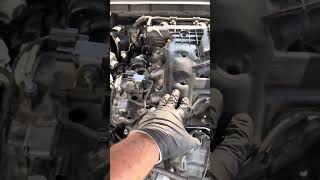
While P0303 is a generic misfire code, its diagnosis on the G80 3.8L has specific challenges. The most common cause is a failed ignition coil, a frequent issue on the Lambda engine family. However, cylinder 3 is located on the rear bank of the engine against the firewall, meaning the upper intake manifold must be removed to access the coil and spark plug. 🎬 Watch: Step-by-step guide to removing the 3.8L coils and plugs. This turns a simple part swap into a more complex and costly job. In fact, Hyundai/Genesis uses two different part numbers for the ignition coils: one for the easily accessible front bank and another (27310-3L000) for the rear bank. Additionally, as a GDI (Gasoline Direct Injection) engine, it is susceptible to carbon buildup on the intake valves over time, which can be a less common but more complex cause of misfires.
Symptoms You May Notice
- Rough or vibrating idle
- Hesitation or stumbling during acceleration
- Noticeable loss of engine power
- Solid Check Engine Light on the dashboard
- Flashing Check Engine Light (indicating a severe misfire)
- Reduced fuel economy
- Smell of raw fuel from the exhaust
- Assuming the issue is a software problem. A TSB (25-01-051G) exists for cold-start misfires on 2021+ models with the 2.5L engine, but it does NOT apply to the 2017-2020 3.8L V6. This is a hardware fault.
- Replacing only the single failed coil or plug. Given the significant labor to remove the intake manifold, it is poor practice not to replace all three rear coils, all six plugs, and the intake gaskets at the same time to prevent a repeat repair for an adjacent cylinder.
Most Likely Causes
- Faulty Ignition Coil 🔴 High Probability → Shop Ignition Coil Ignition coils on the Lambda V6 engine are a common failure item due to constant exposure to high heat and voltage cycles. The rear bank coils, like cylinder 3's, are especially prone to failure and are a different part number than the front bank coils.
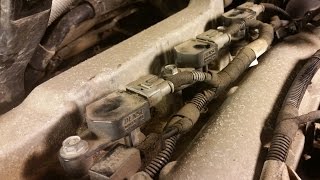
How to confirm: The standard diagnostic is to swap the ignition coil from cylinder 3 with another cylinder (e.g., cylinder 1 on the same bank). If the trouble code changes to P0301, the coil is confirmed to be faulty. This test is difficult for a DIYer due to the intake manifold blocking access to the entire rear bank. A user on the r/GenesisG70 subreddit confirmed this exact diagnosis path for a P0303 on a related vehicle.
Typical fix: Replace the faulty ignition coil. Due to the high labor cost to access the rear bank, it is highly recommended to replace all three rear-bank ignition coils (cylinders 1, 3, 5) and all six spark plugs at the same time.
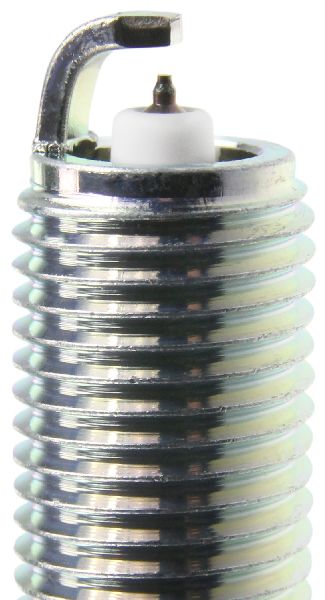
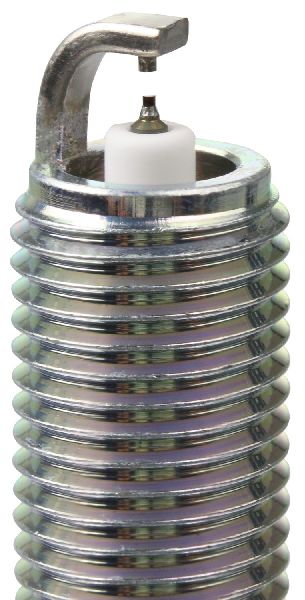
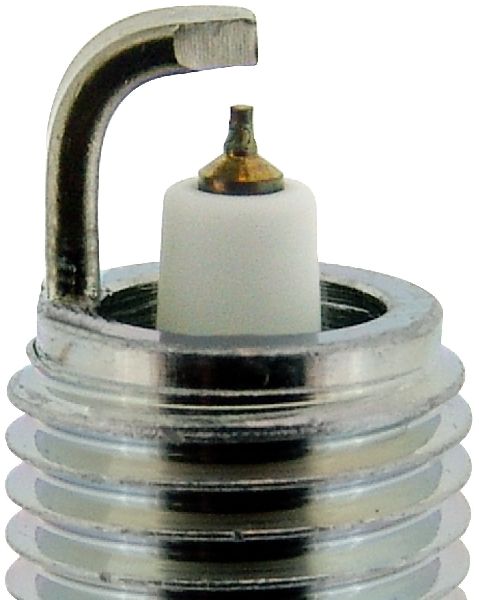
Est. part cost: $50-$100 per coil - Worn or Fouled Spark Plug 🟡 Medium Probability → Shop Spark Plug Spark plugs are a normal wear-and-tear item with a service interval. If they are past their service interval (typically 60,000-100,000 miles), they can fail to produce a strong enough spark, causing a misfire.
How to confirm: After ruling out the ignition coil, inspect the spark plug from cylinder 3. Look for excessive wear on the electrode, heavy carbon deposits, or oil/fuel fouling. Like the coil, this requires removing the intake manifold for access.
Typical fix: Replace the spark plug. It is best practice to replace all six spark plugs as a set to ensure consistent performance and avoid future labor costs. The OEM plugs are typically made by NGK or Denso.
Est. part cost: $15-$30 per plug - Clogged or Faulty Fuel Injector ⚪ Low Probability → Shop Fuel Injector As a GDI engine, the fuel injectors are located inside the combustion chamber and operate under high pressure. Over time, they can become clogged with carbon deposits, leading to an improper spray pattern and a misfire. A user on a Dubai-based forum with a 2018 G80 reported a misfire code that was diagnosed alongside a fuel pump issue, indicating potential fuel system complexity.
How to confirm: This requires advanced diagnostics, such as checking the injector's electrical resistance, listening for its operation with a mechanic's stethoscope, or performing a fuel injector balance test. This is a professional-level diagnosis.
Typical fix: Replace the faulty fuel injector. This is also a labor-intensive job, often requiring intake manifold removal.
Est. part cost: $100-$250 per injector
Rare But Worth Checking
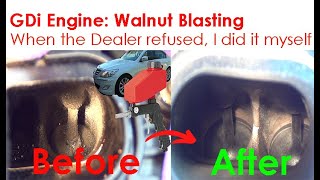
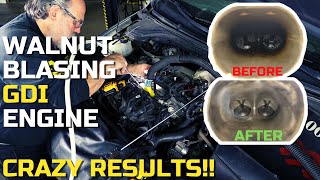
- Carbon Buildup on Intake Valves: This is a well-documented issue on GDI engines like the Lambda II. Because fuel is injected directly into the cylinder, it no longer cleans the intake valves. Over 60,000-100,000 miles, carbon can build up enough to restrict airflow to the cylinder, causing a misfire that ignition or fuel part replacement won't fix. The solution is a manual cleaning service (walnut blasting). 🎬 Watch: How walnut blasting removes carbon buildup on GDI engines. Hyundai dealers offer an 'induction service' to help combat this.
- Vacuum Leak: A vacuum leak, particularly from a failed intake manifold gasket which must be removed for this job, can introduce unmetered air into the engine and cause a misfire. Since the gaskets are single-use, this is a potential point of failure if not replaced correctly during a coil/plug job.
Diagnosis Steps
- Read the code with an OBD-II scanner and confirm it is P0303. Note if any other codes are present.
- Check if the Check Engine Light is flashing. If so, avoid driving the vehicle to prevent catalytic converter damage.
- Due to the location of cylinder 3, professional service is recommended. A technician will remove the upper intake manifold to gain access.
- Once access is gained, swap the ignition coil from cylinder 3 to cylinder 1.
- Reassemble enough to run the engine, clear the codes, and see if the misfire code changes to P0301. If it does, the ignition coil is faulty.
- If the code remains P0303, the coil is likely good. Proceed to inspect and swap the spark plug from cylinder 3 to cylinder 1. If the code then moves to P0301, the spark plug is faulty.
- If the code still remains P0303 after swapping both the coil and plug, the issue is likely in the fuel system (injector) or a mechanical problem.
- Perform advanced diagnostics: check the fuel injector wiring and signal, perform a compression test on cylinder 3, and perform a borescope inspection for carbon buildup on the intake valves.
Parts You'll Likely Need
- Ignition Coil (Rear Bank)
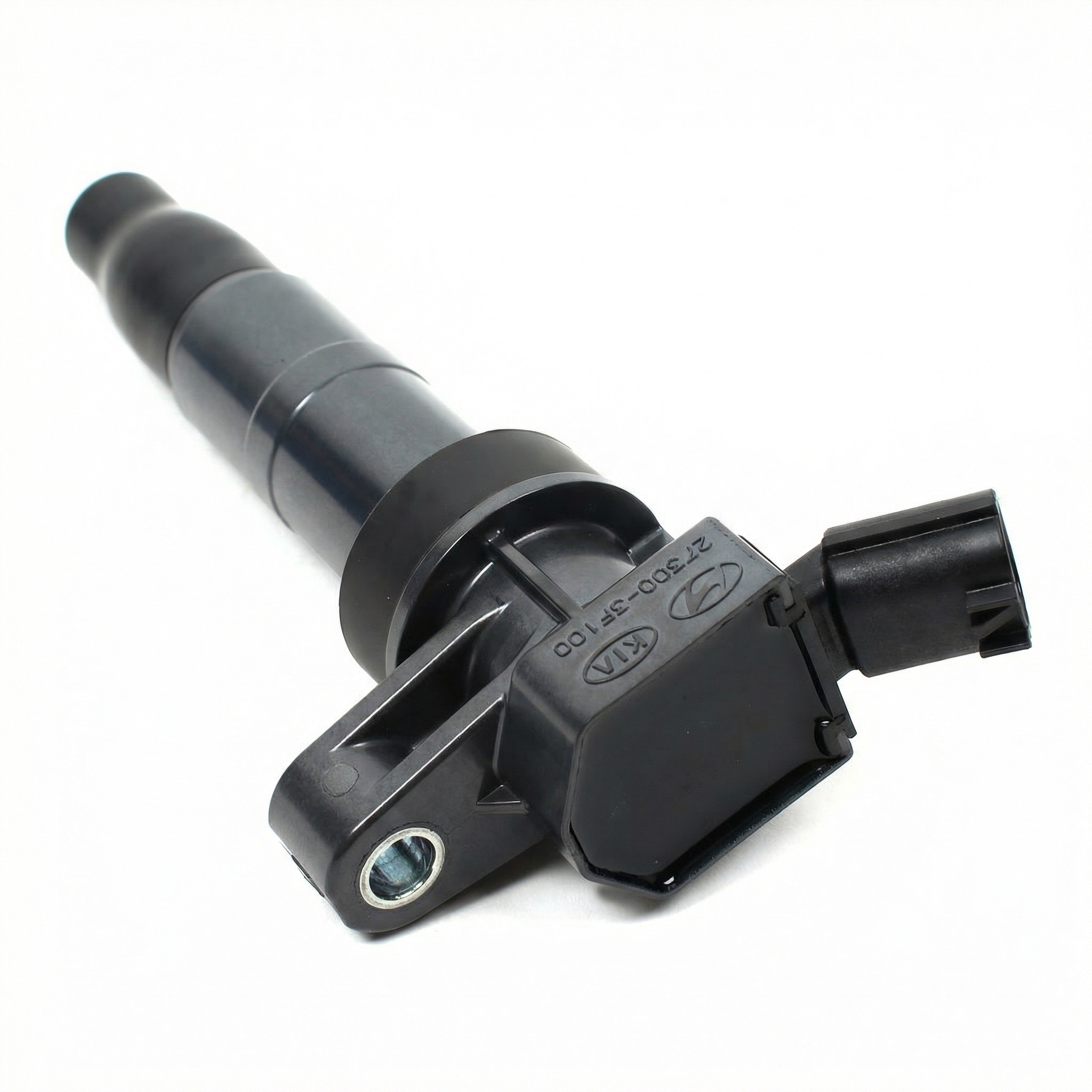
(OEM #27310-3L000)— This is the most common failure part causing a P0303 code on this engine. This specific part number is for the rear bank cylinders (1, 3, 5).
Trusted brands: Denso, NGK, Delphi, Hyundai OEM
OEM price range: $70-$100
Aftermarket price range: $40-$75 - Spark Plug
(OEM #18849-11070 or 18851-11070)— A common maintenance item that can cause a misfire if worn or fouled. It is highly recommended to replace all six plugs if accessing cylinder 3. Part number may vary; confirm with VIN.
Trusted brands: NGK, Denso
OEM price range: $20-$30
Aftermarket price range: $10-$20 - Intake Manifold Gasket Set
(OEM #28215-3CFA0 (Lower))— These gaskets must be replaced anytime the intake manifold is removed to ensure there are no vacuum leaks upon reassembly. Both upper and lower gaskets are required.
Trusted brands: Hyundai OEM, Fel-Pro, Mahle
OEM price range: $40-$60
Aftermarket price range: $20-$40
Related Codes That Often Appear With This One
- P0300 — If the misfire becomes more widespread or intermittent, a P0300 (Random/Multiple Cylinder Misfire) code may appear alongside P0303.
- P0301, P0305 — Misfires on other cylinders of the same bank (Bank 1) could indicate a shared problem, like a vacuum leak affecting that side of the engine, or simply that other coils/plugs are failing due to similar age and wear. A Reddit user with a Genesis Coupe reported codes for P0301, P0303, and P0305 together during cold starts.
Technical Service Bulletins (TSBs) & Recalls
- No TSBs directly address P0303 for the 2017-2020 G80 3.8L. TSB 25-01-051G for misfires on 2.5L engines in newer models does NOT apply.
- A general TSB for all Hyundai models, 23-EM-007H, provides guidelines for diagnosing oil consumption which can be related to carbon deposits, a potential root cause for misfires.
Platform-Specific Known Issues
- GDI Carbon Buildup: Like many GDI engines, the Lambda II 3.8L can suffer from carbon deposits on the intake valves over time, which can lead to misfires that are not resolved by replacing ignition or fuel components. Owners on forums recommend periodic chemical intake cleaning services (like Sea Foam or a dealer 'induction service') every 30,000 miles to mitigate this.
Mechanic-Grade Diagnostic Values
- GDI Fuel Injector Resistance — expected: ~1.8 - 2.2 ohms. Failure: A significantly higher reading, such as kilo-ohms (kΩ), indicates an open circuit and a failed injector. A reading outside the expected range suggests a failing injector.
- Ignition Coil Primary Resistance — expected: ~0.660 ohms. Failure: A reading that is significantly higher (approaching open circuit) or lower (shorted) suggests a faulty coil.
- Ignition Coil Connector Voltage (Key On, Engine Off) — expected: Battery voltage (~12V) at the positive terminal.. Failure: No voltage indicates a problem in the power supply circuit, possibly a blown fuse or wiring issue, rather than a faulty coil.
Hidden / Shadow Codes Worth Checking
- Mode 6 Misfire Counters: This is not a 'code' but a data function. The ECU tracks misfire events per cylinder even before they are frequent enough to set a P0303 code. This is invaluable for diagnosing intermittent issues or confirming the misfire is isolated to cylinder 3. (see via Use the Genesis GDS (Global Diagnostic System) or an advanced professional scan tool with Mode 6 data capabilities. Navigate to the misfire data to see the counts for the current and previous 10 driving cycles.)
Scan Tool Commands That Help
- Genesis GDS (Global Diagnostic System): Live Data / Current Data (Misfire Counter) — To watch misfire counts for each cylinder in real-time during a test drive. This helps confirm the misfire is only on cylinder 3 and under what conditions (load, RPM) it occurs.
- Genesis GDS (Global Diagnostic System): Trigger Module (Flight Record) — For intermittent misfires that are hard to reproduce. This function records sensor and component data over time as the vehicle is driven, which can be downloaded and analyzed to catch the fault when it happens.
- Genesis GDS (Global Diagnostic System): Resetting Adaptive Values — After replacing a component like a fuel injector, resetting the engine's adaptive fuel trim values can help the ECU learn the new part's characteristics faster and restore smooth operation.
Wiring & Ground Locations
- Engine Ground Cable (Driver's Side) — Located on the left (driver's) side of the 3.8L engine.. A poor or corroded main engine ground can cause a host of electrical issues, including weak spark or erratic sensor readings that can lead to misfires. While cylinder 3 is on the passenger side, the entire ignition system relies on solid grounding. The OEM part number is 91885-D2010.
- Ignition Coil Fuse — Located in the engine compartment fuse & relay box.. A fuse chart for the G80 indicates a single shared fuse for all ignition coils. While a blown fuse would likely cause multiple misfires (P0300), a poor connection at the fuse block could theoretically cause an intermittent voltage drop affecting one or more coils.
- Injector Driver Box (IDB) — This is a separate control module from the main ECM.. On the Lambda II GDI engine, the high-pressure fuel injectors are controlled by a dedicated IDB, not directly by the ECM. If an injector test (resistance, stethoscope) passes, a technician might need to check the wiring and signal from the IDB to the cylinder 3 injector, rather than from the main ECM.
Real Owner Repair Stories
- Go-Parts research article citing dealer records (2022 Genesis G80) — P0303 misfire code.
❌ Tried (didn't work) Not specified, but implies standard diagnostics were performed.
✅ What actually fixed it The dealership performed a fuel injection cleaning service, which resolved the issue, suggesting the injector was clogged but not failed. - Go-Parts research article citing dealer records (2022 Genesis G80) — Persistent misfire that kept the car at the dealership for two months.
❌ Tried (didn't work) Multiple unspecified diagnostic attempts.
✅ What actually fixed it The issue was finally resolved by replacing a faulty fuel injector.
"I Checked Everything" — The Actual Cause
- In cases where a P0303 persists after replacing the spark plug and ignition coil, and a smoke test for vacuum leaks comes back clean, the root cause is almost certainly related to fuel delivery or mechanical compression. The next step is to test the cylinder 3 fuel injector (for resistance, spray pattern, and clogging) or perform a compression test on the cylinder. A clogged GDI injector is a common cause that is often missed by initial diagnostics.
OEM Part Supersession History
27310-3L000→N/A— No supersession history found. This part number appears to be the consistent OEM number for the rear bank ignition coil for the 2017-2020 G80 3.8L and related models.
Model Year Variations Within This Range
- 2017-2020: No significant variations in the Lambda II 3.8L GDI engine, cylinder layout, or common causes for P0303 have been documented within this specific model year range for the Genesis G80. The diagnosis and repair procedure is consistent across these years.
Diagnostic Flowchart
Other Known Issues on This Vehicle
Issues unrelated to this code that are worth knowing about as an owner of this generation:
- ABS Module Fire Risk 🔴 High — Widespread enough to trigger a major safety recall (NHTSA 21V-358) affecting 2017-2020 models. (Ref: NHTSA Recall 21V-358)
- Transmission Hard Shifting / Failure 🟠 Medium — Common complaint on 2017 models, with Reddit users reporting full transmission replacements needed around 40k-70k miles. Seems less common on 2018+ models which received a revised transmission. (Ref: TSB 21-AT-010HG addresses some shift quality issues.)
- GDI Carbon Buildup 🟠 Medium — A systemic issue for all GDI engines, typically becoming problematic after 60,000-100,000 miles, causing reduced performance and potential misfires. (Ref: TSB 23-EM-007H (related to oil consumption/carbon))
- Excessive Oil Consumption 🟠 Medium — Some owners report oil consumption issues, which is a known problem across some Hyundai/Kia GDI engines and can be exacerbated by carbon deposits. (Ref: TSB 23-EM-007H provides inspection guidelines.)
- Outdated 3G Telematics Shutdown 🟡 Low — Affects all 2017-2020 models. The built-in 3G receiver means remote features like BlueLink (remote start, diagnostics) ceased to function after the 3G network shutdown. There is no official upgrade path.
Used vs. New Parts: Buying Guide for This Vehicle
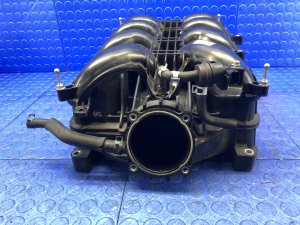
When a used part is the smart pick: For this repair, using used parts is generally not recommended. The primary failure items are electronic (ignition coil) and high-wear (spark plug), which have limited and unknown remaining life when sourced from a junkyard. A used intake manifold could be considered ONLY if the original was physically cracked, which is extremely rare.
Donor-vehicle mileage cap: roughly under 40000 miles for the part to have meaningful remaining life.
What to inspect on the donor part:
- For an intake manifold, inspect for any hairline cracks, especially around mounting points.
- Ensure all threaded inserts are intact and not stripped.
- Verify the part is from an identical engine, as variations exist across the Lambda family.
OEM-only on this vehicle (don't cheap out):
- Fuel Injector: GDI injectors are high-pressure, precision components. While remanufactured units exist, OEM injectors (or those from the direct OEM supplier) are strongly recommended to ensure correct flow rates and longevity.
- Intake Manifold Gaskets: Never reuse these gaskets. Always install a new, high-quality set (OEM, Fel-Pro, Mahle) to prevent vacuum leaks.
Aftermarket brands forum-validated for this vehicle:
- Ignition Coils: Denso, Delphi, NGK. These are often the original equipment manufacturers and offer OEM-quality parts.
- Spark Plugs: NGK, Denso. These are the typical OEM suppliers for Hyundai/Genesis.
Brands owners have reported issues with on this vehicle:
- Unbranded or 'white-box' ignition coils and injectors from online marketplaces. These often have high failure rates and may not meet the precise specifications required by the GDI system, leading to repeat repairs.
Real Owner Stories
Aggregated from forums and TSBs cited above. Mileages and costs reflect what owners reported in those sources.
2018 Genesis G80 3.8L
Symptoms: Misfire code diagnosed alongside a fuel pump issue.
What fixed it: Diagnosis of the fuel system and fuel pump issues.
Source hint: Dubai-based forum
2017 Genesis G80 3.8L — ~55000 miles
Symptoms: Hard shifting and transmission issues reported between 40k-70k miles.
What fixed it: Full transmission replacement.
Source hint: Reddit users
Genesis G70 (Related Vehicle)
Symptoms: P0303 trouble code.
What fixed it: Swapping the ignition coil from cylinder 3 to another cylinder to confirm a faulty coil.
Source hint: r/GenesisG70 subreddit
Related OBD-II Codes
Frequently Asked Questions
Does TSB 25-01-051G apply to my 2017-2020 Genesis G80 3.8L for this misfire?
Is there a TSB that helps diagnose the root cause of misfires related to oil consumption on this engine?
Why is the labor so high for replacing the cylinder 3 ignition coil on the G80 3.8L?
Can I use the same ignition coil for any cylinder on my G80 V6?
How often should I perform an induction service to prevent GDI-related misfires?
Is there a recall for the 2017-2020 G80 that I should be aware of while fixing my engine?
Helpful Videos
Used OEM Parts in Stock
New Aftermarket Parts Available



The information in this article is provided for general reference and educational purposes only. Vehicle specifications, procedures, and part compatibility can vary by production date, trim level, and region. Always consult your vehicle's factory service manual and verify part numbers before purchasing or performing repairs. Safety-critical components such as airbags, seat belts, and braking systems should be installed by a qualified professional.
- Genesis G80:
- 🧭 Diagnostic Flowchart
- 🎬 Helpful Videos
- 🛍️ Shop This Part
- What's Unique About the 2017-2020 Genesis G80
- Symptoms You May Notice
- Most Likely Causes
- Rare But Worth Checking
- Diagnosis Steps
- Parts You'll Likely Need
- Related Codes That Often Appear With This One
- Technical Service Bulletins (TSBs) & Recalls
- Platform-Specific Known Issues
- Mechanic-Grade Diagnostic Values
- Hidden / Shadow Codes Worth Checking
- Scan Tool Commands That Help
- Wiring & Ground Locations
- Real Owner Repair Stories
- "I Checked Everything" — The Actual Cause
- OEM Part Supersession History
- Model Year Variations Within This Range
- Other Known Issues on This Vehicle
- Used vs. New Parts: Buying Guide for This Vehicle
- Real Owner Stories
- 2018 Genesis G80 3.8L
- 2017 Genesis G80 3.8L — ~55000 miles
- Genesis G70 (Related Vehicle)
- Related OBD-II Codes
- Frequently Asked Questions
- 🎟️ Get 5% Off