

P0303 on 2017-2022 Genesis G90: Cylinder 3 Misfire Causes and Fixes
P0303 on a Genesis G90 means cylinder 3 is misfiring, almost always due to a bad ignition coil or a worn spark plug. On the 3.3T V6, cylinder 3 is difficult to access, making the repair labor-intensive. On the 5.0L V8, it's more accessible. Expect to pay $100-$250 for DIY parts, but over $600 at a shop for the 3.3T due to labor.
- P0303 on the G90 is a hardware problem, most likely a bad ignition coil or spark plug.
- Do not drive if the Check Engine Light is flashing to avoid expensive catalytic converter damage.
- On the 3.3T V6, cylinder 3 is very hard to reach. The repair is much more expensive due to the labor required to remove the intake manifold.
- If you are repairing a P0303 on the 3.3T, it is strongly advised to replace all three rear ignition coils and all six spark plugs at the same time to save on future labor costs.
- On the 5.0L V8, cylinder 3 is more accessible, making the diagnosis and repair simpler and cheaper.
What's Unique About the 2017-2022 Genesis G90
For the G90 with the 3.3T V6 engine, the defining issue for a P0303 code is the location of cylinder 3. The cylinders are numbered 1-3-5 on the passenger side (Bank 1) and 2-4-6 on the driver's side (Bank 2), from front to back. Cylinder 3 is the middle cylinder on the passenger side, positioned at the rear of the engine against the firewall and underneath the upper intake manifold. This makes diagnosis and replacement of the coil or spark plug a significantly more labor-intensive and expensive job compared to the front cylinders or the more accessible cylinders on the 5.0L V8. Unlike some other Genesis engines that have software-related misfire bugs, a P0303 on the G90 indicates a definite hardware problem.
Symptoms You May Notice
- Rough or shaking idle 🎬 Watch: Why your car shakes at idle but drives fine
- Engine hesitation or stumbling during acceleration
- Noticeable loss of power
- Solid or flashing Check Engine Light
- Potential for a gasoline smell from the exhaust
- Reduced fuel economy
- Replacing only the spark plug on a 3.3T V6 when the intake manifold is already off. The high labor cost means it is wise to also replace the other two rear coils and all plugs to prevent near-future repeat repairs.
- Assuming a software issue. Unlike some other Genesis/Hyundai engines that had TSBs for software-induced misfires, a P0303 on the G90's V6 or V8 engines is a hardware fault.
Most Likely Causes
- Faulty Ignition Coil 🔴 High Probability → Shop Ignition Coil Ignition coils are a very common failure item. On the 3.3T, the rear bank coils are subjected to high heat in a tight space near the firewall, which may contribute to a shorter lifespan. Forum users on platform-mate vehicles like the Kia Stinger and Genesis G70 report coil failures causing P0303 at mileages as low as 19,000 miles.
How to confirm: Swap the ignition coil from cylinder 3 with another cylinder (e.g., cylinder 1 on the 3.3T, or cylinder 1 on the 5.0L V8). Clear the codes and drive the vehicle. If the code changes to P0301, the ignition coil is confirmed to be the faulty part.
Typical fix: Replace the faulty ignition coil. For the 3.3T, it is highly recommended to replace all three rear bank coils (cylinders 1, 3, 5) and all six spark plugs at the same time due to the high labor cost of accessing them.
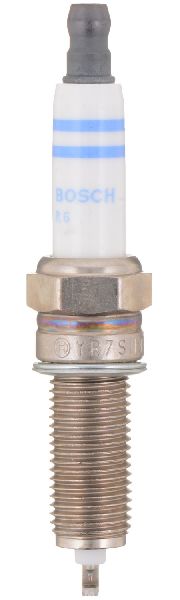
Est. part cost: $50-$120 per coil - Worn or Fouled Spark Plug 🔴 High Probability → Shop Spark Plug Spark plugs are a regular maintenance item. The 3.3T engine has a recommended replacement interval of 42,000 miles. Plugs past their service life or fouled by carbon/oil (which can be a symptom of oil consumption issues) can easily cause a misfire.
How to confirm: If the coil swap test does not move the code, remove the spark plug from cylinder 3. Inspect it for wear (worn electrode), damage (cracked porcelain), or heavy carbon/oil fouling. You can swap the plug with another cylinder to see if the misfire follows, but replacement is often easier if it looks worn.
Typical fix: Replace the spark plug. It is best practice to replace all plugs as a set to ensure even performance. On the 3.3T, it is critical to replace all six plugs if the intake manifold is already removed for a rear coil.
Est. part cost: $15-$40 per plug - Clogged or Faulty Fuel Injector ⚪ Low Probability → Shop Fuel Injector Both engines use Gasoline Direct Injection (GDI), and injectors can be susceptible to carbon buildup or electronic failure over time, though it is less common than ignition component failure. However, injector failures have been noted on related platforms.
How to confirm: If both the coil and spark plug for cylinder 3 are confirmed to be good, the fuel injector is the next likely suspect. This requires more advanced diagnostics, often involving checking injector resistance with a multimeter or performing a power balance test with a professional scan tool.
Typical fix: Replace the faulty fuel injector. This is a more complex job, especially on the 3.3T's rear bank.
Est. part cost: $100-$250 per injector
Rare But Worth Checking
- Low Cylinder Compression: This is a serious mechanical engine issue (e.g., bad valve, worn piston rings, leaking head gasket). It's rare but should be investigated with a compression and/or leak-down test if ignition and fuel system checks do not resolve the issue.
- Carbon Buildup on Intake Valves: As GDI engines, the Lambda II and Tau can suffer from carbon deposits on the intake valves, as fuel is injected directly into the cylinder and doesn't wash the valves. Severe buildup can disrupt airflow into cylinder 3 and cause a misfire. This typically requires professional cleaning, such as walnut blasting.
- Vacuum Leak: A vacuum leak is more likely to cause a random misfire code (P0300) or affect multiple cylinders. However, a leak isolated to the intake manifold runner for cylinder 3 could theoretically cause only P0303. On the 3.3T, a failed upper intake manifold gasket after a repair is a possibility.
Diagnosis Steps
- Read the code with an OBD-II scanner to confirm P0303 is present. Note if the check engine light is flashing and check for any other codes.
- Identify Cylinder 3 Location: - 3.3T V6: Passenger side (Bank 1), middle cylinder, against the firewall. Access requires removing the upper intake manifold. - 5.0L V8: Passenger side (Bank 1), second cylinder from the front.
- Perform an ignition coil swap. Move the ignition coil from cylinder 3 to an easily accessible cylinder (like cylinder 2 or 4 on the driver's side for the 3.3T, or cylinder 1 for the 5.0L). Clear the codes and run the engine. If the code changes (e.g., to P0302 or P0304), the coil is bad.
- If the code remains P0303, inspect and swap the spark plug. Move the spark plug from cylinder 3 to the cylinder you just used for the coil test. If the misfire code now follows the plug, the plug is bad.
- If the misfire remains on cylinder 3 after swapping both the coil and plug, the problem is likely in the fuel system (injector, wiring) or a mechanical engine issue.
- Inspect the wiring connector for the ignition coil and fuel injector on cylinder 3 for any damage, corrosion, or loose connection.
- If the above steps do not identify the issue, a professional diagnosis involving a fuel system pressure test, injector flow test, or cylinder compression/leak-down test is recommended.
Parts You'll Likely Need
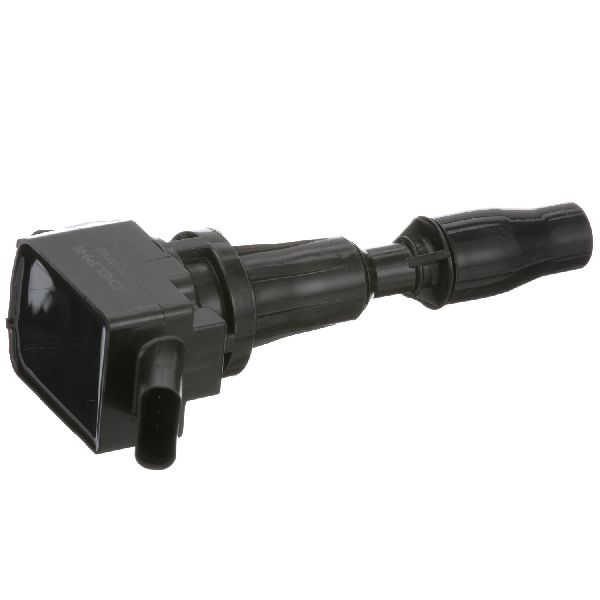
- Ignition Coil (3.3T Rear Bank)
(OEM #27310-3L000)— This is the most common cause of P0303 on the 3.3T engine. The rear bank coils are different from the front bank coils (p/n 27310-3L030) and are not interchangeable.
Trusted brands: Hyundai/Kia OE, Delphi, Worms Racing (Performance)
OEM price range: $80-$120
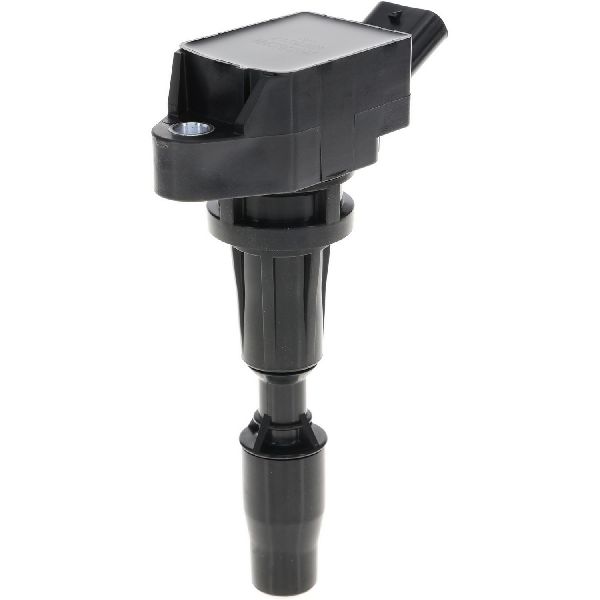
Aftermarket price range: $50-$90 - Ignition Coil (5.0L V8)
(OEM #27300-3F100)— A primary cause of misfires on the 5.0L V8. All 8 coils are the same.
Trusted brands: Hyundai/Kia OE, Hitachi, Delphi, NGK
OEM price range: $70-$110
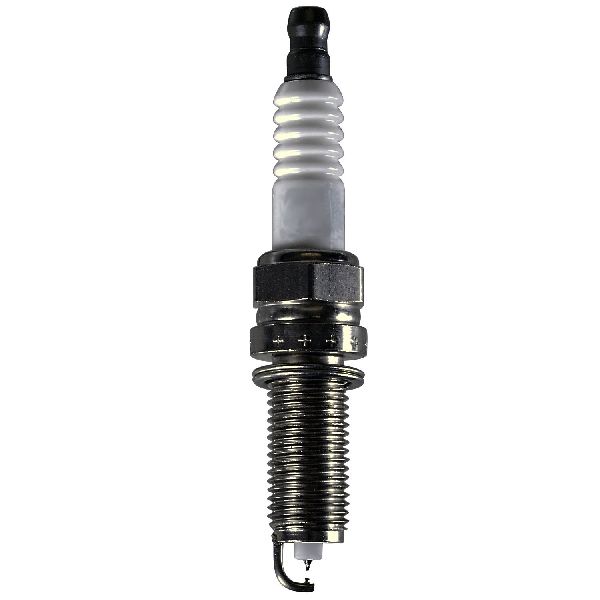
Aftermarket price range: $45-$80 - Spark Plug (Iridium, 3.3T)
(OEM #18852-09070)— Spark plugs are a maintenance item (42k mile interval) and the second most likely cause. They should be replaced as a set, especially if access is difficult.
Trusted brands: NGK, Denso
OEM price range: $25-$40
Aftermarket price range: $15-$25 - Spark Plug (Iridium, 5.0L)
(OEM #18870-11071)— A maintenance item that can cause misfires when worn. Recommended replacement interval is typically longer than the 3.3T, around 96-105k miles.
Trusted brands: NGK (Laser Iridium), Denso
OEM price range: $25-$40
Aftermarket price range: $15-$25 - Upper Intake Manifold Gasket (3.3T)
(OEM #29215-3L100)— This gasket must be replaced anytime the intake manifold is removed on the 3.3T engine to access the rear coils/plugs, in order to prevent vacuum leaks.
Trusted brands: Hyundai/Kia OE
OEM price range: $20-$40
Aftermarket price range: $15-$30
Related Codes That Often Appear With This One
- P0300 — If the misfire is severe or intermittent across other cylinders, a P0300 (Random/Multiple Cylinder Misfire) may be triggered as well.
- P0301, P0305 — On the 3.3T V6, these codes for the other rear-bank cylinders may appear if multiple coils are failing due to age and heat, a common scenario given their location.
- P0267, P0268 — An injector circuit low/high code for cylinder 3 could accompany P0303 if the fuel injector or its wiring is the root cause. A P0206 (Injector Circuit Fault - Cylinder 6) is an example for a different cylinder.
Technical Service Bulletins (TSBs) & Recalls
- NHTSA Recall 19V538000 / 24V191000: While not for misfires directly, this recall addresses a deteriorating left turbocharger oil feed pipe on 3.3T engines, which can leak oil. This points to the high-heat environment at the rear of the engine that also stresses the rear bank ignition coils.
Platform-Specific Known Issues
- On the Kia Stinger forums, a platform mate using the 3.3T engine, numerous owners have documented P0301/P0303 failures due to bad ignition coils on the rear bank, confirming this is a platform-wide weak point.
Mechanic-Grade Diagnostic Values
- Low-Pressure Fuel Pump Pressure (KOEO or Idle) — expected: 40 - 75 PSI. Failure: Pressure below 40 PSI indicates a failing in-tank pump or clogged filter.
- High-Pressure Fuel Rail (5.0L V8 at Idle) — expected: 27 to 33 MPa (3,900 to 4,800 PSI). Failure: Pressure significantly below this range at a stable idle points to an issue with the high-pressure fuel pumps.
- High-Pressure Fuel Rail (General GDI at Idle) — expected: Approximately 600 PSI. Failure: Actual pressure significantly lower than desired pressure reported by the scan tool.
- Short-Term (STFT) and Long-Term (LTFT) Fuel Trims — expected: Within +/- 10% of 0 at stable RPM.. Failure: Consistently exceeding +10% suggests a lean condition (e.g., vacuum leak); consistently exceeding -10% suggests a rich condition (e.g., leaking injector).
Hidden / Shadow Codes Worth Checking
- Mode $06, Test ID ~$A4: This is not a formal code but a monitor within the OBD-II system that stores raw misfire counts for each cylinder. Test ID ~$A4 typically corresponds to cylinder 3 on a V6 engine. This data can confirm an intermittent misfire on cylinder 3 before it's frequent enough to set a P0303 code. (see via An advanced OBD-II scan tool that supports Mode $06 data display. This is a standard feature on professional-grade scanners like the Genesis GDS-Mobile.)
Scan Tool Commands That Help
- Genesis GDS-Mobile (or equivalent professional scanner): Live Data - Misfire Counter — Use this function to view the raw misfire count for each cylinder in real-time. This is the most direct way to confirm the misfire is isolated to cylinder 3 and to verify the repair by ensuring the count for cylinder 3 returns to zero after the fix.
- Genesis GDS-Mobile (or equivalent professional scanner): Power Balance Test — This bidirectional test allows the technician to sequentially disable the fuel injector for each cylinder. When the injector for a healthy cylinder is disabled, the engine RPM will drop. If disabling the cylinder 3 injector causes little or no change in RPM, it confirms that cylinder 3 was not contributing power, pointing to a problem with that cylinder's fuel, spark, or compression.
Wiring & Ground Locations
- Bank 1 Ground Point — Check for a ground strap/wire bolted directly to the Bank 1 (passenger side) valve cover or intake manifold, connecting to the chassis near the strut tower.. A loose or corroded ground for the cylinder head/bank can cause erratic voltage for the ignition coils and injectors on that bank, leading to weak spark or inconsistent injector operation.
- Main Engine/Transmission Ground — Look for a large-gauge ground strap connecting the engine block or transmission housing to the vehicle's frame rail.. While less likely to cause a single-cylinder misfire, a poor main ground can create widespread electrical issues that may manifest intermittently on any given cylinder.
Real Owner Repair Stories
- Genesis G70 owner report (r/GenesisG70) (Genesis G70 3.3T with 19,000 miles) — Check Engine Light with code P0303.
❌ Tried (didn't work) Not specified; owner took vehicle to dealer for diagnosis.
✅ What actually fixed it The dealership replaced the ignition coil pack for cylinder 3 under warranty. - Genesis G70 owner report (r/GenesisG70) (2020 Genesis G70 3.3T with 55,000 miles) — Intermittent engine misfire.
❌ Tried (didn't work) Not specified.
✅ What actually fixed it The owner had two ignition coil packs replaced to resolve the issue.
OEM Part Supersession History
27300-2G000→27300-3F100— Standard part evolution for improved reliability or manufacturing.
Heads up: The new part number (27300-3F100) is the correct replacement for the 5.0L V8 and should be used for all repairs.
Model Year Variations Within This Range
- 2017-2022: The G90 received a major facelift for the 2020 model year, but the core Lambda II 3.3T and Tau 5.0L V8 powertrains remained unchanged. Therefore, the causes, diagnostic procedures, and parts for a P0303 code are consistent across this entire year range.
Diagnostic Flowchart
Other Known Issues on This Vehicle
Issues unrelated to this code that are worth knowing about as an owner of this generation:
- Leaking Turbocharger Oil Feed Pipe (3.3T) 🔴 High → Shop Turbocharger — Common enough to trigger a recall (NHTSA 19V538000, expanded by 24V191000). The pipe can deteriorate and leak oil onto the hot exhaust manifold, creating a fire risk. (Ref: NHTSA Recall: 19V538000, 24V191000)
- Potential for Catastrophic Engine Failure (3.3T) 🔴 High — While not widespread, NHTSA has received petitions to investigate the Lambda II 3.3T engine for sudden failure, including engine knocking and seizure, sometimes without warning. This is alleged to be related to manufacturing defects. (Ref: NHTSA Investigation Petitioned (as of early 2024))
- Oil Consumption (Both Engines) 🟠 Medium — Both the 3.3T and 5.0L GDI engines can be prone to oil consumption, often linked to piston ring issues or infrequent oil changes. Hyundai considers up to 1 quart per 1,000 miles to be within spec, but this can lead to fouled plugs and premature component wear.
- Carbon Buildup on Intake Valves (Both Engines) 🟠 Medium — A common characteristic of Gasoline Direct Injection (GDI) engines. Over time, carbon deposits can form on the intake valves, restricting airflow and causing rough idle or misfires, especially on cold starts.
- Faulty Fuel Pump 🔴 High → Shop Fuel Pump — A recall was issued for 2022-2023 models where the fuel pump could fail, causing the engine to stall and increasing crash risk. (Ref: NHTSA Recall: 24V282000)
Used vs. New Parts: Buying Guide for This Vehicle
When a used part is the smart pick: For this repair, obtaining an ignition coil or a fuel injector from a reputable salvage yard can be a cost-effective alternative to a new part, especially if the donor vehicle has low mileage.
Donor-vehicle mileage cap: roughly under 60000 miles for the part to have meaningful remaining life.
What to inspect on the donor part:
- Verify the donor vehicle's mileage.
- Inspect the part for physical damage, such as cracks in the plastic housing or bent electrical pins.
- Check for corrosion on all electrical connectors.
- If possible, get a part from a vehicle that was totaled due to collision damage rather than one junked for engine failure.
OEM-only on this vehicle (don't cheap out):
- Upper Intake Manifold Gasket (3.3T): Always use a new OEM gasket (p/n 29215-3L100) when the intake is removed to guarantee a perfect seal and prevent vacuum leaks.
Aftermarket brands forum-validated for this vehicle:
- Ignition Coils: Delphi, Hitachi, NGK
- Spark Plugs: NGK, Denso
Real Owner Stories
Aggregated from forums and TSBs cited above. Mileages and costs reflect what owners reported in those sources.
2019-2023 Genesis G70 3.3T V6 — 19000 miles
Symptoms: P0303 code triggered early in the vehicle's life.
What fixed it: Replacement of the failed ignition coil pack.
Source hint: Reddit r/GenesisGV70
2018-2023 Kia Stinger GT 3.3T V6
Symptoms: Misfire codes P0301 and P0303 occurring on the rear bank cylinders.
What fixed it: Replacing all rear bank components, specifically coils 1, 3, and 5, along with all six spark plugs due to the difficulty of accessing the firewall side.
Source hint: Genesis G70 / Kia Stinger Forums (stingerforum.org)
Related OBD-II Codes
Frequently Asked Questions
Where is Cylinder 3 located on my Genesis G90 with the 3.3T V6 engine?
Is there a recall for the 3.3T engine that might be related to my P0303 code?
Why is it recommended to replace all rear bank coils on the 3.3T if only Cylinder 3 is misfiring?
How often should I change the spark plugs on my G90 3.3T to prevent codes like P0303?
Could carbon buildup be causing my G90's rough idle and P0303 code?
What is the most common cause of P0303 on the Genesis G90 platform?
Helpful Videos
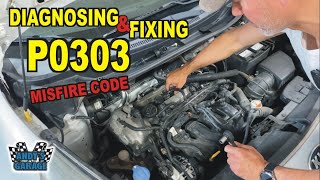
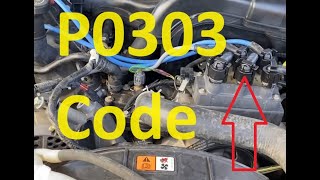
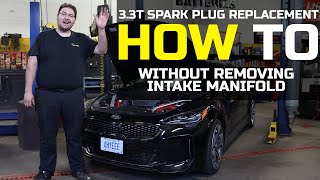

Used OEM Parts in Stock
New Aftermarket Parts Available


The information in this article is provided for general reference and educational purposes only. Vehicle specifications, procedures, and part compatibility can vary by production date, trim level, and region. Always consult your vehicle's factory service manual and verify part numbers before purchasing or performing repairs. Safety-critical components such as airbags, seat belts, and braking systems should be installed by a qualified professional.
- Genesis G90:
- 🧭 Diagnostic Flowchart
- 🎬 Helpful Videos
- 🛍️ Shop This Part
- What's Unique About the 2017-2022 Genesis G90
- Symptoms You May Notice
- Most Likely Causes
- Rare But Worth Checking
- Diagnosis Steps
- Parts You'll Likely Need
- Related Codes That Often Appear With This One
- Technical Service Bulletins (TSBs) & Recalls
- Platform-Specific Known Issues
- Mechanic-Grade Diagnostic Values
- Hidden / Shadow Codes Worth Checking
- Scan Tool Commands That Help
- Wiring & Ground Locations
- Real Owner Repair Stories
- OEM Part Supersession History
- Model Year Variations Within This Range
- Other Known Issues on This Vehicle
- Used vs. New Parts: Buying Guide for This Vehicle
- Real Owner Stories
- 2019-2023 Genesis G70 3.3T V6 — 19000 miles
- 2018-2023 Kia Stinger GT 3.3T V6
- Related OBD-II Codes
- Frequently Asked Questions
- 🎟️ Get 5% Off