

P0303 on 2010-2017 GMC Yukon: Cylinder 3 Misfire Causes and Fixes
P0303 on a GMC Yukon indicates a misfire in cylinder #3. The most common fixes are replacing the spark plug, ignition coil, or spark plug wire, costing between $15 and $100 for DIY. However, be aware that a failed Active Fuel Management (AFM) lifter is a known, more serious cause on these V8 engines, often requiring a more extensive and costly repair.
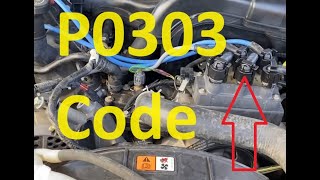
- P0303 indicates a misfire on cylinder 3, which is the second cylinder back on the driver's side of the engine.
- Always start your diagnosis with the simple and cheap parts: check the spark plug wire connection (per TSB #PIP4819A), swap the ignition coil with another cylinder, and inspect the spark plug.
- Listen carefully for a persistent ticking sound. This noise, combined with a P0303 code, strongly points to a failed Active Fuel Management (AFM) lifter, a known and more serious issue with these engines.
- A flashing check engine light is a critical warning to stop driving to prevent expensive damage to your catalytic converter.
What's Unique About the 2010-2017 Gmc YUKON

The V8 engines in this generation of Yukon use an Active Fuel Management (AFM) system to improve fuel economy by deactivating cylinders under light loads. A well-documented weakness in this system is the failure of the hydraulic lifters, which can become stuck or collapse due to issues with oil pressure, sludge, or internal component failure. This can cause a persistent misfire on a single cylinder, like P0303, often accompanied by a distinct ticking sound from the engine. While standard ignition issues are common, this AFM lifter problem is a significant, platform-specific issue to be aware of, as confirmed by numerous owner forums and GM Technical Service Bulletins like 19-NA-219.
Diagnostic Flowchart

Tap your situation to follow the diagnostic path that matches what you're seeing on this vehicle.
Generation note: This range covers two Yukon generations: the 3rd Gen (2010-2014, GMT900 chassis) and the 4th Gen (2015-2017, K2UG chassis). The 3rd Gen uses Vortec V8s, while the 4th Gen introduced the newer EcoTec3 V8s with direct injection. Both engine families feature Active Fuel Management (AFM) and are known to suffer from lifter failures that can cause a P0303 code. The earlier models are also noted for PCV issues that can lead to oil consumption, fouling spark plugs.
Symptoms You May Notice
- Rough or shaking idle
- Hesitation or stumbling during acceleration
- Noticeable loss of engine power
- Flashing or solid Check Engine Light
- Reduced fuel economy
- Engine stalling
- A distinct ticking or tapping noise from the engine, especially on the driver's side, which may increase with RPM (may indicate lifter failure)
- Exhaust fumes smell in the cab under load
- Replacing only ignition components when the root cause is a mechanical issue like a failed AFM lifter. As seen in owner complaints, new plugs, wires, and coils may not solve the problem if the underlying issue is mechanical. [ODI #11355435, 12]
- Assuming a ticking noise is normal 'injector tick' when it is actually a sign of a failing lifter or damaged camshaft lobe.
Most Likely Causes

- Faulty Spark Plug 🔴 High Probability → Shop Spark Plug Spark plugs are a standard wear item. Oil fouling from PCV issues or piston rings can also shorten their life on these engines, a known issue on pre-2011 models.
How to confirm: Remove the spark plug from cylinder 3. Inspect for wear, damage, corrosion, or heavy deposits of carbon or oil. A wet or black, sooty plug indicates it's not firing. You can also swap the plug with another cylinder (e.g., cylinder 1) and see if the code changes to P0301.
Typical fix: Replace the spark plug. It is best practice to replace all 8 spark plugs at the same time for consistent performance. Use the correct OEM plug, such as ACDelco 41-110 (Iridium) for Gen 3 or 41-162 for Gen 4 EcoTec3 engines.
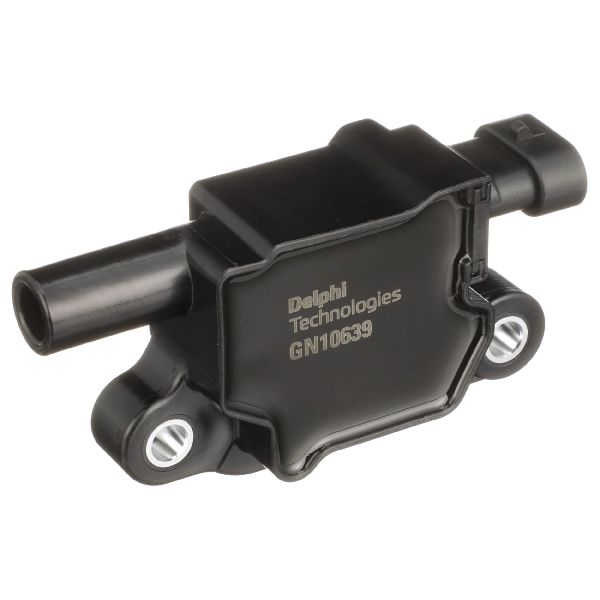
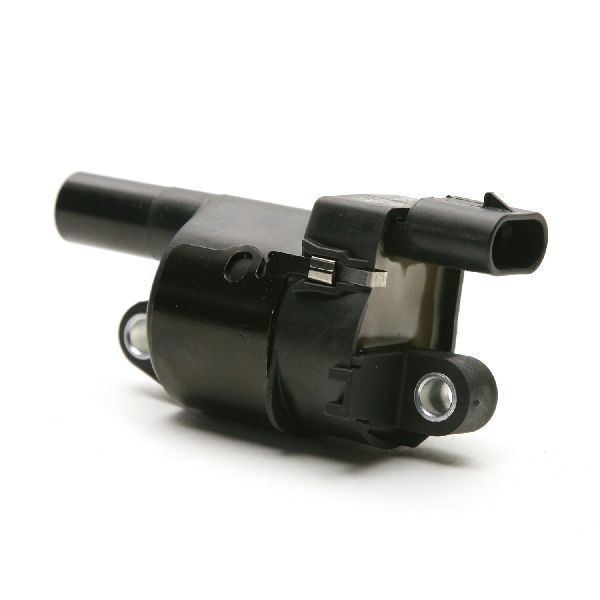
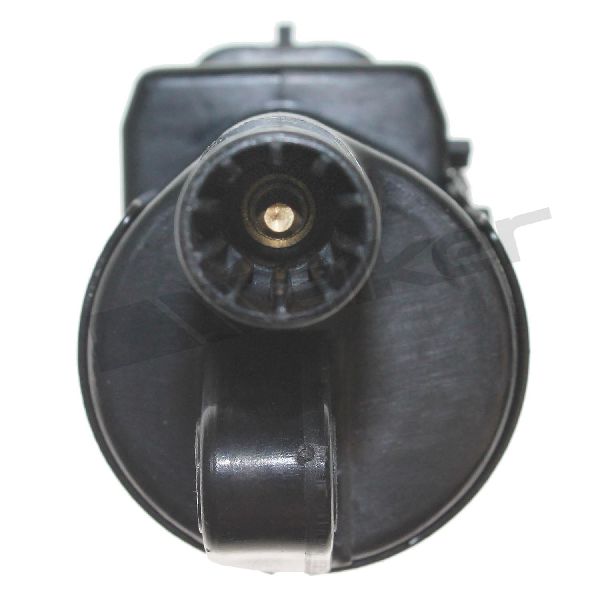
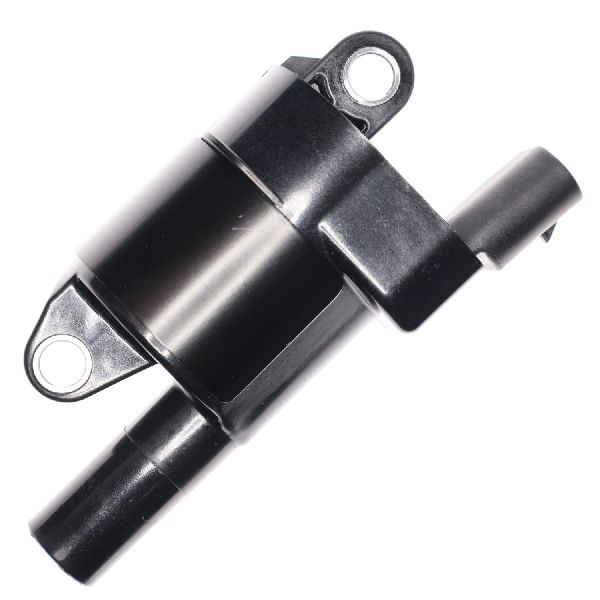
Est. part cost: $8-$20 per plug - Failed Ignition Coil 🔴 High Probability → Shop Ignition Coil The coil-on-plug design means each cylinder's coil is exposed to significant heat and vibration, leading to eventual failure. These coils use pure copper windings and are sensitive to internal shorts.
How to confirm: Swap the ignition coil from cylinder 3 with another cylinder (e.g., cylinder 1). Clear the codes and run the engine. If the misfire code changes to P0301, the coil is bad.
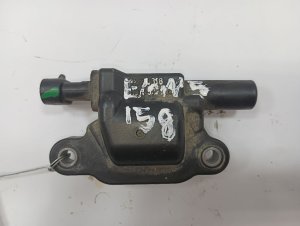
Typical fix: Replace the faulty ignition coil. ACDelco is the OEM brand; part number D510C or D521C is a common replacement for this era.
Est. part cost: $40-$90 - Loose or Damaged Spark Plug Wire 🟡 Medium Probability → Shop Spark Plug A specific GM Technical Service Bulletin (TSB #PIP4819A) was issued for misfires caused by loose spark plug wires on these models due to poor terminal retention.
How to confirm: Visually and physically inspect the spark plug wire for cylinder 3. Ensure it is clicked securely onto both the ignition coil and the spark plug. Check for any signs of arcing (white marks) or physical damage.
Typical fix: Reseat the wire firmly or replace the spark plug wire set if damaged. This should be one of the first, simplest checks performed.
Est. part cost: $40-$80 for a set - Failed Active Fuel Management (AFM) Lifter 🟡 Medium Probability → Shop Engine Valve Lifter A widely known issue on GM V8s with AFM. The lifters can collapse or get stuck due to oil pressure issues, internal failure of the locking pin, or sludge from extended oil change intervals, preventing the valve from operating correctly. While cylinder 3 is not an AFM cylinder itself, issues in the AFM system can cause widespread valvetrain problems or misdiagnoses. However, some TSBs like 19-NA-219 do list P0303 as a possible code from AFM lifter issues.
How to confirm: This is difficult to confirm without professional tools. A key symptom is a persistent ticking noise from the top of the engine. A mechanic can perform tests to disable specific cylinders or measure valve lift. A compression test may show low results for the affected cylinder. In one documented case, a technician loosened the rocker arm for cylinder 3, and the misfire subsided, confirming a lifter issue.
Typical fix: This is a major repair that involves removing the cylinder head(s) 🎬 Watch: Step-by-step AFM lifter replacement and P0300 fix walkthrough. to replace the faulty lifters, lifter guides, and often the camshaft if it is damaged. Many owners opt to install an AFM-delete kit 🎬 Watch: A mechanic explains the permanent fix for GM lifter failure. at the same time, which replaces the specialized AFM components with standard lifters and requires a PCM tune to disable the system. The repair cost at a shop can range from $2,500 to over $7,000.
Est. part cost: $300-$1500+ for parts (lifters, gaskets, bolts, camshaft, etc.) - Clogged or Failed Fuel Injector ⚪ Low Probability → Shop Fuel Injector
How to confirm: Listen to the injector with a mechanic's stethoscope; it should make a consistent clicking sound. You can also swap the injector with another cylinder to see if the misfire code moves, though this is more labor-intensive. Resistance should be between 11-14 Ohms.
Typical fix: Replace the faulty fuel injector. It's often recommended to replace the full set on one bank if the vehicle has high mileage.
Est. part cost: $50-$120
Rare But Worth Checking
- Low Engine Compression: If ignition and fuel checks pass, a compression test is necessary. A result like 100 psi on cylinder 3 when others are at 180 psi indicates a serious mechanical problem. This can be caused by a worn piston ring, a leaking head gasket, or a damaged valve or valve spring.
- Intake Manifold Gasket Leak: → Shop Engine Intake Manifold A vacuum leak near the intake port for cylinder 3 can lean out the air/fuel mixture, causing a misfire. This can often be diagnosed with a smoke test.
- Broken Valve Spring: Though less common than a lifter failure, a broken valve spring will prevent the valve from closing properly, causing a loss of compression and a persistent misfire. TSB 19-NA-219 notes this can cause a tick noise and/or misfire that may only occur at high RPM.
- Faulty Valve Lifter Oil Manifold (VLOM): The VLOM, also called the LOMA, directs oil pressure to the AFM lifters. A failure in this component or its filter screen can starve the lifters of oil, leading to their failure. It's often replaced as part of a comprehensive AFM lifter repair job.
Diagnosis Steps

- Confirm the P0303 code with an OBD-II scanner and check for any other stored codes like P0300 or P0353.
- Listen for a persistent ticking noise from the driver's side of the engine, which is a strong indicator of a potential valvetrain issue like a failed lifter or broken spring.
- Inspect the spark plug wire for cylinder 3 to ensure it is securely connected at both ends, per TSB #PIP4819A.
- Swap the ignition coil from cylinder 3 with cylinder 1. Clear the codes and run the engine. If the code changes to P0301, the ignition coil is the problem.
- If the misfire remains on cylinder 3, remove and inspect the spark plug for wear, fouling, or damage. Replace if necessary.
- If ignition components are good, test the fuel injector by listening for its click with a stethoscope or by checking its resistance (should be 11-14 ohms).
- If the misfire persists, perform an engine compression test on cylinder 3. A significant drop in pressure compared to other cylinders (e.g., below 120 psi) points to a mechanical failure.
- If compression is low, perform a cylinder leak-down test. Air escaping through the intake or exhaust will point to a valve sealing issue (potentially from a bad lifter, spring, or valve seat).
Parts You'll Likely Need
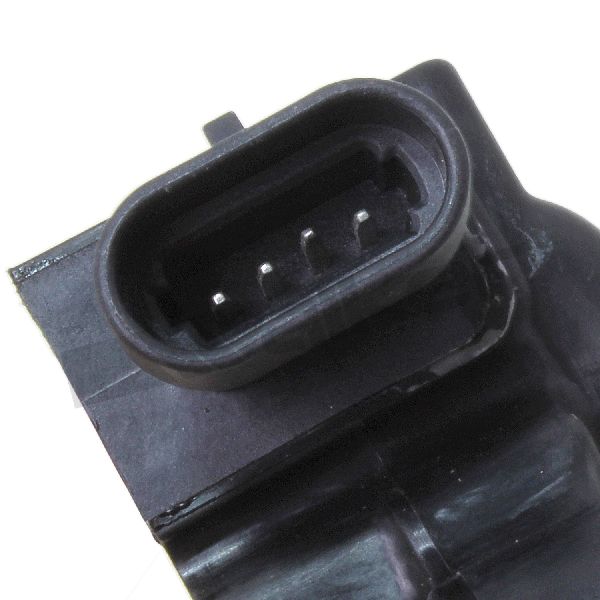
- Ignition Coil
(OEM #ACDelco D521C)— A very common failure point causing a single-cylinder misfire. Easy to diagnose by swapping between cylinders.
Related Codes That Often Appear With This One
- P0300 — If the misfire is intermittent or starting to affect other cylinders, a P0300 (Random/Multiple Cylinder Misfire) may appear alongside P0303.
- P0353 — This code indicates a fault in the ignition coil primary/secondary circuit for cylinder 3. It points more specifically to a bad coil or a wiring/PCM driver issue for that coil, rather than a plug or fuel problem.
Technical Service Bulletins (TSBs) & Recalls

- PIP4819A: Engine Misfires Due To Loose Spark Plug Wires
- 19-NA-219: Information on Engine Misfire or Tick Noise Diagnosis (Covers worn cam, broken spring, collapsed lifter)
- PIP5162H: Engine Misfires May Be Due To A Sticking Or Collapsed Valve Lifter (AFM)
- 15-06-01-002E: Information on Engine Oil Consumption Guidelines
Platform-Specific Known Issues
- Failure of Active Fuel Management (AFM) lifters is a significant and well-documented problem that can lead to a P0303 code, often accompanied by a ticking noise. This is a more severe mechanical failure than typical ignition problems and is discussed extensively in owner forums.
- TSB #PIP4819A specifically calls out loose spark plug wires as a potential cause for misfire codes on these vehicles, making it a critical first check.
- TSB #19-NA-219 provides extensive diagnostic information for engine noises and misfires related to worn camshaft lobes, sticking valves, broken valve springs, and collapsed AFM lifters, all of which can result in a P0303.
Mechanic-Grade Diagnostic Values
- Fuel Injector Resistance — expected: 11 - 14 Ohms. Failure: A reading outside this range indicates a faulty internal coil in the injector.
- Ignition Coil Primary Resistance — expected: 0.3 - 2.0 Ohms. Failure: A reading outside this range suggests a faulty primary winding in the coil.
- Spark Plug Wire Resistance — expected: 4,000 - 20,000 Ohms (must be less than 30,000 Ohms). Failure: A reading over 30,000 ohms indicates excessive resistance or a break in the wire.
- Valve Lifter Oil Manifold (VLOM) Solenoid Resistance — expected: 11 - 18 Ohms. Failure: Readings outside this range suggest a faulty solenoid within the VLOM, which controls the AFM lifters.
- Cylinder Leak-Down Test — expected: Under 15-20%. Failure: A high percentage, such as 82% reported by one owner, indicates a severe mechanical sealing issue with valves or piston rings.
- Engine Compression — expected: Typically 180+ PSI, with less than 15-20% variation between cylinders.. Failure: A reading of 100 PSI on the affected cylinder when others are at 180 PSI points to a major mechanical issue.
Hidden / Shadow Codes Worth Checking
- Mode 6 Misfire Data: The onboard diagnostics system tracks misfire counts for each cylinder even before they are high enough to set a P0303 code. A high-end scanner can access this data (Test ID $A2 through $AB) to see if cylinder 3 is accumulating misfires intermittently. (see via High-end OBD-II scanner with Mode 6 capability or a GM-specific tool like Tech 2/GDS2.)
Scan Tool Commands That Help
- GDS2 / Tech 2: Misfire Graphic / Misfire Counter — To view real-time misfire data for each cylinder. This is crucial for confirming the misfire is isolated to cylinder 3 and not random.
- GDS2 / Tech 2: Cylinder Power Balance — This test deactivates each cylinder one by one and measures the corresponding drop in RPM. A cylinder with a smaller RPM drop is contributing less power, helping to confirm the misfire on cylinder 3.
- GDS2 / Tech 2: Crankshaft Position Variation Learn — This procedure is required after replacing the crankshaft position sensor, the ECM, or performing major engine work. If not performed, the ECM may inaccurately detect misfires, potentially causing a false P0303 code.
Wiring & Ground Locations
- G102 — Located at the left rear of the engine.. This is the primary ground for all 8 ignition coils. A loose or corroded connection here can cause weak spark and misfires on multiple cylinders, which could be misdiagnosed as a single cylinder issue initially.
- G103 — Located at the left rear of the engine compartment on the cowl, above the brake booster.. This ground serves the Engine Control Module (ECM). Poor grounding for the ECM can lead to a host of erratic sensor readings and driver issues, including false misfire detection.
- Cylinder 3 Injector Connector — The electrical connector on the fuel injector for cylinder 3 (driver's side, second from front).. The injector harness connector can become brittle and fail, causing an intermittent connection. One wire should have constant 12V with the key on, and the other is pulsed to ground by the ECM to fire the injector.
Real Owner Repair Stories
- Tahoe Yukon Forum (2008 GMC Yukon, 214,000 miles) — P0303 code.
❌ Tried (didn't work) Swapping spark plug from cylinder 3 to 5., Swapping spark plug wire from cylinder 3 to 7., Swapping ignition coil from cylinder 3 to 1.
✅ What actually fixed it The issue was not fixed by simple part swaps. A compression test showed 100 psi on cylinder 3 vs. 180 psi on cylinder 1. A subsequent leak-down test revealed 82% leakage with air escaping through both the intake and exhaust, indicating a severe internal mechanical failure (likely valves not seating due to lifter/cam/spring issue). The mechanic recommended a full engine replacement. - YouTube - Pine Hollow Auto Diagnostics (2016 GMC Yukon XL 6.2L, 59,000 miles) — P0300 and P0303, misfire on cylinder 3.
❌ Tried (didn't work) Confirmed good spark and 250 PSI compression on cylinder 3.
✅ What actually fixed it A stuck (but not fully collapsed) lifter was diagnosed. The technician slowly loosened the rocker arm for cylinder 3 while the engine was running. As the rocker arm was loosened, the misfire count on the scanner went to zero. This confirmed the lifter was not allowing the valve to close properly. The recommended repair was a new lifter and lifter guide.
When the Usual Fixes Don't Work
- In one forum case, an owner with a P0303 replaced the head gaskets, valve seals, lifters, coil packs, wires, spark plugs, and the fuel injector for cylinder 3, yet the code persisted. This highlights that even after replacing every common component associated with a cylinder, the root cause can sometimes be deeper, potentially in the engine wiring harness or the ECM itself, and demonstrates the frustration of chasing this code when the cause is not straightforward.
OEM Part Supersession History
12645725, 12680871→12698946— Updated design for GM AFM lifters to improve reliability.
Heads up: While these are OEM part numbers for AFM lifters, it is highly recommended to also replace the Valve Lifter Oil Manifold (VLOM) with the latest version (GM #12571609) during an AFM lifter repair, as the old manifold can contribute to new lifter failure.
Model Year Variations Within This Range
- 2015-2017: The 2015+ models use the newer EcoTec3 V8s (5.3L L83, 6.2L L86) which feature direct injection. This adds a high-pressure fuel system and high-pressure fuel pump to the diagnosis. While a P0303 is still often ignition or lifter related, a failing high-pressure injector on cylinder 3 becomes a possibility not present in the 2010-2014 Vortec engines.
- 2010-2014: These models use the Vortec engine family with traditional port fuel injection. Fuel pressure specs are lower and tested at the fuel rail schrader valve. They are particularly noted in TSBs for oil consumption issues related to the PCV system on pre-2011 models, which can foul the spark plug for cylinder 3, causing a P0303.
Helpful Videos
Used OEM Parts in Stock
New Aftermarket Parts Available


The information in this article is provided for general reference and educational purposes only. Vehicle specifications, procedures, and part compatibility can vary by production date, trim level, and region. Always consult your vehicle's factory service manual and verify part numbers before purchasing or performing repairs. Safety-critical components such as airbags, seat belts, and braking systems should be installed by a qualified professional.
- Gmc YUKON:
- 🧭 Diagnostic Flowchart
- 🎬 Helpful Videos
- 🛍️ Shop This Part
- What's Unique About the 2010-2017 Gmc YUKON
- Symptoms You May Notice
- Most Likely Causes
- Rare But Worth Checking
- Diagnosis Steps
- Parts You'll Likely Need
- Related Codes That Often Appear With This One
- Technical Service Bulletins (TSBs) & Recalls
- Platform-Specific Known Issues
- Mechanic-Grade Diagnostic Values
- Hidden / Shadow Codes Worth Checking
- Scan Tool Commands That Help
- Wiring & Ground Locations
- Real Owner Repair Stories
- When the Usual Fixes Don't Work
- OEM Part Supersession History
- Model Year Variations Within This Range
- 🎟️ Get 5% Off