

P0303 on 2018-2021 GMC Yukon: Cylinder 3 Misfire Causes and Fixes
P0303 indicates a misfire on cylinder 3. The most common causes are a faulty spark plug or ignition coil. However, on these GM V8 engines, a failed Active/Dynamic Fuel Management (AFM/DFM) lifter is a well-known and more serious possibility, often accompanied by a ticking noise and potentially requiring major engine repair.
- P0303 is a misfire on cylinder 3. Start diagnosis with the easy and cheap parts: spark plug and ignition coil.
- Always perform a 'swap test' with the ignition coil and spark plug to confirm the failed part before buying new ones.
- Be aware that a persistent P0303, especially with an engine tick, strongly suggests a failed AFM/DFM lifter, a common and serious issue on these Yukon engines.
- Do not drive with a flashing check engine light, as this can quickly destroy your catalytic converters, a costly repair.
- If the issue is a failed lifter, it is a complex, expensive repair that is best left to a professional technician.
What's Unique About the 2018-2021 Gmc YUKON
The 2018-2021 Yukon, with its 5.3L and 6.2L V8 engines, uses Active Fuel Management (AFM) or Dynamic Fuel Management (DFM) to save fuel by deactivating cylinders. A widely documented failure point in this system is the valve lifters. A collapsed or stuck lifter is a very common cause for a single-cylinder misfire like P0303 on this platform, turning what is a simple fix on other vehicles into a potentially major engine repair. This issue is so prevalent that GM has issued technical service bulletins, like #23-NA-043, specifically addressing lifter-related misfires that can cause a P0303 code.
Diagnostic Flowchart
Tap your situation to follow the diagnostic path that matches what you're seeing on this vehicle.
Generation note: This range covers two Yukon generations. The 2018-2020 models are the 4th generation (K2 platform) with AFM. The 2021 model is the first year of the 5th generation (T1 platform) with the updated DFM system. Both systems use special lifters that are known to fail and cause misfires, making the diagnosis and potential causes very similar across these years. The DFM system in 2021+ models has lifters that can fail on any cylinder, not just the AFM-specific cylinders of the older system.
Symptoms You May Notice
- Check Engine Light is on or flashing
- Rough idle or shaking, especially when stopped
- Hesitation or stumbling during acceleration
- Reduced engine power
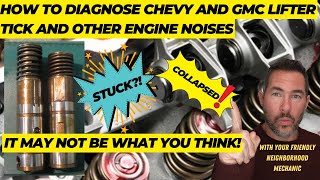
- Noticeable engine ticking or tapping noise, which is a strong indicator 🎬 Watch: How to tell if that ticking is actually a lifter. of a lifter failure
- Worse fuel economy
- Engine shuddering or bucking
- Replacing oxygen sensors when the misfire is the root cause.
- Assuming the catalytic converter is bad, when it's actually being damaged by unburnt fuel from the misfire.
- Replacing only spark plugs and coils when the underlying cause is a failing lifter, leading to a recurring P0303 code.
Most Likely Causes
- Worn or Fouled Spark Plug 🔴 High Probability → Shop Spark Plug Spark plugs are regular wear items. Oil consumption issues, sometimes related to the PCV system or piston rings on these engines, can foul plugs prematurely.
How to confirm: Visually inspect the spark plug from cylinder 3. Look for wear, damage, or fouling (black, sooty, or oily deposits). A proven diagnostic step is to swap the plug with another cylinder (e.g., cylinder 1) and see if the code changes to P0301.
Typical fix: Replace the spark plug. It is best practice to replace all 8 spark plugs at the same time. Use high-quality Iridium plugs like those from ACDelco or NGK.
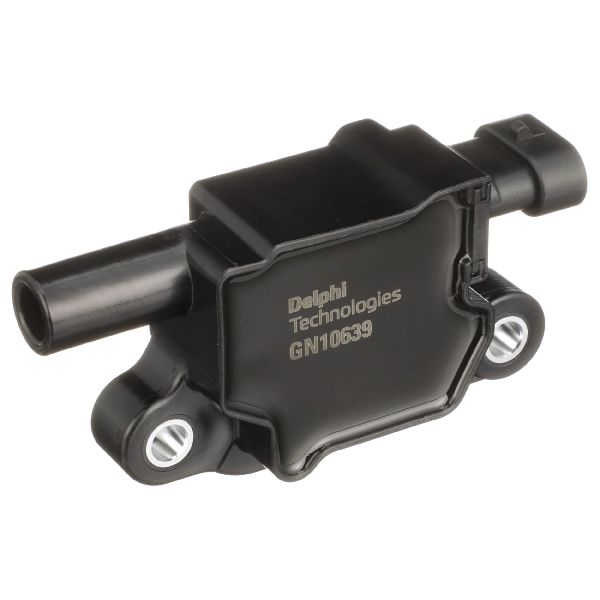
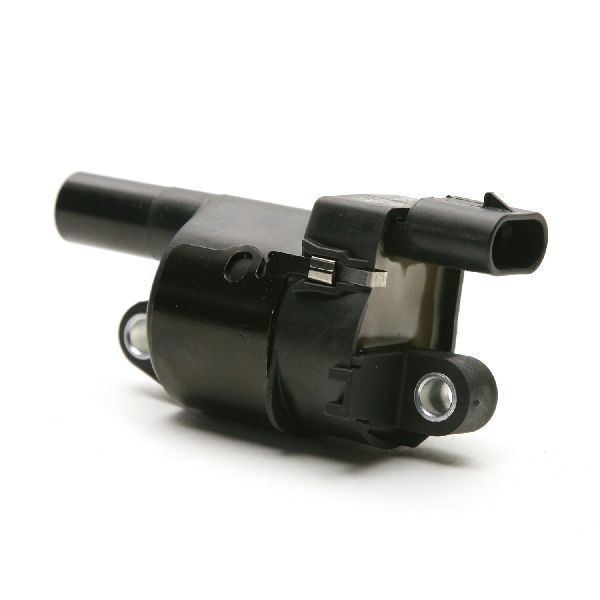
Est. part cost: $8-$20 per plug - Faulty Ignition Coil 🔴 High Probability → Shop Ignition Coil Coil-on-plug systems are reliable but individual coils can fail from heat and age.
How to confirm: Swap the ignition coil from cylinder 3 with another cylinder (e.g., cylinder 1). Clear the codes and run the engine. If the misfire code changes to P0301, the coil is bad. This is a standard and effective diagnostic procedure. 🎬 See how to diagnose misfires by testing plugs and coils.
Typical fix: Replace the faulty ignition coil. ACDelco is the OEM brand.
Est. part cost: $40-$80 - Failed AFM/DFM Lifter 🟡 Medium Probability → Shop Engine Valve Lifter This is a well-documented, widespread issue on GM's 5.3L and 6.2L engines. The complex lifters used for cylinder deactivation can become stuck, collapse, or break internally, preventing the valve from opening correctly.
How to confirm: A persistent ticking noise from the engine is a strong indicator. A mechanic can confirm by removing the valve cover to inspect for non-moving valves or bent pushrods. A diagnostic trick shown in a YouTube video involves slightly loosening the rocker arm bolt on the affected cylinder; if the misfire count drops, it points to a bad lifter. This often requires professional diagnosis and is detailed in TSB #23-NA-043.
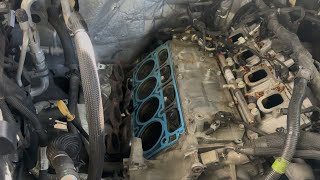
Typical fix: This is a major repair. It requires replacing all lifters and guides on the affected cylinder bank. If a lifter fails, it's crucial to also inspect the camshaft for damage, as a damaged lobe requires camshaft replacement as well. The repair involves removing the cylinder head(s). 🎬 Watch this full repair guide for fixing a collapsed lifter.
Est. part cost: $500-$1500+ - Clogged or Faulty Fuel Injector ⚪ Low Probability → Shop Fuel Injector
How to confirm: After ruling out spark, a mechanic can perform a fuel injector balance test. A DIY method is to listen to the injector with a mechanic's stethoscope to ensure it's clicking. You can also swap the injector with another cylinder, but this is more labor-intensive.
Typical fix: Replace the faulty fuel injector. It's also recommended to clean the other injectors or replace them as a set if they are high mileage.
Est. part cost: $50-$120
Rare But Worth Checking
- Broken Valve Spring: While less common than a lifter failure, a broken valve spring can cause a sudden, severe misfire and low compression in the affected cylinder.
- Internal Engine Damage (Piston, Rings, Camshaft): If a lifter fails catastrophically, it can send metal through the engine and damage the camshaft lobe, requiring more extensive repairs. A bent pushrod is also a common finding alongside a failed lifter.
- Intake Manifold Gasket Leak: → Shop Engine Intake Manifold A vacuum leak from a failed intake manifold gasket near cylinder 3 can lean out the air/fuel mixture and cause a misfire. This can be diagnosed with a smoke test.
Diagnosis Steps
- Confirm the code P0303 with an OBD-II scanner. Note any other codes present, especially P0300 or P050D.
- Listen for a distinct ticking or tapping noise from the engine bay, which strongly points towards a lifter issue.
- Locate cylinder 3 (it is the second cylinder back from the front on the driver's side).
- Swap the ignition coil from cylinder 3 with cylinder 1. Clear codes and drive. If the code changes to P0301, the coil is faulty.
- If the code remains P0303, swap the spark plug from cylinder 3 with cylinder 1. Clear codes and drive. If the code changes to P0301, the spark plug was the issue.
- Inspect the wiring harness for the ignition coil and fuel injector on cylinder 3 for any damage or loose connections. The coil connector is a common point of failure and can be replaced separately (e.g., GM part #19300471).
- If ignition components are good, the issue is likely a fuel injector or, more seriously, a mechanical problem. Check for a bent pushrod or collapsed lifter by removing the valve cover.
- At this point, if the problem is not found, professional diagnosis is recommended to test fuel pressure, injector function, and engine compression/leak-down to confirm internal engine health.
Parts You'll Likely Need
- Spark Plug
(OEM #12622441 (ACDelco 41-123 for L83/L86))— This is the most common wear item and the first logical part to replace for a misfire.
Trusted brands: ACDelco, NGK
OEM price range: $12-$18
Aftermarket price range: $8-$15 - Ignition Coil
(OEM #12611424 (ACDelco D521C))— A common failure point for ignition-related misfires that is easy to diagnose by swapping cylinders.
Trusted brands: ACDelco, Delphi
OEM price range: $60-$90
Aftermarket price range: $35-$60 - AFM/DFM Valve Lifter Kit
(OEM #12722013 (ACDelco, single DFM lifter), full kits vary)— A known major failure point on this platform causing misfires. The repair involves replacing the lifters, guides, and often head gaskets. TSB 23-NA-043 outlines this repair.
Trusted brands: ACDelco, General Motors
OEM price range: $400-$800
Aftermarket price range: $250-$500 - Valve Lifter Guide
(OEM #12595365)— These plastic guides hold the lifters in place and must be replaced during a lifter job to prevent future failures.
Trusted brands: ACDelco
OEM price range: $10-$15 each
Aftermarket price range: $5-$10 each
Related Codes That Often Appear With This One
- P0300 — If the misfire is intermittent or affects multiple cylinders, a P0300 (Random Misfire) may appear alongside P0303. This is common when lifter issues begin.
- P050D — This code for 'Cold Start Rough Idle' is often seen in conjunction with lifter-related misfires on these GM V8 engines.
Technical Service Bulletins (TSBs) & Recalls
- 23-NA-043: Poor Engine Performance, Engine Misfires, Malfunction Indicator Lamp (MIL) Illuminated - DTC P0300, P0301, P0302, P0303, P0304, P0305, P0306
Platform-Specific Known Issues
- A known issue with the Active/Dynamic Fuel Management (AFM/DFM) systems can cause valve lifters to fail, leading to misfires and engine noise. This is a primary concern for any P030x code on these vehicles.
- Technical Service Bulletin #23-NA-043 was issued to address this exact problem, providing a procedure to replace the valve lifters and guides to correct misfire concerns. The procedure varies based on mileage, sometimes requiring replacement on one bank, sometimes both.
- Owner forums are filled with accounts of P0303 codes that were ultimately traced back to failed lifters after spark plugs and coils were replaced without success.
Mechanic-Grade Diagnostic Values
- Ignition Coil Primary Resistance — expected: 0.4 to 0.6 ohms. Failure: A reading outside this range indicates a faulty coil.
- Ignition Coil Secondary Resistance — expected: 5,000 to 7,200 ohms (5.0k-7.2k Ω). Failure: A reading outside this range indicates a faulty coil.
- Low-Side Fuel Pressure (Key On, Engine Off) — expected: 55-62 PSI. Failure: Pressure below 55 PSI may indicate a weak in-tank fuel pump.
- Fuel Injector Control Wire (Pin B on connector) — expected: Pulsing ground signal from ECM when engine is running.. Failure: No pulse or a constant ground/open circuit points to a wiring or ECM driver issue.
Hidden / Shadow Codes Worth Checking
- Misfire History Counters: A professional scan tool like the GM GDS2 can display current and historical misfire counts for each cylinder, even if they haven't been high enough to set a DTC. This is crucial for diagnosing intermittent misfires. (see via GM GDS2 (Global Diagnostic System 2) or high-end professional scan tool with GM-specific software.)
Scan Tool Commands That Help
- GDS2 (GM Dealer Tool): Cylinder Power Balance — This test deactivates one cylinder at a time to measure the RPM drop of each. A cylinder with a smaller RPM drop is contributing less power, helping to confirm the misfire on cylinder 3.
- GDS2 (GM Dealer Tool): Fuel Injector Balance Test — This command fires each injector for a set duration while measuring the corresponding drop in fuel rail pressure. It can identify a weak or clogged injector on cylinder 3.
- GDS2 (GM Dealer Tool): AFM/DFM Cylinder Deactivation Command — A technician can command specific cylinders to deactivate and monitor the system's response. This can help diagnose issues with the Valve Lifter Oil Manifold (VLOM) or solenoids that control the lifters.
Wiring & Ground Locations
- G102 — On the left side (driver's side) of the engine block, below the exhaust manifold, near cylinder #3.. This is a primary ground for the bank of ignition coils. A loose or corroded G102 can cause weak spark and misfires on the entire driver's side bank, including cylinder 3.
- G103 / G104 — On the rear of the passenger's side cylinder head (G103) and sometimes sharing a stud on the back of the cylinder heads (G104).. These grounds are critical for the Engine Control Module (ECM) and various sensors. A poor connection here can cause erratic sensor readings and incorrect ECM calculations, potentially leading to misfire codes.
- Cylinder 3 Fuel Injector Connector — On the fuel rail at cylinder 3. The power wire is typically Pink (Pin A) and the control wire from the ECM is a specific color trace (e.g., Pink/Black on some models).. This is the direct connection for the fuel injector. Testing for voltage on the power wire and a pulsing ground signal on the control wire can confirm if the injector is receiving the correct signals from the ECM.
Real Owner Repair Stories
- YouTube channel 'audio service information' (2018 GMC Yukon, 5.3L V8, 76,000 miles) — Loud ticking noise from the engine bay, P0300 random misfire code stored. Noise was isolated to the cylinder 6 area (passenger side).
❌ Tried (didn't work) Initial diagnosis pointed to a general misfire without specifying a cylinder.
✅ What actually fixed it Upon removing the valve cover, the technician observed a rocker arm was not moving. The pushrod for cylinder 6 was found to be bent. The root cause was diagnosed as a collapsed AFM lifter, requiring cylinder head removal for replacement. - NHTSA ODI #11355435 (2015 GMC Yukon (similar K2 platform)) — Flashing check engine light, then solid. Code P0303 was scanned.
❌ Tried (didn't work) Replaced spark plugs and wires., Replaced ignition coil.
✅ What actually fixed it The owner's complaint was filed while still diagnosing the issue after the common ignition parts did not solve the problem, which is a classic pattern for an underlying mechanical fault like a failed lifter.
OEM Part Supersession History
12645725 (and others)→12698946 (AFM Lifter)— GM has updated the AFM lifter design multiple times to improve reliability.12698946 (AFM Lifter)→12740071 (Latest AFM Lifter)— Continued design improvements for durability.HL-7011 (Elgin, Aftermarket AFM Lifter)→HL-7025 (Elgin, Aftermarket DFM Lifter)— The newer DFM lifter (HL-7025) is backward-compatible with older AFM engines.
Heads up: The older AFM lifter (HL-7011) will NOT work in a newer DFM engine. However, the newer DFM lifter (HL-7025) WILL work in an older AFM engine, making it a common replacement part for both.
Model Year Variations Within This Range
- 2018-2020: These models primarily use the 5.3L L83 or 6.2L L86 engines with Active Fuel Management (AFM), which deactivates cylinders 1, 7, 6, and 4. A failure is most common on one of these cylinders.
- 2021: The 2021 model introduced the 5.3L L84 and 6.2L L87 engines with Dynamic Fuel Management (DFM). DFM is more advanced and can deactivate any of the 8 cylinders using 17 different firing patterns. This means a lifter failure can occur on any cylinder, not just the four designated in the AFM system.
Helpful Videos
We Have This Part in Stock


The information in this article is provided for general reference and educational purposes only. Vehicle specifications, procedures, and part compatibility can vary by production date, trim level, and region. Always consult your vehicle's factory service manual and verify part numbers before purchasing or performing repairs. Safety-critical components such as airbags, seat belts, and braking systems should be installed by a qualified professional.
- Gmc YUKON:
- 🧭 Diagnostic Flowchart
- 🎬 Helpful Videos
- 🛍️ Shop This Part
- What's Unique About the 2018-2021 Gmc YUKON
- Symptoms You May Notice
- Most Likely Causes
- Rare But Worth Checking
- Diagnosis Steps
- Parts You'll Likely Need
- Related Codes That Often Appear With This One
- Technical Service Bulletins (TSBs) & Recalls
- Platform-Specific Known Issues
- Mechanic-Grade Diagnostic Values
- Hidden / Shadow Codes Worth Checking
- Scan Tool Commands That Help
- Wiring & Ground Locations
- Real Owner Repair Stories
- OEM Part Supersession History
- Model Year Variations Within This Range
- 🎟️ Get 5% Off