

P0303 on 2010-2014 Honda Insight: Cylinder 3 Misfire Causes and Fixes
For a 2010-2014 Honda Insight, code P0303 is most often caused by a failed ignition coil or a worn-out spark plug on cylinder 3. A valve adjustment may also be necessary if ignition components are not at fault. On higher mileage vehicles, a clogged EGR valve can also cause misfire-like symptoms. Expect to pay around $40-$80 for a new coil and $15-$25 for a spark plug.
- P0303 on a 2010-2014 Insight indicates a misfire on cylinder 3.
- The most likely causes are a bad ignition coil or a worn spark plug. This engine has eight of each (one front, one rear per cylinder).
- Start diagnosis by swapping the front coil and then the front spark plug from cylinder 3 to another cylinder to see if the misfire follows.
- If ignition parts are good, the next step is a valve clearance adjustment, a known maintenance requirement for many Hondas.
- Avoid driving if the Check Engine Light is flashing to prevent expensive damage to the catalytic converter.
What's Unique About the 2010-2014 Honda Insight
The 2010-2014 Honda Insight's 1.3L LDA-MF6 engine is unique because it uses two spark plugs and two ignition coils for each of its four cylinders, for a total of eight of each. This i-DSI (intelligent Dual & Sequential Ignition) system is designed to ensure complete fuel combustion for better efficiency and lower emissions. When diagnosing a misfire, it's important to remember that there are both front and rear spark plugs/coils. The rear bank is notoriously difficult to access as it is located under the cowl at the base of the windshield.
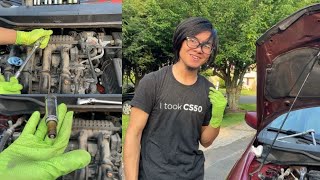
🎬 Watch: How to access and replace all eight coils and plugs.Symptoms You May Notice
- Rough or erratic idle
- Engine hesitation or stumbling during acceleration
- Noticeable shaking or vibration from the engine
- Flashing or solid Check Engine Light
- Reduced fuel economy
- Potential fuel smell from the exhaust
- Sluggish performance and loss of power
- Replacing only one spark plug or coil when a valve adjustment is needed.
- Replacing fuel injectors before thoroughly testing the ignition system (coils and plugs), which is a far more common failure point.
- Ignoring a sticking EGR valve which can cause symptoms identical to a misfire.
Most Likely Causes
- Faulty Ignition Coil 🔴 High Probability → Shop Ignition Coil Coil-on-plug systems are a common failure point. The Insight has eight coils, increasing the chance of an individual failure over time. Heat and vibration contribute to their eventual breakdown.
How to confirm: Swap the front ignition coil from cylinder 3 with the coil from another cylinder (e.g., cylinder 2). Clear the codes and drive the vehicle. If the code changes to P0302, the coil is bad. Remember there is also a rear coil for cylinder 3 which is much harder to access.
Typical fix: Replace the faulty ignition coil. It is often recommended to replace the corresponding spark plug at the same time. Many owners choose to replace all coils on the affected bank (front or rear) at once.
Est. part cost: $40 - $80 per coil - Worn or Fouled Spark Plug 🔴 High Probability → Shop Spark Plug Spark plugs are a regular maintenance item with a service life of around 100,000 miles. The Insight has eight, and they can become worn or fouled with carbon or oil, preventing a proper spark. Oil fouling can be a symptom of the known oil consumption issue on 2012-13 models.
How to confirm: After ruling out the coil, swap the front spark plug from cylinder 3 with another cylinder. If the misfire code follows the plug, the plug is the issue. Inspect the plug for wear, oil, or carbon fouling. A heavily fouled plug points to other issues like oil consumption.
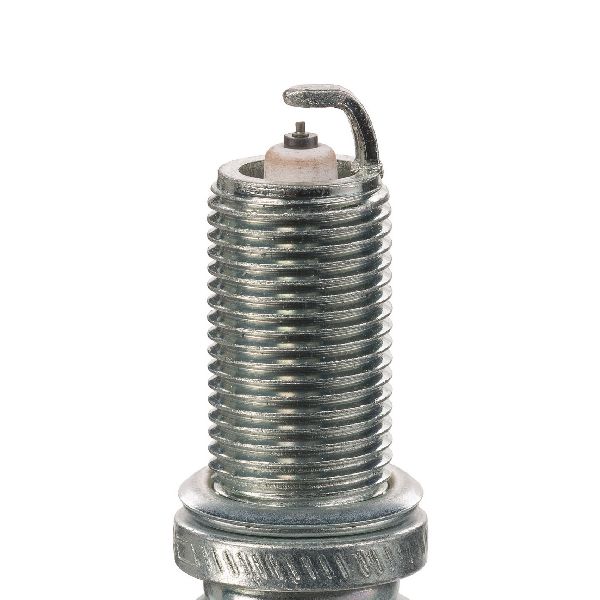
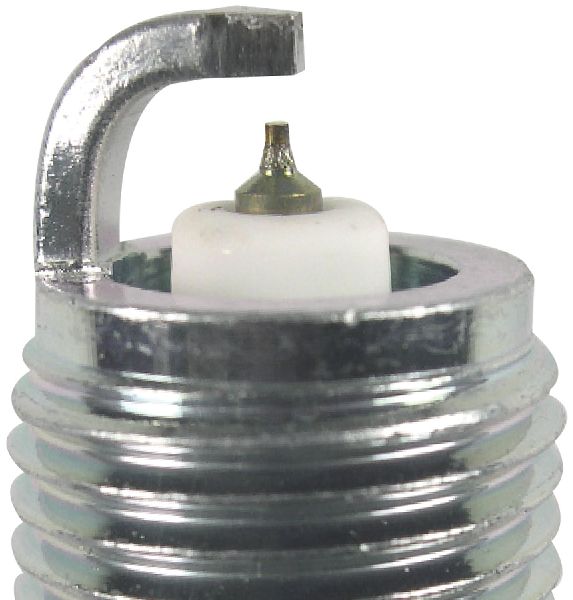
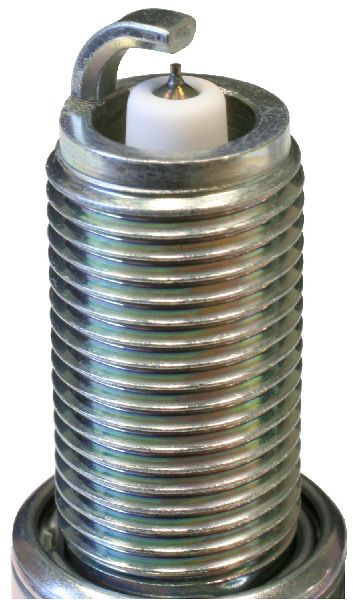
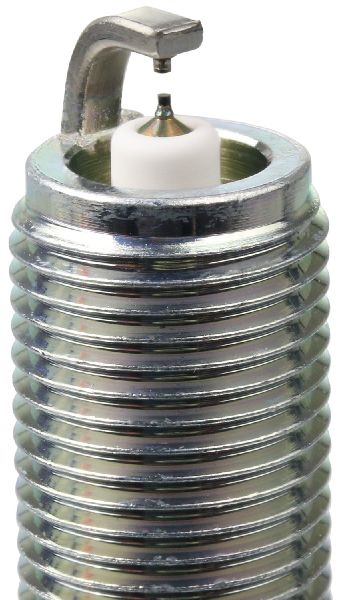
Typical fix: Replace the faulty spark plug. It is best practice to replace all eight spark plugs as a set with OEM-spec Iridium plugs (NGK or Denso) to ensure consistent performance.
Est. part cost: $15 - $25 per plug - Incorrect Valve Clearance 🟡 Medium Probability Many Honda L-series engines require periodic valve adjustments as part of their maintenance schedule, typically every 100,000 miles or if they become noisy. Valves that are too tight or too loose can interfere with proper cylinder sealing and combustion, leading to misfires.
How to confirm: This is confirmed by performing a valve clearance inspection using feeler gauges with the engine cold. The specs for the LDA-MF6 engine are: Intake: 0.15-0.19 mm (0.006-0.007 in), Exhaust: 0.26-0.30 mm (0.010-0.012 in).
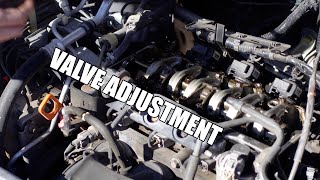
Typical fix: Adjust the intake and exhaust valve clearances to the manufacturer's specifications. This typically involves replacing the valve cover gasket as well. 🎬 See this walkthrough on how to perform a valve adjustment.
Est. part cost: $20 - $50 for a valve cover gasket set - Clogged or Sticking EGR Valve 🟡 Medium Probability → Shop Exhaust Gas Recirculation (EGR) Valve At higher mileage, the EGR valve and its passages can become clogged with carbon deposits. This can disrupt the air-fuel mixture and cause misfire-like symptoms such as hesitation and rough idle, sometimes without setting a specific EGR code.
How to confirm: The issue is often diagnosed by symptoms (hesitation under light load). The valve can be removed and inspected for carbon buildup. The internal plunger can be tested for movement by applying power (e.g., a 9V battery) to its terminals.
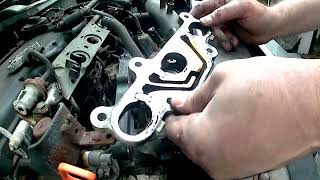
Typical fix: Remove the EGR valve and the EGR plate (if applicable) and thoroughly clean all carbon deposits from the valve, its plunger, and the passages in the intake manifold 🎬 Watch: How to clean carbon from your EGR passages. using carburetor cleaner and small brushes.
Est. part cost: $5 for carburetor cleaner and a new gasket. - Faulty Fuel Injector ⚪ Low Probability → Shop Fuel Injector
How to confirm: Listen for a clicking sound from the injector with a mechanic's stethoscope. You can also test its resistance with a multimeter or swap it with another cylinder's injector to see if the misfire code follows.
Typical fix: Replace the faulty fuel injector.
Est. part cost: $50 - $150
Rare But Worth Checking
- Low Engine Compression: If ignition and fuel system checks do not resolve the issue, a mechanical problem like a worn piston ring (related to oil consumption issues), a valve sealing issue (related to tight valves), or a blown head gasket could be the cause. A compression test is needed to diagnose this.
Diagnosis Steps
- Read the code with an OBD-II scanner. Note if any other codes are present, like P0300 or P0401.
- Begin with the easiest components. Locate cylinder 3 (third from the timing belt side). Swap the front ignition coil from cylinder 3 with the coil from cylinder 2.
- Clear the codes, start the engine, and see if the misfire code moves to P0302. If it does, the ignition coil is faulty and needs replacement.
- If the code remains P0303, move the spark plug from cylinder 3 to cylinder 2 and repeat the test. If the code moves to P0302, the spark plug is the culprit. While the plug is out, inspect it for heavy carbon or oil fouling.
- If the misfire persists on cylinder 3, inspect the wiring and connector for the ignition coil and fuel injector for any damage or corrosion.
- If ignition components are good, the next most likely causes are valve clearance or EGR related. Given the frequency, a valve clearance inspection is a prudent next step, especially if the engine has over 100,000 miles.
- If symptoms include hesitation at light throttle, consider removing and cleaning the EGR valve and passages.
- If the misfire is still not resolved, consider testing the fuel injector for cylinder 3.
- As a final step for persistent issues, perform an engine compression test to check for mechanical problems within the cylinder.
Parts You'll Likely Need
- Ignition Coil
(OEM #30520-RB0-003 (Front), 30521-RB0-003 (Rear))— This is one of the most common failure items for a single-cylinder misfire code.
Trusted brands: Hitachi, Denso, NGK
OEM price range: $70-$100
Aftermarket price range: $40-$80 - Spark Plug
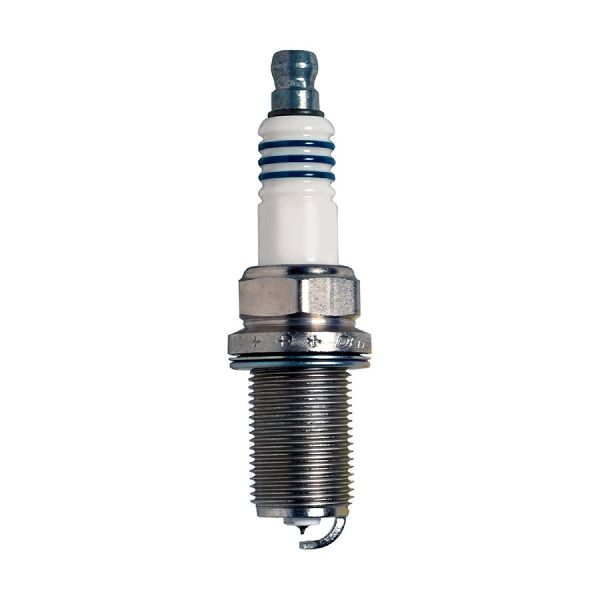
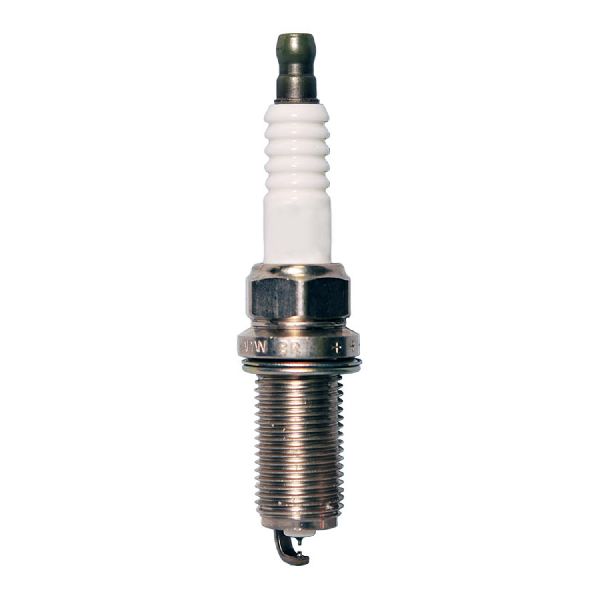
(OEM #NGK: DILFR6F11G (or DIFR6A13G), Denso: DXE20HR13)— Spark plugs are a routine maintenance part and a primary cause of misfires as they wear out. The Insight uses eight Iridium plugs.
Trusted brands: NGK, Denso
OEM price range: $20-$25
Aftermarket price range: $15-$20 - Valve Cover Gasket Set
(OEM #12341-RB0-003)— This gasket must be replaced when performing a valve adjustment to prevent oil leaks.
Trusted brands: Honda OEM, Fel-Pro, Mahle
OEM price range: $30-$40
Aftermarket price range: $20-$30
Related Codes That Often Appear With This One
- P0300 — If the misfire is intermittent or affects multiple cylinders, a P0300 (Random Misfire) code may appear alongside P0303.
- P0301, P0302, P0304 — If other cylinder-specific misfire codes are present, it could point to a systemic issue like a vacuum leak, low fuel pressure, or the need for a full set of spark plugs.
- P0401 — This code for 'EGR Flow Insufficient' may appear if a clogged EGR system is the root cause of the combustion issue, though misfires can occur from a sticking EGR valve even without this code.
Technical Service Bulletins (TSBs) & Recalls
- TSB 16-101: While not directly for P0303, this bulletin addresses the root cause of excessive oil consumption on 2012-13 models, which often leads to spark plug fouling and misfires. It extends the warranty on affected engine components.
Platform-Specific Known Issues
- Access to the rear bank of four spark plugs and ignition coils is very difficult, requiring removal of the windshield cowl panel and wiper assembly. This adds significant time and complexity to what is normally a simple job.
- The known oil consumption issue on 2012-2013 models can cause premature and repeated fouling of spark plugs, leading to recurring misfire codes until the underlying piston ring issue is addressed.
Mechanic-Grade Diagnostic Values
- Fuel Injector Resistance — expected: 10.0 - 13.0 Ohms. Failure: A reading significantly outside this range, or showing an open circuit (infinite resistance), indicates a failed injector. Readings can be slightly higher when the engine is warm.
- Ignition Coil Primary Resistance — expected: 0.49 - 0.57 Ohms (example value for similar Honda coils). Failure: A reading outside of the specified range indicates a faulty coil. This test is less common than simply swapping the coil.
- Mode $06 Misfire Counts — expected: Zero or very few counts on all cylinders during a drive cycle.. Failure: A high number of misfire counts logged for cylinder 3 (Test ID $A2, Component ID $03) confirms the misfire, even before the Check Engine Light is triggered.
Scan Tool Commands That Help
- Honda HDS (Honda Diagnostic System): Misfire Counter / Cylinder Misfire Data — Use this to view real-time and historical misfire counts for each specific cylinder (front and rear plugs). This is more precise than a generic OBD-II scanner and can help determine if the misfire is constant or intermittent under specific load/RPM conditions.
- Honda HDS (Honda Diagnostic System): Injector Test — This function can be used to individually command each injector to fire, allowing a technician to listen for the audible click of the injector solenoid to confirm it is being activated by the PCM. This helps differentiate between a wiring/PCM issue and a failed injector.
Wiring & Ground Locations
- G101 — Located on the left rear of the engine.. This is a primary engine ground. A loose or corroded G101 can cause a host of erratic ignition and sensor issues, including misfires.
- Main Engine Ground Strap — Typically runs from the transmission case to the chassis frame rail near the front of the vehicle.. Corrosion or breakage of this main ground strap is a known issue that can cause intermittent electrical problems, including weak spark energy leading to misfires. A visual inspection for corrosion and a voltage drop test are recommended.
- PCM Connectors (A, B, C) — The PCM is located in the left front of the engine compartment.. The control wires for the ignition coils and fuel injectors for cylinder 3 run to these connectors. When diagnosing a no-spark or no-injection condition that isn't resolved by swapping parts, checking for continuity and voltage at these specific pins is the next step. A wiring diagram is essential for this.
Real Owner Repair Stories
- InsightCentral.net forum user (2010 Honda Insight with over 100,000 miles) — P0303 misfire code, rough idle.
❌ Tried (didn't work) Replaced all 8 spark plugs, Swapped ignition coils with no change
✅ What actually fixed it A valve adjustment. The exhaust valves on cylinder 3 were found to be too tight, causing a loss of compression when the engine was warm. Adjusting all valve clearances to spec resolved the misfire. - InsightCentral.net forum user (High-mileage 2011 Honda Insight) — Hesitation under light acceleration and a rough idle, eventually triggering P0303 and P0300.
❌ Tried (didn't work) Initial diagnosis focused on ignition coils and spark plugs.
✅ What actually fixed it Thoroughly cleaning the EGR valve and all associated passages in the intake manifold. Carbon buildup was restricting flow and causing combustion instability that manifested as a misfire.
When the Usual Fixes Don't Work
- While coils and plugs are the most common cause, a significant number of owners on forums like InsightCentral.net report that a P0303 code on a high-mileage (100k+ miles) Insight was ultimately resolved by a valve adjustment after replacing ignition components did not fix the issue. Tight exhaust valves are a common finding.
Documented NHTSA Reports
- A manufacturer service bulletin for a similar Honda engine platform notes that extreme carbon buildup can cause misfires even at low mileage, resulting in a P0303 code (NHTSA ODI #11271228).
- An owner reported that after replacing MAF sensors, spark plugs, and ignition coils, the vehicle continued to trigger P0303 and P0172 codes and entered limp mode (NHTSA ODI #11682852).
- NHTSA ODI #11707782 describes an incident where a P0303 code was accompanied by a strong fuel smell on the oil dipstick and fouled spark plugs.
- In some cases, a P0303 code has been linked to internal mechanical failure; one report identified metal fragments in the oil and a misfire on the lower block (NHTSA ODI #11571696).
- A report involving a coolant leak through the head gasket resulted in a cylinder 3 misfire, requiring replacement of the head gasket, plugs, and injectors (NHTSA ODI #11692547).
OEM Part Supersession History
30520-RB0-003→30520-RB0-S01— Standard part revision and supplier change over time.
Heads up: The parts are interchangeable. 30520-RB0-S01 is the later revision for the front ignition coils.
Model Year Variations Within This Range
- 2012-2014: A facelift in 2012 introduced minor engine updates for friction reduction, slightly wider tires (185/60R15), and aerodynamic changes. While the core engine (LDA-MF6) and misfire causes remain the same, the 2012-2013 models are specifically noted for potential oil consumption issues that can lead to spark plug fouling and misfires.
Diagnostic Flowchart
Other Known Issues on This Vehicle
Issues unrelated to this code that are worth knowing about as an owner of this generation:
- Excessive Oil Consumption 🔴 High — More prevalent on 2012-2013 models. Can start around 50,000-65,000 miles. Caused by carbon clogging oil control rings. (Ref: Honda issued a warranty extension (TSB 16-101) for 2012-13 models to 8 years/unlimited miles. The fix often involves replacing pistons and rings.)
- IMA Hybrid Battery Degradation 🟠 Medium — Common as the vehicle ages (typically over 8-10 years or 100k+ miles). Symptoms include frequent battery recalibrations ('re-cals'), reduced fuel economy, sluggish acceleration, and the IMA warning light.
- Uncomfortable Seats 🟡 Low — A widely reported subjective complaint across many Honda models of this era, including the Insight.
- Sticking/Clogged EGR Valve 🟠 Medium → Shop Exhaust Gas Recirculation (EGR) Valve — Can occur at higher mileage, causing rough idle, hesitation, or a 'herky-jerky' sensation during light acceleration. May or may not set a specific EGR code (P0401).
Used vs. New Parts: Buying Guide for This Vehicle
When a used part is the smart pick: For expensive electronic components like ignition coils or fuel injectors, a used part from a reputable salvage yard with a low-mileage donor vehicle can be a cost-effective option. This is especially true if you are trying to diagnose the issue and are not yet certain which part has failed.
Donor-vehicle mileage cap: roughly under 80000 miles for the part to have meaningful remaining life.
What to inspect on the donor part:
- Check for the vehicle's overall condition; a well-maintained car is a better donor.
- For ignition coils, look for no cracks in the plastic housing or corrosion on the connector pins.
- Ask for the donor vehicle's VIN to check its service history if possible.
- Ensure the part comes with a short warranty (e.g., 30-90 days) to protect against receiving a dead-on-arrival part.
OEM-only on this vehicle (don't cheap out):
- Spark Plugs: These are wear items and should always be purchased new and to the exact OEM specification (NGK or Denso Iridium) to ensure proper performance and longevity.
- Gaskets: Valve cover and EGR gaskets are single-use and should always be replaced with new ones to prevent leaks.
Aftermarket brands forum-validated for this vehicle:
- Ignition Coils: Hitachi (often the OEM supplier), Denso, NGK.
- Spark Plugs: NGK, Denso (must be the correct Iridium part number).
- Gaskets: Fel-Pro, Mahle.
Brands owners have reported issues with on this vehicle:
- Unbranded, no-name ignition coils from online marketplaces. Forum users frequently report premature failure, weak spark, and poor fitment with ultra-cheap coil sets.
Real Owner Stories
Aggregated from forums and TSBs cited above. Mileages and costs reflect what owners reported in those sources.
2012-2013 Honda Insight 1.3L I4 Hybrid — ~60000 miles
Symptoms: Excessive oil consumption leading to premature and repeated fouling of spark plugs and recurring misfire codes.
What fixed it: Replacing pistons and rings as part of the TSB 16-101 warranty extension.
Source hint: TSB 16-101
2010-2014 Honda Insight 1.3L I4 Hybrid — ~100000 miles
Symptoms: Rough idle, hesitation, or a 'herky-jerky' sensation during light acceleration.
What fixed it: Removing the EGR valve and EGR plate to thoroughly clean all carbon deposits from the valve, plunger, and intake manifold passages.
Source hint: InsightCentral.net - EGR valve repair thre
Related OBD-II Codes
Frequently Asked Questions
I have a 2012 Honda Insight with a P0303 code and high oil consumption. Is there a warranty extension for this?
Why is it so difficult to change the spark plugs on my 2010-2014 Insight?
My Insight is hesitating at light throttle but hasn't thrown an EGR code yet. Could this be related to P0303?
How often should I have the valves adjusted on my LDA-MF6 engine to prevent misfires?
What specific spark plugs should I use for my Honda Insight hybrid?
Can I test if my ignition coil is bad by swapping it with another cylinder?
Helpful Videos
![How to change spark plug on HONDA INSIGHT 2 (ZE) [TUTORIAL AUTODOC]](https://img.youtube.com/vi/JR3z_kdDIaQ/mqdefault.jpg)
![Comment remplacer un bougie d'allumage sur HONDA INSIGHT 2 (ZE) [TUTORIEL AUTODOC]](https://img.youtube.com/vi/WF0qvgGKcXA/mqdefault.jpg)
We Have This Part in Stock

The information in this article is provided for general reference and educational purposes only. Vehicle specifications, procedures, and part compatibility can vary by production date, trim level, and region. Always consult your vehicle's factory service manual and verify part numbers before purchasing or performing repairs. Safety-critical components such as airbags, seat belts, and braking systems should be installed by a qualified professional.
- Honda Insight:
- 🧭 Diagnostic Flowchart
- 🎬 Helpful Videos
- 🛍️ Shop This Part
- What's Unique About the 2010-2014 Honda Insight
- Symptoms You May Notice
- Most Likely Causes
- Rare But Worth Checking
- Diagnosis Steps
- Parts You'll Likely Need
- Related Codes That Often Appear With This One
- Technical Service Bulletins (TSBs) & Recalls
- Platform-Specific Known Issues
- Mechanic-Grade Diagnostic Values
- Scan Tool Commands That Help
- Wiring & Ground Locations
- Real Owner Repair Stories
- When the Usual Fixes Don't Work
- Documented NHTSA Reports
- OEM Part Supersession History
- Model Year Variations Within This Range
- Other Known Issues on This Vehicle
- Used vs. New Parts: Buying Guide for This Vehicle
- Real Owner Stories
- 2012-2013 Honda Insight 1.3L I4 Hybrid — ~60000 miles
- 2010-2014 Honda Insight 1.3L I4 Hybrid — ~100000 miles
- Related OBD-II Codes
- Frequently Asked Questions
- 🎟️ Get 5% Off