

P0303 on 2014-2019 Jaguar F-TYPE: Cylinder 3 Misfire Causes and Fixes
Code P0303 on a Jaguar F-TYPE signifies a misfire in cylinder 3. The most common culprits are a faulty ignition coil or a worn-out spark plug. Swapping the cylinder 3 ignition coil with another is the fastest way to diagnose the problem. However, faulty fuel injectors are also a known issue on this platform.
- P0303 on a Jaguar F-TYPE means cylinder 3 is misfiring.
- The most likely cause is a bad ignition coil, followed closely by a worn spark plug.
- A simple diagnostic step is to swap the cylinder 3 ignition coil with another cylinder's coil to see if the fault code moves.
- Always address a flashing Check Engine Light immediately to prevent costly damage to the catalytic converter.
- Be aware of specific Jaguar TSBs that may indicate a software or startup-related issue rather than a simple component failure.
What's Unique About the 2014-2019 Jaguar F-TYPE
On the high-performance supercharged V6 and V8 engines in the F-TYPE, ignition components are placed under significant stress, making spark plugs and coils common failure points. A unique issue for the F-Type is that the hood vents can allow water to seep into the engine bay, dripping directly onto the fuel injectors and causing corrosion and failure. This can lead to injectors seizing in the cylinder head, complicating replacement. While ignition components are typical causes, Jaguar has also issued Technical Service Bulletins (TSBs) that connect the P0303 code to broader issues. For instance, TSB SSM74160 notes that P0303 can appear alongside other electrical system codes without any noticeable driving problems, suggesting a potential VVT solenoid or software glitch. Another bulletin, JTB00533NAS1, links it specifically to misfires that occur right after a cold start due to fuel injection calibration.
Diagnostic Flowchart
Tap your situation to follow the diagnostic path that matches what you're seeing on this vehicle.
Symptoms You May Notice
- Check Engine Light is on or flashing
- Rough or unstable idle
- Engine hesitation or stumbling during acceleration
- Noticeable loss of engine power
- Reduced fuel economy
- A smell of raw gasoline from the exhaust
- Engine vibrations that can be felt in the cabin
- Replacing oxygen (O2) sensors before diagnosing the root cause of the misfire.
- Replacing the catalytic converter when it has been damaged by a long-term misfire, without fixing the misfire itself.
Most Likely Causes
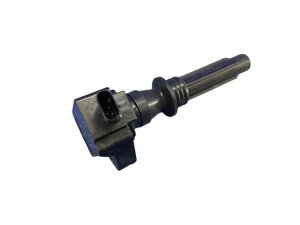
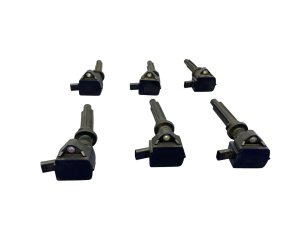
- Faulty Ignition Coil 🔴 High Probability → Shop Ignition Coil Coil-on-plug designs are common failure points on many modern engines, including the high-output Jaguar V6 and V8. Heat cycles and vibration cause the internal windings to fail over time.
How to confirm: Swap the ignition coil from cylinder 3 with an adjacent cylinder (e.g., cylinder 1). Clear the codes and drive the vehicle. If the code changes to P0301, the ignition coil is faulty.
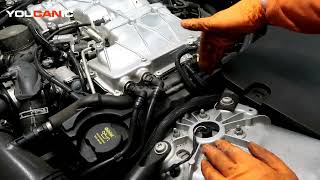
Typical fix: Replace the failed ignition coil. Many owners choose to replace all coils on the same bank or the entire set if they are high in mileage. 🎬 Watch: Step-by-step ignition coil and spark plug replacement guide.
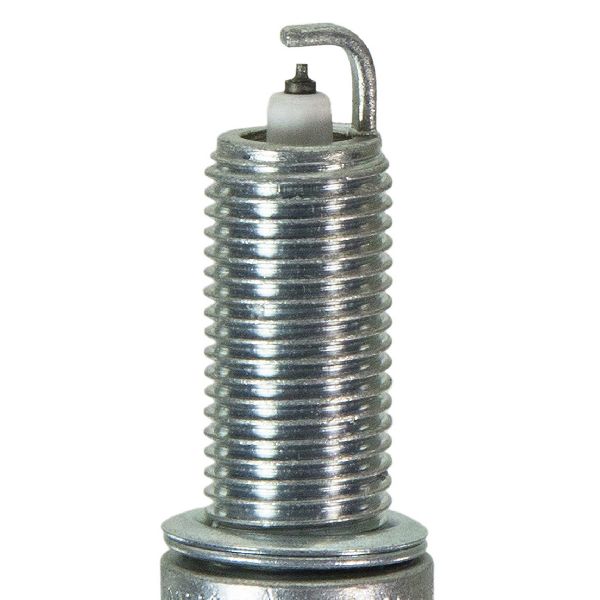
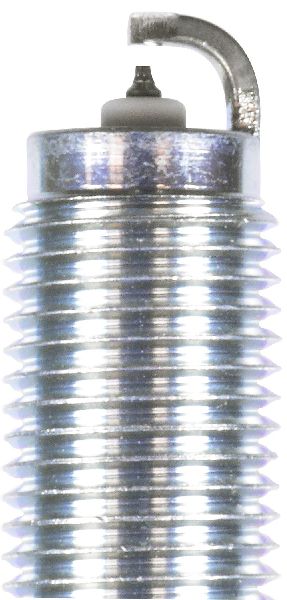
Est. part cost: $118-$134 - Worn or Fouled Spark Plug 🔴 High Probability → Shop Spark Plug Supercharged engines are demanding on spark plugs, leading to a shorter service life. The official maintenance schedule recommends replacement at 3 years or 96,000 miles, but many owners replace them sooner. Plugs can wear, crack, or become fouled with oil or carbon deposits.
How to confirm: After confirming the ignition coil is good, remove the spark plug from cylinder 3. Inspect it for a worn electrode, cracks in the porcelain, or heavy deposits. Compare it to a new plug.
Typical fix: Replace the spark plug in cylinder 3. It is highly recommended to replace all spark plugs at the same time for balanced performance.
Est. part cost: $15-$30 per plug - Faulty or Seized Fuel Injector 🟡 Medium Probability → Shop Fuel Injector As Gasoline Direct Injection (GDI) engines, the injectors are located inside the combustion chamber and are prone to issues. A notable F-Type problem is water ingress from the hood vents, which can cause corrosion and lead to the injectors seizing within the cylinder head. This makes removal difficult and labor-intensive. Failure can be electrical or from clogging.
How to confirm: Listen for a consistent clicking sound from the injector. Use a 'noid light' to verify the injector is receiving an electrical pulse from the PCM. A more definitive test is to swap the injector with another cylinder, but this is labor-intensive. A professional diagnosis is often required.
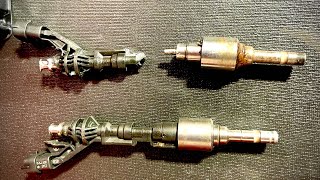
Typical fix: Replace the faulty fuel injector. Due to the high failure rate and potential for seizure, some owners opt to replace all injectors on a bank at once. Special tools are required for removal. 🎬 See how to remove a fuel injector if it breaks.
Est. part cost: $100-$250
Rare But Worth Checking
- Vacuum Leak: A leak in the intake manifold gasket or a vacuum hose near cylinder 3 can lean out the air-fuel mixture, causing a misfire. A smoke test is the most effective way to find a leak.
- Low Engine Compression: This is a more serious mechanical issue, such as a worn piston ring, a bad valve, or a leaking head gasket. A compression test is needed to diagnose this. One forum user reported low compression on cylinders 4 & 5 due to timing chain issues.
- Carbon Buildup on Intake Valves: Like many GDI engines, the AJ126/AJ133 can suffer from carbon buildup on the back of the intake valves. This can disrupt airflow into the cylinder and cause misfires, especially on higher-mileage vehicles. This requires manual cleaning (e.g., walnut blasting) to resolve.
- PCM or Wiring Harness Issue: As suggested by TSB SSM74160, the code can sometimes be triggered by an electrical fault within the Powertrain Control Module or its wiring, even without a true mechanical misfire.
Diagnosis Steps
- Read the code with an OBD-II scanner to confirm P0303 is present, and check for any other codes.
- Identify the location of Cylinder 3. On the 3.0L V6 and 5.0L V8, Bank 1 is the passenger side (US) and Bank 2 is the driver's side. The cylinders are numbered from front to back. Cylinder 3 is the rearmost cylinder on the passenger side (Bank 1).
- Swap the ignition coil from cylinder 3 with the coil from cylinder 1. Clear the codes, run the engine, and re-scan. If the code is now P0301, the ignition coil is bad and needs replacement.
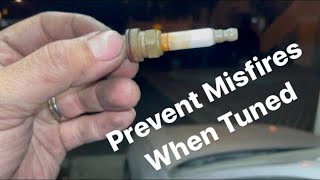
- If the misfire code remains on cylinder 3, remove the spark plug. This requires a special 14mm, 12-point, thin-walled magnetic socket. Inspect it for wear, 🎬 Watch: DIY guide for changing spark plugs to prevent misfires. damage, or fouling. Replace the spark plug if it is in poor condition. It's best to replace the full set.
- If the coil and plug are good, check the fuel injector. Listen for a steady clicking noise. Use a noid light to confirm it's receiving a signal. Check the wiring connector for damage or a loose connection. Be aware that injectors on these engines can seize in the head due to corrosion.
- If the injector seems to be working, inspect for vacuum leaks around the intake manifold near cylinder 3 using a smoke machine or by carefully spraying brake cleaner (use caution as it is flammable).
- If all else fails, perform an engine compression test on cylinder 3 to rule out mechanical problems like bad valves or piston rings.
Parts You'll Likely Need
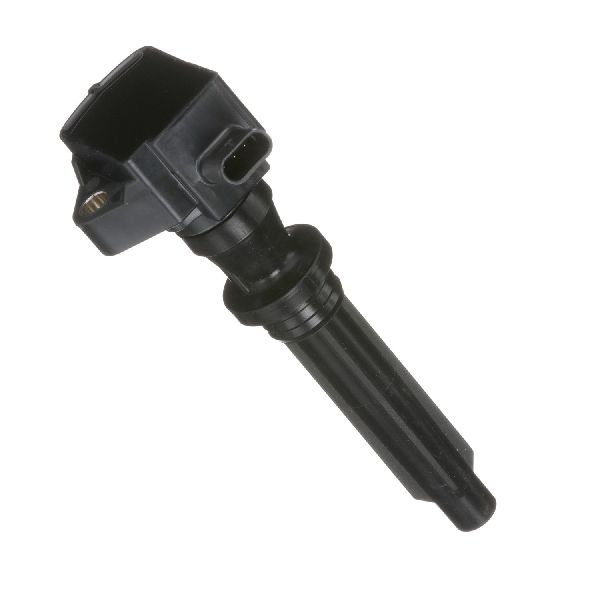
- Ignition Coil
(OEM #AJ813732, C2Z18619)— This is the most common failure part for a single-cylinder misfire. Heat and vibration cause the internal windings to fail over time.
Trusted brands: Bosch, Denso, NGK, Standard Motor Products (UF-730)
OEM price range: $90-$120
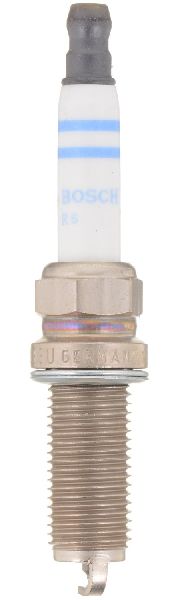
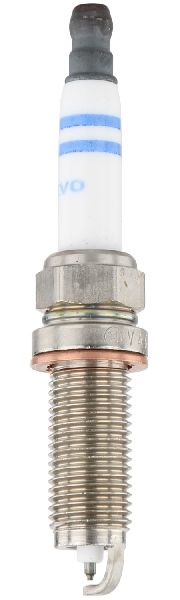
Aftermarket price range: $45-$90 - Spark Plug
(OEM #C2Z28434 (supersedes AJ812988))— Spark plugs are a regular maintenance item. A worn electrode or cracked insulator will cause a weak or non-existent spark. The OEM plug is typically an NGK ILKAR7C10 or SILZKAR7E8S.
Trusted brands: NGK, Bosch, Champion
OEM price range: $20-$35
Aftermarket price range: $15-$25
Related Codes That Often Appear With This One
- P0300 — This indicates a random or multiple cylinder misfire. It can appear with P0303 if the underlying issue (like low fuel pressure or a large vacuum leak) is affecting more than just cylinder 3.
- P0301, P0302, P0304, etc. — Misfire codes for other cylinders may appear if the cause is systemic or if multiple ignition components are failing around the same time. TSB SSM74160 specifically mentions P0302 appearing with P0303.
- P0316 — This code means 'Misfire Detected on Startup (First 1000 Revolutions)'. TSB JTB00533NAS1 explicitly links this code with the P030x series, indicating a problem that is most apparent when the engine is first started from cold.
- P1316 — A Jaguar-specific code indicating the misfire rate is severe enough to potentially damage the catalytic converter. This often accompanies a flashing Check Engine Light.
Technical Service Bulletins (TSBs) & Recalls
- SSM74160: Electrical System issue where multiple DTCs, including P0303, are stored without driveability concerns. Action is to replace the VVT solenoid.
- JTB00533NAS1: Engine and Engine Cooling issue where misfire codes like P0303 are stored along with a P0316 startup misfire code. Action is to update PCM software.
Platform-Specific Known Issues
- TSB #SSM74160 - Erroneous MIL Illumination: Notes that a P0303 code may be stored in the PCM along with other DTCs (P054A-00, P0014-71, P0302-00, etc.) without any noticeable driveability concern. The cause is identified as a faulty Variable Valve Timing (VVT) solenoid (Part No. AJ813329). The fix is to replace the solenoid with a part manufactured after August 23, 2018.
- TSB #JTB00533NAS1 - Cold Start Misfire: Indicates that P0303 can be stored in conjunction with code P0316 (misfire on startup) when the engine is started cold (below 75°C / 167°F). This may be caused by a fuel injection calibration issue. The recommended action is to update the Powertrain Control Module (PCM) software using the Jaguar Land Rover-approved diagnostic tool.
- Seized Fuel Injectors: → Shop Fuel Injector A well-documented issue where water ingress from the hood vents causes corrosion around the direct fuel injectors, causing them to seize in the cylinder head. This makes removal extremely difficult, often requiring specialized hydraulic pullers or even breaking the injector, necessitating extraction of the broken pieces. Main dealers may recommend cylinder head removal for a seized injector, which is a very labor-intensive and expensive repair.
Mechanic-Grade Diagnostic Values
- High-Pressure Fuel System — expected: Up to 2,900 PSI (200 bar). The system is designed for a maximum of 350 bar (5,076 psi).. Failure: Pressure that is significantly below specification under load. Diagnosis requires JLR-approved equipment.
- Low-Pressure Fuel System — expected: Approximately 40-75 PSI.. Failure: Low pressure reading from the in-tank pump, which will starve the high-pressure pumps.
- Engine Ground Strap Voltage Drop — expected: Well under 0.5V (500mV).. Failure: A reading higher than 0.5V while cranking the engine indicates a poor ground connection, which can cause various electrical issues including misfires.
- Ignition Coil Primary/Secondary Resistance — expected: Varies greatly. Generic values are ~0.4-2.0 ohms for primary and 6k-10k ohms for secondary windings.. Failure: A reading outside the specified range. However, testing modern coils with an ohmmeter is often unreliable due to internal electronics; swapping coils is a more definitive test.
Hidden / Shadow Codes Worth Checking
- Mode $06 Misfire Count: The PCM tracks misfire events for each cylinder even if the count is not high enough to trigger a Check Engine Light. This data can be used to confirm an intermittent misfire on a specific cylinder before it becomes a hard fault. (see via Use an advanced OBD-II scanner or a mobile app like Torque that can access Mode $06 data. Look for Test ID (TID) $0C, which typically corresponds to misfire counts for the current or last driving cycle.)
Scan Tool Commands That Help
- Jaguar SDD (Symptom Driven Diagnostics): Gasoline Fuel System Diagnostic Application — This function is used to diagnose the high and low pressure fuel systems. Crucially, for the V6 and V8 engines, it can command the high-pressure fuel pumps to switch off individually, allowing a technician to isolate a faulty pump.
- Jaguar SDD (Symptom Driven Diagnostics): PCM Software Update — As per TSB JTB00533NAS1, if P0303 is accompanied by P0316 (misfire on startup), a PCM software update may be required to correct a fuel injection calibration issue. This is performed using the SDD tool.
- Advanced OBD-II Scanner: Misfire Counter (Live Data) — While driving under conditions that produce the misfire, monitoring the live misfire count for each cylinder can confirm that cylinder 3 is the source of the problem in real-time.
Wiring & Ground Locations
- Main Engine Ground Strap — Located directly under the starter motor on the right (passenger, US) side lower frame, connecting the engine/transmission to the chassis.. A poor engine ground can cause erratic behavior in sensors and actuators, including ignition coils and fuel injectors, leading to misfires. A voltage drop test across this strap is recommended.
- Engine Bay Ground Studs — Various locations in the engine bay, including near the strut towers and firewall. The vehicle's electrical guide provides a full diagram.. The PCM, ignition coils, and injectors rely on clean ground connections. Corrosion or looseness at these points can cause intermittent misfires.
- PCM/Injector Wiring Harness — Runs across the top of the engine to each bank of coils and injectors.. Check for chafing or damage to the wiring leading to the cylinder 3 ignition coil and fuel injector, especially after recent engine work. A wiring diagram for the specific model year is essential for tracing circuits.
Real Owner Repair Stories
- JaguarForums User (2017 Jaguar F-Type, 59k miles) — Multiple misfire codes including P0303, P0301, P0302, and P0300. Unsteady idle.
❌ Tried (didn't work) Initial diagnosis considered a bad PCV valve or vacuum leak.
✅ What actually fixed it Another owner with a similar issue confirmed that replacing the fuel injectors, spark plugs, and ignition coils resolved the misfires, stating the injectors were the most probable root cause. - YouTube video by 'pro auto care' (2017 Jaguar F-Type 3.0L) — Misfire code, fuel injector stuck in the cylinder head.
❌ Tried (didn't work) Standard slide-hammer injector puller tool., Soaking with penetrating oil for hours., Using a pulley system to apply more force.
✅ What actually fixed it The injector broke during removal attempts. The mechanic had to carefully break away the surrounding plastic, then use a screw extractor bit with an impact gun to grip the remaining metal body and successfully extract it without removing the cylinder head.
"I Checked Everything" — The Actual Cause
- In cases related to Jaguar TSBs, a standard smoke test for vacuum leaks would come back clean. The actual cause for P0303 could be a faulty VVT solenoid as described in TSB SSM74160, or a software calibration issue requiring a PCM reflash as per TSB JTB00533NAS1. These electronic and software-based faults produce a misfire code without a physical leak in the intake system.
When the Usual Fixes Don't Work
- While P0303 is most commonly caused by a faulty ignition coil or spark plug, technicians should not rule out less common causes documented by Jaguar. Technical Service Bulletin SSM74160 points to a faulty VVT solenoid triggering the code without any actual misfire being felt. Similarly, TSB JTB00533NAS1 indicates the code can be set during a cold start due to a fuel injection software calibration issue, which requires a PCM update rather than a part replacement. These official manufacturer documents serve as strong counter-evidence to immediately replacing common ignition components without a full diagnosis.
Model Year Variations Within This Range
- 2014-2018: Vehicles manufactured before August 23, 2018, may be equipped with a VVT solenoid prone to failure, which can erroneously trigger a P0303 code as per TSB SSM74160. The fix is to replace it with the updated part (AJ813329) made after this date.
Helpful Videos

Used OEM Parts in Stock
New Aftermarket Parts Available


The information in this article is provided for general reference and educational purposes only. Vehicle specifications, procedures, and part compatibility can vary by production date, trim level, and region. Always consult your vehicle's factory service manual and verify part numbers before purchasing or performing repairs. Safety-critical components such as airbags, seat belts, and braking systems should be installed by a qualified professional.
- Jaguar F-TYPE:
- 🧭 Diagnostic Flowchart
- 🎬 Helpful Videos
- 🛍️ Shop This Part
- What's Unique About the 2014-2019 Jaguar F-TYPE
- Symptoms You May Notice
- Most Likely Causes
- Rare But Worth Checking
- Diagnosis Steps
- Parts You'll Likely Need
- Related Codes That Often Appear With This One
- Technical Service Bulletins (TSBs) & Recalls
- Platform-Specific Known Issues
- Mechanic-Grade Diagnostic Values
- Hidden / Shadow Codes Worth Checking
- Scan Tool Commands That Help
- Wiring & Ground Locations
- Real Owner Repair Stories
- "I Checked Everything" — The Actual Cause
- When the Usual Fixes Don't Work
- Model Year Variations Within This Range
- 🎟️ Get 5% Off