

P0303 on 2017-2019 Jaguar XE: Cylinder 3 Misfire Causes and Fixes
P0303 on a Jaguar XE most often points to a failed ignition coil or a worn spark plug for cylinder 3. A DIY swap of the coil with another cylinder is a quick way to confirm the diagnosis before buying parts, which typically cost between $40 and $100 for a coil and $15-$30 for a spark plug. Check for other codes, as Jaguar TSBs link this misfire to VVT solenoid or grounding issues.
- P0303 indicates a misfire on cylinder 3, most commonly caused by a bad ignition coil or spark plug.
- The easiest DIY diagnostic is to swap the cylinder 3 ignition coil with another cylinder and see if the fault code follows.
- Pay close attention to other DTCs; codes related to camshaft timing point directly to a known VVT solenoid issue covered by TSB SSM74160.
- Do not ignore a flashing check engine light, as it signals a severe misfire that can destroy the catalytic converter.
What's Unique About the 2017-2019 Jaguar XE
For the 2017-2019 Jaguar XE, a P0303 code might be more complex than on other vehicles. While standard ignition faults are common, Jaguar issued Technical Service Bulletin #SSM74160 which links P0303 with several other electrical and engine timing codes. This suggests that the misfire could be a symptom of a deeper issue within the Variable Valve Timing (VVT) system or related sensors, rather than just a simple spark plug or coil failure. Additionally, TSB #SSM75510 points to a poor engine ground connection as a potential cause for misfires on related Ingenium engines.
Diagnostic Flowchart
Tap your situation to follow the diagnostic path that matches what you're seeing on this vehicle.
Symptoms You May Notice
- Check Engine Light is on (solid or flashing)
- Rough or shaky idle
- Engine hesitation or stumbling during acceleration
- Reduced engine power and performance, sometimes with a 'Restricted Performance' message
- Noticeable decrease in fuel economy
- Engine stalling
- Smell of gasoline from the exhaust
- Replacing oxygen (O2) sensors. A misfire can cause an O2 sensor to send abnormal readings due to unburnt fuel in the exhaust, but the sensor itself is not the root cause.
Most Likely Causes
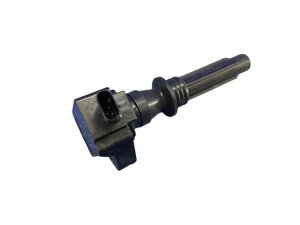
- Faulty Ignition Coil 🔴 High Probability → Shop Ignition Coil Ignition coils are a common failure point on many modern engines, including Jaguar's Ingenium and AJ126, due to high heat and electrical stress.
How to confirm: Swap the ignition coil from cylinder 3 with another cylinder (e.g., cylinder 2). Clear the codes and drive. If the code changes to P0302, the ignition coil is faulty. This is the most common and effective first diagnostic step mentioned by owners.
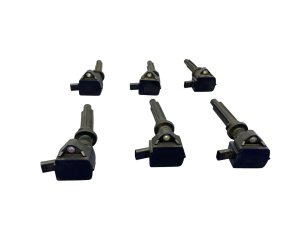
Typical fix: Replace the failed ignition coil. It is often recommended to replace all coils if they are of the same age, especially on higher mileage vehicles.
Est. part cost: $40-$100 - Worn or Fouled Spark Plug 🔴 High Probability → Shop Spark Plug
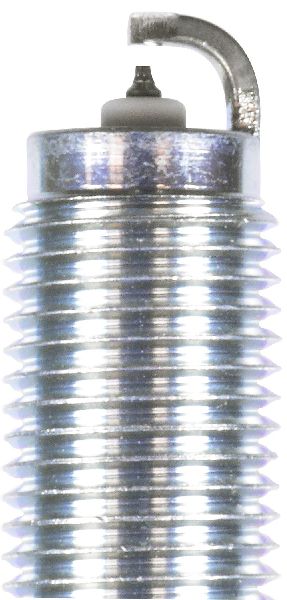
How to confirm: Remove and inspect the spark plug from cylinder 3. Look for signs of wear on the electrode, carbon buildup, oil fouling, or a cracked insulator. The spark plug gap may also be too wide from wear.
Typical fix: Replace the spark plug. It is best practice to replace all spark plugs at the same time to ensure even performance. The recommended interval can be as low as 30,000-50,000 miles on these high-performance engines.
Est. part cost: $15-$30 - Faulty Fuel Injector 🟡 Medium Probability → Shop Fuel Injector
How to confirm: Listen for a consistent clicking sound from the injector. A more definitive test involves checking its resistance with a multimeter or having a professional perform a fuel injector balance test. You can also swap injectors between cylinders, similar to a coil swap, though this is more labor-intensive.
Typical fix: Replace the faulty fuel injector. This is a more involved repair than a spark plug or coil.
Est. part cost: $100-$250 - Vacuum Leak ⚪ Low Probability Leaks can occur at the intake manifold gaskets or various vacuum hoses (like the PCV system), which can become brittle over time.
How to confirm: A smoke test is the most effective method. A mechanic forces smoke into the intake system and looks for where it escapes.
Typical fix: Replace the leaking gasket or hose.
Est. part cost: $20-$150
Rare But Worth Checking
- VVT System Fault: As mentioned in TSB #SSM74160, a P0303 code can appear with other codes like P0014-71 or P0341-00. This points to a faulty VVT solenoid, not a true ignition misfire. The bulletin states this may occur with no driveability issues. The fix is to replace the solenoid (Part No. AJ813329) with a new part manufactured on or after August 23, 2018.
- Poor Engine Ground Connection: TSB #SSM75510, issued for the related Ingenium I6 engine, notes that random misfire codes (including P0303) can be caused by a loose engine ground strap fastener. This creates high resistance in the ignition coil circuit. The fix is to inspect and torque the main engine ground points (G1D178C-1 and G1D108A-1) to 24 Nm.
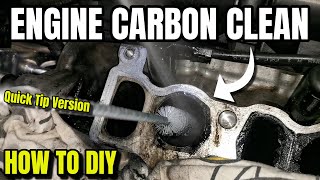
- Carbon Buildup on Intake Valves: The direct injection (GDI) on both the Ingenium gas and AJ126 V6 engines can lead to carbon deposits on the back of the intake valves over time. This can restrict airflow into the cylinder, causing misfires, especially at idle or on a cold start. This issue requires manual cleaning, such as walnut blasting.
- Low Compression: A mechanical engine issue like a worn piston ring, a leaking valve, or a failing head gasket can cause a lack of compression in cylinder 3. This is a serious issue confirmed with a compression test. TSB #SSM75972 notes that some replacement AJ126 engines have been found with incorrect valve clearances, leading to misfires.
Diagnosis Steps
- Read the trouble codes with an OBD-II scanner and note any other codes present. The presence of codes like P0014 or P0341 immediately points towards the VVT issue in TSB #SSM74160.
- Cylinder Location: On the 2.0L I4 engine, the cylinders are numbered 1-2-3-4 from front (radiator) to back (firewall). Cylinder 3 is the third one back. On the 3.0L V6, the bank on the right (passenger side in US) is 1-3-5 and the bank on the left (driver's side) is 2-4-6, from front to back. Cylinder 3 is the middle cylinder on the passenger side.
- Visually inspect the ignition coil and its electrical connector on cylinder 3 for any damage or loose connections.
- Swap the ignition coil from cylinder 3 with an adjacent cylinder (e.g., cylinder 1). Clear the codes, run the engine, and see if the misfire code moves to the new cylinder (e.g., P0301). If it does, the coil is bad. This is the most conclusive and recommended first step.
- If the code remains P0303, remove and inspect the spark plug. Replace it if it is worn, fouled, or past its service life. You can also swap the plug to another cylinder to see if the fault follows.
- If the coil and plug are good, investigate the fuel injector. Listen for its operation or test its electrical circuit. Swapping injectors is possible but more labor-intensive.
- If timing-related codes are present (like P0014 or P0341), refer to TSB #SSM74160 and investigate the VVT solenoids and camshaft position sensors.
- Check for vacuum leaks using a smoke machine, focusing on the intake manifold area and PCV hoses.
- Inspect engine ground connections, particularly if multiple random misfires are occurring, as noted in TSB #SSM75510.
- If all else fails, perform a compression test on cylinder 3 to check for mechanical engine problems like bad valves or piston rings.
Parts You'll Likely Need
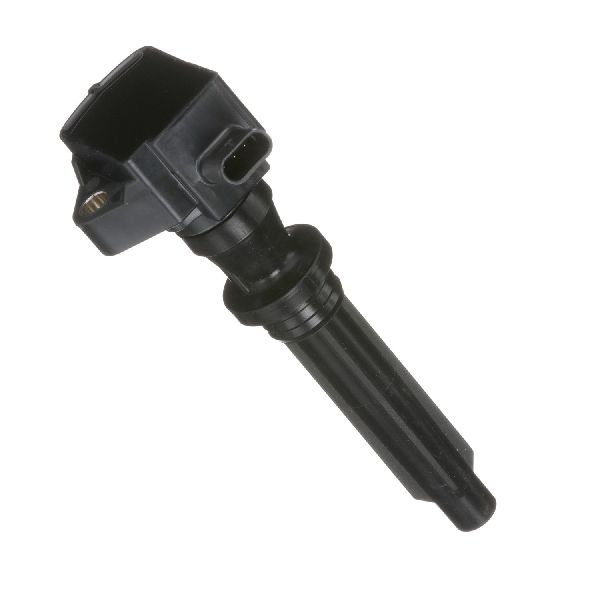
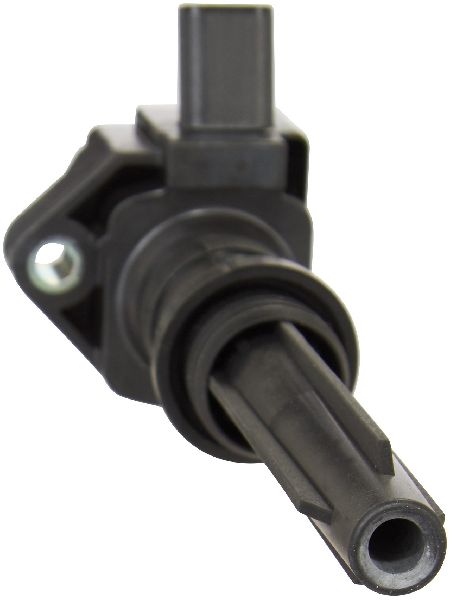
- Ignition Coil
(OEM #JDE38637)— This is the most common cause of a single-cylinder misfire and is a primary component of the ignition system.
Trusted brands: Bosch, Delphi, NGK, Genuine Jaguar
OEM price range: $90-$130
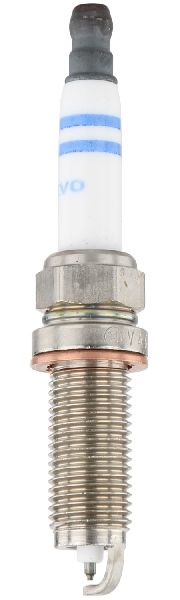
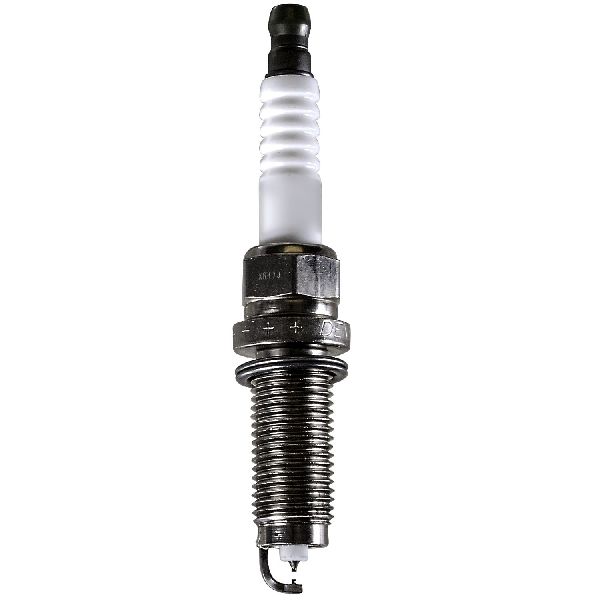
Aftermarket price range: $40-$80 - Spark Plug
(OEM #JDE38685)— Spark plugs are a routine maintenance item and can wear out, causing a weak or inconsistent spark.
Trusted brands: NGK (OEM supplier, Part 93710), Bosch, Denso
OEM price range: $20-$35
Aftermarket price range: $10-$20
Related Codes That Often Appear With This One
- P0300 — If the misfire is intermittent or starting to affect other cylinders, a P0300 (Random/Multiple Cylinder Misfire) code may also be stored.
- P0301, P0302, P0304 — Misfire codes for other cylinders suggest a common problem like a vacuum leak, fuel pressure issue, or bad batch of fuel.
- P054A-00, P0014-71, P0341-00 — As per TSB #SSM74160, these codes appearing with P0303 strongly suggest a more complex electrical or engine timing issue related to the VVT system, often without any noticeable driving symptoms.
- P1316 — This is a Jaguar-specific code indicating 'Misfire Rate Exceeds Emissions,' often stored alongside a specific cylinder misfire code like P0303.
Technical Service Bulletins (TSBs) & Recalls
- SSM74160: Notes that on some 2017 models, P0303 may be stored with other DTCs related to camshaft timing (P0014-71, P000B-00) and position sensors (P0341-00), pointing to a faulty VVT solenoid (Part AJ813329).
- SSM75510: Relates to the Ingenium engine family and identifies loose engine ground strap fasteners as a cause for random misfires (P0300, P0301-P0306) due to high resistance in the
Platform-Specific Known Issues
- TSB #SSM74160 notes that on 2017 models, P0303 can be triggered by a faulty VVT solenoid, potentially misleading the diagnosis towards a simple ignition problem. The fix is a new solenoid made after Aug 23, 2018.
- TSB #SSM75510 indicates that poor engine ground connections can cause intermittent misfires across multiple cylinders, including cylinder 3.
- The direct-injection fuel system on both gasoline engines makes them prone to carbon buildup on intake valves, which can disrupt airflow and cause misfires that won't be fixed by new coils or plugs.
Mechanic-Grade Diagnostic Values
- High-Pressure Fuel Rail Pressure (at idle) — expected: Approx. 40 bar (580 PSI) for direct injection systems.. Failure: Significantly lower or higher pressure at idle suggests a problem with the high-pressure pump, regulator, or sensor.
- Low-Pressure Fuel System Pressure (engine running) — expected: 55-60 PSI.. Failure: Pressure dropping below 50 PSI under load indicates a weak in-tank fuel pump.
- Ignition Coil Primary Winding Resistance — expected: Approximately 0.4 - 2.0 Ohms.. Failure: A reading of infinity (open circuit) or zero (short circuit) indicates a failed coil. Note that a coil can test good when cold and fail when hot.
- VVT Solenoid Coil Resistance — expected: A known good solenoid should measure around 7-8 Ohms.. Failure: A significantly higher reading (e.g., 26 Ohms) or an open circuit indicates a faulty solenoid.
Hidden / Shadow Codes Worth Checking
- P0353: Ignition Coil 'C' (Cylinder 3) Primary/Secondary Circuit Malfunction. This code is more specific than P0303. (see via Standard OBD-II scanner. If this code appears with P0303, it strongly points to an electrical fault with the coil or its wiring, rather than a fuel or mechanical issue.)
Scan Tool Commands That Help
- JLR SDD / Pathfinder: Clear DTCs and Reset Adaptations — After replacing a component like a fuel injector or VVT solenoid, the system's learned values (adaptations) should be cleared to ensure the PCM correctly utilizes the new part. A 'Vehicle Reset' function may be required.
- JLR SDD / Pathfinder: Fuel System Diagnostic Application — To perform a guided, non-intrusive test of the entire fuel system, from the low-pressure pump to the high-pressure components. This is useful for diagnosing intermittent fuel pressure issues that could cause a misfire.
Wiring & Ground Locations
- G1D178C-1 and G1D108A-1 — These are the main engine ground strap connection points mentioned in TSB #SSM75510. While exact diagrams are proprietary, one key engine-to-chassis ground strap is typically located on the lower right side of the engine/transmission area.. A loose or corroded connection at these points increases electrical resistance for the entire engine, which can weaken spark from the ignition coils and cause misfires that seem random or isolated.
- Cylinder 3 Ignition Coil Connector — Directly on top of the ignition coil for cylinder 3.. The connector itself or its wiring can become damaged from heat and vibration, causing an electrical fault. If a P0353 code is present, this connector and its wiring harness are primary suspects.
Real Owner Repair Stories
- JaguarForums.com user report (2010 Jaguar XKR (5.0L Supercharged, similar AJ-family V8 engine)) — Persistent P0303 misfire code.
❌ Tried (didn't work) Swapping ignition coils, Replacing spark plugs, Swapping fuel injectors
✅ What actually fixed it The final cause was a leaking intake manifold gasket near the runner for cylinder 3, confirmed with a smoke test. Replacing the gaskets resolved the misfire.
"I Checked Everything" — The Actual Cause
- In cases related to Jaguar TSB #SSM74160, a standard smoke test for vacuum leaks would come back clean. The actual cause for P0303 could be a faulty VVT solenoid, which is an electro-mechanical part that would not be identified by a smoke test.
OEM Part Supersession History
AJ813329→T4N32636— This is the VVT solenoid referenced in TSB #SSM74160. The original part was prone to failure. Service Action H299 also mandated replacement of the original solenoids on 2018-2020 models.JDE38637→JDE38637G— Standard part revision for the ignition coil.
Model Year Variations Within This Range
- 2017: The 2017 model year was a transition year for the 2.0L petrol engine. Early 2017 models may have the Ford-derived EcoBoost engine (1,999cc), while later 2017 models have the JLR Ingenium engine (1,997cc). This can affect part numbers and diagnostic procedures. The V6 remained the same.
- 2018-2019: These models use the JLR Ingenium 2.0L petrol engine. For 2018-2020 models, Service Action H299 was issued to replace potentially faulty VCT solenoids (part AJ813329) which could cause misfire-related DTCs.
Helpful Videos





Used OEM Parts in Stock
New Aftermarket Parts Available


The information in this article is provided for general reference and educational purposes only. Vehicle specifications, procedures, and part compatibility can vary by production date, trim level, and region. Always consult your vehicle's factory service manual and verify part numbers before purchasing or performing repairs. Safety-critical components such as airbags, seat belts, and braking systems should be installed by a qualified professional.
- Jaguar XE:
- 🧭 Diagnostic Flowchart
- 🎬 Helpful Videos
- 🛍️ Shop This Part
- What's Unique About the 2017-2019 Jaguar XE
- Symptoms You May Notice
- Most Likely Causes
- Rare But Worth Checking
- Diagnosis Steps
- Parts You'll Likely Need
- Related Codes That Often Appear With This One
- Technical Service Bulletins (TSBs) & Recalls
- Platform-Specific Known Issues
- Mechanic-Grade Diagnostic Values
- Hidden / Shadow Codes Worth Checking
- Scan Tool Commands That Help
- Wiring & Ground Locations
- Real Owner Repair Stories
- "I Checked Everything" — The Actual Cause
- OEM Part Supersession History
- Model Year Variations Within This Range
- 🎟️ Get 5% Off