

P0303 on 2009-2016 Jaguar XF: Cylinder 3 Misfire Causes and Fixes
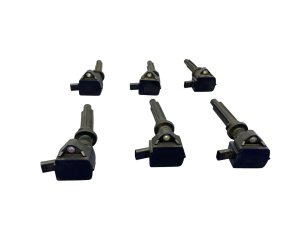
P0303 on a Jaguar XF most often indicates a faulty ignition coil or a worn-out spark plug on cylinder 3. A simple diagnostic is to swap the coil with another cylinder to see if the code follows. For the 5.0L V8 and 3.0L V6, the OEM ignition coil is part number C2Z18619. A new ignition coil costs between $50 and $150, while a single spark plug is about $15-$35.
- P0303 signifies a misfire in cylinder 3, with the most probable cause being a bad ignition coil or spark plug.
- A flashing check engine light is a serious warning that indicates a risk of catalytic converter damage; avoid driving the vehicle.
- The 'coil swap' is the quickest and most effective diagnostic step to confirm a faulty ignition coil without spending money on parts.
- While ignition parts are the common fix, be aware of Jaguar-specific TSBs that point to fuel pump or engine software issues, which may require a dealer visit.
What's Unique About the 2009-2016 Jaguar XF
The 2009-2016 Jaguar XF spans two generations and multiple engine types (Ford-derived 4.2L V8, JLR's own 5.0L V8 and 3.0L V6, and a Ford 2.0L I4), but misfire causes are generally consistent. However, Jaguar has issued several Technical Service Bulletins (TSBs) for this platform that point to less common causes beyond typical ignition parts. These include issues with high-pressure fuel pumps (JTB00410NAS1), clogged fuel injectors from poor fuel quality (SSM-63697), and the need for engine computer software updates (JTB00445NAS1), suggesting that diagnosis should not stop at just the coil and plug if the problem persists. The direct-injection 5.0L and 3.0L engines can also be prone to stuck or leaking fuel injectors, which can cause more severe symptoms like a strong fuel smell or oil contamination.
Diagnostic Flowchart
Tap your situation to follow the diagnostic path that matches what you're seeing on this vehicle.
Generation note: This year range covers the end of the first generation (X250, 2009-2015) and the first year of the second generation (X260, 2016). While the fundamental causes of a misfire are the same, specific part numbers for components like ignition coils and spark plugs differ between the 4.2L V8, the 5.0L V8/3.0L V6, and the 2.0L I4 engines. The provided TSBs primarily relate to the X250 generation, particularly models with the 5.0L V8 and 3.0L V6 engines.
Symptoms You May Notice
- Flashing or solid Check Engine Light. 🎬 Watch: A quick breakdown of what P0303 means for your engine.
- Rough or vibrating engine idle. [SSM-63697, 35]
- Engine hesitation or stumbling during acceleration.
- Noticeable loss of power.
- Rough running or hard starting. [JTB00410NAS1]
- Smell of unburnt fuel from the exhaust.
- Engine jerking during acceleration.
- Replacing oxygen (O2) sensors before diagnosing the root cause of the misfire. A misfire can cause an O2 sensor to read incorrectly, but it is rarely the cause of a single-cylinder misfire.
- Assuming a catalytic converter is bad. A failing catalytic converter is almost always the result of a long-term, unaddressed misfire, not the cause of it. A glowing red exhaust manifold, as noted in one forum post, can be a symptom of this.
Most Likely Causes
- Faulty Ignition Coil 🔴 High Probability → Shop Ignition Coil Coil-on-plug systems are exposed to significant heat and vibration, leading to eventual failure. This is a very common wear item on most modern engines, including all Jaguar XF petrol variants.
How to confirm: Swap the ignition coil from cylinder 3 with another cylinder (e.g., cylinder 1). Clear the codes and run the engine. If the code changes to P0301, the coil is faulty. Also inspect the coil's boot for oil contamination, which indicates a leaking valve cover gasket that can cause premature coil failure.
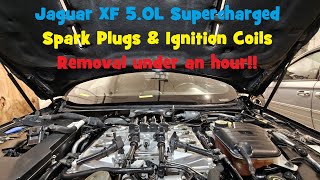
Typical fix: Replace the failed ignition coil. It is often recommended to replace all coils and spark plugs at the same time, especially on higher mileage vehicles or if access is difficult. 🎬 See this walkthrough for removing 5.0L spark plugs and coils.
Est. part cost: $50 - $150 - Worn or Fouled Spark Plug 🔴 High Probability → Shop Spark Plug
How to confirm: Remove the spark plug from cylinder 3 and inspect it for wear, carbon fouling, oil contamination, or a cracked insulator. A worn electrode or incorrect gap can prevent a strong spark. If the coil swap test did not isolate the issue, you can swap the spark plug to another cylinder to see if the code follows.
Typical fix: Replace the spark plug. Spark plugs are a routine maintenance item and should be replaced at manufacturer-specified intervals. Using high-quality OEM-spec plugs like NGK Iridium is recommended.
Est. part cost: $15 - $35 - Faulty Fuel Injector 🟡 Medium Probability → Shop Fuel Injector The direct-injection systems on the 5.0L V8 and 3.0L V6 engines can be sensitive to fuel quality. TSB SSM-63697 notes that poor or contaminated fuel can restrict injector flow. Injectors can also become stuck open or leak, a known issue on the AJ133 and AJ126 engines.
How to confirm: After ruling out the ignition system, listen for a consistent clicking sound from the injector using a mechanic's stethoscope. A leaking injector may cause a strong fuel smell in the oil. A professional can perform a fuel injector balance test. In a JaguarForums thread, a user with a 2013 XF 3.0L had P0303 and P0305 codes, and the dealer diagnosed bad fuel injectors that had saturated the oil with gasoline.
Typical fix: Replace the clogged or failed fuel injector. Sometimes, professional fuel system cleaning can resolve a minor clog. If an injector is leaking, it must be replaced promptly to avoid engine damage.
Est. part cost: $100 - $250
Rare But Worth Checking
- High-Pressure Fuel Pump Fault: → Shop Fuel Pump TSB JTB00410NAS1 specifically mentions that for 2013 models, misfires can be caused by an internal fault with the metering valve in the high-pressure fuel pump, leading to codes like P0303 and P1315.
- Engine Control Module (ECM) Software: → Shop Engine Control Module (ECM) TSB JTB00445NAS1 indicates that some 2013 models may require an ECM reprogram to protect against damaging combustion events that lead to misfires.
- Poor Fuel Quality: According to TSB SSM-63697, poor quality or contaminated fuel can cause misfires on 2013 models with the 5.0L AJ133 engine by restricting fuel injector flow.
- Low Engine Compression: Internal engine issues like a burnt valve, worn piston rings, or a bad head gasket can cause a misfire. On early 5.0L V8s (pre-2015), worn timing chain guides are a known issue that could lead to skipped timing and compression loss. This is the least common and most expensive cause, confirmed with a compression or leak-down test.
- Intake Valve Carbon Buildup: Like many direct-injection engines, the 3.0L V6 (AJ126) and 5.0L V8 (AJ133) can be prone to carbon buildup on the intake valves over time, which can disrupt airflow into the cylinder and cause misfires. This is more likely on higher-mileage vehicles.
Diagnosis Steps
- Read the fault codes using an OBD-II scanner and note any other codes present, such as P1315 or P0300. 🎬 Watch: How to diagnose and test lean misfires on a Jaguar V8.
- Identify the location of cylinder 3. For V-engines, Bank 1 is the passenger side (US models). For the 3.0L V6 (AJ126) and 5.0L V8 (AJ133), cylinder 3 is the middle cylinder on Bank 1. For the 4.2L V8, it is also the middle cylinder on the passenger side.
- Perform the 'Coil Swap Test': Swap the ignition coil from cylinder 3 with a coil from an easily accessible cylinder (like cylinder 1). Clear the codes, start the engine, and see if the misfire code moves to the new cylinder (e.g., P0301). If it does, the coil is bad.
- If the code remains P0303, inspect the spark plug from cylinder 3. Check for oil in the spark plug well, which indicates a leaking valve cover gasket that can ruin coils. If clean, swap the spark plug with another cylinder to see if the code follows.
- If the ignition system is confirmed to be good, inspect the wiring and connector for the cylinder 3 ignition coil and fuel injector for any damage, corrosion, or loose connections. A bad connector can cause intermittent misfires.
- Listen to the cylinder 3 fuel injector with a stethoscope; it should have a regular, audible clicking sound. Compare it to an adjacent injector. An silent or inconsistent injector is likely faulty.
- If the cause is still not found, the issue may be a clogged fuel injector, a vacuum leak near cylinder 3's intake runner, or an internal engine problem like low compression.
- For persistent issues, consult the TSBs. A dealer visit may be required for a fuel pump diagnosis (per JTB00410NAS1) or an ECM reprogram (per JTB00445NAS1).
Parts You'll Likely Need
- Ignition Coil
(OEM #C2Z18619 (for 3.0L V6/5.0L V8), 8W93-12A366-DA (for 5.0L V8))— This is the most common failure part for a P0303 code. Heat and vibration cause the internal windings to fail over time.
Trusted brands: Bosch, Delphi, NGK, Karlyn
OEM price range: $90 - $115
Aftermarket price range: $30 - $90 - Spark Plug
(OEM #AJ812988 / NGK 93476 (for 3.0L V6/5.0L V8), C2S46895 (for early 3.0L V6 N/A))— A worn or fouled spark plug cannot create a strong enough spark for proper combustion. It is a standard maintenance item.
Related Codes That Often Appear With This One
- P0300 — If the misfire is intermittent or beginning to affect other cylinders, a P0300 (Random/Multiple Cylinder Misfire) may be stored as well.
- P0301, P0302, P0304, etc. — Often appears with other specific cylinder misfire codes if multiple ignition components are failing around the same time or if the root cause (like a fuel pump issue) affects multiple cylinders. [JTB00533NAS1, 40]
- P1315 — This is a Jaguar-specific code for 'Persistent Misfire,' indicating a misfire severe enough to potentially damage the catalytic converter. It is mentioned alongside P0303 in TSBs JTB00445NAS1 and JTB00410NAS1.
- P0316 — Indicates 'Misfire Detected on Startup (First 1000 Revolutions).' TSB JTB00533NAS1 links this code with other P030x misfires on 2013-2014 models.
- P0353 — This code indicates a fault in the 'Ignition Coil C Primary/Secondary Circuit,' pointing directly to an electrical issue with the ignition coil or its wiring for cylinder 3. A user on JaguarForums reported this code alongside P0303.
Technical Service Bulletins (TSBs) & Recalls
- SSM74160Attachme: Mentions P0303 in a list of DTCs stored in the PCM on 2016 models.
- JTB00533NAS1: Links P0303 with cold-start misfires (P0316) on 2013-2014 models due to fuel injection calibration.
- JTB00445NAS1: Notes that an ECM reprogram may be needed to resolve misfire codes (including P0303 and P1315) on certain 2013 models.
- JTB00410NAS1: Identifies a faulty high-pressure fuel pump as a potential cause for misfires on 2013 models.
- SSM-63697: States that poor fuel quality can cause injector-related misfires on 5.0L AJ133 engines.
- SSM75972: Highlights potential valve clearance issues causing misfires on new/reman 3.0L AJ126 engines.
Platform-Specific Known Issues
- TSB JTB00410NAS1: On some 2013 models, a rough idle and misfire codes, including P0303, may be caused by an internal fault with the metering valve in the high-pressure fuel pump.
- TSB JTB00445NAS1: For certain 2013 models, a misfire code may require the Engine Control Module (ECM) to be reprogrammed to protect the engine.
- TSB JTB00533NAS1: 2013-2014 models may experience a misfire on cold start (P0316) along with specific cylinder misfire codes due to a fuel injection calibration issue.
- TSB SSM-63697: Misfire codes on 2013 models with the 5.0L engine can be caused by poor fuel quality or fuel contamination restricting fuel injectors.
- TSB SSM75972: On replacement or remanufactured 3.0L AJ126 engines, misfires on cold start (especially on bank 2) may be caused by exhaust valve clearances being below specification.
Mechanic-Grade Diagnostic Values
- High-Pressure Fuel System (GDI Engines) — expected: Up to 2,900 PSI. Failure: A P0087 code (Fuel Rail/System Pressure - Too Low) along with misfire codes often indicates a failing High-Pressure Fuel Pump (HPFP).
- Low-Pressure Fuel System (In-Tank Pump) — expected: 40 - 75 PSI. Failure: Pressure below this range will starve the high-pressure pumps, causing hesitation and misfires under load.
- GDI Fuel Injector Resistance — expected: ~2.5 - 3.0 Ohms (general GDI spec). Failure: A reading of infinity (open circuit) or near zero (short circuit) indicates a failed injector winding.
Scan Tool Commands That Help
- Jaguar SDD (Symptom Driven Diagnostics): Power Balance Test / Cylinder Cut-out Test — To isolate a weak cylinder after confirming a misfire code. The tool disables one cylinder at a time, and the technician observes the drop in engine RPM. A cylinder that causes little or no RPM drop when disabled is not contributing its share of power.
- Jaguar SDD (Symptom Driven Diagnostics): Live Misfire Data — To monitor misfire counts on each cylinder in real-time while driving or idling. This helps confirm if the misfire is constant or only occurs under specific conditions (e.g., load, temperature).
- Jaguar SDD (Symptom Driven Diagnostics): Fuel Injector Calibration/Programming — This is required after replacing a fuel injector on the 5.0L V8 engine to ensure the Engine Control Module (ECM) can precisely control the new component for optimal performance and emissions.
Wiring & Ground Locations
- G1D120 / G1D123 — Right rear of the engine compartment.. These are primary engine ground points. A loose or corroded connection here can cause erratic behavior in sensors, ignition coils, and injectors, leading to intermittent and hard-to-diagnose misfires.
- G1D124 — Behind the right front fender splash shield.. This ground point is exposed to road spray and moisture, making it susceptible to corrosion. It serves various electronic modules, and a poor connection can cause widespread electrical issues, including misfires.
- General Harness — The wiring harness sections that run over the top of the engine to the coils and injectors.. This area is subject to extreme heat cycles, which can make wiring insulation brittle and prone to cracking. A short to ground in the coil or injector wiring for cylinder 3 can cause a persistent P0303 and may be accompanied by a circuit code like P0353.
Real Owner Repair Stories
- JaguarForums user 'ghofert' (2013 XF AWD 3.0L V6) — Rough running at startup, Check Engine Light with codes P0303, P0305, and multiple lean condition codes. Oil was saturated with gasoline.
❌ Tried (didn't work) Dealer replaced the PCV valve, which did not solve the problem., Dealer then replaced two fuel injectors (cylinders 2 and 5) at a cost of over $2,000, but the rough running and fuel-in-oil issue persisted the next day.
✅ What actually fixed it The final fix was not posted, but the story serves as a strong cautionary tale against replacing multiple expensive injectors without confirming they are the root cause. The dealer's suggestion to replace the remaining four injectors was met with skepticism, highlighting a 'parts cannon' approach that failed to properly diagnose the underlying issue.
"I Checked Everything" — The Actual Cause
- A common source of unmetered air on the 3.0L V6 and 5.0L V8 engines is a cracked plastic intake duct, particularly near the throttle body. These components can become brittle with age and develop hairline cracks that are difficult to spot visually and may not show up with a simple propane or spray test. A forum user with high fuel trims (indicating a vacuum leak) only found the issue when the deteriorated duct fell apart upon removal. A smoke test is more likely to reveal such a leak.
When the Usual Fixes Don't Work
- In one case on JaguarForums, a 2013 XF 3.0L with P0303 and P0305 was diagnosed by a dealer as having bad fuel injectors which had saturated the engine oil with gasoline. However, replacing the two injectors did not fix the problem, and the dealer then recommended replacing the other four. This suggests that for multiple misfires accompanied by fuel-in-oil, the root cause may not be the injectors themselves but potentially a systemic issue like a high-pressure fuel pump fault or an ECM problem, as indicated in TSBs JTB00410NAS1 and JTB00445NAS1.
OEM Part Supersession History
Various (pre-2015)→Revised design with steel insert— The original aluminum timing chain guide rails on 5.0L V8 and 3.0L V6 engines were prone to premature wear from the steel tensioner piston.
Heads up: When performing timing chain service on a pre-2015 engine, it is critical to use the updated guide rail design to prevent a repeat failure.C2Z18619→N/A— This ignition coil part number is a stable design used across a wide range of Jaguar and Land Rover models with the 3.0L V6 and 5.0L V8 engines, including the XF from 2009-2015 and 2016 onwards.
Heads up: Also cross-references to Land Rover part number LR035548.
Model Year Variations Within This Range
- 2009-2014: Models with the 5.0L V8 and 3.0L V6 engines built in this period used a flawed timing chain guide design with an aluminum contact point that wears prematurely. This was a major design flaw that can cause chain rattle, jumped timing, and misfires. Models from 2015-onward received updated guides with a steel insert.
- 2013+: Starting in 2013, the engine lineup expanded to include the 3.0L Supercharged V6 (AJ126) and the 2.0L Turbocharged I4. While misfire causes are similar, part numbers for injectors, coils, and other components are specific to each engine and differ from the earlier 4.2L and 5.0L V8s.
Helpful Videos

We Have This Part in Stock

The information in this article is provided for general reference and educational purposes only. Vehicle specifications, procedures, and part compatibility can vary by production date, trim level, and region. Always consult your vehicle's factory service manual and verify part numbers before purchasing or performing repairs. Safety-critical components such as airbags, seat belts, and braking systems should be installed by a qualified professional.
- Jaguar XF:
- 🧭 Diagnostic Flowchart
- 🎬 Helpful Videos
- 🛍️ Shop This Part
- What's Unique About the 2009-2016 Jaguar XF
- Symptoms You May Notice
- Most Likely Causes
- Rare But Worth Checking
- Diagnosis Steps
- Parts You'll Likely Need
- Related Codes That Often Appear With This One
- Technical Service Bulletins (TSBs) & Recalls
- Platform-Specific Known Issues
- Mechanic-Grade Diagnostic Values
- Scan Tool Commands That Help
- Wiring & Ground Locations
- Real Owner Repair Stories
- "I Checked Everything" — The Actual Cause
- When the Usual Fixes Don't Work
- OEM Part Supersession History
- Model Year Variations Within This Range
- 🎟️ Get 5% Off