

P0303 on 2010-2014 Jaguar XK: Cylinder 3 Misfire Causes and Fixes
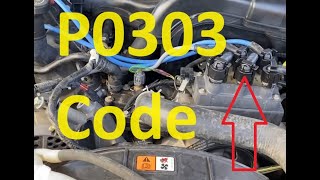
P0303 on a 2010-2014 Jaguar XK indicates a misfire in cylinder 3. The most common cause is a faulty ignition coil, followed by a worn spark plug. A DIY-friendly diagnostic is to swap the cylinder 3 coil with another to see if the code moves. A new OEM-quality coil (part #AJ811378) costs between $60 and $100.
- P0303 means cylinder 3 is misfiring. On a 2010-2014 XK, this is the middle cylinder on the passenger side (US).
- The most likely cause is a bad ignition coil. The quickest diagnostic test is to swap the coil with another cylinder's and see if the code follows.
- If the Check Engine Light is flashing, pull over safely and avoid driving to prevent expensive damage to the catalytic converter.
- If new coils and plugs don't fix the issue, investigate the fuel injector or check for TSBs related to software updates before assuming a major mechanical problem.
What's Unique About the 2010-2014 Jaguar XK
The 2010-2014 XK features the 5.0L direct-injection V8 (AJ133 engine). While these engines are powerful, a single-cylinder misfire like P0303 is most often a straightforward ignition component failure. However, this engine platform is sensitive to fuel quality, and Jaguar has issued service bulletins for this engine family that link misfire codes to both poor fuel quality (TSB SSM-63697) and software calibration issues (TSB JTB00533NAS1), which are important considerations if a simple coil and plug swap doesn't solve the problem.
Diagnostic Flowchart
Tap your situation to follow the diagnostic path that matches what you're seeing on this vehicle.
Symptoms You May Notice
- Rough or vibrating idle
- Engine hesitation or stumbling during acceleration
- Reduced engine power and performance
- Flashing or steady Check Engine Light
- "Restricted Performance" message on the dashboard
- Strong smell of fuel from the exhaust
- Replacing oxygen sensors. While an O2 sensor can be affected by a misfire, it is almost never the root cause of a single-cylinder misfire code.
- Replacing the catalytic converter. A flashing check engine light indicates the misfire is severe enough to damage the converter, but the converter itself is the victim, not the cause.
Most Likely Causes
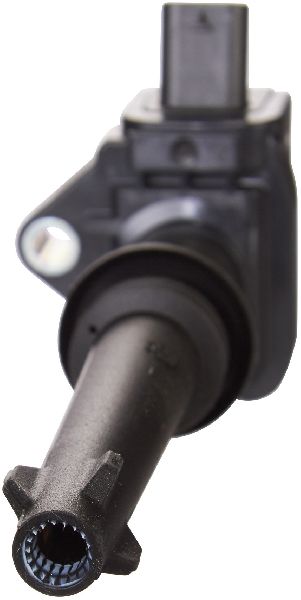
- Faulty Ignition Coil 🔴 High Probability → Shop Ignition Coil Ignition coils are a very common failure item on the AJ133 engine due to constant exposure to high heat and vibration. They are considered a wear item by many owners.
How to confirm: Swap the ignition coil from cylinder 3 with another cylinder (e.g., cylinder 1). Clear the codes and run the engine. If the code changes to P0301, the coil is faulty. This is the definitive DIY diagnostic step.
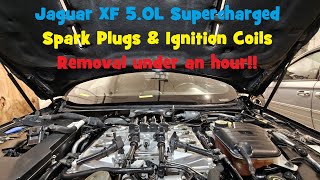
Typical fix: Replace the faulty ignition coil. It is often recommended to replace the corresponding spark plug at the same time. Many owners choose to replace all 8 coils if they are original 🎬 See this walkthrough for removing Jaguar 5.0L coils and plugs and have high mileage.
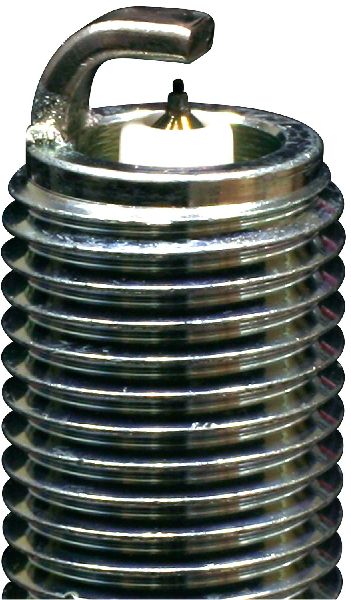
Est. part cost: $40 - $100 - Worn or Fouled Spark Plug 🟡 Medium Probability → Shop Spark Plug Spark plugs are a regular maintenance item. While the service interval is long (around 100,000 miles), a worn electrode, carbon fouling, or oil contamination from a leaking valve cover gasket can prevent a strong spark.
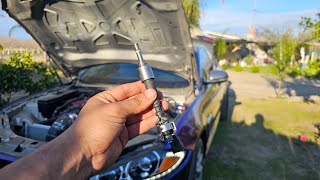
How to confirm: After confirming the coil is good, remove the spark plug from cylinder 3. Inspect it for wear on the electrode, heavy carbon deposits, oil fouling, or damage to the ceramic insulator. Compare it to a new plug.
Typical fix: Replace the spark plug. It's best practice to replace all spark plugs as a set if they are near the end of their service life. Ensure the new plugs are gapped correctly.
Est. part cost: $15 - $30 - Faulty Fuel Injector 🟡 Medium Probability → Shop Fuel Injector The 5.0L engine uses direct injection, and injectors can become clogged or fail electronically. TSB SSM-63697 specifically notes that poor fuel quality can cause injector flow restriction leading to misfires. They are a known failure point on the AJ133 engine family.
How to confirm: This is more complex. A professional can perform a fuel injector balance test. A DIY method is to listen to the injector with a mechanic's stethoscope to check for a consistent clicking sound. Swapping injectors is possible but much more involved than swapping coils as it requires removing the fuel rail.
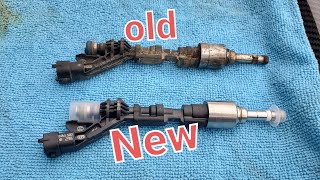
Typical fix: Replace the faulty fuel injector. This is more labor-intensive due to its location under the fuel rail. Special tools are required for removal. 🎬 Watch: How to replace a fuel injector on this engine
Est. part cost: $70 - $200 - Poor Fuel Quality ⚪ Low Probability Jaguar issued TSB SSM-63697 stating that poor fuel quality or contamination can lead to misfire codes on this platform by restricting fuel injectors. This is a diagnosis of exclusion after ignition and other fuel system components are checked.
How to confirm: This is diagnosed by ruling out other causes and considering if the issue started after a recent refuel from a questionable source. Using a quality fuel system cleaner may provide a temporary improvement.
Typical fix: Use a high-quality fuel system cleaner (e.g., Techron, BG 44K) and switch to Top Tier certified gasoline. In severe cases, the fuel tank may need to be drained and the fuel filter replaced.
Est. part cost: $10 - $50 (for additives)
Rare But Worth Checking
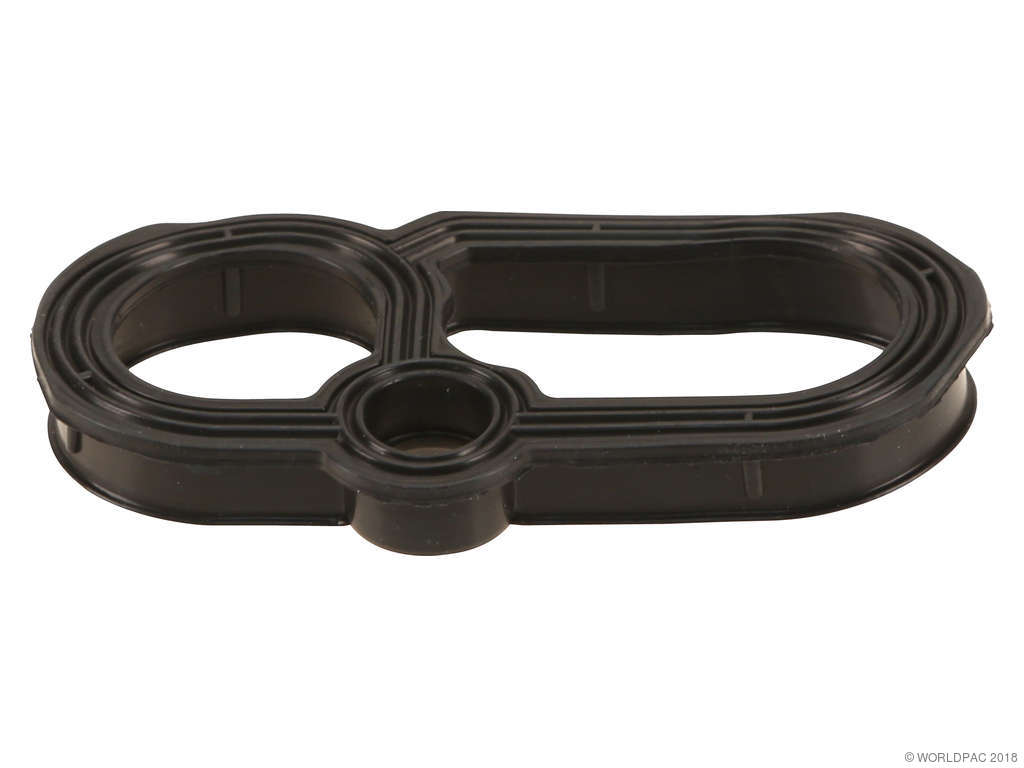
- Intake Manifold Gasket Leak: → Shop Engine Intake Manifold A vacuum leak near the intake runner for cylinder 3 can lean out the air/fuel mixture, causing a misfire. A smoke test is the best way to confirm a leak. These gaskets can become brittle over time.
- Low Engine Compression: A mechanical issue like a burnt valve, worn piston rings, or, more specific to the AJ133, a jumped timing chain due to worn guides, can cause a loss of compression, leading to a persistent misfire. A compression test is needed to diagnose this. A cold-start rattle is a key symptom of timing chain issues.
- ECM Software Calibration Issue: TSB JTB00533NAS1 notes that some vehicles can set misfire codes (P0300-P0308) along with P0316 on a cold start due to a fuel injection calibration issue. This requires a dealer to update the ECM software and is not a mechanical fault.
- Carbon Buildup on Intake Valves: As a direct-injection engine, the 5.0L V8 is susceptible to carbon buildup on the intake valves, which can impede airflow into the cylinder and cause misfires, especially at idle or on a cold start. This typically requires professional cleaning (e.g., walnut blasting) as fuel additives do not touch the valves.
- Leaking Valve Cover Gasket: → Shop Engine Valve Cover A leaking valve cover or spark plug tube seal can allow oil to pool in the spark plug well, shorting out the ignition coil and causing a misfire. A user on JaguarForums.com solved P0303 and P0307 codes by replacing these seals after finding oil on the plugs.
Diagnosis Steps
- Read the code with an OBD-II scanner and note any other codes present. Check freeze frame data to see the conditions (engine temp, RPM) when the misfire occurred.
- Identify cylinder #3. On the Jaguar 5.0L V8, the cylinders are numbered 1-3-5-7 on the right (passenger side in US) bank and 2-4-6-8 on the left (driver side) bank, from front to back. Cylinder 3 is the middle cylinder on the right bank.
- Swap the ignition coil from cylinder 3 with the coil from cylinder 1 (the front-most cylinder on the same bank).
- Clear the codes, start the engine, and let it run or drive it until the Check Engine Light returns.
- Re-scan for codes. If the code is now P0301, the ignition coil is bad and must be replaced.
- If the code remains P0303, the coil is likely good. Inspect the spark plug well for oil contamination from a leaking valve cover gasket.
- If no oil is present, move the spark plug from cylinder 3 to cylinder 1 and repeat the test. If the code moves to P0301, the spark plug is faulty.
- If the code still remains P0303, the issue is likely related to the fuel injector, wiring, or a mechanical problem.
- Visually inspect the wiring harness and connector for the cylinder 3 coil and injector for any damage, looseness, or corrosion.
- If the misfire only occurs on cold starts with code P0316, investigate TSB JTB00533NAS1 regarding a software update.
- If other causes are ruled out, consider a professional diagnosis, which may include a fuel injector balance test, a smoke test for vacuum leaks, or a compression test.
Parts You'll Likely Need
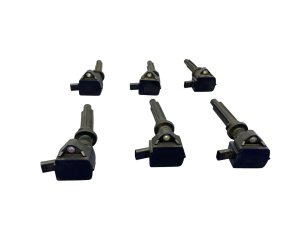
- Ignition Coil
(OEM #AJ811378)— This is the most frequent cause of a single-cylinder misfire on the Jaguar 5.0L V8. The OEM part is made by Bosch.
Trusted brands: Bosch (OEM), Denso, Standard Motor Products, BREMI
OEM price range: $60 - $100
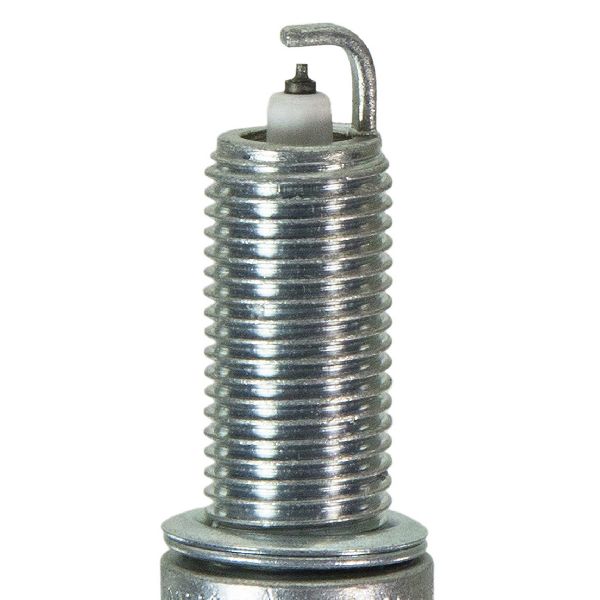
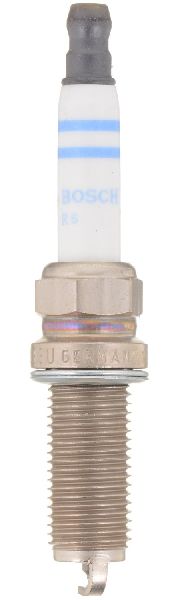
Aftermarket price range: $40 - $75 - Spark Plug
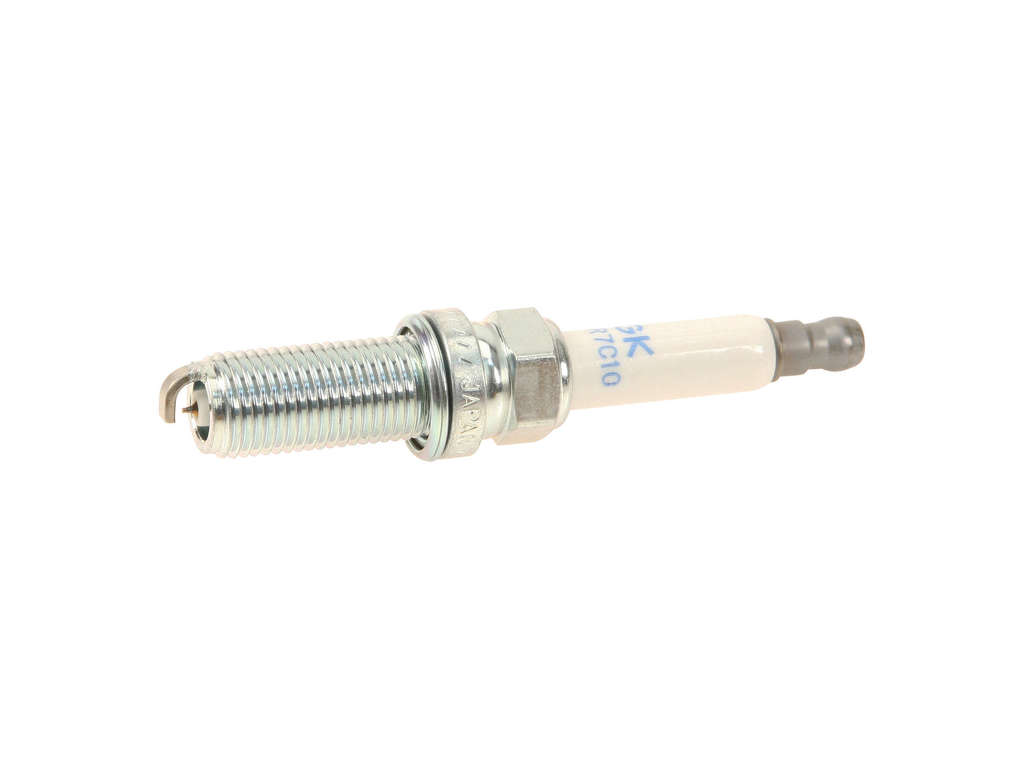
(OEM #C2P23089)— As a routine maintenance item, a worn or fouled spark plug is the second most likely cause of a misfire. The OEM plugs are typically NGK Iridium.
Related Codes That Often Appear With This One
- P0300 — If the condition causing the P0303 is intermittent or starting to affect other cylinders, a P0300 (Random Misfire) code may also be stored.
- P1315 — This is a Jaguar-specific code indicating a persistent misfire that is severe enough to cause catalyst damage. It often accompanies a flashing Check Engine Light.
- P0316 — This code indicates a misfire was detected within the first 1000 engine revolutions after startup. It often points towards issues that are more pronounced on a cold engine, such as the software calibration problem noted in TSB JTB00533NAS1 or leaky fuel injectors.
- P0353 — This code indicates a fault in the ignition coil 'C' (Cylinder 3) primary or secondary circuit. Seeing P0353 with P0303 strongly points to a bad coil, a damaged connector, or a wiring issue to the coil, rather than a fuel or mechanical problem.
Technical Service Bulletins (TSBs) & Recalls
- SSM-63697: Addresses misfires and other running issues caused by poor fuel quality or contaminants restricting fuel injector flow on 5.0L AJ133 engines.
- JTB00533NAS1: Details a condition where a cold engine may misfire and set codes P0316 and P030x due to a fuel injection software calibration issue, requiring a PCM update.
Platform-Specific Known Issues
- TSB SSM-63697: Jaguar has officially noted that poor fuel quality or fuel contamination can restrict fuel injector flow, leading to misfires (including P0303) and rough running.
- TSB JTB00533NAS1: A software calibration issue in the PCM can cause misfires on cold starts (coolant temp below 75°C/167°F), often logging P0316 alongside P030x codes. The fix is a dealer-performed software update.
- Timing Chain Tensioner/Guide Wear: While more likely to cause multiple/random misfires, early-model (2010-2012) AJ133 engines are known for premature wear of plastic timing chain components. A persistent misfire accompanied by a cold-start rattle could be an early sign of this more serious issue.
Mechanic-Grade Diagnostic Values
- High-Pressure Fuel Rail Pressure (at idle) — expected: 3.0-8.0 MPa (435-1160 PSI). Failure: Pressure does not increase with engine speed or remains at low-pressure system levels (around 100-130 PSI).
- Low-Pressure Fuel System Pressure (engine running) — expected: 40-80 PSI. Failure: Pressure significantly below 40 PSI, indicating a weak in-tank fuel pump.
- Ignition Coil Primary Winding Resistance — expected: 0.4 - 2.0 Ohms (A more precise spec for similar Denso coils is 0.49-0.57 Ohms).. Failure: An open circuit (infinity) or short circuit (zero ohms). Note: Coils can test good cold and fail when hot.
- Fuel Injector Resistance — expected: 10 - 16 Ohms. Failure: A reading significantly outside this range or that differs from the other injectors by more than 0.5 ohms.
- Short/Long Term Fuel Trims (at idle) — expected: Within +/- 10%. Failure: Consistently positive readings (e.g., +15% or higher) on one bank can indicate a vacuum leak affecting that side.
Hidden / Shadow Codes Worth Checking
- Mode $06, Component ID $A4: This is not a DTC but a monitor within the OBD-II system. Component ID $A4 corresponds to the misfire counter for Cylinder 3. Reviewing this data can show misfires occurring at a rate below the threshold required to set a P0303 code, which is useful for diagnosing intermittent issues. (see via An advanced OBD-II scanner capable of displaying Mode $06 test results.)
Scan Tool Commands That Help
- Jaguar SDD (Symptom Driven Diagnostics): Power Balance / Misfire Identification — To view a real-time graph of each cylinder's contribution to engine speed. This can visually confirm that cylinder 3 is underperforming compared to the others, helping to isolate the fault, especially if it's intermittent.
- Jaguar SDD (Symptom Driven Diagnostics): Fuel System Diagnostic Application — To run a guided, non-intrusive test of the entire fuel system, checking both low and high pressure sides against expected values. This is critical if a fuel delivery issue is suspected after ignition components have been ruled out.
- Jaguar SDD (Symptom Driven Diagnostics): Clear Adaptations — After replacing a component like a fuel injector or fixing a significant vacuum leak, clearing the engine's learned fuel trim adaptations forces the ECM to relearn, ensuring it operates correctly with the new part or repaired condition.
Wiring & Ground Locations
- Engine Ground Straps — A primary engine-to-body ground strap is located on the left-hand side, between the inner wing and the engine/gearbox mount. Another is often found at the rear RH side of the engine near the torque arm mount.. A corroded or loose engine ground can cause a host of erratic electrical issues, including weak spark or incorrect sensor readings that could lead to misfire codes. Ensuring a clean, tight connection is a crucial step in diagnosing persistent electronic faults.
- ECM Location — The Engine Control Module (ECM) is located in the left rear of the engine compartment.. While rare, damage to the ECM or its connector could cause a fault on the driver circuit for the cylinder 3 coil or injector. Knowing its location is necessary for advanced wiring checks.
- G1D131AR / G1D131AL — These are major ground points located on the Right Hand 'A' Post and Left Hand 'A' Post, respectively.. These serve as primary grounding points for many vehicle systems. While not directly on the engine, a fault here could cause cascading electrical problems that manifest in unexpected ways, including engine management issues.
Real Owner Repair Stories
- JaguarForums.com user report (2010 Jaguar XKR (5.0L Supercharged)) — Persistent P0303 misfire code.
❌ Tried (didn't work) Swapping ignition coils, Replacing spark plugs, Swapping fuel injectors
✅ What actually fixed it The final cause was identified as a leaking intake manifold gasket near the runner for cylinder 3. The leak was confirmed using a smoke test, and replacing the gaskets resolved the misfire. - YouTube user 'Jaguar 5.0 aj133 Missfire Fix!!' (Jaguar with 5.0L AJ133 Supercharged engine) — Persistent misfire that occurred after the engine warmed up. Water was found on the spark plug.
❌ Tried (didn't work) Replacing spark plug multiple times, Replacing ignition coil multiple times, Replacing fuel injector
✅ What actually fixed it The root cause was a leak in the supercharger's intercooler (charge cooler) bricks, allowing coolant to enter the intake and be drawn into the cylinders, causing the misfire. The problem was diagnosed by draining the intercooler system and running the engine, which no longer misfired.
OEM Part Supersession History
AJ810445, C2D28240→AJ811378— Standard part revision and improvement by the manufacturer.
Heads up: While older part numbers may still be found, it is highly recommended to use the latest revision (AJ811378) for all replacements to ensure compatibility and longevity. It is also advised to replace coils in sets or at least use the same part number across a bank to ensure consistent performance.
Model Year Variations Within This Range
- 2010-2014: The core AJ133 engine mechanics related to a P0303 code did not significantly change. However, the transmission was updated from a 6-speed to an 8-speed ZF automatic in 2013, which altered some PCM software and diagnostics but does not change the root causes of a cylinder misfire. Software TSBs may apply to specific VIN ranges within this period.
Helpful Videos
Used OEM Parts in Stock
New Aftermarket Parts Available

The information in this article is provided for general reference and educational purposes only. Vehicle specifications, procedures, and part compatibility can vary by production date, trim level, and region. Always consult your vehicle's factory service manual and verify part numbers before purchasing or performing repairs. Safety-critical components such as airbags, seat belts, and braking systems should be installed by a qualified professional.
- Jaguar XK:
- 🧭 Diagnostic Flowchart
- 🎬 Helpful Videos
- 🛍️ Shop This Part
- What's Unique About the 2010-2014 Jaguar XK
- Symptoms You May Notice
- Most Likely Causes
- Rare But Worth Checking
- Diagnosis Steps
- Parts You'll Likely Need
- Related Codes That Often Appear With This One
- Technical Service Bulletins (TSBs) & Recalls
- Platform-Specific Known Issues
- Mechanic-Grade Diagnostic Values
- Hidden / Shadow Codes Worth Checking
- Scan Tool Commands That Help
- Wiring & Ground Locations
- Real Owner Repair Stories
- OEM Part Supersession History
- Model Year Variations Within This Range
- 🎟️ Get 5% Off