

P0303 on 2017-2024 Jeep Compass: Cylinder 3 Misfire Causes and Fixes
P0303 on a Jeep Compass most often means a bad spark plug or ignition coil on cylinder 3. It's a common issue that's usually inexpensive to fix and can be diagnosed at home by swapping parts between cylinders. For the 2.4L engine, oil leaking into the spark plug tube from a bad valve cover gasket is also a very frequent cause. Expect to pay $15-$100 for parts for a simple ignition fix.
- P0303 on a 2017-2024 Jeep Compass indicates a misfire on cylinder 3.
- The most common causes are a bad spark plug or a faulty ignition coil, which are relatively easy and inexpensive to replace.
- A simple diagnostic technique is to swap the coil and/or spark plug from cylinder 3 with another cylinder to see if the fault code follows the part.
- On 2.4L models, check for oil in the spark plug tube, as a leaking valve cover gasket is a known issue that causes this code.
- Do not ignore a flashing check engine light, as it signals a severe misfire that can quickly damage your catalytic converter.
What's Unique About the 2017-2024 Jeep COMPASS
The 2017-2024 Jeep Compass primarily uses two engines: the 2.4L Tigershark MultiAir (2017-2022) and a 2.0L Turbo (2023-2024). The 2.4L engine is notorious for excessive oil consumption issues, which can foul spark plugs and lead to misfires like P0303. This oil consumption is often due to faulty piston ring design. A software update was issued as a recall to help mitigate this issue. Furthermore, the MultiAir valve system itself relies on clean oil at the proper level to function; low oil can starve the system, causing misfire-like symptoms even if the ignition system is healthy. A leaking valve cover gasket is also extremely common on the 2.4L, allowing oil to pool in the spark plug wells and short out the ignition coil and plug.
Diagnostic Flowchart
Tap your situation to follow the diagnostic path that matches what you're seeing on this vehicle.
Symptoms You May Notice
- Flashing or solid Check Engine Light
- Rough or unstable idle
- Engine hesitation or stumbling during acceleration
- Noticeable shaking or vibration from the engine
- Reduced engine power and performance
- Poor fuel economy
- Difficulty starting the engine
- Fuel smell from the exhaust
- Replacing only the spark plug when the actual cause is a failed ignition coil or an oil leak from the valve cover gasket.
- Replacing ignition or fuel parts without checking for associated codes that might point to a sensor or pressure issue, as noted in manufacturer TSBs.
- Assuming a fuel injector is bad on a 2.4L engine when the symptoms are actually caused by a low engine oil level affecting the MultiAir system.
Most Likely Causes
- Worn or Fouled Spark Plug 🔴 High Probability → Shop Spark Plug The 2.4L Tigershark engine can consume excessive oil, which leads to oil fouling on spark plugs, a common cause of misfires. Spark plugs are also regular wear items that require periodic replacement.
How to confirm: Remove the spark plug from cylinder 3 (second from the right, facing the engine). Inspect it for heavy carbon buildup, oil residue, or a worn-out electrode. Compare it to a plug from a different cylinder.
Typical fix: Replace the spark plug. It is best practice to replace all four spark plugs at the same time to ensure even performance.
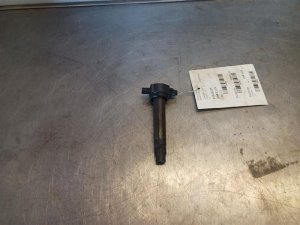
Est. part cost: $10-$25 per plug - Failed Ignition Coil 🔴 High Probability → Shop Ignition Coil Ignition coils are subject to high heat and vibration and are a common failure point on most modern engines. Oil leaks from the valve cover gasket can also saturate the coil boot, causing it to fail.
How to confirm: Swap the ignition coil from cylinder 3 with another cylinder (e.g., cylinder 2). Clear the codes and run the engine. If the code changes to P0302, the ignition coil is faulty.
Typical fix: Replace the failed ignition coil. Many mechanics recommend replacing all coils if they are original and high-mileage, as others may fail soon.
Est. part cost: $40-$100 per coil - Leaking Valve Cover Gasket 🔴 High Probability → Shop Engine Valve Cover The valve cover gasket on the 2.4L engine incorporates spark plug tube seals. These seals are known to harden and fail, allowing engine oil to leak directly into the spark plug wells. This oil saturates the ignition coil boot and spark plug, causing a short and a misfire.
How to confirm: When you remove the ignition coil from cylinder 3, check for liquid engine oil in the spark plug tube. The coil boot will likely be wet with oil.
Typical fix: Replace the valve cover gasket and the integrated spark plug tube seals. It is critical to clean all oil from the spark plug well and replace the oil-soaked ignition coil and spark plug to prevent immediate repeat failure.
Est. part cost: $30-$80 for the gasket set - Faulty Fuel Injector ⚪ Low Probability → Shop Fuel Injector While not as common as ignition issues, fuel injectors can become clogged or fail electronically. However, on the 2.4L MultiAir, symptoms of a bad injector are more often caused by low engine oil affecting the valvetrain.
How to confirm: Listen to the injector with a mechanic's stethoscope; it should make a consistent clicking sound. A more definitive test involves swapping the injector with one from another cylinder, but this is a more labor-intensive job and should be performed after ruling out all ignition and oil-related issues.
Typical fix: Replace the faulty fuel injector. It's recommended to replace the O-rings and seals at the same time.
Est. part cost: $50-$150 per injector
Rare But Worth Checking
- Low Engine Compression: This indicates a serious internal engine problem, such as a bad valve, worn piston rings, or a leaking head gasket. A compression test is needed to confirm. This is the least likely cause and should be investigated last.
- MultiAir Brick Actuator Failure: The 2.4L engine uses a 'MultiAir brick' which is an electro-hydraulic system to control intake valves. Low or dirty oil can cause this component to malfunction, but it can also fail internally, leading to misfires on one or more cylinders. This is an expensive and complex repair.
- Fuel or Air Pressure Sensor Issues: As cited in TSBs #14-009-25 and #09-016-25, misfires can be associated with other codes like P0087 (Fuel Rail Pressure Too Low) or P006C (MAP - Turbocharger Inlet Pressure Correlation). If these codes are present, the sensor or fuel delivery system should be investigated.
Diagnosis Steps
- Check the engine oil level immediately. If it is low, top it off, clear the codes, and drive to see if the misfire returns. This is a critical first step for the 2.4L Tigershark engine.
- Read the trouble codes with an OBD-II scanner and note any other codes present. A flashing check engine light indicates a severe misfire; limit driving. 🎬 Watch: Diagnosing common causes for P0300-P0304 misfire codes.
- Swap the ignition coil from cylinder 3 to cylinder 2. Cylinder 3 is the second cylinder from the right when facing the engine. The coil is held by a 10mm bolt. Clear the codes, drive the vehicle, and see if the misfire code changes to P0302. If it does, the coil is bad.
- While the coil is out, inspect the spark plug well for engine oil. Any presence of liquid oil indicates a leaking valve cover gasket which must be replaced.
- If the code remains P0303 after the coil swap, move the spark plug from cylinder 3 to cylinder 1. You will need a 5/8" (16mm) spark plug socket. Clear the codes and drive. If the code changes to P0301, the spark plug is bad.
- If the misfire persists on cylinder 3, the next step is to check the fuel injector. Listen for a consistent clicking sound from the injector with a stethoscope. You can also check for power at the injector connector with a multimeter or noid light.
- If ignition and fuel delivery seem okay, perform a compression test on cylinder 3 to rule out mechanical engine problems like bad rings or valves.
Parts You'll Likely Need
- Ignition Coil
(OEM #68242286AB (for 2.4L engine))— This is one of the most common failure points for a single-cylinder misfire. The swap test is a simple and effective way to confirm failure. 🎬 Watch: How to replace a faulty ignition coil.
Trusted brands: Mopar, NGK, Delphi
OEM price range: $70-$120
Aftermarket price range: $40-$100 - Spark Plug
(OEM #SP0ZFR5F11 (Mopar/NGK Nickel) or equivalent Iridium plug like NGK 92145.)— Spark plugs are a maintenance item and can become fouled, especially on 2.4L engines with oil consumption issues. They are inexpensive and easy to replace.
Trusted brands: NGK, Champion, Denso
OEM price range: $15-$30
Aftermarket price range: $10-$20 - Valve Cover Gasket Kit
(OEM #05047756AB (for 2.4L engine))— If oil is found in the spark plug well, the gasket has failed and must be replaced to prevent future misfires. This is a very common failure on the 2.4L engine. 🎬 See this walkthrough for replacing the valve cover gasket.
Trusted brands: Mopar, Fel-Pro, Mahle
OEM price range: $60-$100
Aftermarket price range: $30-$80
Related Codes That Often Appear With This One
- P0300 — P0300 indicates a random or multiple cylinder misfire. It can appear alongside P0303 if the misfire is intermittent, starting to affect other cylinders, or if the root cause is systemic, like low fuel pressure or a vacuum leak.
- P0301, P0302, P0304 — These codes indicate misfires in other cylinders. If multiple codes are present, it suggests a problem affecting the whole engine, like a vacuum leak, low fuel pressure, or a failing MultiAir brick.
Technical Service Bulletins (TSBs) & Recalls
- Bulletin #14-009-25 REV. D
- Bulletin #14-003-26
- Bulletin #08-027-20
- Bulletin #09-026-25
- Bulletin #09-016-25
- Bulletin #18-081-17
Platform-Specific Known Issues
- Excessive Oil Consumption (2.4L Tigershark): Many 2017-2022 models with the 2.4L engine are known to consume as much as a quart of oil every 1,000 miles. This can foul spark plugs, but more critically, it can starve the MultiAir valvetrain system of oil pressure, causing stalling and misfire-like symptoms. It is critical to check your oil level regularly.
- Leaking Valve Cover Gasket (2.4L): A very common point of failure is the spark plug tube seals integrated into the valve cover gasket. This causes oil to fill the spark plug wells, shorting out the coil and plug, directly causing a P030x misfire code.
- Ignition Coil Boot TSB (2.4L): TSB #08-027-20 was issued for some vehicles with the 2.4L engine, including the 2017-2018 Compass, for misfire codes caused by faulty ignition coil boots, not the entire coil.
Mechanic-Grade Diagnostic Values
- Ignition Coil Primary Resistance (2.4L) — expected: 0.4 to 2 ohms. Failure: A reading outside this range indicates a faulty coil.
- Ignition Coil Secondary Resistance (2.4L) — expected: 6,000 to 10,000 ohms. Failure: A reading outside this range suggests the coil is bad.
- Spark Plug Gap (2.4L Tigershark) — expected: 0.047 inches (1.2 mm). Failure: An incorrect gap can cause weak spark and misfires. Plugs can wear, increasing the gap.
- Low-Side Fuel Pressure (2.4L) — expected: 58-64 PSI. Failure: Pressure below this range can indicate a weak fuel pump, causing lean conditions and misfires.
Scan Tool Commands That Help
- wiTECH or advanced aftermarket (e.g., Autel): Cylinder Power Balance Test — This function graphically displays the contribution of each cylinder, allowing a technician to visually confirm that cylinder 3 is underperforming compared to the others. It helps verify the misfire is real and ongoing.
- wiTECH or advanced aftermarket: Misfire Counter (Live Data) — Viewing the live misfire counter for each cylinder in Mode $06 can confirm that cylinder 3 is the primary source of misfires, even if they are not severe enough to set a code instantly.
Wiring & Ground Locations
- Cylinder 3 Ignition Coil Control — On the 2016-2017 2.0L/2.4L, this is Pin 49 (wire color DB/OG - Dark Blue/Orange) of the C2 PCM connector.. If the coil and spark plug are good, a continuity and voltage check on this wire is necessary to rule out a wiring harness break or a failed driver in the Powertrain Control Module (PCM).
- Engine Block Ground — The main battery ground cable typically attaches to the engine block, often near the starter or on a dedicated stud. A secondary braided ground strap connects the engine to the chassis/frame.. A poor engine ground increases resistance for the ignition coils, which ground through the cylinder head to the block. This can cause a weak spark and lead to misfires that are difficult to diagnose.
- G218 (Example Ground) — Ground points are located throughout the vehicle, such as on the inner fender. For example, on some Jeep models, a key ground is located on the left inner fender.. Corrosion or looseness at any body or engine ground can create intermittent electrical issues, including misfires. It's important to check that the main engine-to-chassis ground strap is clean and tight.
Real Owner Repair Stories
- Reddit user comment (2015 Chrysler 200 with 2.4L MultiAir engine) — Car would shut off, especially when turning corners. Would crank but not restart immediately.
❌ Tried (didn't work) Initial diagnosis was unclear.
✅ What actually fixed it The problem was low engine oil. The MultiAir system is dependent on oil pressure to operate the intake valves. When turning, the remaining oil would slosh away from the pickup tube, starving the valvetrain and stalling the engine. Topping off the oil resolved the stalling. - YouTube video by JDC Auto (2016 Jeep Cherokee with 2.4L MultiAir engine) — Misfire after replacing the MultiAir VVT actuator ('brick').
❌ Tried (didn't work) Immediate startup after repair.
✅ What actually fixed it The misfire self-corrected after letting the engine idle and revving to 1500-2000 RPM. This allowed oil pressure to build up, settle, and properly actuate the lifters/valves, restoring compression. This is a known behavior after this specific repair.
OEM Part Supersession History
68080580AB→68242286AA, then 68242286AB— Part revision and improvement by the manufacturer.
Heads up: The latest part number, 68242286AB, is the correct replacement for the 2.4L MultiAir engine in the specified vehicle range. Using older stock is not recommended.
Model Year Variations Within This Range
- 2017-2022 vs 2023-2024: The primary engine offering changed from the 2.4L Tigershark MultiAir to the 2.0L Turbo GME T4. Ignition coils, spark plugs, and other engine-specific components are not interchangeable. The 2.0L Turbo uses coil part number 68211953AA, while the 2.4L uses 68242286AB.
- 2017-2022 (2.4L Engine): Due to widespread oil consumption issues, a recall was issued involving a PCM software update. This update alters engine parameters to reduce oil consumption during specific driving conditions (e.g., high-speed deceleration). This software change is a critical factor in the engine's long-term health.
Helpful Videos
We Have This Part in Stock

The information in this article is provided for general reference and educational purposes only. Vehicle specifications, procedures, and part compatibility can vary by production date, trim level, and region. Always consult your vehicle's factory service manual and verify part numbers before purchasing or performing repairs. Safety-critical components such as airbags, seat belts, and braking systems should be installed by a qualified professional.
- Jeep COMPASS:
- 🧭 Diagnostic Flowchart
- 🎬 Helpful Videos
- 🛍️ Shop This Part
- What's Unique About the 2017-2024 Jeep COMPASS
- Symptoms You May Notice
- Most Likely Causes
- Rare But Worth Checking
- Diagnosis Steps
- Parts You'll Likely Need
- Related Codes That Often Appear With This One
- Technical Service Bulletins (TSBs) & Recalls
- Platform-Specific Known Issues
- Mechanic-Grade Diagnostic Values
- Scan Tool Commands That Help
- Wiring & Ground Locations
- Real Owner Repair Stories
- OEM Part Supersession History
- Model Year Variations Within This Range
- 🎟️ Get 5% Off