

P0303 on 2020-2025 Kia Telluride: Cylinder 3 Misfire Causes and Fixes
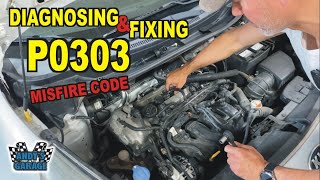
P0303 on a Kia Telluride means cylinder 3 is misfiring. The most common causes are a bad ignition coil or a worn spark plug. For early 2020 models, a simple dealer software update (TSB ENG228) may fix false misfires on cold starts. If the check engine light is flashing, stop driving to prevent catalytic converter damage.
- P0303 means cylinder 3 is misfiring, which is located on the difficult-to-access rear bank of the engine against the firewall.
- The most likely cause is a bad ignition coil or spark plug. Always diagnose by swapping parts with an adjacent cylinder before buying replacements.
- If you have a 2020 Telluride, check with a dealer about TSB ENG228 for a software update, especially if the misfire only happens when the engine is cold.
- If the Check Engine Light is flashing, pull over as soon as it is safe. This indicates a severe misfire that can quickly damage your catalytic converter.
- Due to the location of cylinder 3, replacing the coil or plug requires removing the upper intake manifold, making the repair more labor-intensive than on other cylinders.
What's Unique About the 2020-2025 Kia Telluride
For the 2020 Telluride specifically, Kia issued a Technical Service Bulletin (TSB ENG228) to fix an issue where the engine's computer could falsely detect misfires during a cold start. Beyond that, the Telluride's 3.8L GDI (Gasoline Direct Injection) engine, like many GDI engines, can be prone to carbon buildup on the intake valves over time. This buildup can restrict airflow and cause misfires that aren't related to the usual ignition parts, an issue acknowledged by Hyundai (its sister company) in TSBs for the same engine. Additionally, some owners have reported that excessive oil consumption can lead to fouled plugs; for instance, NHTSA ODI #11717327 describes a case where piston ring issues fouled spark plugs and triggered codes P0300, P0301, P0303, P0304, and P0305.
Symptoms You May Notice
- Check Engine Light is on or flashing
- Rough or shaky idle
- Hesitation or jerking during acceleration
- Loss of engine power
- Reduced fuel economy
- Engine stalling
- Smell of unburned fuel from the exhaust
- Replacing fuel injectors before thoroughly testing the ignition system (coils and plugs).
- Replacing oxygen sensors, which are unlikely to cause a single-cylinder misfire.
- Assuming the issue is carbon buildup before ruling out simpler ignition component failures.
Most Likely Causes
- Faulty Ignition Coil 🔴 High Probability → Shop Ignition Coil Ignition coils are a common failure point on most modern engines as they age. Some owners and technicians report coils being a known failure item on this platform, with some failures at relatively low mileage. A similar Kia diagnostic procedure in NHTSA ODI #11525628 confirmed a P0303 by swapping the cylinder 3 coil pack with cylinder 1 and observing the misfire follow the part.
How to confirm: Swap the ignition coil from cylinder 3 with another cylinder (e.g., cylinder 1). Clear the codes and drive the vehicle. If the code changes to P0301, the ignition coil is bad. Accessing the rear bank (where cylinder 3 is) requires removing the upper intake manifold.
Typical fix: Replace the faulty ignition coil. It is often recommended to replace all three coils on the same bank (rear bank for P0303) and the intake manifold gaskets at the same time, especially if they are original and high-mileage.
Est. part cost: $40-$110 - Worn or Fouled Spark Plug 🔴 High Probability → Shop Spark Plug
How to confirm: After ruling out the ignition coil, inspect the spark plug in cylinder 3. Look for wear, carbon fouling, oil deposits, or damage to the electrode. NHTSA ODI #11579469 notes a case where a cylinder 3 spark plug was found coated in oil, resulting in only 10 PSI of compression. You can also swap the spark plug with another cylinder to see if the misfire code moves.
Typical fix: Replace the spark plug. It is best practice to replace all six spark plugs at the same time, especially since the intake manifold must be removed to access the rear bank.
Est. part cost: $15-$30 per plug - ECM Logic (2020 Models) 🟡 Medium Probability A TSB (ENG228) was issued for 2020 Tellurides built between Jan 9, 2019, and May 19, 2020, to correct faulty ECM logic that could cause false misfire codes during cold starts.
How to confirm: If misfires only happen on cold starts and no issues are found with coils or plugs, contact a Kia dealer with your VIN to see if TSB ENG228 applies and has been performed.
Typical fix: A Kia dealer needs to perform a software update (reflash) on the Engine Control Module (ECM). This is typically done at no cost if the TSB applies.
Est. part cost: $0 if covered by warranty/TSB - Clogged or Faulty Fuel Injector ⚪ Low Probability → Shop Fuel Injector As a GDI engine, the injector tip is directly in the combustion chamber and can become clogged with carbon deposits over time, disrupting the fuel spray pattern. This is a known characteristic of GDI engines in general.
How to confirm: This is more difficult to diagnose. A professional can perform a fuel injector balance test. A simpler, less definitive test is to listen to the injector with a mechanic's stethoscope to check for a consistent clicking sound. One could also swap the injector with another cylinder, but this is a labor-intensive job.
Typical fix: Clean or replace the faulty fuel injector. Accessing the injector requires removing the intake manifold and fuel rail.
Est. part cost: $70-$150
Rare But Worth Checking
- Broken Engine Valve Spring (Specific 2024 Models): Kia issued a recall (SC296 / NHTSA 24V-077) for a batch of 2024 Tellurides built between Oct 1, 2023 and Dec 6, 2023, due to improperly manufactured valve springs that could break. A broken spring can cause a severe misfire, loss of power, and potentially catastrophic engine damage. Check your VIN with a dealer if you have a 2024 model.
- Internal Engine Damage (Valves/Rings): In some Kia models, misfires have been linked to more serious mechanical failures. NHTSA ODI #11697208 describes a situation where P0300 and P0303 were found alongside a burnt valve and seized starter.
- Intake Valve Carbon Buildup: This is a long-term issue common to GDI engines where oil vapors from the PCV system bake onto the intake valves, restricting airflow and causing misfires. This usually occurs at higher mileage (30k+ miles) and may require professional walnut blasting or chemical cleaning to resolve.
- Low Engine Compression: This indicates a serious internal engine problem like worn piston rings, a bad valve, or a leaking head gasket. A compression test is required to diagnose this. The valve spring recall on 2024 models is one potential cause of this.
Diagnosis Steps
- Read the trouble codes with an OBD-II scanner to confirm P0303 and check for any other codes.
- Note the location of cylinder 3, which is the middle cylinder on the rear bank of the engine, closest to the firewall. The rear bank cylinders are 1-3-5 and the front bank are 2-4-6, from left to right (passenger to driver side).
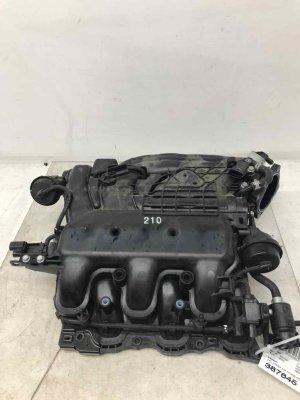
- Accessing the rear bank requires removing the upper intake manifold ('plenum'). This is a necessary step for any work on cylinders 1, 3, or 5.
- Once the manifold is off, swap the ignition coil from cylinder 3 with the coil from cylinder 1 (the leftmost cylinder on the same rear bank). As noted in NHTSA ODI #11525628, if the misfire follows the coil, the part is defective.
- Reassemble the intake manifold using new gaskets, clear the codes, start the engine, and let it run for a few minutes.
- Re-scan for codes. If the code has changed to P0301, the ignition coil is faulty and must be replaced.
- If the code remains P0303, the coil is likely good. Disassemble again and proceed to swap the spark plug from cylinder 3 with cylinder 1 and repeat the test. A technician in NHTSA ODI #11522926 followed this exact process, removing the spark plug and swapping it to another cylinder to isolate the fault.
- If the code moves to P0301, the spark plug is bad. If it remains P0303, the issue is likely with the fuel injector, wiring, or a mechanical problem.
- For 2020 models experiencing cold-start misfires, contact a Kia dealer to check if TSB ENG228 is applicable before proceeding with further part replacements.
- If the issue persists, a professional diagnosis involving a fuel injector test and an engine compression test is recommended.
Parts You'll Likely Need
- Ignition Coil (Rear Bank)
(OEM #27310-3L000)— This is the most common cause of a P0303 code on this engine. Cylinder 3 is on the rear bank, so this specific part number applies.
Trusted brands: Kia (OEM), NGK, Delphi
OEM price range: $60-$90
Aftermarket price range: $40-$75 - Iridium Spark Plug
(OEM #18849-11070)— Spark plugs are a primary wear item and a frequent cause of misfires. It is highly recommended to replace all six if accessing the rear bank for any other repair.
Trusted brands: Kia (OEM), NGK, Denso
OEM price range: $20-$30
Aftermarket price range: $15-$25 - Intake Manifold Gasket Set
(OEM #28215-3CFA0)— These gaskets must be replaced anytime the intake manifold is removed to access the rear cylinders, which is required for a P0303 diagnosis. This prevents vacuum leaks after reassembly.
Trusted brands: Kia (OEM), Mahle, Fel-Pro
OEM price range: $25-$40
Aftermarket price range: $15-$30
Related Codes That Often Appear With This One
- P0300 — If P0300 (Random/Multiple Cylinder Misfire) appears with P0303, it suggests the problem is not isolated to cylinder 3 and could be a widespread issue like a vacuum leak, low fuel pressure, or a systemic problem affecting the whole engine.
- P0301, P0302, P0304, P0305, P0306 — The presence of other specific cylinder misfire codes points to multiple component failures or an issue affecting the entire engine, such as a bad batch of fuel or a failing fuel pump.
- P0363 — This code means 'Misfire Detected - Fueling Disabled'. It indicates the misfire on cylinder 3 is so severe that the PCM has cut fuel to that cylinder to prevent catalytic converter damage. [This is a critical code indicating immediate attention is needed.]
Technical Service Bulletins (TSBs) & Recalls
- ENG228: Addresses an ECM software update for some 2020 Tellurides to improve the logic for detecting misfires, particularly on a cold start.
- TSB ENG222: Relates to engine oil consumption; an owner in NHTSA ODI #11717327 noted that excessive consumption under this bulletin led to fouled plugs and misfire codes including P0303.
Platform-Specific Known Issues
- For 2020 models built between Jan 2019 and May 2020, a software glitch can cause false cold-start misfires, which is correctable with a dealer-installed update per TSB ENG228.
- A recall (SC296 / NHTSA 24V-077) was issued for some 2024 models due to defective valve springs that can break and cause severe misfires.
Mechanic-Grade Diagnostic Values
- Ignition Coil Primary Winding Resistance — expected: 0.49 - 0.57 Ohms at 68°F (20°C). Failure: A reading outside this range suggests a fault within the coil's primary winding.
- Ignition Coil Secondary Winding Resistance — expected: 9.5 - 11.1 kOhms. Failure: A reading outside this range indicates a fault in the coil's secondary winding.
- GDI Fuel Injector Resistance — expected: 12.5 - 13.5 Ohms. Failure: A reading outside this range indicates an electrical fault within the injector.
- High-Pressure Fuel System (at fuel rail, idle) — expected: 40-50 Bar (580-725 PSI). Failure: Significantly lower pressure at idle could point to a fuel delivery issue, though it would likely cause multiple misfires (P0300).
- High-Pressure Fuel System (at fuel rail, under load) — expected: Up to 200 Bar (2900 PSI). Failure: Inability to reach high pressure under load suggests a failing high-pressure fuel pump (HPFP), which typically results in random misfires.
Scan Tool Commands That Help
- Kia GDS (Global Diagnostic System): Misfire Counter Live Data — To monitor misfire events on each specific cylinder in real-time during a test drive. This can confirm if the misfire is constant or only occurs under specific conditions (e.g., load, temperature) and verify if a repair was successful. NHTSA ODI #11522926 mentions using live data to see heavy misfires on cylinder #3.
- Kia GDS (Global Diagnostic System): Flight Record / Trigger Module — For intermittent misfires that are difficult to reproduce. The module is connected and the customer drives the vehicle. When the misfire occurs, the driver presses a button to 'trigger' the recording, capturing a snapshot of sensor data leading up to the event for later analysis.
- Kia GDS (Global Diagnostic System): ECU Reprogramming/Update — This is the specific function required to perform TSB ENG228 for 2020 models with false cold-start misfires. It updates the engine control module's software logic.
- Advanced Aftermarket Scanners (e.g., Foxwell, Autel): Crankshaft Position Sensor Relearn — While not a primary cause for a single cylinder misfire, if major engine work, a starter, or the crankshaft sensor itself has been replaced, a 'crank relearn' procedure may be necessary to correctly calibrate the PCM's misfire detection. An incomplete relearn can sometimes cause false misfire codes.
Wiring & Ground Locations
- Cylinder 3 Ignition Coil Connector — Connected to the ignition coil for the middle cylinder on the rear bank of the engine, closest to the firewall. Access requires removing the upper intake manifold.. This is the direct electrical connection for the ignition coil. Damage, corrosion, or a loose connection here will prevent the coil from firing, causing a P0303. A technician would test for 12V power, ground, and the trigger signal from the ECU at this connector.
- Cylinder 3 Fuel Injector Connector — Under the intake manifold, connected to the middle fuel injector on the rear bank. Access is difficult and requires intake removal.. Damage to this connector or its wiring will stop the fuel injector from operating, guaranteeing a misfire on cylinder 3. This should be checked if ignition components are confirmed to be good. The wiring harness part number is 35341-3L150.
- Engine Control Unit (ECU) — Located in the engine bay, next to the air filter box on the driver's side.. The ECU is the source of the trigger signals for both the ignition coil and the fuel injector. While rare, a failed driver circuit within the ECU for cylinder 3 can cause this code. All wiring from the coil and injector ultimately terminates here.
OEM Part Supersession History
27310-3L000→N/A— This is the current part number for the ignition coils on the rear bank (cylinders 1, 3, 5).
Heads up: The front bank (cylinders 2, 4, 6) uses a different part number, 27310-3L030. While they may appear physically similar, they should not be interchanged.
Model Year Variations Within This Range
- 2023-2025: The Kia Telluride received a significant facelift for the 2023 model year, including a new grille, bumpers, and redesigned headlights. The interior was updated with a new dashboard featuring dual 12.3-inch screens. However, the core powertrain, the 3.8L V6 engine and 8-speed automatic transmission, remained unchanged. Therefore, the causes and fixes for a P0303 code are identical between the 2020-2022 and 2023-2025 models.
Diagnostic Flowchart
Other Known Issues on This Vehicle
Issues unrelated to this code that are worth knowing about as an owner of this generation:
- Windshield Prone to Cracking 🟠 Medium — Widely reported by owners, especially on 2020-2021 models. Seems to be less frequent on later years but still a notable complaint.
- Headlight Condensation / Dimming 🟠 Medium — Common complaint across all model years, leading to a class-action lawsuit. Moisture enters the headlight assembly, causing dimming and potential failure. Kia/Hyundai have TSBs (BOD055, 22-BD-002H) that classify most condensation as normal. (Ref: BOD055 / 22-BD-002H (Informational), Class Action Lawsuit (Young v. Hyundai))
- Tow Hitch Wiring Harness Fire Risk 🔴 High — Affects a large number of 2020-2022 vehicles equipped with a factory tow hitch. Debris/moisture can short the module, causing a fire risk even when parked. (Ref: Recall SC249 / NHTSA 22V626 (Interim repair), Recall SC270 (Final repair))
- Excessive Wind Noise 🟡 Low — A common complaint where wind noise from the front doors/mirrors becomes noticeable at highway speeds. Often attributed to door seals or mirror housing design.
- GDI Engine Carbon Buildup 🟠 Medium — An inherent characteristic of the 3.8L GDI engine. Over time (typically 30k-60k miles), carbon can build on intake valves, leading to performance issues, oil consumption, and misfires. (Ref: Hyundai TSB 23-EM-007H (describes cleaning procedure))
- Vehicle Rollaway Risk 🔴 High — A recall was issued for approximately 427,000 Tellurides from 2020-2024 due to an improperly assembled driveshaft that could lead to vehicle movement while in Park. (Ref: NHTSA 24V194 / Kia SC300)
Used vs. New Parts: Buying Guide for This Vehicle
When a used part is the smart pick: For this repair, used parts are generally not recommended for the primary failure components (ignition coils, spark plugs). However, if a more complex repair is needed, sourcing a used upper intake manifold from a salvage yard is a viable option if the original is damaged during removal.
Donor-vehicle mileage cap: roughly under 80000 miles for the part to have meaningful remaining life.
What to inspect on the donor part:
- For any used part, verify the VIN of the donor vehicle to check for accident history and ensure it's from a similar model year.
- Inspect plastic components like manifolds for cracks, warping, or signs of extreme heat.
- Check electrical connectors for corrosion, bent pins, or cut wires.
OEM-only on this vehicle (don't cheap out):
- While not strictly 'OEM-only', it is strongly recommended to use OEM or high-quality OEM-supplier (like NGK or Denso) ignition coils and spark plugs. Cheap, unbranded online parts are a common source of repeat failures and misdiagnosis.
Aftermarket brands forum-validated for this vehicle:
- Ignition Coils: NGK, Delphi, Mando
- Spark Plugs: NGK, Denso (often the OEM supplier)
Brands owners have reported issues with on this vehicle:
- Unbranded 'white box' ignition coils and sensors from online marketplaces like Amazon or eBay. These often have a high premature failure rate and do not adhere to OEM specifications, which can cause further diagnostic issues.
Real Owner Stories
Aggregated from forums and TSBs cited above. Mileages and costs reflect what owners reported in those sources.
2022 Kia Telluride S — 27500 miles
Symptoms: Started running rough and was having a hard time getting into gear.
What fixed it: Dealer diagnosed the code as either ignition coils or spark plugs; the ignition coils were replaced under warranty.
Source hint: r/KiaTelluride owner report
Kia Owner Report — NHTSA ODI #11525628
Symptoms: The engine began bucking and stopped running at high speed.
What fixed it: The dealer found active codes P0300 and P0303. They swapped the cylinder 3 coil pack with cylinder 1, and the misfire followed the part. Replacing the coil pack resolved the issue with no signs of cylinder damage.
Related OBD-II Codes
Frequently Asked Questions
My 2020 Telluride has a misfire only when I first start it in the morning. Is there a specific fix for this?
I have a 2024 Telluride with a severe misfire. Could this be a major mechanical failure?
Which cylinder is causing the P0303 code on my 3.8L V6 engine?
Do I need to remove the intake manifold to fix a P0303 code?
Is carbon buildup a known issue that could cause misfires on the Telluride?
Should I replace all the spark plugs if only Cylinder 3 is misfiring?
Helpful Videos
We Have This Part in Stock

The information in this article is provided for general reference and educational purposes only. Vehicle specifications, procedures, and part compatibility can vary by production date, trim level, and region. Always consult your vehicle's factory service manual and verify part numbers before purchasing or performing repairs. Safety-critical components such as airbags, seat belts, and braking systems should be installed by a qualified professional.
- Kia Telluride:
- 🧭 Diagnostic Flowchart
- 🎬 Helpful Videos
- 🛍️ Shop This Part
- What's Unique About the 2020-2025 Kia Telluride
- Symptoms You May Notice
- Most Likely Causes
- Rare But Worth Checking
- Diagnosis Steps
- Parts You'll Likely Need
- Related Codes That Often Appear With This One
- Technical Service Bulletins (TSBs) & Recalls
- Platform-Specific Known Issues
- Mechanic-Grade Diagnostic Values
- Scan Tool Commands That Help
- Wiring & Ground Locations
- OEM Part Supersession History
- Model Year Variations Within This Range
- Other Known Issues on This Vehicle
- Used vs. New Parts: Buying Guide for This Vehicle
- Real Owner Stories
- 2022 Kia Telluride S — 27500 miles
- Kia Owner Report — NHTSA ODI #11525628
- Related OBD-II Codes
- Frequently Asked Questions
- 🎟️ Get 5% Off