

P0303 on 2013-2019 Land Rover Range Rover: Cylinder 3 Misfire Causes & Fixes
P0303 indicates a misfire in cylinder 3. On a 2013-2019 Range Rover, this is most often a failed ignition coil or spark plug. A simple coil swap between cylinders is the first diagnostic step. However, be aware that this code can also be an early symptom of timing chain issues, especially if accompanied by other codes or a distinct engine rattle on cold starts.
- P0303 on your Range Rover means cylinder #3 is misfiring.
- The most likely and easiest-to-fix causes are a bad ignition coil or a worn spark plug.
- Always perform a coil swap as the first diagnostic step to avoid replacing the wrong part.
- If you hear a rattling from the engine on cold starts or have other timing-related codes (e.g., P0016), the misfire could be a symptom of a more serious timing chain problem.
- Do not drive if the check engine light is flashing, as this can quickly destroy your expensive catalytic converters.
What's Unique About the 2013-2019 Land Rover RANGE ROVER
The 2013-2019 Range Rover (L405 generation) primarily uses the AJ126 3.0L V6 and AJ133 5.0L V8 supercharged engines. The V6 is notably derived from the V8 block. While a P0303 code is often a simple ignition issue, these specific engines have a known weakness in their timing chain systems. Prematurely wearing plastic timing chain guides and tensioners can cause the timing chain to stretch or jump, leading to misfires. A distinct rattling noise from the engine on a cold start is a classic symptom of this impending failure. The provided TSB SSM74161 specifically links P0303 with timing-related codes, highlighting that a misfire on this platform should be investigated with extra caution.
Diagnostic Flowchart
Tap your situation to follow the diagnostic path that matches what you're seeing on this vehicle.
Symptoms You May Notice
- Flashing or solid Check Engine Light
- Rough or unstable idle
- Engine hesitation or stumbling during acceleration
- Noticeable loss of engine power
- Increased fuel consumption
- Fuel smell from the exhaust
- Engine rattling noise, especially on cold starts (indicative of timing chain issues)
- Replacing only the spark plug when the ignition coil is the actual culprit. The coil swap diagnostic step is crucial to avoid this.
- Ignoring the possibility of a timing chain issue when other timing-related codes are present or a cold-start rattle is audible, leading to repeated misfire problems after addressing only ignition components.
Most Likely Causes
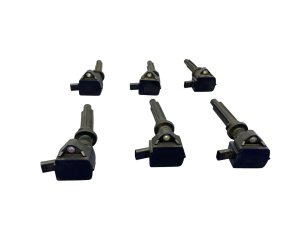
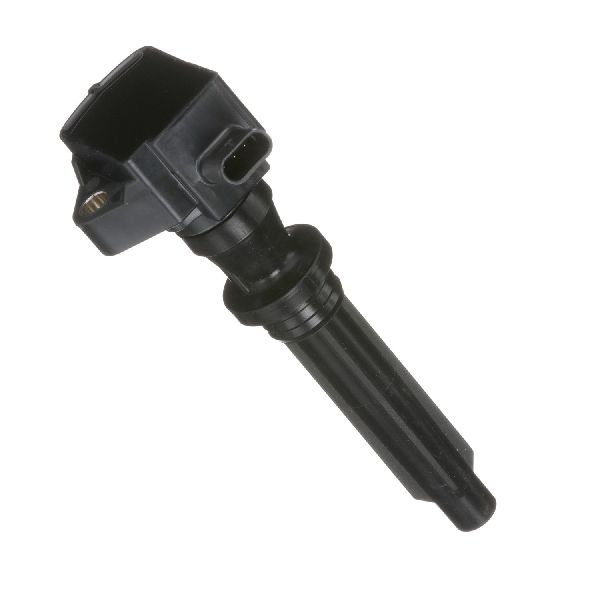
- Failed Ignition Coil 🔴 High Probability → Shop Ignition Coil Coil-on-plug systems are common failure points on many modern engines due to constant exposure to high heat and vibration in the cylinder head.
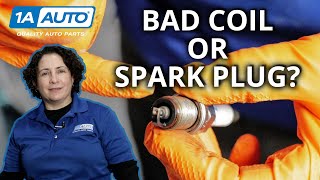
How to confirm: Swap the ignition coil from cylinder 3 with another cylinder (e.g., cylinder 1). Clear the codes and run the engine. If the code changes to P0301, the ignition coil is faulty. This is a standard and highly effective diagnostic technique. 🎬 Watch: How to diagnose misfire codes and test ignition coils
Typical fix: Replace the failed ignition coil. It is often recommended to replace all coils if they are original and have high mileage to prevent future failures.
Est. part cost: $50-$120 per coil - Worn or Fouled Spark Plug 🔴 High Probability → Shop Spark Plug Spark plugs are a regular maintenance item. On direct-injection, supercharged engines, they can wear more quickly or become fouled by carbon or oil deposits.
How to confirm: After confirming the coil is good, inspect the spark plug from cylinder 3. Look for wear on the electrode, carbon buildup, oil/coolant fouling, or an incorrect gap. Swapping the plug to another cylinder is also a valid test.
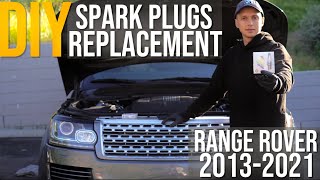
Typical fix: Replace the spark plug. It is best practice to replace all spark plugs at the same time 🎬 See this step-by-step guide for replacing Range Rover spark plugs for consistent performance.
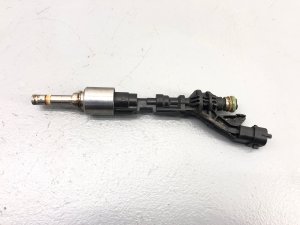
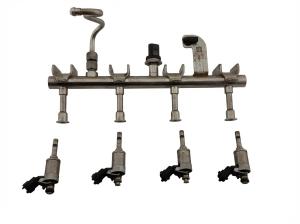
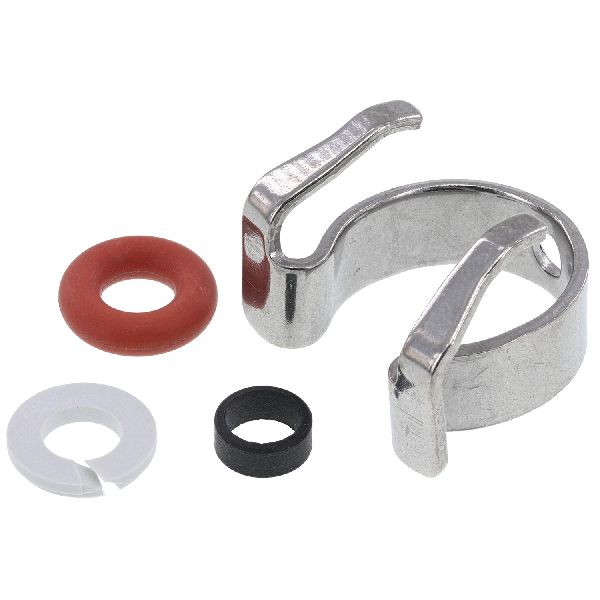
Est. part cost: $15-$30 per plug - Faulty Fuel Injector 🟡 Medium Probability → Shop Fuel Injector
How to confirm: Listen for a consistent clicking sound from the injector with a mechanic's stethoscope. A more advanced method involves checking the injector's resistance with a multimeter or having a professional perform a flow test. A leaking injector might also be indicated by fuel trim data on a scan tool.
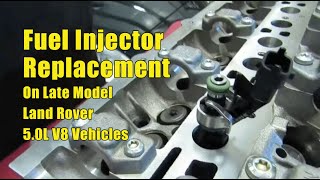
Typical fix: Replace the faulty fuel injector. This is more labor-intensive than a coil or plug. 🎬 Watch: Overview of fuel injectors for the Land Rover 5.0L engine It's also wise to check the fuel rail and pressure.
Est. part cost: $150-$250 per injector, with professional replacement costing significantly more. - Timing Chain System Wear 🟡 Medium Probability The AJ126 (V6) and AJ133 (V8) engines are known for premature wear of plastic timing chain guides and tensioners, which can cause chain slack and rattling noises, particularly on cold starts.
How to confirm: Listen for a distinct rattling noise from the front of the engine on cold starts that may last for a few seconds. Check for associated timing correlation codes (like P0016, P0019, etc.). A definitive diagnosis requires inspecting the timing chain for slack by removing the valve covers, which is labor-intensive.
Typical fix: This is a major repair requiring replacement of the timing chains, tensioners, and guides. It is a complex job best left to a qualified Land Rover specialist. Full kits are available from various manufacturers.
Est. part cost: $800-$2000 for a full kit
Rare But Worth Checking
- Low Engine Compression: Can be caused by a worn piston ring, a bad valve, or a leaking head gasket. A compression test or leak-down test is needed to confirm this mechanical issue.
- Vacuum Leak: A leak in a vacuum hose or intake manifold gasket can lean out the air-fuel mixture and cause misfires. This would typically set multiple misfire codes (P0300) but can sometimes isolate to one cylinder if the leak is near the cylinder 3 intake runner.
- Intake Valve Carbon Buildup: As direct-injection engines, the AJ126/AJ133 are prone to carbon buildup on the back of the intake valves. This can disrupt airflow into the cylinder and cause misfires. This typically requires media blasting (e.g., walnut blasting) to clean.
Diagnosis Steps
- Read all stored DTCs with an OBD-II scanner. Pay close attention to any codes other than P0303, especially timing (P001x) or fuel system codes.
- If the Check Engine Light is flashing, do not drive the vehicle further to prevent catalytic converter damage.
- Listen for unusual engine noises. A distinct rattle for 2-3 seconds on a cold start is a strong pointer towards timing chain guide/tensioner failure.
- Locate cylinder 3. On the JLR 5.0L V8, it is the third cylinder back on the driver's side (Bank 1). On the 3.0L V6, it is the rearmost cylinder on the driver's side (Bank 1).
- Swap the ignition coil from cylinder 3 to another cylinder (e.g., cylinder 1). Clear the codes and start the engine. See if the misfire code moves to the new cylinder (P0301). If it does, the ignition coil is bad.
- If the misfire stays on cylinder 3, swap the spark plug from cylinder 3 to a different cylinder. If the code moves, the spark plug is bad.
- If the code remains P0303, inspect the fuel injector connector for cylinder 3. Listen to the injector with a stethoscope to ensure it is clicking. Check fuel trims with an advanced scanner if possible.
- If ignition and fuel injector seem okay, perform a compression test and a cylinder leak-down test on cylinder 3 to check for mechanical engine problems like bad valves or piston rings.
- If any timing-related codes are present or a cold-start rattle was confirmed, the timing chain system is the primary suspect. This should be investigated by a qualified technician.
Parts You'll Likely Need
- Ignition Coil
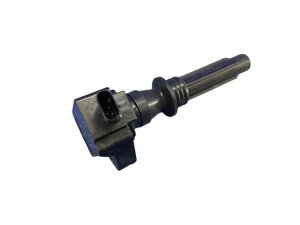
(OEM #LR030636 / C2D28464)— This is the most common cause of a single-cylinder misfire. Heat and vibration cause the internal windings to fail over time.
Trusted brands: Bosch, Delphi, NGK, Genuine Jaguar Land Rover
OEM price range: $90-$150
Aftermarket price range: $50-$100 - Spark Plug
(OEM #LR025605)— As a standard wear item, the spark plug is the second most likely cause. A worn electrode or carbon fouling can prevent a proper spark.
Trusted brands: NGK (often the OEM supplier), Denso
OEM price range: $25-$40
Aftermarket price range: $15-$25 - Fuel Injector
(OEM #LR079542 / C2D24386)— Less common than ignition parts, but injectors can become clogged or fail electronically, preventing proper fuel delivery to cylinder 3.
Trusted brands: Bosch (often the OEM supplier)
OEM price range: $150-$250
Related Codes That Often Appear With This One
- P0300 — Indicates a random/multiple cylinder misfire. If seen with P0303, it suggests the problem might be more widespread than just cylinder 3, pointing towards a systemic issue like a vacuum leak, fuel delivery problem, or timing.
- P0301, P0302, P0304, etc. — Misfire codes for other cylinders. When seen together, this strongly points towards a common cause like timing issues, low fuel pressure, or a major vacuum leak.
- P0016, P0017, P0019, P054A — These are crankshaft/camshaft position correlation codes. Their presence alongside P0303 is a strong indicator of a timing chain problem, as noted in TSB SSM74161.
- P1313, P1316 — These are manufacturer-specific codes indicating a misfire rate that could damage the catalyst. They often accompany a flashing check engine light and add urgency to the diagnosis.
Technical Service Bulletins (TSBs) & Recalls
- SSM74161: Mentions that DTCs P0303-00 and P0302-00 can be stored along with several timing-related codes (P054A-00, P0014-71, etc.) in the PCM, directly linking misfires to potential timing issues on these vehicles. Note: The full text of this TSB seems to focus more on VVT solenoid issues on the AJ200 (4-cyl) engines, but its inclusion of P0303 is notable.
- LTB00916NAS5: Addresses a rattle noise and timing DTCs (P0016, P0017, etc.) caused by a failure in the intake variable cam timing actuator on some JLR engines, showing another potential link between timing system faults and misfire-like symptoms.
Platform-Specific Known Issues
- The AJ126 (3.0L V6) and AJ133 (5.0L V8) engines are known for issues with timing chain tensioners and guides made of plastic that can wear prematurely, causing chain slack, rattling noises, and setting misfire and timing codes. This is a significant repair if it is the root cause.
- The 3.0L V6 (AJ126) is derived directly from the 5.0L V8 (AJ133) block, with two cylinder bores blanked off. They share the same timing chain architecture and weaknesses.
Mechanic-Grade Diagnostic Values
- High-Pressure Fuel Rail Pressure (at idle) — expected: 3.0 - 8.0 MPa (approx. 435 - 1160 PSI), depending on engine temperature. Will increase with engine speed.. Failure: Pressure reads low, around 700-900 KPa (100-130 PSI), and does not increase with engine speed, indicating a faulty high-pressure fuel pump.
- High-Pressure Fuel Rail Pressure (at start-up) — expected: Up to 150 bar (2176 PSI). Failure: Failure to build high pressure on startup can indicate a weak high-pressure pump or a fault in the low-pressure supply.
- Low-Pressure Fuel System Pressure (at start-up) — expected: ~106 PSI. Failure: Significantly lower pressure indicates a problem with the in-tank fuel pump or its control module.
- Ignition Coil Primary Resistance — expected: ~0.75 ohms. Failure: A reading of 'open' indicates a failed coil. However, a correct resistance reading does not guarantee the coil is good under heat and load.
Hidden / Shadow Codes Worth Checking
- Mode $06, Test ID $A4: Accesses the onboard monitor for raw, non-CEL-triggering misfire counts for Cylinder 3. This is a critical tool for seeing intermittent or low-frequency misfires before they are bad enough to set a persistent P0303 code. Test IDs $A2, $A3, $A5, etc., correspond to the other cylinders. (see via Advanced OBD-II scan tool with Mode $06 functionality.)
Scan Tool Commands That Help
- JLR SDD / Pathfinder or advanced aftermarket (e.g., Launch, Autel, Foxwell): Misfire Count / Cylinder Misfire Data — Use this function to view live and historical misfire counts for each individual cylinder. This helps confirm if the misfire is isolated to cylinder 3 or if other cylinders are also misfiring at a lower, non-code-triggering rate, which might suggest a systemic issue rather than a single bad component.
- JLR SDD / Pathfinder: Clear Adaptations — After replacing a component like a fuel injector or addressing a vacuum leak, engine fuel trim adaptations should be reset. This forces the PCM to relearn the fuel delivery strategy with the new/repaired components, ensuring optimal performance and preventing the old learned values from causing issues.
Wiring & Ground Locations
- Main Engine Earth Leads — Located in the engine bay on both the driver and passenger sides, behind the air filter boxes. A bundle of ground wires connects to a stud on the chassis.. These primary ground points are known to corrode. A poor ground connection can cause a voltage drop to critical components, including the PCM and ignition system, leading to a host of electrical gremlins, including misfires and 'Restricted Performance' warnings that can be misdiagnosed as component failure.
- A-Pillar Ground Headers — Located behind the kick panels in the driver and passenger footwells, at the bottom of the 'A' pillar.. These headers are a common earth point for numerous interior and control module circuits. While less likely to directly cause a single cylinder misfire, a fault here can contribute to erratic PCM behavior.
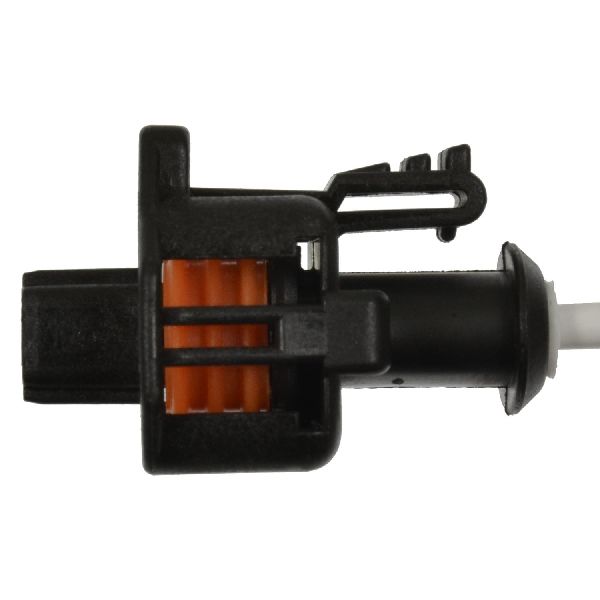
- Injector 3 Connector (T174) — The electrical connector on the fuel injector for cylinder 3. Specific pinouts are detailed in the official Land Rover wiring diagrams.. When diagnosing a persistent P0303 after checking the coil and plug, a technician must test for power and signal at the injector connector itself. Knowing the connector designator (e.g., T174) is essential for navigating official service manuals and wiring diagrams.
OEM Part Supersession History
LR079542→LR105439— Standard part revision and update by the manufacturer (Bosch).
Model Year Variations Within This Range
- 2013-2016 vs 2017-2019: The official dealer diagnostic software changes. Models up to ~2016 use SDD (Symptom Driven Diagnostics), while models from ~2017 onwards use the newer Pathfinder software. While both can diagnose P0303, the user interface and some specific service functions may differ.
- Post-2013: The AJ126/AJ133 engines received updated timing chain tensioners and guides starting around the 2013 model year to address premature wear seen on earlier 5.0L engines. However, failures can still occur, especially with extended oil change intervals, so the issue is not completely eliminated in this vehicle range.
Helpful Videos
Used OEM Parts in Stock
New Aftermarket Parts Available


The information in this article is provided for general reference and educational purposes only. Vehicle specifications, procedures, and part compatibility can vary by production date, trim level, and region. Always consult your vehicle's factory service manual and verify part numbers before purchasing or performing repairs. Safety-critical components such as airbags, seat belts, and braking systems should be installed by a qualified professional.
- Land Rover RANGE ROVER:
- 🧭 Diagnostic Flowchart
- 🎬 Helpful Videos
- 🛍️ Shop This Part
- What's Unique About the 2013-2019 Land Rover RANGE ROVER
- Symptoms You May Notice
- Most Likely Causes
- Rare But Worth Checking
- Diagnosis Steps
- Parts You'll Likely Need
- Related Codes That Often Appear With This One
- Technical Service Bulletins (TSBs) & Recalls
- Platform-Specific Known Issues
- Mechanic-Grade Diagnostic Values
- Hidden / Shadow Codes Worth Checking
- Scan Tool Commands That Help
- Wiring & Ground Locations
- OEM Part Supersession History
- Model Year Variations Within This Range
- 🎟️ Get 5% Off