

P0303 on 2017-2024 Mazda CX-5 2.5L: Cylinder 3 Misfire Causes and Fixes
P0303 on a 2017-2024 Mazda CX-5 almost always means a bad ignition coil on cylinder 3. A worn spark plug is the second most likely cause. Swapping the coil from cylinder 3 to another cylinder is the fastest way to confirm the problem. A new OEM-spec coil is about $40-$80 and is a very easy 15-minute DIY fix.
- P0303 means cylinder 3 is misfiring. On this Mazda, the cause is overwhelmingly likely to be a bad ignition coil.
- Always diagnose before buying parts. A 10-minute 'coil swap' test can confirm a bad coil for free.
- If the check engine light is flashing, stop driving to prevent catastrophic damage to your catalytic converter.
- If you have a 2018 or 2019 model, check with a dealer to see if your vehicle was part of the cylinder deactivation recall (3719F), which can cause this code.
- When replacing spark plugs, use the correct OEM-spec NGK Iridium plugs and replace them as a full set of four.
What's Unique About the 2017-2024 Mazda CX-5
While ignition components are common failure points on any vehicle, earlier Skyactiv engines were subject to a Technical Service Bulletin (TSB 01-014/16) for premature ignition coil failure from a specific supplier (YUMEBISHI). Though this TSB officially covers models up to 2016, the pattern of coil failure remains the most common cause for a P0303 code on these later models. Additionally, some 2018-2019 models with cylinder deactivation were recalled (Mazda Recall 3719F) for a software issue that could cause a misfire when re-engaging cylinders, making it important to verify if this recall applies to your vehicle.
Symptoms You May Notice
- Rough or vibrating idle
- Hesitation or stumbling during acceleration
- Noticeable loss of engine power
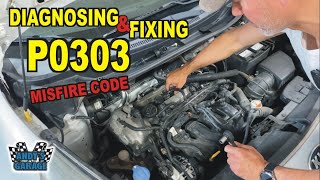
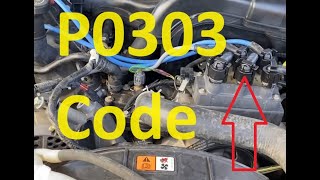
- Flashing or solid Check Engine Light 🎬 Watch: How to diagnose P0303 spark plug and coil issues.
- Reduced fuel economy
- Vehicle may enter 'limp mode' with severely reduced power.
- Engine shaking, especially under load or going uphill.
- Replacing oxygen sensors. The O2 sensors are usually just reporting the effects of the misfire, not causing it.
- Replacing the catalytic converter. A misfire can damage the converter, but it is almost never the cause of a single-cylinder misfire code.
- Using incorrect spark plugs. Several owner forums mention that using plugs other than the specified NGK Iridium plugs can cause persistent, hard-to-diagnose misfires.
Most Likely Causes
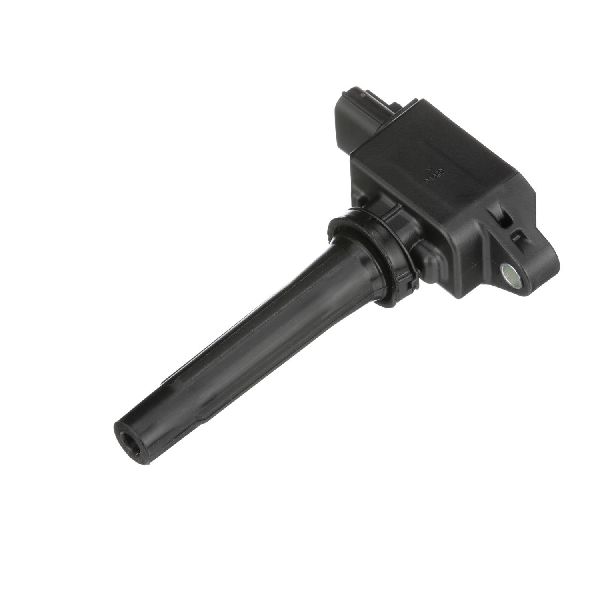
- Failed Ignition Coil 🔴 High Probability → Shop Ignition Coil Mazda has a documented history of ignition coil failures on Skyactiv engines. TSB 01-014/16 identified YUMEBISHI-brand coils on 2013-2016 models as prone to internal failure from temperature changes. This pattern continues to be the most common cause of single-cylinder misfires on the 2017+ models.
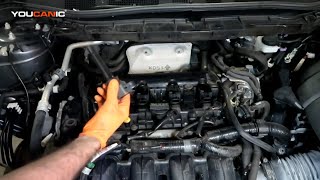
How to confirm: Swap the ignition coil from cylinder 3 with another cylinder (e.g., cylinder 2). Clear the codes, drive the car, and see if the code changes to P0302. If it does, the coil is the faulty part. This is the definitive DIY diagnostic step. 🎬 Watch: Step-by-step ignition coil replacement on the Skyactiv engine.
Typical fix: Replace the faulty ignition coil. While you can replace just one, it's often good practice to replace all four if they are original and high-mileage.
Est. part cost: $40-$100 for one aftermarket coil, $120-$175 for one OEM coil. - Worn or Fouled Spark Plug 🟡 Medium Probability → Shop Spark Plug Spark plugs are a standard maintenance item. The Skyactiv-G engine has a recommended service interval of 75,000 miles. Using incorrect or non-OEM spec plugs is a known cause of persistent misfires on this platform, as confirmed in forum discussions.
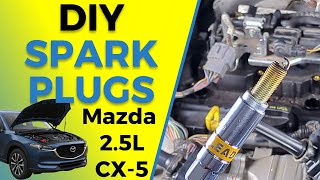
How to confirm: After confirming the ignition coil is good, remove the spark plug from cylinder 3. Inspect it for wear (worn electrode), carbon fouling, oil, or a cracked porcelain insulator. Compare it to a new plug. 🎬 See this DIY guide for changing Mazda 2.5L spark plugs.
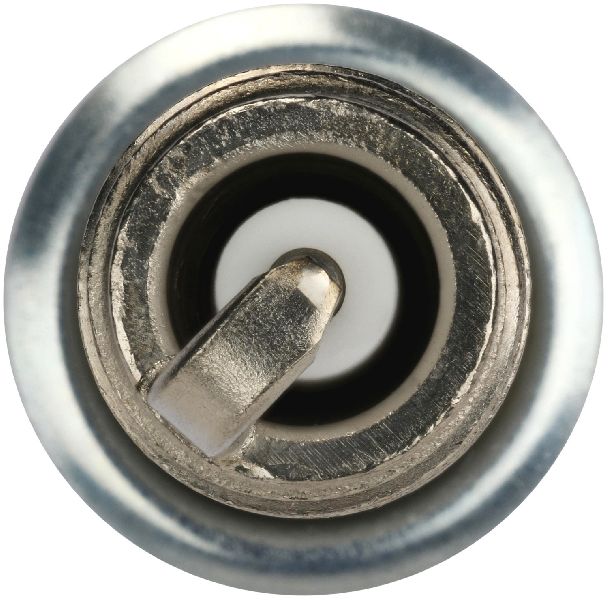
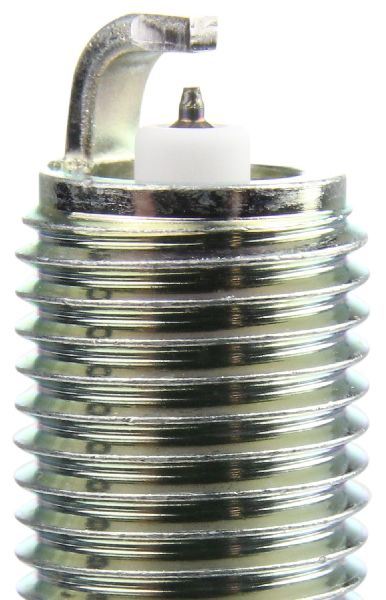
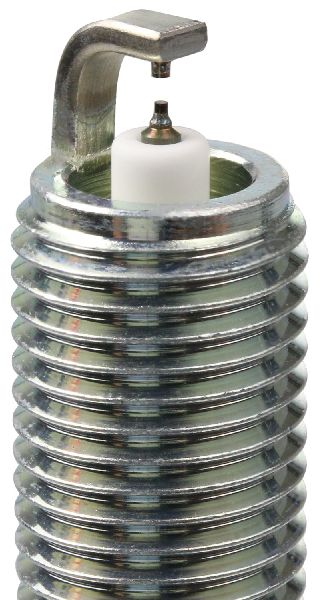
Typical fix: Replace the spark plug in cylinder 3. It is highly recommended to replace all four spark plugs as a set with the correct OEM-specification plugs (e.g., NGK ILKAR7L11).
Est. part cost: $40-$80 for a set of four high-quality aftermarket plugs. - Leaking or Clogged Fuel Injector ⚪ Low Probability → Shop Fuel Injector As a direct-injection engine, carbon buildup can affect injectors over time. A leaking injector can also cause a rich condition that may be accompanied by a P0172 code. While less common than ignition issues, a faulty injector can cause a persistent misfire that doesn't resolve with new plugs or coils.
How to confirm: This is more difficult to diagnose. A professional can test fuel injector balance. A DIY method is to swap the injector from cylinder 3 with another cylinder, but this is labor-intensive on this engine and requires new seals. A technician can also use a scan tool to monitor fuel trims and misfire counts while manipulating fuel conditions to isolate a bad injector.
Typical fix: Replace the faulty fuel injector. It's recommended to replace the seals for all injectors that are removed.
Est. part cost: $200-$400 for one injector.
Rare But Worth Checking
- Intake Valve Carbon Buildup: Direct injection engines like the Skyactiv-G are prone to carbon buildup on the intake valves over time, which can disrupt airflow and cause misfires, typically after 60,000-80,000 miles. If ignition and fuel parts don't solve the issue, this is a likely culprit. A professional cleaning (walnut blasting) typically costs between $400 and $600.
- Cylinder Deactivation Software Fault (2018-2019 models): A recall (Mazda #3719F / NHTSA 19V497000) was issued for some 2018-2019 CX-5s where the software controlling the transition out of cylinder deactivation could cause an intake valve rocker arm to be displaced, leading to a misfire. Check with a Mazda dealer to see if your VIN was affected and if the recall was performed.
- Low Engine Compression: If all else fails, a mechanical issue like a worn piston ring, bad valve, or failing head gasket could be the cause. A compression test or cylinder leak-down test is needed to confirm this. In rare cases on models with cylinder deactivation, this could be related to a cracked cylinder head, a known but uncommon issue on this platform.
Diagnosis Steps
- Read the DTCs with an OBD-II scanner to confirm P0303 and check for any other codes.
- Note if the Check Engine Light is solid or flashing. A flashing light indicates a severe, catalyst-damaging misfire.
- Perform an ignition coil swap. Move the coil from cylinder 3 (third from the right/belt side) to cylinder 2. Clear the codes and drive. If the code returns as P0302, the ignition coil is bad.
- If the code remains P0303, inspect the spark plug in cylinder 3. Look for excessive wear, fouling, or damage. Ensure it is the correct OEM-spec part number.
- If ignition components are good, check the wiring and connector for the cylinder 3 ignition coil and fuel injector for any damage or corrosion.
- If the issue persists, the problem is likely a faulty fuel injector or carbon buildup on the intake valves. Professional diagnosis may be required.
- For 2018-2019 models, contact a Mazda dealer with your VIN to check for open recalls related to the cylinder deactivation software (Recall 3719F).
Parts You'll Likely Need
- Ignition Coil
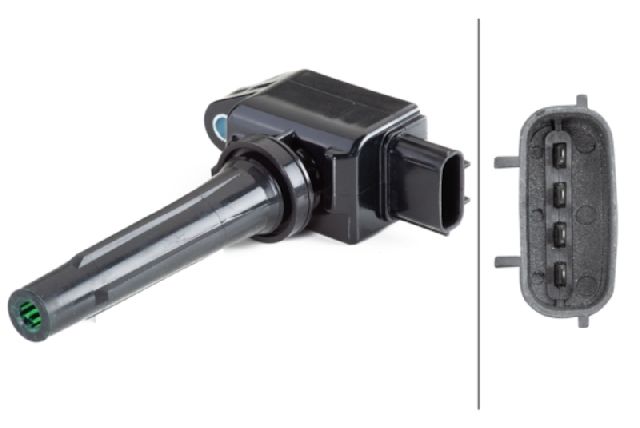
(OEM #PE20-18-100A)— This is the most frequent failure point for a P0303 code on this engine, with a history of supplier issues noted in Mazda TSB 01-014/16. The part number has been revised over time to improve reliability.
Trusted brands: Denso, NGK, Bosch, Mitsubishi (OEM supplier)
OEM price range: $120-$175
Aftermarket price range: $40-$100 - Iridium Spark Plug
(OEM #PE5R-18-110 (NGK ILKAR7L11))— Worn or incorrect spark plugs are the second most common cause of a misfire. It's a routine maintenance item that is often overlooked. Using the exact OEM plug is critical.
Trusted brands: NGK
OEM price range: $20-$30 per plug
Aftermarket price range: $10-$20 per plug
Related Codes That Often Appear With This One
- P0300 — If the misfire is intermittent or affects multiple cylinders, a P0300 (Random Misfire) may be stored along with P0303.
- P0301, P0302, P0304 — If other cylinders are also misfiring, their respective codes will appear. This points towards a more systemic issue like a vacuum leak, fuel delivery problem, or severe carbon buildup.
- P0172 — A 'System Too Rich' code alongside P0303 strongly suggests a leaking fuel injector on cylinder 3 is dumping excess fuel.
Technical Service Bulletins (TSBs) & Recalls
- 01-014/16 - Highlights internal failure of YUMEBISHI-produced ignition coils causing misfires (P0300-P0304) on 2013-2016 models due to temperature fluctuations.
- 01-001/23A - Pertains to 2.5L Turbo engines (not the standard PY-VPS) where an exhaust manifold valve issue can cause misfires. Not directly applicable but good to be aware of.
- 01-002/23 - Addresses c
Platform-Specific Known Issues
- Ignition Coil Failures: TSB 01-014/16 was issued for 2013-2016 models due to internal failures of YUMEBISHI-brand ignition coils. The bulletin advises replacing them with Mitsubishi-brand coils. While the TSB does not officially cover 2017+ models, the high failure rate of ignition coils persists as the top cause for misfires.
- Cylinder Deactivation Recall (2018-2019): Mazda Recall 3719F / NHTSA 19V497000 addresses a PCM software problem on some 2018-2019 CX-5 models with cylinder deactivation. The fault can cause an intake valve rocker arm to move out of position when re-engaging cylinders, resulting in a misfire and potential engine damage.
Mechanic-Grade Diagnostic Values
- High Pressure Fuel System — expected: Up to 200 bar (2900 PSI) or 2176 PSI at full throttle.. Failure: Significantly lower pressure readings under load may indicate a failing high-pressure fuel pump (HPFP), though this is an uncommon cause for a single-cylinder misfire.
- Mode $06 Misfire Counter — expected: Near zero for all cylinders on a healthy engine.. Failure: A high and incrementing count for Test ID $A4, Component ID $03 (Cylinder 3) confirms the PCM is actively detecting misfires on that cylinder, even if the CEL is not yet flashing.
- Ignition Coil Resistance — expected: Not a reliable test. Modern coil-on-plug units are difficult to test accurately with a multimeter due to internal electronics.. Failure: N/A - The most reliable test is swapping the coil to another cylinder and seeing if the misfire code follows.
Hidden / Shadow Codes Worth Checking
- Mode $06, Test IDs $A2-$A7: These test IDs correspond to misfire counts for each cylinder. Specifically for a 4-cylinder, Test ID $A4 corresponds to Cylinder 3. This allows a technician to see raw misfire data before it's high enough to set a persistent P0303 code. (see via Requires an advanced OBD-II scanner or software (like FORScan for Ford/Mazda) that can display Mode $06 data.)
Scan Tool Commands That Help
- FORScan / M-MDS (Mazda Modular Diagnostic System): Cylinder Power Balance Test — This bidirectional test allows the technician to selectively disable fuel to each cylinder one by one. When cylinder 3 is disabled, if there is little to no change in engine RPM or smoothness, it confirms that cylinder 3 was not contributing power, pinpointing the misfire location.
Wiring & Ground Locations
- Engine Compartment Ground Points — Several key ground points are located in the engine bay, bolted directly to the chassis and engine block. One major ground point is typically located on the driver's side inner fender/frame rail.. A corroded or loose main engine ground can cause a host of intermittent electrical issues, including weak spark or erratic sensor readings that could lead to a misfire code. While less common than a bad coil, it's a critical check if electrical issues are suspected.
- Ignition Coil Connector — The 3-pin connector on top of the ignition coil for cylinder 3.. The pins should be tested for 12V+ power, a good ground, and the PCM trigger signal (using a scope or noid light). A damaged connector, spread pins, or corroded wiring can interrupt the signal to the coil, causing a misfire that appears to be a coil failure but is actually a wiring issue.
- Engine Bay Fuse Box — Located in the engine compartment on the driver's side, near the battery.. This box contains fuses and relays critical to the engine management system, including power for the ignition coils and fuel injectors. Verifying these fuses are intact is a basic but essential step.
Real Owner Repair Stories
- Mazdas247 Forum User (2018 Mazda CX-5 Touring AWD) — Car went into limp mode while passing a truck, check engine light and other warnings illuminated.
❌ Tried (didn't work) Initial dealer diagnosis was inconclusive., PCM software update was performed but did not prevent recurrence.
✅ What actually fixed it The dealer found the rocker arm on cylinder #4 had dislodged, a known issue related to the cylinder deactivation system. Mazda directed the dealer to replace the entire engine. The user noted that after the engine replacement, the transmission began acting up. - Mazdas247 Forum User (2013 Mazda CX-5 Grand Touring, 260k+ miles) — Sudden loss of power, engine light on, P0302 code initially.
❌ Tried (didn't work) Replaced all 4 spark plugs with NGK Iridium (code changed to P0303)., Replaced the new spark plug in cylinder 3 again., Swapped ignition coil from cylinder 3 to cylinder 4 (code remained P0303).
✅ What actually fixed it The user discovered they had installed the wrong NGK spark plugs. The final resolution was installing the correct OEM-spec NGK plugs (ILKAR7L11), which solved the persistent misfire. This highlights the engine's sensitivity to correct plug specification.
OEM Part Supersession History
PE01-18-100, PE01-18-100A→PE20-18-100, then PE20-18-100A— Standard part evolution for improved reliability and manufacturing changes. The earlier TSB for coil failures on pre-2017 models likely prompted supplier and design changes.
Heads up: The latest part number, PE20-18-100A, is the recommended replacement for all previous versions on this platform. While older part numbers may fit, using the latest revision ensures you have the most updated design.
Model Year Variations Within This Range
- 2018-2019: Introduction of cylinder deactivation technology. This created a unique failure mode where a software glitch in the PCM could cause a rocker arm to dislodge during the transition from 2-cylinder to 4-cylinder mode, leading to a misfire and potential engine damage. This led to recall 3719F.
- 2022+: For the 2022 model year, Mazda made i-ACTIV AWD standard on all CX-5 trims and revised the trim naming structure (e.g., Grand Touring Reserve became Turbo). While not directly affecting the cause of P0303, it's a key change in the vehicle's configuration.
Diagnostic Flowchart
Other Known Issues on This Vehicle
Issues unrelated to this code that are worth knowing about as an owner of this generation:
- Cracked Cylinder Head (Primarily on Cylinder Deactivation models) 🔴 High → Shop Engine Cylinder Head — Appears in some 2018+ models, often between 40,000-80,000 miles. More common on 2.5T engines but also documented on the naturally aspirated 2.5L (PY-VPS). (Ref: TSB 01-002/23)
- Excessive Oil Consumption 🟠 Medium — Reported in some 2017-2021 models, particularly the 2.5L Turbo, but also seen in the naturally aspirated engine. Can start as early as 12,000 miles, with some owners adding a quart every 1,000-3,000 miles. (Ref: TSB 01-003/23 (for 2.5T valve stem seals))
- Intake Valve Carbon Buildup 🟠 Medium — Common to all direct-injection engines. Becomes a potential issue after 60,000-80,000 miles, causing rough idle or misfires if not addressed.
- Premature Brake Wear 🟡 Low — Some owners report needing to replace brake pads and rotors earlier than expected, sometimes under 40,000 km (25,000 miles).
- Flickering LED Daytime Running Lights (DRL) 🟡 Low — A widely reported issue, particularly on 2016 models but seen in the 2nd generation as well, where the DRLs fail or flicker due to a faulty sealing gasket leading to moisture intrusion.
Used vs. New Parts: Buying Guide for This Vehicle
When a used part is the smart pick: For this repair, a used part only makes sense for the ignition coil, and only if sourced from a very low-mileage donor vehicle. Given the relatively low cost of new aftermarket coils ($40-$80), the risk of getting a used coil with limited remaining life is often not worth the small savings.
Donor-vehicle mileage cap: roughly under 30000 miles for the part to have meaningful remaining life.
What to inspect on the donor part:
- For an ignition coil, check for cracks in the plastic housing or corrosion on the electrical connector pins.
- Ensure the rubber boot is pliable and free of tears or swelling.
- Ask for the VIN of the donor car to verify mileage and check for accident history.
OEM-only on this vehicle (don't cheap out):
- Spark Plugs: The Skyactiv-G engine is notoriously sensitive to spark plug specifications. Only use the specified OEM NGK Iridium plugs (ILKAR7L11) to avoid persistent, hard-to-diagnose misfires.
- Fuel Injectors: Due to the high pressures and precise nature of direct injection, using OEM or a top-tier OE-supplier brand is critical for proper function and longevity.
Aftermarket brands forum-validated for this vehicle:
- Ignition Coils: NGK, Denso, Bosch
- Spark Plugs: NGK (as the OEM supplier)
Brands owners have reported issues with on this vehicle:
- Unbranded, 'white-box' ignition coils and spark plugs from online marketplaces. These often have high failure rates and can cause more diagnostic headaches than they solve.
Real Owner Stories
Aggregated from forums and TSBs cited above. Mileages and costs reflect what owners reported in those sources.
2017-2024 Mazda CX-5 2.5L
Symptoms: Experienced a P0302, then a P0303 after replacing plugs. The engine had a persistent misfire.
What fixed it: Replacing the spark plugs with the correct OEM-spec NGK plugs, as the aftermarket ones initially installed were incorrect and causing the issue.
Source hint: Mazdas247 thread titled 'P0303 - Cylinder 3 issue'
2017-2024 Mazda CX-5 2.5L
Symptoms: Diagnosed a P0304 misfire. To troubleshoot, the owner moved the ignition coil from cylinder 4 to cylinder 3.
What fixed it: The code followed the coil to cylinder 3 (becoming P0303), confirming a bad coil. Replacing the faulty coil with a new one resolved the issue.
Source hint: YouTube owner diagnosis cited in common_causes
Related OBD-II Codes
Frequently Asked Questions
Does Mazda Recall 3719F apply to my 2018-2019 CX-5?
I have a 2017 CX-5; does TSB 01-014/16 regarding YUMEBISHI coils apply to me?
Which spark plugs should I use for my 2.5L Skyactiv-G to avoid P0303 codes?
Could a P0303 code on my 2018+ CX-5 be related to a cracked cylinder head?
Is there a specific maintenance interval for spark plugs on the CX-5 to prevent misfires?
Can carbon buildup cause a P0303 code on my high-mileage CX-5?
Helpful Videos
We Have This Part in Stock


The information in this article is provided for general reference and educational purposes only. Vehicle specifications, procedures, and part compatibility can vary by production date, trim level, and region. Always consult your vehicle's factory service manual and verify part numbers before purchasing or performing repairs. Safety-critical components such as airbags, seat belts, and braking systems should be installed by a qualified professional.
- Mazda CX-5:
- 🧭 Diagnostic Flowchart
- 🎬 Helpful Videos
- 🛍️ Shop This Part
- What's Unique About the 2017-2024 Mazda CX-5
- Symptoms You May Notice
- Most Likely Causes
- Rare But Worth Checking
- Diagnosis Steps
- Parts You'll Likely Need
- Related Codes That Often Appear With This One
- Technical Service Bulletins (TSBs) & Recalls
- Platform-Specific Known Issues
- Mechanic-Grade Diagnostic Values
- Hidden / Shadow Codes Worth Checking
- Scan Tool Commands That Help
- Wiring & Ground Locations
- Real Owner Repair Stories
- OEM Part Supersession History
- Model Year Variations Within This Range
- Other Known Issues on This Vehicle
- Used vs. New Parts: Buying Guide for This Vehicle
- Real Owner Stories
- 2017-2024 Mazda CX-5 2.5L
- 2017-2024 Mazda CX-5 2.5L
- Related OBD-II Codes
- Frequently Asked Questions
- 🎟️ Get 5% Off