

P0303 on 2019-2021 Mazda MAZDA3: Cylinder 3 Misfire Causes and Fixes
P0303 on a 2019-2021 Mazda3 indicates a misfire in cylinder 3. The most common causes are a faulty ignition coil or a worn spark plug. For 2.5L Turbo models, a known TSB (#01-001-23a) points to a more serious issue where a valve in the exhaust manifold seizes, leading to compression loss and requiring cylinder head replacement.
- P0303 on a 2019-2021 Mazda3 is a misfire on cylinder 3, most often caused by a bad ignition coil or spark plug.
- A simple and effective diagnostic step is to swap the ignition coil from cylinder 3 to another cylinder to see if the misfire code follows the coil.
- Owners of the 2.5L Turbo model must be aware of TSB #01-001-23a. If simple fixes don't resolve the misfire, a serious engine repair involving the cylinder head may be required.
- Do not ignore a flashing check engine light, as it indicates a severe misfire that can quickly destroy the catalytic converter.
What's Unique About the 2019-2021 Mazda MAZDA3
For the 2019-2021 Mazda3, the cause of a P0303 code can differ significantly depending on the engine. While standard ignition component failure is common on all versions, the 2.5L Turbo engine has a specific, documented issue. A Technical Service Bulletin (TSB #01-001-23a) identifies a problem where a variable valve in the exhaust manifold can seize, causing the exhaust port to overheat. This leads to uneven wear on the exhaust valve seat and a resulting loss of compression, which triggers misfire codes. This is a much more severe potential cause than the typical spark plug or coil failure seen on the non-turbo engine.
Diagnostic Flowchart
Tap your situation to follow the diagnostic path that matches what you're seeing on this vehicle.
Symptoms You May Notice
- Check Engine Light is on or flashing
- Rough or shaky idle
- Poor acceleration and loss of power
- Vehicle jerking or hesitating
- Reduced fuel economy
- Fuel smell from the exhaust
- Replacing only the spark plug when the ignition coil is the actual culprit.
- On Turbo models, repeatedly replacing spark plugs and coils without performing a compression test to check for the underlying cylinder head/exhaust manifold issue described in TSB #01-001-23a. 🎬 See a real-world diagnosis of the 2.5T cylinder misfire issue.
- Assuming a rough idle is a vacuum leak when it is caused by the cylinder 3 misfire.
Most Likely Causes
- Faulty Ignition Coil 🔴 High Probability → Shop Ignition Coil Mazda has a history of ignition coil failures, as noted in TSB #01-014-16-3208A for a previous generation, which identified certain supplier coils (YUMEBISHI) as being prone to failure. It remains a primary cause for single-cylinder misfires across models.
How to confirm: Swap the ignition coil from cylinder 3 with another cylinder (e.g., cylinder 2). Clear the codes and drive the vehicle. If the code changes to P0302, the ignition coil is faulty. Cylinder 3 is the third cylinder from the front of the engine (belt side).
Typical fix: Replace the faulty ignition coil. It is often recommended to replace all coils at the same time for preventative maintenance, especially on higher mileage vehicles.
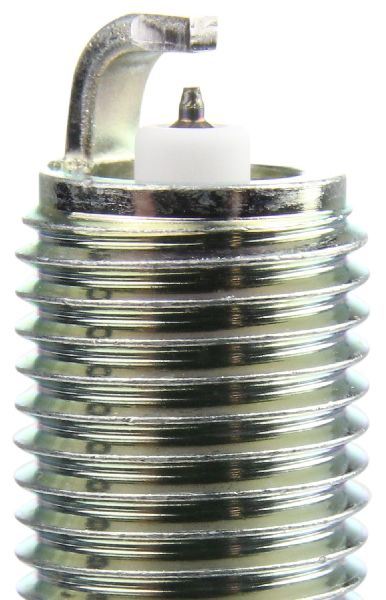
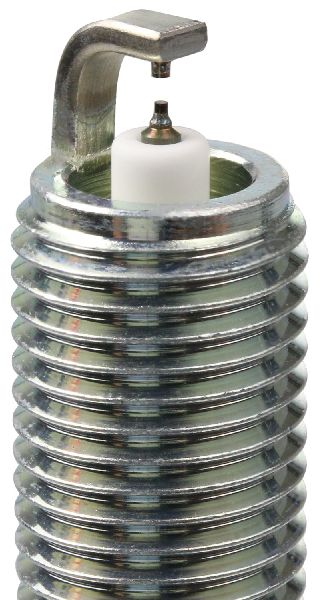
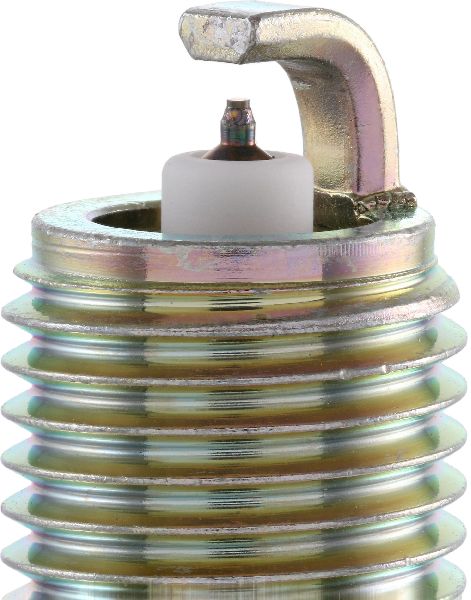
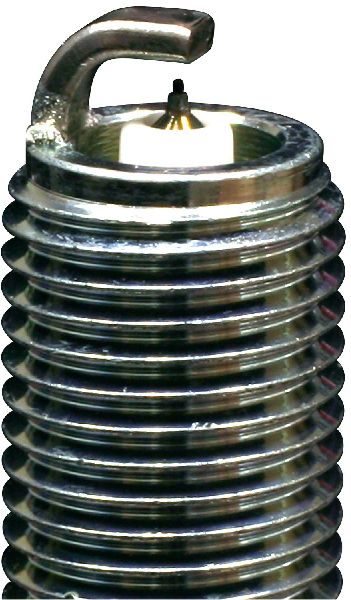
Est. part cost: $40-$80 - Worn or Fouled Spark Plug 🔴 High Probability → Shop Spark Plug
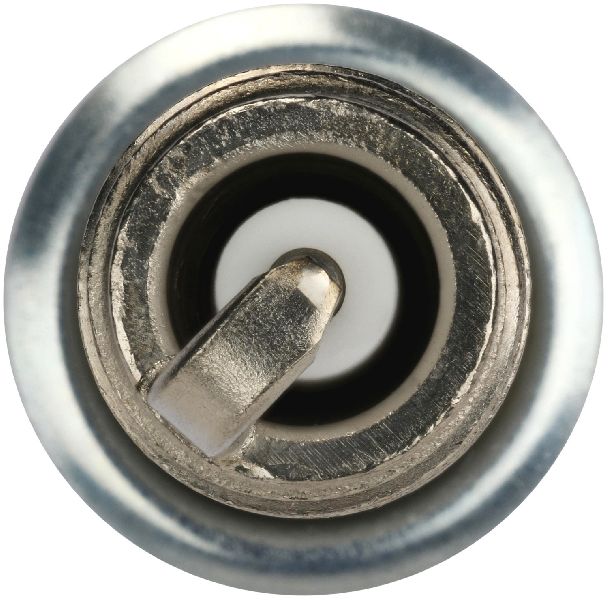
How to confirm: Remove the spark plug from cylinder 3 and inspect it. Look for signs of wear on the electrode, carbon fouling (black, sooty), oil fouling (wet, black), or deposits. Compare it to a plug from a healthy cylinder.
Typical fix: Replace the spark plug. It is best practice to replace all spark plugs at the same time to ensure even performance. Ensure you use the correct OEM-spec plug, as these engines are sensitive.
Est. part cost: $15-$50 - Seized Exhaust Manifold Valve (2.5L Turbo Only) 🟡 Medium Probability → Shop Exhaust Manifold As per TSB #01-001-23a, the variable valve in the exhaust manifold can seize, causing the exhaust port to overheat. This leads to uneven wear on the exhaust valve seat, resulting in compression loss and misfires. This is a known design flaw that was addressed with a modified exhaust manifold and cylinder head.
How to confirm: This is a complex diagnosis that requires a professional. A compression test and leak-down test on cylinder 3 will be necessary to confirm compression loss. The TSB outlines the specific diagnostic procedure for dealers.
Typical fix: According to the TSB, the repair involves replacing the cylinder head and the modified exhaust manifold. This is a significant and expensive repair. One owner on the Mazdas247 forum reported a dealer quote of $6,000, which was negotiated down to $2,000 with Mazda corporate assistance, even out of warranty.
Est. part cost: $2000-$6000+ - Clogged or Faulty Fuel Injector ⚪ Low Probability → Shop Fuel Injector Direct injection engines can be susceptible to injector issues. A TSB for older models (#01-017-16-3242) notes that fuel injector circuit issues can cause misfires. Forum discussions for Skyactiv engines also point to clogged injectors as a possible cause after coils and plugs are ruled out.
How to confirm: A mechanic can perform a fuel injector balance test. Another method is to swap the cylinder 3 injector with another cylinder's injector, but this is more labor-intensive than swapping a coil. A bidirectional scan tool can also be used to deactivate injectors one by one to see if there is no change in RPM on cylinder 3.
Typical fix: Replace the faulty fuel injector. Sometimes, a professional fuel system cleaning can resolve minor clogs, but replacement is often more reliable.
Est. part cost: $100-$250
Rare But Worth Checking
- Carbon Buildup on Intake Valves: Gasoline Direct Injection (GDI) engines, like the Skyactiv-G, are prone to carbon buildup on the back of the intake valves over time. This can disrupt airflow into the cylinder and cause misfires. This is more common on higher-mileage vehicles. Some owners on Reddit have discussed dealers recommending a 'walnut blast' cleaning service for this issue.
- Internal Engine Issues: Although rare on newer vehicles, a loss of compression from worn piston rings or a leaking head gasket can cause a persistent P0303 code that isn't resolved by replacing ignition or fuel components. A compression test is the definitive diagnostic step.
- Frozen Water in Exhaust: TSBs for older models (#01-007-19-3541 and #01-006-18-3429) mention that water accumulating and freezing in the muffler could cause backpressure and lead to misfire codes. While less likely on this newer generation, it's a possibility in extremely cold climates if other causes are ruled out.
Diagnosis Steps
- Read the code with an OBD-II scanner and confirm P0303 is present. Note any other codes and freeze frame data. 🎬 Watch: How to diagnose P0303 codes using an OBD-II scanner.
- If the Check Engine Light is flashing, do not drive the vehicle extensively to avoid catalytic converter damage.
- Identify cylinder 3. On a 4-cylinder transverse engine like the Mazda3's, cylinders are numbered 1-2-3-4, starting from the engine's belt/pulley side. Cylinder 3 is the third one from the belts.
- Swap the ignition coil from cylinder 3 with the coil from cylinder 2.
- Clear the codes and drive the vehicle until the Check Engine Light returns.
- Scan for codes again. If the code is now P0302, the ignition coil is bad and needs replacement.
- If the code remains P0303, the coil is likely good. Move the spark plug from cylinder 3 to cylinder 2 and repeat the process. If the code moves to P0302, the spark plug is faulty.
- If the code still remains P0303, the issue is not a simple coil or plug. Inspect the wiring and connector for the cylinder 3 ignition coil and fuel injector for any damage or corrosion.
- If you have a 2.5L Turbo model, the next step is to strongly suspect the issue described in TSB #01-001-23a. The vehicle should be taken to a qualified technician or Mazda dealer for a compression test and further diagnosis.
- For non-turbo models, the next steps would be to check the fuel injector, check for vacuum leaks, and perform an engine compression test to rule out mechanical issues.
Parts You'll Likely Need
- Ignition Coil
(OEM #PE20-18-100A (Non-Turbo, without cylinder deactivation), PYFS-18-100 (Non-Turbo, with cylinder deactivation), P51R-18-100A (Turbo))— This is one of the most common failure points for a single-cylinder misfire.
Trusted brands: Mazda (OEM), NGK, Bosch, Delphi
OEM price range: $90-$140
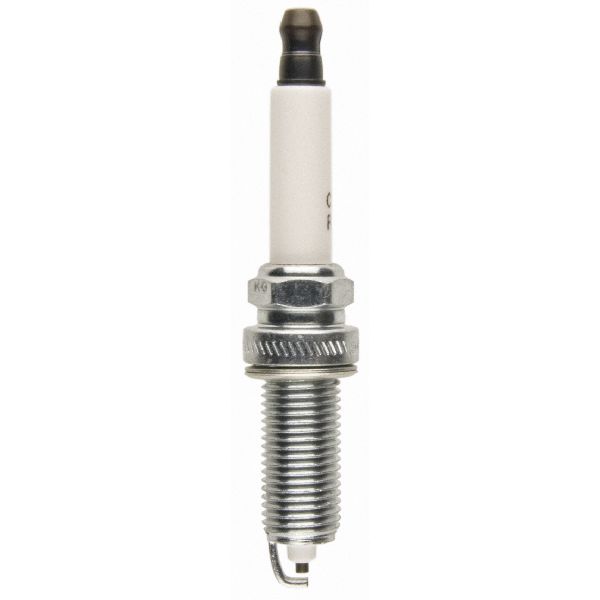
Aftermarket price range: $40-$80 - Spark Plug
(OEM #PE5R-18-110A or PE5S-18-110 (Non-Turbo), PY8V-18-110 (Turbo))— Spark plugs are a routine maintenance item and can foul or wear out, causing a misfire.
Trusted brands: NGK (ILKAR7L11), Denso
OEM price range: $20-$35
Aftermarket price range: $10-$25 - Cylinder Head & Exhaust Manifold (Turbo Only)
(OEM #PYY1-10-SJ0 (Cylinder Head Set))— Required to fix the specific issue of a seized exhaust manifold valve and resulting compression loss as described in TSB #01-001-23a.
Trusted brands: Mazda (OEM)
OEM price range: $2000+
Aftermarket price range: N/A
Related Codes That Often Appear With This One
- P0300 — If multiple cylinders are misfiring, a P0300 (Random Misfire) code may be stored along with the specific cylinder code. This can point to a systemic issue like a fuel delivery problem or the TSB-related issue on Turbo models.
- P0301, P0302, P0304 — These codes indicate misfires in other cylinders. Seeing them together strongly suggests a systemic issue like a vacuum leak, poor fuel quality, or the TSB-related issue on Turbo models affecting multiple cylinders.
- P0203 — This code indicates a malfunction in the fuel injector circuit for cylinder 3. If seen with P0303, it strongly suggests the problem is with the fuel injector or its wiring.
Technical Service Bulletins (TSBs) & Recalls
- 01-001-23a: Addresses misfires (P030x) on 2.5L Turbo engines due to a seized exhaust manifold valve causing compression loss.
- 01-014-16-3208A: Notes internal failure of specific ignition coils (YUMEBISHI brand) as a cause for misfires on older models.
- 01-017-16-3242: Links fuel injector circuit codes with misfire codes on older models.
- 01-007-19-3541: Mentions frozen water in the muffler as a potential cause of misfires in cold climates on older models.
- 01-013/21: Details coolant leaks from cracks in the cylinder head on 2.5T engines, a related but distinct issue from the valve seat wear problem.
Platform-Specific Known Issues
- For 2019-2021 Mazda3 models with the 2.5T engine, TSB #01-001-23a describes a serious condition where a seized valve in the exhaust manifold can cause the exhaust port to overheat, leading to uneven wear on the valve seat and subsequent compression loss, which triggers misfires. The official fix involves replacing the cylinder head and the exhaust manifold with modified parts.
Mechanic-Grade Diagnostic Values
- Ignition Coil Primary Resistance — expected: 0.49—0.57 ohms. Failure: A reading outside this range indicates a faulty coil.
- Ignition Coil Secondary Resistance — expected: 9.5—11.1 kilohms. Failure: A reading outside this range indicates a faulty coil.
- Fuel Injector Resistance — expected: 1.6–2.52 ohms (at 32—176 °F). Failure: A reading outside this range indicates a faulty injector.
- High-Pressure Fuel Rail Pressure (at idle) — expected: ~300 PSI. Failure: Significantly lower pressure, such as a reading below 100 PSI at idle, points to a failing high-pressure fuel pump (HPFP).
Hidden / Shadow Codes Worth Checking
- Mode 6 Data (TID $A2-$A5, CID $0C): This is not a DTC, but a diagnostic function. It provides the raw misfire count for each cylinder (Cyl 1-4) during the current and last 10 driving cycles. A high count for cylinder 3 confirms the P0303 code, even if the misfire is not constant. (see via Requires a professional scan tool like the Mazda M-MDS or an advanced aftermarket scanner (Autel, Snap-on) that can access OBD-II Mode 6 data.)
Scan Tool Commands That Help
- Mazda M-MDS, Autel, or similar advanced scanner: Active Test / Bidirectional Control: Fuel Injector Deactivation — After confirming spark and coil are good, this test can diagnose a faulty fuel injector without removing it. The technician can command the cylinder 3 injector to turn off while the engine is idling. If there is little to no change in engine RPM or smoothness, it confirms that the injector was not contributing, indicating it is clogged or has failed.
- Mazda M-MDS: KOER (Key-ON Engine-Running) On-Demand Self-Test — This is a comprehensive self-test that checks various input/output devices while the engine is running. It can help identify related system faults that might be contributing to the misfire condition.
Wiring & Ground Locations
- Engine Ground Points — While specific diagrams for the 2019+ Mazda3 are not publicly available, common Skyactiv engine ground points include a strap from the passenger side chassis near the power steering reservoir to a motor mount stud, and from the valve cover to the intake manifold and transmission housing.. A poor ground connection for the engine block or cylinder head can cause erratic behavior in ignition components, leading to weak spark and intermittent misfires that are difficult to diagnose.
Real Owner Repair Stories
- Mazdas247 forum user 'vicvega' (2002 Mazda Protege5 (older model, but illustrates a diagnostic principle)) — Persistent P0303 misfire code.
❌ Tried (didn't work) Cleaned EGR and MAF sensor, Replaced ignition coils, Replaced spark plugs (problem got worse)
✅ What actually fixed it Replacing the ignition spark plug wires. The user suspected the boot for cylinder #3 was cut and arcing internally, causing the misfire. This highlights that the connection between the coil and plug can be the fault, not just the coil or plug itself.
OEM Part Supersession History
PYY1-10-SJ0 (Cylinder Head Set for Turbo TSB)→PYY1-10-SJ0 (with modified gasket and head design)— A related TSB for coolant leaks on the 2.5T engine notes that the cylinder head and exhaust manifold gasket were redesigned to reduce stress and prevent cracking. This improved design is relevant to the misfire TSB as it addresses the root cause of excessive heat and force on the head.
Heads up: Using the old cylinder head design with the new gasket is not recommended.
Model Year Variations Within This Range
- 2019-2021: The 2.5L non-turbo engine was available in two versions: with and without cylinder deactivation (CD). They use different ignition coils. The non-CD engine uses part number PE20-18-100A, while the engine with CD uses part number PYFS-18-100. Ordering the wrong coil will result in fitment or performance issues.
Helpful Videos
We Have This Part in Stock

The information in this article is provided for general reference and educational purposes only. Vehicle specifications, procedures, and part compatibility can vary by production date, trim level, and region. Always consult your vehicle's factory service manual and verify part numbers before purchasing or performing repairs. Safety-critical components such as airbags, seat belts, and braking systems should be installed by a qualified professional.
- Mazda MAZDA3:
- 🧭 Diagnostic Flowchart
- 🎬 Helpful Videos
- 🛍️ Shop This Part
- What's Unique About the 2019-2021 Mazda MAZDA3
- Symptoms You May Notice
- Most Likely Causes
- Rare But Worth Checking
- Diagnosis Steps
- Parts You'll Likely Need
- Related Codes That Often Appear With This One
- Technical Service Bulletins (TSBs) & Recalls
- Platform-Specific Known Issues
- Mechanic-Grade Diagnostic Values
- Hidden / Shadow Codes Worth Checking
- Scan Tool Commands That Help
- Wiring & Ground Locations
- Real Owner Repair Stories
- OEM Part Supersession History
- Model Year Variations Within This Range
- 🎟️ Get 5% Off