

P0303 on 2014-2020 Nissan Rogue: Cylinder 3 Misfire Causes and Fixes
P0303 on a Nissan Rogue almost always means you need to replace the spark plug and/or ignition coil for cylinder 3. A DIY fix with a new plug and coil costs around $50-$100 and is the most common solution. Before replacing parts, check for oil in the spark plug tube, as a leaking valve cover gasket is a very common root cause that will destroy the new coil if not fixed.
- P0303 on a 2014-2020 Rogue is almost always a bad spark plug or ignition coil in cylinder 3.
- The easiest way to diagnose a bad coil is to swap it with another cylinder and see if the code follows.
- When you remove the ignition coil, check for oil in the spark plug tube. If you see oil, you must replace the valve cover gasket to fix the root cause.
- If the Check Engine Light is flashing, pull over and stop driving to avoid damaging your catalytic converter.
- For a high-mileage vehicle, it's wise to replace all four spark plugs and ignition coils at the same time for long-term reliability.
What's Unique About the 2014-2020 Nissan Rogue
The QR25DE engine in the 2014-2020 Rogue is a reliable, port-injected engine, which avoids the carbon buildup issues common in direct-injected engines. However, ignition coil failure is a very common problem on this platform. A critical and unique issue is the design of the valve cover, where the spark plug tube seals are integrated and not separately serviceable. These seals are known to harden and leak oil directly into the spark plug tubes, which saturates the ignition coil boot and causes the coil to fail. Simply replacing the coil without replacing the entire valve cover assembly will lead to repeated failures.
Symptoms You May Notice
- Rough or vibrating idle
- Engine hesitation or stumbling during acceleration.
- Noticeable loss of engine power.
- Reduced fuel economy.
- Check Engine Light is on and may be flashing.
- Strong smell of gasoline from the exhaust.
- Engine stalling.
- Replacing only the spark plug when the ignition coil is also bad (or vice-versa).
- Replacing ignition coils repeatedly without checking for and fixing the root cause: oil in the spark plug tubes from a leaking valve cover gasket.
- Assuming a P0303 is always a simple plug/coil issue without considering less common causes like fuel delivery or compression when the problem persists.
Most Likely Causes
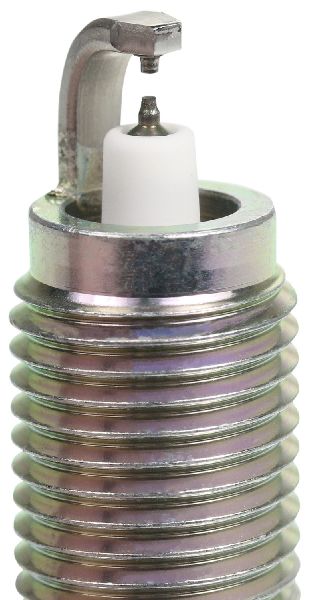
- Worn or Fouled Spark Plug 🔴 High Probability → Shop Spark Plug Spark plugs are a routine maintenance item and a primary failure point for any misfire. Oil from a leaking valve cover tube seal can also foul the plug, causing a misfire.
How to confirm: Remove the spark plug from cylinder 3 and inspect it. Look for a wet (oil or fuel fouled) appearance, heavy carbon deposits, a cracked insulator, or excessive wear on the electrode. Compare it to a plug from a working cylinder.
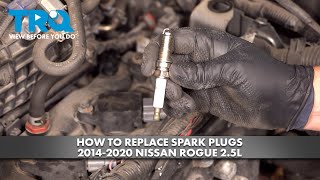
Typical fix: Replace the spark plug. It is highly recommended to replace all four spark plugs at the same time with OEM-spec NGK or Denso plugs to ensure even performance. Torque to spec (typically around 18 ft-lbs).
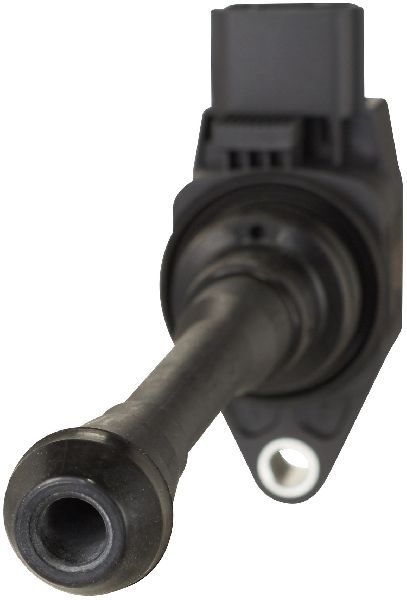
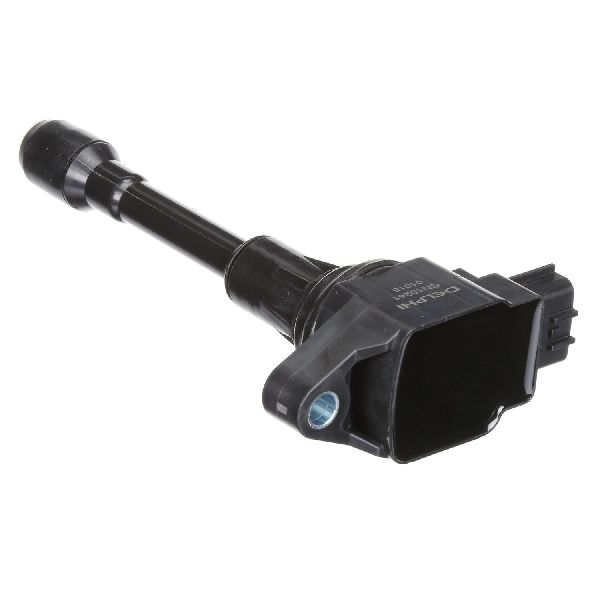
Est. part cost: $10-$25 per plug - Failed Ignition Coil 🔴 High Probability → Shop Ignition Coil Ignition coil failure is a very common issue on the QR25DE engine, often induced by oil contamination from a leaking valve cover gasket.
How to confirm: Swap the ignition coil from cylinder 3 with the coil from another cylinder (e.g., cylinder 2). Clear the codes and drive the vehicle. If the code changes to P0302, the coil is bad. Visual inspection of the coil boot for oil saturation is also a strong indicator.
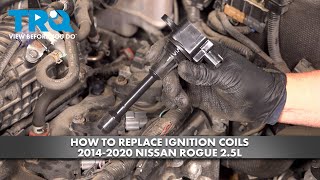
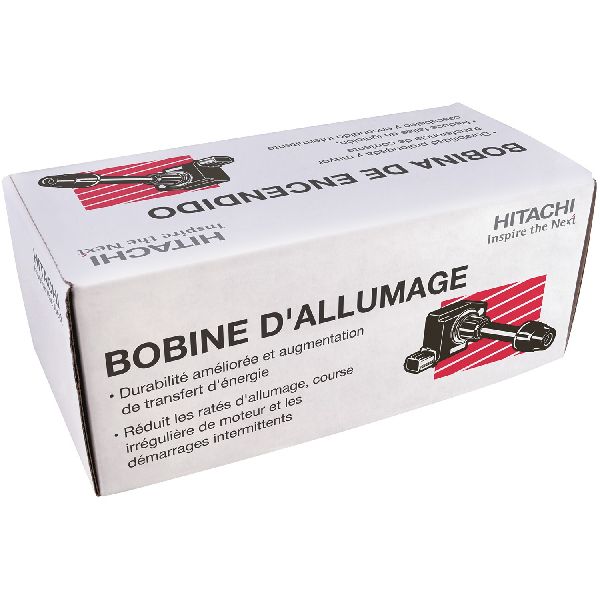
Typical fix: Replace the faulty ignition coil. Many owners and mechanics recommend replacing all four coils if the vehicle has over 75,000 miles, as the others are 🎬 See how to properly swap out your old ignition coils. likely near the end of their service life. Use reputable brands like Hitachi (OEM supplier) or NGK.
Est. part cost: $30-$80 per coil - Faulty Fuel Injector 🟡 Medium Probability → Shop Fuel Injector Fuel injectors can become clogged with deposits or fail electronically over time, preventing the correct amount of fuel from reaching cylinder 3.
How to confirm: This is more difficult for a DIYer. A professional can perform a fuel injector balance test. A more advanced DIY step is to listen to the injector with a mechanic's stethoscope to check for a consistent clicking sound. Swapping the injector from cylinder 3 with another cylinder is possible but requires removing the fuel rail.
Typical fix: Replace the faulty fuel injector. It's often recommended to replace them as a set on high-mileage vehicles to ensure balanced fuel delivery.
Est. part cost: $50-$150 per injector
Rare But Worth Checking
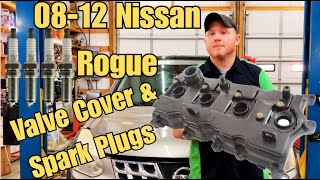
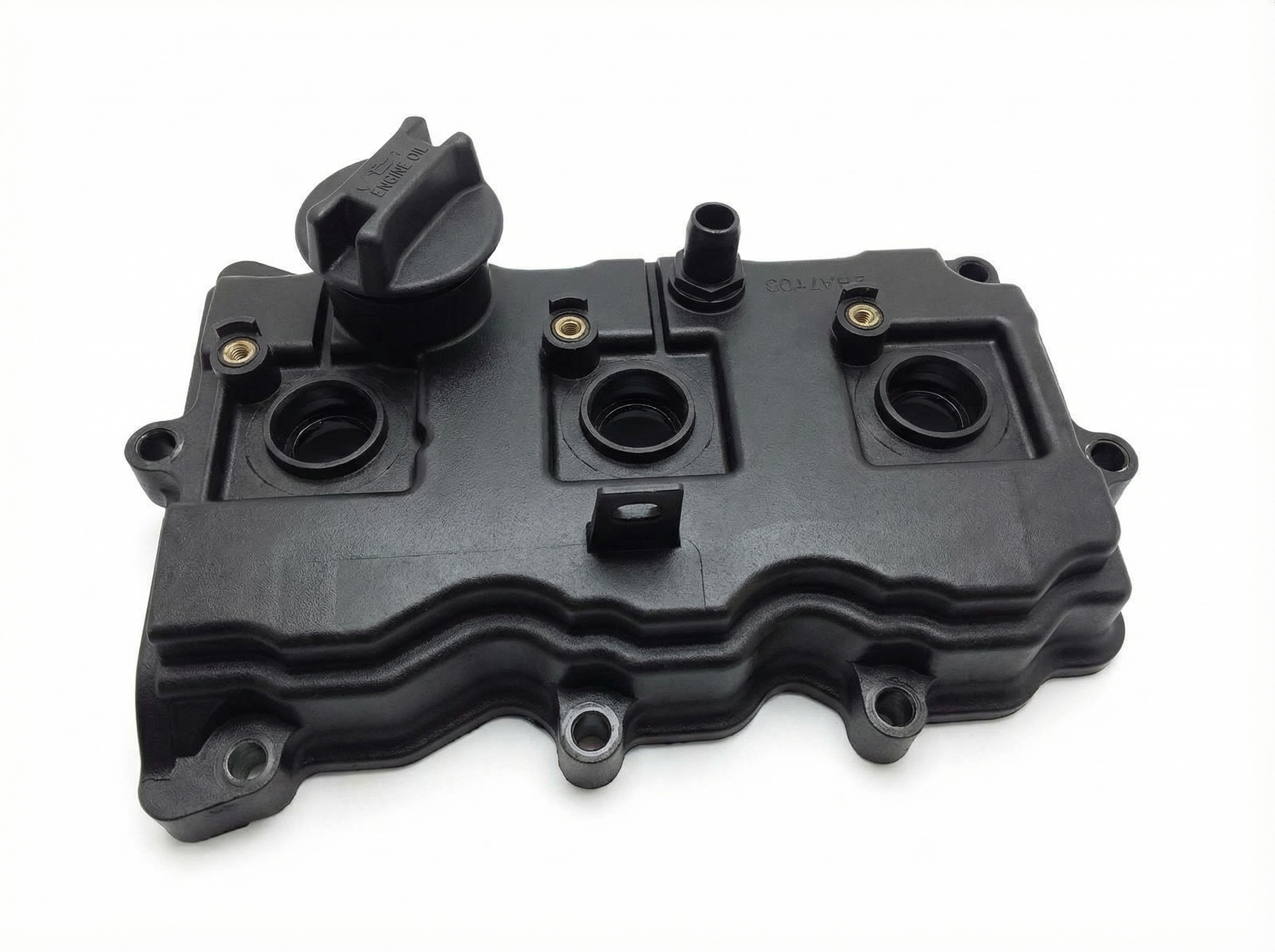
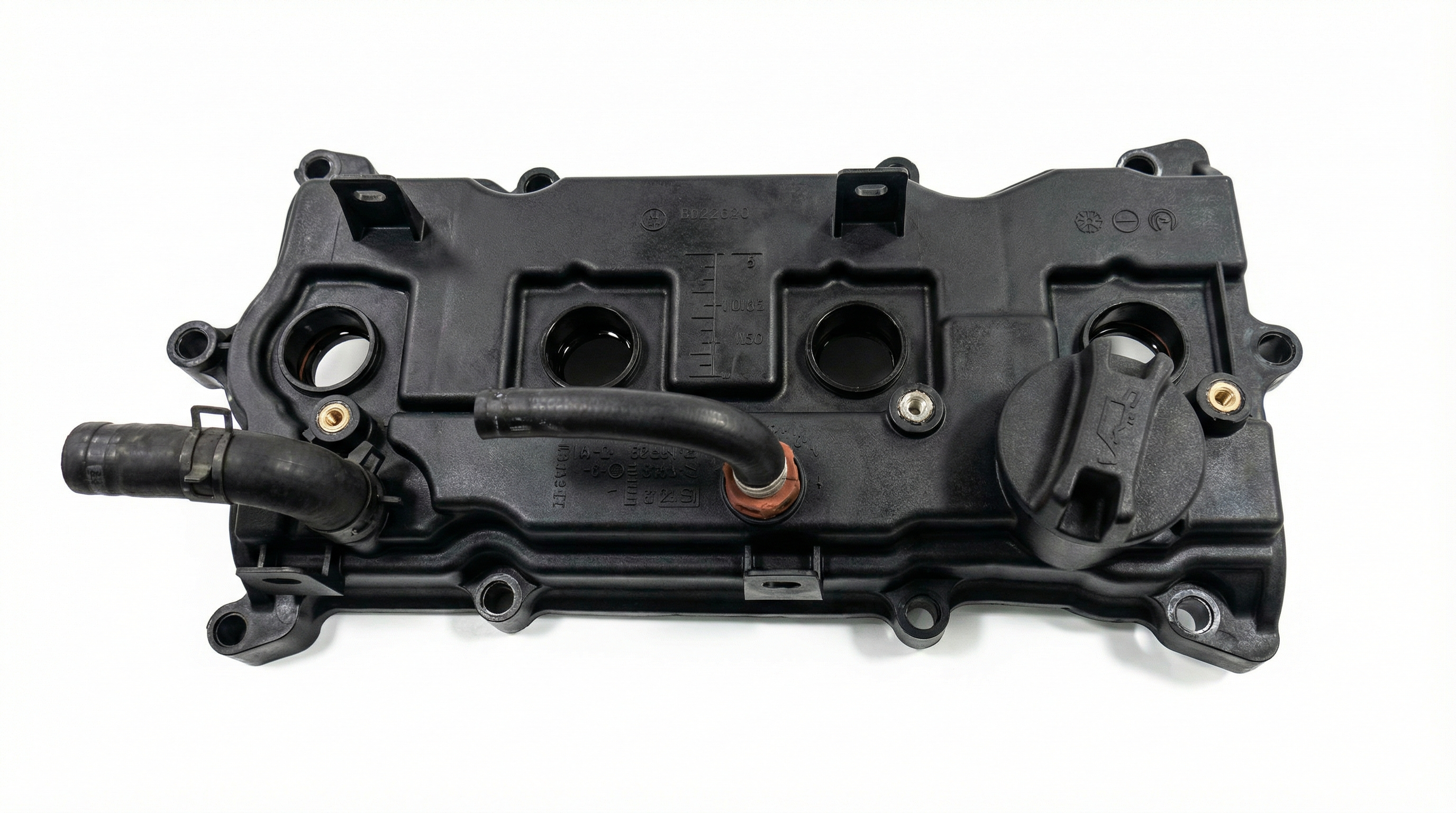
- Leaking Valve Cover Gasket (Spark Plug Tube Seal): → Shop Engine Valve Cover This is a key issue for the QR25DE engine. When removing the ignition coil, shine a light into the spark plug tube. If you see liquid oil, the entire valve cover assembly must be replaced to prevent future ignition coil failures. The tube seals are not sold separately. A Reddit user confirmed this is a common failure and that aftermarket valve covers may cause oil consumption issues due to inferior internal baffles.
- Low Engine Compression: If ignition and fuel components are good, a compression test should be performed. This can indicate more serious internal engine problems like a burned exhaust valve, worn piston rings, or a damaged cylinder wall. An owner report in NHTSA ODI #10585058 for a similar Nissan model noted that a P0303 code was ultimately caused by a cylinder losing compression.
- Damaged Coil or Injector Wiring: Inspect the wiring harness and connector for cylinder 3's ignition coil and fuel injector. Look for any signs of rodent damage, chafing, corrosion, or loose pins at the connector.
- Carbon Buildup and Catalyst Damage: While less common on port-injected engines, NHTSA ODI #11089943 describes a case where carbon build-up on valves caused misfires (P0300 and P0303) and led to the breakdown of the catalyst, eventually requiring a long engine assembly replacement.
Diagnosis Steps
- Read the code with an OBD-II scanner to confirm P0303 and check for any other codes.
- Note if the Check Engine Light is solid or flashing. A flashing light indicates a severe misfire requiring immediate attention.
- Turn off the engine. Locate cylinder 3. On the QR25DE, the cylinders are numbered 1-2-3-4 from left to right (passenger to driver side).
- Remove the 10mm bolt holding the ignition coil for cylinder 3. Pull the coil straight up.
- Inspect the spark plug tube for liquid oil. If oil is present, the valve cover assembly needs replacement. This is the likely root cause of the misfire.
- If no oil is present, swap the ignition coil from cylinder 3 with the coil from cylinder 2.
- Clear the codes with the scanner, start the engine, and drive until the Check Engine Light returns.
- Scan the codes again. If the code is now P0302, the ignition coil is faulty and needs to be replaced.
- If the code remains P0303, the coil is likely good. The next step is to inspect the spark plug. Using a 14mm deep socket, remove the plug from cylinder 3 and check for wear, fouling, or damage. Replace if necessary (it's best to replace all four).
- If the plug and coil are good and there's no oil leak, the issue may be the fuel injector, wiring, or a compression problem, which may require professional diagnosis.
Parts You'll Likely Need
- Ignition Coil
(OEM #22448-JA00C (superseded by 22448-1KT1A))— This is one of the most common failure points for a P0303 code on this engine, often due to oil contamination.
Trusted brands: Hitachi (IGC0002), NGK (49024), Denso (673-4028), Nissan OEM
OEM price range: $100-$135
Aftermarket price range: $30-$80 - Spark Plug
(OEM #22401-JA01B (NGK DILKAR6A11))— Spark plugs are a primary wear item and the first part to check for a misfire.
Trusted brands: NGK, Denso
OEM price range: $15-$25
Aftermarket price range: $10-$20 - Valve Cover Assembly (with Gasket and Tube Seals)
(OEM #13264-3KY0A (US Make, 2014-16), 13264-4JM0A (JP Make, 2016), 13264-6FL0A (KRA Make, 2016), 13264-3TU0A (US Make, 2017-20))— Required if oil is found in the spark plug tubes. The tube seals are integrated into the cover and are not serviceable separately, a known issue on the QR25DE.
Trusted brands: Nissan OEM, Fel-Pro, Mahle
OEM price range: $150-$250
Aftermarket price range: $50-$100
Related Codes That Often Appear With This One
- P0300 — If the misfire is intermittent or begins to affect other cylinders, a P0300 (Random Misfire) code may appear alongside P0303, suggesting a problem common to all cylinders like a vacuum leak or low fuel pressure.
- P0301, P0302, P0304 — If other cylinder-specific misfire codes are present, it points towards a problem affecting the whole engine, like low fuel pressure, a large vacuum leak, or contaminated fuel, rather than a component specific to cylinder 3.
Platform-Specific Known Issues
- The spark plug tube seals, which are integrated into the valve cover and cannot be replaced individually, are known to harden and leak oil directly onto the ignition coils, causing them to fail prematurely. This makes replacing the entire valve cover assembly a common part of a P0303 repair on higher-mileage Rogues.
- A manufacturer service bulletin, TSB Bulletin #NTB12096, notes that a MIL may be on with misfire DTCs (P0300-P0304) stored even when there are no drivability issues present.
- Similarly, TSB Bulletin #NTB22-069 describes misfire codes including P0303 occurring during a cold start warm-up cycle with no accompanying drivability concerns.
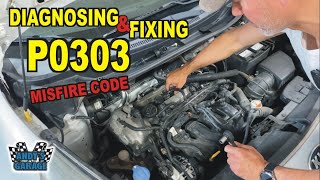
- A helpful DIY video for this repair is available on YouTube titled 'Nissan Rogue Oil Leak Fix – QR25DE Valve Cover Replacement DIY', which addresses this exact issue.
Mechanic-Grade Diagnostic Values
- Ignition Coil Primary Resistance — expected: 0.4 - 2.0 Ohms. Failure: A reading outside this range, or of 0 Ohms (short circuit), indicates a faulty coil.
- Ignition Coil Secondary Resistance — expected: 6,000 - 10,000 Ohms (6k - 10k Ω). Failure: A reading significantly outside this range suggests the coil's internal windings are compromised.
- Fuel Pressure (at fuel rail) — expected: Approximately 50-51 PSI. Failure: Pressure significantly lower than 50 PSI indicates a weak fuel pump, clogged filter, or faulty pressure regulator.
Scan Tool Commands That Help
- Nissan CONSULT (or advanced professional scanners): Power Balance Test — Use this function when a misfire is felt but the specific cylinder is uncertain, or to confirm a weak cylinder after basic part swaps. The tool individually cuts fuel to each cylinder, and the resulting RPM drop is measured. A cylinder with little to no RPM drop is the one that is not contributing power, confirming the location of the misfire.
Real Owner Repair Stories
- Reddit user on r/NissanRogue (2015 Nissan Rogue SV, 129k miles) — Persistent P0300 and P0303 codes, rough starts, uneven idle, flashing check engine light.
❌ Tried (didn't work) Replaced spark plug and ignition coil on cylinder 3 (worked for 400 miles, then failed again)., Dealership performed fuel system treatment., Replaced all fuel injectors., Replaced all ignition coils., Confirmed good compression and no intake manifold leaks via smoke test., Replaced all 4 spark plugs with new NGKs.
✅ What actually fixed it The original poster did not find a resolution, but another user in the thread with a similar history of unresolved misfires on a different cylinder reported the final fix was replacing the ignition coil's wiring pigtail connector, which had an intermittent connection issue not visible on inspection. - Reddit user on r/Nissan (2006 Nissan Sentra SE-R (with QR25DE engine)) — Misfire on cylinder 3 (P0303).
❌ Tried (didn't work) Initial diagnosis assumed spark plug or ignition coil failure.
✅ What actually fixed it The actual cause was a burned exhaust valve in cylinder 3, which had a hole burned through it. This was a mechanical failure requiring cylinder head removal to fix, not a simple ignition or fuel part replacement. - NHTSA ODI #10605621 — An owner reported the check engine light came on with OBD2 code P0303 and intermittently P0300, indicating cylinder #3 and multiple cylinder misfiring.
"I Checked Everything" — The Actual Cause
- In a documented case on a 2015 Rogue with a persistent P0303, the owner and a dealership confirmed there were no vacuum leaks from the intake manifold (a test often done with a smoke machine). Despite replacing plugs, coils, and injectors, the misfire continued. This points to causes that a smoke test cannot find, such as a faulty wiring pigtail with an intermittent connection, a failing fuel injector driver in the ECM, or an internal mechanical issue like a burned valve.
When the Usual Fixes Don't Work
- While the vast majority of P0303 codes on the QR25DE are resolved by replacing the spark plug and/or ignition coil, there are documented cases where this does not fix the problem. In one instance, a persistent misfire on a 2015 Rogue that had all ignition and fuel parts replaced was likely caused by a faulty wiring pigtail to the coil. In another case on the same engine family, the P0303 was the result of a burned exhaust valve, a serious internal engine issue requiring a compression test to diagnose. These cases highlight that if the common fixes fail, the next steps must be a compression test and a thorough inspection of the wiring harness, not just another set of plugs and coils.
OEM Part Supersession History
22448-JA00C→22448-1KT1A— Part has been updated by the manufacturer. The new part is a direct replacement.
Heads up: These parts are cross-compatible. Other compatible part numbers include 22448-ED000 and 22448-JA00A.13264-3TA0A, 13264-3TU0A→13264-3KY0A— Part consolidation and minor revisions by the manufacturer for 2014-2016 US-built models.
Heads up: It is critical to order the valve cover based on the vehicle's VIN, as different part numbers were used for US, Japan, and Korean-built models within the same generation. While superseded, using the wrong cover can lead to fitment issues.
Model Year Variations Within This Range
- 2014-2020: The primary variation within this generation for a P0303 repair is the specific part number for the valve cover assembly. Different numbers were used depending on the model year and the vehicle's country of manufacture (USA, Japan, Korea). Always verify the correct part number using the vehicle's VIN before ordering a replacement valve cover. The core engine, ignition system, and the common failure patterns remain consistent.
Diagnostic Flowchart
Other Known Issues on This Vehicle
Issues unrelated to this code that are worth knowing about as an owner of this generation:
- CVT Transmission Failure/Hesitation 🔴 High — Very common, particularly in 2014-2016 models. Issues like shuddering, hesitation, and overheating can appear around 80,000-100,000 miles. (Ref: Multiple class-action lawsuits and warranty extensions have been issued by Nissan for CVT problems.)
- A/C Compressor Failure 🟠 Medium — Widespread reports of the A/C system blowing warm air, often due to a premature failure of the A/C compressor clutch or the compressor itself, sometimes well before 100,000 miles. (Ref: No specific recall, but a very common complaint. A TSB for 2021 models (NTB22-021) addresses A/C amplifier issues that can cause similar symptoms.)
- EVAP System Leaks (Vent Control Valve/Gas Cap) 🟡 Low — Frequently causes Check Engine Lights for codes like P0442, P0455, and P0456. The issue is often a loose gas cap or a failed EVAP vent control valve, which is a known weak point on many Nissan models. (Ref: Nissan has issued TSBs like NTB13-097 and NTB17-082E which detail diagnostic procedures for these common EVAP codes.)
- Faulty Fuel Level Sensor 🟡 Low — Owners may experience an inaccurate fuel gauge reading due to a worn sensor on the fuel sending unit inside the tank.
- Poor Interior Heating at Idle 🟡 Low — Some owners report that the heater only blows hot air while driving, not at idle. This is often caused by air pockets in the cooling system that need to be bled out.
Used vs. New Parts: Buying Guide for This Vehicle
When a used part is the smart pick: A used OEM ignition coil from a low-mileage (under 60k miles) donor vehicle can be a cost-effective and reliable alternative to a new, unbranded aftermarket coil. Since it's an electronic part with no moving components, a genuine Nissan/Hitachi coil often has a long service life.
Donor-vehicle mileage cap: roughly under 60000 miles for the part to have meaningful remaining life.
What to inspect on the donor part:
- For ignition coils, verify it is a genuine OEM part (e.g., Nissan or Hitachi branding), not a generic replacement.
- Inspect the coil body for any cracks, melting, or physical damage.
- Check the electrical connector for corrosion or broken tabs.
- For a valve cover, ensure it is a genuine Nissan part to avoid potential oil consumption issues caused by poorly designed baffles in some aftermarket units.
OEM-only on this vehicle (don't cheap out):
- Valve Cover Assembly: Strongly recommended to use a genuine Nissan OEM part. Forum users and mechanics report that some cheap aftermarket valve covers have improperly designed internal PCV baffles, which can lead to increased oil consumption.
Aftermarket brands forum-validated for this vehicle:
- Ignition Coils: Hitachi (OEM supplier), NGK, Denso.
- Spark Plugs: NGK, Denso (use the specific laser iridium or platinum plug required by the manufacturer).
- Valve Cover Gaskets/Seals: Fel-Pro, Mahle (if buying a gasket for an OEM cover, though most replacements are the full assembly).
Brands owners have reported issues with on this vehicle:
- Unbranded, no-name ignition coil 'packs' sold at a deep discount online.
- Cheap, unverified aftermarket valve cover assemblies due to the risk of poor PCV baffle design.
Real Owner Stories
Aggregated from forums and TSBs cited above. Mileages and costs reflect what owners reported in those sources.
2014-2020 Nissan Rogue 2.5L
Symptoms: Oil leak repair estimate led to a discussion about spark plug tube seals leaking onto the ignition system.
What fixed it: Replacement of the entire valve cover assembly because the tube seals are built-in and not sold separately.
Source hint: Reddit - r/NissanRogue - Thread titled 'Oil Leak repair'
Related OBD-II Codes
Frequently Asked Questions
Can I just replace the spark plug tube seals on my Nissan Rogue to stop the oil from fouling the cylinder 3 coil?
Which spark plugs should I use for my 2.5L Rogue to fix a P0303 code?
Is there a specific ignition coil brand recommended for the QR25DE engine?
My Rogue has over 75,000 miles and just threw a P0303 code; should I replace more than just the cylinder 3 coil?
Could my Rogue's P0303 misfire be related to the CVT transmission issues?
Are there any TSBs for the EVAP codes that sometimes appear with engine lights on this model?
Helpful Videos
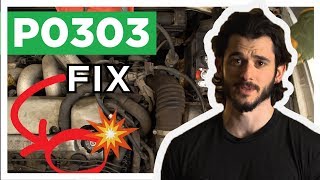
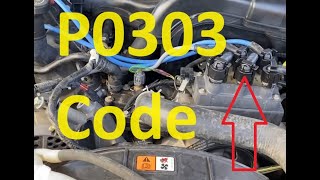
Used OEM Parts in Stock
New Aftermarket Parts Available


The information in this article is provided for general reference and educational purposes only. Vehicle specifications, procedures, and part compatibility can vary by production date, trim level, and region. Always consult your vehicle's factory service manual and verify part numbers before purchasing or performing repairs. Safety-critical components such as airbags, seat belts, and braking systems should be installed by a qualified professional.
- Nissan Rogue:
- 🧭 Diagnostic Flowchart
- 🎬 Helpful Videos
- 🛍️ Shop This Part
- What's Unique About the 2014-2020 Nissan Rogue
- Symptoms You May Notice
- Most Likely Causes
- Rare But Worth Checking
- Diagnosis Steps
- Parts You'll Likely Need
- Related Codes That Often Appear With This One
- Platform-Specific Known Issues
- Mechanic-Grade Diagnostic Values
- Scan Tool Commands That Help
- Real Owner Repair Stories
- "I Checked Everything" — The Actual Cause
- When the Usual Fixes Don't Work
- OEM Part Supersession History
- Model Year Variations Within This Range
- Other Known Issues on This Vehicle
- Used vs. New Parts: Buying Guide for This Vehicle
- Real Owner Stories
- 2014-2020 Nissan Rogue 2.5L
- Related OBD-II Codes
- Frequently Asked Questions
- 🎟️ Get 5% Off