

P0303 on 2007-2012 Nissan Sentra 2.0L: Cylinder 3 Misfire Causes and Fixes
The P0303 code on a 2007-2012 Nissan Sentra indicates a misfire in cylinder 3. The most common cause is a failed ignition coil or a worn-out spark plug. Accessing cylinder 3 requires removing the intake manifold, making the repair more complex than on other vehicles. Replacing a single ignition coil is a DIY fix costing around $40-$75 for the part, but the added labor of the manifold removal is a key consideration.
- P0303 on a 2007-2012 Sentra means cylinder 3 is misfiring.
- The most likely cause is a bad ignition coil, followed by a worn spark plug.
- Diagnosing this code requires removing the intake manifold to access the cylinder 3 coil and plug, making it more difficult than on many other cars.
- The easiest diagnostic step is to swap the cylinder 3 coil with another cylinder's coil to see if the misfire code follows it.
- Do not drive for long with a flashing check engine light, as this can destroy the catalytic converter, leading to a much more expensive repair.
What's Unique About the 2007-2012 Nissan Sentra
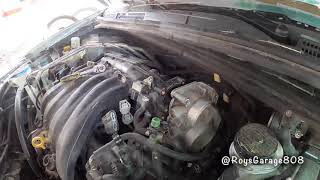
For the Nissan Sentra with the MR20DE engine, accessing the ignition coils and spark plugs for cylinders 2 and 3 can be more involved than on other vehicles. The plastic intake manifold wraps over the top of the valve cover, requiring its removal for access to the center cylinders. This design turns a simple ignition component swap into a more labor-intensive job, as the battery, airbox, and throttle body must also be disconnected and moved to get the manifold off. One particularly difficult bolt is located on the back of the manifold, securing it to the cylinder head, which is notoriously hard to reach.
Symptoms You May Notice
- Flashing or solid Check Engine Light
- Rough or shaking engine idle
- Engine hesitation or stumbling during acceleration
- Noticeable loss of power
- Reduced fuel economy
- Sweet smell from exhaust (in cases of head gasket failure)
- Difficulty starting the engine
- Replacing only the spark plug without testing the ignition coil. The most common diagnostic step is to swap coils to see if the misfire follows the coil.
- Replacing the catalytic converter. A misfire can cause a P0420 (Catalyst System Efficiency) code to appear, but the misfire is the root cause, not the converter itself. Fixing the misfire first is essential.
- Forgetting to replace the intake manifold gasket after removing it for service. A reused gasket can cause a vacuum leak, leading to new performance issues and codes like P0171 (System Too Lean).
Most Likely Causes
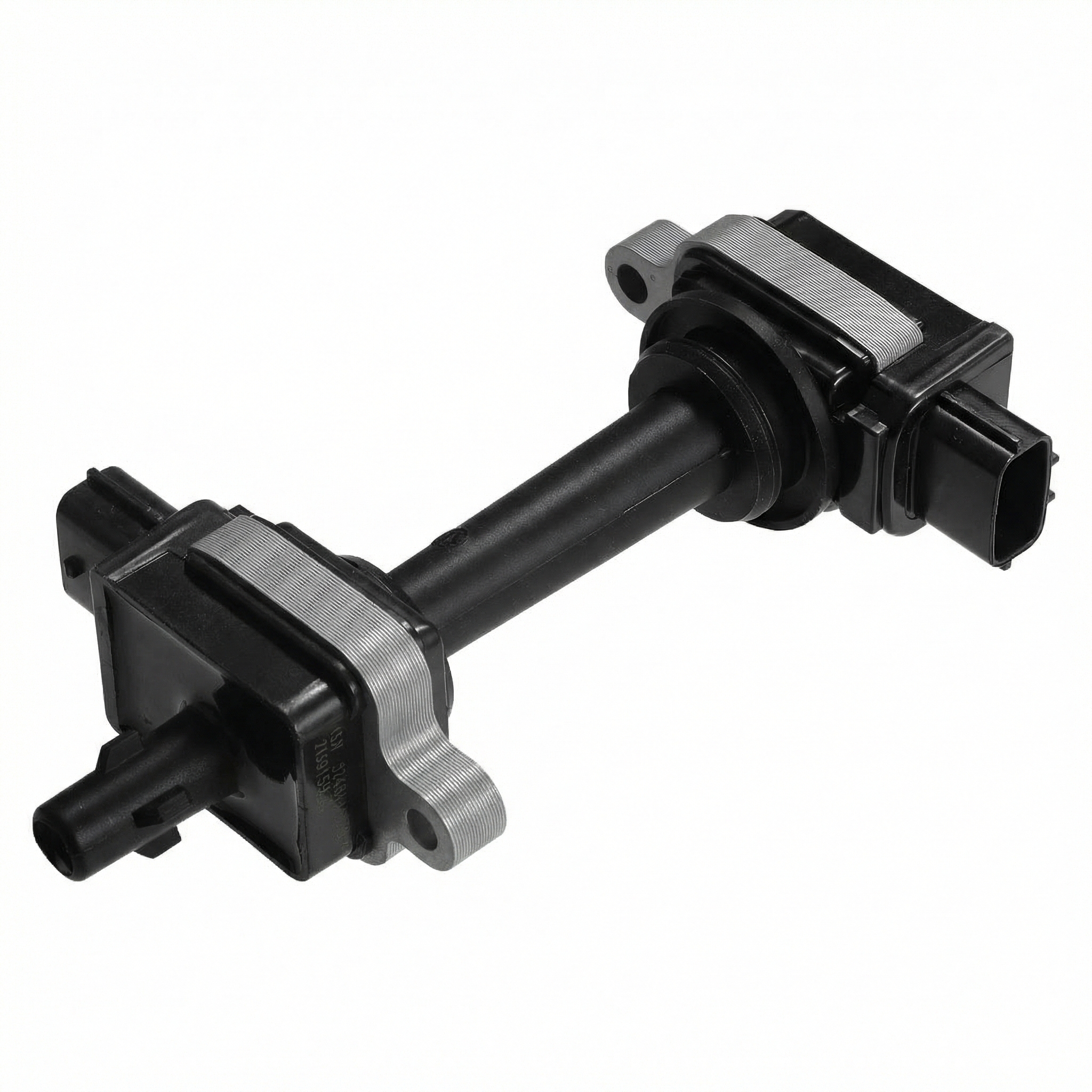
- Failed Ignition Coil 🔴 High Probability → Shop Ignition Coil Coil-on-plug ignition systems are a common failure point on many modern vehicles as they age. Heat and vibration lead to eventual electronic failure. On the MR20DE, oil leaking from a failed valve cover gasket can also pool in the spark plug tubes and saturate the ignition coil boots, causing them to fail.
How to confirm: Swap the ignition coil from cylinder 3 with another cylinder (e.g., cylinder 1). Clear the codes and drive the vehicle. If the code changes to P0301, the ignition coil is faulty. Visual inspection may also reveal oil contamination on the coil boot.
Typical fix: Replace the faulty ignition coil. It is often recommended to replace all four coils and spark plugs at the same time for preventative maintenance, especially if they are original or if oil contamination is found.
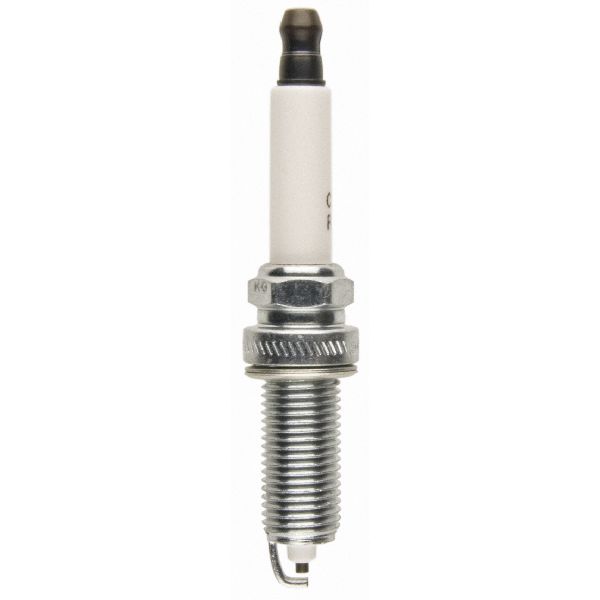
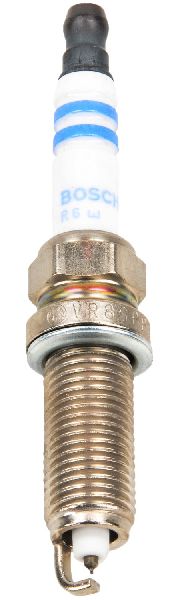
Est. part cost: $40-$75 for one coil - Worn or Fouled Spark Plug 🔴 High Probability → Shop Spark Plug Spark plugs are a regular maintenance item. If not replaced at the recommended interval (around 100,000 miles), the electrodes can wear, causing a weak spark. Oil from a leaking valve cover gasket or fuel from a faulty injector can also foul the plug, preventing it from firing.
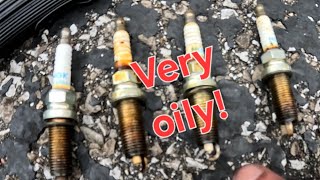
How to confirm: After confirming the ignition coil is good, remove the spark plug from cylinder 3. Inspect for wear, oil fouling, or damage. A wet, fuel-smelling plug indicates a lack of spark, while a black, oily plug points to a leaking valve cover gasket. 🎬 Watch: How to handle spark plugs fouled by oil leaks.
Typical fix: Replace the spark plug. It is best practice to replace all four spark plugs as a set. If plugs are fouled by oil, the valve cover gasket must also be replaced to prevent a recurrence.
Est. part cost: $10-$25 per plug - Leaking Valve Cover Gasket 🟡 Medium Probability → Shop Engine Valve Cover The rubber gaskets and spark plug tube seals become hard and brittle with age and heat cycles, losing their ability to seal. This allows engine oil to leak into the spark plug tubes.
How to confirm: When removing the ignition coil from cylinder 3, check for liquid oil in the tube or on the coil boot and spark plug. A brittle, cracked gasket may be visible when the valve cover is removed.
Typical fix: Replace the valve cover gasket and the integrated spark plug tube seals. Thoroughly clean all oil from the spark plug tubes and ignition coils before reassembly.
Est. part cost: $30-$60 for the gasket set - Faulty Fuel Injector 🟡 Medium Probability → Shop Fuel Injector
How to confirm: If swapping the coil and replacing the plug does not resolve the P0303 code, the fuel injector is a likely culprit. You can test for a signal at the injector connector with a 'noid' light or listen for a 'clicking' sound from the injector using a mechanic's stethoscope.
Typical fix: Replace the fuel injector for cylinder 3. It's also wise to replace the O-rings and seals.
Est. part cost: $50-$150
Rare But Worth Checking
- Low Engine Compression: If ignition and fuel components are confirmed to be good, a mechanical issue like a burnt valve, worn piston rings, or a leaking head gasket could be the cause. A compression test is needed to diagnose this. A healthy MR20DE should have compression around 180-202 PSI, but readings as low as 130 PSI have been observed on running vehicles. Some owners have reported head gasket issues on the MR20DE. NHTSA ODI #11256820 describes an instance of low compression with only 83,000 miles on the vehicle, resulting in codes P0300 and P0303.
- Dirty or Faulty Mass Airflow (MAF) Sensor: A dirty MAF sensor can provide incorrect air readings to the computer, leading to an improper air/fuel mixture and causing misfires. Sometimes this can trigger a misfire code on a single cylinder before triggering a general MAF sensor code.
- Vacuum Leak: A vacuum leak near the intake manifold runner for cylinder 3 could lean out the air/fuel mixture enough to cause a misfire. This can be caused by a failed intake manifold gasket, which should be replaced any time the manifold is removed.
- Clogged or Damaged Catalytic Converter: While a misfire can damage a catalytic converter, a pre-existing clog in the converter can increase backpressure and cause misfires. NHTSA ODI #10557504 notes a case where the exhaust manifold pre-catalyst had come apart, leading to codes P0420, P0302, and P0303.
Diagnosis Steps
- Read the trouble code with an OBD-II scanner to confirm P0303 and any other codes. 🎬 Watch: Step-by-step DIY guide for diagnosing a P0303 misfire.
- Note if the Check Engine Light is solid or flashing. A flashing light indicates a severe misfire that can damage the catalytic converter.
- To access the ignition coils, the intake manifold must be removed. This involves disconnecting the battery, air intake hose, throttle body wiring, and several bolts and nuts securing the manifold.
- Once the manifold is off, swap the ignition coil from cylinder 3 with another cylinder (e.g., cylinder 1, which is on the end). Inspect the coil boot for oil saturation, which indicates a leaking valve cover gasket.
- Reassemble the intake manifold (using a new gasket is highly recommended), clear the codes, and start the engine. Let it run for a few minutes.
- Rescan for codes. If the code is now P0301, the ignition coil is bad and needs to be replaced.
- If the code remains P0303, the problem is likely the spark plug, fuel injector, or a mechanical issue. Remove the intake again and replace the spark plug in cylinder 3 (a 14mm socket is required). Inspect the old plug for fouling.
- If the problem persists, the next step is to check the fuel injector and its wiring using a noid light or stethoscope.
- If all ignition and fuel components check out, perform a compression test to rule out mechanical engine problems like a bad head gasket or valves. A healthy MR20DE should have compression around 180-202 PSI.
Parts You'll Likely Need
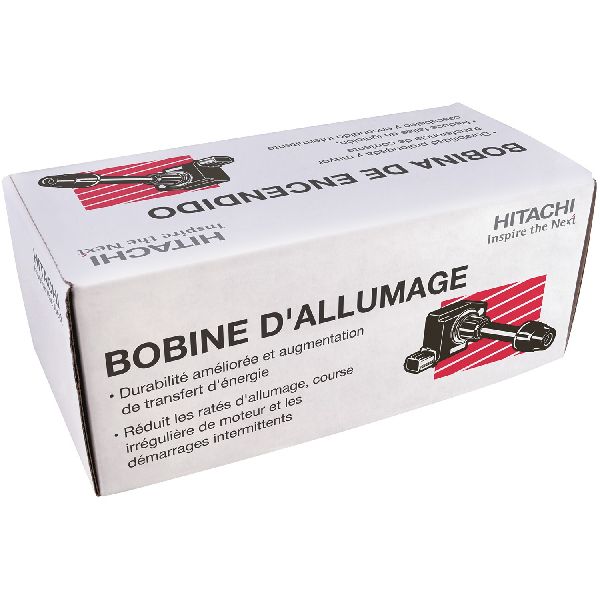
- Ignition Coil
(OEM #22448-JA00C)— This is the most frequent cause of a single-cylinder misfire on the MR20DE engine.
Trusted brands: Hitachi (OEM), NGK, Denso, Delphi
OEM price range: $90-$120
Aftermarket price range: $40-$75 - Spark Plug
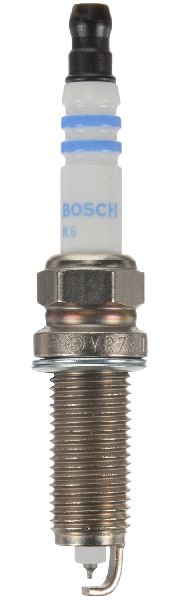
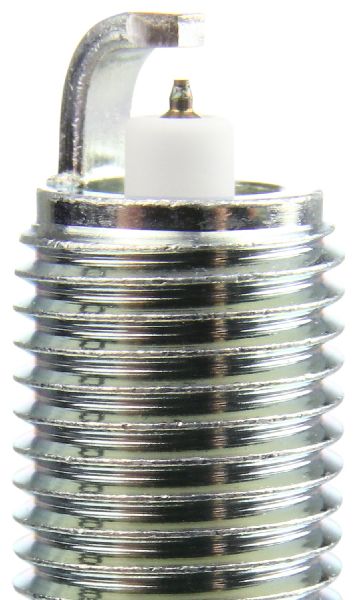
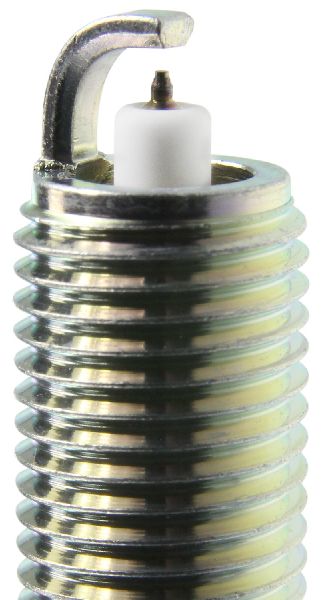
(OEM #22401-CK81B)— As a standard maintenance item, a worn spark plug is a common cause of misfires if the ignition coil is good. The OEM plug is an NGK Iridium.
Trusted brands: NGK (PLFR4A-11), Denso
OEM price range: $20-$30
Aftermarket price range: $10-$25 - Intake Manifold Gasket
(OEM #14035-ET000)— Must be replaced whenever the intake manifold is removed to prevent vacuum leaks. Not replacing it is a common DIY mistake.
Trusted brands: Fel-Pro, Mahle, Nissan OEM
OEM price range: $20-$30
Aftermarket price range: $10-$20
Related Codes That Often Appear With This One
- P0300 — If the misfire becomes more frequent or other cylinders begin to misfire, a P0300 (Random/Multiple Cylinder Misfire) code may appear alongside P0303.
- P0420 — A persistent misfire allows unburned fuel to enter the exhaust, which can overheat and damage the catalytic converter, triggering a P0420 code.
- P0171 — If the intake manifold gasket is not replaced or seated correctly after a repair, it can create a vacuum leak, causing a P0171 (System Too Lean) code to appear along with misfire codes.
Technical Service Bulletins (TSBs) & Recalls
- NTB12-051j: A TSB related to reprogramming the ECM for a P0101 MAF sensor code was issued for 2011-2012 Sentra models with the MR20DE engine. While not directly for P0303, it addresses a related engine management component that can affect air-fuel mixture and potentially contribute to misfires. It involves an ECM reprogram if no other driveability issues are present.
Platform-Specific Known Issues
- Access to the spark plugs and ignition coils for cylinders 2 and 3 is obstructed by the plastic intake manifold, which must be removed for service. This increases labor time compared to engines with unobstructed access.
- A video by 'MLWorks Automotive' on YouTube shows a detailed repair of a P0303 on a Sentra, highlighting that oil-soaked spark plugs from a brittle valve cover gasket are a very common underlying cause.
- The valve cover gasket and spark plug tube seals are often sold as a single unit and should be replaced together if oil is found in the spark plug wells.
Mechanic-Grade Diagnostic Values
- Fuel Pressure at Idle — expected: ~51 PSI (350 kPa). Failure: Significantly lower pressure indicates a weak fuel pump or clogged filter. Significantly higher pressure could indicate a faulty fuel pressure regulator.
- Fuel Injector Resistance — expected: Approximately 12 - 17 Ohms (High-Impedance). Failure: A reading of 0 ohms (short) or infinite/OL (open) indicates a failed injector. The key is consistency; all injectors should have very similar resistance values. An injector that deviates significantly from the others is suspect.
- Ignition Coil Primary Resistance — expected: 0.49 - 0.57 Ohms at 68°F (20°C). Failure: A reading outside this range indicates a faulty primary winding in the coil.
- Ignition Coil Secondary Resistance — expected: 9.5 - 11.1 kOhms. Failure: A reading outside this range indicates a faulty secondary winding in the coil.
- Mode 6 Misfire Count — expected: Zero or very few counts on all cylinders.. Failure: A high number of misfire counts logged for cylinder 3 confirms the P0303 code. This data can be viewed with an advanced scan tool.
Scan Tool Commands That Help
- Nissan CONSULT-II / CONSULT-III: Power Balance Test — This is a primary professional diagnostic step for a misfire. The tool deactivates one cylinder at a time while monitoring RPM drop. If deactivating cylinder 3 causes little or no change in engine RPM, it confirms that cylinder is not contributing power, pinpointing the fault location.
Wiring & Ground Locations
- Main Engine Ground Strap — Connects from the exhaust side of the cylinder head to a tab on the firewall.. A poor engine ground can cause a weak or inconsistent spark across all cylinders, potentially leading to misfires. While it would typically cause a random misfire (P0300), it can sometimes manifest as a single cylinder code initially.
- Secondary Engine Ground — Connects from the intake manifold area to the negative battery terminal or nearby chassis point.. This ground is critical for the ECM and its sensors. A poor connection can cause erratic sensor readings and incorrect signals to the ignition coils and fuel injectors.
- Ignition Coil Connector Pinout — The 3-pin connector on each ignition coil.. For testing: Pin 1 is the trigger signal from the ECM, Pin 2 is ground, and Pin 3 is 12V+ ignition power. Verifying power, ground, and a pulsing signal on the trigger wire at the cylinder 3 coil connector can rule out a wiring or ECM driver issue.
Real Owner Repair Stories
- MLWorks Automotive on YouTube (2010 or 2011 Nissan Sentra) — Rough running, blinking check engine light, codes P0300, P0303, P0171.
❌ Tried (didn't work) Initial visual inspection under the hood did not reveal the cause.
✅ What actually fixed it The mechanic removed the intake manifold and found multiple spark plug tubes filled with oil. The root cause was a brittle, leaking valve cover gasket. The final repair involved replacing one failed ignition coil, all four oil-soaked spark plugs, the valve cover gasket set, the PCV valve seal, and both the primary and secondary intake manifold gaskets. - NICOclub Forums user (1991 Infiniti Q45 (similar diagnostic principles)) — Misfire off-idle and during acceleration, felt by driver but hard to detect on scanner.
❌ Tried (didn't work) A Nissan CONSULT Power Balance test showed only minor variations., Checked for vacuum leaks (none found)., Replaced coolant temperature sensor.
✅ What actually fixed it After diagnostics failed to pinpoint the issue, the owner manually tore down the top end and discovered two brand new NGK spark plugs (#1 and #3) had cracked insulators. Replacing the cracked plugs resolved the misfire. - NHTSA ODI #10472512 — An owner reported a misfire occurring 3-5 seconds after starting. A technician confirmed codes P0303 and P0300, finding coolant inside cylinder number 3 due to a failed head gasket.
- NHTSA ODI #10493544 — An owner of a similar model noted that when the P0303 code appeared, they also observed the coolant level starting to drop.
OEM Part Supersession History
22448-JA00C→22448-1KT1A— Standard part revision, likely for improved reliability or manufacturing process change.
Heads up: The new part number (22448-1KT1A) is the correct service replacement for the original. Other numbers like 22448-JA00A, 22448-ED000, and 22448-EN200 are also listed as compatible equivalents for this application.
Diagnostic Flowchart
Other Known Issues on This Vehicle
Issues unrelated to this code that are worth knowing about as an owner of this generation:
- CVT Transmission Failure 🔴 High — Very common issue for this generation, can occur at various mileages, often post-100k miles. Symptoms include slipping, jerking, and eventual total failure. (Ref: While numerous TSBs and a warranty extension program existed, many are now expired. This is a widely documented chronic problem.)
- Cracked Air Intake Hose 🟡 Low — Common as the vehicle ages. The rubber hose between the air filter box and the throttle body can crack, causing unmetered air to enter the engine, leading to lean codes (P0171) and rough idle.
- Blower Motor Failure 🟠 Medium — The heater/AC blower motor is known to become noisy or fail entirely. Replacement is complicated by its location, requiring removal of the brake and gas pedal assemblies for access.
- Failed Mass Air Flow (MAF) Sensor 🟡 Low — A relatively common failure item that can cause hesitation, rough idle, and poor fuel economy. Often triggers code P0101. (Ref: NTB12-051j addresses an ECM software issue that can falsely trigger a P0101 code.)
- Throttle Body Failure 🟠 Medium — The electronic throttle body can fail, causing rough idle, poor acceleration, and stalling. Sometimes cleaning can resolve issues, but often the unit requires replacement and an idle air volume relearn procedure.
Used vs. New Parts: Buying Guide for This Vehicle
When a used part is the smart pick: For this repair, using used parts is generally not recommended. The primary failure items (ignition coils, spark plugs, gaskets) fail due to age, heat, and wear. A used part from a junkyard will have a significant portion of its life already consumed and may fail soon after installation. The labor involved in removing the intake manifold makes it unwise to risk using a part with an unknown history.
Donor-vehicle mileage cap: roughly under 60000 miles for the part to have meaningful remaining life.
What to inspect on the donor part:
- For an ignition coil, there is no reliable way to visually inspect its remaining life. Avoid any with visible cracks in the plastic housing or corrosion on the connector pins.
- For an intake manifold, ensure there are no cracks, especially around bolt holes, and that all threaded inserts are intact.
- Never reuse used spark plugs or gaskets.
Aftermarket brands forum-validated for this vehicle:
- Ignition Coils: Hitachi (OEM supplier), NGK, Denso, Delphi.
- Spark Plugs: NGK, Denso.
- Gaskets: Fel-Pro, Mahle.
Brands owners have reported issues with on this vehicle:
- Unnamed or 'white-box' ignition coils from online marketplaces. Forum users strongly advise against using cheap, lesser-known brands as they have a high failure rate, forcing you to repeat the labor-intensive repair.
Real Owner Stories
Aggregated from forums and TSBs cited above. Mileages and costs reflect what owners reported in those sources.
2010 Nissan Sentra 2.0L
Symptoms: Found a piece in the cylinder after a P0303 code; after replacing the coil and plug, new codes P0420 and P0300 appeared.
What fixed it: The owner replaced the coil and plug, but the situation highlighted the risk of the misfire spreading or causing catalytic converter damage.
Source hint: Reddit (r/MechanicAdvice) - 'Had a code P0303 and found this piece in there.' (2022)
2010 Nissan Sentra MR20DE
Symptoms: Rough idle accompanied by multiple codes including P0300, P0303, and P0011.
What fixed it: Diagnosis suggested performing cold compression and leakdown tests to check for head gasket issues common to these engines.
Source hint: Nissan Forum - '2010 Sentra – P0300, P0303, P0011 rough idle' (2019)
2013 Nissan Sentra
Symptoms: P0303 code persisted even after replacing coils, plugs, and injectors.
What fixed it: The issue was resolved by replacing a faulty throttle body.
Source hint: Car Talk Community - 'Nissan sentra P0303 code' (2013)
Related OBD-II Codes
Frequently Asked Questions
Why is it more difficult to change the spark plugs on my 2.0L Sentra compared to other cars?
Does TSB NTB12-051j apply to my P0303 misfire code?
I found oil on my cylinder 3 ignition coil boot; what does this mean?
What is the recommended spark plug replacement interval for the 2007-2012 Sentra 2.0L?
What should the engine compression be for a healthy MR20DE engine?
Can a flashing Check Engine Light on my Sentra cause permanent damage?
Helpful Videos
Used OEM Parts in Stock
New Aftermarket Parts Available

The information in this article is provided for general reference and educational purposes only. Vehicle specifications, procedures, and part compatibility can vary by production date, trim level, and region. Always consult your vehicle's factory service manual and verify part numbers before purchasing or performing repairs. Safety-critical components such as airbags, seat belts, and braking systems should be installed by a qualified professional.
- Nissan Sentra:
- 🧭 Diagnostic Flowchart
- 🎬 Helpful Videos
- 🛍️ Shop This Part
- What's Unique About the 2007-2012 Nissan Sentra
- Symptoms You May Notice
- Most Likely Causes
- Rare But Worth Checking
- Diagnosis Steps
- Parts You'll Likely Need
- Related Codes That Often Appear With This One
- Technical Service Bulletins (TSBs) & Recalls
- Platform-Specific Known Issues
- Mechanic-Grade Diagnostic Values
- Scan Tool Commands That Help
- Wiring & Ground Locations
- Real Owner Repair Stories
- OEM Part Supersession History
- Other Known Issues on This Vehicle
- Used vs. New Parts: Buying Guide for This Vehicle
- Real Owner Stories
- 2010 Nissan Sentra 2.0L
- 2010 Nissan Sentra MR20DE
- 2013 Nissan Sentra
- Related OBD-II Codes
- Frequently Asked Questions
- 🎟️ Get 5% Off