

P0303 on 2013 Scion FR-S: Cylinder 3 Misfire Causes and Fixes
P0303 on a 2013 Scion FR-S indicates a misfire in cylinder 3. The most common causes are a faulty ignition coil or a worn spark plug. A simple diagnostic is to swap the cylinder 3 coil with another cylinder to see if the misfire code follows. For this specific model year, a fractured valve spring due to a known recall is also a possible, more serious cause.
- P0303 signifies a misfire in cylinder 3, which is the rear cylinder on the passenger side of the engine.
- The most probable cause is a bad ignition coil or a worn spark plug.
- A simple and effective first diagnostic step is to swap the cylinder 3 ignition coil with another cylinder's coil to see if the misfire code follows.
- Do not ignore a flashing check engine light, as it signals a severe misfire that can cause expensive catalytic converter damage.
- Be aware of TSB S-SB-0013-14, which points to a potential issue with camshaft position sensor clearance if simple ignition fixes do not resolve the problem.
What's Unique About the 2013-2013 Scion FR-S
The 2013 Scion FR-S is equipped with a 2.0L FA20 boxer engine, a design shared with the Subaru BRZ. While common ignition parts are the primary suspects for a P0303, this platform has two major vehicle-specific considerations. First, a Technical Service Bulletin (S-SB-0013-14) links misfire codes to incorrect camshaft position sensor clearance. Second, and more critically for the 2013 model year, these vehicles were subject to a major safety recall (NHTSA Campaign 18V-727) for engine valve springs that could fracture and cause misfires or catastrophic engine failure. Furthermore, there are widespread owner reports of botched recall repairs causing engine failure, making any P0303 on a 2013 model a cause for careful investigation.
Diagnostic Flowchart
Tap your situation to follow the diagnostic path that matches what you're seeing on this vehicle.
Symptoms You May Notice
- Rough or shaky idle
- Hesitation or stumbling during acceleration
- Noticeable loss of engine power
- Flashing or solid Check Engine Light
- Increased fuel consumption
- Fuel smell from the exhaust
- Engine stalling
- Replacing only the spark plug without testing the ignition coil first. The easiest diagnostic step is to swap coils to see if the misfire moves to another cylinder.
- Assuming the problem is only ignition or fuel-related without considering the possibility of a mechanical failure, especially given the history of the valve spring recall on the 2013 model year.
Most Likely Causes
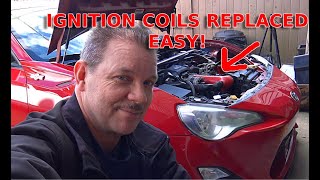
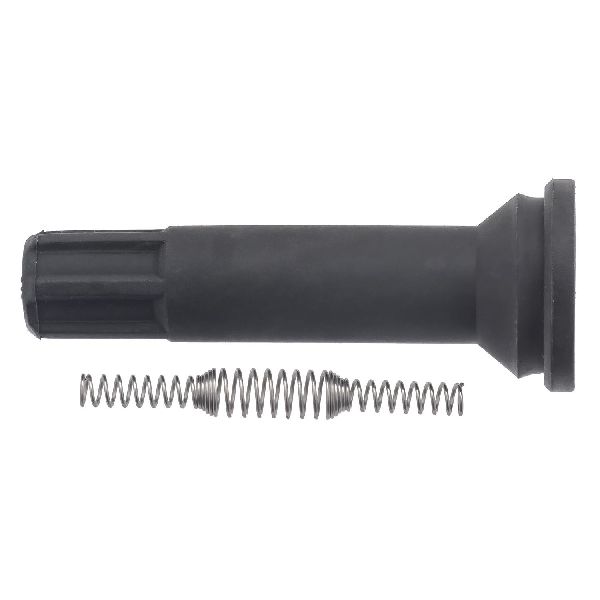
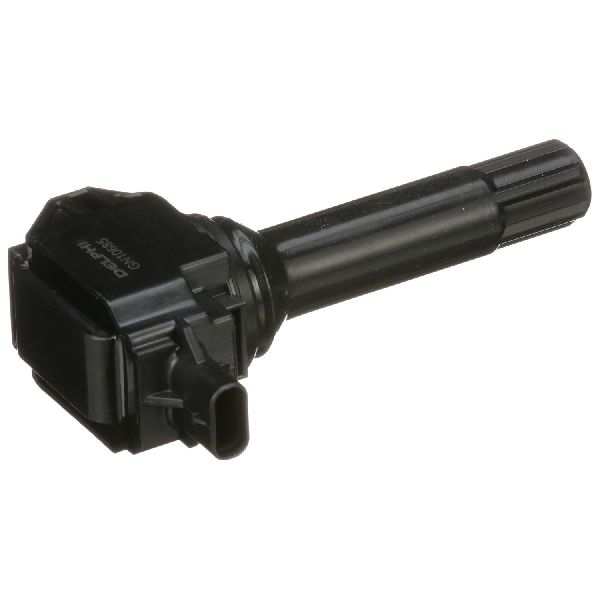
- Faulty Ignition Coil 🔴 High Probability → Shop Ignition Coil Ignition coils are a common wear item, and on the FA20, they are known to fail from sustained heat, a condition that can be worsened by aftermarket headers or track use. Many owners on forums report solving P030x codes by replacing a single coil. 🎬 Watch: This DIY guide shows how to replace faulty ignition coils.
How to confirm: Swap the ignition coil from cylinder 3 with another cylinder (e.g., cylinder 1). Clear the codes and drive the car. If the code changes to P0301, the ignition coil is faulty.
Typical fix: Replace the failed ignition coil. It is often recommended to replace all four as a set if they are original and high-mileage, especially since 2013-era coils had known defects. Some owners upgrade to 2017+ model year coils, which are considered more reliable, using a harness adapter.
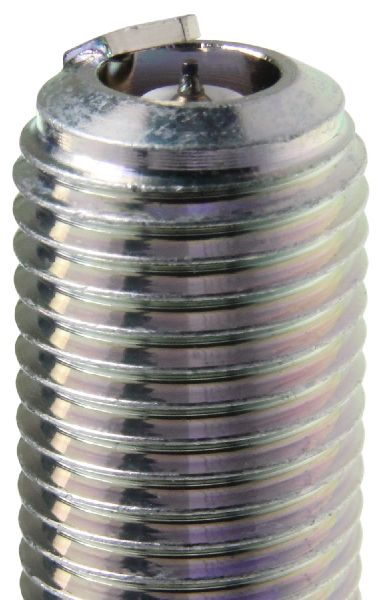
Est. part cost: $70-$120 - Worn or Fouled Spark Plug 🔴 High Probability → Shop Spark Plug Spark plugs have a recommended service interval of 60,000 miles. Plugs that are worn, or fouled by oil from a leaking valve cover gasket tube seal, can cause a weak spark and misfire.
How to confirm: After ruling out the coil, remove the spark plug from cylinder 3. Inspect it for wear (eroded electrode), carbon/oil fouling, or damage. Compare it to a new plug.
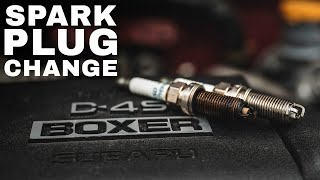
Typical fix: Replace the spark plug. It is best practice to replace all four spark plugs at the same time to maintain consistent performance. 🎬 See this walkthrough for an easy spark plug change.
Est. part cost: $15-$30 per plug - Camshaft Position Sensor Clearance Issue 🟡 Medium Probability → Shop Engine Camshaft A manufacturer TSB (S-SB-0013-14) specifically states that misfire codes, including P0303, can be caused by the camshaft position sensor clearance being out of specification.
How to confirm: This is more difficult to confirm without specialized knowledge. It should be investigated if new plugs and coils do not resolve the issue, especially if other camshaft-related codes (P034x, P036x, P039x) are present.
Typical fix: Adjust or replace the affected camshaft position sensor according to the TSB procedure.
Est. part cost: $80-$120 - Clogged or Faulty Fuel Injector ⚪ Low Probability → Shop Fuel Injector The FR-S uses both port and direct injection (D-4S). While reliable, a direct or port injector for cylinder 3 can become clogged or fail. In forum discussions, this is often the next suspected part after ignition components are ruled out.
How to confirm: This requires more advanced diagnostics, such as checking fuel trims with a scan tool or performing a fuel injector balance test. A mechanic can also listen to the injector with a stethoscope to check for a healthy clicking sound. Resistance can be tested with a multimeter; high impedance injectors should typically read between 12-16 ohms.
Typical fix: Clean or replace the faulty fuel injector.
Est. part cost: $150-$300 for a direct injector
Rare But Worth Checking
- Fractured Valve Spring (2013 Model Year Recall): The 2013 FR-S was recalled (NHTSA 18V-727) for valve springs that could fracture, causing a misfire, engine noise, stalling, or catastrophic failure. One Reddit user with a P0303 found broken valve train components in their oil pan, a likely result of this issue. 🎬 Watch: What to look for regarding valve spring failure.
- Botched Valve Spring Recall Repair: A significant number of owners have reported engine failures shortly after the valve spring recall service was performed. This is often attributed to technicians applying too much sealant (RTV) during reassembly, which can break off and clog oil passages, leading to oil starvation and engine seizure.
- Low Engine Compression: A mechanical issue like a burnt valve, worn piston rings, or a leaking head gasket can cause a persistent misfire that ignition and fuel parts won't fix. A compression and/or leak-down test is needed to diagnose this. One owner on ft86club confirmed their persistent P0303 was due to low compression in that cylinder, requiring an engine rebuild.
- Vacuum Leak: A leak in the intake manifold gasket near cylinder 3 can lean out the air/fuel mixture and cause a misfire. This would typically be accompanied by a lean code (P0171) and a high idle.
Diagnosis Steps
- Read the code with an OBD-II scanner and note any other codes present.
- Identify cylinder 3. On the FA20 engine, cylinders are numbered with 1 and 3 on the passenger side (front to back) and 2 and 4 on the driver's side (front to back). Cylinder 3 is the rear cylinder on the passenger side.
- Swap the ignition coil from cylinder 3 with the coil from cylinder 1 (front passenger side).
- Clear the codes, start the engine, and let it run or drive it until the check engine light returns.
- If the code is now P0301, the ignition coil is bad and needs replacement.
- If the code remains P0303, the coil is likely good. Proceed to inspect the spark plug.
- Remove the spark plug from cylinder 3. Check for wear, damage, or fouling. If it looks worn or is past its 60,000-mile service interval, replace all four spark plugs.
- If plugs and coils are good, investigate the fuel injector for cylinder 3. Listen for a consistent clicking sound. More advanced tests include checking injector resistance or performing a flow test.
- Check vehicle history to see if the valve spring recall (NHTSA 18V-727) was performed. If the misfire appeared shortly after the service, the repair itself may be suspect.
- If other cam sensor codes are present, refer to TSB S-SB-0013-14 for the camshaft position sensor inspection procedure.
- If all else fails, perform a compression and/or leak-down test on cylinder 3 to check for mechanical engine problems like bad rings, a burnt valve, or a head gasket leak.
Parts You'll Likely Need
- Ignition Coil
(OEM #SU003-04713 (supersedes SU003-00417, SU003-04670))— This is the most common failure part for a single-cylinder misfire. Heat and vibration cause the internal windings to fail over time.
Trusted brands: Denso (OEM, P/N: 673-1308), NGK
OEM price range: $90-$125
Aftermarket price range: $50-$90 - Iridium Spark Plug
(OEM #SU003-04931 (supersedes SU003-00416))— As a routine maintenance item (60k miles), a worn spark plug can no longer create a strong enough spark for complete combustion, leading to a misfire.
Trusted brands: Denso (OEM, Model: ZXE27HBR8), NGK (e.g., 95236)
OEM price range: $18-$28
Aftermarket price range: $12-$20
Related Codes That Often Appear With This One
- P0300 — This is a 'Random/Multiple Cylinder Misfire' code. It may appear alongside P0303 if other cylinders are also misfiring intermittently, which could point to a systemic issue like a vacuum leak or fuel delivery problem.
- P0301, P0302, P0304 — These codes indicate misfires in cylinders 1, 2, and 4, respectively. Seeing multiple specific cylinder misfire codes could point to a systemic issue like a fuel delivery problem or the cam sensor issue noted in the TSB.
- P034x, P036x, P039x — These are camshaft position sensor codes. Per TSB S-SB-0013-14, their presence alongside a P0303 strongly suggests the cam sensor clearance is the root cause.
- P219A — Bank 1 Air-Fuel Ratio Imbalance. This code can sometimes appear with a misfire code if the engine is struggling to maintain the correct air-fuel mixture at idle.
Technical Service Bulletins (TSBs) & Recalls
- S-SB-0013-14: Notes that engine misfire DTCs (P0301, P0302, P0303, and P0304) can be triggered by camshaft position sensor clearance being out of specification.
- NHTSA Campaign 18V-727 (Subaru WTY-84): Safety recall for 2013 model year vehicles concerning engine valve springs that may fracture, leading to engine malfunction or stalling.
Platform-Specific Known Issues
- Engine Valve Spring Recall (NHTSA: 18V-727): 2013 models were recalled for engine valve springs that could fracture, potentially causing an engine misfire, stalling, and increasing the risk of a crash. A P0303 code could be a direct symptom of this defect.
- Post-Recall Engine Failure: There are widespread reports of engine failures occurring shortly after the valve spring recall service. The suspected cause is the misapplication of sealant by technicians, leading to clogged oil passages, oil starvation, and catastrophic engine damage.
Mechanic-Grade Diagnostic Values
- Ignition Coil Primary Resistance — expected: 0.70 ohms. Failure: Significant deviation from the expected value.
- Ignition Coil Secondary Resistance — expected: 3.7k ohms. Failure: Significant deviation from the expected value.
- Fuel Injector (Port or Direct) Resistance — expected: 12 to 16 ohms. Failure: A reading that is significantly higher, lower, or open (no reading). All injectors should have very similar resistance values.
- Low-Pressure Fuel System Pressure (at idle) — expected: ~50-60 psi. Failure: Pressure significantly below this range can starve the high-pressure pump.
- High-Pressure Fuel System Pressure (at idle) — expected: ~400-700 psi. Failure: Pressure significantly outside this range indicates an issue with the high-pressure pump or its control circuit.
Hidden / Shadow Codes Worth Checking
- P119E / P119F: These are manufacturer-specific codes that can relate to air-fuel ratio control and may appear alongside a P0303, sometimes pointing towards a valve-related issue rather than simple ignition or fuel problems. (see via A professional-grade OBD-II scanner or Toyota's Techstream software.)
Scan Tool Commands That Help
- Toyota Techstream / Professional Scanner: Live Data > Misfire Count — To confirm an intermittent misfire that doesn't always trigger a CEL. One technician noted P0303 would only count misfires under very specific light-load conditions (2k-3k RPM, 1.5-2.5% throttle), which can only be observed on a live data list.
- Manual Procedure: ECU Idle Relearn Procedure — After disconnecting the battery or replacing major engine components, the idle can be rough. A specific relearn process can speed up calibration: let the engine warm up from cold at idle without touching the throttle, let it idle for 5 more minutes, turn off for 30 seconds, then restart and idle for another 5 minutes.
Wiring & Ground Locations
- Engine Ground Straps — There are three primary ground locations: one on each side from the front bottom of the engine to the frame rail, and one from the passenger side top-rear of the engine/transmission area to the transmission tunnel.. A poor ground connection can cause erratic behavior in the ignition system, leading to weak spark and intermittent misfires that are difficult to diagnose.
- ECM (Engine Control Module) — Located at the right end of the dash.. This is the source of the control signals for the ignition coils and fuel injectors. Any wiring tests for these components will trace back to the ECM connectors.
Real Owner Repair Stories
- ft86club Forum Member (2014 Subaru BRZ (same FA20 engine)) — Persistent P0303 misfire code, rough idle especially when warm, even after replacing spark plugs.
❌ Tried (didn't work) Replacing all spark plugs, Swapping ignition coil from cylinder 3 to cylinder 1 (misfire did not move), Cleaning MAF sensor and throttle body
✅ What actually fixed it An engine rebuild was required. A compression and leak-down test confirmed low compression in cylinder 3, indicating a mechanical engine problem, not an ignition or fuel issue. - ft86club Forum Member (2013 BRZ with a 2015 FA20 engine swap) — P0303 with power loss and rumbling exhaust note, occurring during a track day session.
❌ Tried (didn't work) Initially replaced OEM spark plug and coil, which worked for 300 miles before failing again under high stress (track use).
✅ What actually fixed it The misfire returned and was resolved by replacing the ignition coil again. The owner noted the failed part was a non-OEM (Duralast) coil, suggesting it may not have been robust enough for high-heat track conditions. - ft86club Forum Thread (2013 Scion FR-S / Subaru BRZ) — Misfire codes (P030x) accompanied by a distinct 'pop' noise from the intake, either at startup or under heavy load.
❌ Tried (didn't work) Replacing ignition coils often did not solve the issue.
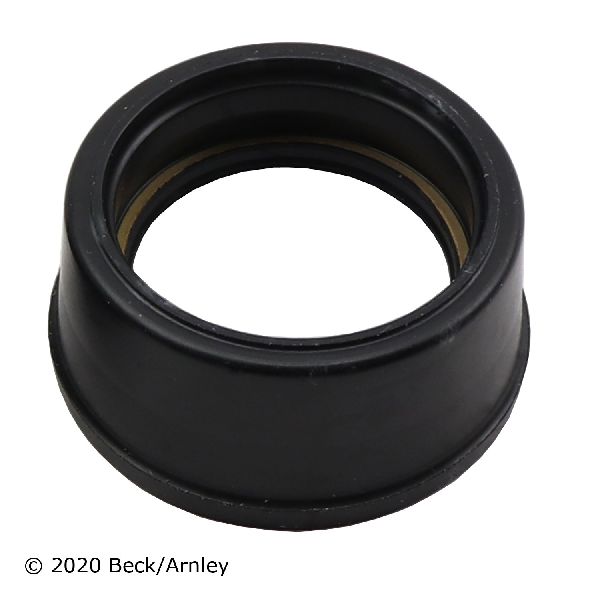
✅ What actually fixed it The cause was identified as a failed teflon seal on the direct fuel injector for the corresponding cylinder. The fix is to replace the direct injector seal and insulator. - Reddit user on r/ft86 (2013 Subaru BRZ with 42k miles) — Sudden jerky driving, flashing CEL, then engine would not restart. Code P0303.
❌ Tried (didn't work) Initial diagnosis focused on common spark plug/coil issues.
✅ What actually fixed it The owner found pieces of a broken valve guide on the skid plate under cylinder 3. This indicated a catastrophic mechanical failure, directly related to the known valve spring defect in 2013 models.
"I Checked Everything" — The Actual Cause
- A common scenario for a persistent P0303, sometimes accompanied by a 'popping' noise from the intake, is a failed direct injector (DI) seal. A standard smoke test checks for vacuum leaks in the intake manifold and hoses but would not detect a leak at the injector tip seal, which is seated inside the combustion chamber. This allows unmetered air to enter the cylinder directly, leaning out the mixture and causing a misfire that mechanics might struggle to diagnose after ignition components and vacuum leaks are ruled out.
When the Usual Fixes Don't Work
- While swapping the ignition coil is the correct first step, multiple owner reports confirm that if the misfire code does not move with the coil, the next most likely cause is not always the spark plug. On the FA20 engine, a persistent single-cylinder misfire after a good coil and plug are confirmed should lead to an investigation of the direct injector seal or a compression test. One owner chased a P0303 by replacing plugs and coils, only to find the cylinder had low compression and required a rebuild. Another common 'fix' after ignition parts fail to solve the problem is replacing a leaking direct injector seal.
OEM Part Supersession History
SU003-00417, SU003-04670→SU003-04713— Standard part revision and improvement over time.
Heads up: While the parts are interchangeable, owner communities widely report that ignition coils from 2017+ models are more durable than the original 2013 coils, which were prone to failure. Upgrading to the newer coils (and sometimes the corresponding wiring harness) is a common reliability modification.
Model Year Variations Within This Range
- 2013 only: The 2013 model year is subject to NHTSA recall 18V-727 for potentially defective valve springs that can fracture and cause misfires or engine failure. This is a primary consideration for any P030x code on a 2013 vehicle.
- 2013-2016 vs 2017+: The original ignition coils used on early models are considered less reliable. Coils from 2017+ models are a common upgrade for owners of earlier cars seeking better durability, especially for track use or modified vehicles.
Helpful Videos
We Have This Part in Stock


The information in this article is provided for general reference and educational purposes only. Vehicle specifications, procedures, and part compatibility can vary by production date, trim level, and region. Always consult your vehicle's factory service manual and verify part numbers before purchasing or performing repairs. Safety-critical components such as airbags, seat belts, and braking systems should be installed by a qualified professional.
- Scion FR-S:
- 🧭 Diagnostic Flowchart
- 🎬 Helpful Videos
- 🛍️ Shop This Part
- What's Unique About the 2013-2013 Scion FR-S
- Symptoms You May Notice
- Most Likely Causes
- Rare But Worth Checking
- Diagnosis Steps
- Parts You'll Likely Need
- Related Codes That Often Appear With This One
- Technical Service Bulletins (TSBs) & Recalls
- Platform-Specific Known Issues
- Mechanic-Grade Diagnostic Values
- Hidden / Shadow Codes Worth Checking
- Scan Tool Commands That Help
- Wiring & Ground Locations
- Real Owner Repair Stories
- "I Checked Everything" — The Actual Cause
- When the Usual Fixes Don't Work
- OEM Part Supersession History
- Model Year Variations Within This Range
- 🎟️ Get 5% Off