

P0303 on 2005-2010 Scion tC: Cylinder 3 Misfire Causes and Fixes
P0303 on a 2005-2010 Scion tC indicates a misfire in cylinder 3. The most common causes are a failed ignition coil or a worn/oil-fouled spark plug. A simple coil swap between cylinders is the fastest way to diagnose the problem. Due to the 2AZ-FE engine's known oil consumption issue, checking the oil level and spark plug for fouling is a critical first step. A new Denso ignition coil costs about $25-$70.
- P0303 means cylinder 3 is misfiring. Do not drive if the check engine light is flashing.
- The most likely cause is a bad ignition coil. Swap the coil from cylinder 3 to another cylinder to confirm before buying parts.
- The second most likely cause is a worn or oil-fouled spark plug.
- Be aware of the 2AZ-FE engine's known oil consumption issue, which can cause this code. Monitor your oil level closely.
- If a new coil and plug don't fix the issue, a compression test is the next critical step to check for internal engine problems.
What's Unique About the 2005-2010 Scion tC
The 2005-2010 Scion tC uses the 2AZ-FE engine, which is notorious for a significant oil consumption issue due to a piston ring design flaw, particularly in 2007-2010 models. This problem can lead to oil-fouled spark plugs, causing persistent misfires like P0303. While ignition components are the most frequent culprits, it's crucial to consider low compression from this oil consumption issue as a more serious underlying cause if basic fixes don't work. Toyota addressed this with a Warranty Enhancement Program (ZE7), which has since expired.
Symptoms You May Notice
- Rough or shaky idle
- Hesitation or stumbling during acceleration
- Noticeable loss of engine power
- Flashing or solid Check Engine Light
- Decreased fuel economy
- Fuel smell from the exhaust
- Engine light that flashes under load and may become solid or turn off during cruising
- Replacing only the spark plug without testing the ignition coil first.
- Replacing fuel system components before performing a simple ignition coil swap.
- Ignoring the possibility of low compression on high-mileage 2AZ-FE engines, especially if it consumes oil.
- Replacing the fuel injector but not the O-rings and insulators, creating a new vacuum leak.
Most Likely Causes
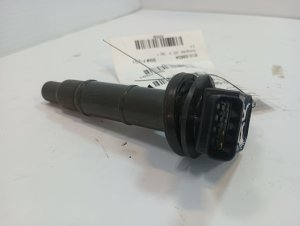
- Faulty Ignition Coil 🔴 High Probability → Shop Ignition Coil Coil-on-plug ignition systems are common failure points on many vehicles as they age due to constant heat exposure. Many owners on forums like ScionLife and Reddit report solving P030x codes by replacing a single failed coil.
How to confirm: Swap the ignition coil from cylinder 3 with another cylinder (e.g., cylinder 1). Clear the codes and drive. If the code changes to P0301, the coil is bad. This is the most commonly recommended first diagnostic step in owner forums.
Typical fix: Replace the faulty ignition coil. Denso is the original equipment (OE) manufacturer and is highly recommended by owners over cheaper aftermarket brands to avoid premature failure. It is often suggested to replace all four coils if they are original and high-mileage.
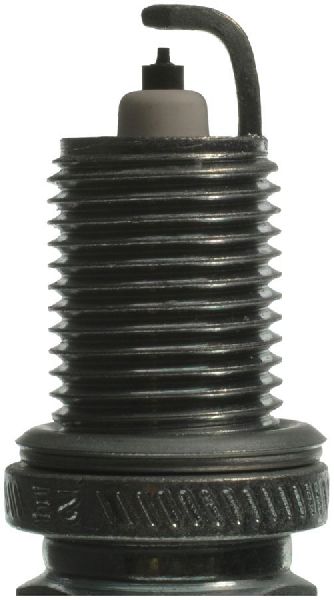
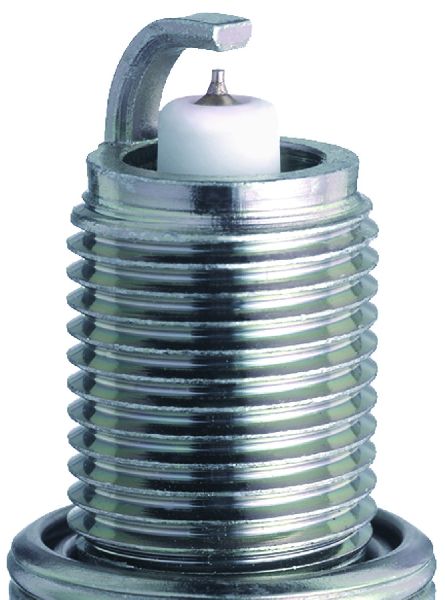
Est. part cost: $25-$70 per coil - Worn or Fouled Spark Plug 🔴 High Probability → Shop Spark Plug The 2AZ-FE's tendency to consume oil can foul spark plugs with oil and carbon deposits, leading to misfires. Standard wear also requires replacement, typically with Iridium plugs specified for a 100,000-mile interval.
How to confirm: After confirming the coil is good, remove the spark plug from cylinder 3. Inspect for wear, damage, or fouling (black, sooty, or wet appearance). Compare it to a plug from a healthy cylinder. A worn-out iridium tip can also be a cause.
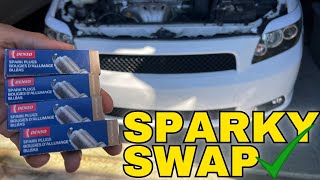
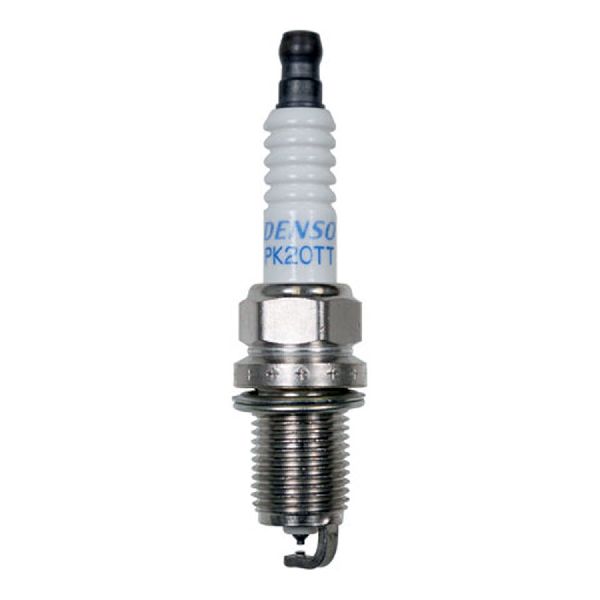
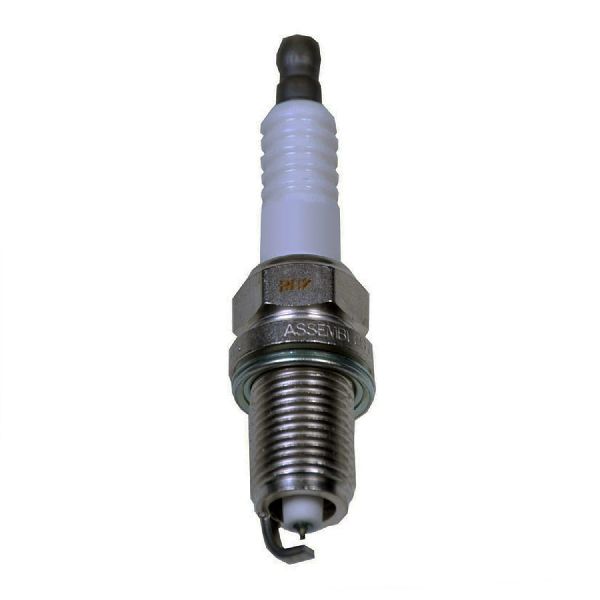
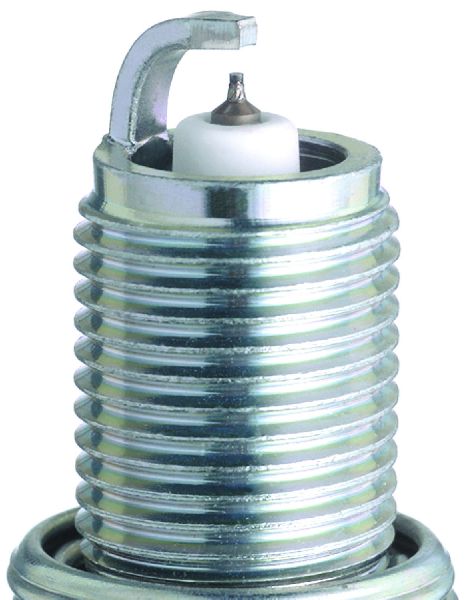
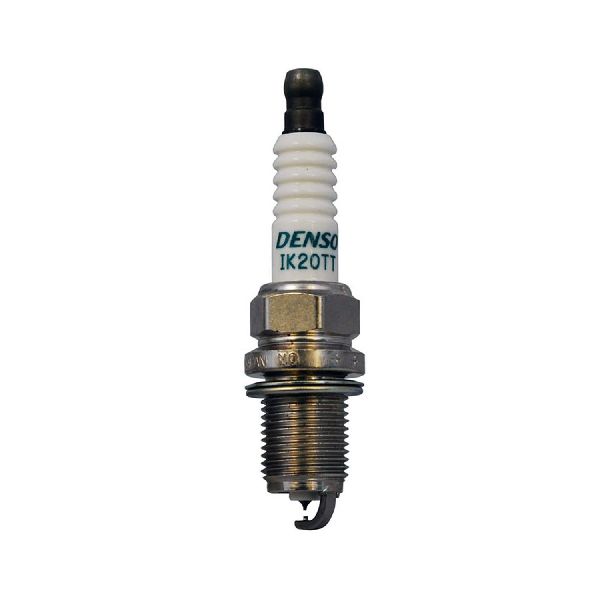
Typical fix: Replace the spark plug. It is best practice to replace all four spark plugs at once 🎬 Watch: Easy DIY walkthrough for changing your Scion tC spark plugs. with the correct OEM-spec Iridium plugs, such as Denso SK20R11 or NGK IFR6A11. Ensure they are gapped correctly and apply anti-seize to the threads.
Est. part cost: $10-$20 per plug - Clogged or Failed Fuel Injector 🟡 Medium Probability → Shop Fuel Injector Injectors can become clogged over time or fail electrically. Some owners have reported injectors failing only when hot, with resistance values jumping far out of spec.
How to confirm: Listen for a clicking sound from the injector with a mechanic's stethoscope. You can test the injector's electrical pulse with a 'noid' light. A more definitive test is to swap the fuel injector from cylinder 3 with another cylinder, similar to the coil swap procedure, though this is more labor-intensive.
Typical fix: Clean or replace the fuel injector for cylinder 3. When replacing, it's also critical to replace the injector's O-rings and bottom insulators (seals) to prevent vacuum leaks.
Est. part cost: $40-$100 - Low Engine Compression ⚪ Low Probability The 2AZ-FE engine in 2007-2010 tC models is subject to TSB S-SB-0024-11 Rev2 for excessive oil consumption caused by faulty piston ring design. This leads to carbon buildup and loss of compression, which directly causes misfires.
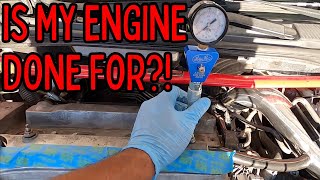
How to confirm: Perform a dry and wet compression test on all four cylinders. 🎬 See how to perform a compression test to check for sealing issues. A significant pressure drop (more than 15-20% lower than the others) in cylinder 3 indicates a mechanical engine problem. Normal compression is around 170 PSI, with a minimum of 156 PSI cited by technicians.
Typical fix: This is a major repair. It requires replacing pistons and piston rings as outlined in the TSB. This often means a complete engine rebuild or replacement, costing thousands of dollars.
Est. part cost: $1500+
Rare But Worth Checking
- Intake Manifold Gasket Leak: → Shop Engine Intake Manifold A vacuum leak near the cylinder 3 intake runner can lean out the air/fuel mixture enough to cause a misfire. This might also be accompanied by a P0171 (System Too Lean) code.
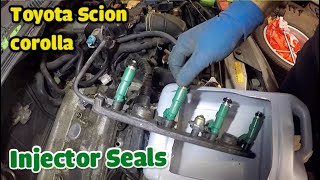
- Faulty Fuel Injector Insulators/Seals: → Shop Fuel Injector Separate from the injector itself, the rubber insulators that seal the injector to the intake manifold can become hard and brittle, causing a vacuum leak specific to that cylinder. One owner on ScionLife fixed a persistent P0303 by replacing these seals after swapping every other component. 🎬 Watch: How to replace fuel injector seals to fix vacuum leaks.
- Faulty Engine Control Module (ECM): → Shop Engine Control Module (ECM) This is extremely rare. The ECM should only be considered after all other possibilities (ignition, fuel, and mechanical) have been exhaustively ruled out.
Diagnosis Steps
- Check engine oil level. If it is low, top it off. The 2AZ-FE's oil consumption issue is a primary suspect for fouling plugs.
- Read the codes with an OBD-II scanner to confirm P0303 and check for any other codes.
- If the Check Engine Light is flashing, avoid driving the vehicle to prevent catalytic converter damage.
- Locate cylinder 3. On the 2AZ-FE, the cylinders are numbered 1-2-3-4 from the passenger side (drive belt side) to the driver's side.
- Swap the ignition coil from cylinder 3 with the coil from cylinder 1. Clear the codes and run the engine. If the code returns as P0301, the ignition coil is faulty and needs replacement.
- If the code remains P0303, remove the spark plug from cylinder 3. Inspect for heavy carbon or oil fouling, or a damaged electrode. If fouled or worn, replace all four spark plugs.
- If the misfire still remains on cylinder 3, inspect the fuel injector wiring and connector. Use a 'noid' light to verify the ECM is sending a pulse to the injector. Consider swapping the injector with another cylinder if you are comfortable with the procedure.
- Inspect for vacuum leaks around the intake manifold, especially near the runner for cylinder 3. Pay close attention to the fuel injector seals.
- Perform an engine compression test on all cylinders. A reading below 150 PSI or a significant variation points to a serious internal engine issue, likely related to the known 2AZ-FE oil consumption problem.
Parts You'll Likely Need
- Ignition Coil
(OEM #90919-02244 (superseded by 90919-02266))— This is the most common failure part for a single-cylinder misfire on this engine.
Trusted brands: Denso (OEM), NGK, Delphi
OEM price range: $70-$90
Aftermarket price range: $25-$60 - Iridium Spark Plug
(OEM #Denso SK20R11 or NGK IFR6A11)— Worn or oil-fouled spark plugs are the second most likely cause of a misfire. Using the correct Iridium plug is crucial for performance and longevity.
Trusted brands: Denso (SK20R11), NGK (IFR6A11)
OEM price range: $15-$25
Aftermarket price range: $10-$20
Related Codes That Often Appear With This One
- P0300 — If the misfire is intermittent or affects multiple cylinders, a P0300 (Random/Multiple Cylinder Misfire) may be stored alongside P0303.
- P0301, P0302, P0304 — If other cylinder-specific misfire codes are present, it points towards a common cause like a vacuum leak, fuel delivery issue, or a failing catalytic converter. A failing head gasket can also cause misfires in adjacent cylinders.
- P0171 — A 'System Too Lean' code can appear with P0303 if the misfire is caused by a vacuum leak or a clogged fuel injector.
Technical Service Bulletins (TSBs) & Recalls
- S-SB-0024-11 Rev2: Details the repair procedure for replacing pistons and rings to address the excessive oil consumption issue on 2AZ-FE engines. It specifies the updated parts required.
- S-SB-0031-14: Outlines the of
- Bulletin #S-SB-0013-14: While issued for the FR-S model, this manufacturer bulletin notes that engine misfire DTCs including P0303 can be caused by camshaft position sensor clearance being out of specification, which may also cause a rough idle.
Platform-Specific Known Issues
- Excessive Oil Consumption (TSB S-SB-0024-11 Rev2): The 2AZ-FE engine in 2007-2010 tC models is known for excessive oil consumption due to defective piston and piston ring design. This can foul spark plugs, causing persistent misfires. Toyota issued a Warranty Enhancement Program (ZE7) for this, which extended coverage to 10 years or 150,000 miles, but it has now expired for all affected vehicles. If you have persistent misfires and consume more than 1 quart of oil in ~1,200 miles, a compression test is essential to check for internal engine damage.
Mechanic-Grade Diagnostic Values
- Fuel Injector Resistance — expected: 11.6 to 12.4 Ω at 20°C (68°F). Failure: A reading outside this range indicates a faulty injector coil.
- Fuel Pressure at Idle — expected: 304 to 343 kPa (44 to 50 psi). Failure: Pressure below this range may indicate a weak fuel pump or faulty pressure regulator.
- Fuel Pressure Hold Test — expected: Remains at 147 kPa (21 psi) or more for 5 minutes after engine shutoff.. Failure: A rapid drop in pressure points to a leaking injector, check valve in the fuel pump, or pressure regulator.
- Ignition Coil Insulation Resistance (Megohmmeter) — expected: 10 MΩ or more. Failure: A reading below 10 MΩ suggests the coil's insulation is breaking down, which can cause misfires under load.
- Ignition Coil Primary Winding Resistance (Older style, not coil-on-plug) — expected: Cold: 0.40 - 0.50 Ω, Hot: 0.49 - 0.62 Ω. Failure: Values outside this range indicate a failing primary coil winding. Note: This is less applicable to the direct coil-on-plug system in the tC but is a general Toyota spec.
Hidden / Shadow Codes Worth Checking
- Mode $06, Test ID $53: This is not a separate code but a function within a generic OBD-II scanner. It displays misfire counts for each cylinder from the last and current driving cycles before they are high enough to trigger a P030x code. A technician can use this to see if cylinder 3 is accumulating misfires even without a solid CEL. (see via A professional scan tool or an advanced consumer OBD-II scanner with Mode $06 capability. The misfire count will reset when the ignition is turned off if the count isn't high enough to set a pending code.)
Scan Tool Commands That Help
- Toyota Techstream: Active Test: Control the Injection (Fuel Cut) — This allows a technician to individually shut off the fuel injector to each cylinder. If you command a fuel cut to cylinder 3 and there is NO change in the engine's idle quality, it confirms that cylinder 3 was not contributing, pointing to a problem with that cylinder's ignition, fuel, or compression.
- Toyota Techstream: Data List > Misfire — To view live misfire counts for each cylinder while the engine is running. This is more powerful than generic Mode $06 as it provides real-time data during a test drive under various load conditions to replicate the misfire.
- Toyota Techstream: Utility: Check the Cylinder Compression — This is a quick relative compression test. The ECU measures the rotational speed of the crankshaft as each cylinder goes through its compression stroke. While not a substitute for a mechanical gauge, it can quickly identify a cylinder with significantly lower compression than the others. A workaround notes that cranking must begin within 1 second of clicking 'Start' for it to record properly on some models.
Wiring & Ground Locations
- EC — Left front corner of the engine compartment.. This is a primary ground point for the engine harness. Corrosion or a loose connection here can cause intermittent issues for multiple engine components, including the ignition coils.
- ED / EE — Located on the rear of the engine block/cylinder head.. These are critical ground points for the Engine Control Module (ECM) and various sensors. A poor connection here can cause erratic sensor readings and misfires that are difficult to diagnose.
- Cylinder 3 Ignition Coil Connector (Pin 4) — The 4-pin connector on the ignition coil for cylinder 3.. Pin 4 (typically a White wire with a Black tracer) is the ground wire for the ignition coil. Verifying a solid ground connection at this pin is a key step if a new coil doesn't fix the misfire.
- Cylinder 3 Injector Connector (Pin 2) — The 2-pin connector on the fuel injector for cylinder 3.. Pin 2 is the ground pulse signal from the ECM. A 'noid' light connected here should flash, indicating the ECM is commanding the injector to fire. No flash points to a wiring or ECM driver issue.
OEM Part Supersession History
90919-02243→90919-02244, then 90919-02266— Standard part evolution for improved reliability and manufacturing efficiency.
Heads up: All part numbers (90919-02243, 90919-02244, 90919-02266) are cross-compatible for this vehicle. It is recommended to use the latest revision (90919-02266) when replacing.
Model Year Variations Within This Range
- 2008-2010: Later versions of the 2AZ-FE engine (from 2008 onwards) have a slightly higher compression ratio (9.8:1 vs 9.6:1), a more aggressive intake cam profile, and piston oil squirters. This resulted in a power increase to 161 hp for the tC. While the P0303 diagnosis is the same, these later engines are also within the range most affected by the excessive oil consumption TSB.
- 2007-2010: These model years are specifically cited in TSBs for excessive oil consumption due to piston ring design. While earlier models can still consume oil, the problem is officially recognized and most prevalent in this later range.
Diagnostic Flowchart
Real Owner Stories
Aggregated from forums and TSBs cited above. Mileages and costs reflect what owners reported in those sources.
2007 Scion tC
Symptoms: Persistent misfire on cylinder 3.
What fixed it: The owner swapped spark plugs, ignition coils, and fuel injectors to isolate the issue, leading to a discussion about replacing the fuel injector insulators (seals) to fix vacuum leaks.
Source hint: ScionLife.com - Thread '2007 tC Cylinder 3 Misfire'
Scion tC
Symptoms: Triggered a P0303 Cylinder 3 Misfire code.
What fixed it: Performed an engine compression test to diagnose the misfire, which revealed unexpectedly low compression results on cylinders 1, 2, and 4, pointing to a broader mechanical failure.
Source hint: ScionLife.com - Thread 'Mis fire -> P0303 Cylinder 3 Misfire -> Low compression on Cyl 1, 2, and 4?'
First Gen Scion tC
Symptoms: Engine misfire triggering a cylinder-specific misfire code.
What fixed it: Diagnosed the issue by swapping the ignition coil to another cylinder to see if the code followed (e.g., moving to P0303), confirming the coil as the faulty component.
Source hint: Reddit.com/r/Cartalk - 'First Gen Scion TC Misfire'
2007 Scion tC
Symptoms: Excessive engine oil consumption.
What fixed it: Took the vehicle to a dealership to undergo the ZE7 Warranty Enhancement Program oil consumption test to address the underlying defect.
Source hint: Reddit.com/r/MechanicAdvice - '07 Scion tC - excessive oil consumption'
Related OBD-II Codes
Frequently Asked Questions
Does TSB S-SB-0024-11 Rev2 apply to my 2005-2010 Scion tC for a P0303 code?
Is the Warranty Enhancement Program (ZE7) for oil consumption still active for my Scion tC?
What is the most common first diagnostic step for a P0303 on the 2AZ-FE engine?
Which spark plugs should I use when replacing them on my Scion tC?
What is considered normal engine compression for the 2AZ-FE if I suspect internal damage?
How much oil consumption is considered excessive and a risk for fouling plugs on this engine?
Helpful Videos
![Toyota 2.4L Engine Rebuild - 2AZFE Oil Burn Fix [Rav4 Oil Consumption]](https://img.youtube.com/vi/lQida-2k4fQ/mqdefault.jpg)
Used OEM Parts in Stock
New Aftermarket Parts Available

The information in this article is provided for general reference and educational purposes only. Vehicle specifications, procedures, and part compatibility can vary by production date, trim level, and region. Always consult your vehicle's factory service manual and verify part numbers before purchasing or performing repairs. Safety-critical components such as airbags, seat belts, and braking systems should be installed by a qualified professional.
- Scion tC:
- 🧭 Diagnostic Flowchart
- 🎬 Helpful Videos
- 🛍️ Shop This Part
- What's Unique About the 2005-2010 Scion tC
- Symptoms You May Notice
- Most Likely Causes
- Rare But Worth Checking
- Diagnosis Steps
- Parts You'll Likely Need
- Related Codes That Often Appear With This One
- Technical Service Bulletins (TSBs) & Recalls
- Platform-Specific Known Issues
- Mechanic-Grade Diagnostic Values
- Hidden / Shadow Codes Worth Checking
- Scan Tool Commands That Help
- Wiring & Ground Locations
- OEM Part Supersession History
- Model Year Variations Within This Range
- Real Owner Stories
- 2007 Scion tC
- Scion tC
- First Gen Scion tC
- 2007 Scion tC
- Related OBD-II Codes
- Frequently Asked Questions
- 🎟️ Get 5% Off