

P0303 on 2012-2016 Toyota Prius V: Cylinder 3 Misfire Causes and Fixes
On a 2012-2016 Prius V, P0303 often points to more than just a bad spark plug or coil. A clogged Exhaust Gas Recirculation (EGR) system and dirty intake manifold are extremely common causes. Cleaning the EGR cooler and intake passages is a critical diagnostic step if plugs and coils are good. A cold start rattle accompanying the misfire can also indicate a failing head gasket, another known issue for this platform.
- For a P0303 code on a 2012-2016 Prius V, do not stop at spark plugs and ignition coils.
- The most probable cause, unique to this vehicle, is a clogged EGR system (cooler, valve, and intake manifold passages).
- A simple ignition coil swap is the first and easiest diagnostic step to rule out a bad coil.
- If coils and plugs are good, plan to remove and thoroughly clean the intake manifold and EGR components; this is considered regular preventative maintenance by many owners.
- Check for related TSBs; Toyota has issued bulletins for both intake manifold replacement (T-SB-0116-15 Rev) and ECM updates (T-SB-0147-16) to address misfire conditions.
What's Unique About the 2012-2016 Toyota PRIUS V
The 2ZR-FXE engine in the Prius V is well-known for issues related to its Exhaust Gas Recirculation (EGR) system. Over time, carbon deposits from exhaust gas, mixed with oil vapor from the PCV system, clog the EGR cooler, valve, and small passages within the intake manifold. This blockage disrupts proper airflow and EGR gas distribution to the cylinders, leading to misfires that often appear on specific cylinders like #1 or #3 before affecting others. This is such a known issue that Toyota issued a Technical Service Bulletin (T-SB-0116-15 Rev) acknowledging that misfire codes, including P0303, can be caused by this and may require replacing the entire intake manifold with an updated part. [⭐ T-SB-0116-15 Rev, 8] Furthermore, a clogged EGR system is widely believed to be a contributing factor to the other notorious issue on this platform: premature head gasket failure.
Diagnostic Flowchart
Tap your situation to follow the diagnostic path that matches what you're seeing on this vehicle.
Symptoms You May Notice
- Rough idle, especially when the engine is cold
- Vehicle shaking or hesitating during light acceleration. [⭐ T-SB-0116-15 Rev]
- Flashing or solid Check Engine Light
- Reduced fuel economy
- Engine knocking or rattling sounds, particularly on a cold start. [⭐ T-SB-0147-16]
- Loss of power
- Sudden loss of coolant without visible leaks.
- Replacing only the spark plugs and ignition coils without inspecting the EGR system. On this specific vehicle, the EGR is a primary suspect and ignoring it often leads to the misfire returning.
- Mistaking a cold start rattle as a minor issue. On this platform, it is a classic early warning sign of either a severely clogged EGR system or a failing head gasket and should be investigated immediately.
Most Likely Causes
- Clogged EGR System (Cooler, Valve, and Intake Manifold Passages) 🔴 High Probability The 2ZR-FXE engine's EGR design is highly susceptible to carbon buildup, which restricts exhaust gas flow and causes uneven distribution to the cylinders. This is a widely documented problem for this generation of Prius.
How to confirm: Remove the intake manifold and EGR components to visually inspect for heavy, thick carbon deposits. The passages for each cylinder runner inside the manifold will often be partially or completely blocked. Disconnecting the EGR valve connector and road testing the vehicle can also be a diagnostic step; if the misfire disappears, it points to a clogged system.
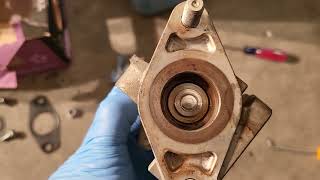
Typical fix: A thorough cleaning of the EGR cooler, EGR valve, and all passages in the intake manifold is required. Many owners use brake cleaner, oven cleaner, or a soak in a degreaser solution to dissolve the carbon. 🎬 Watch: Step-by-step guide to cleaning the EGR valve and cooler. Toyota's official fix per TSB T-SB-0116-15 Rev is to replace the intake manifold assembly entirely with an updated part. [⭐ T-SB-0116-15 Rev, 8]
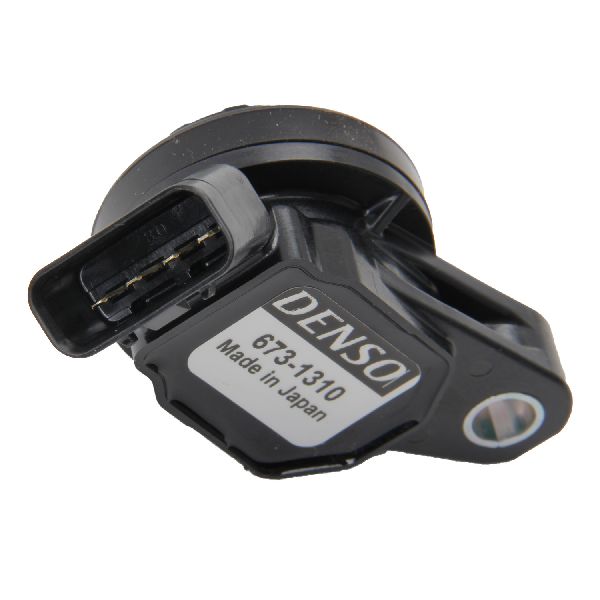
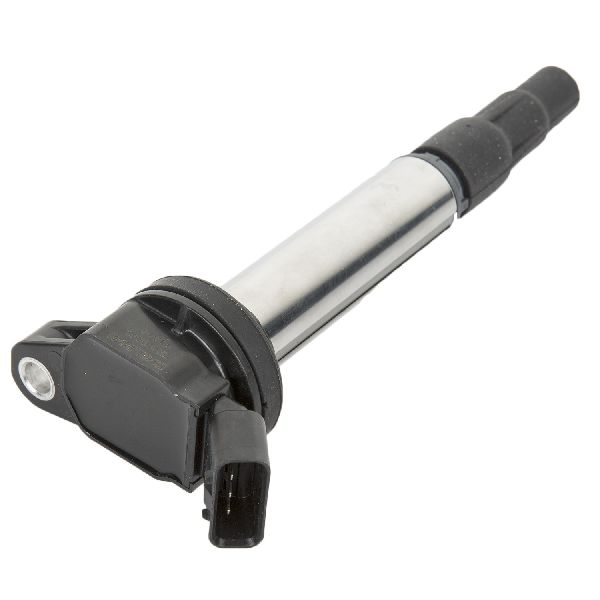
Est. part cost: $50-$100 for gaskets and cleaning supplies, or $250-$400 for a new OEM intake manifold. - Faulty Ignition Coil 🔴 High Probability → Shop Ignition Coil
How to confirm: Swap the ignition coil from cylinder 3 with another cylinder (e.g., cylinder 1). Clear the codes and drive the vehicle. If the code changes to P0301, the ignition coil is faulty.
Typical fix: Replace the faulty ignition coil. It is often recommended to replace all four coils and spark plugs at the same time if they are near the end of their service life. The OEM part is typically made by Denso.
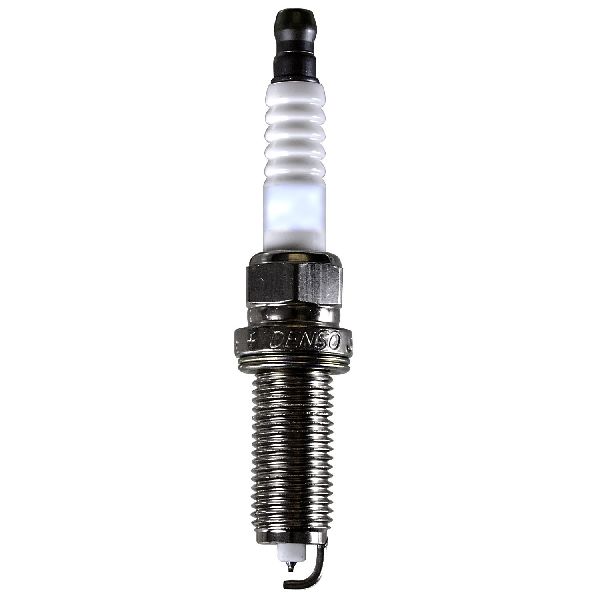
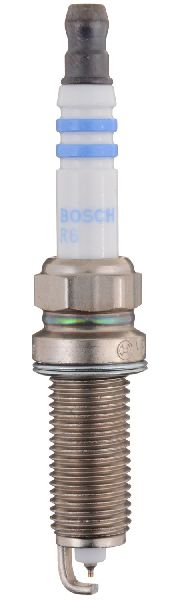
Est. part cost: $40-$90 for a single aftermarket coil, or $95-$145 for a single OEM coil. - Worn or Fouled Spark Plug 🟡 Medium Probability → Shop Spark Plug
How to confirm: Remove the spark plug from cylinder 3 and inspect it for wear, damage, or fouling from oil or carbon. A 'steam-cleaned' or unusually white appearance can indicate a coolant leak from a failing head gasket. A severely worn electrode with a very large gap can also cause a misfire. Compare it to the other plugs.
Typical fix: Replace the spark plug. It is best practice to replace all four spark plugs as a set. The OEM plugs are typically Iridium long-life plugs from Denso or NGK.
Est. part cost: $10-$25 per plug. - Faulty Fuel Injector ⚪ Low Probability → Shop Fuel Injector
How to confirm: After ruling out spark issues, you can swap the fuel injector from cylinder 3 with another cylinder. This is more labor-intensive. A mechanic can also perform a fuel injector balance test or a resistance test on the injector.
Typical fix: Replace the faulty fuel injector. Cleaning is sometimes successful, but replacement is more reliable.
Est. part cost: $70-$150 per injector.
Rare But Worth Checking
- Failing Head Gasket: While less common to present with only a single cylinder misfire initially, head gasket failure is a known, significant issue on higher-mileage 2010-2015 Prius models. Symptoms often include a rough, rattling cold start ('death rattle'), coolant consumption without external leaks, and white smoke from the exhaust. A clogged EGR system is considered a primary contributing factor to this failure. Diagnosis can be confirmed with a chemical block test for combustion gases in the coolant or by inspecting the cylinder with a borescope for coolant intrusion.
- Internal Engine Problem: Very rare causes include low compression due to a burnt valve or worn piston rings. A compression test and a cylinder leak-down test can diagnose these mechanical issues.
Diagnosis Steps
- Read the trouble codes with an OBD-II scanner and note any other codes present. Freeze frame data can show the conditions under which the misfire occurred.
- Check for symptoms of head gasket failure: coolant level in the reservoir, signs of white smoke on startup, or a rattling noise when the engine first starts. If present, prioritize head gasket diagnosis.
- Swap the ignition coil from cylinder 3 to a different cylinder (e.g., cylinder 1). Clear the codes, drive the car, and see if the misfire code follows the coil (e.g., P0301 appears). If it does, replace the bad coil.
- If the misfire remains on cylinder 3, inspect and swap the spark plug from cylinder 3 to a different cylinder. If the code follows the plug, replace the spark plugs. Check the old plug for unusual fouling.
- If the misfire still remains on cylinder 3, the next most likely cause on this vehicle is a clogged EGR system. Remove the intake manifold and inspect the EGR passages for carbon buildup.
- Thoroughly clean the intake manifold, EGR valve, and EGR cooler, or replace the intake manifold as per TSB T-SB-0116-15 Rev. [2, ⭐ T-SB-0116-15 Rev]
- If the EGR system is clean and the problem persists, investigate the fuel injector for cylinder 3, potentially by swapping it with another cylinder.
- As a final step for persistent issues, perform an engine compression test and a cylinder leak-down test to check for mechanical engine problems like a failing head gasket or burnt valve.
Parts You'll Likely Need
- Intake Manifold Assembly
(OEM #17120-37091)— Toyota's official TSB recommends replacing the manifold to fix misfires caused by EGR passage clogging. This part number is the updated version that supersedes 17120-37090. [⭐ T-SB-0116-15 Rev, 15, 16, 17, 33, 34]
Trusted brands: Toyota (OEM)
OEM price range: $220-$400
Aftermarket price range: $150-$250 - Ignition Coil
(OEM #90919-02258)— A common failure point for any vehicle, causing a lack of spark to the cylinder. This OEM part number supersedes 90919-02252.
Trusted brands: Denso, NGK, Toyota (OEM)
OEM price range: $95-$145
Aftermarket price range: $40-$70 - Spark Plug
(OEM #Denso FK16R-A8 (or NGK equivalent))— A standard maintenance item that wears out over time, leading to a weak or inconsistent spark. The OEM spec is an Iridium plug.
Trusted brands: Denso, NGK
OEM price range: $15-$25
Aftermarket price range: $8-$15
Related Codes That Often Appear With This One
- P0300 — Indicates a random or multiple cylinder misfire. This often appears with P0303 when the underlying cause, like a clogged EGR, begins to affect other cylinders. [⭐ T-SB-0116-15 Rev, ODI #11623185, 9]
- P0301, P0302, P0304 — Misfire codes for other cylinders. Seeing them together strongly suggests a systemic problem like a clogged EGR system or failing head gasket, not just a single bad coil. [⭐ T-SB-0116-15 Rev, 4]
- P0401 — Means "EGR Flow Insufficient." This code is a direct pointer to a clogged EGR system and is often the root cause of the misfire codes.
- P0171 — Indicates the system is running lean. This can sometimes appear after an initial misfire is fixed if the underlying cause (like clogged injectors or intake issues) is not fully resolved.
Technical Service Bulletins (TSBs) & Recalls
- T-SB-0116-15 Rev: Notes that P030x misfire codes can occur during light acceleration when the EGR system is active and recommends replacing the intake manifold assembly.
- T-SB-0147-16: Addresses a vibration/tapping noise and misfire codes at cold start with an ECM logic update.
Platform-Specific Known Issues
- EGR System Clogging: The most significant issue for this platform. Carbon from the exhaust builds up and clogs the EGR cooler and intake manifold passages, causing misfires, rough running, and engine knocking. This is addressed in TSB T-SB-0116-15 Rev. [⭐ T-SB-0116-15 Rev, 19]
- Cold Start Rattle/Misfire: Some vehicles may exhibit a rough idle, tapping noise, and misfire codes upon a cold start. TSB T-SB-0147-16 addresses this with an ECM software update to modify engine logic, though it may not solve an underlying mechanical or clogging issue. [⭐ T-SB-0147-16, 48]
- Head Gasket Failure: High-mileage examples are prone to head gasket failure, often precipitated by a clogged EGR system increasing cylinder temperatures and pressures. Early symptoms are a cold-start rattle and misfire codes like P0303.
Mechanic-Grade Diagnostic Values
- Fuel Injector Resistance — expected: 11.6 to 12.4 Ω at 20°C (68°F). Failure: A reading significantly outside this range, or one that is an outlier compared to the other injectors.
- Ignition Coil Primary Resistance — expected: Approximately 1.5 to 2.1 Ω. Failure: A reading of infinity (open circuit) or near zero (short circuit).
- Ignition Coil Secondary Resistance — expected: Approximately 9.7 to 13.7 kΩ. Failure: A reading significantly outside this range.
- Ignition Coil Connector Pin 4 Voltage (Key On, Engine Off) — expected: Battery Voltage (~12V). Failure: Low or no voltage indicates a problem with the power supply to the coil.
Hidden / Shadow Codes Worth Checking
- Mode 6, Test ID $A4, Comp ID $0C: This is not a DTC, but a specific monitor in the ECM that tracks the raw misfire count for Cylinder 3. A technician can view this data to see if misfires are occurring, even if the count is not yet high enough to trigger the P0303 code and turn on the Check Engine Light. (see via A professional scan tool capable of reading Mode 6 data, such as Toyota's Techstream software.)
Scan Tool Commands That Help
- Toyota Techstream: Active Test: Control the Fuel Cut — After swapping the coil and plug, use this to turn off the fuel injector for cylinder 3. If the engine's idle speed and sound do not change, it confirms cylinder 3 was not contributing power, pointing towards a fuel or compression issue for that cylinder.
- Toyota Techstream: Active Test: Control the EGR Step Position — At idle, command the EGR valve to open. If the engine stumbles or dies, the valve is mechanically functioning. If there is no change in idle, the EGR passages are likely clogged, preventing the exhaust gas from entering the intake manifold.
- Toyota Techstream: Data List: Misfire RPM (Cyl 1-4) — Monitor this parameter during a test drive under the conditions noted in the freeze frame data. It provides a live count of misfire events per cylinder, helping to confirm the issue is active and isolated to cylinder 3.
Wiring & Ground Locations
- Ignition Coil Connector (Cylinder 3) — On top of the valve cover, plugged into the third ignition coil from the front of the engine (passenger side).. This is the connection point for testing power, ground, and the trigger signal from the ECM. Pin 1: IGF (Ignition Feedback), Pin 2: GND (Ground), Pin 3: IGT (Ignition Trigger), Pin 4: +12V Power.
- Ground Points EA / EB — Bolted to the left side of the cylinder head (driver's side).. These are primary ground points for the engine control system, including the ignition coils. A loose or corroded ground here can cause erratic spark and intermittent misfires on one or more cylinders.
Real Owner Repair Stories
- PriusChat forum user 'robomoto' (2010 Prius with 280,000 km) — Engine shaking hard with clunking noises at low acceleration, codes P0301, P0303, and P0300.
❌ Tried (didn't work) Using fuel system cleaner.
✅ What actually fixed it A complete and thorough cleaning of the EGR cooler, EGR pipe, and all EGR passages within the intake manifold, which were heavily clogged with carbon. - Reddit user 'u/dsmyte' (2014 Prius C with 230k miles) — P0303 misfire code, shaking while idling, clicking/flappy noise on acceleration/deceleration.
❌ Tried (didn't work) Swapping ignition coils (code did not move from cylinder 3)., Replacing spark plugs., Cleaning fuel injectors (this temporarily cleared the P0303 but then a P0171 lean code appeared).
✅ What actually fixed it After the misfire returned as a lean code, the final fix was a thorough cleaning of the EGR system and the intake manifold. After cleaning, the codes were cleared and did not return after 500 miles.
"I Checked Everything" — The Actual Cause
- A common scenario for a P0303 on a Prius V is performing a smoke test on the intake system and finding no leaks. This leads mechanics to rule out intake issues. However, the actual problem is often internal clogging of the EGR distribution passages inside the intake manifold. A smoke test only checks for external vacuum leaks and will not detect these internal blockages, which are a primary cause of misfires on this engine.
OEM Part Supersession History
17120-37090→17120-37091— The updated intake manifold assembly is believed to have design revisions intended to reduce the rate of carbon accumulation in the EGR passages, which is the root cause of the issue described in TSB T-SB-0116-15 Rev.90919-02252→90919-02258— Standard part revision by the manufacturer for improved reliability or manufacturing process changes.
Model Year Variations Within This Range
- 2012-2016: While the P0303 diagnosis path related to the EGR system is consistent across the 2012-2016 Prius V range, it's worth noting that Toyota implemented updated pistons and piston rings in the 2ZR-FXE engine around the 2014/2015 model year to address oil consumption concerns. This change does not directly affect the EGR clogging issue but is a known engine variation within this generation.
Helpful Videos
We Have This Part in Stock


The information in this article is provided for general reference and educational purposes only. Vehicle specifications, procedures, and part compatibility can vary by production date, trim level, and region. Always consult your vehicle's factory service manual and verify part numbers before purchasing or performing repairs. Safety-critical components such as airbags, seat belts, and braking systems should be installed by a qualified professional.
- Toyota PRIUS V:
- 🧭 Diagnostic Flowchart
- 🎬 Helpful Videos
- 🛍️ Shop This Part
- What's Unique About the 2012-2016 Toyota PRIUS V
- Symptoms You May Notice
- Most Likely Causes
- Rare But Worth Checking
- Diagnosis Steps
- Parts You'll Likely Need
- Related Codes That Often Appear With This One
- Technical Service Bulletins (TSBs) & Recalls
- Platform-Specific Known Issues
- Mechanic-Grade Diagnostic Values
- Hidden / Shadow Codes Worth Checking
- Scan Tool Commands That Help
- Wiring & Ground Locations
- Real Owner Repair Stories
- "I Checked Everything" — The Actual Cause
- OEM Part Supersession History
- Model Year Variations Within This Range
- 🎟️ Get 5% Off