

P0303 on 2009-2016 Volkswagen Jetta: Cylinder 3 Misfire Causes & Fixes
On a 2009-2016 VW Jetta, code P0303 is most often caused by a failed ignition coil on cylinder 3. A new coil from a reputable brand like Bosch or NGK costs about $30-$60 and is a very common, 10-minute DIY replacement. Swapping the coil with another cylinder is the definitive diagnostic test.
- P0303 on a 2009-2016 Jetta indicates a misfire in cylinder 3.
- The most probable cause is a faulty ignition coil, which is a simple and inexpensive DIY fix.
- Always diagnose before replacing parts. Swap the cylinder 3 coil with another cylinder's coil to confirm if it's the source of the problem.
- If you have a TSI engine (1.4T, 1.8T, 2.0T), carbon buildup on the intake valves is a very common cause for misfires and should be investigated if coils and plugs are good.
- Avoid driving with a flashing check engine light to prevent costly damage to the catalytic converter.
What's Unique About the 2009-2016 Volkswagen JETTA

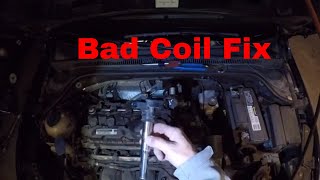
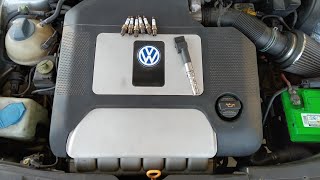
For this generation of Jetta, which includes multiple engine types like the 2.5L 5-cylinder and various turbocharged (TSI) 4-cylinders, ignition coils are a known, high-failure item. 🎬 Watch: How to replace ignition coils on the 2.5L engine. Additionally, the direct-injection TSI engines are particularly susceptible to carbon buildup on the intake valves, which can disrupt airflow and cause misfires that often start on a single cylinder before affecting others. This happens because fuel is injected directly into the cylinder, so it no longer has a cleaning effect on the intake valves.
Diagnostic Flowchart
Tap your situation to follow the diagnostic path that matches what you're seeing on this vehicle.
Generation note: This range covers the end of the Mk5 generation (2009-2010) and the majority of the Mk6 generation (2011-2016). While the fundamental causes of P0303 are the same, specific engine types (e.g., 2.5L 5-cylinder vs. 1.8T/2.0T 4-cylinder TSI engines) have different part numbers and unique issues. The carbon buildup on intake valves is almost exclusive to the TSI engines. The 2.5L engine is generally not prone to this issue.
Symptoms You May Notice
- Flashing or solid Check Engine Light
- Rough or shaking idle
- Engine hesitation or stumbling during acceleration
- Noticeable loss of power
- Reduced fuel economy
- Engine running rough
- Harder to start engine
- Smell of rotten eggs from the exhaust, indicating catalytic converter damage
- Replacing oxygen sensors, as they are unlikely to cause a single-cylinder misfire.
- Replacing the mass airflow (MAF) sensor without checking for more common causes first.
Most Likely Causes

- Faulty Ignition Coil 🔴 High Probability → Shop Ignition Coil Ignition coils are a well-documented common failure part on VW engines from this era, including the 2.5L and 2.0T TSI. Heat and vibration cause the internal components to degrade over time, leading to misfires that often first appear under heavy load or acceleration.
How to confirm: Swap the ignition coil from cylinder 3 with another cylinder (e.g., cylinder 2). Clear the codes and run the engine. If the code changes to P0302, the ignition coil is faulty. This is the most common and effective diagnostic step.
Typical fix: Replace the faulty ignition coil. It is often recommended to replace all coils at the same time as a preventative measure, as the others are likely of the same age and condition.
Est. part cost: $30 - $80 - Worn or Fouled Spark Plug 🔴 High Probability → Shop Spark Plug Spark plugs are a standard maintenance item. If they haven't been replaced according to the service interval (typically every 40,000-60,000 miles), they are a likely cause. A fouled plug can have excessive carbon buildup or oil deposits.
How to confirm: After confirming the coil is good, remove the spark plug from cylinder 3. Inspect it for wear, carbon fouling, oil, or damage to the electrode or ceramic. A worn electrode or incorrect gap can cause a weak spark. You can also swap it with another cylinder's plug to see if the misfire follows.
Typical fix: Replace the spark plug. It is best practice to replace all spark plugs as a set to ensure consistent performance.
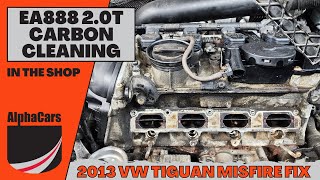
Est. part cost: $10 - $25 per plug - Carbon Buildup on Intake Valves (TSI Engines) 🟡 Medium Probability Gasoline direct injection (GDI/TSI) engines spray fuel directly into the cylinder, so fuel detergents don't wash over the intake valves. Over time, oil vapor from the PCV system bakes onto the hot valves, restricting airflow and causing misfires, often starting on a single cylinder during cold starts.
How to confirm: This requires visual inspection using a borescope inserted into the intake port after removing the intake manifold. A shop can perform this inspection relatively easily.
Typical fix: The intake manifold must be removed and the valves cleaned, most commonly through walnut shell blasting. This service is typically recommended every 60k-80k miles as preventative maintenance on TSI engines.
Est. part cost: $20 - $50 for gaskets and seals (if performed DIY) - Clogged or Faulty Fuel Injector ⚪ Low Probability → Shop Fuel Injector While less common than ignition issues, fuel injectors can fail or become clogged, preventing the correct amount of fuel from reaching cylinder 3. This can sometimes be mistaken for other issues.
How to confirm: Listen for a consistent clicking sound from the injector with a mechanic's stethoscope. A more advanced test involves checking the injector's resistance with a multimeter or having a shop perform a flow test. Swapping injectors between cylinders is also possible but is a much more involved job than swapping coils.
Typical fix: Replace the faulty fuel injector. On direct injection engines, this is a more labor-intensive job that also requires replacing the injector seals.
Est. part cost: $50 - $150
Rare But Worth Checking
- Low Cylinder Compression: This indicates a more serious mechanical engine problem, such as a burnt valve, damaged piston rings, or head gasket failure. A compression test is needed to diagnose this. A 'wet' compression test (adding a small amount of oil to the cylinder) can help differentiate between ring and valve issues.
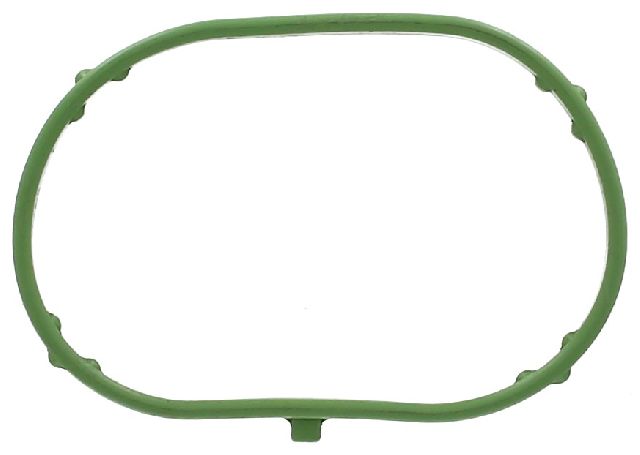
- Vacuum Leak: A leak in the intake manifold gasket near the cylinder 3 runner can cause a lean mixture and misfire. This can sometimes be found by spraying brake cleaner near the gasket with the engine running and listening for a change in idle speed.
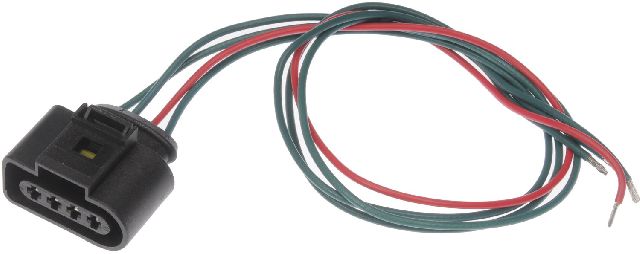
- Damaged Ignition Coil Wiring: → Shop Ignition Coil The wiring harness or connector for the ignition coil can become brittle and crack over time due to engine heat, leading to a poor connection and intermittent misfires. The plastic locking tab is notoriously fragile. Pigtail repair kits are available.
- Faulty PCV Valve: → Shop PCV Valve A failed Positive Crankcase Ventilation (PCV) valve can lead to excessive oil consumption, which can foul spark plugs and contribute to carbon buildup, indirectly causing misfires.
Diagnosis Steps
- Read the trouble codes with an OBD-II scanner and note any other codes present. Freeze frame data can show the engine conditions when the misfire occurred.
- Identify cylinder 3. On 4-cylinder TSI engines, it's the third cylinder from the timing belt side (passenger side in the US). On the 2.5L 5-cylinder, it's the middle cylinder (firing order 1-2-4-5-3).
- Swap the ignition coil from cylinder 3 with an adjacent cylinder (e.g., cylinder 2). This requires no tools on the 2.5L and is the quickest diagnostic step.
- Clear the codes, start the engine, and drive until the check engine light returns. If the code changes to P0302, the ignition coil is bad.
- If the code remains P0303, perform the same swap test with the spark plugs. You will need a spark plug socket.
- If the code still remains P0303, inspect the wiring and connector for the cylinder 3 ignition coil. Look for cracked plastic, corrosion on the pins, or broken wires. The locking tab is often broken, which can cause a loose connection.
- For TSI engines with over 60,000 miles, especially if misfires occur on cold starts, suspect carbon buildup. A professional inspection with a borescope is the next step.
- If all ignition and fuel delivery components check out, perform a compression test to rule out mechanical engine damage like a burnt valve or bad piston rings.
Parts You'll Likely Need
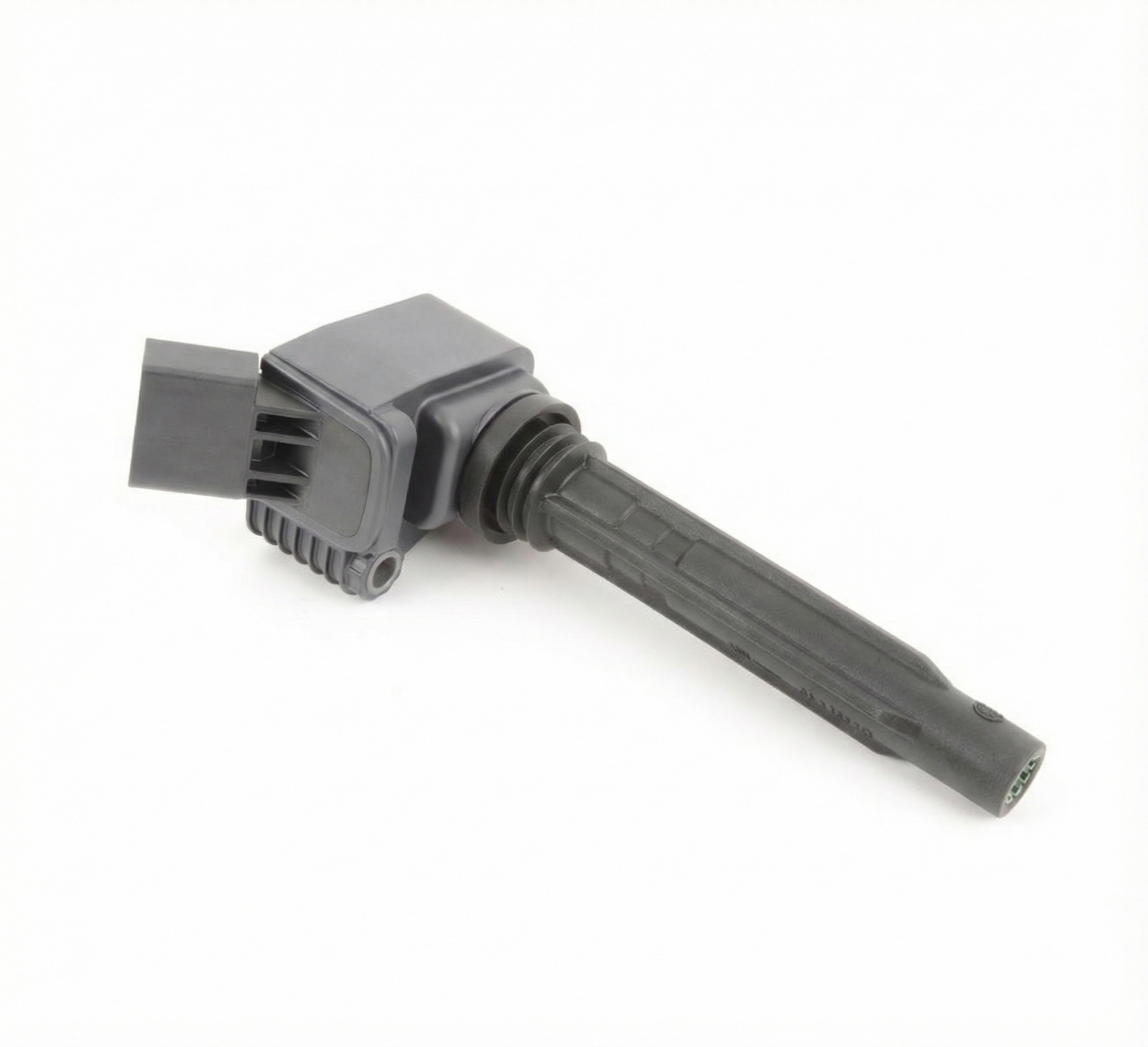
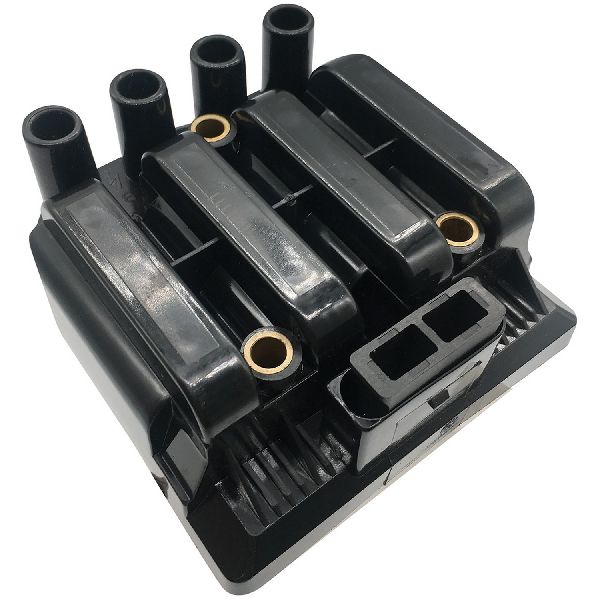
- Ignition Coil
(OEM #07K905715G (for 2.5L), 06H905115B / 06L905110K (for 2.0T TSI, check specific engine code))— This is the most common failure point for a P0303 code on this vehicle. Part number 07K905715F for the 2.5L has been superseded by 07K905715G. For the 2.0T, 06H905115B is common, but later models may use 06L905110H/K.
Trusted brands: Bosch, NGK, Eldor, APR (performance)
OEM price range: $50 - $80
Aftermarket price range: $30 - $60 - Spark Plug
(OEM #101905617C (for 2.5L), 06H905601A (for 2.0T TSI))— A standard wear-and-tear item that is the second most likely cause of a misfire.
Trusted brands: NGK, Bosch
OEM price range: $18 - $25
Aftermarket price range: $10 - $18 - Intake Manifold Gasket
(OEM #07K133237S (for 2.5L), 06F129717D (for 2.0T TSI))— Required if the intake manifold is removed for carbon cleaning or injector replacement.
Related Codes That Often Appear With This One
- P0300 — Indicates a random/multiple cylinder misfire. It may appear with P0303 if the problem is starting to affect other cylinders or if the misfire is intermittent.
- P0301, P0302, P0304 — Misfire codes for other cylinders. Seeing them together points to a systemic issue like bad fuel, a major vacuum leak, widespread carbon buildup, or multiple failed ignition components.
- P0087 — As noted in TSB #VIN4APIN20220118, this code for low fuel rail pressure can appear alongside misfire codes, suggesting a fuel delivery problem could be the root cause.
- P0353 — This code indicates a fault in the ignition coil primary/secondary circuit for cylinder 3. If seen with P0303, it strongly points to a bad ignition coil or a wiring/connector issue to that coil.
Technical Service Bulletins (TSBs) & Recalls
- VIN4APIN20220118: Notes that P0303 can occur with other misfire codes (P0300, P0301, P0302, P0304) and fuel pressure codes like P0087 and P053F, indicating a potential link between fuel delivery issues and misfires.
- 16-NA-383: While a GM bulletin, it describes the exact phenomenon of carbon buildup on direct injection engines causing misfires (P030x codes) after as little as 5,000 miles, which is directly applicable to the VW TSI engines.
Platform-Specific Known Issues
- Direct-injection TSI engines are known for significant carbon accumulation on intake valves, which can cause rough running and misfire codes, even at relatively low mileage. This issue often manifests as cold-start misfires.
- Ignition coils on both 2.5L and TSI engines have a high failure rate and are a primary cause of single-cylinder misfires. Many owners recommend replacing all coils if one fails.
- The plastic connectors for the ignition coils become brittle from heat cycles and frequently break, especially the locking tab, causing a loose connection that can trigger a misfire code.
Mechanic-Grade Diagnostic Values
- Ignition Coil Primary Resistance (2.5L & 2.0T) — expected: 0.4 - 2.0 Ohms, with some aftermarket parts specifying 0.62-0.65 Ohms.. Failure: A reading of zero indicates an internal short; a significantly high or infinite reading indicates an open circuit.
- Ignition Coil Secondary Resistance (2.5L & 2.0T) — expected: 6,000 - 11,300 Ohms (6.0kΩ - 11.3kΩ).. Failure: Readings outside this range suggest the coil is faulty and needs replacement.
- High-Pressure Fuel Rail Pressure at Idle (TSI Engines) — expected: ~40 bar (approx. 580 PSI).. Failure: A pressure of 6-10 bar at idle indicates a failing High-Pressure Fuel Pump (HPFP).
- High-Pressure Fuel Rail Pressure Under Load (TSI Engines) — expected: Rises with engine speed, up to 110.0 bar (approx. 1595 PSI).. Failure: Failure to increase pressure under load points to a fuel delivery issue (HPFP or LPFP).
- Low-Pressure Fuel System Pressure (All Engines) — expected: 50 - 90 PSI.. Failure: Pressure below 50 PSI indicates a weak in-tank fuel pump (LPFP) or clogged filter, which can starve the high-pressure system on TSI engines.
Hidden / Shadow Codes Worth Checking
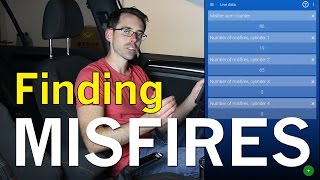
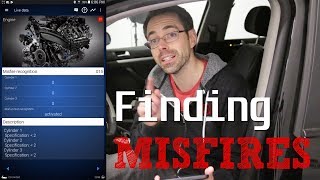
- Live Misfire Counters (per cylinder): Using a VW-specific scan tool like VCDS (VAG-COM), a technician can view live misfire counts for each individual cylinder before they are significant enough to trigger a specific fault code like P0303. This is invaluable for diagnosing intermittent issues. (see via In VCDS, go to Engine (01) -> Measuring Blocks -> Groups 014, 015, and 016. For newer UDS controllers, use Advanced Measuring Values and search for 'misfire'.)
Scan Tool Commands That Help
- VCDS (VAG-COM) or ODIS: View Misfire Counters in Measuring Blocks/Advanced Measuring Values — Use this function to confirm if misfires are isolated to cylinder 3 or if other cylinders are also misfiring at a lower rate that hasn't yet triggered a code. A few sporadic misfires can be normal at idle, but a rapidly increasing count on one cylinder confirms the problem location.
Wiring & Ground Locations
- Ground Point 15 (G15) — On top of the cylinder head.. This is the direct ground connection for the ignition coils. Corrosion or a loose connection at this point can cause a weak or intermittent spark on one or more cylinders, leading to misfire codes.
- Ground Point G1 / G12 — Located at the left rear of the engine compartment, often below the battery tray.. This is a primary engine-to-chassis ground. A poor connection here can cause a host of electrical issues, including erratic behavior from the ignition system.
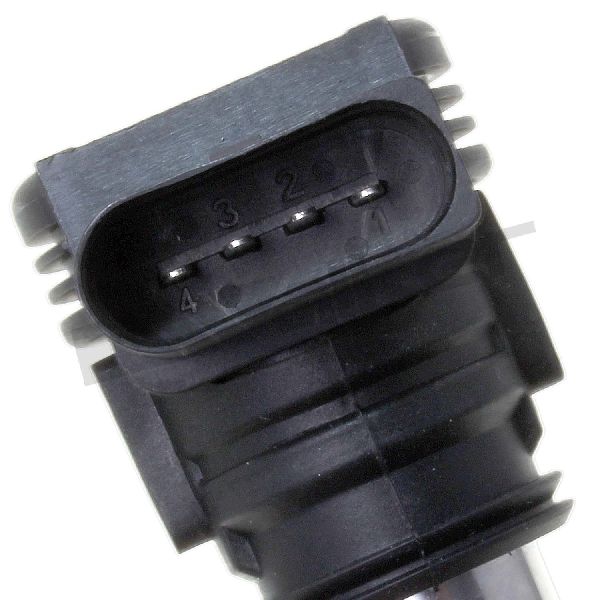
- Ignition Coil Connector (4-pin) — Directly on top of each ignition coil.. The connector itself or the pigtail wiring can become brittle from heat and vibration, causing a poor connection. The locking tabs are notoriously fragile, and a loose connector can cause an intermittent P0303. Pin 1 is typically 12V+ power, Pin 2 is the signal from the ECM, Pin 3 is a secondary ground, and Pin 4 is the primary ground path to G15.
Real Owner Repair Stories
- VWVortex Forums (2010 VW GTI, 53k miles (2.0T TSI engine)) — Intermittent P0303 misfire only on cold starts, occurring every couple of weeks. Rough idle for the first 20-30 seconds on every cold start, then smooths out.
❌ Tried (didn't work) Replaced all spark plugs with new OEM plugs., Replaced all ignition coils with new 'R8 red top' coils., Swapped the cylinder 3 coil with other cylinders; the P0303 code did not move.
✅ What actually fixed it The owner suspected either a failing fuel injector or carbon buildup. Another user confirmed that carbon buildup on the intake valves is a very common cause for these exact symptoms (cold start misfire on a single cylinder) even at relatively low mileage (as low as 25k miles), and that it often doesn't cause misfires on other cylinders initially. The implied fix is a manual intake valve cleaning (walnut blasting). - Reddit r/Jetta (2014 Jetta 1.8T 5-speed) — Initially had a P0302 (Cylinder 2 misfire). Replaced the coil, and the code went away. Later, under hard acceleration, the engine began to rumble and a P0303 code appeared.
❌ Tried (didn't work) Replacing the ignition coil on cylinder 2 fixed the P0302, but then a P0303 appeared., The user suspected issues with aftermarket coil packs.
✅ What actually fixed it The final resolution isn't explicitly stated by the original poster, but a reply noted that for their similar issue, the problem was only resolved after using OEM spark plugs and wires, as aftermarket versions were problematic. This highlights the sensitivity of these ignition systems to part quality.
OEM Part Supersession History
07K905715, 07K905715A, B, C, D, E, F→07K905715G— Updated design for improved reliability and performance. This is a very common replacement part.
Heads up: The 'G' revision is the latest and most reliable version for the 2.5L and many 2.0T engines. While older revisions may work, they are prone to the original failure. It is best to use the latest available part number.
Model Year Variations Within This Range
- 2008-2014: The 2.5L 5-cylinder engine came in several codes, most commonly CBUA and CBTA. While the long block is largely the same, there are differences in accessories and sensors. For example, the CBUA has two oxygen sensors while the CBTA has one. Swapping engines between these codes may require changing harnesses or using a T-fitting for oil pressure sensors.
Helpful Videos
Used OEM Parts in Stock
New Aftermarket Parts Available


The information in this article is provided for general reference and educational purposes only. Vehicle specifications, procedures, and part compatibility can vary by production date, trim level, and region. Always consult your vehicle's factory service manual and verify part numbers before purchasing or performing repairs. Safety-critical components such as airbags, seat belts, and braking systems should be installed by a qualified professional.
- Volkswagen JETTA:
- 🧭 Diagnostic Flowchart
- 🎬 Helpful Videos
- 🛍️ Shop This Part
- What's Unique About the 2009-2016 Volkswagen JETTA
- Symptoms You May Notice
- Most Likely Causes
- Rare But Worth Checking
- Diagnosis Steps
- Parts You'll Likely Need
- Related Codes That Often Appear With This One
- Technical Service Bulletins (TSBs) & Recalls
- Platform-Specific Known Issues
- Mechanic-Grade Diagnostic Values
- Hidden / Shadow Codes Worth Checking
- Scan Tool Commands That Help
- Wiring & Ground Locations
- Real Owner Repair Stories
- OEM Part Supersession History
- Model Year Variations Within This Range
- 🎟️ Get 5% Off