

P0304 on 2017-2022 Alfa Romeo Giulia: Cylinder 4 Misfire Causes and Fixes
P0304 on an Alfa Romeo Giulia signifies a misfire in cylinder 4. The most common causes are a worn spark plug or a failing ignition coil. For the 2.0L engine, a set of four OEM-spec NGK spark plugs costs around $100, while a single ignition coil is about $50-$150. For the 2.9L V6, costs are higher. Driving with a flashing check engine light can damage the catalytic converter.
- P0304 indicates a misfire in cylinder 4, most often due to a bad spark plug or ignition coil.
- A simple diagnostic step is to swap the ignition coil from cylinder 4 with another cylinder to see if the misfire code follows it.
- Always use high-quality, OEM-spec (NGK) spark plugs, as these engines are sensitive to incorrect parts.
- Do not drive for extended periods with a flashing check engine light, as this can cause expensive damage to the catalytic converter.
What's Unique About the 2017-2022 Alfa Romeo GIULIA
The Alfa Romeo Giulia, with its high-strung turbocharged engines (both the 2.0L GME-T4 and the 2.9L 690T V6), is sensitive to ignition component quality and battery voltage. Misfires can sometimes be triggered by transient electrical issues during startup. Furthermore, a known Technical Service Bulletin (S2018000011) indicates that misfire codes, including P0304, can erroneously appear after a specific PCM software update, highlighting a unique software-related quirk for this platform. The 2.9L V6 in the Quadrifoglio model also features a cylinder deactivation system, which can introduce unique diagnostic complexities if a misfire is suspected.
Diagnostic Flowchart
Tap your situation to follow the diagnostic path that matches what you're seeing on this vehicle.
Symptoms You May Notice
- Rough running engine, especially at idle.
- Hesitation or stumbling during acceleration.
- Flashing or solid Check Engine Light.
- Noticeable loss of power.
- Smell of unburned fuel from the exhaust.
- Unusual engine noises, like knocking or pinging.
- Replacing only the spark plug when the ignition coil is the actual culprit. The 'coil swap' diagnostic step is crucial to avoid this.
- Assuming a major mechanical failure before ruling out simple ignition or fuel delivery components.
- Replacing parts without confirming the failure. For example, replacing an injector when the issue was a simple wiring connector fault.
Most Likely Causes
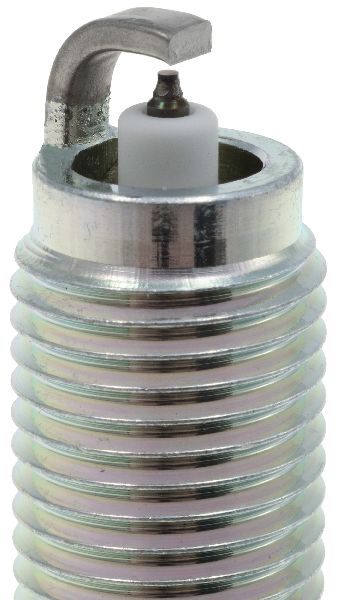
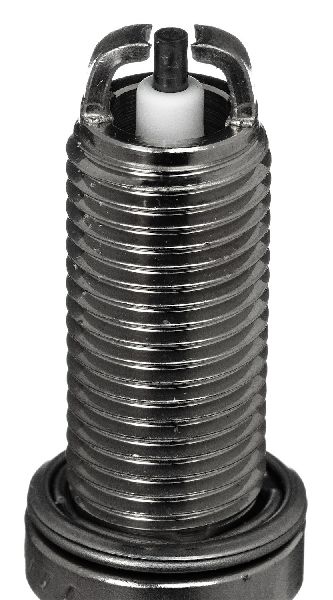
- Worn or Fouled Spark Plugs 🔴 High Probability → Shop Spark Plug Turbocharged, direct-injection engines are demanding on spark plugs, leading to faster wear, with replacement recommended as early as 25-30k miles. Using non-OEM spec plugs is a known cause of misfires on the Giulia.
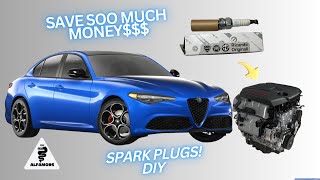
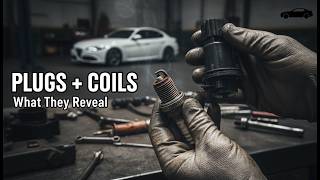
How to confirm: Remove the spark plug from cylinder 4 and inspect it for a worn electrode, carbon fouling, or oil contamination. Compare it to a new plug. 🎬 Watch: What old plugs and coils reveal about engine health. The gap may be out of specification; the recommended gap is typically .024"-.025".
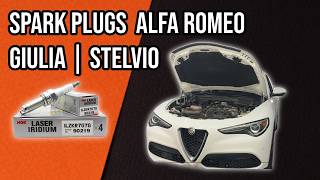
Typical fix: Replace the full set of spark plugs. 🎬 Watch: A complete 2.0L spark plug and coil installation guide. It is critical to use OEM-spec NGK Laser Iridium plugs and torque them correctly.
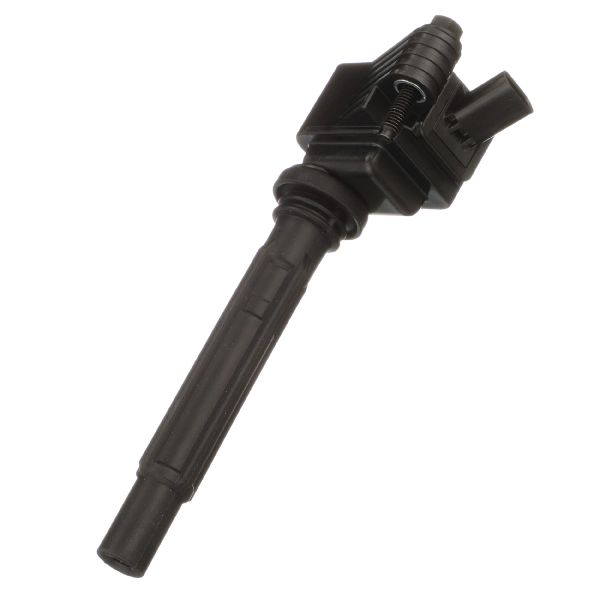
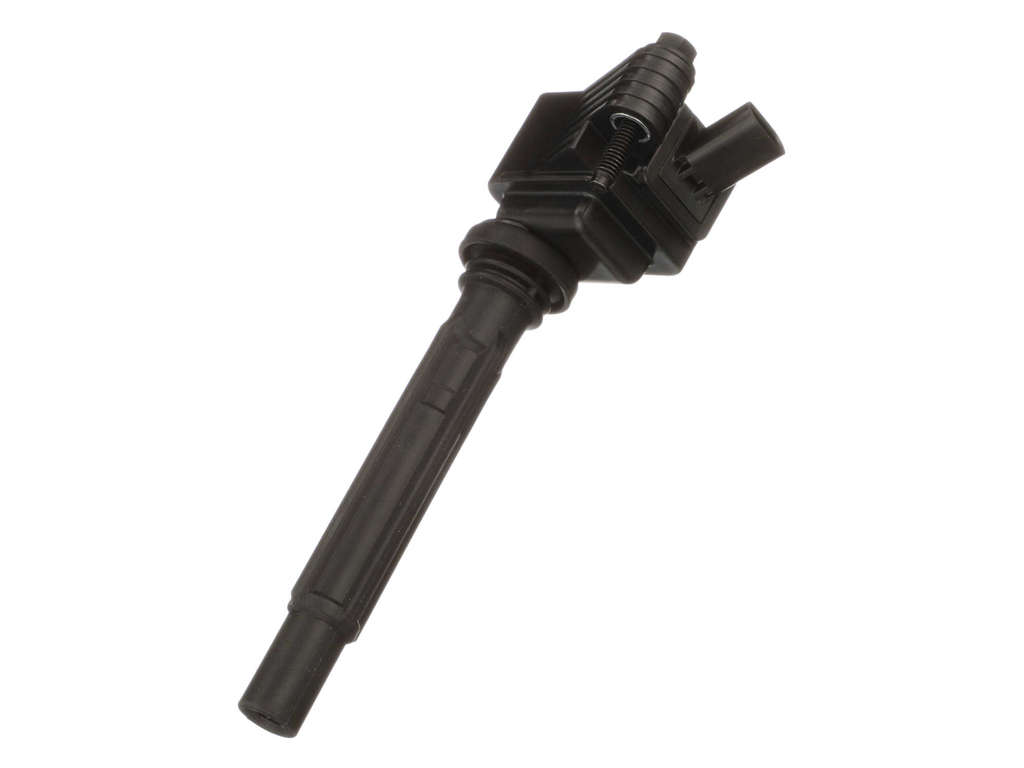
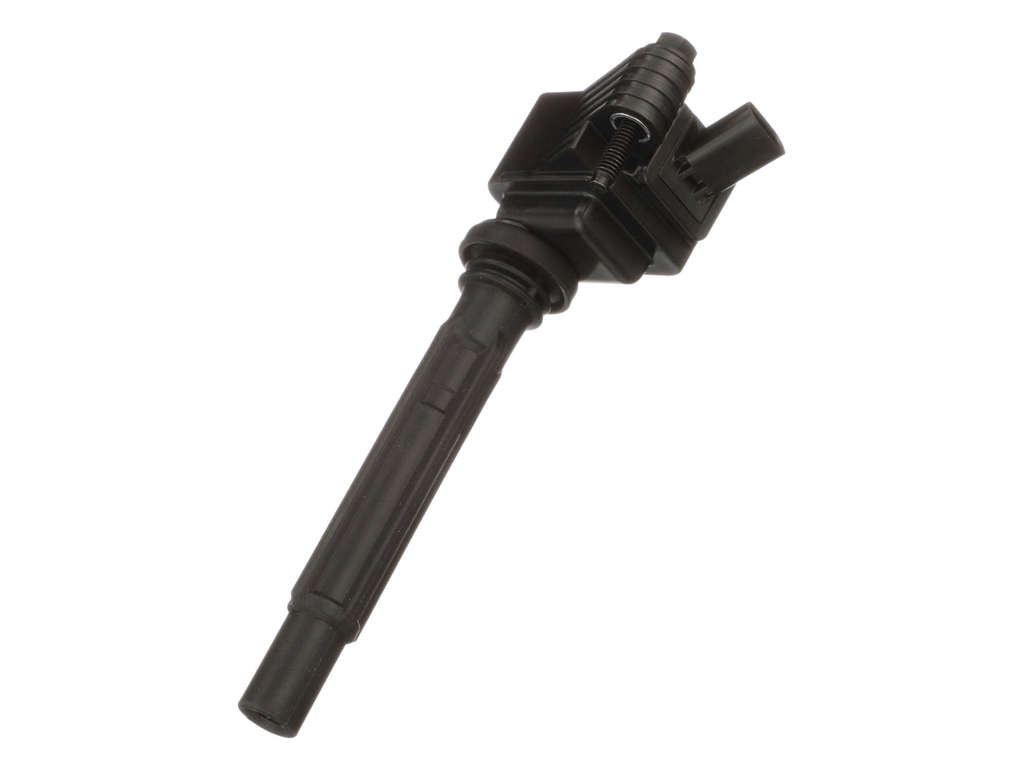
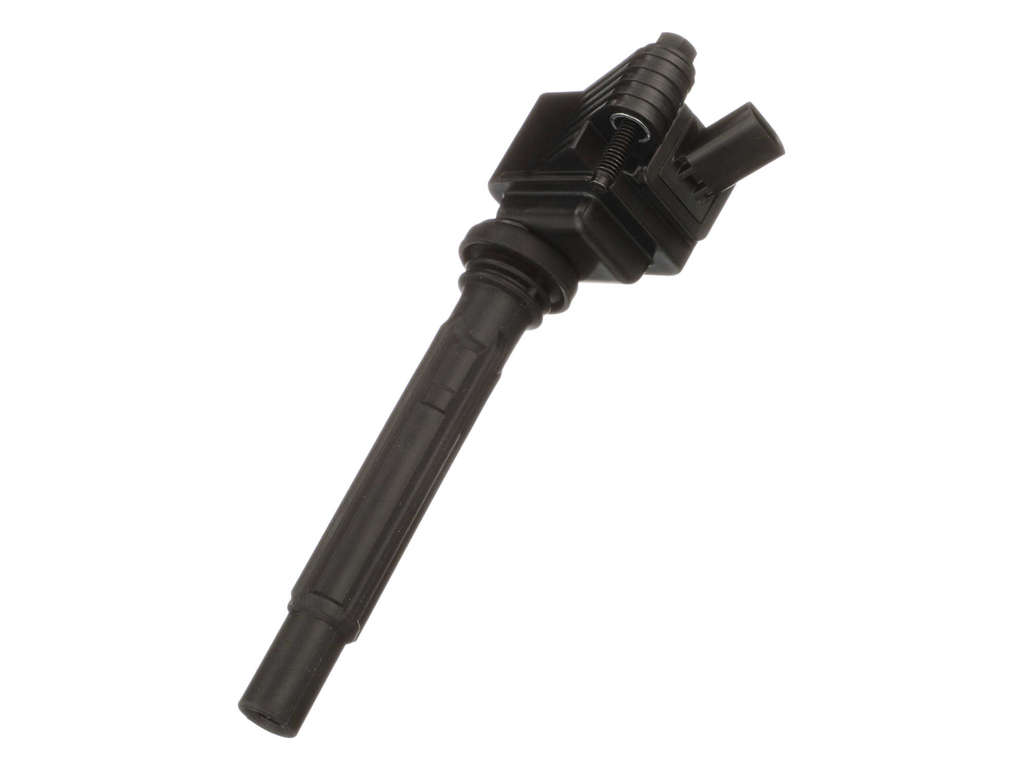
Est. part cost: $100-$130 for a set of 4 (2.0L) or $330 for a set of 6 (2.9L V6). - Failing Ignition Coil 🔴 High Probability → Shop Ignition Coil Coil-on-plug systems are common failure points on many modern engines. Heat and vibration can cause the coil's internal windings to fail over time, especially on high-performance turbocharged engines.
How to confirm: Swap the ignition coil from cylinder 4 with one from another cylinder (e.g., cylinder 1). Clear the codes and drive the car. If the code changes to P0301, the ignition coil is faulty.
Typical fix: Replace the failed ignition coil. While you can replace just one, it's often wise to replace them as a set if they are original and the vehicle has high mileage.
Est. part cost: $50-$150 for a single OEM-quality coil. - Faulty Fuel Injector 🟡 Medium Probability → Shop Fuel Injector
How to confirm: This is more complex to diagnose on a GDI engine. A professional can perform a fuel injector balance test. You can also swap injectors between cylinders, similar to an ignition coil, but this is a more involved job requiring new seals.
Typical fix: Replace the faulty fuel injector in cylinder 4. It is mandatory to replace the Teflon tip seal and O-rings to prevent high-pressure fuel leaks.
Est. part cost: $100-$250 - PCM Software Issue ⚪ Low Probability TSB #S2018000011 specifically notes that misfire codes can be set after performing the software update for Customer Satisfaction Notification (CSN) W05 on 2018 models.
How to confirm: This can only be confirmed by an Alfa Romeo dealership by checking the vehicle's service history and current PCM software version against the TSB.
Typical fix: The dealership may need to re-flash or update the Powertrain Control Module (PCM) software.
Est. part cost: $0 if covered under warranty or a campaign, otherwise dealer labor rates apply.
Rare But Worth Checking
- Leaking Head Gasket: A Reddit user reported a P0304 misfire on a 2017 Giulia at 55k miles was ultimately caused by a bad head gasket, allowing coolant into the cylinder. This is a severe mechanical issue requiring a compression test and/or coolant system pressure test to diagnose.
- Low Battery Voltage / Electrical Glitch: → Shop Vehicle Battery Some owners report that transient misfire codes can appear on startup if the start button is pressed too quickly or the battery is weak, causing a CAN bus communication delay. Clearing the code may resolve it if it doesn't return.
- Clogged or Dirty Air/Fuel Filters: While less common for a single-cylinder misfire, a restricted air filter or clogged fuel filter can disrupt the air-fuel mixture enough to cause a misfire under certain conditions.
Diagnosis Steps
- Read the fault codes with an OBD-II scanner to confirm P0304 and check for any other codes.
- Note the freeze frame data to see the engine conditions (RPM, load, temperature) when the misfire occurred.
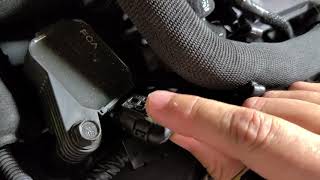
- Visually inspect the wiring harness and connector for the cylinder 4 ignition coil and fuel injector for any damage or loose connections. 🎬 See how to safely remove the delicate ignition coil connectors.
- Swap the ignition coil from cylinder 4 to another cylinder (e.g., cylinder 2). Clear the codes and run the engine. If the code changes to P0302, the coil is bad.
- If the misfire does not follow the coil, remove and inspect the spark plug from cylinder 4. Look for wear, damage, fouling, or an incorrect gap. The OEM gap is around .024".
- If the plug and coil are good, the issue may be with the fuel injector. This is harder to test and may require a professional.
- A compression test can be performed on cylinder 4 to rule out mechanical engine issues like bad valves or a failed head gasket.
- Check for vacuum leaks, which can lean out the mixture and cause misfires.
Parts You'll Likely Need
- Ignition Coil
(OEM #670050924)— This is one of the most common failure items causing a single-cylinder misfire. It's responsible for generating the high voltage for the spark plug.
Trusted brands: Bosch, NGK, Mopar, Eldor
OEM price range: $90-$150
Aftermarket price range: $50-$100 - Spark Plug
(OEM #NGK ILZKR7G7G (also sold as stock code 90219))— Spark plugs are a regular maintenance item and a frequent cause of misfires as they wear out. Using the correct OEM-spec NGK plug is critical for the Giulia.
Trusted brands: NGK
OEM price range: $25-$35 per plug
Aftermarket price range: $15-$25 per plug
Related Codes That Often Appear With This One
- P0300 — If the misfire is intermittent or affects multiple cylinders, a P0300 (Random/Multiple Cylinder Misfire Detected) may be stored alongside P0304.
- P0301, P0302, P0303 — If there is a systemic issue like a vacuum leak, bad fuel, or a software problem, multiple cylinders may misfire and log their respective codes.
- P0363 — This indicates 'Misfire Detected - Fueling Disabled'. It's a more severe code logged when the PCM detects a misfire so critical that it shuts off the fuel injector to cylinder 4 to protect the catalytic converter.
Technical Service Bulletins (TSBs) & Recalls
- 0900222: Mentions P0304 as a potential cause for a rough running engine.
- S2018000011: Notes that P0304 and other misfire codes can be set after performing a specific PCM software update (CSN W05).
Platform-Specific Known Issues
- TSB #S2018000011 notes that P0304 can be triggered after a specific PCM software update on 2018 models.
- TSB #0900222 confirms that P0304 is associated with a rough running engine complaint on 2022 models.
- Cylinder location: On the 2.0L I4, cylinder 4 is at the rear, by the firewall. On the 2.9L V6, cylinder 4 is the front-most cylinder on the driver's side bank (LHD).
Mechanic-Grade Diagnostic Values
- Low-Pressure Fuel System Pressure — expected: Actual pressure should match desired pressure commanded by the PCM. A significant drop below desired pressure indicates a problem.. Failure: A large, sudden drop in actual pressure, especially if accompanied by codes P0087 or P008A, points to a failing in-tank low-pressure fuel pump, a known recall issue on 2017-2019 models.
- Battery State of Charge (via IBS sensor) — expected: Should be above 80% for normal operation.. Failure: Consistently low voltage or state of charge can cause numerous random electrical faults on the Giulia, including transient misfire codes, even if the battery can still start the car.
Hidden / Shadow Codes Worth Checking
- Mode 6 Misfire Counters: The ECU tracks misfires per cylinder even before they reach the threshold to set a P030x trouble code. Monitoring these counters can show which cylinder is having minor issues. (see via Advanced scan tools like MultiECUScan can access Mode 6 data to view these raw misfire counts per cylinder.)
- Soft Codes: These are fault codes stored in various modules that do not trigger a Check Engine Light. They can indicate intermittent or emerging issues. (see via Using MultiECUScan, there is a specific function to 'Scan for soft codes' across all vehicle modules.)
Scan Tool Commands That Help
- MultiECUScan: Self-adaptation parameters reset — After replacing a component like a fuel injector or sensor, this function can be used to clear the ECU's learned adaptive values, forcing it to relearn based on the new part's performance.
- MultiECUScan: Proxi Alignment Procedure — While not a direct fix for P0304, it is a critical service function for the Giulia. It's used to align the configuration of all vehicle control modules. If modules are out of sync (often indicated by a flashing odometer), it can cause widespread communication errors that could potentially manifest as other faults.
Wiring & Ground Locations
- Main Engine Ground Strap — Located between the transmission and the chassis, toward the middle of the car on the driver's side (LHD).. This is a critical failure point. The original uncoated strap corrodes, causing high resistance. The engine's electrical system then seeks alternative ground paths, often through smaller wires in the main harness, causing them to overheat and melt. This electrical instability can cause random, hard-to-diagnose misfires and other faults before a complete no-start condition occurs.
Real Owner Repair Stories
- Reddit user on r/AlfaRomeo (2017 Giulia, 55,000 miles) — P0304 misfire code.
❌ Tried (didn't work) Initial diagnostics (not specified, but typically spark/coil checks).
✅ What actually fixed it Replacement of a bad head gasket that was allowing coolant into cylinder 4. - YouTube channel 'Max Shepherd' (Alfa Romeo Giulia (year not specified)) — Check engine light, misfiring, shaking, loss of power at higher RPM.
❌ Tried (didn't work) Initial diagnosis suggested a software update., Replacing spark plugs with aftermarket 'Champion' brand plugs.
✅ What actually fixed it The misfire was finally resolved by removing the aftermarket Champion spark plugs and installing genuine OEM-spec plugs. - Reddit user on r/AlfaRomeo (2019 Stelvio 2.0T (shared platform)) — Massive cloud of white smoke and engine bogging/limp mode immediately after an oil change.
✅ What actually fixed it The issue was caused by the service shop overfilling the engine oil. The excess oil was forced through the PCV system into the intake, causing it to burn in the combustion chambers, leading to smoke and misfires. The fix was correcting the oil level.
"I Checked Everything" — The Actual Cause
- A common diagnostic path for misfires is a smoke test to find vacuum leaks. However, on the Giulia platform, a car can have perfect vacuum integrity but still suffer from misfires due to the corroded main engine ground strap. The strap's high resistance creates electrical instability that the ECU can interpret as a misfire, a problem a smoke test would never find.
When the Usual Fixes Don't Work
- In several documented owner experiences, the common fixes of replacing spark plugs and ignition coils did not resolve the P0304 misfire. One owner discovered the root cause was a faulty head gasket, a purely mechanical failure. Another owner traced a persistent misfire back to using high-quality but non-OEM brand spark plugs; switching to the specified NGK plugs immediately solved the problem, highlighting the platform's extreme sensitivity to ignition components. In the most unusual cases, a corroded main ground strap, a component completely unrelated to the ignition or fuel system for a specific cylinder, was found to be the culprit by creating electrical instability across the entire vehicle.
OEM Part Supersession History
Unknown (uncoated ground strap)→68648999AA— The original uncoated ground strap was prone to corrosion, leading to high resistance and severe electrical problems. The new part is coated for improved corrosion protection.670050243→670050924— Part number consolidation or supplier change for the ignition coil. Both numbers may refer to the same part.
Heads up: Both part numbers are listed for the 2.9L V6 engine. It's crucial to verify fitment by VIN as multiple suppliers (Bosch, Eldor) exist.
Model Year Variations Within This Range
- 2020-2022: The 2.0L engine received ULEV125 emissions certification starting in the 2020 model year. A known characteristic of this programming is a brief period of rough idle on a cold start, which is done intentionally to heat the catalytic converter faster. This is normal operation and should not be diagnosed as a fault.
- 2020+: The 2020 model year introduced a significant interior refresh with a new, larger 8.8-inch touchscreen infotainment system and a redesigned center console. Mechanical components related to the engine and drivetrain remained the same as prior years.
Helpful Videos
We Have This Part in Stock

The information in this article is provided for general reference and educational purposes only. Vehicle specifications, procedures, and part compatibility can vary by production date, trim level, and region. Always consult your vehicle's factory service manual and verify part numbers before purchasing or performing repairs. Safety-critical components such as airbags, seat belts, and braking systems should be installed by a qualified professional.
- Alfa Romeo GIULIA:
- 🧭 Diagnostic Flowchart
- 🎬 Helpful Videos
- 🛍️ Shop This Part
- What's Unique About the 2017-2022 Alfa Romeo GIULIA
- Symptoms You May Notice
- Most Likely Causes
- Rare But Worth Checking
- Diagnosis Steps
- Parts You'll Likely Need
- Related Codes That Often Appear With This One
- Technical Service Bulletins (TSBs) & Recalls
- Platform-Specific Known Issues
- Mechanic-Grade Diagnostic Values
- Hidden / Shadow Codes Worth Checking
- Scan Tool Commands That Help
- Wiring & Ground Locations
- Real Owner Repair Stories
- "I Checked Everything" — The Actual Cause
- When the Usual Fixes Don't Work
- OEM Part Supersession History
- Model Year Variations Within This Range
- 🎟️ Get 5% Off