

P0304 on 2020-2021 Audi A6 ALLROAD: Cylinder 4 Misfire Causes and Fixes
P0304 on a 2020-2021 Audi A6 Allroad indicates a misfire in cylinder 4. The most common cause is a faulty ignition coil, followed by a worn spark plug. A simple DIY diagnosis is to swap the cylinder 4 ignition coil with another cylinder's coil (e.g., cylinder 5) to see if the code follows. In some cases, a dealership software update may be required to fix overly sensitive misfire detection, especially with winter-blend fuels.
- P0304 indicates a misfire on cylinder 4, which is the front-most cylinder on the driver's side of the 3.0L V6 engine.
- The most likely cause is a bad ignition coil, which can be easily diagnosed at home by swapping it with another cylinder's coil.
- Worn spark plugs are the second most likely cause. It is best practice to replace all six coils and/or plugs at the same time.
- If the check engine light is flashing, pull over and stop driving to prevent catastrophic damage to the catalytic converter.
- In some cases, a simple software update from an Audi dealer may be required to fix overly sensitive misfire detection.
What's Unique About the 2020-2021 Audi A6 ALLROAD
The 2020-2021 Audi A6 Allroad uses the 3.0L V6 TFSI engine (engine code DLZA), part of the EA839 family. This engine features a 'hot-V' design with the turbocharger nestled between the cylinder banks. While highly efficient, these direct-injection engines are known for being demanding on ignition components, and ignition coil failures are a very common cause of misfires. Additionally, Audi has issued several Technical Service Bulletins (TSBs), such as A0123802069038_4, indicating that the misfire detection software was sometimes overly sensitive, especially with winter-blend fuels, and could trigger false codes. A dealership software update is often the prescribed fix in these cases. The EA839 engine family has also had documented cases of rocker arm failures, which can be a more severe, mechanical cause of a persistent misfire.
Diagnostic Flowchart
Tap your situation to follow the diagnostic path that matches what you're seeing on this vehicle.
Symptoms You May Notice
- Rough or shaky idle
- Engine hesitation or stumbling during acceleration
- Reduced engine power
- Flashing or solid Check Engine Light
- Decreased fuel economy
- Smell of unburned fuel from the exhaust
- Replacing only the spark plug without testing the ignition coil, which is a more common failure point and easier to test by swapping.
- Assuming a fuel pump is bad for a single-cylinder misfire. A failing fuel pump would more likely cause random misfires (P0300) or affect an entire bank of cylinders.
- Replacing hardware (coils, plugs) when a simple ECM software update at the dealership is all that is needed to fix overly sensitive misfire detection, as noted in TSBs like 2069038/4.
Most Likely Causes
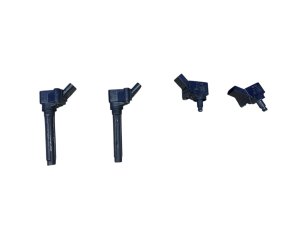
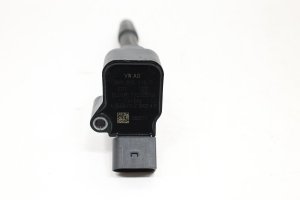
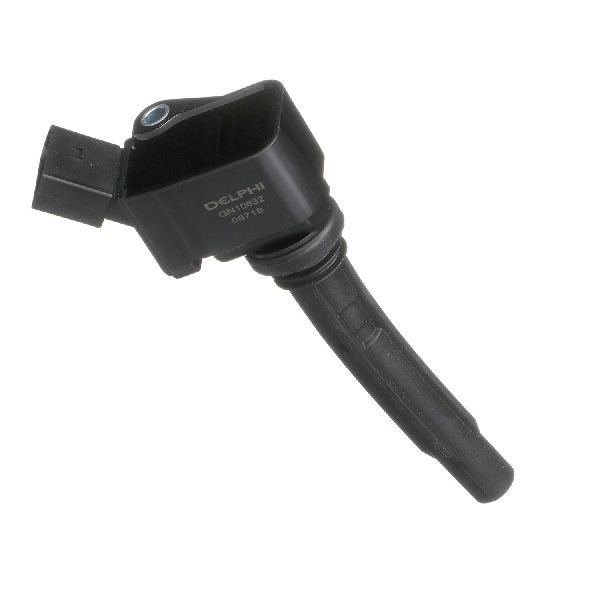
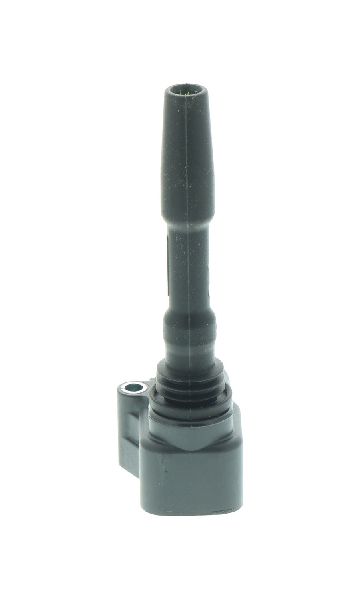
- Faulty Ignition Coil 🔴 High Probability → Shop Ignition Coil Ignition coils on modern high-output engines like the 3.0T operate under high thermal and electrical stress and are a common failure point across the EA839 engine family. Several part number revisions by Audi suggest ongoing efforts to improve their reliability. The latest revision is generally recommended.
How to confirm: Swap the ignition coil from cylinder 4 with another cylinder (e.g., cylinder 5). To access the driver's side coils (4, 5, 6), the coolant expansion tank must be unbolted and moved aside. Clear the codes and drive. If the code changes to P0305, the ignition coil is faulty.
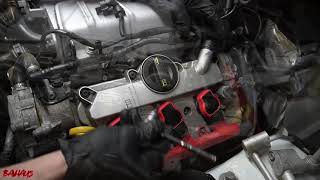
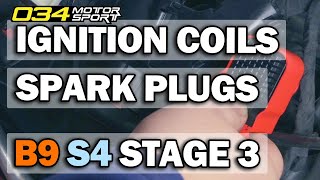
Typical fix: Replace the faulty ignition coil. It is best practice to replace all six coils at once for preventative maintenance, preferably with the latest OEM part number revision. 🎬 Watch: How to install new ignition coils and spark plugs.
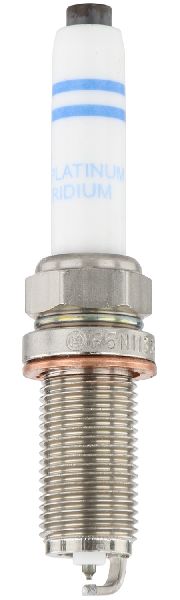
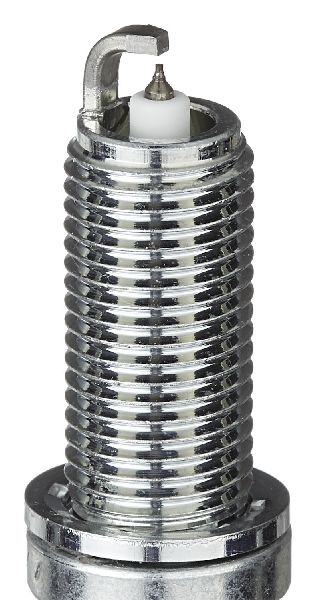
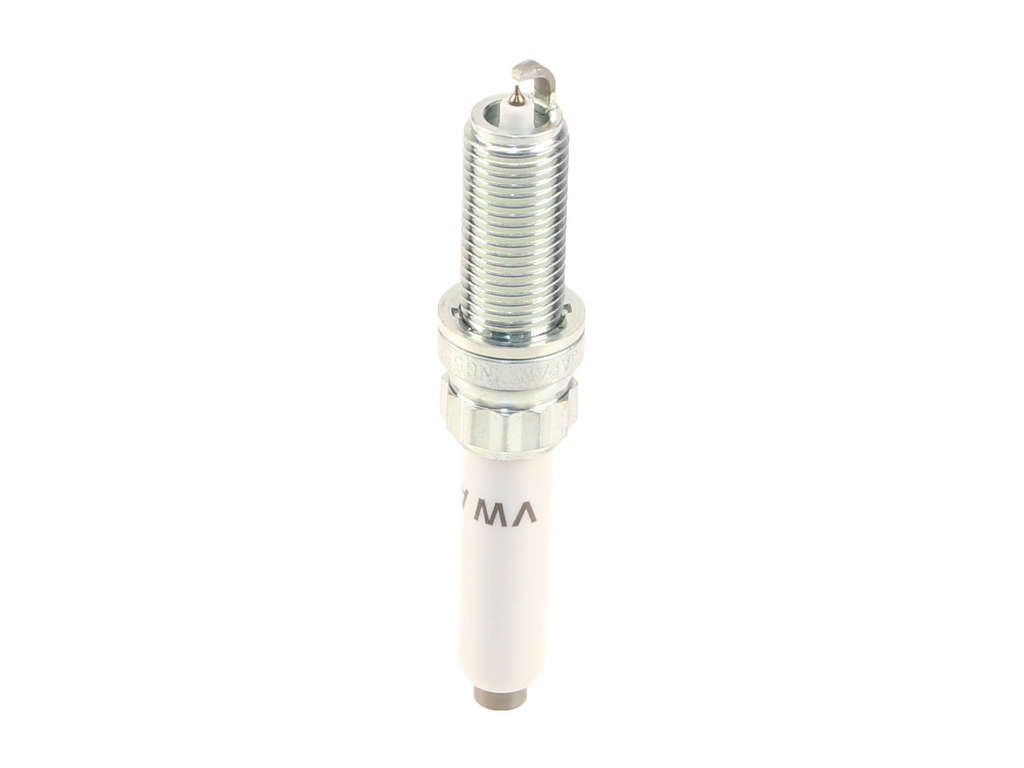
Est. part cost: $40-$90 per coil - Worn or Fouled Spark Plug 🔴 High Probability → Shop Spark Plug Spark plugs are a regular maintenance item with a specific service interval. The recommended interval for the 3.0T EA839 engine is every 40,000 miles or 6 years. Exceeding this interval or issues like oil leaks can cause them to wear out or become fouled, leading to a weak or nonexistent spark.
How to confirm: After removing the ignition coil, remove the spark plug from cylinder 4 and inspect it. Look for signs of wear on the electrode (a rounded center electrode), carbon fouling (black, sooty deposits), oil fouling (wet, black deposits), or a cracked ceramic insulator.
Typical fix: Replace the spark plug. It is highly recommended to replace all six spark plugs at the same time, especially if they are near the end of their service life.
Est. part cost: $25-$40 per plug - Clogged or Faulty Fuel Injector 🟡 Medium Probability → Shop Fuel Injector Direct injection (TFSI) systems operate under very high pressure and are susceptible to carbon deposits on the injector nozzle, which can disrupt the fuel spray pattern. While less common than ignition issues, injector failure can cause a persistent single-cylinder misfire.
How to confirm: This is more difficult for a DIYer. A professional can perform a fuel injector balance test. Swapping injectors between cylinders is possible but is much more labor-intensive than swapping coils and requires special tools for replacing the Teflon seals. 🎬 See how a pro performs a fuel injector swap test.
Typical fix: Replace the faulty fuel injector. It's mandatory to also replace the Teflon seals and O-rings using special tools to prevent high-pressure fuel leaks. Sometimes, running a high-quality fuel system cleaner with Polyetheramine (PEA) can help with minor clogging.
Est. part cost: $150-$300 per injector - Intake Valve Carbon Buildup 🟡 Medium Probability As a direct-injection engine, fuel is sprayed directly into the cylinder, not over the intake valves. This means oil and fuel vapors from the PCV system can bake onto the back of the valves over time, restricting airflow and causing misfires, especially on cold starts. This is a well-documented issue on modern direct-injection engines.
How to confirm: Requires a borescope inspection of the intake ports and valves, which usually involves removing the intake manifold.
Typical fix: The intake valves need to be cleaned, typically through walnut blasting. This is a labor-intensive job that should be performed by a qualified shop.
Est. part cost: $0 (service only)
Rare But Worth Checking
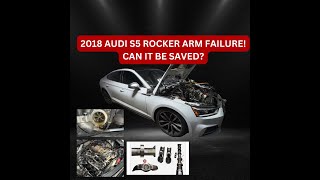
- Low Compression / Internal Engine Damage: While very rare on a newer vehicle, a persistent misfire that isn't resolved by ignition or fuel system parts could indicate a mechanical problem. Early EA839 engines had some issues with rocker arm failures. 🎬 Watch: Diagnosing a severe rocker arm failure on this engine. A compression and leak-down test is required to diagnose this. One owner of a related vehicle with a DLZA engine family reported a P0304 code that was ultimately caused by low compression requiring engine replacement.
- ECM Software Glitch: Audi has released TSBs (e.g., 2069038/4, 2058038/5) for the EA839 engine family addressing misfire detection that is too sensitive, particularly with winter-blend fuels. In these cases, the fix is not a hardware replacement but an ECM software update performed by a dealership.
Diagnosis Steps
- Read the trouble codes with an OBD-II scanner to confirm P0304 and check for any other related codes.
- If the Check Engine Light is flashing, do not drive the vehicle to prevent catalytic converter damage.
- Identify cylinder 4. On the 3.0L V6, Bank 2 is the driver's side. The cylinders are numbered 4, 5, 6 from front to back. Cylinder 4 is at the front.
- To access Bank 2 coils, unbolt the coolant expansion tank (typically two 10mm bolts) and move it aside. No special tools are required.
- Swap the ignition coil from cylinder 4 with the coil from cylinder 5.
- Clear the codes with the scanner.
- Drive the vehicle until the Check Engine Light returns.
- Re-scan for codes. If the code is now P0305, the ignition coil is faulty and needs replacement.
- If the code remains P0304, the issue is not the coil. Proceed to inspect the spark plug in cylinder 4. Remove it and check for wear, fouling, or damage. Replace if it's in poor condition or past its 40,000-mile service interval.
- If the coil and plug are good, the issue is likely more complex. Check for TSBs related to ECM software updates. If none apply, the problem may be a fuel injector, carbon buildup, or a mechanical issue requiring professional diagnosis.
Parts You'll Likely Need
- Ignition Coil
(OEM #06M905115F)— This is the most common failure point for a single-cylinder misfire on this engine. Part number 06M905115F is a common revision for the EA839 engine, superseding older versions.
Trusted brands: Bosch, NGK, Eldor
OEM price range: $60-$90
Aftermarket price range: $40-$70 - Spark Plug
(OEM #06M905606F)— A regular maintenance item (40k miles) that can cause misfires when worn or fouled. It's best practice to replace them when replacing coils.
Trusted brands: NGK, Bosch
OEM price range: $25-$40
Aftermarket price range: $15-$25
Related Codes That Often Appear With This One
- P0300 — If the misfire becomes more frequent or starts to affect other cylinders, a P0300 (Random/Multiple Cylinder Misfire) code may appear.
- P0305, P0306 — Misfire codes for other cylinders on the same bank (Bank 2 is cylinders 4, 5, 6) could indicate an issue affecting that entire bank, like a vacuum leak near the intake manifold for that bank.
- P0430 — Catalyst System Efficiency Below Threshold (Bank 2). A chronic misfire on cylinder 4 sends unburned fuel into the exhaust, which can overheat and destroy the catalytic converter on Bank 2, leading to this code.
Technical Service Bulletins (TSBs) & Recalls
- A0123802069038_4 / 2069038/4: Provides information for when the MIL is on for cylinder misfires (P0300-P0306) and advises that a software update may be needed to correct the issue.
- A0124212069038_5: Provides information when the MIL is illuminated for cylinder misfires, including P0304.
- A0123912069038_5: Provides information for when the MIL is illuminated for cylinder misfires, including P0304.
- 2058038/5: Notes that software calibration can cause misfires with winter-blend fuel on 2021 A6/A7 models, triggering codes P0300-P0306.
Platform-Specific Known Issues
- Audi has issued multiple Technical Service Bulletins (TSBs) for misfire detection on this engine platform. TSB 2069038/4 specifically notes that an ECM software update may be required to correct overly sensitive monitoring that can cause misfire codes.
- Another TSB, 2058038/5, mentions that software calibration issues can cause misfires under certain conditions with winter-blend fuel.
- Oil leaks from the valve cover gasket can seep into the spark plug tubes, saturating and destroying the ignition coil. When replacing a coil, inspect the spark plug tube for any signs of oil.
Mechanic-Grade Diagnostic Values
- Compression Pressure — expected: 10+ BAR. Failure: A reading significantly below spec, such as 3 BAR, indicates a severe mechanical engine failure.
- Crankshaft Position Sensor Voltage (at connector) — expected: 5V supply, 5V on signal wire (KOEO), ~12.6V on ground (probed to battery positive). Failure: Incorrect voltage readings point to a wiring or ECU fault rather than a sensor failure.
Hidden / Shadow Codes Worth Checking
- P130A: Cylinder Disabling. This Audi-specific code is often stored alongside a persistent misfire code like P0304, indicating the ECU has intentionally shut down the cylinder to prevent damage. (see via Advanced scanners like VCDS or dealership tools (ODIS).)
Scan Tool Commands That Help
- VCDS (VAG-COM): Advanced Measuring Values (Blocks 015, 016 for older models; search 'mis' for newer UDS modules) — To view live misfire counters for each individual cylinder. This helps confirm which cylinder is misfiring in real-time, even if a fault code hasn't been set yet. The ECU must have 'misfire recognition' enabled for data to appear.
Wiring & Ground Locations
- T2dc — A 2-pin black connector located near the fuel injector for cylinder 4.. This is the direct electrical connector for the cylinder 4 fuel injector. A poor connection or corrosion here can cause an injector-related misfire.
- N163 — Designator for Ignition Coil 4 in Audi wiring diagrams.. This is the specific component identifier for the cylinder 4 ignition coil, which receives power via the main engine harness and is controlled by the ECU (J220).
- Engine Ground Strap — A primary ground runs from the right side engine mount to a stud on the frame rail. Another runs from the left cylinder head to the chassis.. A corroded or loose engine ground can cause a wide range of phantom electrical issues, including weak spark and misfires that are difficult to diagnose.
- J220 (Motronic ECM) — The Engine Control Module, typically located in the plenum chamber electronics box.. The ECM provides the ground signal to fire both the ignition coil (N163) and the fuel injector (N33) for cylinder 4. A fault in the ECM driver for this cylinder is a rare but possible cause.
Real Owner Repair Stories
- AudiWorld Forums user (2018 Audi Q7 3.0T (EA839 engine family), 53,000 miles) — P0304 (Cylinder 4 Misfire), 'hide cylinder' code, 'drive system malfunction' warning on dash.
❌ Tried (didn't work) Replacing fuel injectors
✅ What actually fixed it The issue was catastrophic internal engine failure. A compression test revealed cylinder 4 had only 3 BAR of pressure, while the specification is over 10 BAR. The engine required replacement. - Reddit user comment (Audi with EA839 engine (model not specified)) — Misfire on cylinder #3, ticking noise.
❌ Tried (didn't work) Initial diagnosis was unclear.
✅ What actually fixed it The dealership found metal 'glitter' in the oil filter housing, diagnosing a rocker arm failure. The recommended fix was to replace the camshafts and all rocker arms.
Model Year Variations Within This Range
- 2020-2021: While the engine (DLZA) is the same, Audi made minor changes to standard and optional features between the 2020 and 2021 model years. For example, the 2021 Premium Plus trim made adaptive cruise control with lane assist standard. However, there are no documented mechanical changes to the core engine or ignition system that would alter the diagnosis of P0304. Notably, C8 platform cars (2019+) are believed to have been built with the updated rocker arm bearings from the factory, making the failure less likely than on 2018 models but not impossible.
Helpful Videos
Used OEM Parts in Stock
New Aftermarket Parts Available


The information in this article is provided for general reference and educational purposes only. Vehicle specifications, procedures, and part compatibility can vary by production date, trim level, and region. Always consult your vehicle's factory service manual and verify part numbers before purchasing or performing repairs. Safety-critical components such as airbags, seat belts, and braking systems should be installed by a qualified professional.
- Audi A6 ALLROAD:
- 🧭 Diagnostic Flowchart
- 🎬 Helpful Videos
- 🛍️ Shop This Part
- What's Unique About the 2020-2021 Audi A6 ALLROAD
- Symptoms You May Notice
- Most Likely Causes
- Rare But Worth Checking
- Diagnosis Steps
- Parts You'll Likely Need
- Related Codes That Often Appear With This One
- Technical Service Bulletins (TSBs) & Recalls
- Platform-Specific Known Issues
- Mechanic-Grade Diagnostic Values
- Hidden / Shadow Codes Worth Checking
- Scan Tool Commands That Help
- Wiring & Ground Locations
- Real Owner Repair Stories
- Model Year Variations Within This Range
- 🎟️ Get 5% Off