

P0304 on 2019-2021 Audi A7: Cylinder 4 Misfire Causes and Fixes
P0304 on a 2019-2021 Audi A7 indicates a misfire in cylinder 4. The most common causes are a faulty ignition coil or a worn spark plug. Swapping the ignition coil from cylinder 4 with another cylinder is the quickest way to diagnose the problem. In some cases, a software update or a more serious mechanical issue like a failed rocker arm could be the cause.
- P0304 specifically points to a misfire in cylinder 4, which is the front-most cylinder on the driver's side of the engine.
- The most likely cause is a bad ignition coil, followed by a worn spark plug.
- A simple diagnostic test is to swap the ignition coil from cylinder 4 with an adjacent cylinder (like 5) and see if the misfire code follows the coil.
- Do not ignore a flashing check engine light, as it signals a severe misfire that can quickly damage your catalytic converter.
- When replacing spark plugs, it is best to replace all six at once.
What's Unique About the 2019-2021 Audi A7
The 2019-2021 Audi A7 uses a 3.0L turbocharged V6 engine (EA839 family) with a 48-volt mild-hybrid system. While P0304 is a standard code, this platform has specific known issues. Audi has issued multiple Technical Service Bulletins (TSBs) for misfires (P0300-P0306) that can be resolved with an ECM software update, indicating the misfire detection can be overly sensitive. Additionally, the EA839 engine family is known for a mechanical weakness: premature rocker arm bearing failure, which can lead to a persistent misfire and requires significant mechanical repair.
Diagnostic Flowchart
Tap your situation to follow the diagnostic path that matches what you're seeing on this vehicle.
Symptoms You May Notice
- Rough or shaky idle
- Hesitation or stumbling during acceleration
- Noticeable loss of engine power
- Solid or flashing Check Engine Light
- Smell of unburned fuel from the exhaust
- Reduced fuel economy
- Replacing the oxygen (O2) sensor. An O2 sensor might report a problem due to the misfire, but it is almost never the root cause of a single-cylinder misfire code.
- Replacing the catalytic converter. A misfire can destroy a catalytic converter, but a bad converter will not cause a P0304 code.
Most Likely Causes
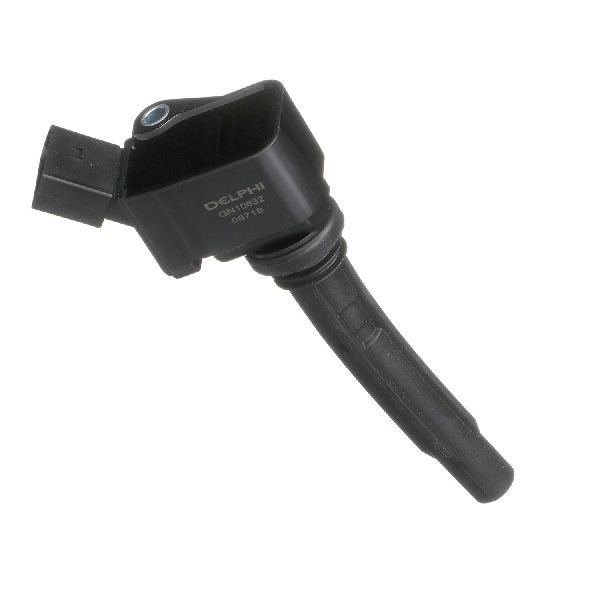
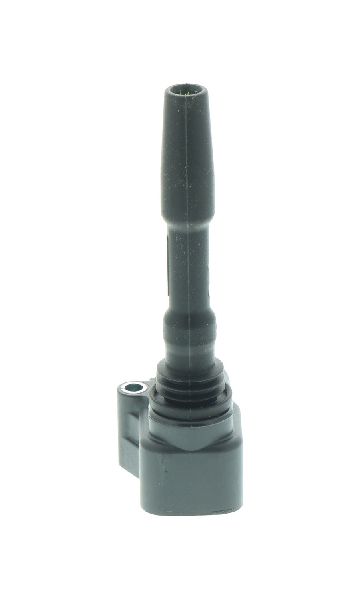
- Faulty Ignition Coil 🔴 High Probability → Shop Ignition Coil Ignition coils are a common failure point on many modern engines, including Audi's V6, due to constant exposure to high heat and electrical stress. They are a frequent cause of single-cylinder misfires on the EA839 engine.
How to confirm: The easiest way to confirm a bad coil is to swap the ignition coil from cylinder 4 with another cylinder (e.g., cylinder 5). Clear the codes and drive the car. If the code changes to P0305, the coil is faulty.
Typical fix: Replace the faulty ignition coil. It is often recommended to replace all six coils at the same time for preventative maintenance, especially if they are original and the vehicle has higher mileage.
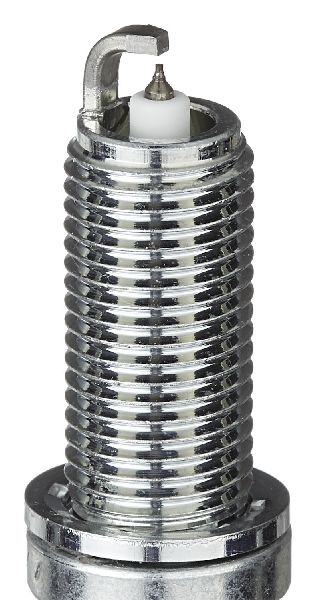
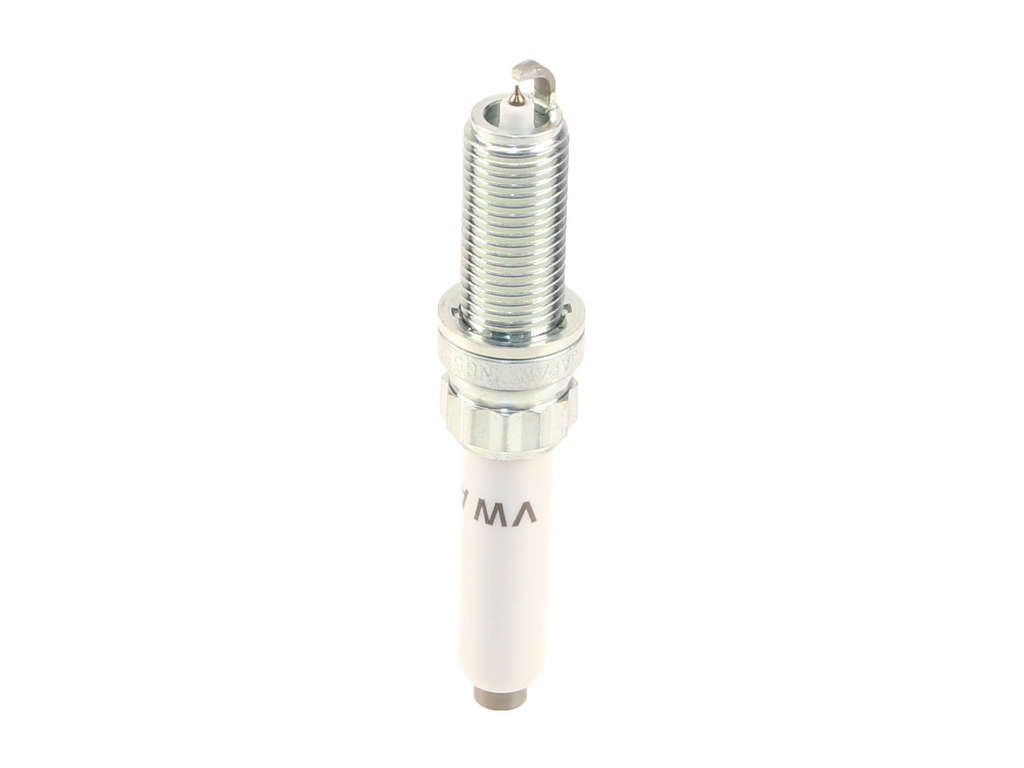
Est. part cost: $40-$80 per coil - Worn or Fouled Spark Plug 🔴 High Probability → Shop Spark Plug Spark plugs are a regular maintenance item. The service interval for the EA839 engine is typically around 40,000 miles, but plugs can fail prematurely, especially on tuned vehicles.
How to confirm: After ruling out the ignition coil, remove the spark plug from cylinder 4. Inspect it for signs of wear, carbon fouling, oil, or damage to the electrode or ceramic insulator. Compare it to a new plug or a plug from a known good cylinder.
Typical fix: Replace the spark plug in cylinder 4. It is best practice to replace all six spark plugs as a set to ensure even performance.
Est. part cost: $20-$40 per plug - Clogged or Faulty Fuel Injector 🟡 Medium Probability → Shop Fuel Injector Direct injection (DI) fuel injectors operate under very high pressure and can be susceptible to clogging from fuel deposits or failure. This is a known issue on the EA839 platform.
How to confirm: This is more complex to diagnose. It involves checking fuel trims with an advanced scan tool or having a professional perform a fuel injector balance test. Swapping injectors between cylinders (similar to an ignition coil swap) can be done, but it is a much more labor-intensive job requiring special tools for the seals.
Typical fix: Replace the faulty fuel injector. This requires removing the fuel rail and new Teflon seals must be installed on the injector. If an injector is replaced, its specific IMA code must be programmed into the engine computer using a tool like VCDS.
Est. part cost: $150-$300 per injector
Rare But Worth Checking
- Failed Rocker Arm: → Shop Engine Rocker Arm The EA839 engine has a known issue with rocker arm bearing failure, which can cause a ticking noise, misfires, and eventually catastrophic engine damage if ignored. The failure often occurs on the exhaust camshaft. Diagnosis involves listening for a distinct, slow tapping sound (unlike the faster tick of injectors) and may require removing the valve cover for inspection. The fix involves replacing all rocker arms, often with an updated part (OEM P/N 0P2109417).
- Carbon Buildup on Intake Valves: As a direct-injection engine, the intake valves are not cleaned by fuel spray, leading to carbon accumulation over time. Severe buildup can restrict airflow into the cylinder, causing misfires. This typically causes random misfires (P0300) but can affect a single cylinder. The fix is a manual cleaning process, often called walnut blasting.
- ECM Software Issue: Audi has released several TSBs (e.g., A0122312069038_1) indicating that misfire codes can be triggered erroneously. A dealer can check if a software update is available for the Engine Control Module (ECM), which can resolve the issue without replacing any parts. Some updates were specifically to address misfires at low RPM or with certain fuel blends.
- Vacuum Leak: A leak in a vacuum hose or intake gasket can introduce unmetered air, leaning out the air/fuel mixture and causing a misfire. This would typically affect multiple cylinders and set a P0300 code, but a leak isolated to one cylinder's intake runner is possible. A failed PCV valve is a common source of vacuum leaks on these engines.
- Low Cylinder Compression: This indicates a serious mechanical engine problem, such as a worn piston ring, a bad valve, or a head gasket leak. A compression test is needed to confirm. This is an unlikely failure on a newer vehicle but is possible, sometimes as a result of another failure like a broken rocker arm.
Diagnosis Steps
- Read the code with an OBD-II scanner and check for any other pending or stored codes. Note any freeze-frame data which shows the engine conditions when the misfire occurred.
- Identify the location of cylinder 4. On the Audi 3.0L V6, Bank 1 is the passenger side (cylinders 1, 2, 3 front to back) and Bank 2 is the driver's side (cylinders 4, 5, 6 front to back). Cylinder 4 is the front-most cylinder on the driver's side.
- Swap the ignition coil from cylinder 4 with the coil from cylinder 5. This requires moving the coolant expansion tank for access. Clear the codes and start the engine. Let it idle and rev it slightly. Re-scan for codes.
- If the code changes to P0305, the ignition coil is the problem. Replace the faulty coil.
- If the code remains P0304, the coil is likely not the issue. Proceed to the next step.
- Swap the spark plug from cylinder 4 with the plug from cylinder 5. Clear codes and test again.
- If the code changes to P0305, the spark plug was the issue. Replace all six spark plugs.
- If the code remains P0304, inspect the wiring and connector for the ignition coil and fuel injector on cylinder 4 for any visible damage.
- If wiring appears okay, the problem is likely more complex. Consider a faulty fuel injector, a mechanical engine issue (like a failed rocker arm or low compression), or a software issue. At this stage, professional diagnosis is recommended. A dealer can check for applicable TSBs and software updates.
Parts You'll Likely Need
- Ignition Coil
(OEM #06H905110P)— This is the most frequent cause of a single-cylinder misfire on this engine. It's a relatively simple and inexpensive part to replace. Many part numbers have been used; always verify with your VIN. Aftermarket performance versions from brands like APR and 034Motorsport claim ~10% higher energy output.
Trusted brands: Bosch, Eldor, NGK, APR
OEM price range: $60-$90
Aftermarket price range: $40-$70 - Spark Plug
(OEM #06M905606F)— As a standard maintenance item, spark plugs wear out and can cause misfires. If they haven't been changed in over 40,000 miles, they are a prime suspect.
Trusted brands: NGK, Bosch
OEM price range: $30-$45
Aftermarket price range: $20-$35 - Rocker Arm
(OEM #0P2109417)— For persistent misfires accompanied by a ticking noise, a failed rocker arm is a significant possibility on the EA839 engine. This is a preventative or necessary repair to avoid further engine damage. This part number is an updated design that supersedes the earlier, failure-prone 06M109417H.
Trusted brands: Audi Genuine
OEM price range: $25-$40 per arm
Related Codes That Often Appear With This One
- P0300 — If multiple, random cylinders are misfiring, you will see P0300 (Random/Multiple Cylinder Misfire Detected) in addition to or instead of P0304. This points to a problem affecting the whole engine, like a major vacuum leak, low fuel pressure, or significant carbon buildup.
- P0301, P0302, P0303, P0305, P0306 — These codes indicate misfires in other specific cylinders. Seeing them alongside P0304 can help diagnose if the problem is isolated or more widespread. Multiple misfire codes could point to a systemic issue like a software problem or a failing fuel pump.
Technical Service Bulletins (TSBs) & Recalls
- A0124212069038_5: Provides information for when the Malfunction Indicator Lamp (MIL) is on due to cylinder misfires (P0300-P0306).
- A0123912069038_5: Provides information for when the MIL is illuminated with DTCs P0300-P0306.
- A0123802069038_4: Bulletin for MIL on, cylinder misfires, and DTCs P0300-P0306.
- A0123612069038_3: Provides information for when the MIL is on and DTCs P0300-P0306 may be stored.
- A0123352069038_2: Instructions for when the MIL is illuminated and one or more misfire DTCs may be stored.
- A0122312069038_1: Announces a software update available for instances where the MIL is illuminated with one of the following DTCs: P0300, P0301, P0302, P0303, P0304, P0305, P0306.
Platform-Specific Known Issues
- Audi has released multiple Technical Service Bulletins (TSBs) related to misfire detection (P030x codes) on 2019 models, covering the Engine, Electrical System, and Equipment. This indicates a known pattern of issues that may require dealer-level diagnostics if simple fixes don't resolve the problem.
- TSB A0122312069038_1 (and subsequent revisions) specifically mentions a software update to resolve erroneously triggered misfire DTCs.
Mechanic-Grade Diagnostic Values
- Low-Pressure Fuel System — expected: 4 to 6 bar. Failure: Pressure below this range can starve the high-pressure pump, leading to misfires under load.
- High-Pressure Fuel Rail — expected: Up to 200 bar (2900 PSI), depending on demand. Failure: Failure to reach or maintain requested pressure under load can cause misfires.
- Fuel Injector Resistance — expected: While a specific value for the EA839 is not published, all injectors should have readings within 0.5 ohms of each other.. Failure: An injector with a resistance reading that is an outlier compared to the others is likely faulty.
- VCDS Misfire Counter (Non-UDS) — expected: 0 at idle. A few sporadic counts under load changes can be normal.. Failure: A rapidly increasing number in the counter for a specific cylinder indicates an active misfire, even if the Check Engine Light is not on.
Hidden / Shadow Codes Worth Checking
- N/A (Live Data Monitoring): While Audi doesn't use 'shadow codes' in the same way as other brands, a technician can see misfires before they are severe enough to set a fault code. The ECU maintains a running count of misfire events for each cylinder. (see via Using a scan tool like VCDS, navigate to Engine (01) -> Advanced Measuring Values. Select the misfire counters for all cylinders (e.g., 'Misfire counter cylinder 1', 'Misfire counter cylinder 2', etc.). For older controllers, this may be in Measuring Blocks 015 and 016.)
Scan Tool Commands That Help
- VCDS or ODIS: Misfire Counter Monitoring — This is a primary diagnostic step to confirm which cylinder is misfiring and under what conditions (idle, load, cold start) by observing the live data counts for each cylinder.
- VCDS or ODIS: Injector Adaptation (Long Adaptation) — Required after replacing a fuel injector. Each new injector has a specific IMA/IIC calibration code printed on it that must be entered into the ECU to ensure precise fuel delivery and correct engine operation.
- VCDS or ODIS: Output Tests (Selective Output Test) — With the engine off, a technician can command the ECU to activate specific components, such as the fuel injector for cylinder 4. Listening for a 'click' can help confirm if the injector's solenoid is functioning electrically, helping to rule out wiring or ECU driver issues.
Real Owner Repair Stories
- Ross-Tech Forums user 'Itsmys4' (2018 Audi S4 (EA839 engine), 48,000 miles) — Ticking noises from under the valve covers.
❌ Tried (didn't work) Dealer initially dismissed the noise as a common fuel system tick.
✅ What actually fixed it Owner self-diagnosed and confirmed premature rocker arm failure. He replaced the rocker arms himself with the engine in the car, which resolved the issue and made the car run smoother. - VAG Technic YouTube Channel (Audi B9 S4 (EA839 engine), 97,000 miles) — Vehicle was booked for preventative rocker arm replacement, but was already tapping.
❌ Tried (didn't work) Preventative maintenance was booked too late.
✅ What actually fixed it The engine had already suffered damage. Diagnosis found three failed (seized) rocker arms which in turn damaged two camshafts, requiring a much more extensive and expensive repair than just replacing the rocker arms. - Reddit user on r/AudiS4 (Audi B9 S4/S5/SQ5 (EA839 Engine)) — Cylinder 6 misfire.
❌ Tried (didn't work) Initial diagnosis ongoing.
✅ What actually fixed it The user reported they were proceeding with a compression test and leak-down test, indicating the diagnostic path for a persistent single-cylinder misfire on this platform quickly moves towards suspected mechanical failure after ruling out plugs/coils.
When the Usual Fixes Don't Work
- While faulty ignition coils and spark plugs are the most common cause of P0304 on a majority of vehicles, on the EA839 engine in the 2019-2021 A7, a persistent misfire that does not resolve after swapping ignition components should lead to a strong suspicion of mechanical failure. The well-documented issue of rocker arm bearing failure means this possibility should be investigated much sooner than on other engines. Continuing to diagnose only ignition or fuel system components while ignoring signs of mechanical trouble (like a light ticking noise) can lead to a delayed diagnosis and risks severe engine damage when a failing rocker arm damages the camshaft.
OEM Part Supersession History
06M109417H, 06M109417L→0P2109417— The original rocker arms were prone to premature needle bearing failure. The updated part (0P2109417) features a revised design with larger, more robust bearings for improved durability.
Heads up: The parts are interchangeable, but it is highly recommended to replace all 24 rocker arms with the updated part number (0P2109417) to prevent future failures.
Model Year Variations Within This Range
- 2019: Models produced before mid-2019 are more likely to be equipped with the original, failure-prone rocker arms (P/N 06M109417H). Models produced after this period, including 2020-2021 vehicles, should have the updated, more reliable rocker arms (P/N 0P2109417) from the factory, reducing the likelihood of this specific failure.
Helpful Videos

We Have This Part in Stock


The information in this article is provided for general reference and educational purposes only. Vehicle specifications, procedures, and part compatibility can vary by production date, trim level, and region. Always consult your vehicle's factory service manual and verify part numbers before purchasing or performing repairs. Safety-critical components such as airbags, seat belts, and braking systems should be installed by a qualified professional.
- Audi A7:
- 🧭 Diagnostic Flowchart
- 🎬 Helpful Videos
- 🛍️ Shop This Part
- What's Unique About the 2019-2021 Audi A7
- Symptoms You May Notice
- Most Likely Causes
- Rare But Worth Checking
- Diagnosis Steps
- Parts You'll Likely Need
- Related Codes That Often Appear With This One
- Technical Service Bulletins (TSBs) & Recalls
- Platform-Specific Known Issues
- Mechanic-Grade Diagnostic Values
- Hidden / Shadow Codes Worth Checking
- Scan Tool Commands That Help
- Real Owner Repair Stories
- When the Usual Fixes Don't Work
- OEM Part Supersession History
- Model Year Variations Within This Range
- 🎟️ Get 5% Off