

P0304 on 2020-2021 Audi Q7: Cylinder 4 Misfire Causes and Fixes
P0304 on a 2020-2021 Audi Q7 signals a misfire in cylinder 4. Before replacing parts, check if your vehicle needs a software update per TSB A0123802069038_4, which states an ECM update is the official fix for overly sensitive misfire detection. Otherwise, the most likely cause is a failed ignition coil or a worn spark plug, which is a common DIY fix costing between $50 and $150.
- First, check with an Audi dealer if your Q7 needs a software update per TSB A0123802069038_4, as this may fix the P0304 code without replacing any parts.
- The most common hardware culprits are a bad ignition coil or a worn spark plug.
- A flashing check engine light is serious. Stop driving immediately to prevent costly damage to your catalytic converter.
- Spark plugs should be replaced every 40,000 miles as part of scheduled maintenance on these engines.
- Diagnosing a bad ignition coil is a simple DIY test: swap the coil from cylinder 4 to another cylinder and see if the misfire code follows it.
What's Unique About the 2020-2021 Audi Q7
For the 2020-2021 Audi Q7, a P0304 code has a unique and critical first step before you start replacing parts. Audi issued a Technical Service Bulletin (TSB #A0123802069038_4) specifically for this vehicle range and engine. The bulletin states, "The software needs to be updated. The optimized software will correct the misfire and prevent the MIL from illuminating." This confirms the misfire detection could be overly sensitive and that an engine control module (ECM) software update is the official first-line fix. This means a trip to the dealer for a software flash could resolve the issue without any new hardware. Additionally, a recall for the low-pressure fuel pump (NHTSA 22V516) on these models can cause debris to destroy the high-pressure fuel pump, leading to misfires.
Diagnostic Flowchart
Tap your situation to follow the diagnostic path that matches what you're seeing on this vehicle.
Symptoms You May Notice
- Rough or vibrating idle.
- Engine hesitation or stumbling during acceleration.
- Noticeable loss of power.
- Solid or flashing Check Engine Light.
- Reduced fuel economy.
- Smell of unburnt fuel from the exhaust.
- Replacing ignition coils and spark plugs without first checking for the required ECM software update per TSB A0123802069038_4, potentially spending money on an issue that could be fixed by software.
Most Likely Causes
- Engine Control Module (ECM) Software 🔴 High Probability → Shop Engine Control Module (ECM) Audi has officially identified a software issue for the 2020-2021 Q7 that can cause false or intermittent misfire codes, including P0304.
How to confirm: Contact an Audi dealership and provide your VIN. They can check if TSB A0123802069038_4 (or a superseding bulletin) applies to your vehicle and if the update has been performed. The TSB explicitly states this is the fix for the condition.
Typical fix: The dealership will update the ECM software using their diagnostic tools. This is typically covered if the vehicle is under warranty.
Est. part cost: $0-$200 - Faulty Ignition Coil 🔴 High Probability → Shop Ignition Coil Ignition coils are a common wear item on modern turbocharged engines due to high heat and electrical load. Failure is a frequent cause of misfires on Audis and related VW Group vehicles.
How to confirm: Swap the ignition coil from cylinder 4 with another cylinder (e.g., cylinder 1). Clear the codes and run the engine. If the code changes to P0301, the coil is bad.
Typical fix: Replace the faulty ignition coil. It is best practice to replace all coils at the same time to prevent future failures and ensure consistent performance.
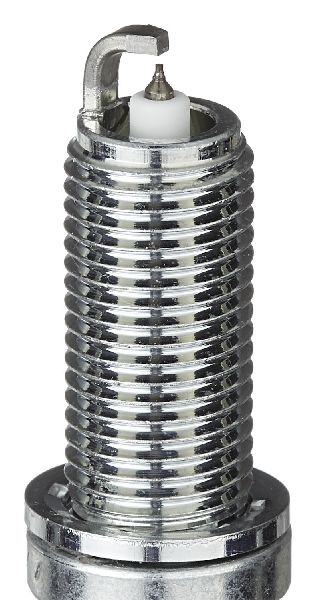
Est. part cost: $40-$80 per coil - Worn or Fouled Spark Plug 🟡 Medium Probability → Shop Spark Plug Audi specifies a 40,000-mile replacement interval for spark plugs on these engines. Many vehicles with this code are at or near this mileage, making worn plugs a likely cause, especially if they have not been changed on schedule.
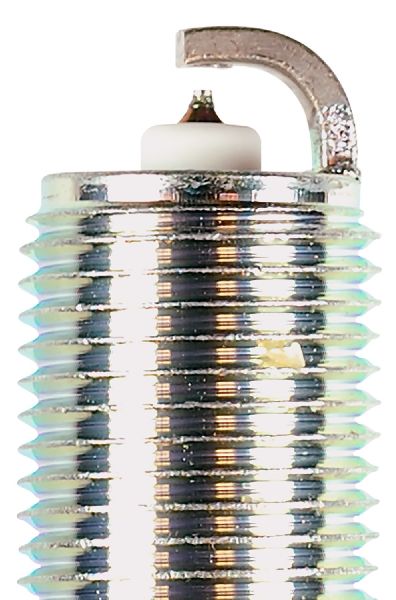
How to confirm: After confirming the coil is good, remove the spark plug from cylinder 4. Inspect it for wear (worn electrode), carbon fouling, or oil contamination. A fouled plug can also indicate other issues.
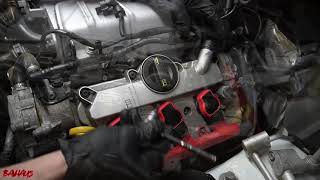
Typical fix: Replace the spark plug. It is mandatory to replace all spark 🎬 See this walkthrough on how to replace your spark plugs plugs as a set to ensure balanced engine performance.
Est. part cost: $80-$150 for a set - Clogged or Faulty Fuel Injector ⚪ Low Probability → Shop Fuel Injector Direct injection (TFSI) engines can be susceptible to carbon buildup on fuel injectors over time, which can disrupt the fuel spray pattern and cause a misfire.
How to confirm: This is more complex to diagnose. It involves swapping injectors between cylinders (requires specialized tools and new seals) or using an advanced scan tool to monitor fuel trims and injector balance rates.
Typical fix: Clean or replace the fuel injector for cylinder 4. This is a complex job requiring special tools for seal installation.
Est. part cost: $150-$300 per injector
Rare But Worth Checking
- Leaking Valve Cover Gasket / Spark Plug Tube Seal: → Shop Engine Valve Cover If you remove the ignition coil and find engine oil in the spark plug well, the gasket has failed. The oil will destroy the new coil and plug if not fixed.
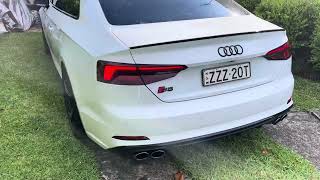
- Rocker Arm / Valvetrain Failure: → Shop Engine Rocker Arm The EA839 engine family has a known, albeit uncommon, issue with rocker arm failure, where the needle bearings can fail. This 🎬 Listen to what a healthy EA839 engine should sound like can lead to misfires and ticking noises. While more prevalent on early (2018) models, it remains a potential mechanical cause.
- Internal Engine Damage (e.g., Scored Cylinders): In severe cases, a persistent misfire or ticking noise can be a symptom of major internal engine problems like scored cylinder walls, potentially related to piston issues. A Reddit user with a 2020 Q7 3.0T reported this exact failure at 40,000 miles, requiring a complete engine replacement. Diagnosis requires a compression test and borescope inspection.
- Low Cylinder Compression: If ignition and fuel components are confirmed good, a mechanical issue like a bad valve or worn piston rings could be the cause. This requires a compression test to diagnose and is a major repair.
Diagnosis Steps
- Read the code with an OBD-II scanner to confirm P0304 and check for any other codes.
- Crucial First Step: Contact an Audi dealer with your VIN to see if TSB #A0123802069038_4 is open for your vehicle. If so, have the ECM software updated before proceeding. The TSB is the official fix for this condition.
- Locate cylinder 4. On the 3.0L V6, Bank 1 (cylinders 1-2-3) is on the passenger side and Bank 2 (cylinders 4-5-6) is on the driver's side. Cylinder 4 is the front-most cylinder on the driver's side. On the 2.0L I4, it's the rearmost cylinder, closest to the firewall/transmission.
- Swap the ignition coil from cylinder 4 with an easily accessible cylinder (like cylinder 1 or 5).
- Clear the codes, start the engine, and see if the misfire code 'moves' to the new cylinder (e.g., P0301 or P0305). If it does, the ignition coil is faulty.
- If the code remains P0304, remove the spark plug from cylinder 4. Inspect its condition. Replace the full set of spark plugs if they are worn or due for service (40,000 miles).
- If the misfire persists, the issue is likely with the fuel injector or a mechanical problem. Professional diagnosis is recommended at this stage.
- A mechanic would perform a fuel system test on the injector and, if necessary, a cylinder compression and leak-down test to check for mechanical engine health.
Parts You'll Likely Need
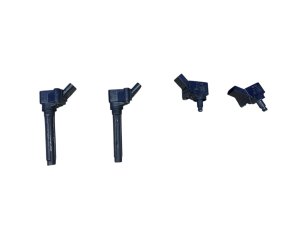
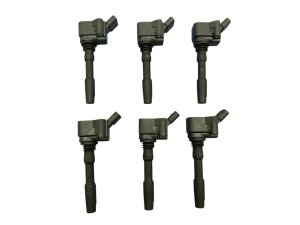
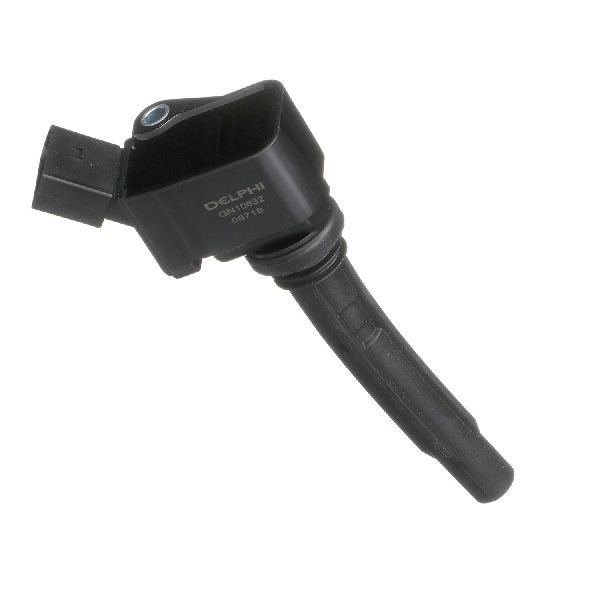
- Ignition Coil
(OEM #06L905110K (Latest revision, supersedes 06H905110L, 06L905110F, etc.))— This is the most common hardware failure causing a single-cylinder misfire on this platform.
Trusted brands: Eldor (OEM), Bosch, NGK, Delphi
OEM price range: $60-$90
Aftermarket price range: $40-$70 - Spark Plug
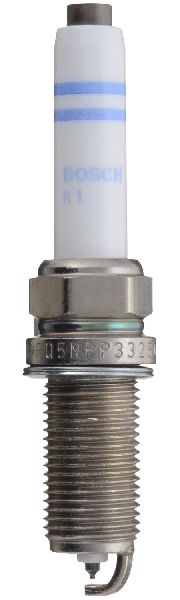
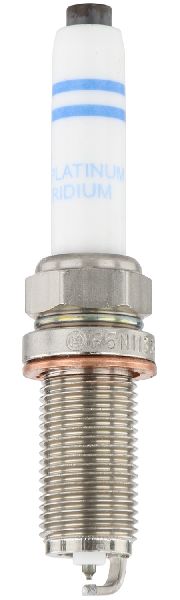
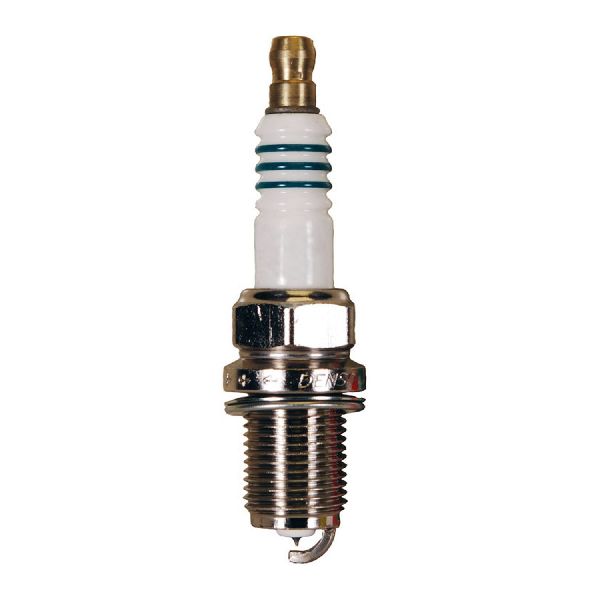
(OEM #3.0L V6: 06M905606F (NGK SILKGR9A7ES) | 2.0L I4: 06K905601B)— These are a scheduled maintenance item at 40,000 miles and are often worn out when a P0304 code appears.
Trusted brands: NGK (OEM), Bosch, Denso
OEM price range: $120-$200 (set of 4 or 6)
Aftermarket price range: $80-$150 (set of 4 or 6)
Related Codes That Often Appear With This One
- P0300 — This is a 'Random/Multiple Cylinder Misfire' code. It often appears with P0304 if the misfire is intermittent or affecting other cylinders as well, and is specifically mentioned in the software update TSB.
- P0301, P0302, P0303, P0305, P0306 — These codes indicate misfires in other specific cylinders. Seeing them together with P0304 points to a systemic issue like the software problem, bad fuel, or a vacuum leak affecting all cylinders.
Technical Service Bulletins (TSBs) & Recalls
- A0123802069038_4 / 01 23 80 2069038/4: 'MIL on; cylinder misfires (DTCs P0300, P0301, P0302, P0303, P0304, P0305, P0306)'. This bulletin states that for certain 2020-2021 Q7s, 'The software needs to be updated. The optimized software will correct the misfire and prevent the MIL from illuminating.'
- A0124212069038_5: Provides information when the MIL is illuminated for cylinder misfires P0300-P0306.
- A0123912069038_5: Provides information for when the MIL is illuminated for DTCs P0300-P0306.
Platform-Specific Known Issues
- ECM Misfire Detection Software Sensitivity: A Technical Service Bulletin (A0123802069038_4) was issued for 2020-2021 Q7 models because the factory ECM software could incorrectly trigger misfire DTCs. The official fix is a software update, not a hardware replacement.
- EA839 Engine Mechanical Vulnerabilities: While generally reliable, the 3.0T V6 engine family (EA839) has documented cases of valvetrain (rocker arm) and piston-related issues that can lead to misfires and, in rare instances, catastrophic failure like scored cylinder walls.
Mechanic-Grade Diagnostic Values
- Low-Pressure Fuel Pump (LPFP) Pressure — expected: 4 to 6 bar. Failure: Pressure below 4 bar can starve the high-pressure pump, causing misfires under load.
- High-Pressure Fuel Pump (HPFP) Pressure — expected: Up to 200-250 bar, depending on demand. Failure: Inability to reach target pressure specified by the ECM, leading to lean conditions and misfires.
- Live Misfire Counter (per cylinder) — expected: 0 at idle and under normal load.. Failure: Any count that consistently increments on cylinder 4 confirms a real-time misfire.
- Long-Term and Short-Term Fuel Trims — expected: Within +/- 10% (ideally +/- 5%). Failure: High positive values on Bank 2 (cylinders 4-5-6) could indicate an unmetered air leak or fueling issue affecting cylinder 4.
- Ignition Coil Connector Voltage (Pin 1 to Ground) — expected: 12V+ with Key On, Engine Off.. Failure: No voltage indicates a wiring or fuse issue upstream of the coil.
Hidden / Shadow Codes Worth Checking
- Mode $06, Test ID $53 (or similar, e.g., $A2-$A7 for specific cylinders): Provides raw misfire count data for each cylinder over the current and previous 10 driving cycles. This can reveal intermittent misfires that haven't yet triggered a P0304 code. (see via Advanced OBD-II scanner, VCDS (VAG-COM), or OBDeleven under 'Advanced Measuring Values' or Mode $06 data.)
Scan Tool Commands That Help
- VCDS (VAG-COM) or OBDeleven: Advanced Measuring Values (MVB) for Groups 015 & 016 — To monitor live misfire counts for each cylinder simultaneously while driving. This is the primary method for confirming which cylinder is misfiring and under what conditions (idle, load, cold/hot).
- ODIS (Dealer Tool): Guided Fault Finding (GFF) — When diagnosing a P0304, GFF provides a step-by-step test plan that automatically checks for relevant TSBs, software updates, and prompts the technician to perform specific electrical and mechanical tests.
- VCDS or ODIS: Fuel Injector Adaptation/Coding — After replacing a direct fuel injector. New injectors have calibration values that must be programmed into the ECM to ensure precise fuel delivery. Skipping this can cause persistent running issues.
Wiring & Ground Locations
- Cylinder Head Ground Point — On the cylinder head itself, often near the valve cover. For Bank 2 (Cyl 4-5-6), this is on the driver's side of the engine.. The ignition coils for cylinders 4, 5, and 6 share a common ground point. Corrosion or a loose connection at this single point can cause erratic spark and misfires on any of those cylinders.
- Ignition Coil Connector (Cylinder 4) — Plugged into the top of the ignition coil for the front-most cylinder on the driver's side of the 3.0T V6 engine.. Damage to the connector housing, pins, or wiring pigtail can cause an intermittent connection, leading to a misfire on only cylinder 4. The pins are: Pin 1 (Power), Pin 2 (Signal from ECM), Pin 3 (Ground), Pin 4 (Power Ground).
- ECM Connector T94 — At the Engine Control Module (ECM), typically located in the plenum chamber at the base of the windshield.. A corroded pin or damaged wire at the main ECM connector for the cylinder 4 ignition coil signal could cause a persistent P0304 that is difficult to trace at the engine side.
Real Owner Repair Stories
- AudiWorld Forums User (2021 Audi Q7 55 TFSI (3.0T), 35,000 miles) — Check engine light with code P0304.
❌ Tried (didn't work) Swapping ignition coil from cylinder 4 to another cylinder., Swapping spark plug from cylinder 4 to another cylinder.
✅ What actually fixed it The Audi dealership diagnosed and replaced a faulty fuel injector in cylinder 4. - Audizine Forums User (2018 Audi S4 (EA839 3.0T engine)) — Persistent misfire at idle (P0305 in this case) and a light ticking noise.
❌ Tried (didn't work) Initial diagnosis focused on ignition and fuel.
✅ What actually fixed it A failed rocker arm bearing was discovered to be the root cause, requiring replacement of the rocker arms for that cylinder bank. - Reddit r/audi User (2019 Audi Q8 (EA839 3.0T engine)) — P0304 misfire code.
❌ Tried (didn't work) Replacing spark plugs., Replacing ignition coils.
✅ What actually fixed it The dealership performed two actions: an ECM software update per a TSB and a manual carbon cleaning service for the intake valves. The combination of both resolved the misfire.
"I Checked Everything" — The Actual Cause
- A common scenario on TFSI engines is a misfire code with no vacuum leaks found during a smoke test. The actual cause is often a torn diaphragm in the PCV (Positive Crankcase Ventilation) valve. This creates an unmetered air leak that leans out the mixture, but it can be internal to the intake manifold and not show up with smoke. A key symptom is a strong vacuum suction when trying to remove the oil cap while the engine is running.
When the Usual Fixes Don't Work
- While the official Audi TSB points to a software update as the primary fix, numerous owner accounts confirm that hardware failures are still very common. In many real-world cases, even after the software update, the P0304 code was ultimately resolved by replacing a faulty fuel injector. This suggests that while the software may be overly sensitive, it can also correctly identify underlying hardware problems that should not be ignored.
OEM Part Supersession History
06L905110C, 06L905110D, 06L905110E, 06L905110F, 06L905110H→06L905110K— Ongoing revisions by the manufacturer to improve reliability and prevent premature failure under high heat conditions.
Heads up: While older revisions may physically fit, it is critical to use the latest available part number (e.g., 06L905110K) when replacing coils to ensure longevity. Installing a mix of old and new revisions is not recommended.06M906036T→06M906036AE— Revisions to improve fuel injector reliability and performance.
Heads up: When replacing a fuel injector, it is crucial to use the latest part number specified for the vehicle's VIN and to replace the single-use Teflon seals with the correct installation tools.
Model Year Variations Within This Range
- 2020-2021: The primary difference affecting this code is software. Early 2020 models are more likely to require the ECM software update specified in TSB A0123802069038_4 than later 2021 models, which may have received the updated software from the factory. Mechanically, the 2020 and 2021 Q7s with the same engine are nearly identical.
Helpful Videos
Used OEM Parts in Stock
New Aftermarket Parts Available

The information in this article is provided for general reference and educational purposes only. Vehicle specifications, procedures, and part compatibility can vary by production date, trim level, and region. Always consult your vehicle's factory service manual and verify part numbers before purchasing or performing repairs. Safety-critical components such as airbags, seat belts, and braking systems should be installed by a qualified professional.
- Audi Q7:
- 🧭 Diagnostic Flowchart
- 🎬 Helpful Videos
- 🛍️ Shop This Part
- What's Unique About the 2020-2021 Audi Q7
- Symptoms You May Notice
- Most Likely Causes
- Rare But Worth Checking
- Diagnosis Steps
- Parts You'll Likely Need
- Related Codes That Often Appear With This One
- Technical Service Bulletins (TSBs) & Recalls
- Platform-Specific Known Issues
- Mechanic-Grade Diagnostic Values
- Hidden / Shadow Codes Worth Checking
- Scan Tool Commands That Help
- Wiring & Ground Locations
- Real Owner Repair Stories
- "I Checked Everything" — The Actual Cause
- When the Usual Fixes Don't Work
- OEM Part Supersession History
- Model Year Variations Within This Range
- 🎟️ Get 5% Off