

P0304 on 2008-2012 Audi S5 4.2L V8: Cylinder 4 Misfire Causes and Fixes
P0304 on your S5 is most likely a failed ignition coil or a worn-out spark plug in cylinder 4. If a simple coil and plug swap doesn't fix it, the cause is almost certainly carbon buildup on the intake valves, a very common issue for this engine that requires professional cleaning. Less common causes include a faulty fuel injector or PCV system failure.
- P0304 is a misfire on cylinder 4, the rearmost cylinder on the passenger side.
- Always perform the 5-minute ignition coil swap test first; it's the most common failure and is free to diagnose.
- If coils and spark plugs are good, the cause is very likely carbon buildup on the intake valves, a well-documented issue with this engine that requires professional service.
- If the Check Engine Light is flashing, pull over and stop the engine immediately to prevent costly damage to your catalytic converters.
- When replacing coils or plugs, it is best practice to replace all eight at once for preventative maintenance and balanced performance.
What's Unique About the 2008-2012 Audi S5
The 4.2L V8 (engine code: CAUA) in the B8 generation Audi S5 is a Fuel Stratified Injection (FSI) engine. This direct-injection design, while efficient, is highly susceptible to severe carbon buildup on the intake valves. Unlike older port-injected engines, fuel is sprayed directly into the cylinder and does not wash over the valves, so they don't get cleaned. Over time, this carbon accumulation chokes airflow, becoming a primary cause of persistent misfires like P0304 after common ignition faults are ruled out, especially on cars with over 60,000 miles.
Symptoms You May Notice
- Rough or shaking idle
- Hesitation or stumbling during acceleration
- Noticeable loss of engine power
- Flashing or solid Check Engine Light
- Increased fuel consumption
- Smell of unburnt fuel from the exhaust
- Popping or backfiring sounds from the exhaust on deceleration
- Replacing only the spark plug without testing the ignition coil first. The 'coil swap' test is free and definitively diagnoses the most common cause.
- Assuming the issue is a vacuum leak without first checking for the common PCV failure symptom (high crankcase vacuum).
- Replacing fuel system components before investigating carbon buildup, which is a much more probable cause on this specific engine after ignition parts are ruled out.
- Replacing coils and plugs when the actual issue is a clogged catalytic converter from previous, unfixed misfires.
Most Likely Causes
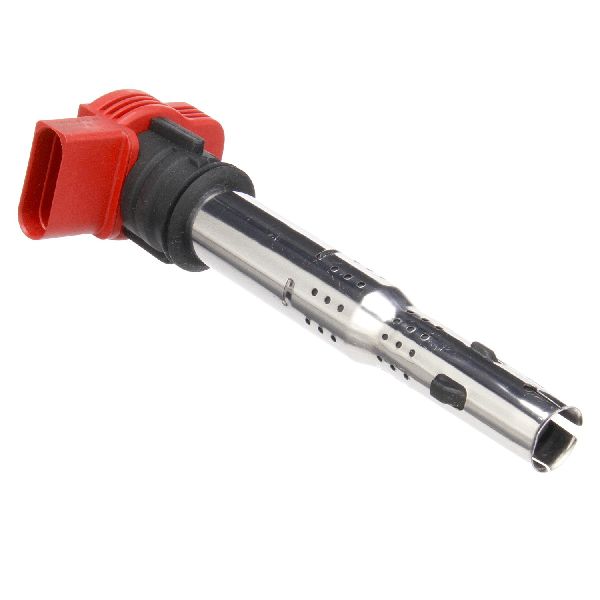
- Faulty Ignition Coil 🔴 High Probability → Shop Ignition Coil Ignition coils are a common failure item on most Volkswagen Auto Group (VAG) engines of this era. Heat and vibration cause them to fail over time. Old or failing coils are a known cause of misfires when tuning these engines.
How to confirm: Swap the ignition coil from cylinder 4 with another cylinder (e.g., cylinder 3). Clear the codes and drive. If the code changes to P0303, the ignition coil is bad.
Typical fix: Replace the faulty ignition coil. It is best practice to replace all eight coils at the same time to prevent future misfires and ensure consistent performance. Many owners upgrade to the red coils from the Audi R8.
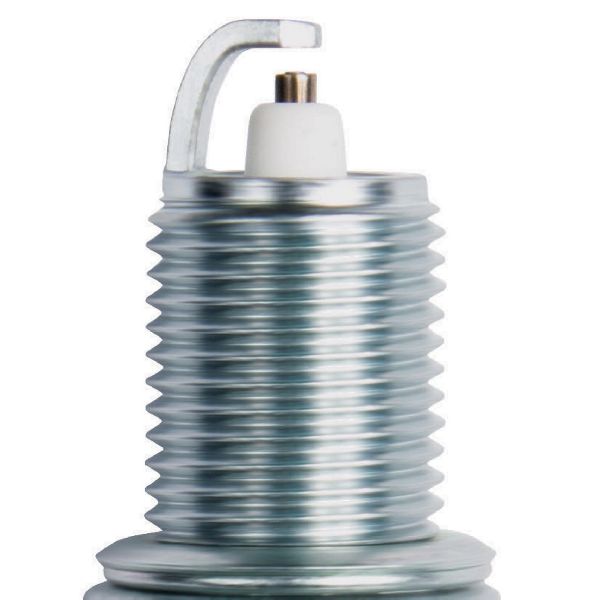
Est. part cost: $30-$80 per coil - Worn Spark Plug 🔴 High Probability → Shop Spark Plug Spark plugs are a regular maintenance item with a recommended replacement interval of around 6 years or 90,000 km. If they are old or fouled with oil or carbon, they cannot produce a strong enough spark for proper combustion.
How to confirm: After confirming the coil is good, remove the spark plug from cylinder 4. Inspect it for wear, damage, or fouling (black and sooty, or wet with fuel/oil). A healthy plug should have a light tan color on the insulator. Oil in the spark plug well indicates a leaking valve cover gasket, which can also cause the coil to fail.
Typical fix: Replace the spark plug. It is highly recommended to replace all eight spark plugs as a set to ensure balanced engine performance.
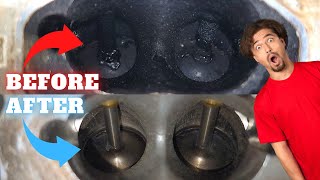
Est. part cost: $15-$30 per plug - Intake Valve Carbon Buildup 🟡 Medium Probability This is the most significant known issue for the 4.2L FSI V8 engine. The direct injection system causes oil and carbon deposits to bake onto the intake valves, restricting airflow and causing misfires, especially at higher mileage (60,000+ miles).
How to confirm: This requires a visual inspection using a borescope inserted into the intake ports. The valves will be visibly coated in thick, black carbon deposits. Multiple misfire codes (P0300, P0301, P0306, etc.) alongside intake runner codes (P2004) strongly point to carbon buildup.
Typical fix: A professional 'carbon cleaning' or 'walnut blasting' service is required. This involves removing the intake manifold and using a media blaster to physically clean 🎬 Watch: See how walnut blasting removes carbon from these valves. the carbon off the valves. This is a labor-intensive job, often costing $2000-$3000 at a repair shop.
Est. part cost: $0 (service cost) - Faulty Fuel Injector ⚪ Low Probability → Shop Fuel Injector Fuel injectors can become clogged or fail electronically over time, though it is less common than ignition issues or carbon buildup. They are considered a potential issue on cars over 80,000 miles. A bad injector was identified as the cause in one forum user's experience with P0304.
How to confirm: This is more difficult to diagnose. A mechanic can perform a fuel injector balance test. You can also try swapping the injector with another cylinder, but this is a much more labor-intensive job than swapping a coil, requiring removal of the fuel rail.
Typical fix: Replace the faulty fuel injector. It's recommended to replace the Teflon seal and o-rings at the same time. Some specialists recommend replacing all injectors on high-mileage vehicles.
Est. part cost: $70-$150 per injector
Rare But Worth Checking
- Failed PCV / Oil Separator: A torn diaphragm in the crankcase vent valve (PCV) can cause a massive vacuum leak, leading to a very rough idle and multiple misfire codes. A key symptom is extreme suction at the oil filler cap when the engine is running. This part was replaced as a preventative measure during a carbon cleaning in one documented case.
- Low Compression: In rare cases, a mechanical engine issue like a worn piston ring, a burnt valve, or issues with the timing chain could cause low compression in cylinder 4, leading to a persistent misfire. This would be confirmed with a compression test.
- Intake Manifold Runner Flap Issue: → Shop Engine Intake Manifold The intake manifold has internal flaps that adjust airflow. These can get stuck due to carbon buildup or actuator failure, often triggering codes like P2006/P2007 alongside misfires. This can sometimes be caused by vacuum leaks to the actuator solenoid.
Diagnosis Steps
- Read the trouble codes with an OBD-II scanner. Confirm P0304 is present and note any other codes, such as P0300 or P2006/P2007.
- Note the Check Engine Light behavior. If it is flashing, do not drive the vehicle to prevent catalytic converter damage.
- Locate Cylinder 4. On the Audi 4.2L V8, the cylinders are numbered from front to back. Bank 1 (passenger side, US) is cylinders 1-4. Bank 2 (driver's side, US) is cylinders 5-8. Cylinder 4 is the rearmost cylinder on the passenger side.
- Perform the 'Ignition Coil Swap Test'. Swap the ignition coil from cylinder 4 with the coil from cylinder 3. Clear the codes, start the engine, and let it run. Re-scan for codes. If the code has moved to P0303, you have a bad ignition coil.
- If the code remains P0304, inspect the spark plug. Remove the plug from cylinder 4. Check for excessive wear, fouling (black and sooty), or damage. Also check for oil in the spark plug tube, which indicates a valve cover gasket leak. If the plug's condition is poor or its replacement history is unknown, replace it.
- If coils and plugs are good, the next and most likely step is to suspect carbon buildup. This is best confirmed by a professional using a borescope to inspect the intake valves. This is a very common issue for this engine.
- If carbon buildup is not the issue, further diagnostics would involve checking the fuel injector on cylinder 4, testing for vacuum leaks (especially the PCV valve), and finally, performing a compression test to rule out mechanical engine problems.
Parts You'll Likely Need
- Ignition Coil
(OEM #06E905115G)— This is the most common cause of a single-cylinder misfire on this engine. This part number supersedes several previous versions (06E905115A/B/C/D/E/F).
Trusted brands: Bosch, NGK, Delphi, Eldor
OEM price range: $60-$80
Aftermarket price range: $30-$50 - Spark Plug
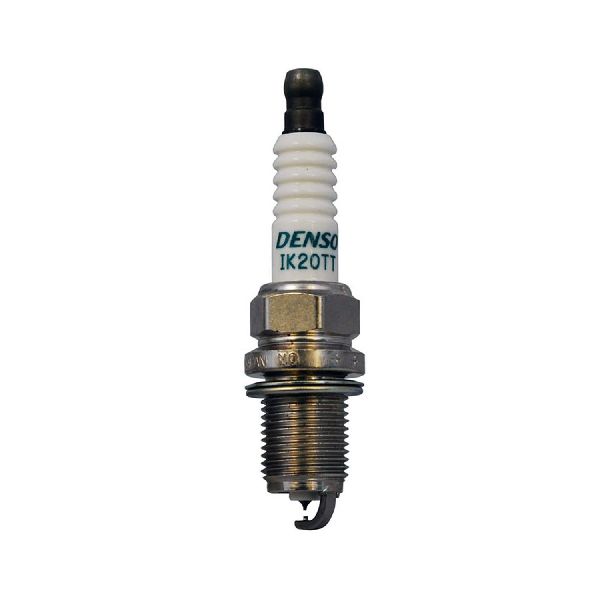
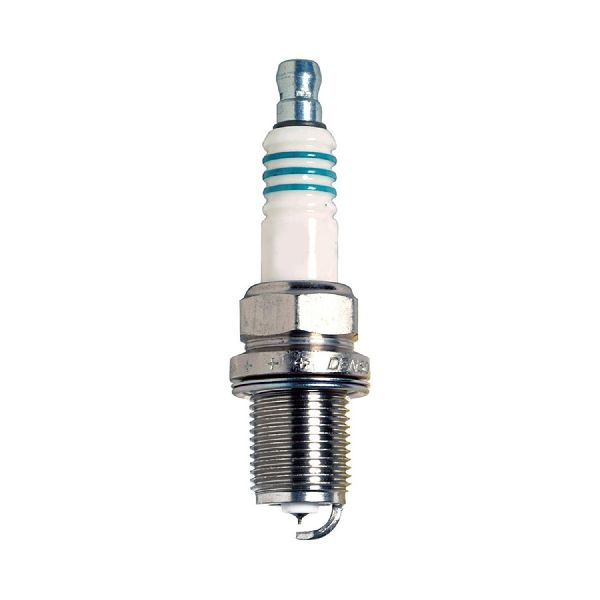
(OEM #101905621B)— A worn or fouled spark plug is the second most common cause and is a standard maintenance item. The OEM plug is typically an NGK PFR6W-TG.
Trusted brands: NGK, Bosch, Denso
OEM price range: $20-$30
Aftermarket price range: $15-$25
Related Codes That Often Appear With This One
- P0300 — If the misfire is intermittent or affects multiple cylinders due to a systemic problem like carbon buildup or a vacuum leak, a P0300 (Random/Multiple Cylinder Misfire) may be stored alongside P0304.
- P0301, P0302, P0303, P0305, P0306, P0307, P0308 — If other cylinder-specific misfire codes are present, it points towards a larger issue affecting the whole engine or one bank, such as severe carbon buildup, a failing fuel pump, or a major vacuum leak.
- P2004, P2006, P2007 — These codes indicate a problem with the intake manifold runner control system (stuck open or closed). This is often seen with severe carbon buildup that physically obstructs the runners, or a vacuum system fault, and will frequently be accompanied by misfire codes.
Technical Service Bulletins (TSBs) & Recalls
- TSB 2033561/2: Mentions premature failure of some Bosch ignition coils on various 2010-2011 Audi models, leading to misfires.
- Bulletin #A0124212069038_5: A manufacturer bulletin for other Audi models that addresses the illumination of the MIL due to cylinder misfires, specifically citing codes P0300 through P0306.
- Bulletin #A0123912069038_5: Provides diagnostic information for when the MIL is illuminated with DTCs P0300, P0301, P0302, P0303, P0304, P0305, and P0306.
Platform-Specific Known Issues
- Carbon Buildup: As mentioned, the 4.2L FSI V8 is notorious for carbon deposits on intake valves, leading to misfires. This is not a matter of 'if' but 'when' for most owners, typically requiring service every 60,000-80,000 miles. One owner on AudiWorld with 200,000 miles was quoted $2000-$3000 for the service after getting multiple misfire codes.
- Owner Experience: A user on the r/audis5 subreddit reported P0300 and P0304 codes and another user commented that their similar issue on a B8.5 turned out to be a bad fuel injector.
- Owner Experience: An AudiWorld forum member with a 2002 Allroad (different engine but same code) traced a P0304 that only appeared on hot restarts to a faulty Ignition Control Module (ICM), which the B8 S5 does not have, highlighting the importance of platform-specific diagnosis.
Mechanic-Grade Diagnostic Values
- High-Pressure Fuel System — expected: Up to 136 bar (1973 PSI). Failure: Inability to reach or maintain high pressure under load can indicate a failing High-Pressure Fuel Pump (HPFP).
- Low-Pressure Fuel System (supplying the HPFP) — expected: Approximately 4 to 6 bar. Failure: Low pressure from the in-tank pump (LPFP) will starve the HPFP, causing misfires under load.
- Fuel Injector Internal Resistance — expected: 1.5 ohms Max (per 2011 Service Manual) or 12.0 to 20.0 ohms (per 2008 Service Manual). Failure: A reading outside the specified range indicates a faulty injector. Note the discrepancy between model year service manuals.
Scan Tool Commands That Help
- VCDS (VAG-COM): Advanced Measuring Values - Groups 014, 015, 016 — Use these blocks to monitor live misfire counts for each individual cylinder. This is the primary way to confirm which cylinder is actively misfiring and under what conditions (idle, load, etc.), which is essential for verifying the fault is on cylinder 4.
- VCDS (VAG-COM): Applications -> Controller Channel Map -> 01-Engine — This function creates a comprehensive log of all available measuring values from the ECU. It's useful for capturing a complete snapshot of the engine's state when the misfire occurs to share with experts on forums for remote diagnosis.
Wiring & Ground Locations
- Main Engine Ground — Runs from the right side (passenger side, US) engine mount bracket to a stud on the frame rail.. A corroded or loose main engine ground can cause a host of difficult-to-diagnose electrical issues, including weak spark leading to misfires.
- G615 — On the left (driver's side, US) suspension strut tower.. This is a key grounding point for several engine management components. A poor connection here could cause erratic sensor readings or issues with the ignition system.
- ECM (J623) Location — Located in the plenum chamber (under the plastic cover at the base of the windshield), typically on the left side.. Water ingress into the plenum chamber can damage the ECM or its connectors, potentially causing misfires and other serious issues. Checking for moisture in this area is a crucial step if electrical problems are suspected.
Real Owner Repair Stories
- Ross-Tech Forum User (2008 Audi S5 4.2L V8, Supercharged) — Misfires on all of Bank 1 (P0300, P0301, P0302, P0303, P0304) at anything above light throttle.
❌ Tried (didn't work) Carbon cleaning, New PCV / oil separator, Swapped camshaft position sensors, solenoids, coils, and plugs between banks, Replaced all 8 fuel injectors, Replaced front O2 sensor, Replaced both motor mounts
✅ What actually fixed it The root cause was a clogged catalytic converter on Bank 1. Previous misfires caused by failed motor mounts had destroyed the cat, which then created enough backpressure to cause new misfires even after the original problem was fixed. - NHTSA ODI #10779170 — An owner reported experiencing a loss of power, hesitation, and rough idling followed by a P0304 code. Despite a mechanic replacing the spark plugs and coil packs, the misfire problem persisted.
"I Checked Everything" — The Actual Cause
- A torn diaphragm in the PCV valve (oil separator) can cause significant unmetered vacuum leaks, leading to rough idle and misfires. This may not be detected by a conventional smoke test of the intake tract because it's an internal leak from the crankcase. The definitive symptom is a very strong vacuum at the oil filler cap when the engine is running, making the cap difficult to remove.
OEM Part Supersession History
06E905115E→06E905115F, 06E905115G— Improved internal design and materials to increase longevity and better resist failure from high engine heat.
Heads up: While all revisions are physically interchangeable, it is highly recommended to use the latest available revision (or a quality aftermarket equivalent) and replace all 8 coils at once to ensure consistent spark energy and prevent repeat failures of older-style coils.
Model Year Variations Within This Range
- 2008-2012 (Coupe): The S5 Coupe used the 4.2L V8 (CAUA) engine during these years.
- 2013+: For the 2013 model year (the B8.5 facelift), the S5 Coupe's 4.2L V8 was replaced by a 3.0L supercharged V6 engine. Diagnostic procedures and common causes for misfires are different for this later engine.
- 2010-2012 (Cabriolet): The S5 Cabriolet models used the 3.0L supercharged V6 engine during this period, not the 4.2L V8.
Diagnostic Flowchart
Other Known Issues on This Vehicle
Issues unrelated to this code that are worth knowing about as an owner of this generation:
- Timing Chain Tensioner Wear 🟠 Medium — Less common than on the older B6/B7 S4 V8, but can still occur at high mileage (100k+ miles). The B8 S5's CAUA engine has improved guides. A brief rattle on a cold start is the primary warning sign.
- Thermostat Failure 🟠 Medium — A relatively common failure where the thermostat sticks open, preventing the engine from reaching full operating temperature. This is less catastrophic than sticking closed but will affect performance and efficiency.
- Intake Manifold Runner Control Failure 🟠 Medium → Shop Engine Intake Manifold — The plastic linkage arms or the internal flaps can fail or get stuck, often due to carbon buildup or age. This typically throws codes like P2006, P2007, or P2015 and causes a loss of power.
- Cracked Coolant Expansion Tank 🟡 Low — The plastic coolant overflow tank can develop hairline cracks over time due to heat cycles, leading to slow coolant loss.
- Failing Door Lock Actuators 🟡 Low — A common issue across many Audis of this era where the door lock mechanism fails, preventing the door from locking or unlocking electronically.
- Worn Control Arm Bushings 🟠 Medium — The front suspension control arm bushings are a common wear item, leading to knocking or clunking noises over bumps and imprecise handling.
Used vs. New Parts: Buying Guide for This Vehicle
When a used part is the smart pick: Used parts are generally not recommended for the key failure items related to a P0304 code. Ignition coils, spark plugs, and fuel injectors are wear items and should be purchased new. A used intake manifold could be considered if yours is physically damaged, but it would need to be thoroughly cleaned (walnut blasted) before installation.
Donor-vehicle mileage cap: roughly under 60000 miles for the part to have meaningful remaining life.
What to inspect on the donor part:
- For a major component like an intake manifold, verify the donor car had no fire damage.
- Check for cracks or damage around mounting points.
- Ask for the VIN of the donor car to verify its mileage and history if possible.
OEM-only on this vehicle (don't cheap out):
- PCV / Oil Separator: Aftermarket versions are known to have high failure rates; stick with OEM for this part.
- Sensors (Camshaft, Crankshaft, Oxygen): Critical sensors should be sourced from OEM or a direct OEM supplier (like Bosch) to ensure accurate readings.
- Fuel Injectors: While expensive, OEM or OEM-supplier injectors are recommended due to the precise requirements of the FSI system. Remanufactured units from reputable specialists are an alternative, but cheap aftermarket injectors are a significant risk.
Aftermarket brands forum-validated for this vehicle:
- Ignition Coils: Bosch, NGK, Eldor (often the OEM supplier)
- Spark Plugs: NGK (specifically PFR6W-TG), Bosch
- Carbon Cleaning Tools: 034Motorsport and similar brands offer specialized tools for cleaning intake ports.
Brands owners have reported issues with on this vehicle:
- Unbranded or 'no-name' ignition coils and sensors from online marketplaces. These frequently fail prematurely or are dead on arrival.
Real Owner Stories
Aggregated from forums and TSBs cited above. Mileages and costs reflect what owners reported in those sources.
2011 Audi S5 4.2L V8
Symptoms: Engine throwing misfire codes including P0304.
What fixed it: The issue was traced to a bad fuel injector.
Source hint: Reddit r/audis5 thread titled 'p0300_p0304_engine_misfire/'
Audi S5 4.2L V8 — 200000 miles
Symptoms: Multiple misfire codes.
What fixed it: Professional carbon cleaning service.
Cost: $2000-$3000
Source hint: AudiWorld forum member cited in vehicle_specific_issues
Audi Owner Report (NHTSA ODI #10779170)
Symptoms: Loss of power, hesitation in engine, rough idling, and a Check Engine Light for P0304.
What fixed it: The owner reported that replacing spark plugs and coil packs did not resolve the persistent misfire.
Related OBD-II Codes
Frequently Asked Questions
Is there a TSB for ignition coil failure on my 2010-2011 Audi S5?
Where is Cylinder 4 located on the Audi 4.2L V8 engine?
I've heard the 4.2L FSI engine has carbon issues. How often does this cause misfires?
Can I use the 'red' ignition coils from the Audi R8 in my S5?
What is the recommended spark plug replacement interval for the 2008-2012 Audi S5?
How much does it cost to fix the carbon buildup issue on an Audi S5 4.2L?
Helpful Videos
We Have This Part in Stock


The information in this article is provided for general reference and educational purposes only. Vehicle specifications, procedures, and part compatibility can vary by production date, trim level, and region. Always consult your vehicle's factory service manual and verify part numbers before purchasing or performing repairs. Safety-critical components such as airbags, seat belts, and braking systems should be installed by a qualified professional.
- Audi S5:
- 🧭 Diagnostic Flowchart
- 🎬 Helpful Videos
- 🛍️ Shop This Part
- What's Unique About the 2008-2012 Audi S5
- Symptoms You May Notice
- Most Likely Causes
- Rare But Worth Checking
- Diagnosis Steps
- Parts You'll Likely Need
- Related Codes That Often Appear With This One
- Technical Service Bulletins (TSBs) & Recalls
- Platform-Specific Known Issues
- Mechanic-Grade Diagnostic Values
- Scan Tool Commands That Help
- Wiring & Ground Locations
- Real Owner Repair Stories
- "I Checked Everything" — The Actual Cause
- OEM Part Supersession History
- Model Year Variations Within This Range
- Other Known Issues on This Vehicle
- Used vs. New Parts: Buying Guide for This Vehicle
- Real Owner Stories
- 2011 Audi S5 4.2L V8
- Audi S5 4.2L V8 — 200000 miles
- Audi Owner Report (NHTSA ODI #10779170)
- Related OBD-II Codes
- Frequently Asked Questions
- 🎟️ Get 5% Off