

P0304 on 2008-2013 Cadillac CTS: Cylinder 4 Misfire Causes and Fixes
On a 2008-2013 Cadillac CTS, P0304 is most often caused by a bad ignition coil or a worn spark plug on cylinder 4. A simple coil swap is the first diagnostic step. If ignition parts are good, carbon buildup on the intake valves, a common issue on these direct-injection engines, is the next likely cause. In some cases, especially on earlier 3.6L LLT engines, it can be a symptom of a stretched timing chain.
- P0304 on this Cadillac CTS is a misfire on the middle cylinder on the driver's side.
- Always diagnose by swapping the ignition coil first, then the spark plug, as these are the most common and easiest fixes.
- Accessing cylinder 4 requires removing the upper intake manifold, adding some complexity to the job.
- If the Check Engine Light is flashing, stop driving immediately to prevent catalytic converter damage.
- Be aware that carbon buildup and timing chain stretch are known, more serious issues on these engines that can also cause misfires.
What's Unique About the 2008-2013 Cadillac CTS
The 3.0L LF1 and 3.6L LLT V6 engines are direct-injected, meaning fuel is sprayed directly into the cylinder. This design makes them highly susceptible to carbon buildup on the intake valves, as there is no fuel to wash them clean. This buildup can restrict airflow and cause misfires, especially on cold starts. Additionally, the earlier LLT engines (roughly 2008-2011) are known for premature timing chain stretching, which can alter valve timing and lead to various misfire codes, including P0304. GM issued Special Coverage Adjustment 11340C to address this, extending the warranty on the chains to 10 years/120,000 miles.
Symptoms You May Notice
- Rough or shaky idle
- Engine hesitation or stumbling during acceleration, especially under load or going up an incline.
- Noticeable loss of engine power
- Flashing or solid Check Engine Light.
- Reduced fuel economy.
- Smell of unburned gasoline from the exhaust.
- Engine may feel like it will stall when stopped in gear.
- Replacing only the spark plug without testing the ignition coil first.
- Replacing fuel injectors before ruling out the much more common ignition system faults or carbon buildup.
- Assuming a major mechanical failure before performing the simple coil and plug swap diagnostics.
- Paying for a costly 'tune-up' to fix a misfire without diagnosing the specific failed component, as one owner was quoted $2,200 by a dealer for what could be a single bad coil.
Most Likely Causes
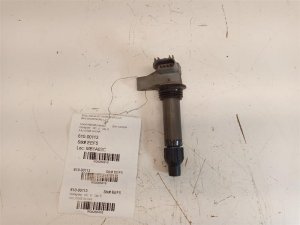
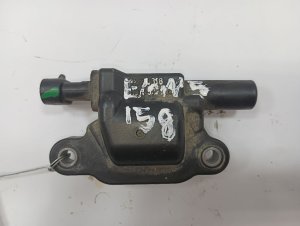
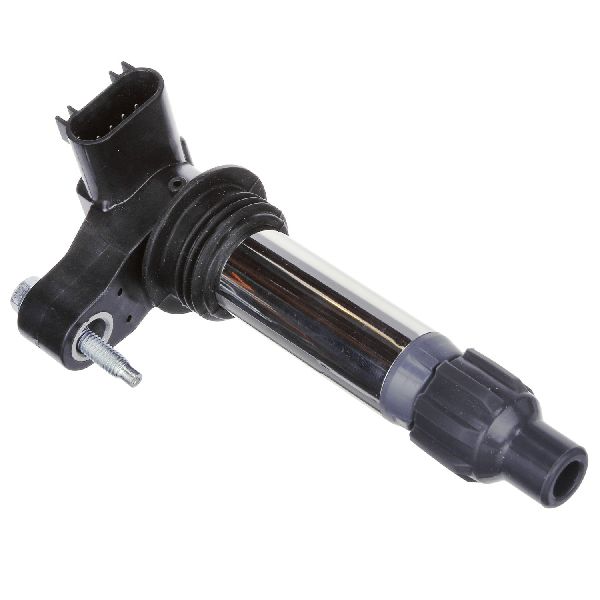
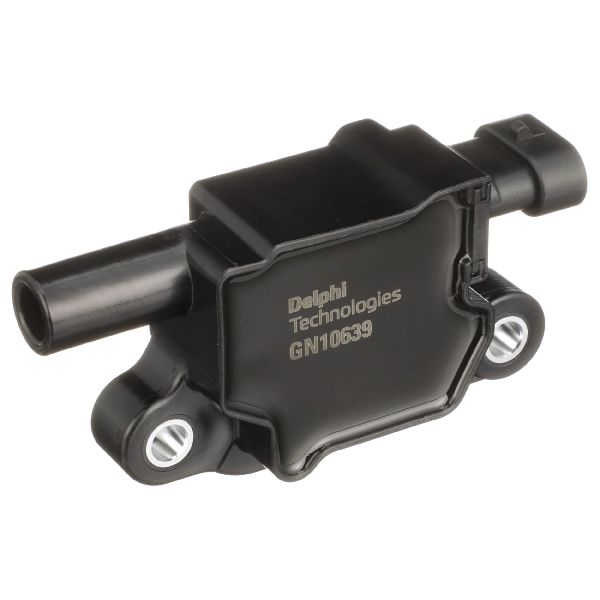
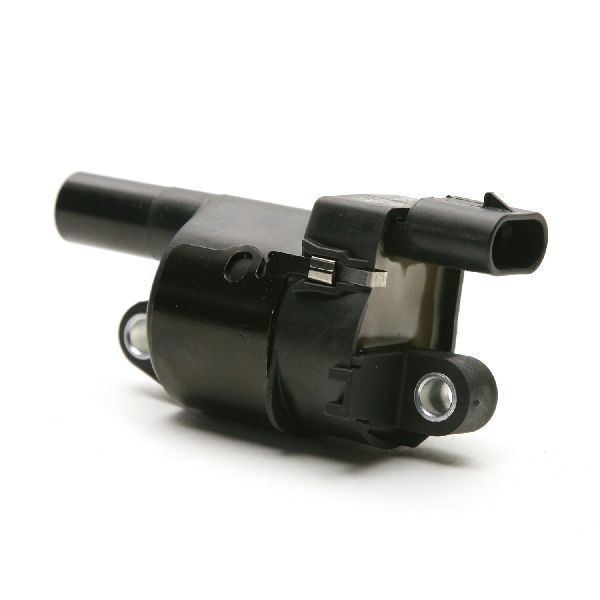
- Faulty Ignition Coil 🔴 High Probability → Shop Ignition Coil Ignition coils are a common wear item, and heat cycles can cause them to fail over time, leading to a weak or no-spark condition. This is the most frequent cause of a single-cylinder misfire on these engines. Manufacturer Bulletin #PIP5038B notes that technicians may find codes P0300 through P0306 alongside ignition coil circuit codes P0351 through P0356, requiring specific electrical diagnostics.
How to confirm: Swap the ignition coil from cylinder 4 with another cylinder (e.g., cylinder 2). Clear the codes and run the engine. If the misfire code changes to P0302, the ignition coil is faulty. This is a widely-accepted diagnostic step confirmed by numerous owner experiences online.
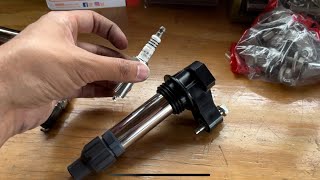
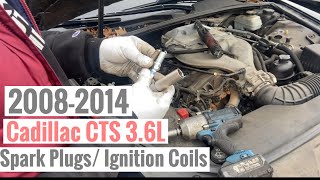
Typical fix: Replace the faulty ignition coil. It is held on by a single 10mm bolt. 🎬 Watch: Step-by-step guide to replacing coils and spark plugs. Note that accessing the driver's side coils (2, 4, 6) requires removing the upper intake manifold. Many owners recommend replacing all coils on the affected bank at the same time.
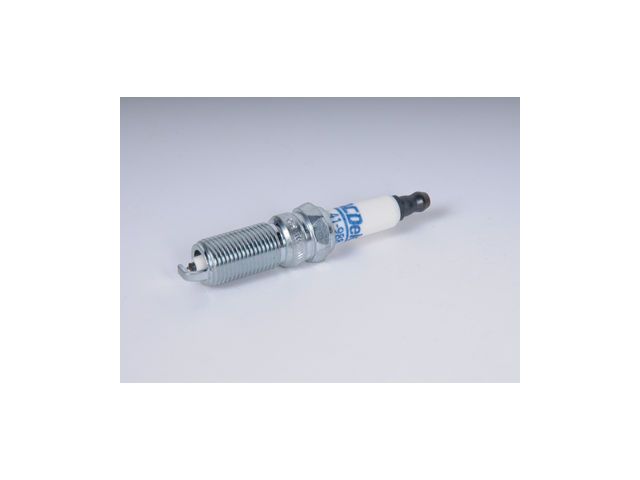
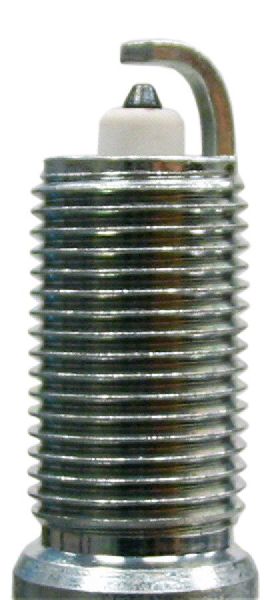
Est. part cost: $40-$70 for an OEM ACDelco coil. - Worn or Fouled Spark Plug 🔴 High Probability → Shop Spark Plug Spark plugs have a finite service life, typically around 100,000 miles. These engines require specific iridium plugs (ACDelco 41-109), and using incorrect plugs or extending service intervals can lead to fouling or a weak spark.
How to confirm: After confirming the coil is good, inspect the spark plug from cylinder 4. Look for a worn electrode, heavy carbon deposits, or oil fouling. You can swap the spark plug with another cylinder to see if the misfire follows. Also, check the spark plug boot for a loose fit, as mentioned in TSB PIP4819A, which states that technicians should replace any loose spark plug wires found during misfire diagnosis.
Typical fix: Replace the spark plug. The recommended OEM plug is the ACDelco Iridium 41-109, which comes pre-gapped. It's highly recommended to replace all six spark plugs at the same time to maintain consistent performance.
Est. part cost: $12-$20 per plug. - Carbon Buildup on Intake Valves 🟡 Medium Probability As direct-injection engines, the LF1 and LLT do not spray fuel over the intake valves. This allows oil vapor from the PCV system to bake onto the hot valves, forming hard carbon deposits that restrict airflow and can cause misfires. This is a well-documented issue, referenced in GM TSB PIP5029B.
How to confirm: This requires a borescope to visually inspect the intake valves with the intake manifold removed. Misfires that are worse on a cold start and then improve as the engine warms up are a strong indicator of this issue.
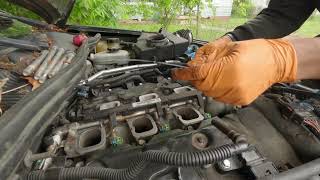
Typical fix: Perform an intake valve cleaning service. This can be done chemically or, more effectively, through media blasting (walnut blasting) with the intake manifold removed. Some owners report temporary success with spray-in cleaners, but physical cleaning is the long-term solution. 🎬 See how to clean intake valves on this 3.6L engine.
Est. part cost: $20-$30 for chemical cleaners, $500-$1000 for professional walnut blasting service. - Faulty Fuel Injector ⚪ Low Probability → Shop Fuel Injector Direct injectors operate under very high pressure and can become clogged or fail electronically over time, leading to improper fueling of a cylinder. While less common than ignition faults, it is a known failure point.
How to confirm: This is more difficult to diagnose. A professional may use a scan tool to monitor fuel trims or perform an injector balance test. Swapping injectors between cylinders is possible but is a labor-intensive job requiring intake manifold removal and new seals. A mechanic's stethoscope can be used to listen for a consistent, rapid clicking sound from the injector.
Typical fix: Replace the faulty fuel injector and its seal. It is often recommended to replace all injectors on the same bank (Bank 2 for cylinder 4) at the same time. This is a more advanced DIY job due to the high-pressure fuel system.
Est. part cost: $50-$100 per injector.
Rare But Worth Checking
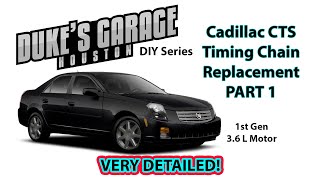
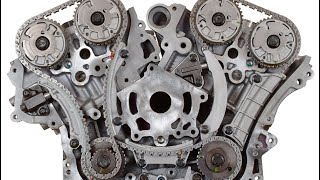
- Stretched Timing Chains: While less likely to cause a single-cylinder misfire, the LLT and LF1 engines are known for timing chain issues. If P0304 is accompanied by codes like P0008, P0017, or P0019, a stretched timing chain is a very strong possibility. GM acknowledged this with Special Coverage Adjustment 11340C, which extended the warranty for this specific issue. 🎬 Watch this detailed DIY walkthrough for timing chain replacement.
- Low Engine Compression: Mechanical engine problems like a worn piston ring, a leaking valve, or a head gasket failure can cause a loss of compression in cylinder 4. This is a serious issue that can be confirmed with a compression test.
- PCV System Issues: A clogged or malfunctioning PCV (Positive Crankcase Ventilation) orifice in the valve cover can lead to increased oil consumption and contribute to the carbon buildup on intake valves, indirectly causing misfires. TSB 12-06-01-009F includes instructions for cleaning the PCV orifice during timing chain service.
Diagnosis Steps
- Read the trouble codes with an OBD-II scanner to confirm P0304. Note if the Check Engine Light is solid or flashing. A flashing light requires immediate attention to prevent catalytic converter damage.
- Locate cylinder 4. On the longitudinally mounted V6 in the CTS, Bank 1 (1-3-5) is the passenger side and Bank 2 (2-4-6) is the driver's side. Cylinder 4 is the middle cylinder on the driver's side.
- Perform an ignition coil swap. Remove the engine cover and upper intake manifold to access the driver's side coils. Swap the coil from cylinder 4 with the coil from cylinder 2 (the front cylinder on the same bank).
- Clear the codes and drive the vehicle until the Check Engine Light returns. If the code is now P0302, the ignition coil is bad and must be replaced.
- If the code remains P0304, swap the spark plugs between cylinders 4 and 2. Clear codes and re-test. If the code moves to P0302, the spark plug is faulty.
- If the misfire remains on cylinder 4, inspect the wiring and connector for the ignition coil and fuel injector for any signs of damage or corrosion. Per TSB #PIP4819A, check that the spark plug boot is secure on both the coil and the plug, as loose wires are a documented cause for codes P0300 through P0308.
- If ignition and wiring are good, the next steps involve checking the fuel injector and investigating for carbon buildup or mechanical issues like low compression, which may require professional assistance and tools like a borescope or compression tester.
Parts You'll Likely Need
- Ignition Coil
(OEM #12631982 (Superseded by 12613057))— This is the most common failure part causing a single-cylinder misfire on the CTS V6 engines.
Trusted brands: ACDelco, Delphi, NGK
OEM price range: $50-$70
Aftermarket price range: $30-$50 - Iridium Spark Plug
(OEM #41-109 (Alternate numbers: 12681660, 12622561))— Spark plugs are a routine maintenance item and the second most likely cause of a misfire.
Related Codes That Often Appear With This One
- P0300 — If the misfire condition is affecting multiple cylinders, a P0300 (Random/Multiple Cylinder Misfire) will be stored alongside the specific cylinder code.
- P0302, P0306 — Misfire codes for other cylinders on the same bank (Bank 2, driver's side) could indicate a shared problem like a clogged catalytic converter for that bank or a vacuum leak affecting that side of the intake manifold.
- P0354 — This code indicates a fault in the ignition coil circuit for cylinder 4. It points more directly to an electrical problem with the coil or its wiring, and often appears with P0304. Manufacturer Bulletin #PIP5038B specifically links P0351-P0356 with misfire codes.
- P0204 — This code for 'Injector Circuit/Open - Cylinder 4' points to an electrical issue with the fuel injector. If seen with P0304, it strongly suggests the misfire is fuel-related, likely a bad injector or wiring problem.
Technical Service Bulletins (TSBs) & Recalls
- 12-06-01-009D: Announces the release of updated timing chain service kits to address codes related to stretched timing chains (P0008, P0017, etc.), which can be an underlying cause of misfires.
- Special Coverage Adjustment 11340C: Supersedes previous versions and extends warranty coverage for premature timing chain wear to 10 years or 120,000 miles for affected 2007-2009 CTS models. It covers timing chain replacement and/or an ECM reprogram.
- PIP5029G / 16-NA-383: Describes diagnosing and cleaning carbon buildup from intake valves on direct injection engines to resolve misfires, often noticeable on cold starts.
- PIP4819A: Notes that misfire codes can sometimes be caused by a poor connection between the ignition coil boot and the spark plug, advising technicians to check for a secure fit and replace any loose spark plug wires.
- Bulletin #PIP5038B: Highlights that vehicles with a Malfunction Indicator Lamp may store misfire codes P0300-P0306 in conjunction with ignition coil circuit codes P0351-P0356, requiring technicians to follow specific service information diagnostics.
Platform-Specific Known Issues
- Direct Injection Carbon Buildup: The design of the LF1/LLT engines leads to carbon accumulation on intake valves, which is a well-documented cause of misfires and rough running, especially when cold.
- Timing Chain Stretch: Early production 3.6L LLT engines (2008-2012) were particularly prone to premature timing chain wear due to a combination of chain design and long oil change intervals. GM issued Special Coverage 11340C to cover repairs for 10 years/120,000 miles.
Hidden / Shadow Codes Worth Checking
- Mode 6 Misfire Counters: A professional scan tool can access Mode 6 data, which includes misfire counts per cylinder for the current and previous drive cycles. This can reveal if other cylinders are misfiring occasionally, even if not enough to set a P030x code, which can help diagnose a random misfire (P0300) condition. (see via Professional OBD-II Scan Tool with Mode 6 capability (e.g., GDS2, Autel, Snap-on).)
- P1336: This code for 'Crankshaft Position (CKP) System Variation Not Learned' can be stored if a crankshaft position sensor is replaced or the ECM is reprogrammed without performing the proper relearn procedure. An incorrect CKP variation can cause the ECM to misinterpret crankshaft speed fluctuations, potentially leading to false misfire codes. (see via Professional OBD-II Scan Tool (e.g., GDS2, Tech 2).)
Scan Tool Commands That Help
- GDS2/Tech 2: Misfire Graphic — To view current and historical misfire counts for each cylinder in real-time. This helps determine if the P0304 is consistent or intermittent and if other cylinders are contributing to a rough engine condition.
- GDS2/Tech 2: Crankshaft Position (CKP) Variation Relearn — This procedure must be performed after replacing the crankshaft position sensor, ECM, or performing major engine work. It calibrates the ECM to the minor variations in the crankshaft reluctor wheel, ensuring accurate misfire detection. Failure to perform this can lead to false misfire codes.
- GDS2/Tech 2: Injector Balance Test — This function allows a technician to disable one injector at a time to measure the RPM drop for each cylinder. If disabling the cylinder 4 injector causes little or no change in RPM, it confirms that the injector is not contributing power, pointing to a failure in that injector or cylinder.
Wiring & Ground Locations
- G131 — On the left rear of the engine (driver's side).. This is a primary engine-to-chassis ground. A loose or corroded G131 can cause unstable voltage and intermittent electrical issues for components on the driver's side of the engine, including the ignition coils for cylinders 2, 4, and 6, leading to weak spark and misfires.
- G130 — On the rear of the right cylinder head (passenger's side).. While on the opposite bank, this ground is part of the main engine grounding scheme. A problem here can affect the overall stability of the engine's electrical system, though it's less likely to cause an isolated P0304.
- Cylinder 4 Ignition Coil Connector — On top of the valve cover, connected to the cylinder 4 ignition coil (middle coil, driver's side).. The connector and its wiring are a common point of failure. Check for broken locking tabs, corroded pins, or chafed wires in the harness leading to the coil. A poor connection here will cause a P0304 and potentially a P0354.
Real Owner Repair Stories
- cadillacforums.com user (2010 CTS 3.6L (LLT)) — Check engine light with codes P0300, P0302, P0304, P0306 (misfires on all of Bank 2) and timing code P0017.
❌ Tried (didn't work) Replacing spark plugs, Replacing ignition coils
✅ What actually fixed it The timing chains were found to be stretched. Replacing all three timing chains and the related tensioners resolved all misfire and timing codes.
OEM Part Supersession History
12618542 / 12631982→12613057— Internal design and material updates by GM/ACDelco to improve durability and resistance to heat-related failure.12622561→41-109 (also seen as 12681660)— Part number consolidation and branding changes by ACDelco. The 41-109 is the standard service replacement part number.
Heads up: ACDelco Iridium plugs are pre-gapped and should not be adjusted, as this can damage the fine iridium tip.
Model Year Variations Within This Range
- 2008-2011: The 3.6L LLT engines in these earlier models are more prone to the premature timing chain stretching issue compared to later models. While the LF1 (3.0L) can also have chain issues, it is most famously documented on the early 3.6L LLT.
- 2012-2013: In 2012, the 3.6L LLT engine was replaced by the LFX V6. While architecturally similar, the LFX has several updates, including an integrated exhaust manifold/cylinder head design and different internal components. While it can still suffer from carbon buildup, the timing chain guides and programming were revised, making severe chain stretch less common than on the LLT.
Diagnostic Flowchart
Real Owner Stories
Aggregated from forums and TSBs cited above. Mileages and costs reflect what owners reported in those sources.
2008 Cadillac CTS
Symptoms: Multiple misfires including P0304 with a flashing check engine light, accompanied by a P2098 fuel trim code.
What fixed it: Replacing failing ignition coils, which were identified as the primary culprit causing the secondary fuel trim code.
Source hint: RepairPal - '2008 Cadillac CTS DTC codes P0300 P0302 P0300 P0304 P2098 HELP'
2004 Cadillac CTS
Symptoms: P0201 and P0301 misfire codes.
What fixed it: Targeted diagnosis over broad parts replacement, avoiding a $2,200 dealer-quoted 'tune-up'.
Source hint: YouTube - '2004 Cadillac CTS P0201 and p0301 misfire. Diagnose and repair'
Related OBD-II Codes
Frequently Asked Questions
Is the timing chain stretch issue covered under warranty for my 2008 Cadillac CTS?
Why does my 3.6L LLT engine misfire worse on cold starts?
What spark plugs should I use to fix a P0304 code on my CTS?
I have a P0304 code; how do I access cylinder 4 on the 3.0L/3.6L V6?
Could a loose spark plug boot cause my P0304 code?
How much does it cost to fix the carbon buildup issue on the LF1/LLT engine?
Helpful Videos


Used OEM Parts in Stock
New Aftermarket Parts Available

The information in this article is provided for general reference and educational purposes only. Vehicle specifications, procedures, and part compatibility can vary by production date, trim level, and region. Always consult your vehicle's factory service manual and verify part numbers before purchasing or performing repairs. Safety-critical components such as airbags, seat belts, and braking systems should be installed by a qualified professional.
- Cadillac CTS:
- 🧭 Diagnostic Flowchart
- 🎬 Helpful Videos
- 🛍️ Shop This Part
- What's Unique About the 2008-2013 Cadillac CTS
- Symptoms You May Notice
- Most Likely Causes
- Rare But Worth Checking
- Diagnosis Steps
- Parts You'll Likely Need
- Related Codes That Often Appear With This One
- Technical Service Bulletins (TSBs) & Recalls
- Platform-Specific Known Issues
- Hidden / Shadow Codes Worth Checking
- Scan Tool Commands That Help
- Wiring & Ground Locations
- Real Owner Repair Stories
- OEM Part Supersession History
- Model Year Variations Within This Range
- Real Owner Stories
- 2008 Cadillac CTS
- 2004 Cadillac CTS
- Related OBD-II Codes
- Frequently Asked Questions
- 🎟️ Get 5% Off