

P0304 on 2010-2017 Cadillac Escalade: Cylinder 4 Misfire Causes and Fixes
P0304 indicates a misfire on cylinder 4. On the Escalade, this is most often a bad spark plug, wire, or ignition coil. However, it is also a very common symptom of a collapsed Active Fuel Management (AFM) lifter, which is a more serious and expensive repair. A flashing check engine light indicates a severe misfire that can damage the catalytic converter and should be addressed immediately.
- P0304 is a misfire on cylinder 4 (passenger side, second from front).
- Start diagnosis with the simple fixes: check the spark plug wire, swap the ignition coil with another cylinder, and inspect the spark plug.
- Listen carefully for a ticking or knocking noise. This is a strong indication of the common (and serious) AFM lifter failure.
- Do not ignore a flashing check engine light, as this can cause rapid and expensive damage to your catalytic converter.
- If the issue is a failed lifter, the repair is complex and costly, with shop estimates ranging from $3,000 to over $7,000.
What's Unique About the 2010-2017 Cadillac ESCALADE
The 2010-2017 Escalade spans two generations, but both are equipped with a 6.2L V8 featuring Active Fuel Management (AFM), also known as cylinder deactivation. This system is a known weak point. While simple ignition faults are common, P0304 is frequently an early warning sign of a failing AFM lifter on cylinder 4, which is one of the cylinders deactivated by the system. This is a mechanical issue specific to this engine family that is more complex than a standard tune-up. An owner complaint to the NHTSA directly links a P0304 code on a 2017 Escalade to collapsed AFM lifters, and multiple TSBs address the issue.
Diagnostic Flowchart
Tap your situation to follow the diagnostic path that matches what you're seeing on this vehicle.
Generation note: This range covers two Escalade generations. The 3rd Gen (2010-2014) uses the 6.2L L94 V8. The 4th Gen (2015-2017) uses the updated 6.2L L86 EcoTec3 V8 with direct injection. While both suffer from AFM lifter issues, the L86 can also be prone to carbon buildup on intake valves due to its direct injection design, which can also cause misfires. GM released TSB 16-NA-383 discussing misfires due to carbon buildup.
Symptoms You May Notice
- Rough or shaking idle
- Hesitation or stumbling during acceleration
- Loss of power
- Flashing or solid Check Engine Light
- Engine stalling
- Ticking or knocking noise from the engine
- White smoke from exhaust
- Traction Control light illuminating
- Replacing only the spark plug when the ignition coil or wire is the actual problem.
- Replacing ignition and fuel components when the underlying issue is a mechanical failure like a collapsed lifter. A forum user described replacing plugs, wires, and a coil pack on a Denali with a 6.2L only to have the misfire and a loud knock persist, leading to a diagnosis of lifter/cam failure.
Most Likely Causes
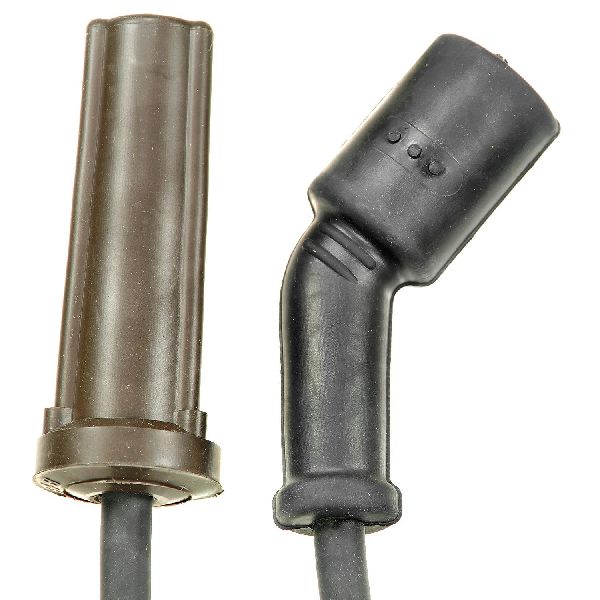
- Faulty Spark Plug or Wire 🔴 High Probability → Shop Spark Plug Spark plugs are a routine wear item. A GM Technical Service Bulletin (#PIP4819A) specifically calls out loose spark plug wires as a cause for misfire codes on these trucks. The porcelain on a spark plug can also crack, leading to a misfire.
How to confirm: Inspect the spark plug for wear, fouling, or damage. Check that the spark plug wire is securely connected at both the coil and the plug. Resistance-test the wire or swap it with another cylinder's wire to see if the misfire moves.
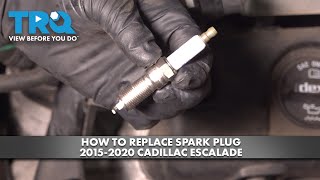
Typical fix: Replace the spark plug and/or spark plug wire. It is best practice to replace all spark plugs at the same time. 🎬 Watch: Step-by-step guide to replacing your Escalade spark plugs
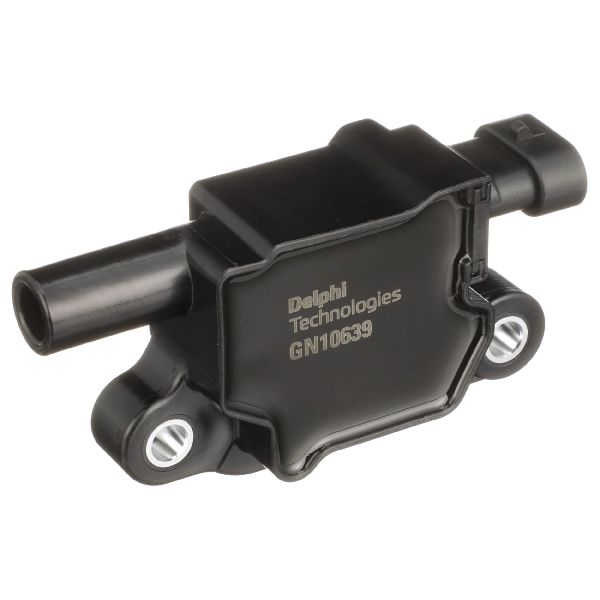
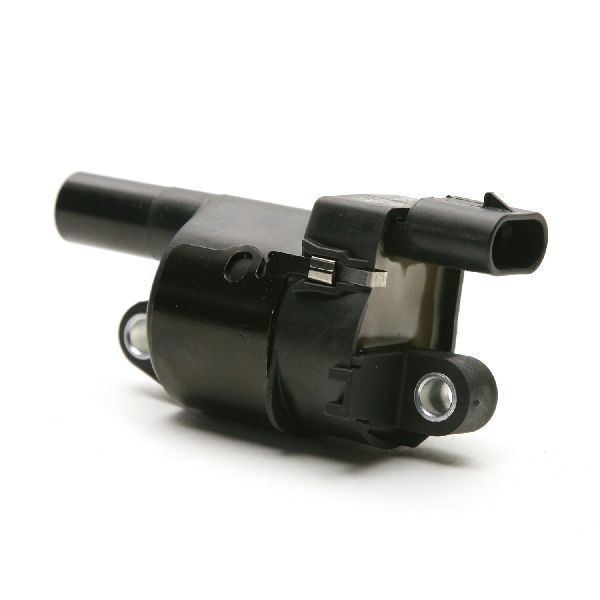
Est. part cost: $10-$25 for a single plug and wire, $80-$200 for a full set. - Failed Ignition Coil 🔴 High Probability → Shop Ignition Coil Coil-on-plug ignition coils are subjected to high heat and vibration, making them a common failure point on any modern V8. It is not unheard of to receive a brand new coil that is also faulty.
How to confirm: The easiest method is to swap the ignition coil from cylinder 4 with another cylinder (e.g., cylinder 2 on the same bank). Clear the codes and drive the vehicle. If the code changes to P0302, the ignition coil is bad.
Typical fix: Replace the faulty ignition coil.
Est. part cost: $40-$90 for one OEM-quality coil. - Collapsed or Stuck AFM Lifter 🟡 Medium Probability → Shop Engine Valve Lifter The Active Fuel Management system deactivates cylinders 1, 4, 6, and 7 to save fuel. The specialized lifters are a well-documented, high-failure-rate item. TSB 15-06-01-002A and later revisions directly address this failure, noting it can be caused by oil aeration or internal locking pin damage.
How to confirm: A noticeable ticking or knocking sound is a strong indicator. A mechanic can confirm by removing the valve cover to check for a loose rocker arm and often a bent pushrod on cylinder 4. A compression test will show low or no compression on the affected cylinder. A running compression test that stays below 25 PSI regardless of AFM command status points to a collapsed lifter.
Typical fix: This is a major repair requiring replacement of the failed lifter, the corresponding lifter guide, and often the camshaft if it has been damaged by the failed lifter roller. Many owners opt to replace all AFM lifters or perform an 'AFM delete' at this time, which involves replacing AFM components with standard lifters and reprogramming the ECU.
Est. part cost: $500-$1,500 for lifters, gaskets, and potentially a new camshaft. A single AFM lifter can cost around $77. - Faulty Fuel Injector ⚪ Low Probability → Shop Fuel Injector
How to confirm: Listen for the injector's clicking sound with a mechanic's stethoscope. Check the injector's resistance with a multimeter. You can also swap the injector with another cylinder to see if the misfire code follows, though this is more labor-intensive than swapping a coil.
Typical fix: Replace the faulty fuel injector. Using a fuel injector cleaner additive during troubleshooting is sometimes recommended.
Est. part cost: $50-$120 for a single injector.
Rare But Worth Checking
- Intake Manifold Gasket Leak: → Shop Engine Intake Manifold A vacuum leak near the cylinder 4 intake runner can lean out the mixture and cause a misfire. This would usually be accompanied by other codes like P0171 or P0174.
- Loss of Compression (Other Mechanical Failure): Beyond a lifter, a misfire can be caused by a broken valve spring, a burnt valve, or worn piston rings. A cylinder leak-down test is required to diagnose these issues.
- Bad Ground Connection: A poor ground for the bank of ignition coils can cause a weak spark. One video showed a misfire on the entire passenger-side bank (2, 4, 6, 8) due to a corroded ground strap on the engine block. A document on ground locations identifies G102 at the left rear of the engine as the ground for all 8 ignition coils.
- Carbon Buildup on Intake Valves: On the direct-injected L86 engine (2015-2017), carbon buildup on the back of the intake valves can prevent them from sealing properly, causing a misfire. GM TSB 16-NA-383 addresses this. Chemical cleaning procedures can sometimes resolve this without removing the cylinder heads.
Diagnosis Steps
- Read the code with an OBD-II scanner and confirm P0304 is present. Note any other codes, especially P0300 or P3400.
- Inspect the spark plug wire for cylinder 4. Ensure it is fully seated and not damaged. Per TSB #PIP4819A, loose wires are a known issue.
- Swap the ignition coil from cylinder 4 with the coil from cylinder 2. Clear the codes and drive the vehicle. If the code changes to P0302, the ignition coil is bad.
- If the code remains P0304, remove and inspect the spark plug from cylinder 4. Look for excessive wear, oil fouling, carbon tracking, or a cracked porcelain insulator. Replace if necessary.
- Listen to the engine for a persistent ticking or knocking noise, which is a strong sign 🎬 Watch: How to diagnose a lifter tick on an Escalade of a lifter issue.
- If ignition parts are good, perform a compression test on cylinder 4. A low or zero reading points to a mechanical problem. A running compression test that stays below 25 PSI points directly to a stuck/collapsed AFM lifter. 🎬 See how a collapsed lifter causes a P0304 misfire
- If compression is good, the issue may be fuel-related. Check the fuel injector for cylinder 4 by listening for its click or testing its resistance.
- If a lifter failure is suspected, remove the passenger-side valve cover. Inspect for a loose rocker arm and a bent pushrod on cylinder 4. A bent pushrod is a very common consequence of a collapsed or stuck lifter.
Parts You'll Likely Need
- Ignition Coil
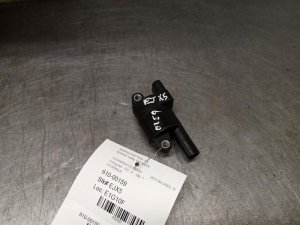
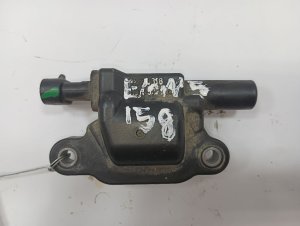
(OEM #12611424 (L94) / 12674754 (L86))— A very common failure point causing a single-cylinder misfire. Easy to diagnose by swapping with another cylinder. Note that the L94 and L86 engines may use different coil designs.
Trusted brands: ACDelco, Delphi, NGK
OEM price range: $50-$90
Aftermarket price range: $30-$60 - Spark Plug
(OEM #41-110 (Iridium))— Spark plugs are a maintenance item and can foul or wear out, causing a weak or inconsistent spark.
Trusted brands: ACDelco, NGK
OEM price range: $10-$15
Aftermarket price range: $7-$12 - Spark Plug Wire
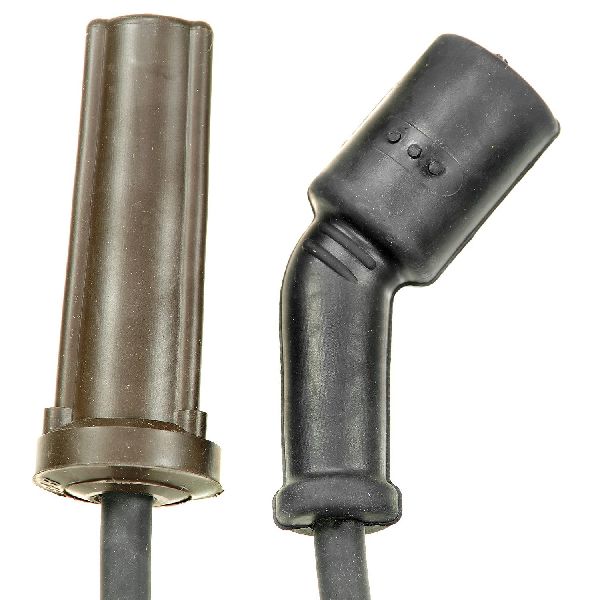
(OEM #9748RR)— GM issued a TSB (#PIP4819A) indicating that loose or faulty spark plug wires can cause this exact code.
Trusted brands: ACDelco
OEM price range: $10-$20
Aftermarket price range: $8-$15 - AFM Lifter Kit
(OEM #12645725 (Package of 4 AFM lifters))— A collapsed or stuck AFM lifter is a very common mechanical failure on these engines that causes P0304. It's recommended to replace them in banks or as a full set.
Trusted brands: ACDelco, Elgin
OEM price range: $250-$350 (for 4)
Aftermarket price range: $150-$250 (for 4) - Valve Lifter Oil Manifold (VLOM)
(OEM #12660737 (Service Kit))— This part contains the solenoids that control the AFM lifters. It can fail or its internal filter can become clogged, leading to lifter failure. TSBs often recommend replacing it along with the lifters.
Trusted brands: ACDelco
OEM price range: $200-$300
Aftermarket price range: $100-$180
Related Codes That Often Appear With This One
- P0300 — If the misfire is severe or intermittent, or if the underlying cause (like a failing AFM system) begins to affect other cylinders, the PCM may log P0300 (Random/Multiple Misfire) alongside the specific cylinder code.
- P3400 — This code relates to the Cylinder Deactivation System (Bank 1). Its appearance with a P0304 strongly suggests the problem is related to the AFM lifters or their control system, as cylinder 4 is an AFM cylinder on bank 1.
- P0301, P0306, P0307 — Misfires on other AFM-managed cylinders (1, 6, and 7) can indicate a systemic problem with the Active Fuel Management system, such as issues with the Valve Lifter Oil Manifold (VLOM) or widespread lifter failure.
Technical Service Bulletins (TSBs) & Recalls
- PIP4819A: Inspect for loose spark plug wires causing misfires.
- 15-06-01-002E (and subsequent revisions like H, J, L): Addresses engine misfire/tick noise (P0300) from a mechanically collapsed/stuck AFM lifter. Recommends replacing the valve lifter oil manifold and the affected bank of lifters.
- PIP4568S: Discusses tick noise and/or misfires on AFM cylinders (1, 4, 6, 7) due to an AFM lifter that unlocks or is mechanically collapsed.
- 19-NA-219: Diagnostic tip for various noises and misfire DTCs, lists collapsed AFM lifter as a potential cause.
- 16-NA-383: Information on rough idle or misfire due to major carbon buildup on intake/exhaust valves, particularly relevant for direct injection engines.
Platform-Specific Known Issues
- AFM Lifter Failure Diagnosis: → Shop Engine Valve Lifter For the 6.2L V8s in these Escalades, a P0304 accompanied by a ticking or knocking sound almost always points to a failed AFM lifter. Diagnosis is confirmed by removing the passenger side valve cover and checking for a loose rocker arm and/or a bent pushrod on cylinder #4. This is a much more involved and expensive repair than typical ignition system faults.
- AFM Delete as a Permanent Solution: Due to the high failure rate of the AFM system, many owners and independent shops opt for an 'AFM Delete' when a lifter fails. This involves replacing the specialized AFM lifters, camshaft, and Valve Lifter Oil Manifold (VLOM) with standard, non-AFM components and reprogramming the engine computer to disable the cylinder deactivation function. This is considered a permanent, albeit costly, solution.
- Direct Injection Carbon Buildup (2015-2017 L86): The 2015+ models with the L86 engine feature direct injection. While more efficient, this design can lead to carbon deposits on the intake valves since fuel is no longer sprayed over them, which has a cleaning effect. Significant buildup can cause a valve to not seal properly, resulting in a misfire. This should be considered if ignition and AFM issues are ruled out.
Mechanic-Grade Diagnostic Values
- Ignition Coil Primary Resistance — expected: 0.4 to 2.0 ohms. Failure: A reading outside this range indicates a faulty coil.
- Ignition Coil Secondary Resistance — expected: 6,000 to 10,000 ohms (6.0k-10.0k Ω). Failure: A reading outside this range suggests the coil is faulty.
- Fuel Pressure (2010-2014 L94 V8) — expected: 50-60 PSI (345-414 kPa) at idle. Failure: Pressure below 50 PSI can cause lean misfires.
- Fuel Pressure (2015-2017 L86 V8, High-Pressure Side) — expected: 300-750 PSI (2-5 MPa) at idle. Failure: Low readings can indicate a failing high-pressure fuel pump (HPFP) or sensor.
- Running Compression Test (AFM Cylinder) — expected: Should rise above 25 PSI when AFM solenoid is commanded OFF.. Failure: Compression that stays below 25 PSI regardless of AFM command status indicates a mechanically stuck or collapsed lifter.
Hidden / Shadow Codes Worth Checking
- Mode $06, Test ID $A2-$AF: These Test IDs typically correspond to misfire counts for each cylinder (e.g., $A2 for Cyl 1, $A3 for Cyl 2, etc.). A high count for Component ID $04 (Cylinder 4) can confirm the P0304 before the check engine light becomes constant. (see via A professional scan tool with Mode $06 data capability.)
Scan Tool Commands That Help
- GDS2 (GM Global Diagnostic System 2): Cylinder Deactivation (Active Fuel Management) System Compression Test — Used to isolate a failed AFM lifter. The tool commands the AFM solenoids on and off while observing running compression to see if the lifter responds.
- GDS2: Injector Balance Test — This function individually fires each fuel injector and measures the corresponding drop in fuel pressure to identify a weak or clogged injector without removing it from the engine.
- GDS2: Crankshaft Position Variation Relearn — Should be performed after major engine work, like replacing a flexplate or camshaft. If not performed, the ECM can misinterpret normal crankshaft speed variations as misfires, potentially causing a false P0304.
Wiring & Ground Locations
- G102 — Located at the left rear of the engine.. This is the primary ground point for all eight ignition coils. Corrosion or a loose connection here can cause a weak spark and lead to misfires on one or more cylinders, including cylinder 4.
- Valve Lifter Oil Manifold (VLOM) Filter — Located in the engine valley, beneath the intake manifold and under the oil pressure sensor on the VLOM itself.. This small screen filters oil going to the AFM lifter control solenoids. If it becomes clogged with sludge or debris, it can starve the lifters of oil pressure, causing them to fail and triggering a P0304 misfire.
Real Owner Repair Stories
- Tahoe Yukon Forum (GMC Denali (year not specified, but with 6.2L and AFM)) — Check engine light with code P0304, engine missing, and a new loud knocking noise from the passenger side of the engine.
❌ Tried (didn't work) Replacing spark plugs, Replacing spark plug wires, Replacing the ignition coil on cylinder 4
✅ What actually fixed it The owner took it to a mechanic who diagnosed a failed AFM lifter and camshaft. The final repair was a full AFM/DOD delete, including a new, slightly more aggressive camshaft and all new lifters. - YouTube - Alex The Car Doctor (2016 Cadillac Escalade) — Initially a ticking noise, which later changed to a very bad skip (misfire) without a tick.
❌ Tried (didn't work) A previous shop had allegedly performed a repair costing $2,800 that did not solve the problem.
✅ What actually fixed it The mechanic found the AFM lifter for the misfiring cylinder had completely fallen apart, with a large chunk missing. This destroyed the camshaft lobe and scored the lifter bore in the engine block. The fix required a partial engine teardown to replace the lifters, camshaft, and send the block to a machine shop to repair the lifter bore.
OEM Part Supersession History
HL-7011 (Elgin Aftermarket for AFM)→HL-7025 (Elgin Aftermarket for DFM/AFM)— The newer DFM (Dynamic Fuel Management) lifter (HL-7025) is backward-compatible with older AFM systems.
Heads up: The original AFM-only lifter (HL-7011) will ONLY fit AFM applications and cannot be used in newer DFM engines. The DFM lifter (HL-7025) can be used in both.
Model Year Variations Within This Range
- 2015-2017: The L86 engine uses a high-pressure, camshaft-driven mechanical fuel pump to supply the direct injection system, operating at pressures up to 2,100+ PSI (15 MPa). This adds another potential failure point (the high-pressure pump) not present on the 2010-2014 L94 port-injected engines.
- 2010-2014 vs 2015-2017: The diagnostic scan tool changes. Models from 2010-2013 may require the older Tech2 scan tool, while 2014 and newer models exclusively use the GDS2 software platform. Using the wrong tool can result in a 'no communication' error.
Helpful Videos
Used OEM Parts in Stock
New Aftermarket Parts Available


The information in this article is provided for general reference and educational purposes only. Vehicle specifications, procedures, and part compatibility can vary by production date, trim level, and region. Always consult your vehicle's factory service manual and verify part numbers before purchasing or performing repairs. Safety-critical components such as airbags, seat belts, and braking systems should be installed by a qualified professional.
- Cadillac ESCALADE:
- 🧭 Diagnostic Flowchart
- 🎬 Helpful Videos
- 🛍️ Shop This Part
- What's Unique About the 2010-2017 Cadillac ESCALADE
- Symptoms You May Notice
- Most Likely Causes
- Rare But Worth Checking
- Diagnosis Steps
- Parts You'll Likely Need
- Related Codes That Often Appear With This One
- Technical Service Bulletins (TSBs) & Recalls
- Platform-Specific Known Issues
- Mechanic-Grade Diagnostic Values
- Hidden / Shadow Codes Worth Checking
- Scan Tool Commands That Help
- Wiring & Ground Locations
- Real Owner Repair Stories
- OEM Part Supersession History
- Model Year Variations Within This Range
- 🎟️ Get 5% Off