

P0304 on 2010-2013 Cadillac Escalade EXT: Cylinder 4 Misfire Causes and Fixes
P0304 on a 2010-2013 Escalade EXT indicates a misfire in cylinder 4. The most common causes are a faulty ignition coil, a worn spark plug, or a loose/damaged spark plug wire. A simple first step is to swap the ignition coil from cylinder 4 with another cylinder to see if the code follows. In some cases, this can be an early sign of a more serious Active Fuel Management (AFM) lifter failure.
- P0304 is a misfire on cylinder 4, which is the second cylinder from the front on the passenger side.
- Start your diagnosis with the easiest and most common fixes: check the spark plug wire, then swap the ignition coil with another cylinder.
- A flashing check engine light is serious. It means unburned fuel is entering the exhaust, which can destroy your catalytic converter, a very expensive repair.
- Always use the correct iridium spark plugs (ACDelco 41-110 or equivalent) and consider replacing the spark plug wires (ACDelco 9748RR or equivalent) during a tune-up, as they are a known issue per a GM TSB.
What's Unique About the 2010-2013 Cadillac ESCALADE EXT
On the 6.2L V8 (L94) engine in these Escalades, the ignition components are subjected to significant heat. A GM Technical Service Bulletin (TSB) specifically notes that loose spark plug wires can be a cause for misfires across the engine, including P0304. Additionally, the coil-on-plug wires can become brittle from heat cycling and fail internally when removed for service. More critically, these engines feature Active Fuel Management (AFM), and a P0304 code, especially when accompanied by a ticking noise, can be an early symptom of a collapsed or stuck AFM lifter on cylinder 4, which is a known and serious issue for this engine family.
Diagnostic Flowchart
Tap your situation to follow the diagnostic path that matches what you're seeing on this vehicle.
Symptoms You May Notice
- Rough or shaking idle
- Hesitation or stumbling during acceleration
- Reduced engine power
- Solid or flashing Check Engine Light
- A noticeable smell of unburned fuel from the exhaust
- Ticking or tapping noise from the engine, which can point towards a lifter issue.
- "Service Stabilitrak" and "Service Traction Control" messages may appear on the dash along with the check engine light.
- Replacing only the spark plug when the ignition coil is the actual problem.
- Replacing the catalytic converter when it has been damaged by the misfire, but not fixing the root cause of the misfire first.
- Assuming an expensive lifter failure before thoroughly ruling out the much more common and cheaper ignition system components (plug, wire, coil).
Most Likely Causes
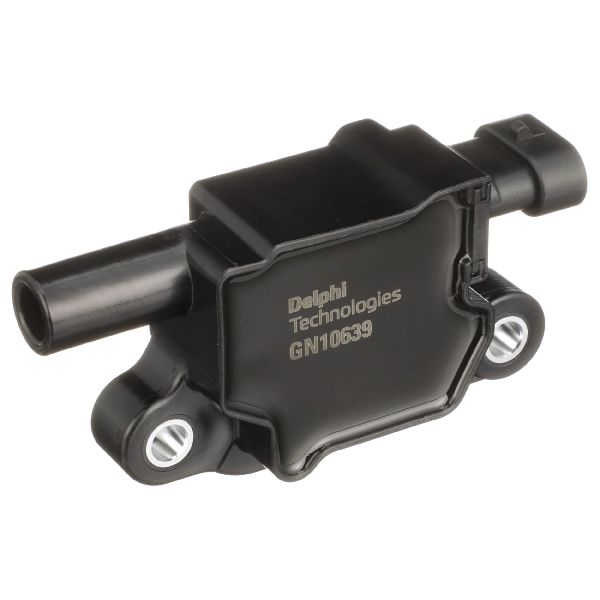
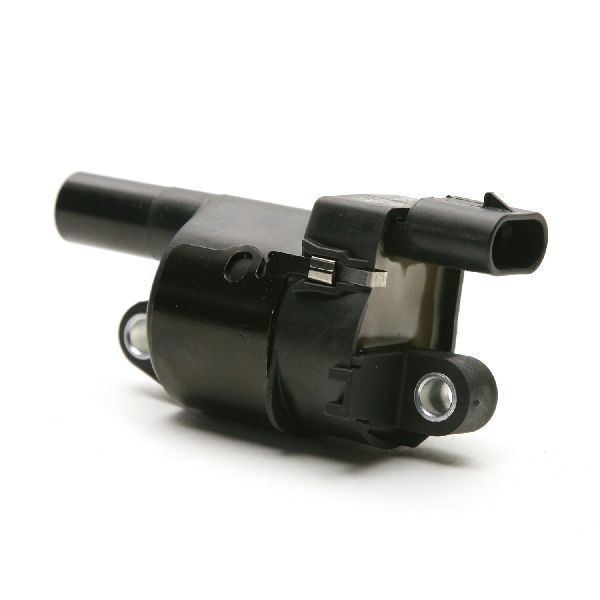
- Faulty Ignition Coil 🔴 High Probability → Shop Ignition Coil The coil-on-plug design is generally reliable, but individual coils are a common failure point on any modern V8 engine due to constant high heat and vibration. It's not unusual for an owner to replace a bad coil only to find the new one is also faulty out of the box.
How to confirm: Swap the ignition coil from cylinder 4 with another cylinder (e.g., cylinder 2, which is on the same bank). Clear the codes and drive the vehicle. If the code changes to P0302, the ignition coil is faulty.
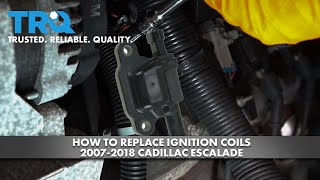
Typical fix: Replace the faulty ignition coil. 🎬 Watch: Step-by-step guide to replacing your Escalade's ignition coils. It is often recommended to replace the corresponding spark plug at the same time.
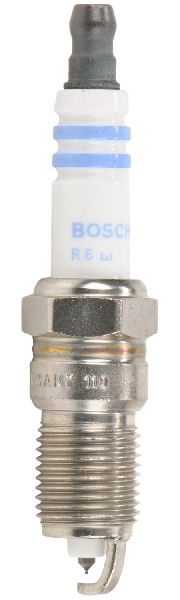
Est. part cost: $40-$75 - Worn or Fouled Spark Plug 🔴 High Probability → Shop Spark Plug Spark plugs are a regular maintenance item with a service life of around 100,000 miles. As they wear, the gap can widen or they can become fouled with oil or carbon deposits, leading to a weak spark. Cracked porcelain insulators are also a common finding.
How to confirm: Remove the spark plug from cylinder 4 and inspect it. Look for a worn electrode, cracks in the porcelain (a common failure), or heavy carbon/oil deposits. Compare it to a new plug. A GM service bulletin advises against re-gapping modern iridium plugs as it can damage the tip.
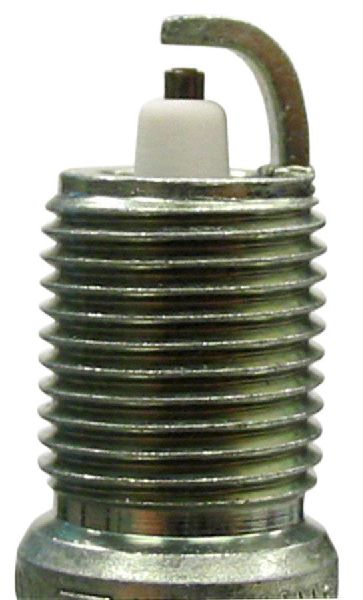
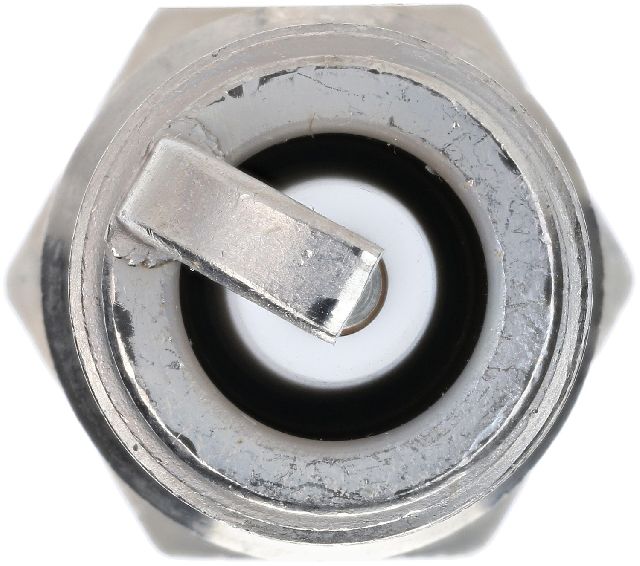
Typical fix: Replace the spark plug. It is best practice to replace all 8 spark plugs at the same time to maintain consistent performance. The original ACDelco 41-110 plugs have been superseded by part number 41-162.
Est. part cost: $10-$20 per plug - Loose or Damaged Spark Plug Wire 🟡 Medium Probability → Shop Spark Plug A manufacturer TSB (#PIP4819A) specifically calls out inspecting for and replacing loose spark plug wires as a fix for misfire codes on this vehicle. The wires can also become brittle and damaged from engine heat, or the connection inside the boot can fail.
How to confirm: Visually inspect the spark plug wire for cylinder 4. Ensure it is securely connected at both the ignition coil and the spark plug. Check for any signs of arcing (white marks), abrasion, or heat damage. Wiggle the boot to ensure a tight fit.
Typical fix: Replace the spark plug wire. It is often sold in a full set of 8.
Est. part cost: $50-$80 for a set - Clogged or Faulty Fuel Injector ⚪ Low Probability → Shop Fuel Injector While less common than ignition issues, fuel injectors can become clogged with deposits over time, preventing the correct amount of fuel from reaching cylinder 4 and causing a lean misfire.
How to confirm: This is a more advanced diagnostic. A professional can perform a fuel injector balance test. A DIY method is to listen to the injector with a mechanic's stethoscope; it should have a consistent clicking sound. You can also swap the injector with another cylinder, but this is more labor-intensive.
Typical fix: Replace the faulty fuel injector. Some owners attempt to clean them first.
Est. part cost: $50-$150
Rare But Worth Checking
- AFM Lifter Failure: → Shop Engine Valve Lifter The 6.2L V8 is equipped with Active Fuel Management (AFM), which can deactivate cylinders (1, 4, 6, and 7). A collapsed or stuck AFM lifter on cylinder 4 is a significant and well-documented cause of a persistent P0304 misfire. This often produces a distinct ticking or tapping noise and can lead to a bent pushrod or camshaft damage if not addressed. A compression test may show intermittent or zero compression.
- Loss of Compression (Mechanical Issue): This is a serious mechanical issue. Aside from a failed lifter, it could be a broken valve spring, a bad valve, worn piston rings, or a damaged cylinder head. A compression test is needed to diagnose this. An owner of a 2013 Yukon with a 6.2L and P0304 found a broken valve spring after a shop misdiagnosed it as a lifter failure.
- Intake Manifold Gasket Leak: → Shop Engine Intake Manifold A vacuum leak near the intake runner for cylinder 4 can lean out the air/fuel mixture and cause a misfire. This would typically be accompanied by a lean code (P0171/P0174) or misfires on adjacent cylinders. The original plastic intake gaskets on these GM V8s are known to degrade and crack over time.
Diagnosis Steps
- Retrieve all stored fault codes with an OBD-II scanner. Note any other codes besides P0304, such as P0300 or P3400.
- Identify the location of cylinder 4. On the 6.2L V8, it is the second cylinder from the front on the passenger side (Bank 2).
- Inspect the spark plug wire for cylinder 4. Ensure it is fully seated on the coil and the spark plug. Check for any visible damage. This is highlighted in TSB #PIP4819A.
- Swap the ignition coil from cylinder 4 with the coil from cylinder 2 (front cylinder, passenger side). Clear the codes and run the engine to see if the misfire code moves to P0302. If it does, the coil is bad.
- If the misfire remains on cylinder 4, remove and inspect the spark plug. Look for wear, oil fouling, or cracks in the white porcelain insulator. Even if it looks okay, consider swapping it with cylinder 2's plug to see if the code follows.
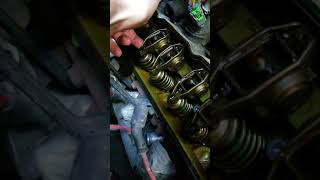
- If the misfire still remains on cylinder 4, listen for a distinct ticking noise from the valve cover area on the passenger side. A ticking noise combined with a P0304 is a strong indicator of a potential AFM lifter failure. 🎬 See how to diagnose a ticking noise and lifter failure.
- Listen to the fuel injector for cylinder 4 with a mechanic's stethoscope. It should have a steady, rhythmic clicking. Compare its sound to the other injectors.
- If a mechanical issue is suspected, perform a compression test on cylinder 4. A reading of zero, or one that is intermittently low, points towards a mechanical problem like a stuck lifter or broken valve spring.
- If an AFM lifter is suspected, a professional diagnosis may involve removing the valve cover to observe rocker arm movement. 🎬 Watch: Pro tips for diagnosing GM lifter and ticking issues. A rocker arm that isn't moving indicates a collapsed lifter and likely a bent pushrod.
Parts You'll Likely Need
- Ignition Coil
(OEM #12629037)— Ignition coils are a very common failure point for cylinder-specific misfires due to heat and vibration.
Trusted brands: ACDelco, Delphi
OEM price range: $40-$60
Aftermarket price range: $25-$50 - Iridium Spark Plug
(OEM #41-110 or 41-162)— Spark plugs are a standard wear item. The original 41-110 has been superseded by the 41-162, but both are considered acceptable.
Trusted brands: ACDelco, NGK
OEM price range: $11-$15
Aftermarket price range: $8-$12 - Spark Plug Wire Set
(OEM #9748RR)— A GM TSB points to loose wires as a cause, and heat can make them brittle, causing them to fail during service or over time.
Related Codes That Often Appear With This One
- P0300 — If the misfire is intermittent or other cylinders are also misfiring, a P0300 (Random/Multiple Cylinder Misfire) code may also be present. This is common when the root cause is an AFM lifter issue or a vacuum leak.
- P0302, P0306, P0308 — These codes represent misfires on other cylinders on the same bank (passenger side). If a ground wire issue or a vacuum leak is affecting the entire bank, multiple codes may appear together.
- P3400 — This code stands for 'Cylinder Deactivation System Bank 1'. Its appearance alongside a P0304 strongly suggests the misfire is related to the Active Fuel Management (AFM) system, possibly a failing lifter on cylinder 4.
Technical Service Bulletins (TSBs) & Recalls
- PIP4819A: Notes that a Service Engine Soon lamp with misfire codes (P0300-P0308) can be caused by loose spark plug wires that need replacement.
- 19-NA-219: A broader GM bulletin discussing various causes for engine misfires (P0300-P0308) and associated noises. It specifically details how to diagnose a worn cam/lifter, sticking valve, broken valve spring, or a collapsed AFM lifter, all of which can cause a P0304.
Platform-Specific Known Issues
- Per TSB #PIP4819A, loose spark plug wires are a known cause of misfires on this engine platform. Technicians are advised to inspect the wires and replace any that are found to be loose.
- AFM lifter failure is a significant concern. Cylinders 1, 4, 6, and 7 are the AFM cylinders. A P0304 code, especially with a ticking noise, is a classic symptom of a collapsed lifter in cylinder 4. This can lead to major engine repair, including camshaft replacement.
- A user on a GM forum with a 2013 Escalade experienced a P0304 that persisted after replacing the plug, wire, coil, and injector. The intermittent nature and appearance of a P3400 code pointed towards an AFM-related issue.
Mechanic-Grade Diagnostic Values
- Fuel Pressure (Key On, Engine Off) — expected: 55-62 PSI. Failure: Pressure below 50 PSI can indicate a weak fuel pump or clogged filter, potentially causing lean misfires.
- Fuel Injector Resistance — expected: 11-15 Ohms. Failure: A reading of 0 Ohms, infinite resistance, or a value significantly different from other injectors points to a failure.
- Ignition Coil Primary Resistance — expected: 0.8 - 2.0 Ohms (general specification). Failure: A reading outside this range suggests an internal coil problem, though swapping the coil is a more reliable test.
Hidden / Shadow Codes Worth Checking
- Mode 6, TID $A2-$AB: Mode 6 provides raw data from the PCM's self-tests. Test IDs $A2 through $AB typically store the misfire counts for each cylinder over the last 10 driving cycles. This allows a technician to see if cylinder 4 is logging misfires even if they aren't frequent enough to keep the check engine light on continuously. (see via An advanced OBD-II scanner or professional tool (like Tech2/GDS2) with Mode 6 capability.)
Scan Tool Commands That Help
- GDS2 / Tech2: Cylinder Power Balance / Injector Kill — This bidirectional test allows a technician to disable the fuel injector for each cylinder one by one. When a healthy cylinder is disabled, the engine RPM will drop noticeably. If disabling cylinder 4 causes no change in RPM, it confirms that cylinder was not contributing power, pinpointing the misfire location.
- GDS2 / Tech2: AFM Cylinder Deactivation Test — This function commands the Active Fuel Management system on and off. It can be used to check the functionality of the VLOM (Valve Lifter Oil Manifold) solenoids and to see if the misfire on cylinder 4 is directly related to the AFM system being active or inactive.
Wiring & Ground Locations
- G102 — Located at the left rear of the engine, on the cylinder head.. This ground is for all 8 ignition coils. A loose or corroded connection here can cause weak spark and random misfires, though it would typically affect more than just one cylinder.
- G103 — Located on the front of the passenger side (Bank 2) cylinder head.. This is a primary engine-to-chassis ground on the same bank as cylinder 4. Poor grounding can cause erratic behavior in sensors and ignition components on that bank.
- Firing Order — The firing order for the L94 V8 is 1-8-7-2-6-5-4-3.. Knowing the firing order helps in advanced diagnostics, such as looking for patterns in misfires. Cylinder 4 is preceded by cylinder 5 and followed by cylinder 3 in the sequence.
Real Owner Repair Stories
- Tahoe Yukon Forum user 'Blackbeard718' (Denali (year not specified, but with AFM, likely similar to Escalade)) — P0304 code, engine missing, and a new loud knocking sound from the side of cylinder 4.
❌ Tried (didn't work) New spark plugs, New spark plug wires, New ignition coil on cylinder 4
✅ What actually fixed it The owner suspected a failed lifter based on the symptoms and forum advice. The final resolution was taking it to a mechanic to perform a full AFM/DOD delete, including a new cam and lifters. - GM Forum user (2013 Cadillac Escalade Premium 6.2L, 90k miles) — P0304, tapping noise, rough running, Stabilitrak/Traction Control lights. Also saw intermittent P0300 and P3400.
❌ Tried (didn't work) New spark plug on cylinder 4, Swapped spark plug wire, New coil pack on cylinder 4, New fuel injector on cylinder 4
✅ What actually fixed it The user's story did not have a final confirmed fix, but the combination of P0304 and P3400 (Cylinder Deactivation System Bank 1) strongly pointed towards an AFM lifter failure, which was the consensus from other forum members. The user was continuing diagnosis.
OEM Part Supersession History
ACDelco 41-110→ACDelco 41-162— GM changed suppliers for the spark plugs, reportedly from Denso to NGK (or vice-versa), leading to a new part number and minor design changes.
Heads up: Both plugs are functionally interchangeable for this application. However, some users have reported a preference for the older 41-110 plugs, citing better manufacturing quality and smoother engine performance, though the 41-162 is the officially recommended service part.
Model Year Variations Within This Range
- 2010-2013: The 2010 model year marked the introduction of the 6.2L L94 engine, which replaced the previous L9H. The key difference was the addition of Active Fuel Management (AFM). Therefore, AFM-related failures causing P0304 (like a stuck lifter on cylinder 4) are a primary concern for this entire 2010-2013 range but not for pre-2010 6.2L Escalades.
Helpful Videos
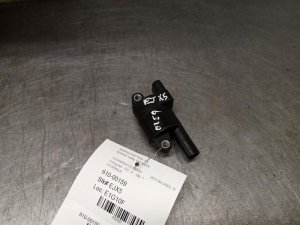
Used OEM Parts in Stock
New Aftermarket Parts Available

The information in this article is provided for general reference and educational purposes only. Vehicle specifications, procedures, and part compatibility can vary by production date, trim level, and region. Always consult your vehicle's factory service manual and verify part numbers before purchasing or performing repairs. Safety-critical components such as airbags, seat belts, and braking systems should be installed by a qualified professional.
- Cadillac ESCALADE EXT:
- 🧭 Diagnostic Flowchart
- 🎬 Helpful Videos
- 🛍️ Shop This Part
- What's Unique About the 2010-2013 Cadillac ESCALADE EXT
- Symptoms You May Notice
- Most Likely Causes
- Rare But Worth Checking
- Diagnosis Steps
- Parts You'll Likely Need
- Related Codes That Often Appear With This One
- Technical Service Bulletins (TSBs) & Recalls
- Platform-Specific Known Issues
- Mechanic-Grade Diagnostic Values
- Hidden / Shadow Codes Worth Checking
- Scan Tool Commands That Help
- Wiring & Ground Locations
- Real Owner Repair Stories
- OEM Part Supersession History
- Model Year Variations Within This Range
- 🎟️ Get 5% Off